
17 Common Reasons Your Tomato Leaves Are Turning Yellow (And The Quick Fixes For Each)
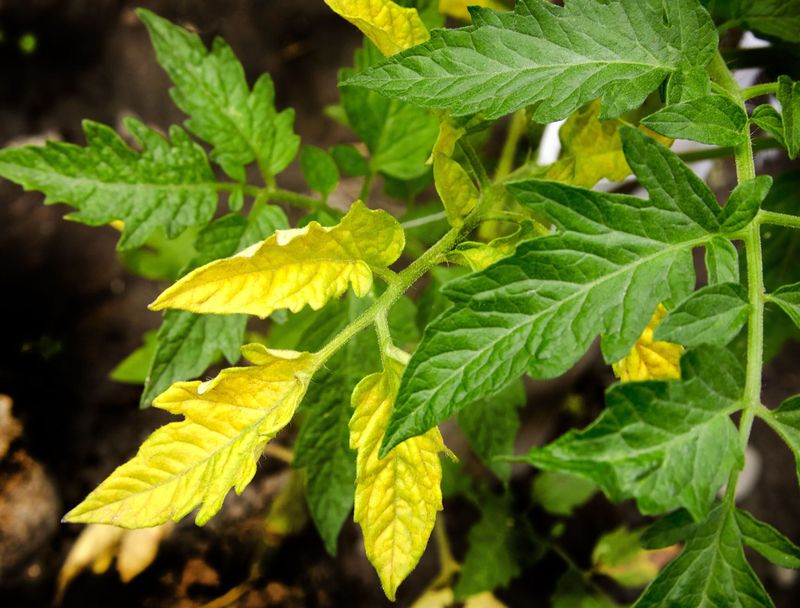
Few things make a tomato grower nervous like spotting yellow leaves where there used to be healthy green. The good news is that yellow leaves are your plant’s way of talking to you, and once you learn to read the signs, the fix is usually simple.
From hungry roots to too much water to plain old aging, each cause leaves its own clue. Here are 17 common reasons your tomato leaves turn yellow, plus a quick fix for each one so you can get your plants back on track today.
1. Nitrogen Deficiency
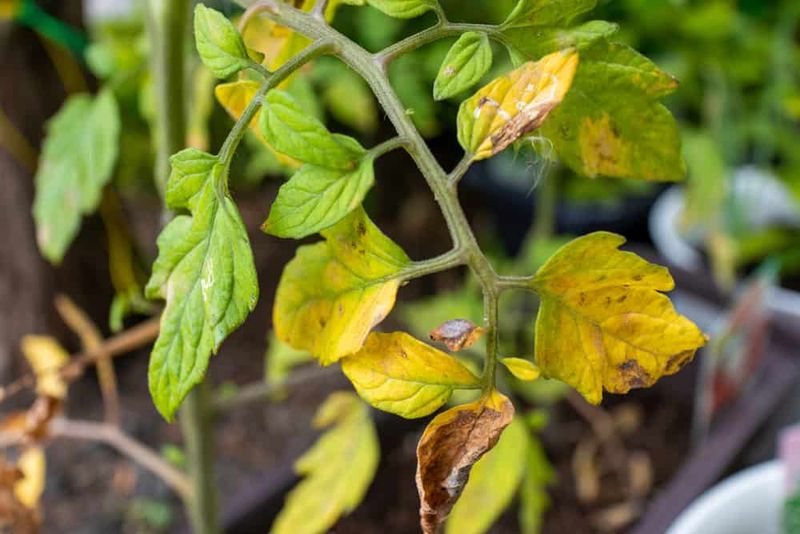
Notice the oldest, biggest leaves near the bottom of your plant fading to pale green or yellow first? That is classic nitrogen hunger.
Tomatoes are heavy feeders, and when nitrogen runs low the plant pulls it out of older leaves to keep new growth going.
Alongside the yellowing, you may spot stunted growth and a generally sad, slow-moving plant. It is one of the most common reasons backyard tomatoes look off by midseason.
The quick fix is to feed them. Use a balanced fertilizer such as a 5-10-5, one made specifically for tomatoes, or a water-soluble source like fish emulsion that delivers nitrogen fast.
Keep a regular feeding schedule going, since these plants eat more than most.
2. Magnesium Deficiency
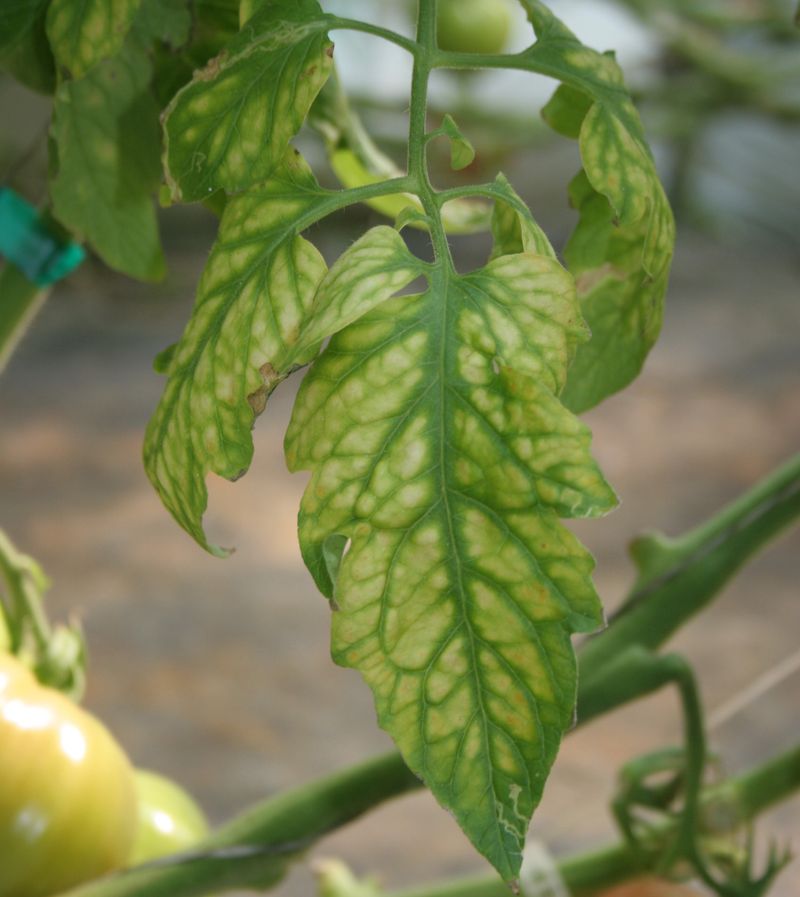
Ever seen a tomato leaf where the spaces between the veins go yellow but the veins stay bright green? Gardeners call that interveinal chlorosis, and it usually points straight to a magnesium shortage.
It tends to show up on older leaves first. In more serious cases you might spot yellow blotches or even reddish, purple, or brown tints creeping across the foliage.
To turn it around, reach for a fertilizer that includes micronutrients, or try a simple Epsom salt spray. Mix two tablespoons of Epsom salt (magnesium sulfate) into one gallon of water and mist the leaves every two weeks.
Skip hot, sunny days when spraying so you do not scorch the foliage.
3. Potassium Deficiency
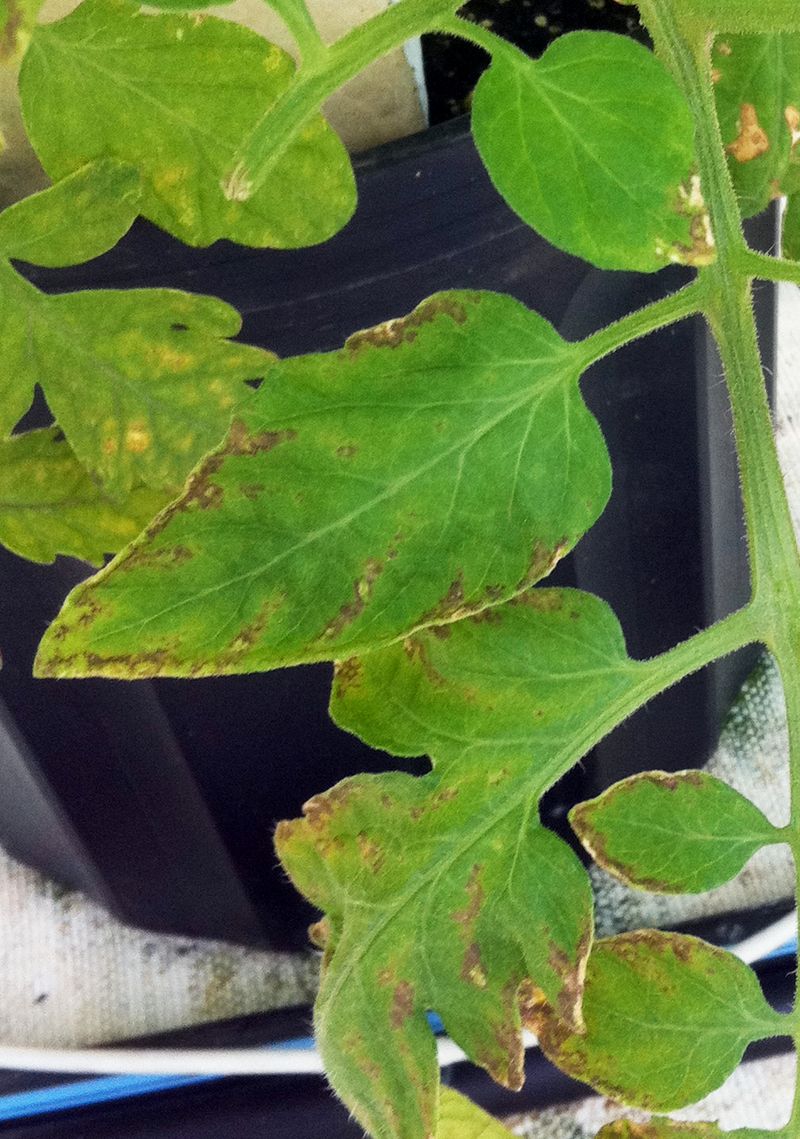
Yellowing that starts along the edges of newer leaves and then browns like a sunburn is a telltale sign of low potassium. The margins can look scorched even though the center of the leaf stays green.
Your fruit may drop hints too. Potassium-starved plants often produce tomatoes with yellow shoulders that never quite ripen evenly, which is frustrating when harvest time rolls around.
Switching from a granular product to a liquid fertilizer can correct the problem more quickly, since the nutrients become available right away. A soil test takes the guesswork out and tells you exactly how much your plants need.
4. Iron Deficiency
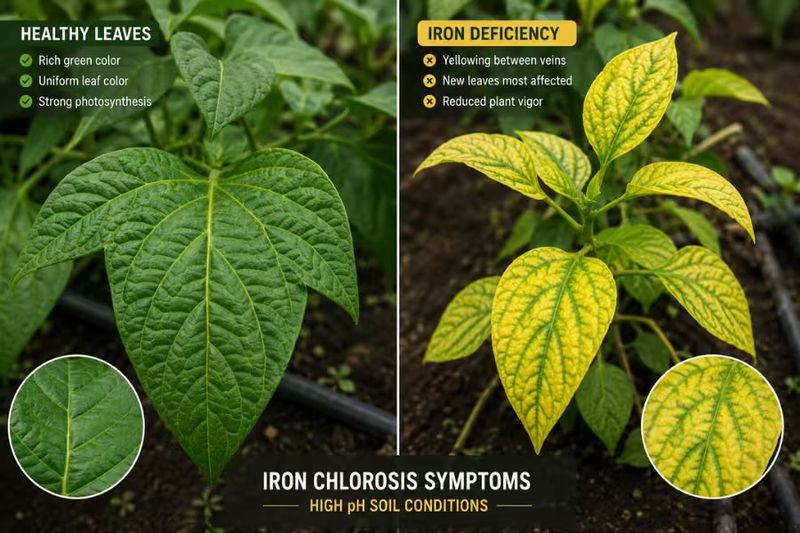
When the youngest leaves at the very top of the plant turn pale or yellow while their veins stay green, iron is often the missing piece. It is the opposite pattern of nitrogen hunger, which hits the older leaves down low.
Here is the sneaky part: the iron may already be in your soil. In alkaline, high-pH ground the plant simply cannot absorb it, so it starves in the middle of plenty.
Grab a soil pH test first, since tomatoes are happiest between 6.2 and 6.8. If the reading comes back too high, use an acidifying fertilizer to nudge it down, and apply an iron foliar spray for a faster green-up.
5. Calcium Deficiency
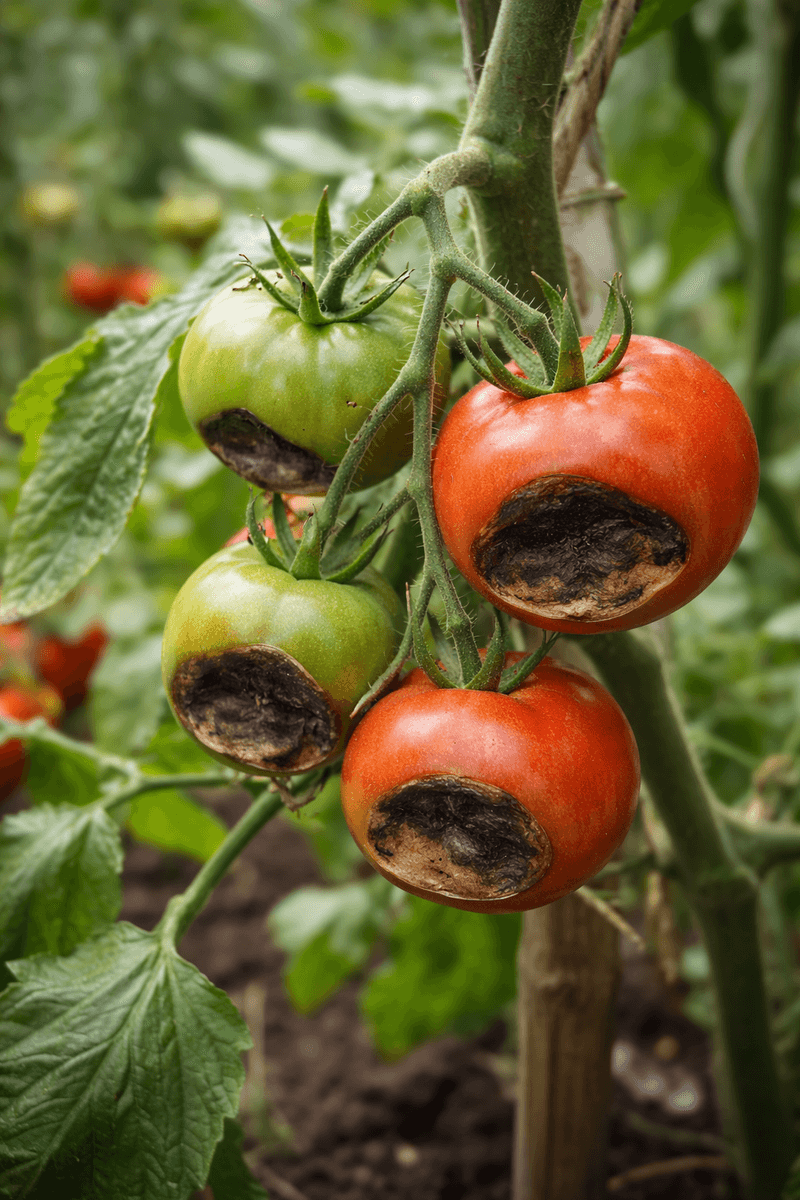
Calcium trouble likes to announce itself on the newest growth, where leaves may yellow and twist into odd, distorted shapes rather than fading evenly. It rarely looks like tidy, uniform yellowing.
The bigger giveaway usually appears on the fruit. Blossom end rot, those sunken brown or black spots on the bottom of your tomatoes, walks hand in hand with a calcium problem.
Because calcium moves through the plant with water, steady and generous watering is your best tool. Fix any erratic watering habits, and run a soil test if you suspect the mineral itself is actually lacking.
6. Sulfur Deficiency
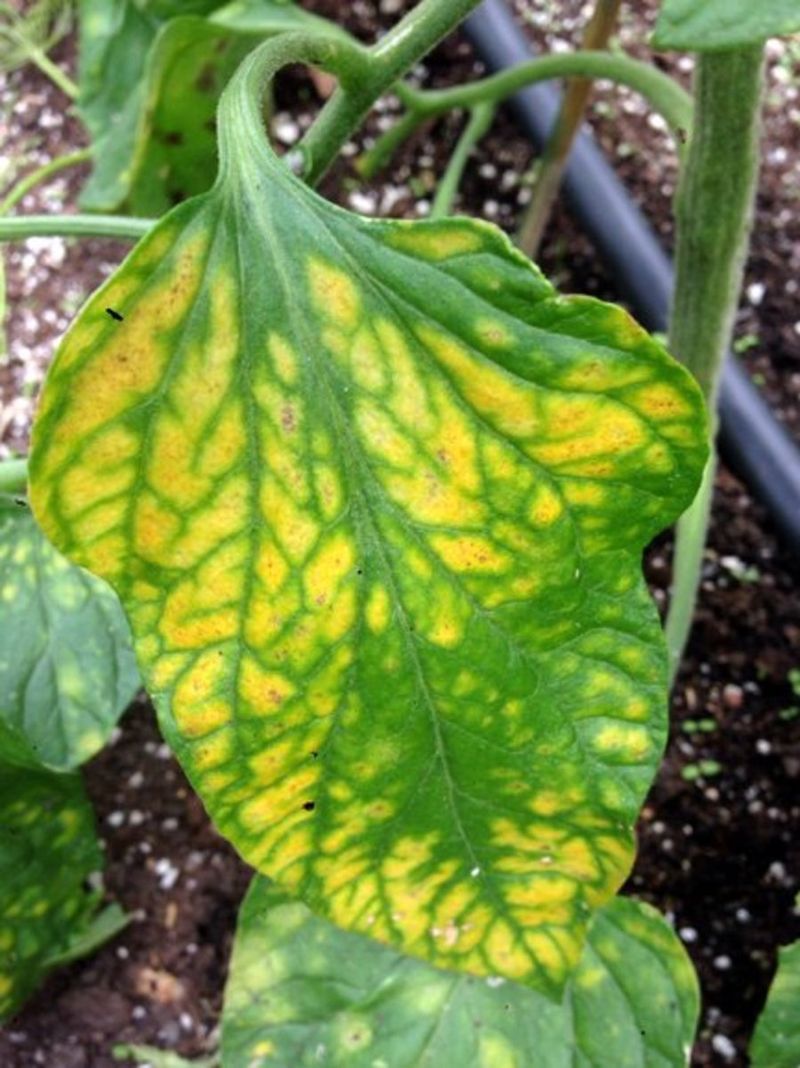
Sulfur shortage is the great impersonator, because it looks a lot like nitrogen deficiency with its evenly pale green or yellow leaves. Many gardeners mix the two up and treat the wrong problem.
The clue that separates them is location. Sulfur trouble shows up on the upper, newer leaves first and then spreads downward, while nitrogen hunger starts at the bottom.
Once you have identified it, the fix is refreshingly simple. Feed with a balanced fertilizer that includes sulfur and your plant should regain its color as the new growth fills in.
7. Overwatering
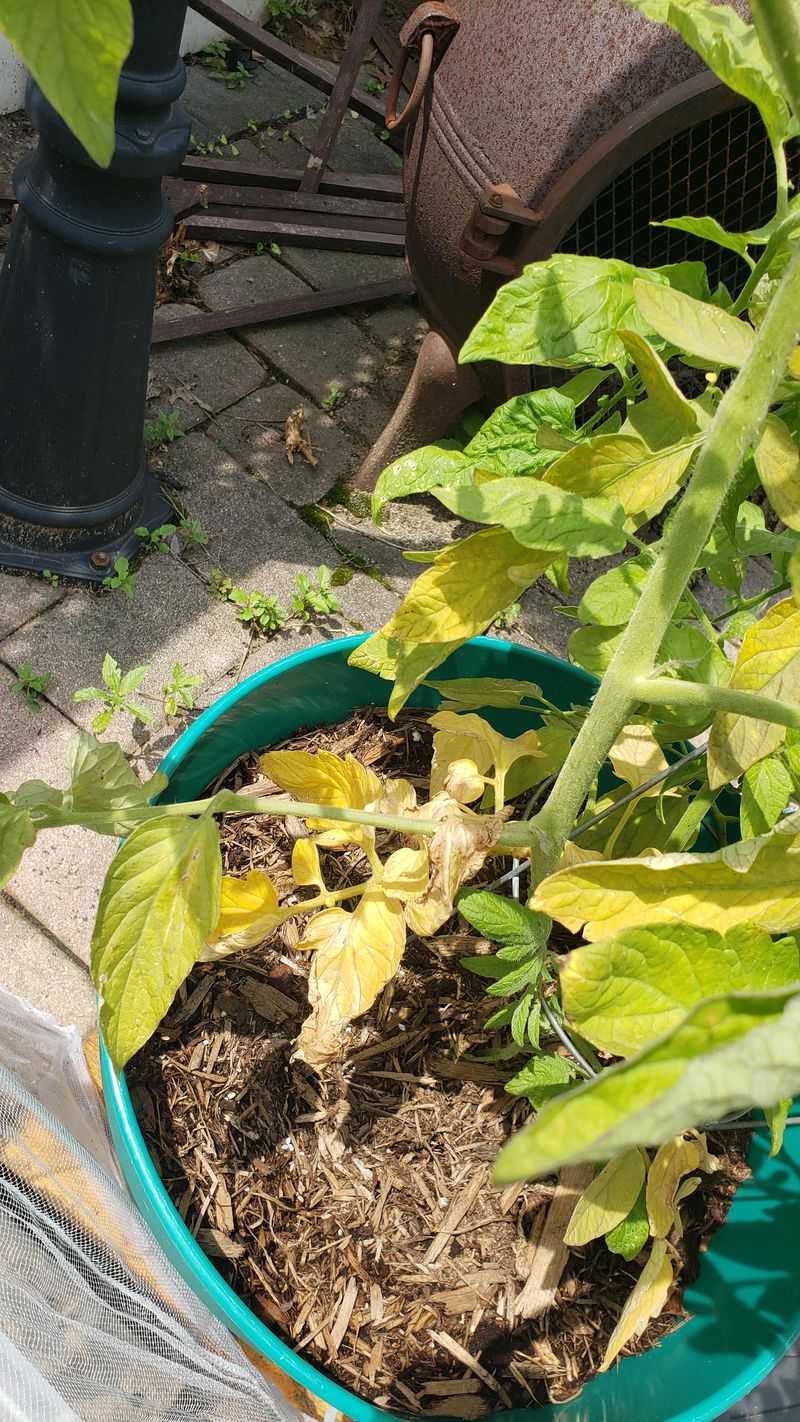
Kindness can backfire in the garden, and drowning your tomatoes with love is a perfect example. When lower leaves go yellow and the soil stays soggy day after day, overwatering is usually to blame.
A waterlogged plant may even droop while sitting in wet soil, which confuses a lot of people into watering more. In reality the roots are gasping for oxygen and edging toward root rot.
Pull back and let the top inch of soil dry out before you water again. Improving drainage by mixing in organic matter helps water move through instead of pooling around the roots.
8. Underwatering and Drought
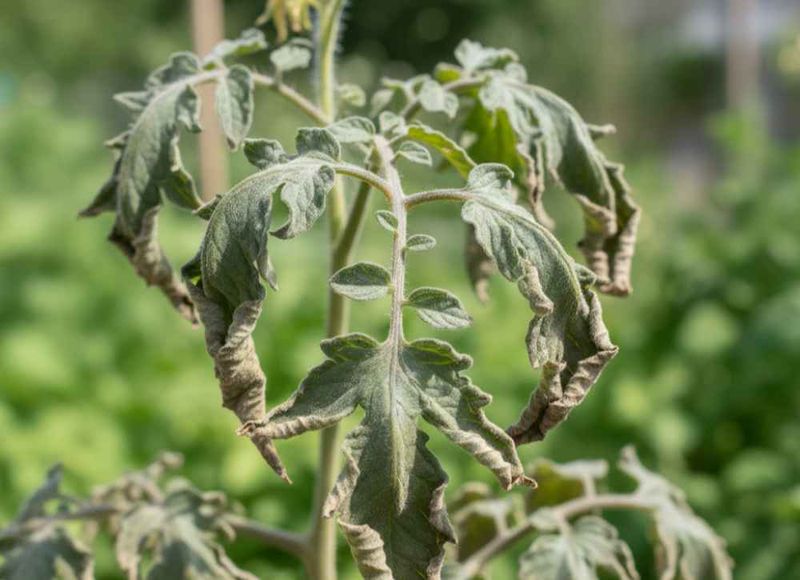
On the flip side, a thirsty tomato dehydrates and can no longer pull nutrients up from the soil, so the leaves suffer. Before they turn yellow, watch for wilting and crispy brown edges as early warning signs.
Dry spells during summer heat make this a fast-moving problem, especially for plants in containers that dry out quicker than those in the ground.
Set up a steady watering routine and water deeply so moisture reaches the roots. Aim for about an inch of water per week, bumping it up to roughly two inches during the hottest stretches of the season.
9. Insufficient Sunlight
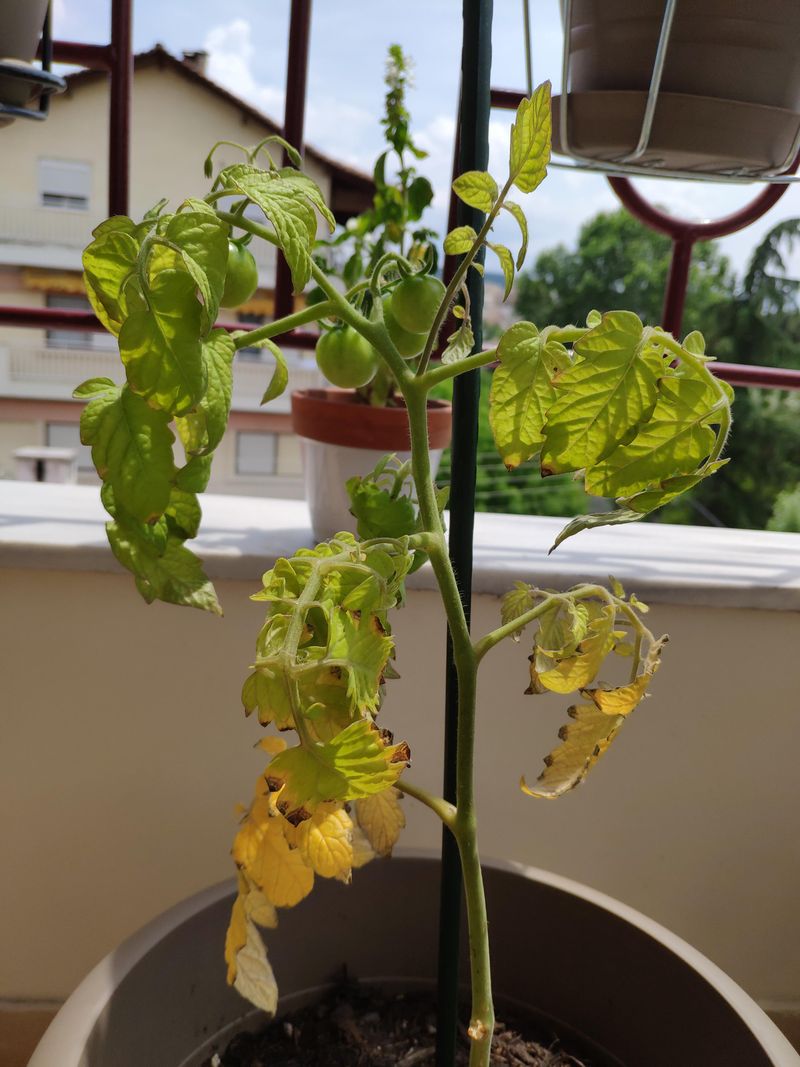
Sun-loving to the core, tomatoes want a full 6 to 8 hours of direct light every day. Fall short of that and the leaves may lose their rich color and turn yellow as photosynthesis slows down.
Shade is the usual culprit, whether from a nearby fence, a tree that leafed out, or a spot that just does not get as much light as you thought.
If your plants live in containers, simply scoot them to a sunnier location. Trim back overhanging branches that cast shade, and when you plan next season’s garden, pick the brightest patch you have.
10. Excessive Sun and Heat Stress
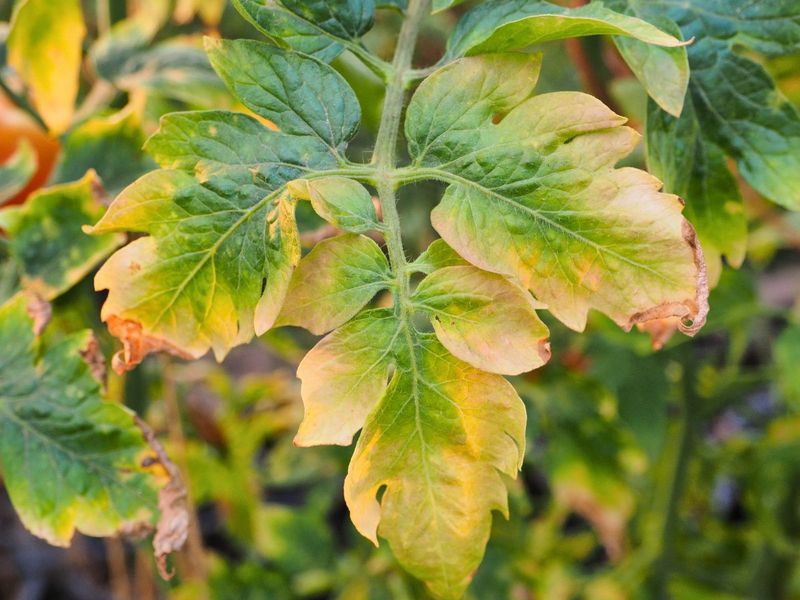
Too much of a good thing works both ways. During brutal heat waves, intense sun can scorch the foliage, causing discoloration and sunscald that shows up as yellow or bleached patches.
The reassuring news is that heat stress is usually temporary. Once the weather calms down, most plants shake it off and carry on producing.
Keep them well hydrated while the heat lingers, since a well-watered plant handles high temperatures far better. Give it a little time and your tomato should bounce back as the thermometer drops.
11. Transplant Shock
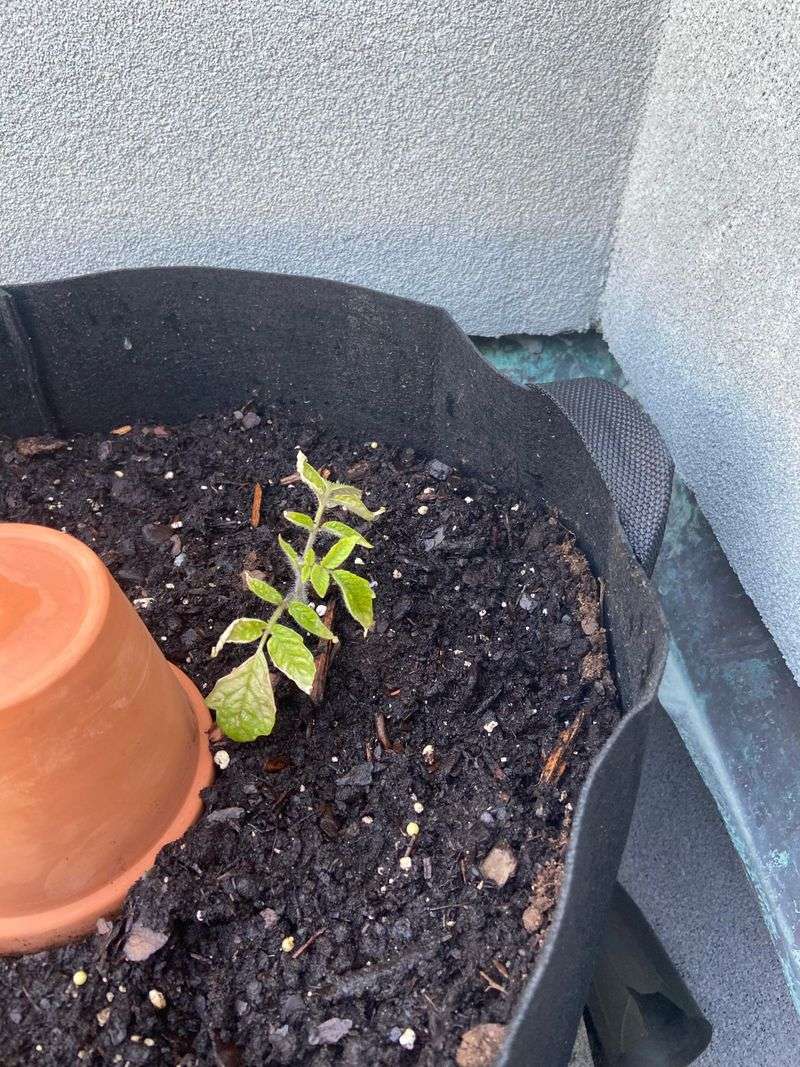
Just moved a young tomato into a new bed or a bigger pot and watched the leaves yellow within days? Take a breath, because transplant shock is a normal stress reaction, not a death sentence.
Roots need time to settle into their new home, and while they adjust the plant may sulk a bit. Most seedlings recover on their own within a week or two.
Baby them through the transition with a good drink of water and a little protection from harsh temperatures. Hold off on fertilizer for now and focus on gentle care until the roots take hold.
12. Pests Like Aphids, Spider Mites, and Flea Beetles
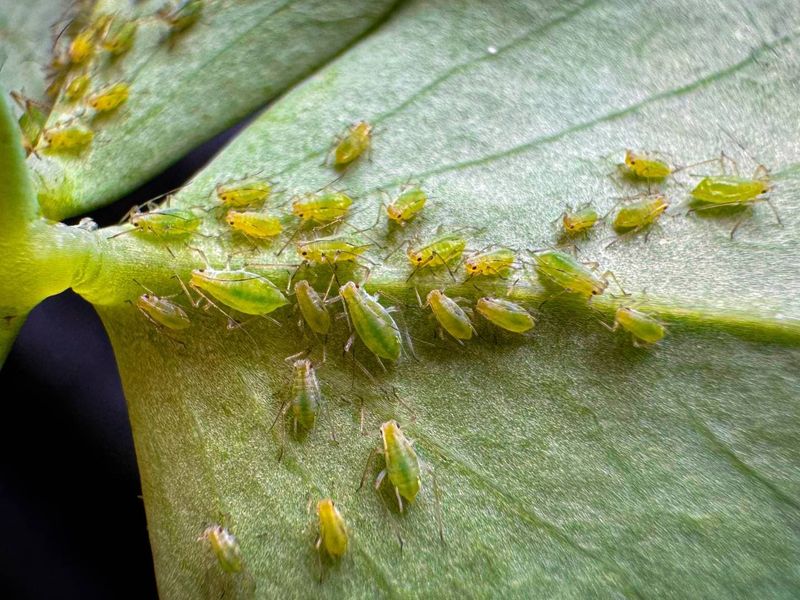
Tiny freeloaders can drain the life right out of your plant. Aphids, spider mites, and flea beetles all feed on tomato sap, leaving leaves sticky, stressed, and yellowing as they lose their vigor.
Beyond the direct damage, these pests can carry diseases from plant to plant, turning a small nuisance into a bigger headache.
Make a habit of flipping leaves over and inspecting regularly so you catch trouble early. Encouraging beneficial predator insects helps knock back aphids naturally, and identifying the exact pest lets you target your response.
For stubborn spider mites, treatments such as chlorothalonil, mancozeb, or copper fungicide may be used when needed.
13. Diseases Such as Early Blight and Septoria Leaf Spot
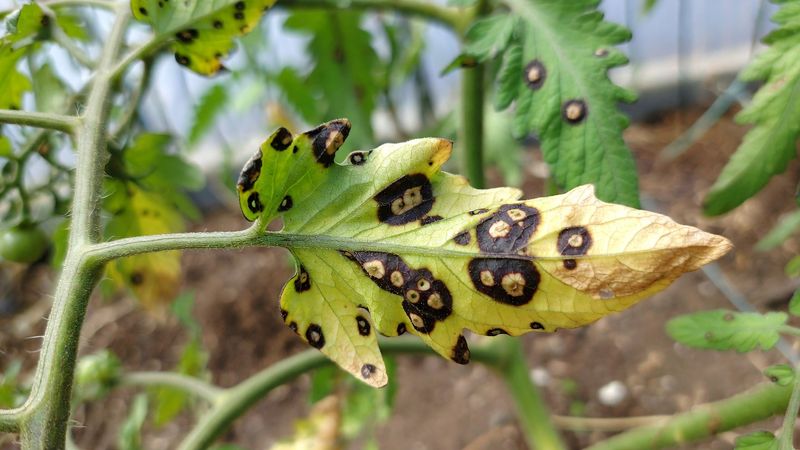
When yellowing shows up in blotchy, uneven patches rather than a smooth fade, fungal disease is often the reason. Look closely and you will usually find spots or lesions with the yellow ringed around them.
Early blight starts as pale-yellow spots that darken to brown on the lower leaves, while septoria leaf spot leaves larger brown markings mixed with yellowing. Both can trigger heavy leaf drop if ignored.
Snip away the infected lower leaves to open up air circulation and slow the spread. A fungicide like chlorothalonil, mancozeb, or copper may help when treatment is warranted.
Going forward, rotate your crops and water at the soil line instead of overhead to keep future outbreaks at bay.
14. Poor Soil Drainage or Compaction
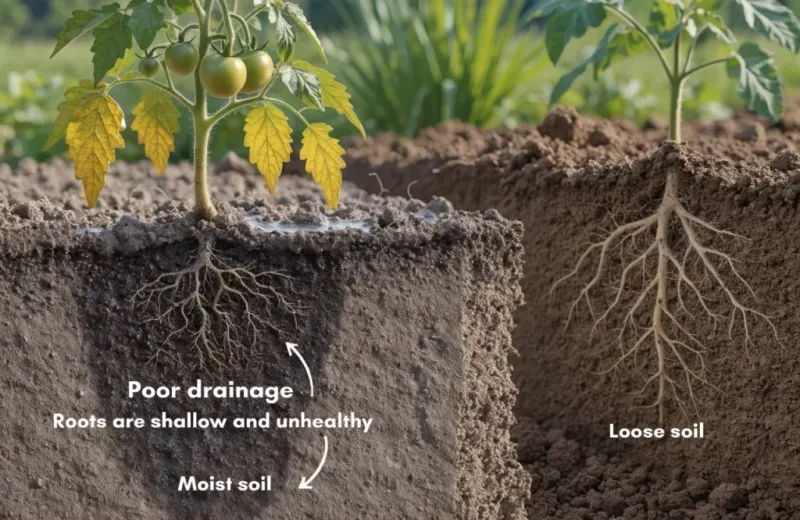
Sometimes the problem is not how much you water but where the water goes. Heavy, compacted, or poorly draining soil traps moisture around the roots, choking off oxygen and inviting root rot that shows up as yellow leaves.
It is easy to overlook, since you might be watering perfectly while the soil quietly holds everything in place like a soggy sponge.
Loosen and enrich the ground by working in organic matter, which improves both structure and drainage. For potted tomatoes, double-check that the container actually has enough holes for excess water to escape.
15. Inconsistent Moisture
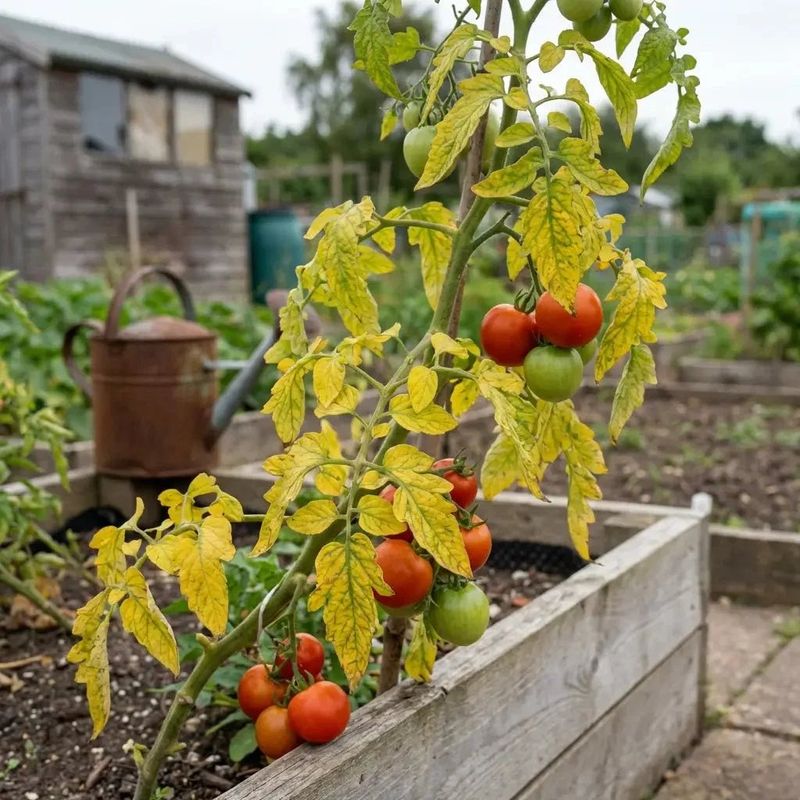
Plants crave routine, and a feast-or-famine watering pattern throws them completely off balance. Swinging between bone-dry and soaking wet stresses the roots and hampers their ability to soak up nutrients, which leads to yellowing leaves.
The frustrating thing is that you might be giving the right total amount of water, just delivered at wildly uneven intervals.
Steady wins the race here. Water deeply and less often on a predictable schedule so the roots grow strong and the moisture level stays even, keeping the whole plant calmer and greener.
16. Fertilizer Burn
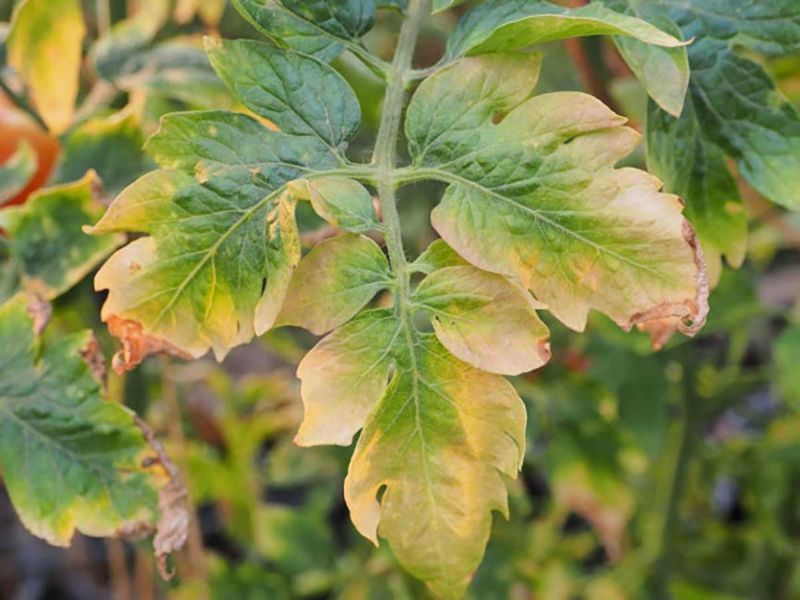
Eager gardeners often assume more fertilizer means more tomatoes, but overfeeding backfires fast. Fertilizer burn shows up as yellowing leaves with brown, crispy edges, and container plants get hit hardest because salts build up in the limited soil.
The extra nutrients essentially pull moisture away from the roots, leaving the leaves scorched even though you were trying to help.
If you suspect you overdid it, flush the pot or bed with plenty of clean water to rinse those excess salts out of the soil. Then ease way back on how much and how often you feed.
17. Normal Aging
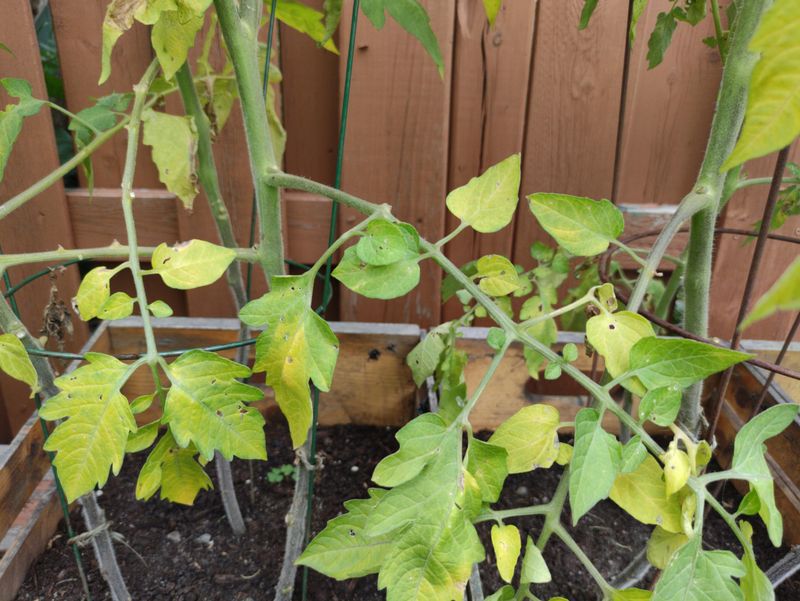
Before you panic, remember that not every yellow leaf is a cry for help. As tomato plants mature, the oldest leaves down at the base naturally fade and yellow once they stop pulling their weight in the photosynthesis department.
It is simply part of the plant’s life cycle, the same way lower leaves gracefully retire so energy can flow to fruit and fresh growth up top.
No treatment is required for this one. If the faded leaves bother you or crowd the base, feel free to pinch or snip them off to keep things tidy and improve airflow.