
19 Gorgeous Perennials That Carry Bold Color Into Your Garden’s Late Season
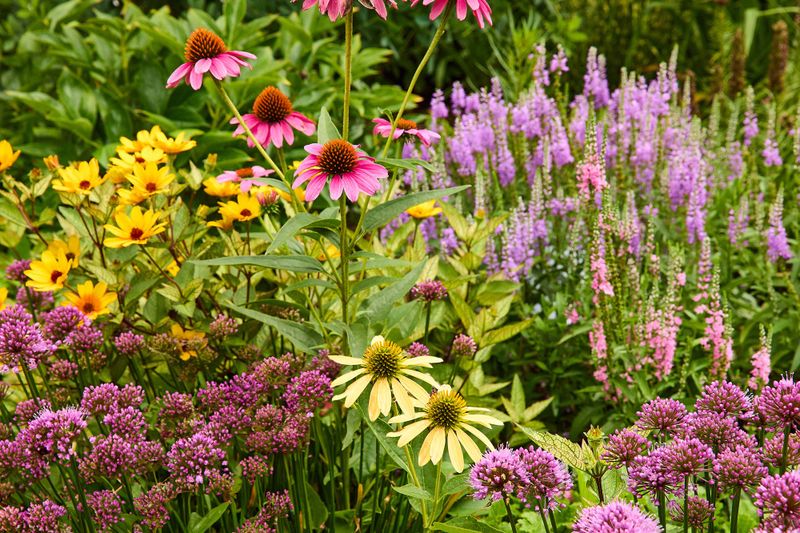
When summer starts to fade, a lot of gardens fade right along with it, leaving you staring at tired stems and empty spots where the color used to be. The good news is that certain perennials are just getting warmed up when everything else winds down, painting your yard with rich reds, purples, golds, and blues well into fall.
Planting a few of these means you get months of extra bloom without much extra work, and you avoid that sad end-of-season slump. Here are 19 dependable perennials that keep the show going long after the fireworks of midsummer are over.
1. Canna
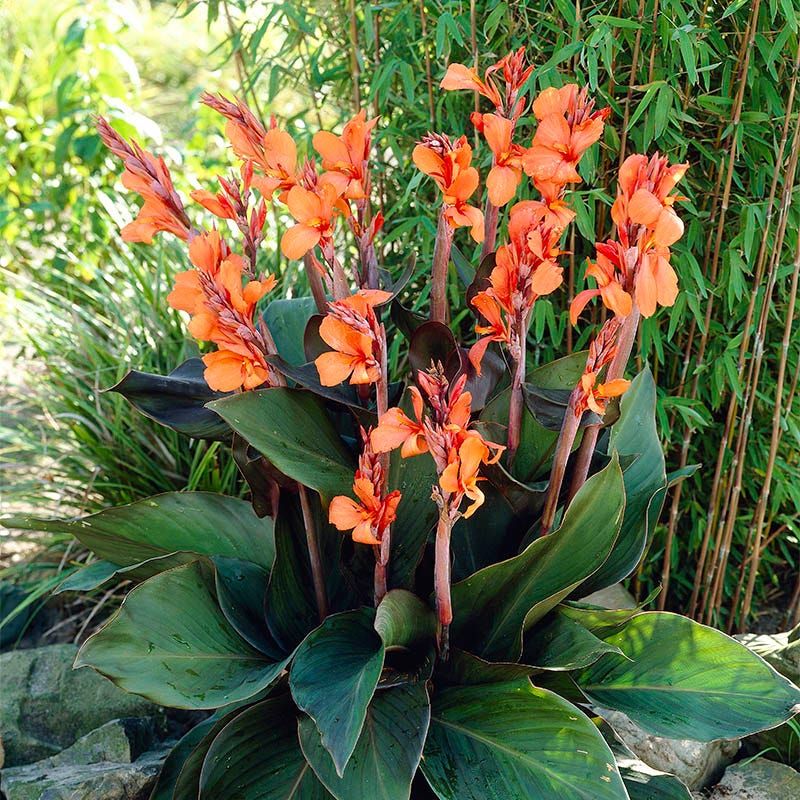
Few plants bring the tropics to a US backyard quite like canna. With paddle-shaped leaves and flame-colored blooms in red, orange, yellow, coral, and pink, it looks like something you would expect on a beach vacation rather than in a Midwestern flower bed.
What earns canna a spot here is its stamina. While many summer flowers throw in the towel by September, canna keeps pumping out those bold, exotic blooms right up until frost knocks it back.
Give it full sun and steady moisture, and it will reward you with height and drama that few other perennials can match. In colder zones, you can dig up the rhizomes after the first frost and store them indoors, then replant next spring for another round of color.
2. Chrysanthemum (Hardy Garden Mums)
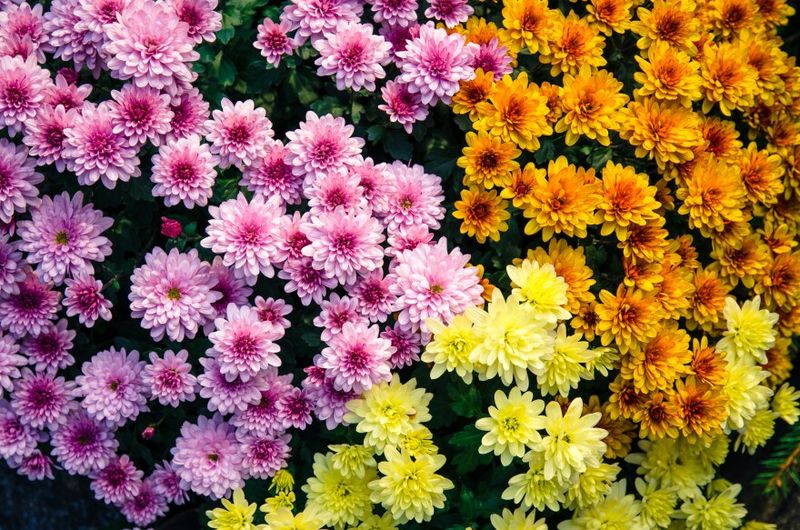
Say hello to the plant practically everyone reaches for when fall arrives. Hardy garden mums are the classic autumn workhorse, blanketing themselves in cushioned flowers in nearly every color you can name.
Their reputation is well earned. A single healthy mum can carry hundreds of blooms at once, turning a plain porch or border into a burst of seasonal color that lasts for weeks.
Here is a tip a lot of folks miss: the mums sold in stores each fall are often treated as throwaway decorations, but if you plant hardy varieties in spring and pinch them back through early summer, they will return bushier and stronger year after year. Give them full sun and decent drainage, and they will become one of the most reliable late-season performers you own.
3. Japanese Anemone
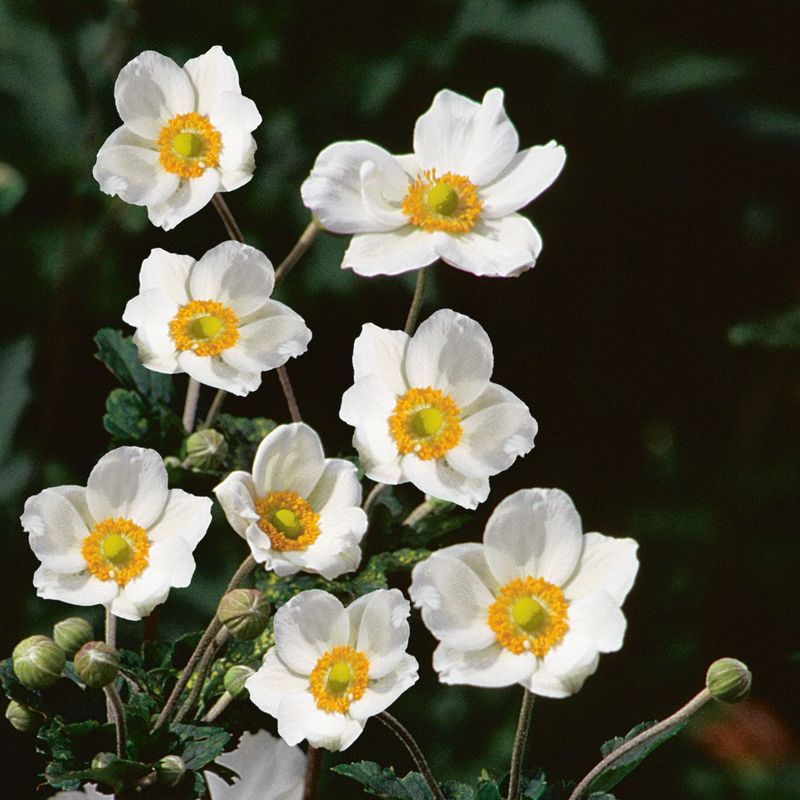
Grace is the word that comes to mind with Japanese anemone. Tall, wiry stems hold up cupped flowers that seem to float and sway with the slightest breeze, giving a soft, romantic feel to the fall garden.
The variety ‘Honorine Jobert’ is a standout, opening pure white petals around a bright golden button from August all the way into October. That long stretch of bloom is exactly why it belongs on any late-season list.
Unlike many fall bloomers that demand blazing sun, anemones are happy in partial shade, making them a lifesaver for those tricky spots under trees or along the north side of the house. Give them a couple of seasons to settle in, and they will spread into a generous, dependable patch.
4. Joe Pye Weed
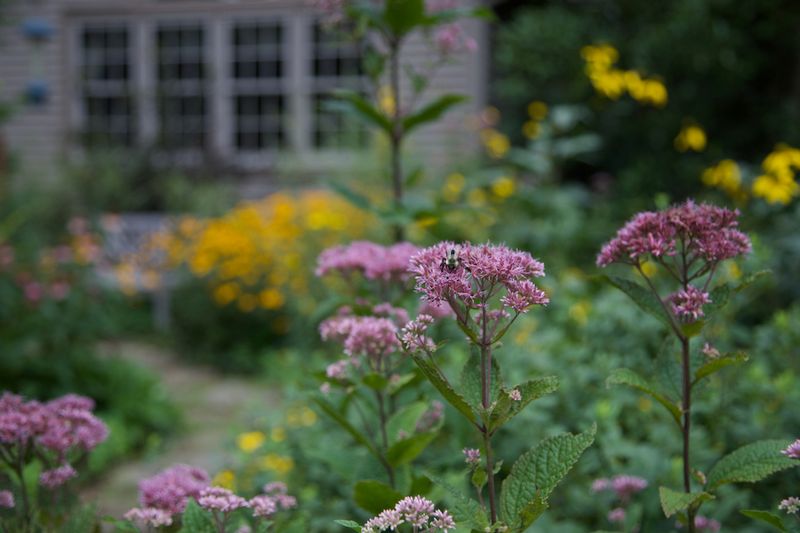
Do not let the humble name fool you. Joe Pye Weed is a towering, statuesque native that can reach well over six feet, topped with big dusty-pink flower clusters that hum with butterflies and bees.
Its size alone makes it a valuable player, filling the back of a border with presence when shorter summer flowers have already collapsed. From late summer into fall, those fuzzy mauve heads keep the pollinators fed and your garden buzzing.
Native to much of the eastern and central US, it thrives in moist soil and does not mind a spot that stays a little damp. Plant it where you have room to let it stretch, and it becomes a living landmark in the late-season landscape.
5. Sedum (Stonecrop)
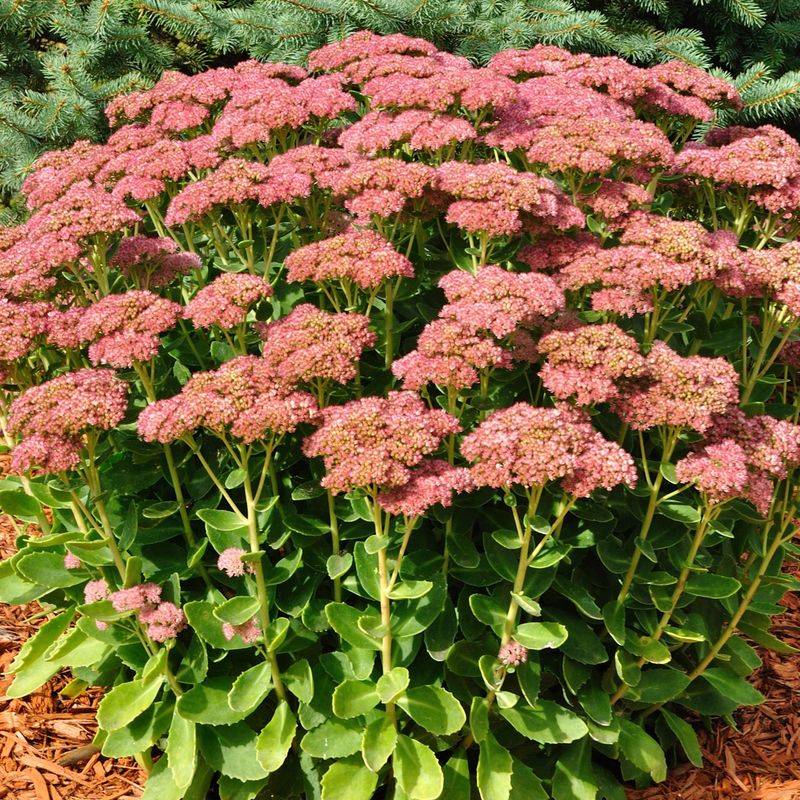
Watching sedum change through the season is half the fun. Upright types like the beloved ‘Autumn Joy’ start out with pale green broccoli-like buds, open to soft pink flower heads, then slowly deepen to rich brick red as the weather cools.
Texture is where sedum truly shines. Those thick, flat flower plates give the fall garden structure and substance, and they hold their shape beautifully even after they dry out.
Tough as nails, this succulent perennial shrugs off drought, poor soil, and neglect without complaint. Bees adore the late blooms, and if you leave the seed heads standing through winter, they add sculptural interest against the snow.
6. Aster
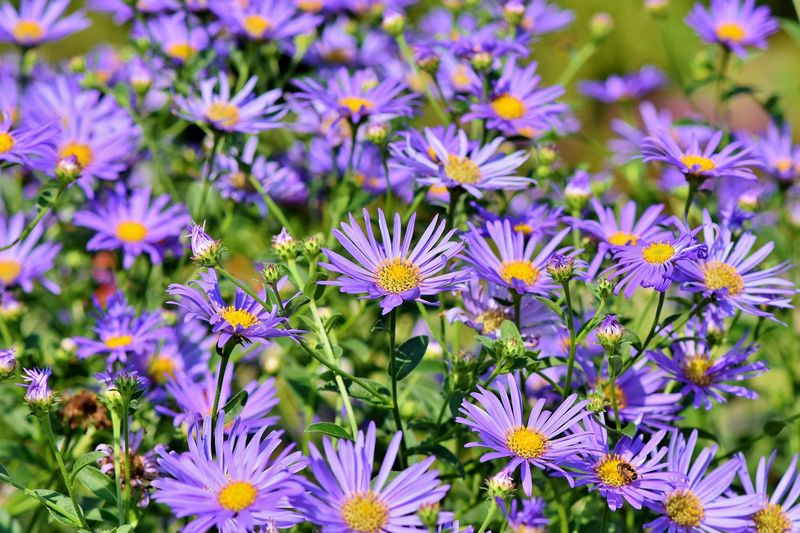
When most flowers are calling it quits, asters explode into a cloud of tiny star-shaped daisies. Also known as Michaelmas daisies, they come drenched in white, pink, lavender-blue, and deep purple, often smothering the plant so completely you can barely see the leaves.
Variety is their gift to the garden. You can find low, mounding types for the front of a bed and taller, airy ones for the back, so there is an aster to fit almost any space.
Beyond looks, asters are a critical food source for bees and migrating butterflies heading into fall. Plant them in full sun, give them a midsummer pinch to keep them compact, and they will hand you one of the most dazzling late-season displays around.
7. Heuchera (Coral Bells)
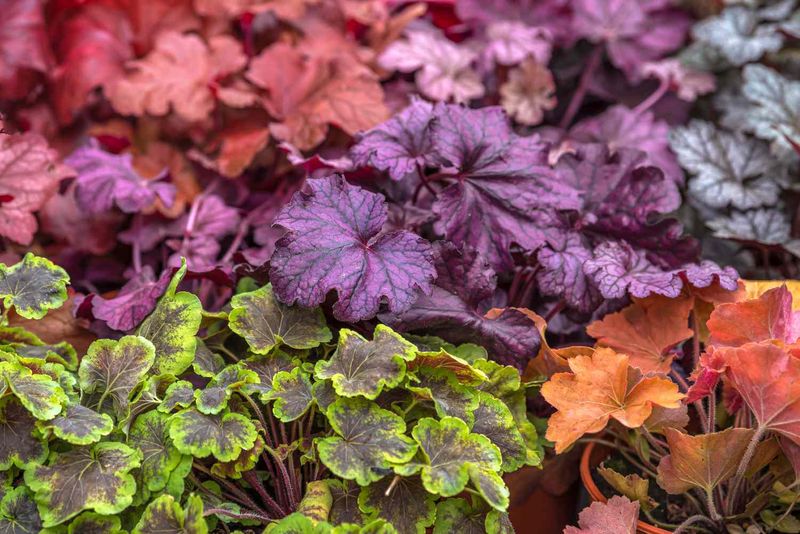
Most plants on this list win you over with flowers, but heuchera plays a different game entirely. Grown mainly for its ruffled, jewel-toned leaves, it comes in caramel, plum, lime, silver, and near-black shades that look good all season long.
The magic happens when temperatures drop. As fall settles in, many heuchera leaves deepen and brighten, turning richer and more vivid just as the flower-heavy plants around them fade away.
Because it holds its color into shady corners, heuchera solves the classic problem of adding late-season interest where sun is in short supply. Tuck a few near a path or the front of a border, and you get months of foliage color with almost no fuss.
8. Perennial Hibiscus
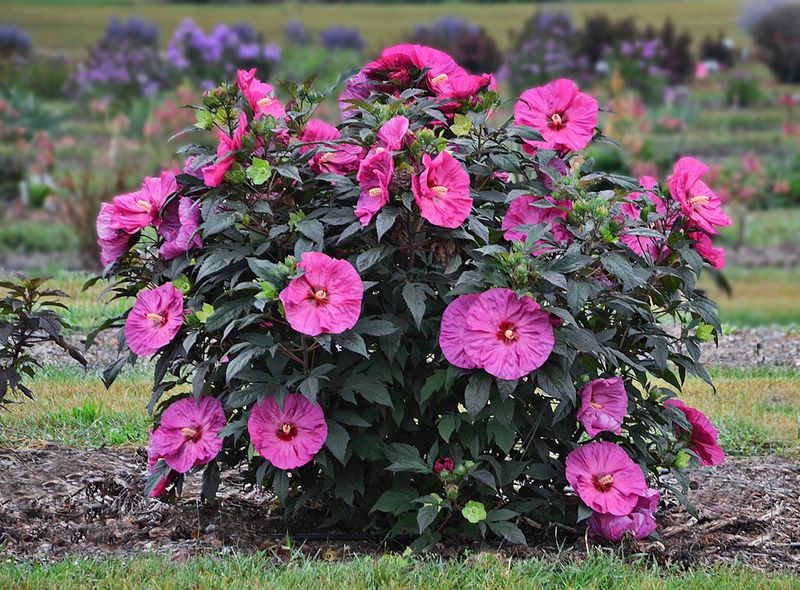
Prepare for jaws to drop. Perennial hibiscus, especially the Summerific series, produces flowers so enormous, often six to eight inches across, that first-time visitors assume they must be fake.
Those dinner-plate blooms in red, pink, and white keep coming from midsummer well into fall, giving you tropical drama that survives cold winters and returns bigger every year. Not bad for a plant that dies back to the ground each season.
It leafs out late in spring, so do not panic if the bed looks empty in May. Give it full sun and plenty of water, and by the time other flowers are slowing down, your hibiscus will be putting on its biggest show of the year.
9. Leadwort
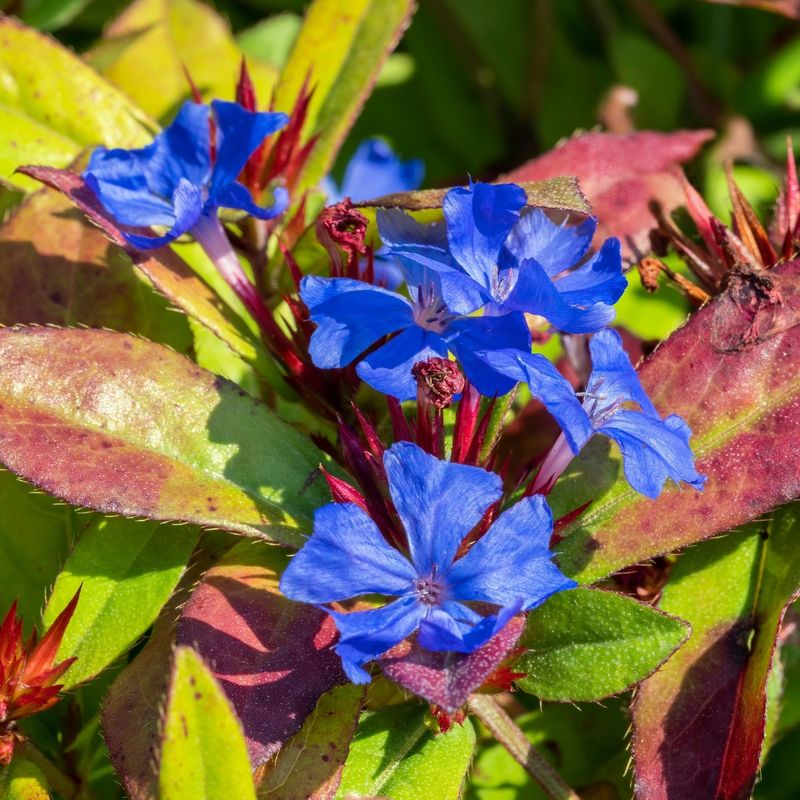
True blue is one of the rarest colors in the garden, which makes leadwort feel like a small miracle. Its flowers glow an intense cobalt that stops people mid-stroll to ask what on earth it is.
As a low, spreading groundcover, it does double duty in fall. The foliage turns fiery shades of red at the same time the blue blooms are still open, creating a bold color clash you rarely see anywhere else.
It fills in bare ground, edges pathways cleanly, and asks for very little in return. For gardeners craving something different when the season winds down, leadwort delivers both a rare hue and a fall foliage bonus.
10. Little Bluestem
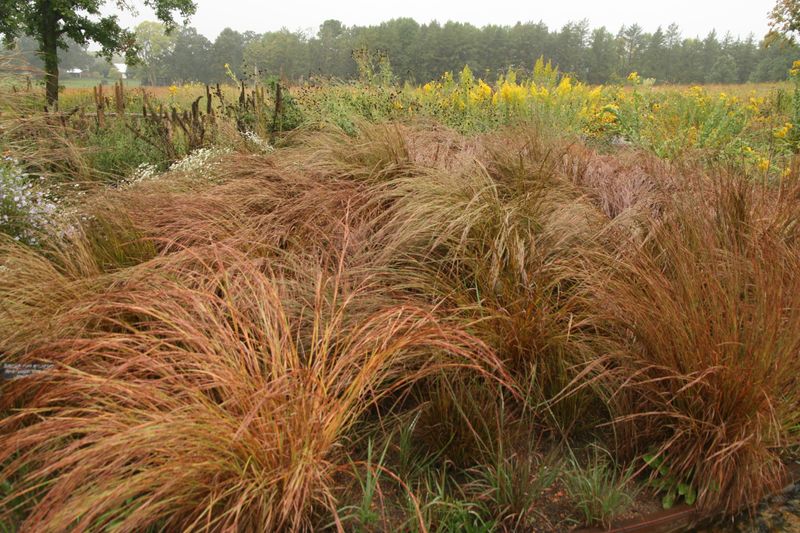
Grasses often get overlooked, but little bluestem makes a strong case for including at least one. This native prairie grass starts the year in cool blue-green, then transforms in fall into stunning shades of orange, red, and purple.
Movement is its secret weapon. When afternoon light catches the fluffy seed heads and the whole clump sways in a breeze, it brings a warmth and texture that flowers alone simply cannot provide.
Tough, drought-friendly, and happy in poor soil, little bluestem holds its color and form deep into winter. Pair it with asters or sedum, and the grass gives the whole scene a glowing, prairie-inspired backdrop.
11. Black-Eyed Susan
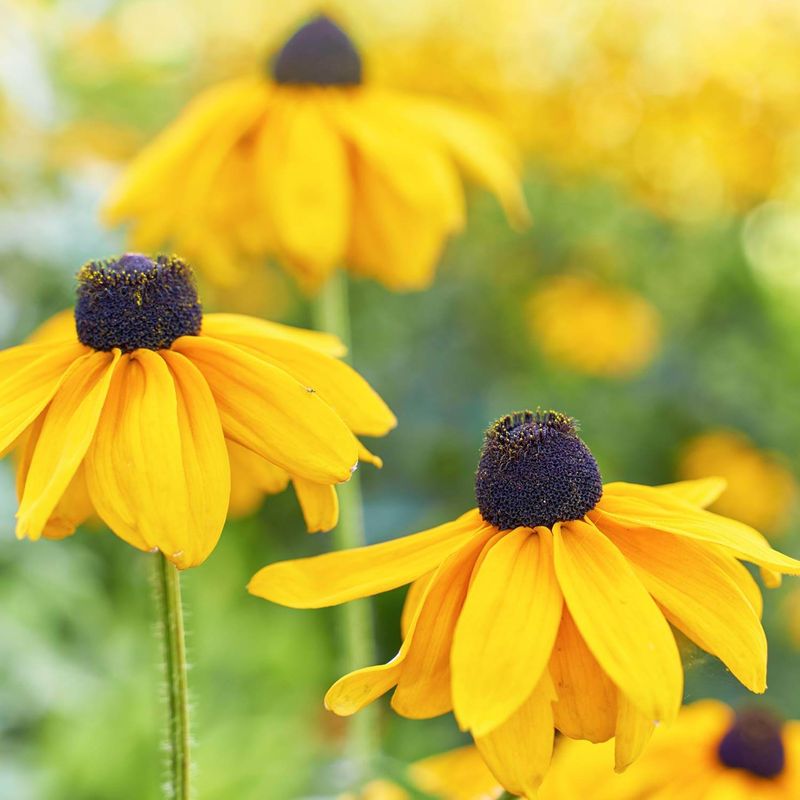
Cheerful is the only way to describe black-eyed Susan. Those golden-yellow petals ringing a chocolate-brown center are basically the color of sunshine, and they keep coming from midsummer straight into early fall.
Reliability is why so many gardeners plant it. Rudbeckia is long-lived, tolerant of heat and dry spells, and it spreads politely enough to fill a bed without taking over the neighborhood.
Butterflies and bees love the flowers, and finches will pick at the seed heads if you leave them standing. For dependable, no-drama gold that carries the garden from summer into autumn, few plants beat it.
12. Garden Phlox
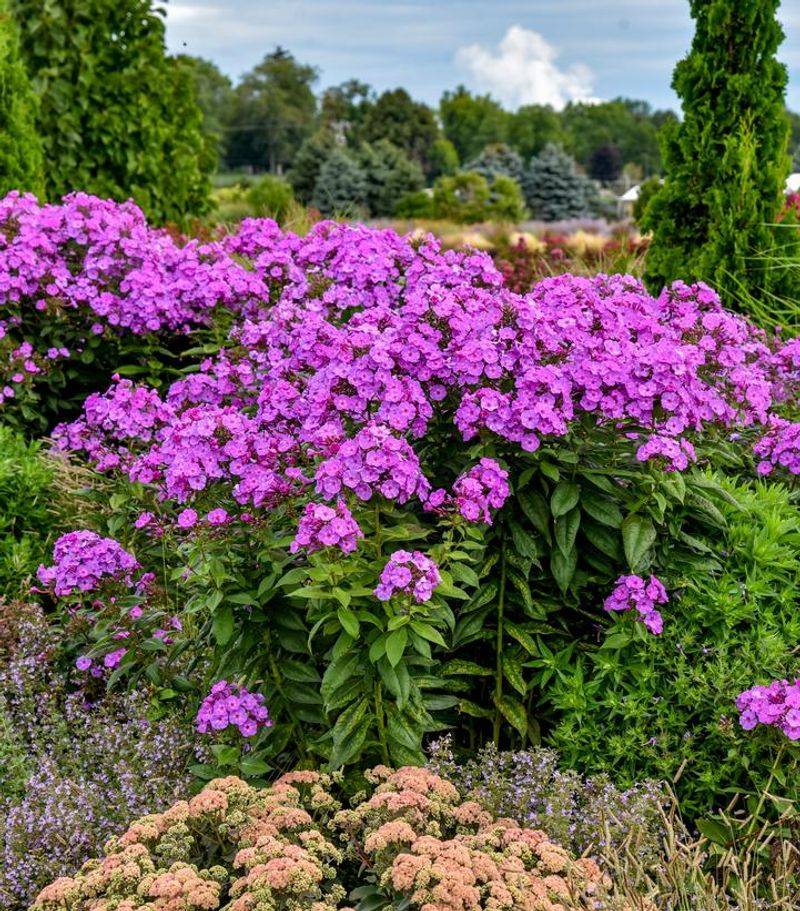
Fragrance is the first thing you notice with garden phlox. Big, rounded clusters of pink, purple, white, and red flowers perfume the late summer air, drawing hummingbirds and butterflies from across the yard.
A cottage-garden classic, phlox brings a lush, old-fashioned charm that feels right at home in a mixed border. Those dense flower heads sit atop tall stems, adding both height and softness to the scene.
Look for mildew-resistant varieties to keep the foliage clean, and give the plants room for air to move around them. Deadhead spent blooms and phlox will often push out a fresh round of color, stretching its season even further into fall.
13. Russian Sage
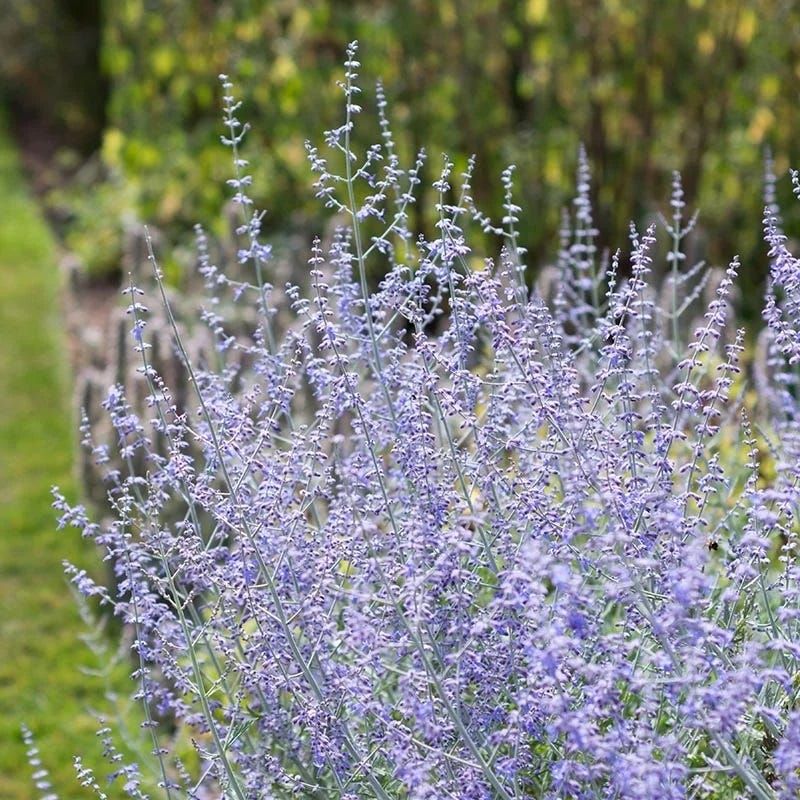
Picture a soft lavender-blue haze drifting three feet tall, and you have Russian sage. Its wispy flower plumes rise above silvery, aromatic foliage, giving the garden a dreamy, cloud-like quality from August onward.
Toughness hides behind that delicate look. This is a plant that laughs at heat, drought, and lean soil, thriving in the sunny, dry spots where fussier flowers would sulk.
The airy structure lets it weave beautifully between bolder blooms like sedum and coneflower without crowding them out. Cut it back hard in early spring, and it comes roaring back to blur the edges of your border with cool color all fall.
14. Coneflower
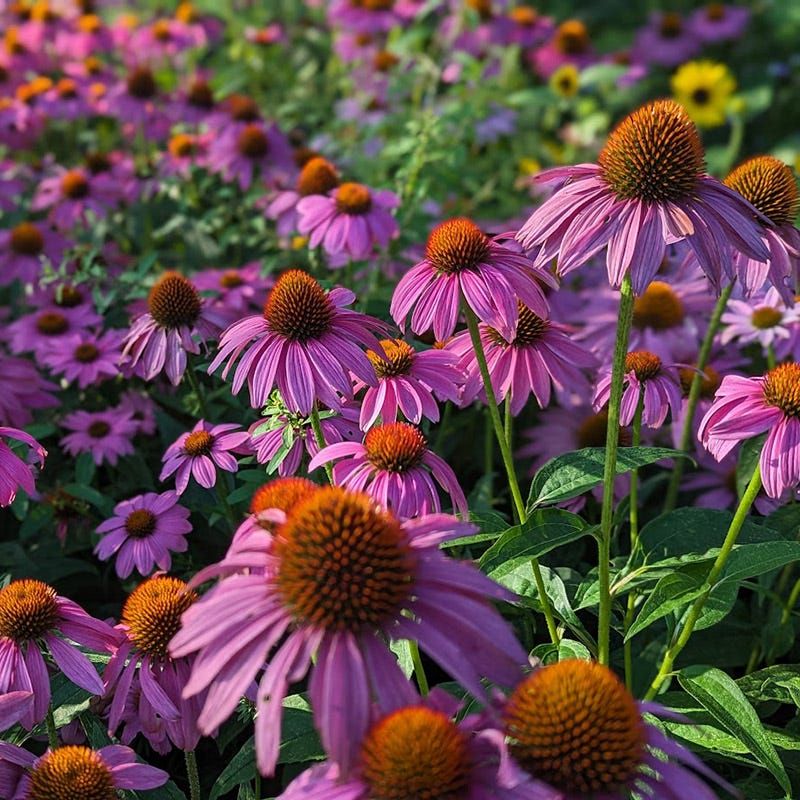
Sturdy and cheerful, coneflower is one of those plants that just keeps giving. Its daisy-like blooms sit on strong stems in purple, pink, orange, red, and yellow, and newer varieties push the color range further every year.
Though it starts flowering in summer, coneflower earns its place here by carrying that color well into fall, especially if you snip off faded blooms to encourage more. The raised, spiky central cone gives each flower a bold, sculptural look.
Pollinators flock to it all season, and if you leave the seed heads standing, goldfinches will happily clean them out through autumn. Drought-tolerant and long-lived, echinacea rewards very little effort with a very long show.
15. Yarrow
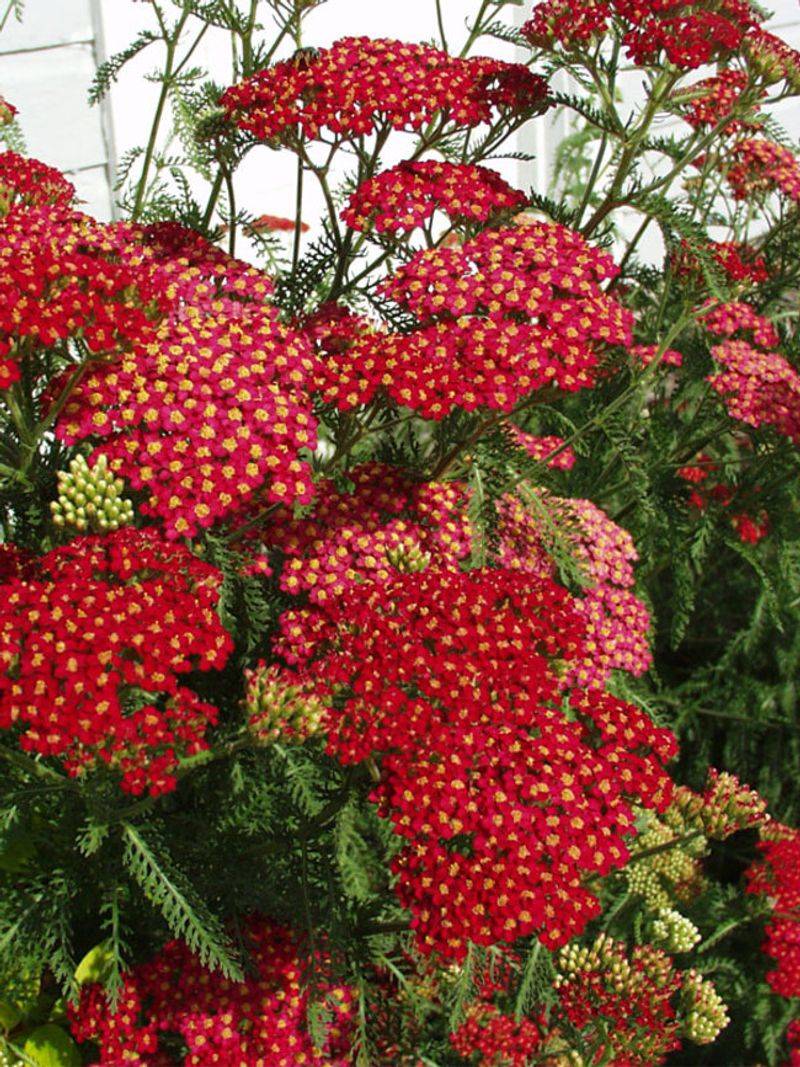
Flat-topped and feathery, yarrow brings a different shape to the party. The ‘Paprika’ variety in particular lights up with bright red flower plates held on sturdy stems that refuse to flop, even late in the season.
Its finely cut, ferny foliage adds texture below the blooms, and butterflies treat those flat landing pads like a favorite diner. The color holds and gently fades to softer tones as fall moves along.
Yarrow is famously easygoing, thriving in heat and dry soil while asking for almost nothing in return. Cut the flowers for fresh or dried arrangements, and the plant will often send up more, keeping the garden colorful right through the late season.
16. Agastache (Blue Fortune)
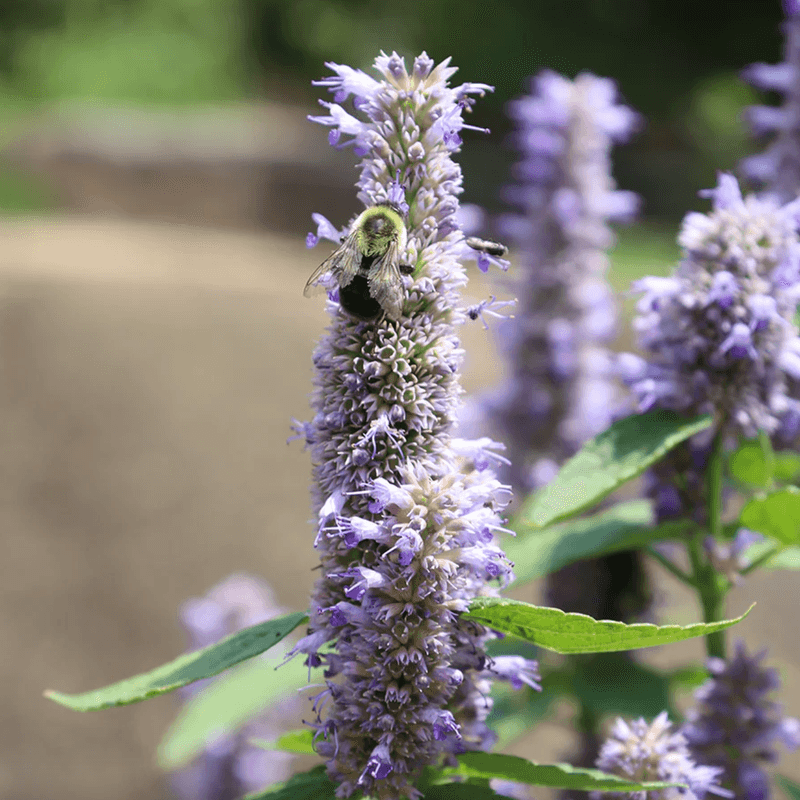
Bees seem to have agastache on speed dial. ‘Blue Fortune’ sends up dense spikes packed with violet-blue flowers that stay busy with pollinators from summer into early autumn.
Crush a leaf and you will catch a licorice-mint scent that gives the plant its common name of hyssop. That fragrance, combined with the upright flower spikes, adds both aroma and vertical interest to the border.
It handles heat and dry conditions with ease, making it a smart pick for sunny spots that bake in late summer. Long-blooming and low-maintenance, agastache keeps the color and the buzz going well past the peak of the season.
17. Caryopteris (Bluebeard)
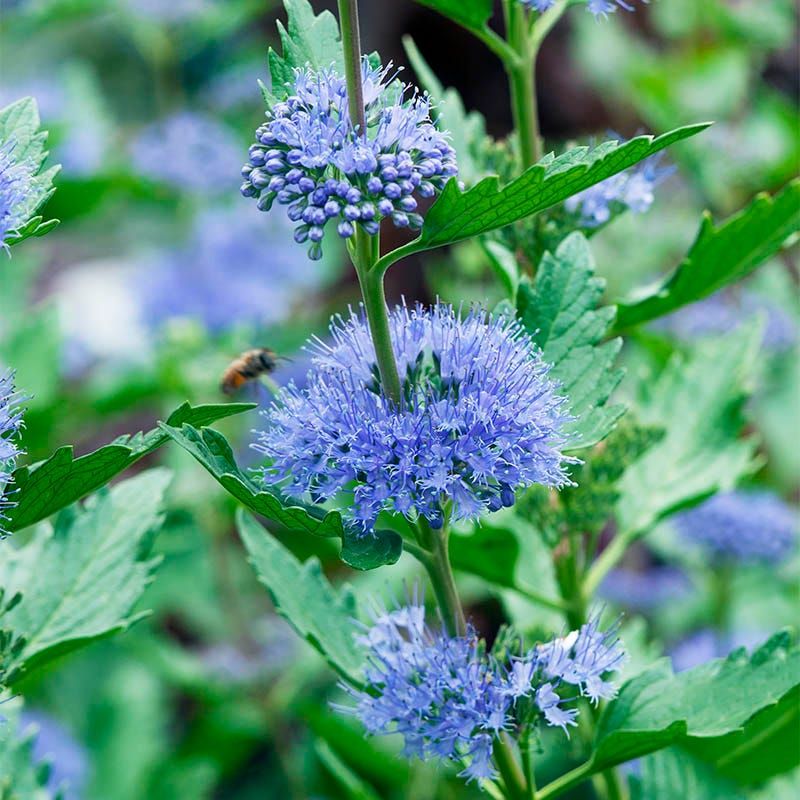
Timing is everything, and caryopteris nails it. Often grown as a small perennial shrub, bluebeard bursts into fuzzy blue flowers right as monarch butterflies pass through on their fall migration.
The blooms cluster along the stems in a soft, misty blue that pairs beautifully with the plant’s gray-green, aromatic leaves. That cool color is a welcome change when so much of the fall palette leans toward warm reds and golds.
Bees and butterflies swarm it while it flowers, turning a single shrub into a pollinator hotspot. Cut it back in early spring, give it full sun, and it will bloom on new growth right when you need late-season color most.
18. Helenium (Sneezeweed)
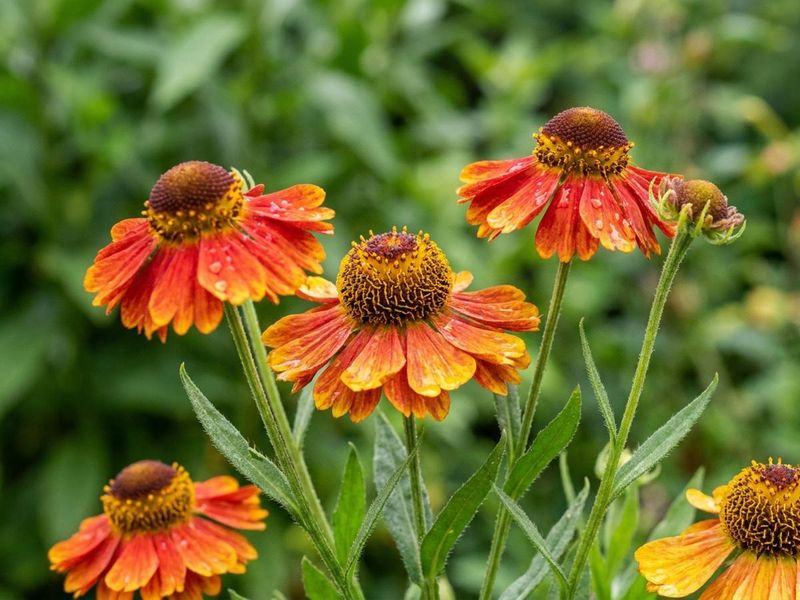
If fall had an official flower, helenium would be a strong contender. Its daisy-like blooms come in fiery yellow, orange, red, and rich mahogany, often streaked together on the same flower like a sunset caught mid-sky.
Despite the alarming nickname of sneezeweed, it will not make you sneeze; the name comes from an old, unrelated use of the dried leaves. What it will do is set the late-season garden ablaze with warm, saturated color.
Butterflies find the domed centers irresistible, and the flowers keep coming for weeks if you deadhead. Plant it in full sun with moist soil, and helenium becomes one of the boldest sources of autumn fire you can grow.
19. Toad Lily
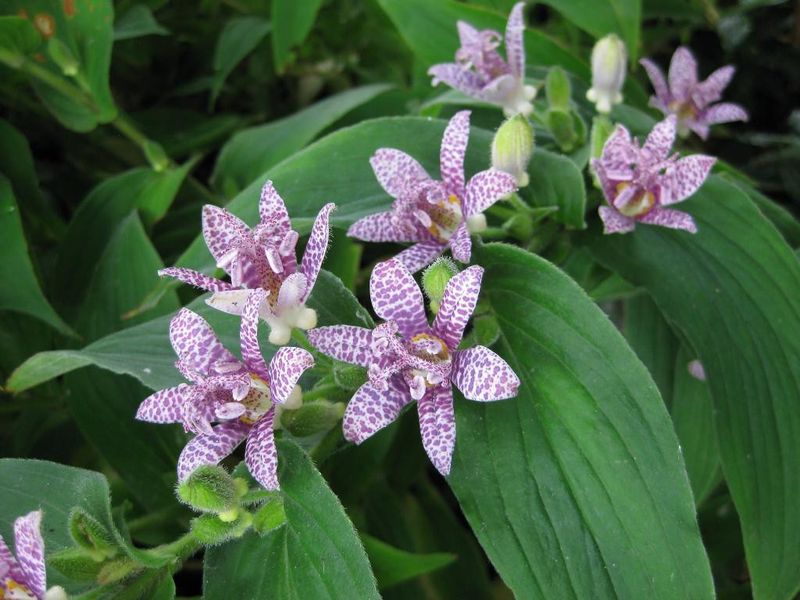
Look closely at a toad lily and you might forget it is October at all. Its small, orchid-like flowers are freckled with purple spots on white or lilac petals, looking far too exotic for a shady corner of a US backyard.
Shade is exactly where it excels, which makes it precious. Most late bloomers demand full sun, so a plant that lights up dim, wooded spots in late summer and fall fills a real gap in the garden.
Because the flowers are small and detailed, toad lily rewards a closer look, tucked along a path where you will pass by often. Give it rich, moist soil and dappled light, and it will hand you delicate, unusual color when little else is blooming in the shade.