
22 Fast-Spreading Perennials That Fill Empty Gaps Fast Without Ever Taking Over
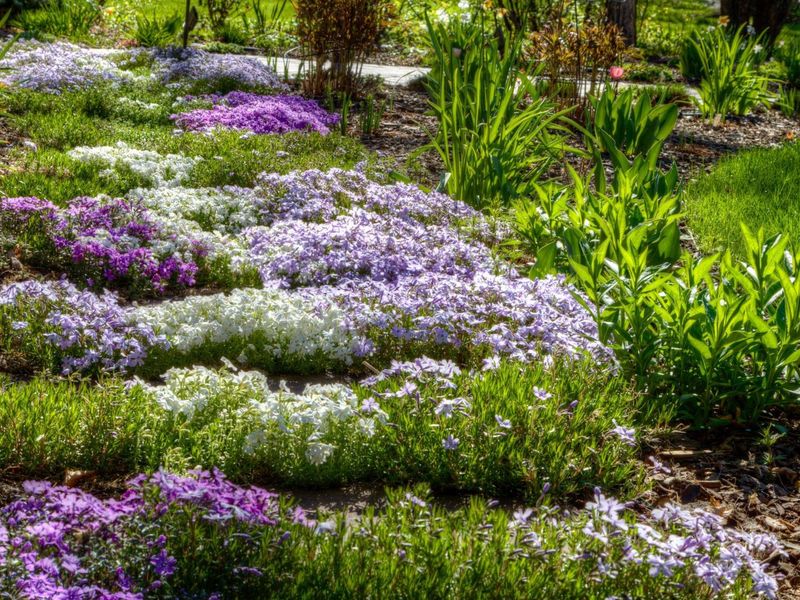
Bare patches in a flower bed have a way of nagging at you every time you walk past. The good news is that some perennials spread quickly enough to cover that empty soil in a season or two, yet they know how to stay in their lane instead of bullying the neighbors. That balance is exactly what makes them worth planting, especially in a busy backyard where you want results but not a weeding headache. Here are 22 dependable spreaders that fill gaps fast and play nice with everyone around them.
1. Creeping Phlox (Phlox subulata)
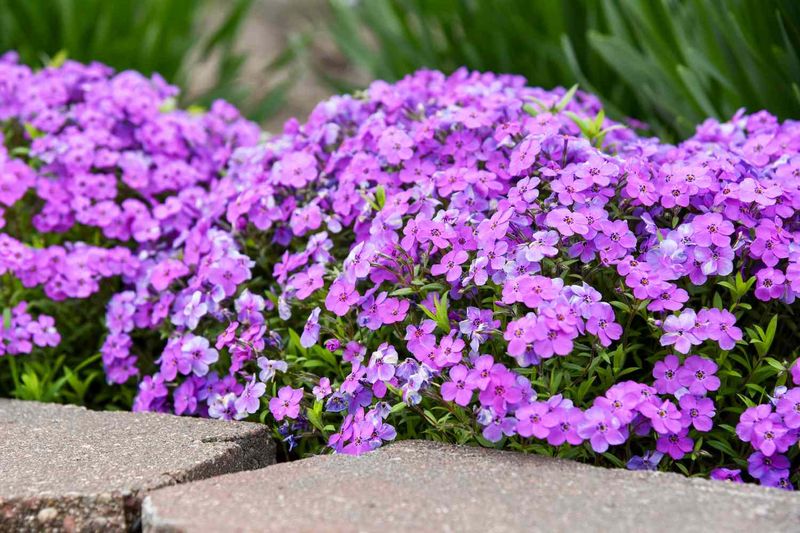
Come early spring, creeping phlox turns into a low carpet of pink, purple, or white blooms that hugs the ground like a living blanket. It fills in slopes and bed edges within a couple of seasons, yet its shallow, mat-forming roots stay put rather than sending runners across the yard.
Sunny spots with decent drainage bring out its best color, and it shrugs off dry spells once it settles in. After the flowers fade, the needle-like green foliage keeps things tidy all summer.
Gardeners in the Northeast and Midwest lean on it for rock gardens and stone walls, where it spills over edges without swallowing them. A light shearing after bloom keeps it dense and encourages fuller growth the following year.
2. Hardy Geranium (Geranium ‘Rozanne’)
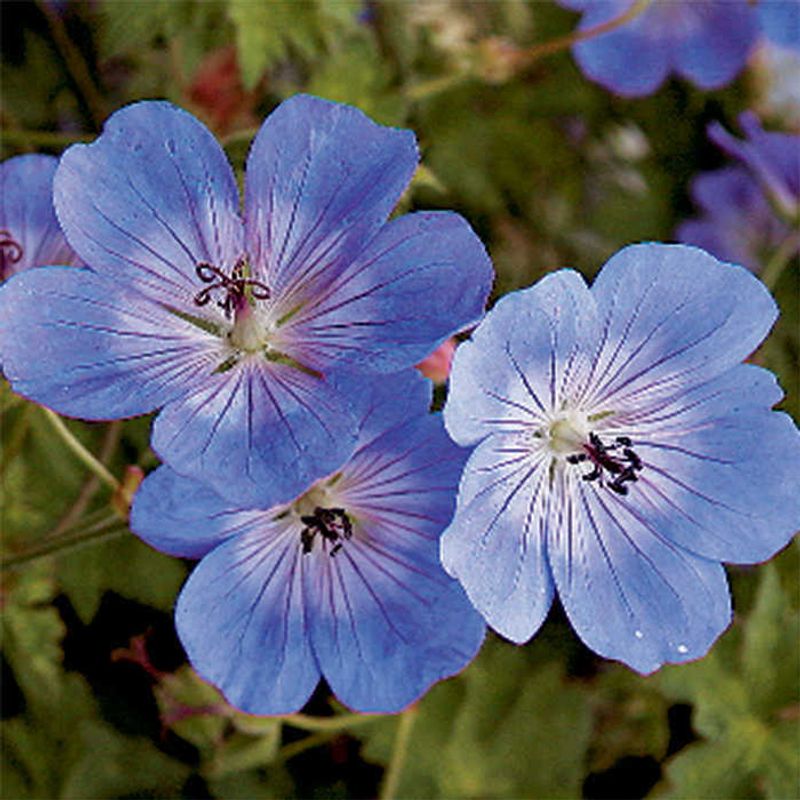
Few perennials work as hard for as long as Rozanne, a hardy geranium that keeps pumping out violet-blue flowers from early summer until frost. It weaves gently between shrubs and taller plants, softening gaps without elbowing anyone aside.
The mounding clumps expand a little wider each year, but they grow outward at a polite pace and never seed themselves into a nuisance. That predictability is why it earned a Perennial Plant of the Year award back in 2008.
Partial shade or full sun both suit it, and it forgives less-than-perfect soil. When midsummer heat leaves it looking floppy, a quick trim brings a fresh flush of leaves and blooms.
3. Creeping Thyme (Thymus serpyllum)
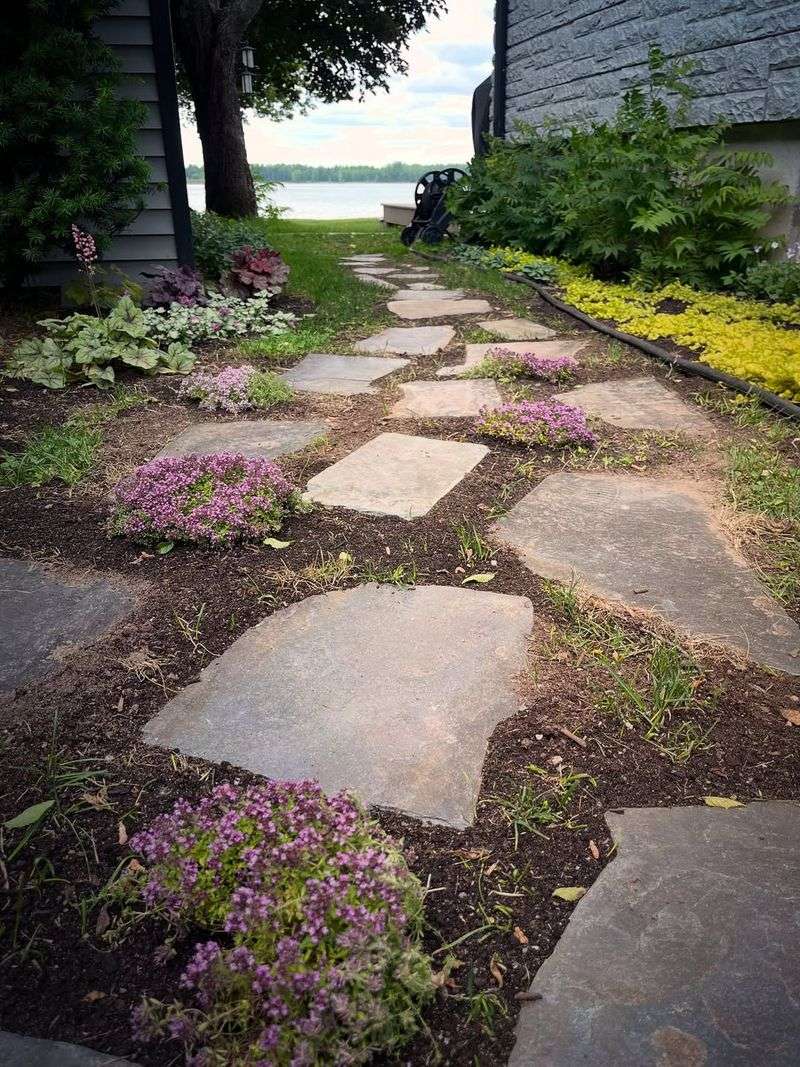
Step on a patch of creeping thyme and it releases a warm, herbal scent that instantly makes a path feel more inviting. This tough little plant spreads across the ground in a tight mat, filling cracks between pavers and edging walkways where taller plants would struggle.
Tiny pink or purple flowers cover it in summer, drawing in bees while the low growth keeps weeds from muscling in. It handles foot traffic better than almost any other flowering ground cover.
Hot, dry, sandy spots that frustrate other perennials are exactly where thyme thrives. Its spreading habit stays controlled because it roots as it creeps, so you can lift and relocate stray pieces with almost no effort.
4. Coral Bells (Heuchera)
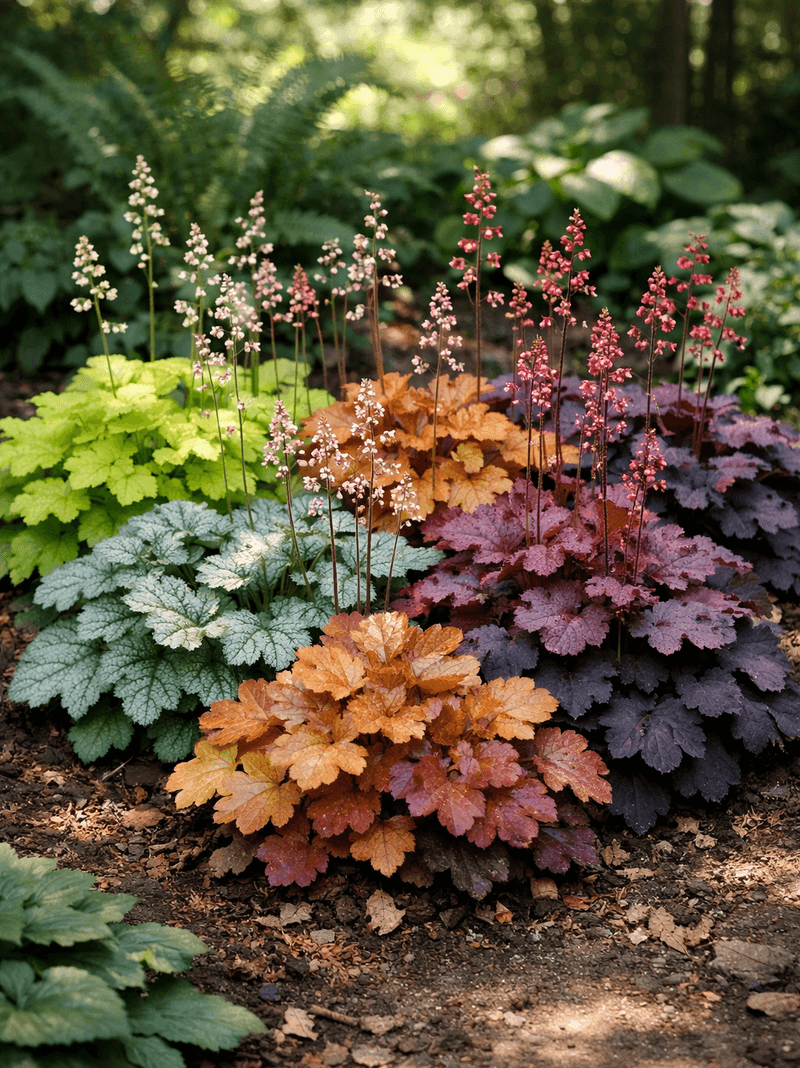
Grown mostly for foliage that ranges from lime green to deep burgundy to silvery purple, coral bells brighten shady corners where flowers are hard to come by. The clumps widen steadily season after season, knitting together into colorful drifts that never turn invasive.
Airy stems of small bell-shaped flowers rise above the leaves in late spring, and hummingbirds notice them long before you do. The mounds hold their shape, so they blend into borders without crowding neighbors.
Dappled shade in most US zones keeps the leaf colors vivid, though many newer varieties tolerate morning sun. Dividing an established clump every few years gives you free plants to fill gaps elsewhere in the yard.
5. Catmint (Nepeta)
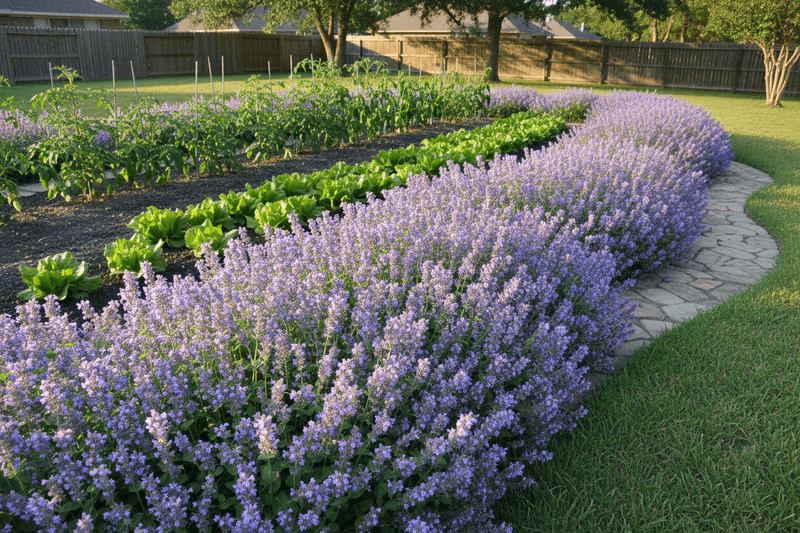
Long, lavender-blue flower spikes and soft gray-green leaves give catmint a relaxed, cottage-garden charm that fills space beautifully. It bulks up into a generous mound within a single season, covering bare ground with a haze of color that lasts for months.
Unlike the catnip that sends felines wild, most ornamental catmints are sterile hybrids, so they spread by widening their clump rather than seeding all over the place. That makes them a tidy choice for edging paths and softening bed fronts.
Drought and heat barely faze it, and a shear in midsummer resets the whole plant for a second bloom. Bees and butterflies treat it like a favorite diner from June onward.
6. Lady’s Mantle (Alchemilla mollis)
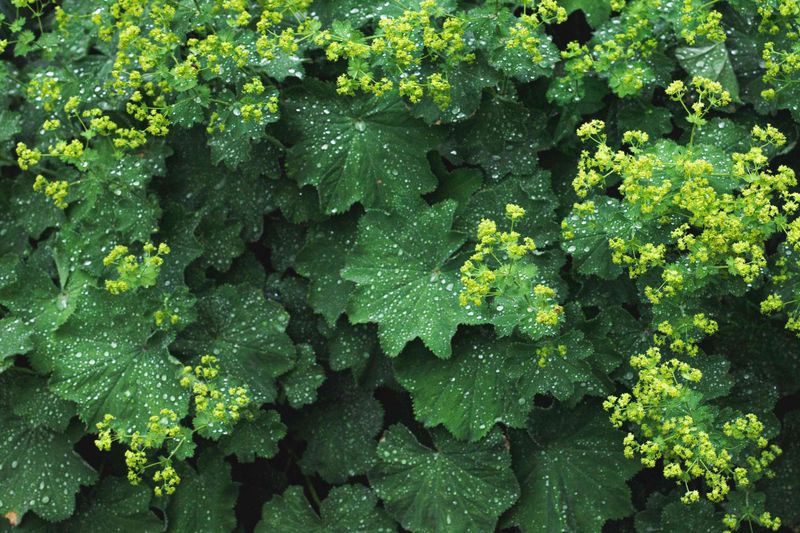
Raindrops bead up like tiny silver marbles on the scalloped leaves of lady’s mantle, a detail that has charmed gardeners for generations. The fuzzy foliage forms rounded clumps that expand year by year, filling gaps at the front of a border with a soft, ruffled texture.
Frothy sprays of chartreuse flowers float above the leaves in early summer, pairing well with almost anything nearby. It self-sows modestly, but the seedlings are easy to pull or move where you actually want them.
Part shade and moist soil keep it lush, though it copes with sun in cooler northern zones. Cutting it back after flowering keeps the mound fresh and stops any unwanted spreading.
7. Sedum ‘Angelina’ (Sedum rupestre)
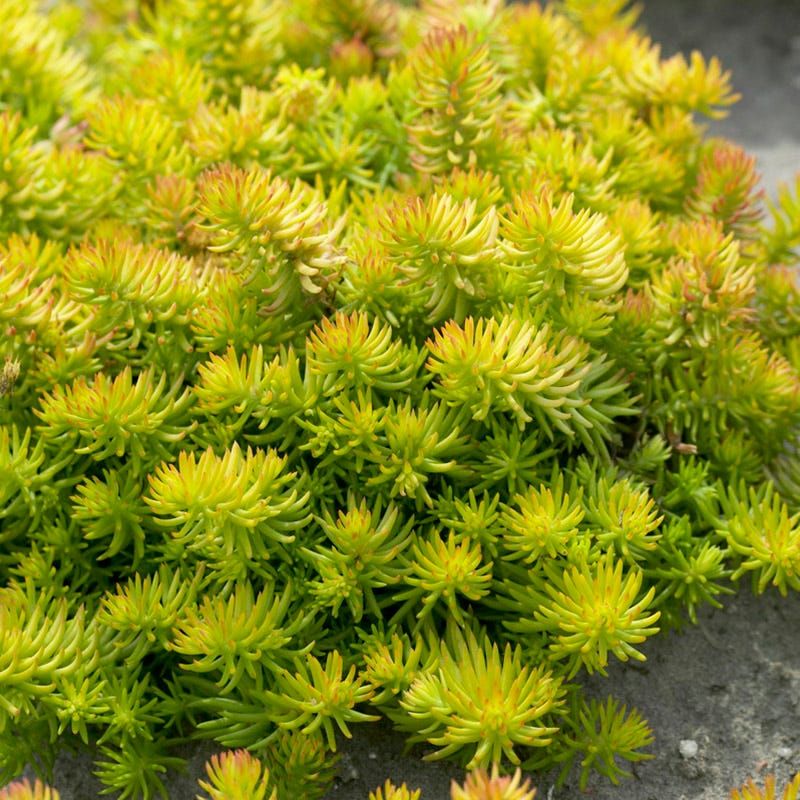
Golden needle-like foliage that turns coppery-orange in cold weather makes Angelina stonecrop stand out even without a single flower. This low-growing sedum spreads across gravelly, poor soil that would starve most plants, forming a bright chartreuse mat as it goes.
Because it roots shallowly and creeps rather than leaps, it stays easy to manage. Snap off a piece, press it into bare soil, and it usually takes hold on its own.
Full sun and sharp drainage suit it perfectly, which is why it shines in rock gardens, hell strips, and container spillovers across drought-prone parts of the country. Winter turns it a rich amber, giving the garden color when little else offers any.
8. Black-Eyed Susan (Rudbeckia fulgida)
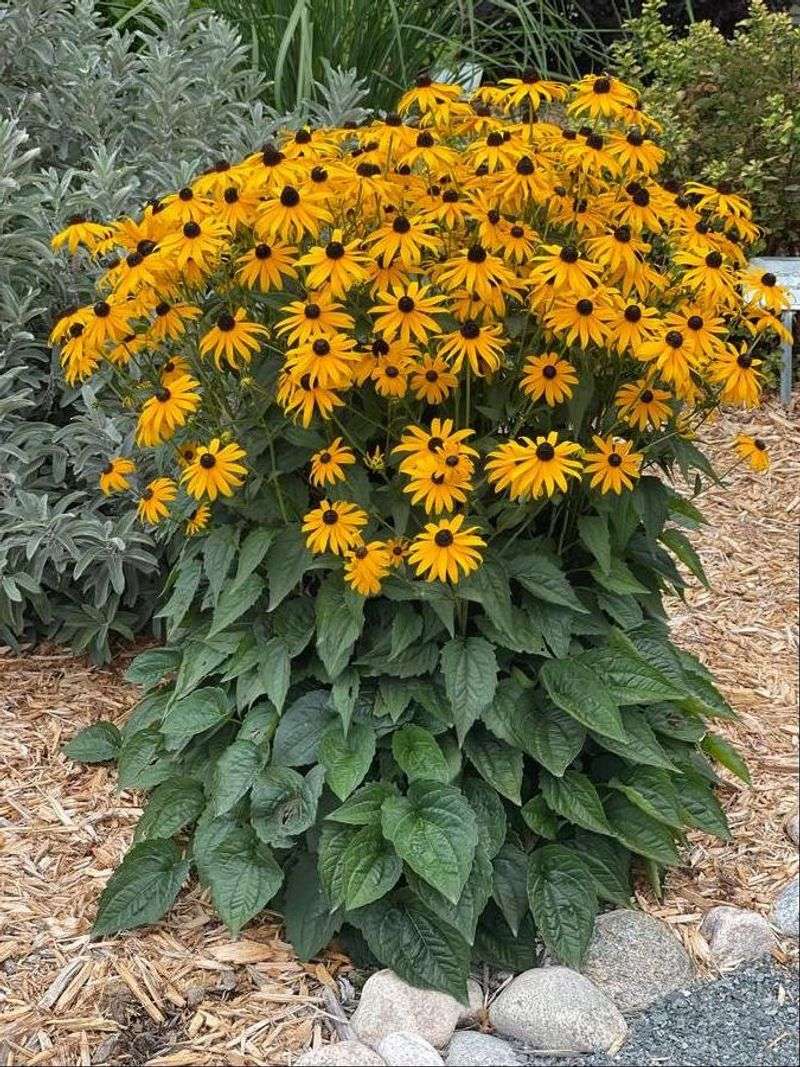
Golden-yellow petals circling a dark chocolate center make black-eyed Susan one of the most cheerful sights of late summer. The plant clumps outward reliably, filling mid-border gaps with waves of bloom that keep going until the first hard frost.
Variety matters here: the named clumping type Goldsturm behaves itself, spreading steadily without the aggressive self-seeding of some wild cousins. Butterflies swarm the flowers, and songbirds crack open the seed heads through winter.
Sun and average soil are all it asks, and it holds up through heat and humidity across most of the eastern and central states. Leaving the spent flower heads standing feeds the birds and adds structure to a dormant garden.
9. Lamb’s Ear (Stachys byzantina)
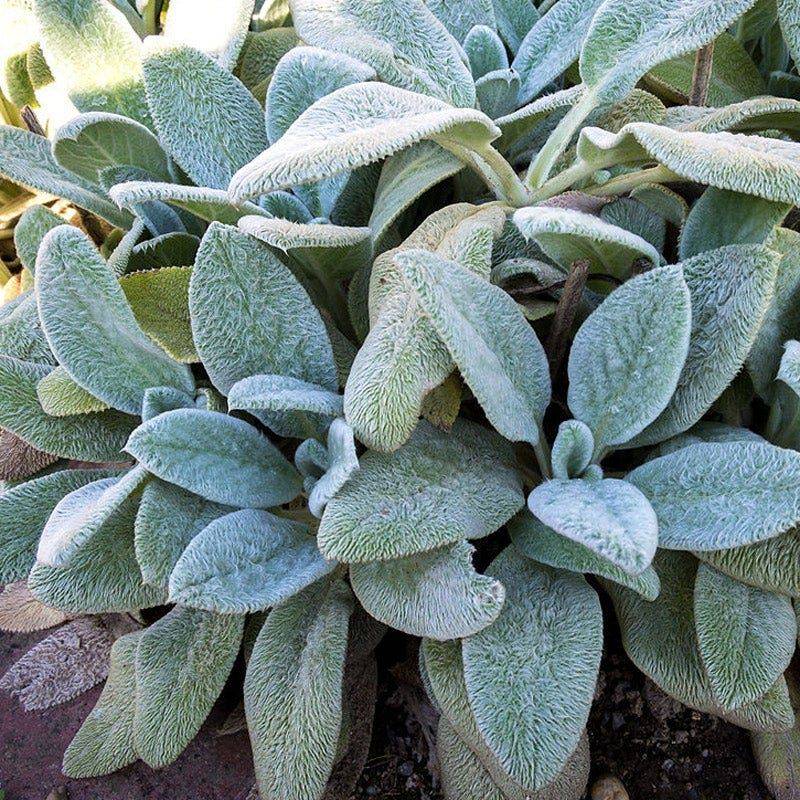
Kids and grown-ups alike can’t resist touching lamb’s ear, whose silvery leaves feel exactly as soft and fuzzy as the name suggests. The velvety rosettes spread outward into a shimmering ground cover that lights up the front of a border in full sun.
It creeps along at a gentle, forgiving pace, so filling a gap never turns into a takeover. Any stems that wander too far pull up with a light tug.
Poor, dry soil actually keeps it healthiest, since soggy conditions can rot the fuzzy leaves. The pale foliage cools down hot color schemes and reflects moonlight, giving evening gardens a soft glow.
10. Threadleaf Coreopsis (Coreopsis verticillata)
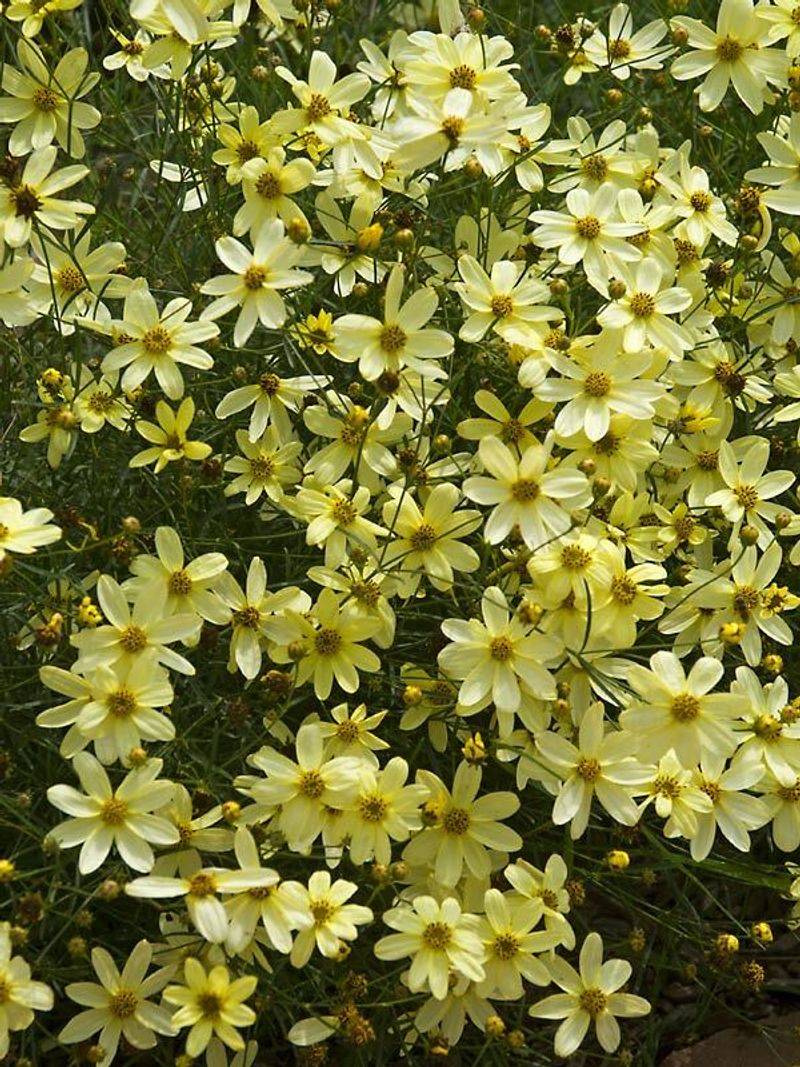
Feathery, fine-textured foliage topped with hundreds of small daisy-like flowers gives threadleaf coreopsis an airy, sunshine-yellow presence all summer long. The plant expands by slowly creeping roots, forming a soft mound that fills space without any bullying behavior.
Popular varieties like Moonbeam and Zagreb stay compact and bloom for months if you give them an occasional trim. Pollinators love the flowers, and the delicate leaves add a lacy contrast next to bolder-leaved neighbors.
Heat, drought, and lean soil don’t slow it down, which makes it a favorite from the Great Plains to the Southeast. Shearing it back after the first big flush keeps the flowers coming right into fall.
11. Creeping Jenny (Lysimachia nummularia ‘Aurea’)
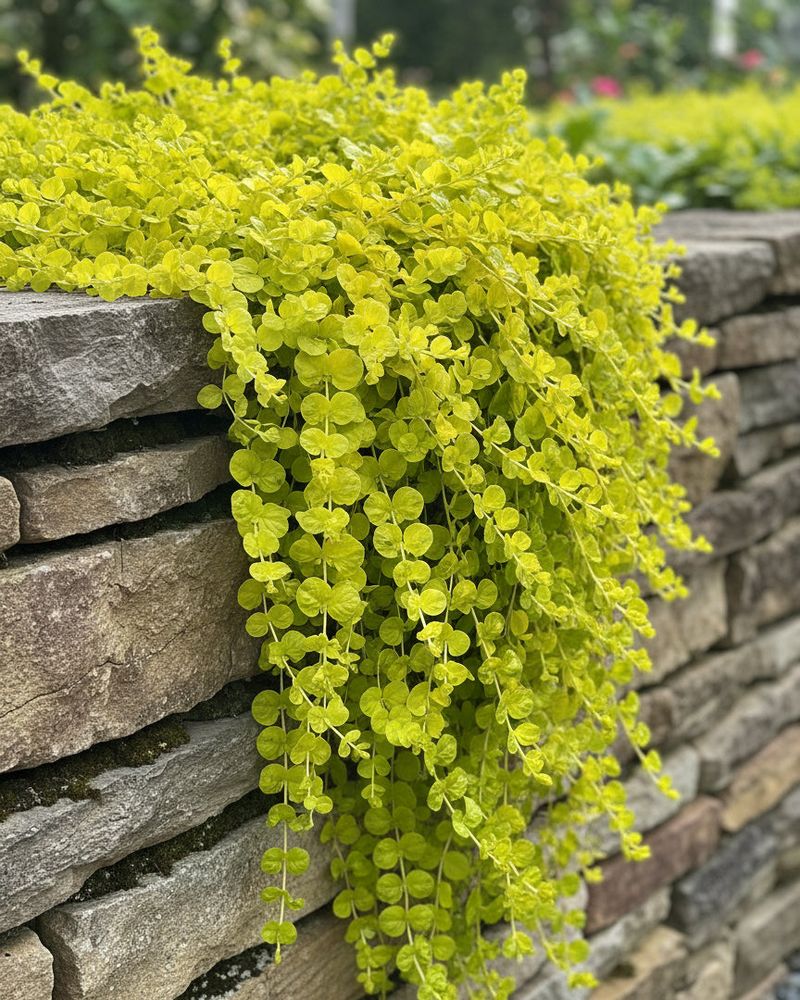
Rounded, coin-shaped leaves in bright golden-green trail along the ground and spill over container edges, giving creeping Jenny an almost glowing quality. The golden Aurea variety brightens shady, damp corners where many plants sulk.
It moves quickly to knit together a low mat, and small yellow flowers dot it in summer. The trick is choosing the golden form and giving it a defined space, since it stays far more manageable than its plain green cousin.
Moist soil in sun or part shade suits it best, and it takes root wherever a stem touches down. Pulling back stray runners now and then keeps this eager spreader neatly within bounds.
12. Foamflower (Tiarella)
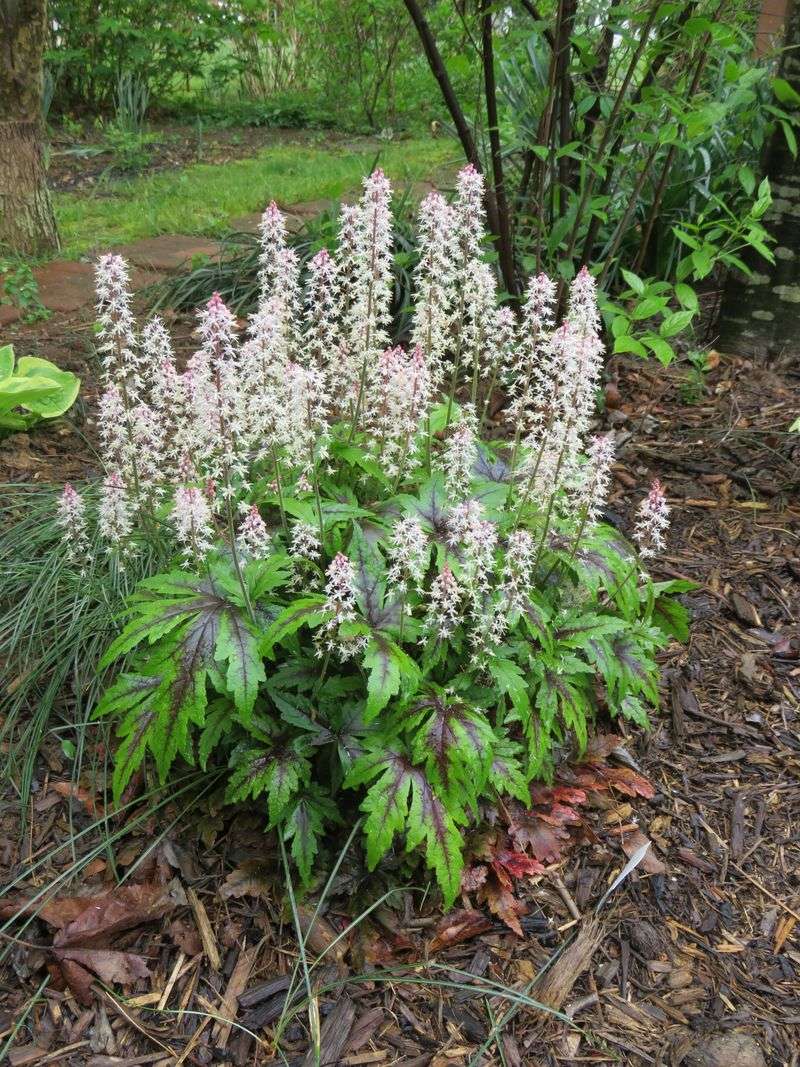
Native woodland charm sums up foamflower, whose frothy white or pink spring blooms rise above deeply lobed leaves like little clouds on stems. It spreads by short runners to form a soft carpet in shade, filling those tricky dark spots under trees.
The growth stays gentle and clumping, so it blankets ground gradually instead of overwhelming a bed. Many varieties show striking dark veining that keeps the foliage interesting long after the flowers finish.
Rich, moist soil in dappled shade mirrors its native forest floor, making it a natural fit for eastern US gardens. Pair it with ferns and hostas for a layered woodland look that fills in more each year.
13. Ajuga (Ajuga reptans)
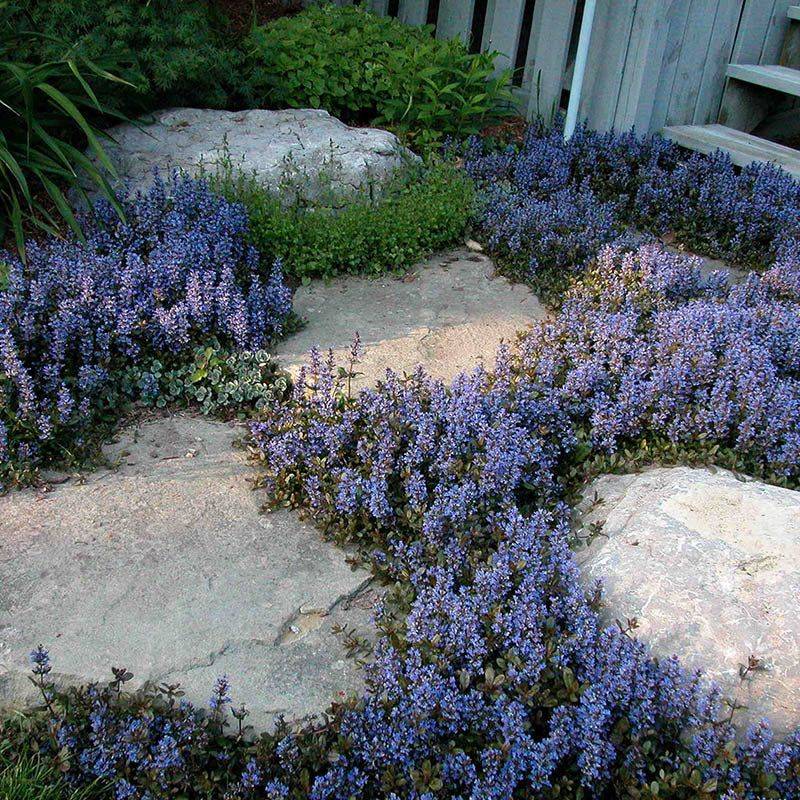
Glossy rosettes in bronze, burgundy, or variegated tones make ajuga a standout ground cover, and in late spring it throws up short spikes of blue flowers that carpet the whole patch. It spreads by runners to fill shady gaps fast, choking out weeds as it goes.
Choosing a well-behaved cultivar like Chocolate Chip keeps the spread in check, since the compact types stay far tidier than the older rampant forms. The dense mat is one of the few ground covers that can genuinely outcompete weeds.
Part shade and average soil are all it needs, and it tolerates a range of conditions across the country. Edging the patch with a spade once a year keeps its enthusiasm politely contained.
14. Salvia ‘May Night’ (Salvia nemorosa)
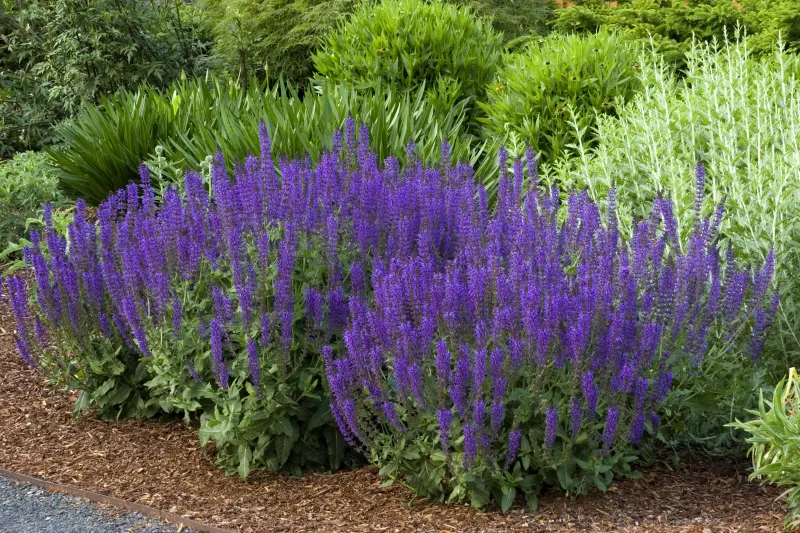
Deep violet flower spikes standing at attention give May Night salvia a bold, upright look that fills the middle of a border with rich color. The clump widens dependably each year, adding presence to a bed without any tendency to run wild.
Bees and hummingbirds work the spikes constantly, and cutting the plant back after the first bloom brings a strong second show later in the season. It was named Perennial Plant of the Year in 1997 for exactly this kind of reliability.
Full sun and well-drained soil keep it sturdy, and it laughs off heat and drought once established. The aromatic foliage tends to be left alone by deer and rabbits, a bonus in many backyards.
15. Bergenia (Bergenia cordifolia)
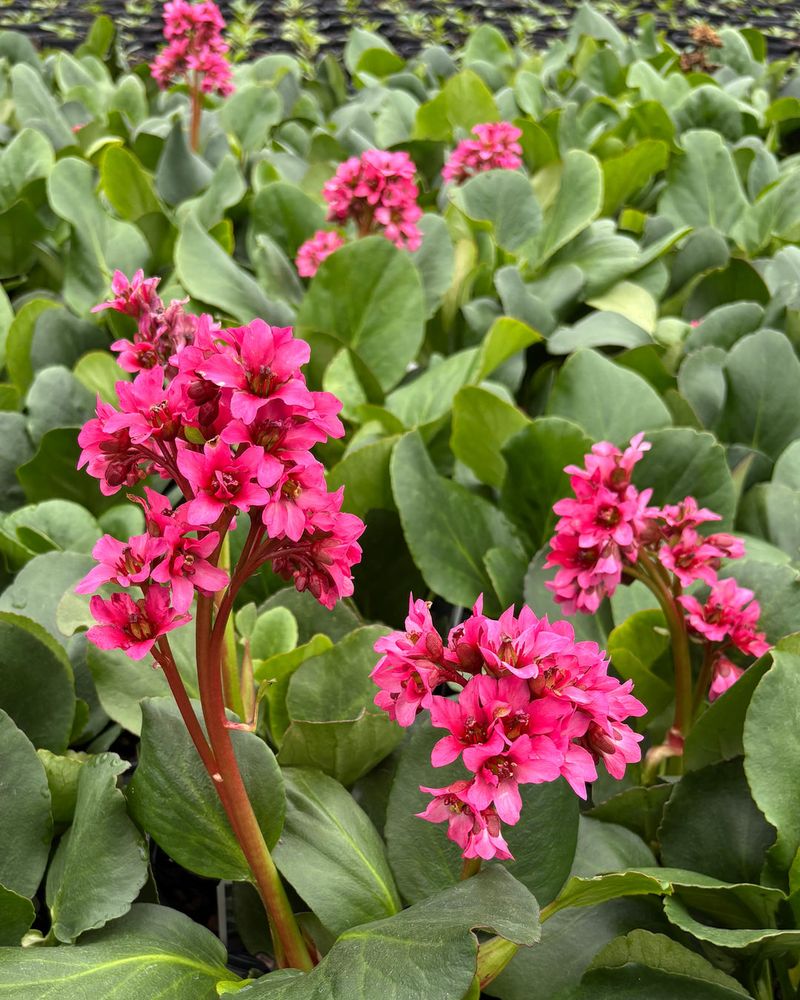
Big, glossy, cabbage-like leaves earned bergenia the nickname pigsqueak, thanks to the sound the leaves make when rubbed between fingers. Those bold leaves turn burgundy in cold weather, and pink flower clusters pop up in early spring on thick stems.
The plant spreads by slowly creeping rhizomes, forming a dense, weed-smothering clump that never gets out of hand. Its year-round foliage makes it a workhorse for filling shady front-of-border gaps.
Sun or shade both work, and it tolerates poor soil and neglect with remarkable grace. Snipping off any tattered winter leaves in early spring keeps the clump looking crisp and refreshed.
16. Daylily (Hemerocallis)
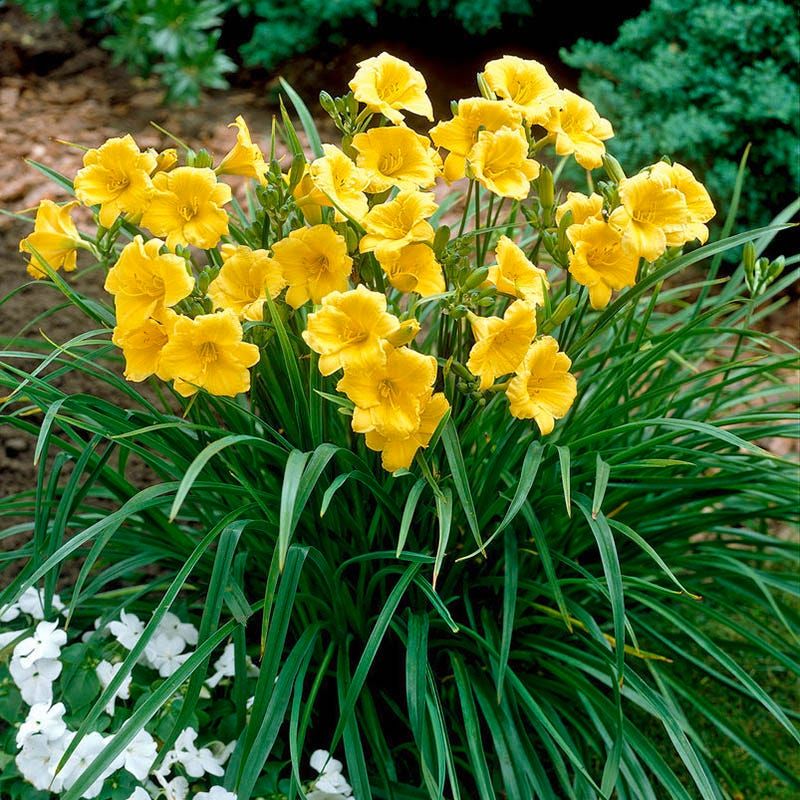
Each daylily bloom lasts only a single day, but a healthy clump throws so many buds that the show rolls on for weeks. The fountain of strappy green leaves fills space beautifully even between flushes, and the clump fattens up steadily year after year.
Named garden varieties multiply by expanding their crown rather than seeding around, so you get bigger, better clumps without any invasion. Repeat bloomers like Stella de Oro keep the color coming from early summer into fall.
Just about any soil and sun exposure will do, which is why daylilies thrive from Maine to Texas. Dividing an overgrown clump every few years reinvigorates it and gives you plenty of plants to fill more gaps.
17. Barrenwort (Epimedium)
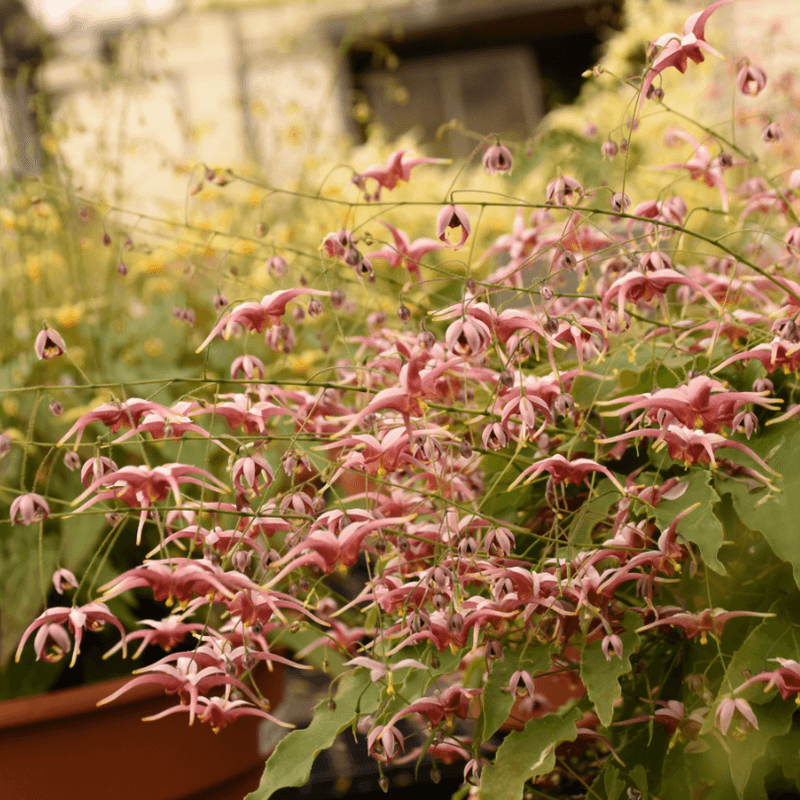
Delicate, spider-like flowers dangle above heart-shaped leaves in spring, giving barrenwort a fairy-garden quality that belies its toughness. Once settled, it handles the dry shade under trees better than almost any other perennial, a spot most gardeners dread.
The clumps spread outward slowly by shallow rhizomes, weaving into a graceful ground cover without ever bolting across a bed. New spring foliage often emerges tinted red or bronze before settling into green.
Dry, root-filled shade is where it earns its keep, thriving where hostas and ferns struggle for water. Cutting the old foliage down in late winter lets the fresh leaves and flowers shine in early spring.
18. Hardy Ice Plant (Delosperma)
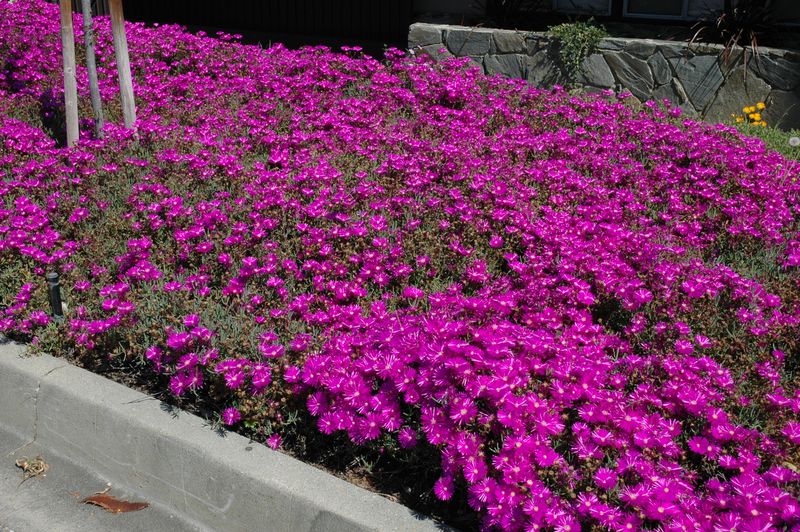
Neon-bright daisy-like flowers in magenta, orange, or yellow blanket the hardy ice plant so thickly in summer that you can barely see the leaves. This succulent ground cover spreads into a low mat across hot, dry, sunbaked ground where little else will grow.
The fleshy foliage stores water, so it sails through drought while covering gaps quickly. Its spread stays flat and controlled, making it ideal for slopes, gravel gardens, and the strip along a driveway.
Sharp drainage is the one non-negotiable, since wet winter soil is its only real enemy. In many western and mountain states it stays evergreen, offering color for a surprisingly long stretch of the year.
19. Woodland Phlox (Phlox divisa)
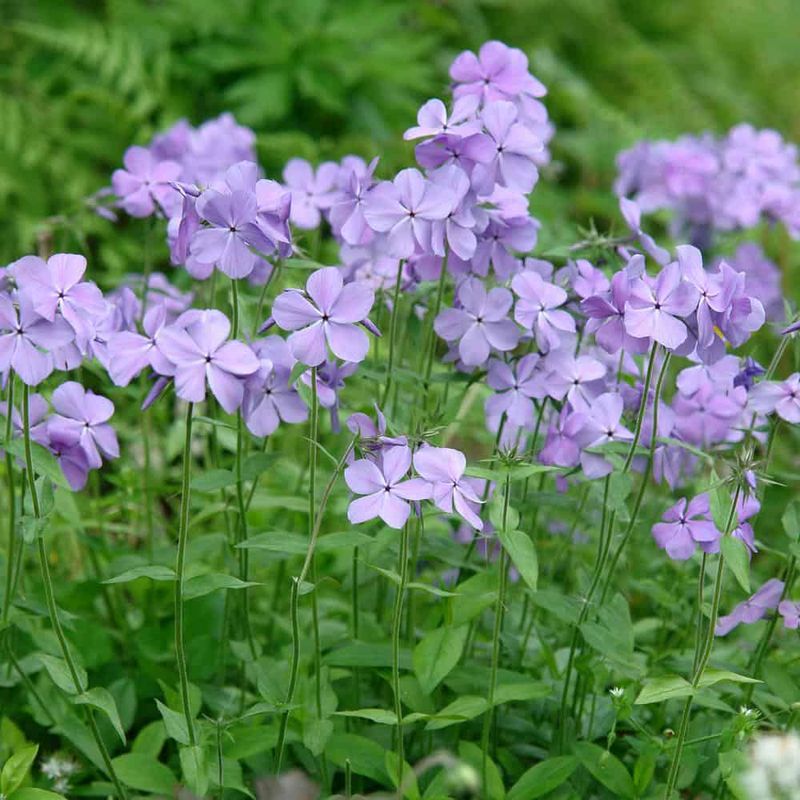
Unlike its ground-hugging cousin, woodland phlox lifts sweetly fragrant blue-lavender flowers about a foot off the ground in mid-spring, perfuming shady gardens. This native perennial spreads by short rooting stems to form loose colonies that fill woodland gaps gently.
The gradual, well-mannered spread makes it a dream for naturalizing under trees without any fear of it running amok. Butterflies and early native bees rely on it as a spring nectar source.
Moist, humus-rich soil in dappled shade suits it best, mimicking the eastern forests it calls home. Combining it with ferns and wild ginger builds a self-filling native carpet that improves every year.
20. Bloody Cranesbill (Geranium sanguineum)
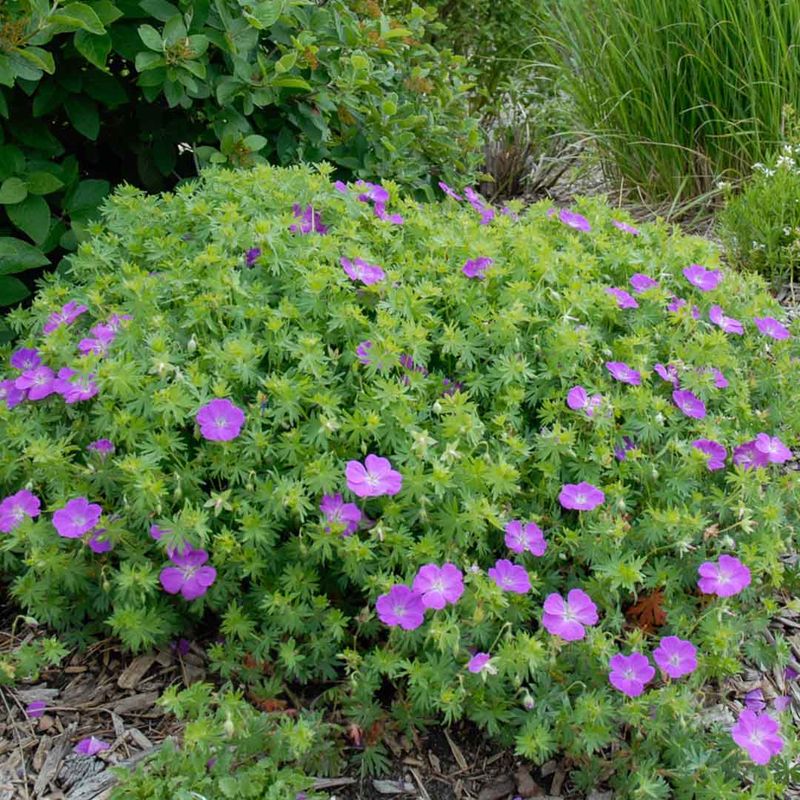
Magenta-pink flowers scattered over finely cut leaves give bloody cranesbill a jewel-box look from late spring well into summer. The mounding clumps knit together into a dense, weed-suppressing cushion that expands modestly year after year.
Autumn adds a bonus, when the foliage flushes deep red and gives the plant its dramatic common name. It fills gaps at the border’s edge without any aggressive spreading, staying exactly where you tuck it.
Full sun or light shade both work, and it tolerates poor, rocky soil and dry spells with ease. A quick shearing after the main bloom tidies the mound and can coax out a few more flowers.
21. Sweet Woodruff (Galium odoratum)
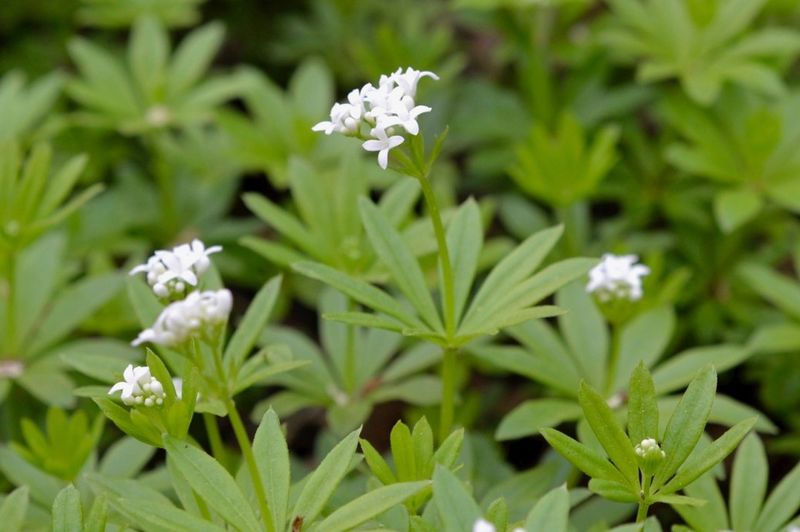
Whorls of bright green leaves circle the stems of sweet woodruff like little green stars, topped by clouds of tiny white flowers in late spring. It spreads by creeping roots to form a fresh, low carpet in shade, filling those cool spots under shrubs and trees.
Crushed or dried, the foliage smells of fresh-cut hay, a scent that has flavored spring drinks in Germany for centuries. The spread is quick but shallow-rooted, so keeping it in bounds takes nothing more than an occasional pull.
Cool, moist shade is where it thrives, and it will gently retreat if summer turns hot and dry. As a living mulch beneath hostas and ferns, it holds moisture and keeps weeds down all season.
22. Perennial Geranium ‘Biokovo’ (Geranium x cantabrigiense)
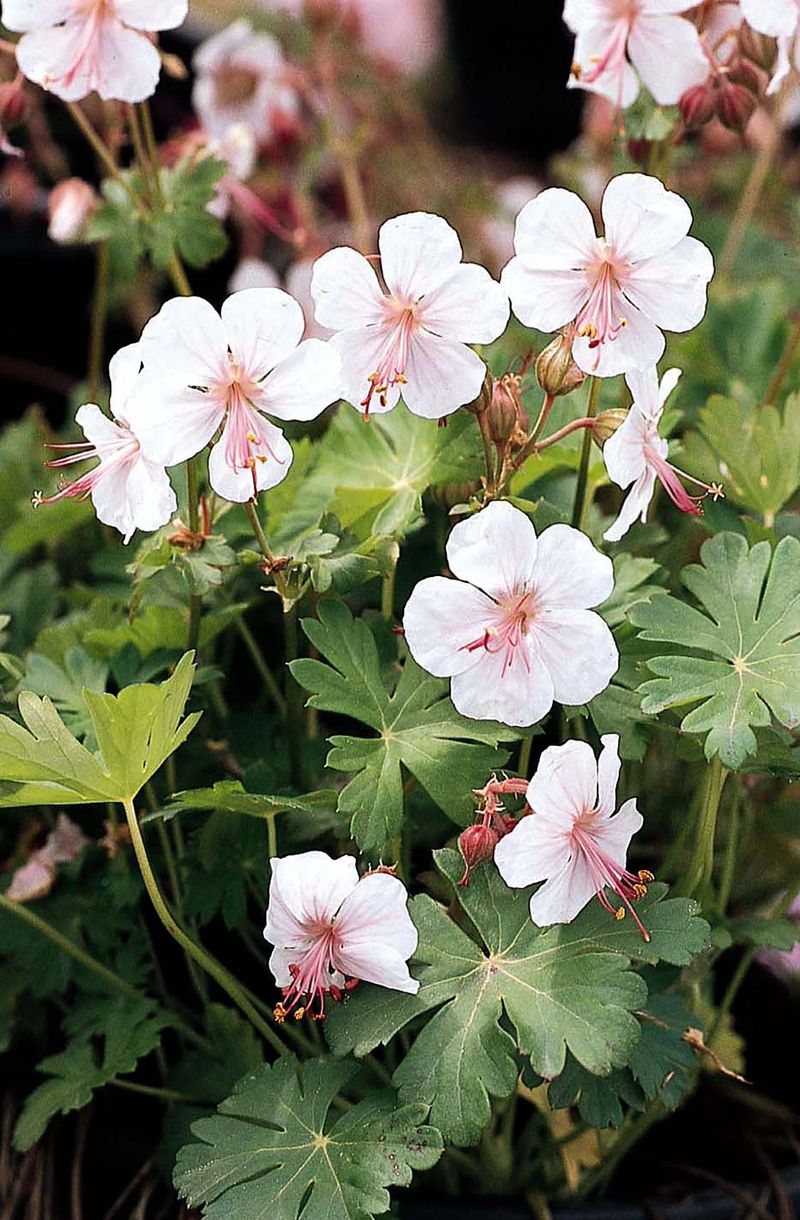
Soft blush-white flowers with pink centers cover Biokovo in late spring, but the real magic is its aromatic foliage that carpets the ground and turns fiery shades in fall. It creeps outward by rhizomes at a steady, controlled pace, filling gaps and edging paths cleanly.
The dense growth blocks weeds and holds together as a tidy, low cushion that never overwhelms companions. It shrugs off deer and rabbits, thanks to the scent released when the leaves are touched.
Sun to part shade suits it, and it handles dry conditions once its roots take hold, which makes it a low-fuss pick for busy gardeners. A single plant can knit into a broad, weed-proof mat in just a couple of seasons.