
22 Reasons Your Tomato Leaves Are Curling—With A Quick Fix For Every One
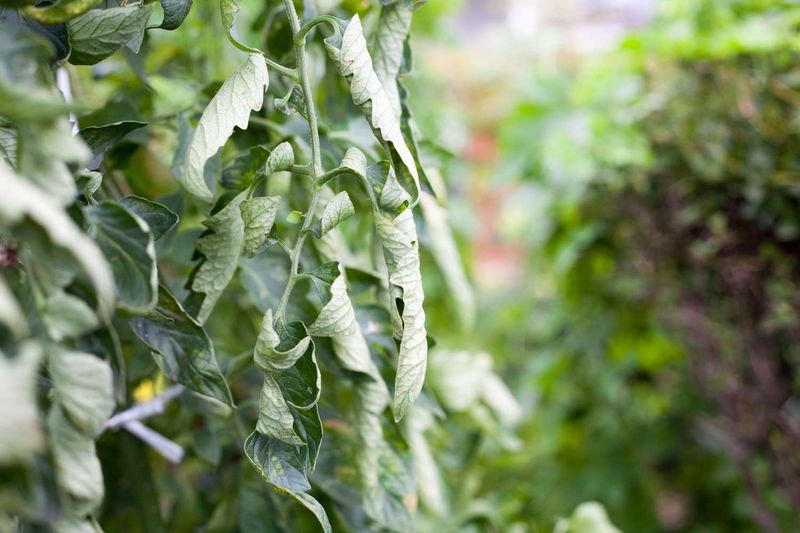
Tomato leaves talk to you long before the fruit ever ripens, and curling is one of their loudest signals. Some causes are totally harmless, while others quietly steal your harvest if you ignore them. The tricky part is that a dozen very different problems can all end in the same twisted, cupped, or rolled-up leaf. Walk through these 22 reasons and their matching fixes, and you will know exactly what your plant is trying to tell you.
1. Herbicide Drift From a Neighbor’s Lawn
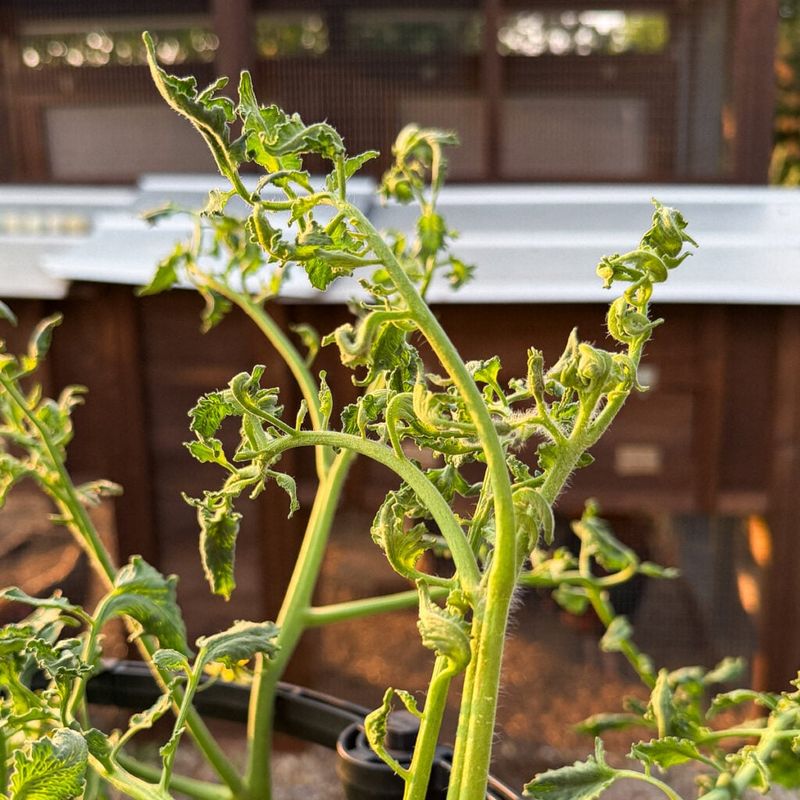
One weekend of someone spraying weed killer three yards over can leave your tomatoes twisted like corkscrews by Monday. Growth-regulator herbicides such as 2,4-D and dicamba travel on the breeze and hit tomatoes harder than almost any other backyard plant.
The giveaway is new growth that curls downward with stringy, fern-like leaflets and stems that bend into strange spirals. Fruit may come out cat-faced or hollow if the dose was heavy.
Quick fix: there is no antidote, so play defense. Rinse plants with plenty of water if drift just happened, keep them well fed and watered so they can push out clean new growth, and ask neighbors for a heads-up before they spray. Mild cases often outgrow it in two to three weeks.
2. Simple Heat Protection Roll
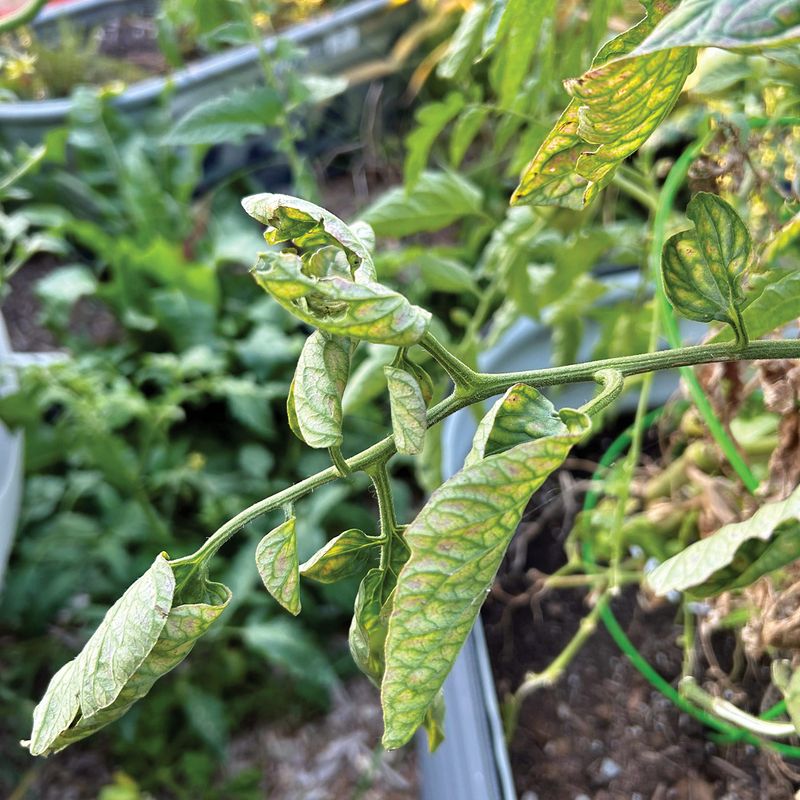
When afternoon temperatures push past the mid-90s, tomato plants roll their leaves upward and inward on purpose. It is basically the plant closing the blinds to cut down on water loss and sunburn.
You will notice the lower and outer leaves curl first, and they usually flatten back out overnight once things cool off. The plant itself stays green, firm, and otherwise healthy.
Quick fix: nothing drastic is needed since this is self-protection, not disease. Offer a bit of afternoon shade with a light row cover or shade cloth during heat spikes, mulch to keep roots cool, and water deeply in the early morning. The curl relaxes as the season settles.
3. Overzealous Pruning of Suckers
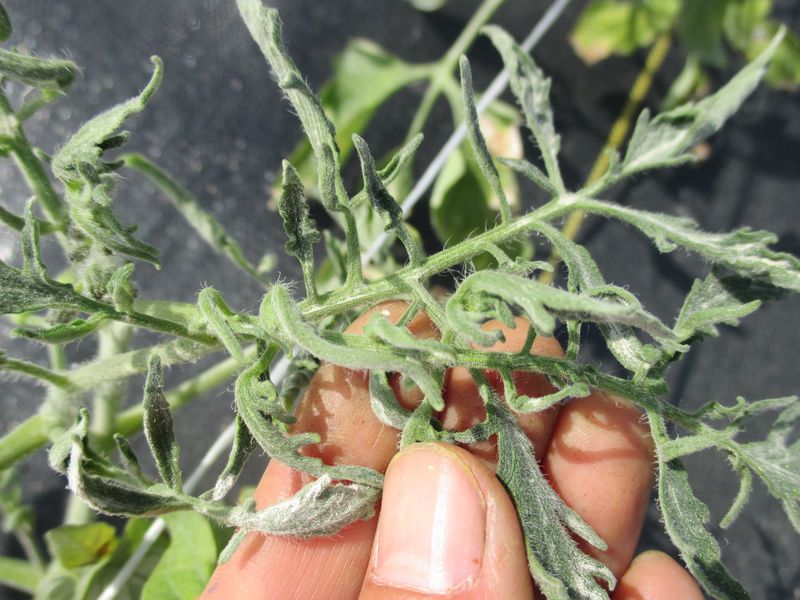
Snip too many suckers and leaves in one afternoon, and the plant reacts by curling what remains. Aggressive pruning throws off the balance between roots pumping up water and leaves that can use it.
Gardeners who strip a plant bare to boost airflow often see the top leaves cup and roll within a day or two. The plant is stressed, not sick.
Quick fix: back off the shears. Remove no more than a third of the foliage at a time, and spread heavy pruning over a couple of weeks. Prune in the cooler morning hours so the plant is not fighting heat and shock at once, and give it a steady drink afterward to recover.
4. Physiological Leaf Roll
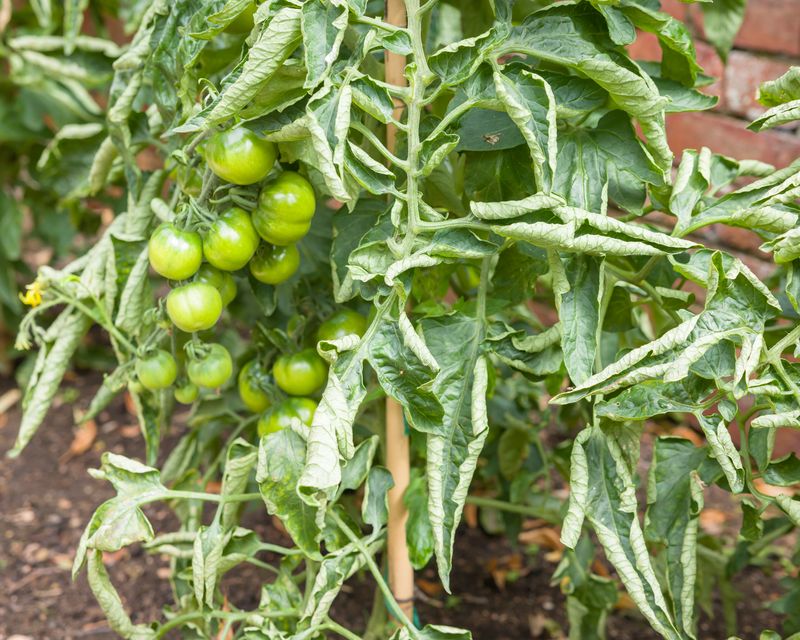
Some tomatoes, especially indeterminate heirlooms, roll their older leaves upward with zero outside cause. It shows up when the plant is growing fast and carrying a heavy load of fruit.
Look for thick, leathery lower leaves that curl into tubes while the fruit sets and ripens normally. No spots, no yellowing, no bugs, just curl.
Quick fix: honestly, do nothing. Physiological roll does not hurt yield and often follows a growth spurt or a big swing in watering. Keep moisture even and let the plant do its thing. Varieties like beefsteaks and certain paste tomatoes are simply prone to it.
5. Tomato Yellow Leaf Curl Virus
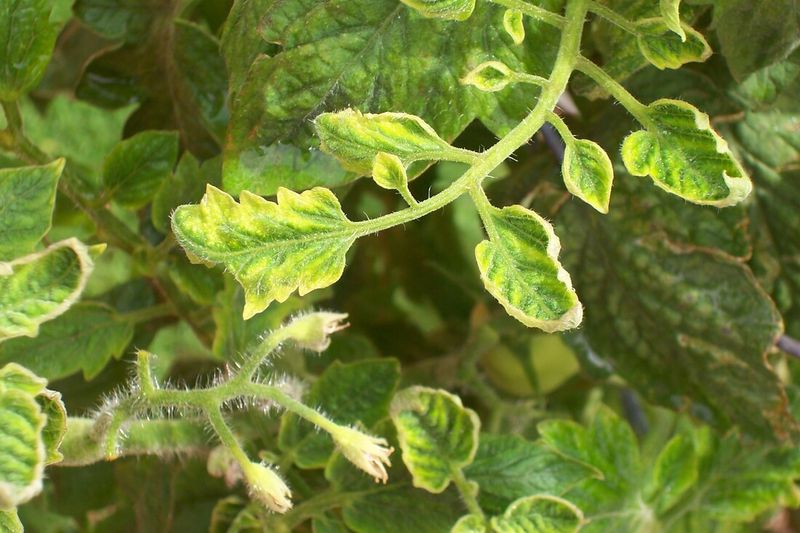
Spread by tiny whiteflies, this virus is one of the nastier reasons for curl and it does not fix itself. Southern and coastal gardeners see it most, but it keeps creeping north.
Infected plants show upward-curling leaves with yellow edges, stunted bushy growth, and flowers that drop before fruiting. Once it takes hold, the plant rarely produces well.
Quick fix: prevention beats cure here. Control whiteflies with yellow sticky traps and insecticidal soap, and pull heavily infected plants so they do not become a reservoir. Next season, plant TYLCV-resistant varieties and cover young transplants with insect netting until they are established.
6. Broad Mites You Cannot See
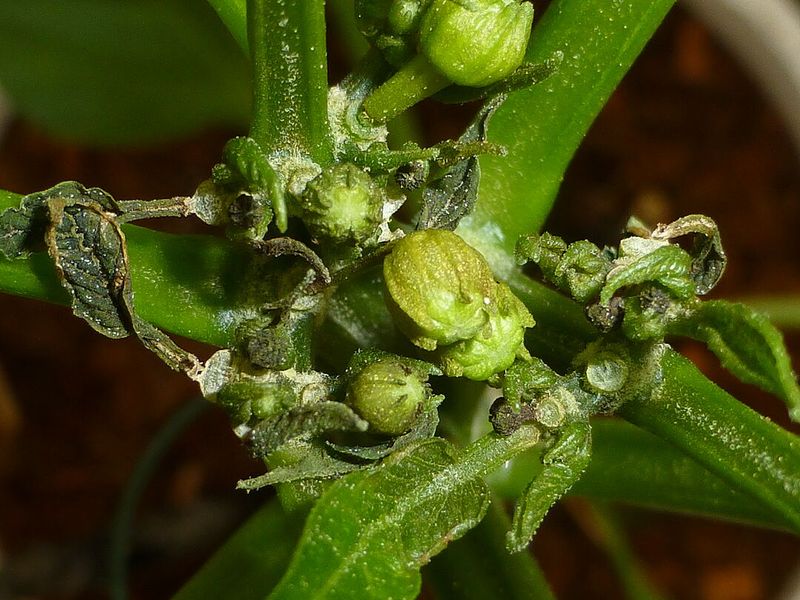
Invisible to the naked eye, broad mites do damage that looks weirdly like herbicide injury. They cluster in the growing tips and inject a toxin that twists new leaves.
New growth turns bronzed, narrow, and curled downward, often shiny or coppery on the underside. A hand lens helps, but usually you diagnose them by the pattern of damage.
Quick fix: sulfur sprays or insecticidal soap can knock them back, applied to the tips where they hide. Some gardeners report that a spinosad product helps too. Remove the worst-affected tips and treat every few days, since these mites reproduce fast in warm weather.
7. Aphid Colonies Sucking the Tips
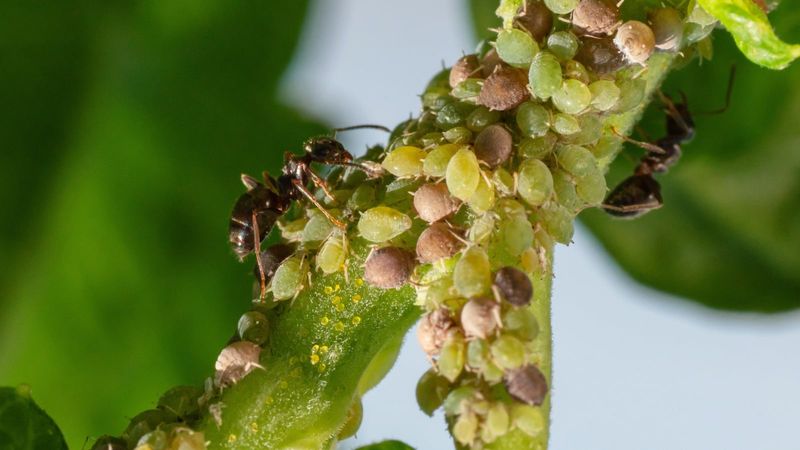
Little soft-bodied aphids gather on the undersides of new growth and drain the sap, leaving leaves puckered and curled around them. A big colony can distort a whole growing tip in days.
Flip a curled leaf over and you may find clusters of green, black, or gray insects, plus sticky honeydew and maybe some ants farming them. Curl usually comes with a bit of yellowing.
Quick fix: a strong blast of water knocks most of them off. Follow up with insecticidal soap or neem oil on the leaf undersides, and welcome ladybugs and lacewings, which devour aphids by the dozen. Check every few days until the colony collapses.
8. Not Enough Water at the Roots
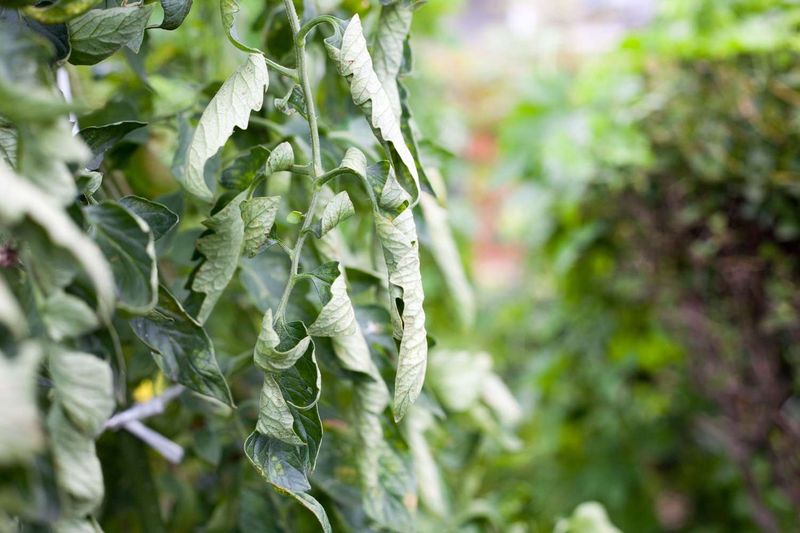
A thirsty tomato curls its leaves inward to shrink the surface losing moisture, especially in fast-draining sandy beds or small containers. It is the plant rationing what little it has.
Signs pile up: curled leaves, drooping stems in the heat, dry crumbly soil a couple inches down, and slow overall growth. Container plants show it first because their roots dry out fast.
Quick fix: water deeply and consistently rather than a little each day. Stick a finger two inches into the soil, and if it is dry, soak until water runs out the bottom. A two to three inch mulch layer holds moisture and keeps the roots from swinging between soaked and bone dry.
9. Too Much Water and Soggy Roots
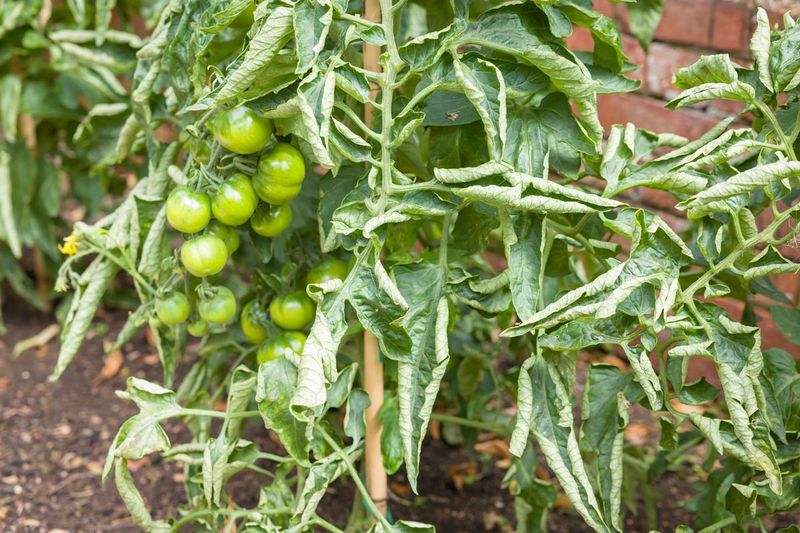
Drowning is just as bad as drought, and it curls leaves for the opposite reason. Waterlogged soil starves roots of oxygen so they cannot move moisture up to the leaves.
Watch for curled leaves that stay curled even in cool weather, yellowing lower foliage, and soil that never seems to dry out. Roots may start to rot and smell sour.
Quick fix: let the bed dry before watering again, and check that containers actually drain. Amend heavy clay with compost to open it up, and if a raised bed puddles, add drainage or build the soil higher. Ease off the hose and let those roots breathe.
10. Wind Whipping the Foliage
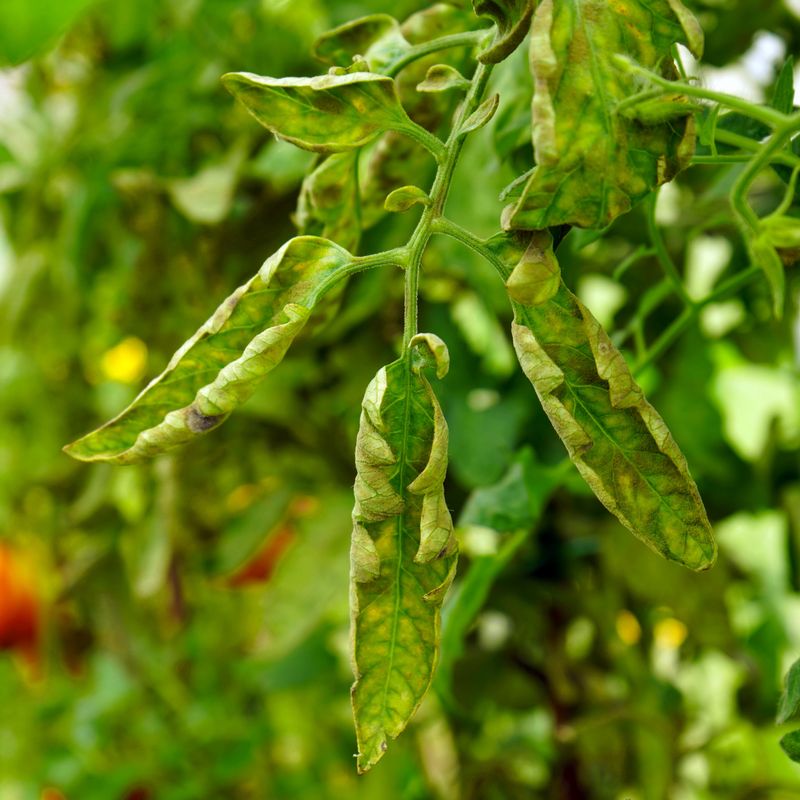
A stretch of gusty days can dry out and physically stress leaves until they curl to protect themselves. Open backyards and rooftop containers take the brunt of it.
Curl from wind often pairs with tattered leaf edges and plants leaning hard in one direction. The damage looks worse on the windward side.
Quick fix: put up a simple windbreak with burlap, a fence panel, or taller companion plants on the exposed side. Stake plants firmly so they are not thrashing around, and keep them watered, since wind pulls moisture out of leaves faster than still air. Once the gusts settle, new growth usually comes in flat.
11. Transplant Shock After Setting Out
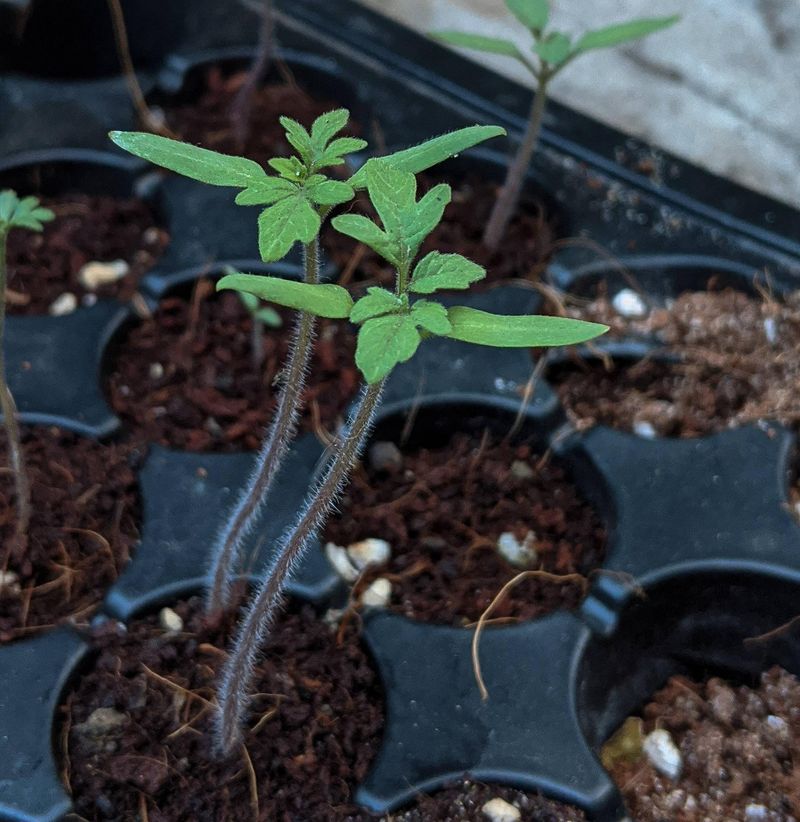
Move a seedling from a cozy windowsill straight into the garden and it may curl up in protest. The roots get disturbed and the plant suddenly faces real sun and wind it was never toughened up for.
Freshly transplanted tomatoes often show cupped or curled leaves for a week or so, sometimes with a purple tinge and stalled growth. It is temporary if you handle it right.
Quick fix: harden off seedlings over seven to ten days by setting them outside for longer stretches before planting. Transplant on a cloudy afternoon, water them in well, and shield them from harsh midday sun for a few days. They bounce back once the roots grab hold.
12. Too Much Nitrogen Fertilizer
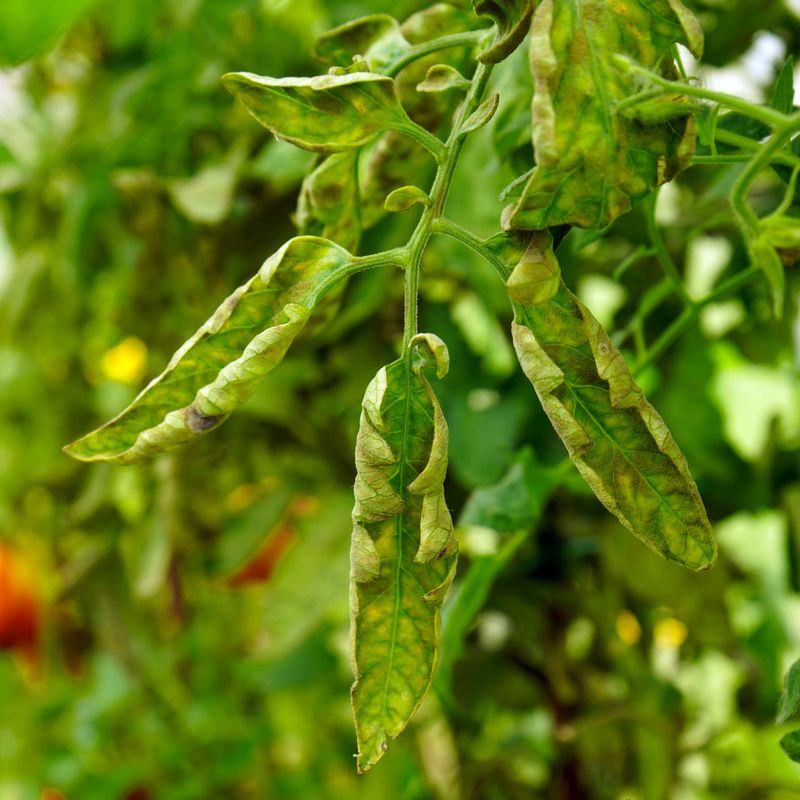
Feed a tomato like a lawn and it responds with lush, dark, rubbery leaves that curl downward. Overloading on nitrogen pushes fast leafy growth the plant cannot fully support.
The tell is deep green foliage, thick stems, curled leaf tips, and often lots of vines but few flowers. You basically grew a beautiful bush with no dinner on it.
Quick fix: stop the high-nitrogen feeding immediately. Flush the bed with plain water to leach out excess, and switch to a balanced or bloom-focused fertilizer with more phosphorus and potassium. Going forward, feed lightly and let the plant tell you when it wants more.
13. Potassium Deficiency
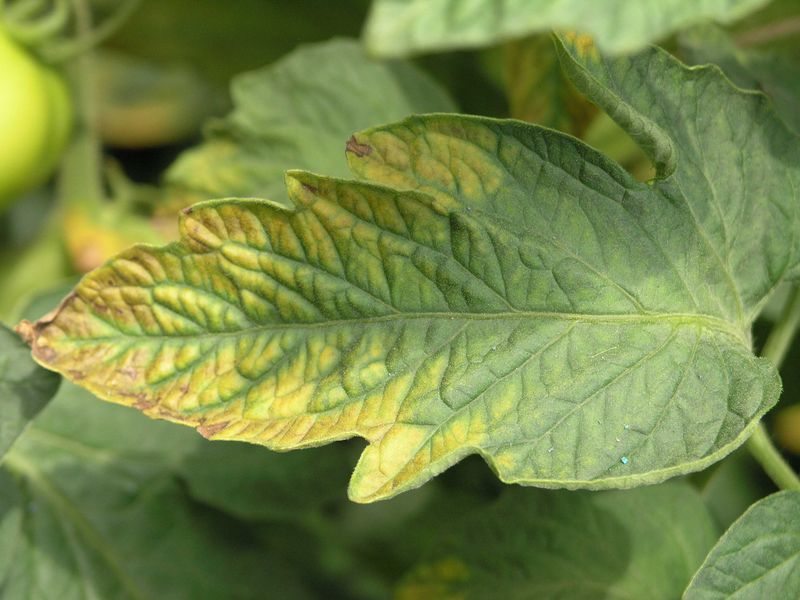
When potassium runs short, tomato leaves curl and the edges scorch to a crispy yellow-brown. Fruit may ripen unevenly with greenish shoulders as a bonus clue.
Older leaves show it first, curling with dead margins while the veins stay greenish. Sandy soils and heavy fruit loads drain potassium fastest.
Quick fix: feed with a fertilizer that lists a strong middle-to-last number, or work in some kelp meal or wood ash if a soil test says potassium is low. Keep watering even, because dry-wet swings block potassium uptake even when it is present. A soil test takes the guesswork out.
14. Magnesium and Calcium Imbalance
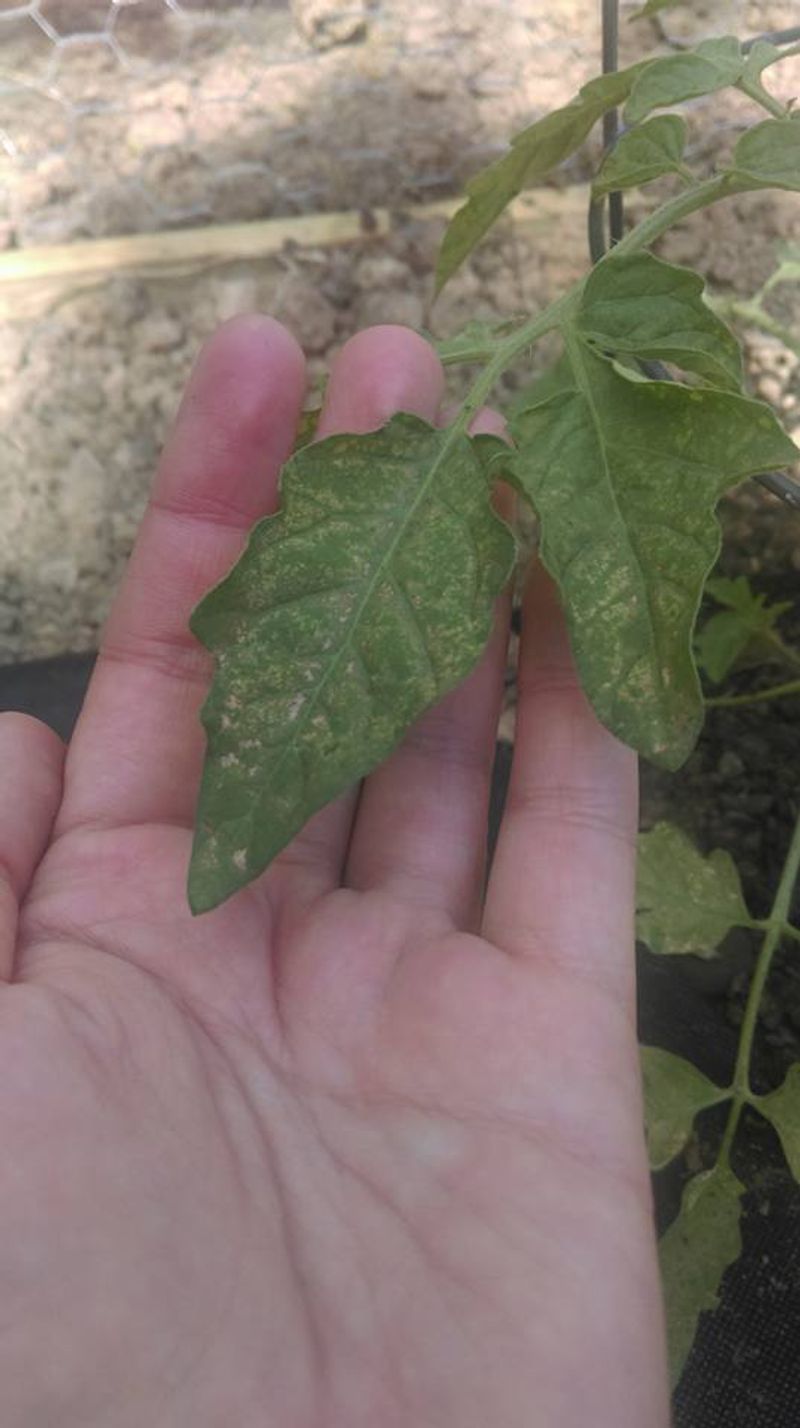
Nutrient tug-of-war in the soil can leave leaves curled and blotchy even when you fertilize plenty. Too much of one nutrient can lock out another, so calcium or magnesium gets stranded.
Magnesium shortfall shows yellowing between the veins with curling, while calcium trouble often pairs curl with blossom end rot on the fruit. Both trace back to uneven watering as much as to the soil itself.
Quick fix: keep moisture steady so roots can actually pull nutrients up. A light Epsom salt drench can ease clear magnesium shortage, and adding calcium through gypsum or crushed eggshells over time helps. Do a soil test before dumping in amendments so you fix the real gap.
15. Whiteflies Swarming the Undersides
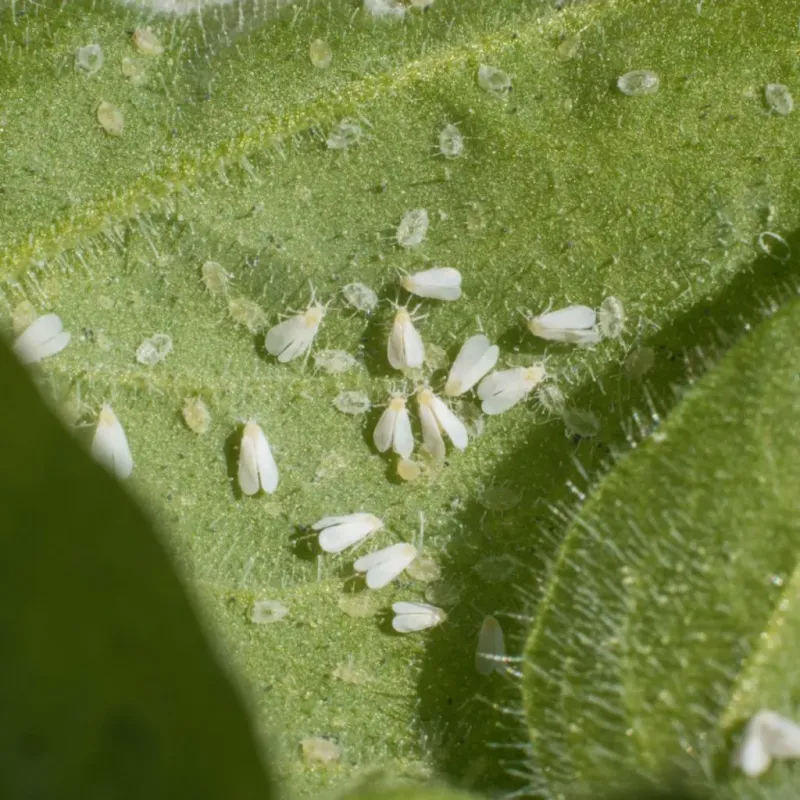
Give a plant a gentle shake and if a cloud of tiny white specks flutters up, whiteflies are your curl culprit. They feed on sap and coat leaves in sticky honeydew that grows sooty mold.
Leaves curl, yellow, and turn sticky, and the pests double as carriers for that yellow leaf curl virus mentioned earlier. Warm, sheltered spots let their numbers explode.
Quick fix: hang yellow sticky traps to catch adults and spray insecticidal soap or neem on the undersides where nymphs hide. A handheld vacuum in early morning, when they are sluggish, thins the crowd fast. Repeat treatments, because their life cycle keeps replacing the ones you kill.
16. Root Damage From Cultivating Too Close
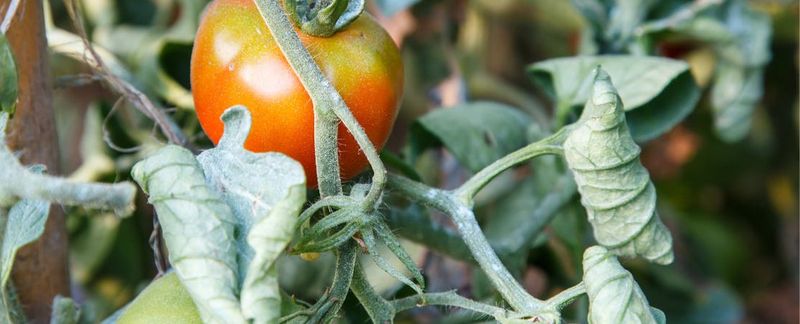
That hoe or trowel you used to knock out weeds may have sliced the very roots keeping your tomato hydrated. Chopped roots cannot deliver water, so the leaves curl in response.
Curl that appears right after you weeded or dug near the base is a strong hint. The plant may wilt in the heat and perk up at night while it regrows roots.
Quick fix: stop digging within a foot of the stem and switch to hand-pulling weeds close in. Lay down mulch to smother weeds without tools, water gently to support recovery, and give the plant a couple of weeks to rebuild its root system. It usually recovers if the damage was not severe.
17. Container Roots Running Out of Room
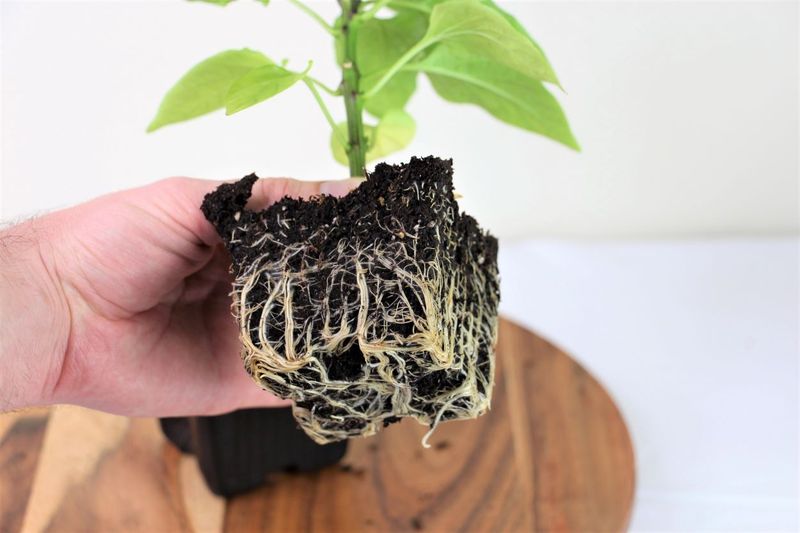
A tomato jammed into a too-small pot eventually circles its roots into a solid mass and starts curling from thirst it cannot satisfy. The pot dries out almost as fast as you fill it.
Curled leaves, constant wilting, roots poking from drainage holes, and water racing straight through are the classic signs of a rootbound plant. Five-gallon minimum is the rule most container growers learn the hard way.
Quick fix: move the plant into a larger container, ideally 10 gallons or more for full-size varieties, teasing the outer roots loose first. If repotting is not possible mid-season, water more often and feed lightly to compensate. Bigger pots mean fewer curl headaches all summer.
18. Fusarium or Verticillium Wilt
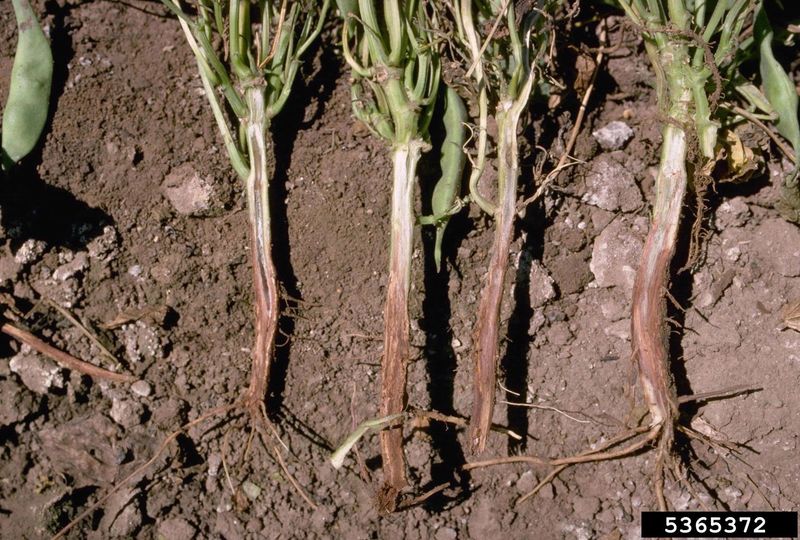
Soil-borne fungal wilts clog the plant’s plumbing from the inside, and curling is often the first outward crack in the armor. These fungi live in the soil for years and attack the water-carrying tissue.
One-sided yellowing and curling, wilting that gets worse in heat, and brown streaks inside a sliced stem point to wilt disease. Once it is in the vascular system, there is no cure.
Quick fix: remove and trash infected plants, never compost them. Rotate tomatoes to a fresh bed and plant resistant varieties marked with V or F on the label. Solarizing the soil under clear plastic over summer can lower the fungal load for next year.
19. Cool Nights Early in the Season
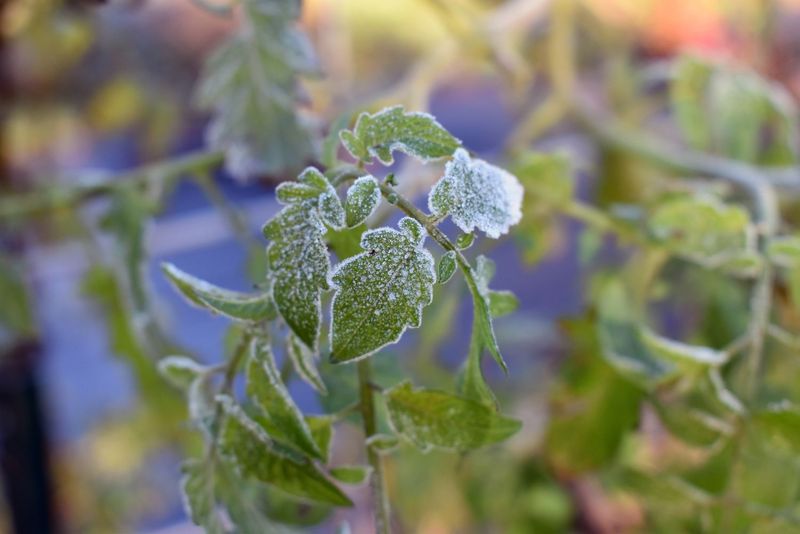
Set tomatoes out too early and a run of chilly nights can make their leaves cup and curl in defense. Tomatoes are warm-weather plants that sulk when temperatures dip into the 40s.
Spring transplants often show purplish, curled leaves and slow, stalled growth when nights stay cold. It looks alarming but rarely does lasting harm.
Quick fix: wait until nighttime lows hold steady above 50 degrees before planting, or protect early plants with cloches, row covers, or wall-of-water rings. Warm soil with black plastic or fabric helps too. Once the nights warm up, the curl smooths out and growth takes off.
20. Contaminated Manure or Compost
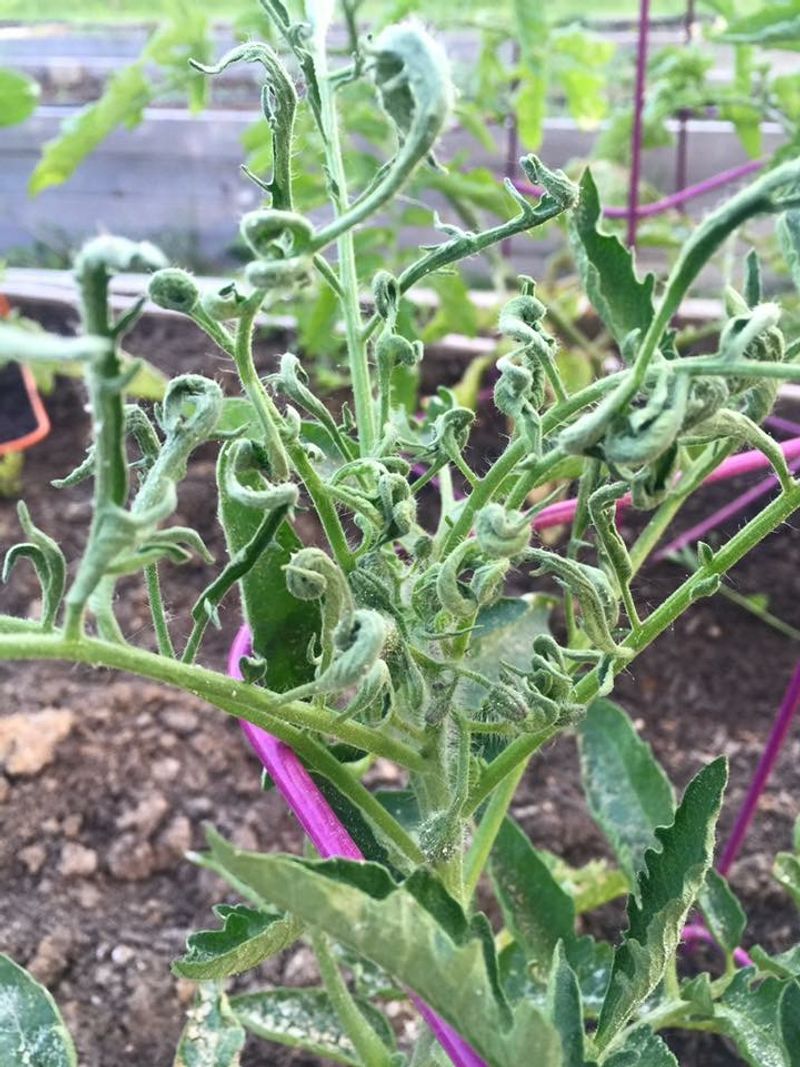
Bring in a truckload of manure or straw from a farm that sprayed persistent herbicides, and your tomatoes may curl for the whole season. Chemicals like aminopyralid survive the animal’s gut and the composting process.
The damage mimics herbicide drift but shows up in every plant grown in that soil, with cupped, fern-like new growth. It is heartbreaking because the source is your own carefully added compost.
Quick fix: prevention is everything, so quiz your compost or manure source about herbicide use before hauling it home. Do a quick bioassay by sprouting beans or peas in a sample first. If a bed is already contaminated, grow non-sensitive crops there while the residue breaks down over a year or more.
21. Big Swings in Humidity and Watering
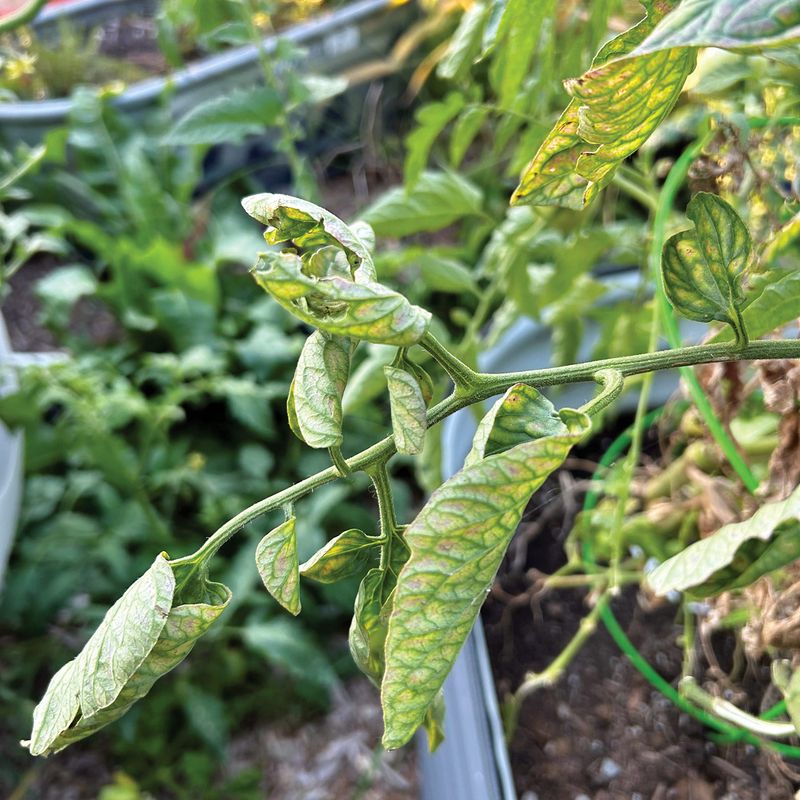
A plant that gets flooded then left bone-dry over and over will curl just from the whiplash. Sudden jumps between soaked soil and drought confuse the roots and stress the whole plant.
Erratic curl that comes and goes, without pests or clear disease, often traces back to an inconsistent watering routine or a stretch of wildly changing weather. Container growers on hot patios see it most.
Quick fix: aim for steady, predictable moisture rather than dramatic extremes. A soaker hose on a timer or a self-watering container smooths out the highs and lows, and mulch buffers the swings. Consistency is what tomatoes crave more than any fancy feeding schedule.
22. Psyllids and Their Toxic Saliva
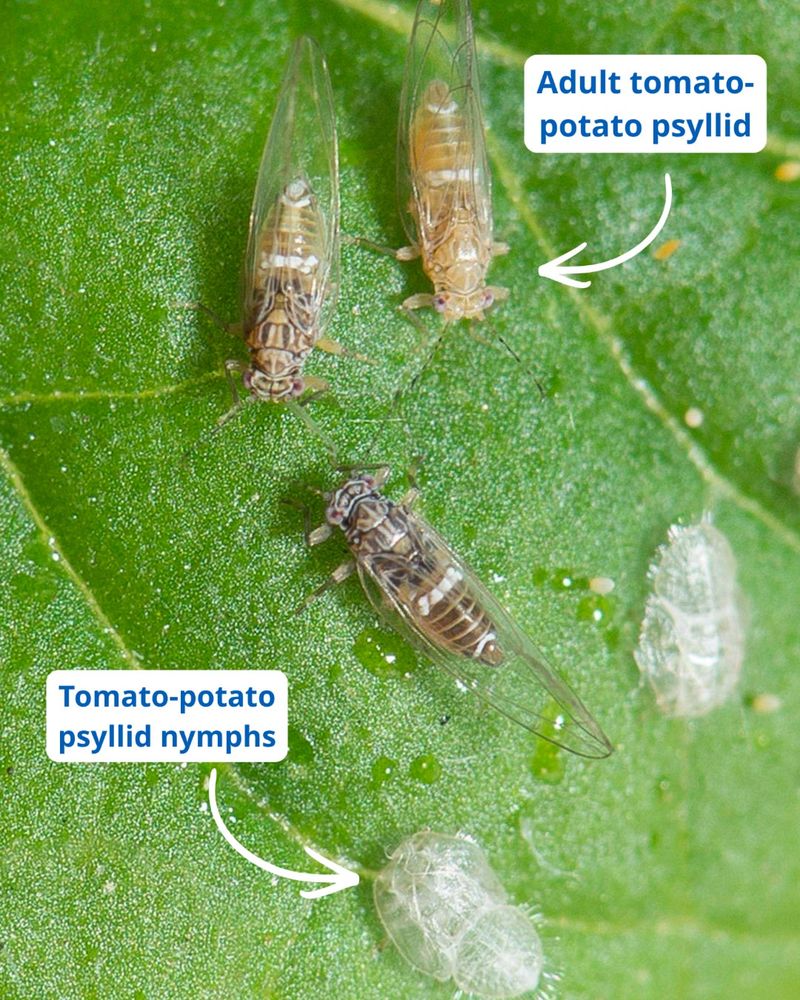
Tomato psyllids are tiny jumping insects whose saliva triggers a condition growers call psyllid yellows, and curling comes right along with it. Western and central US gardens see them most.
Leaves curl upward and turn yellow or purple, growth stiffens and shortens, and fruit sets poorly or comes out misshapen. The nymphs are flat, scale-like, and easy to miss on leaf undersides.
Quick fix: scout the undersides regularly and treat with insecticidal soap, neem, or sulfur to interrupt them. Reflective mulch can confuse and repel the adults. Pull badly affected plants if psyllids are widespread, and encourage predatory insects that feed on the nymphs.