
36 Red Hummingbird Flowers That Turn Your Yard Into A Nonstop Buzz Of Winged Visitors
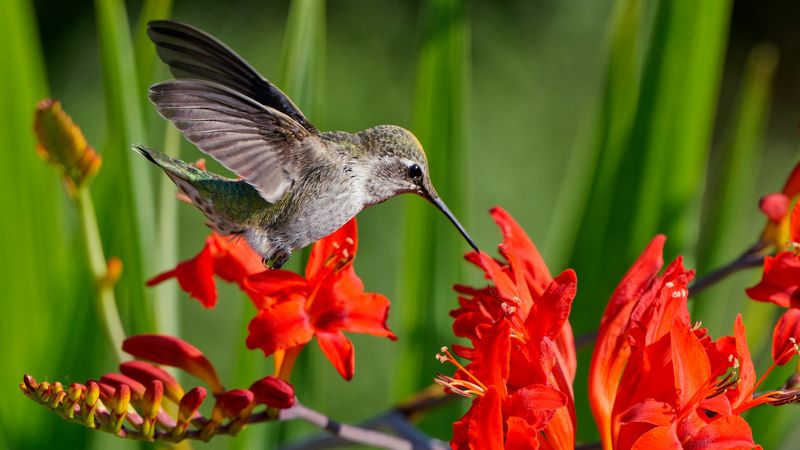
Hummingbirds can’t resist the color red, and filling your yard with the right blooms is like ringing a dinner bell for these tiny flying jewels. The 36 flowers below all wear shades of scarlet, crimson, and ruby that pull hummingbirds in for a sip of nectar. Some are quick-growing annuals, others come back year after year, and a few thrive happily in pots on a small patio. Pick a handful that fit your climate, and your backyard will hum with wings from spring straight through fall.
1. Cardinal Flower (Lobelia cardinalis)
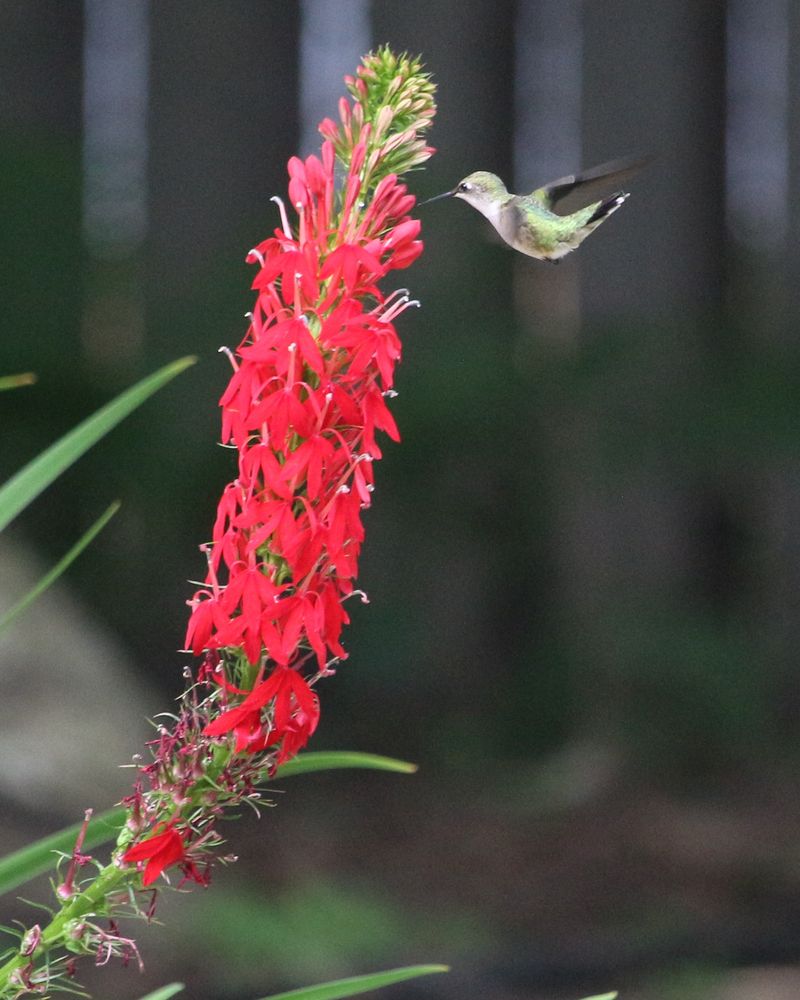
Few native plants shout for hummingbird attention like this one. Its towering spikes of fire-engine red blooms rise straight up from wet, boggy soil, making it a standout along ponds and rain gardens across the eastern and central United States.
Hummingbirds practically line up for it because the long, tubular flowers are shaped perfectly for their slender bills. Bees struggle to reach the nectar, so the birds get a private buffet.
Plant it where the ground stays damp and it will reward you with color from midsummer into early fall. Fun bit of trivia: the name comes from the crimson robes worn by Catholic cardinals, which the blooms mimic almost exactly.
2. Bee Balm (Monarda didyma)
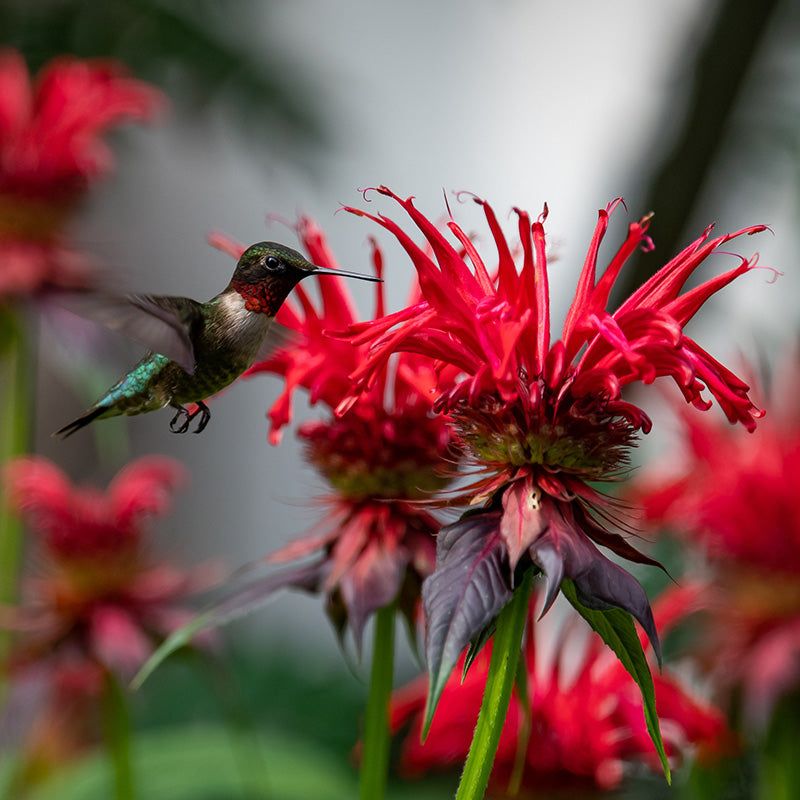
Ragged, shaggy, and unapologetically wild-looking, bee balm brings a splash of scarlet that hummingbirds spot from across the yard. The fringed flower heads look like tiny fireworks frozen mid-burst.
Beyond the birds, the leaves smell minty when crushed, and early American settlers brewed them into a tea after the Boston Tea Party dried up their imported supply. That is why you may hear it called Oswego tea.
Give it room to spread in a sunny bed and keep the air moving to fend off powdery mildew. In return you get weeks of buzzing, fluttering activity from both hummingbirds and their insect neighbors.
3. Trumpet Vine (Campsis radicans)
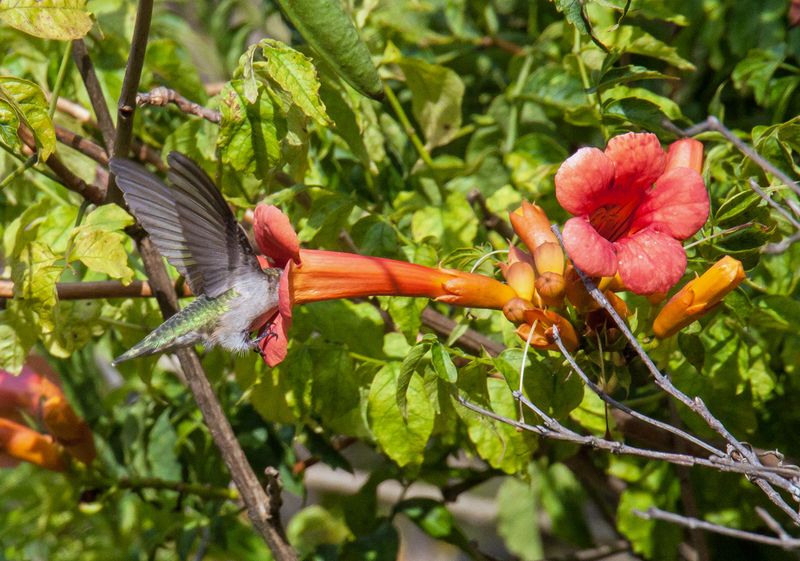
Vigorous does not even begin to describe this climber. Trumpet vine can blanket a fence or arbor in a single season, hanging heavy with clusters of orange-red trumpets that hummingbirds adore.
The blooms are so beloved by ruby-throated hummingbirds that some gardeners call it the hummingbird vine outright. Each flared flower holds a generous pool of nectar deep inside.
A word of caution: this plant means business and can overtake weaker structures, so give it a sturdy support and cut it back hard each year. Once established, it delivers a reliable summer show with almost no fussing on your part.
4. Scarlet Sage (Salvia splendens)
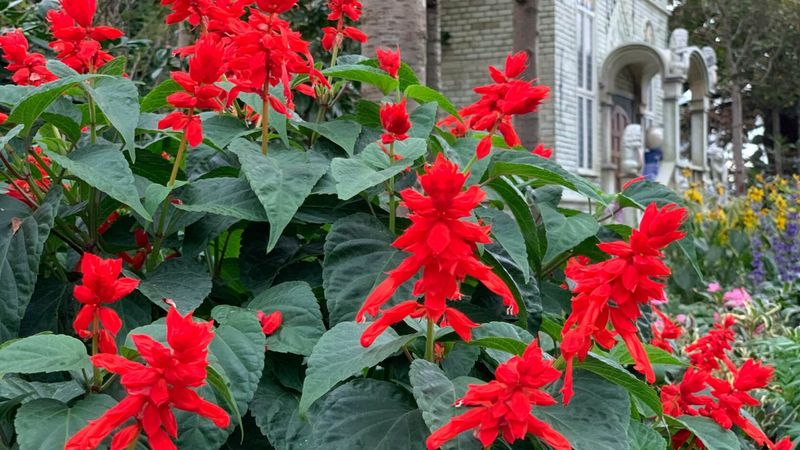
Bright as a stoplight and just as impossible to miss, scarlet sage packs dense spikes of red blooms onto compact, tidy plants. It is a favorite for bedding displays because it flowers nonstop from spring until frost.
Hummingbirds zero in on the tubular petals, dipping in again and again throughout the day. Since it grows quickly from seed or transplants, you can fill an empty bed with hummingbird fuel in just a few weeks.
Treat it as an annual in most US zones and pinch off spent flowers to keep the show going. It handles containers beautifully too, so a balcony or porch can join the party.
5. Pineapple Sage (Salvia elegans)
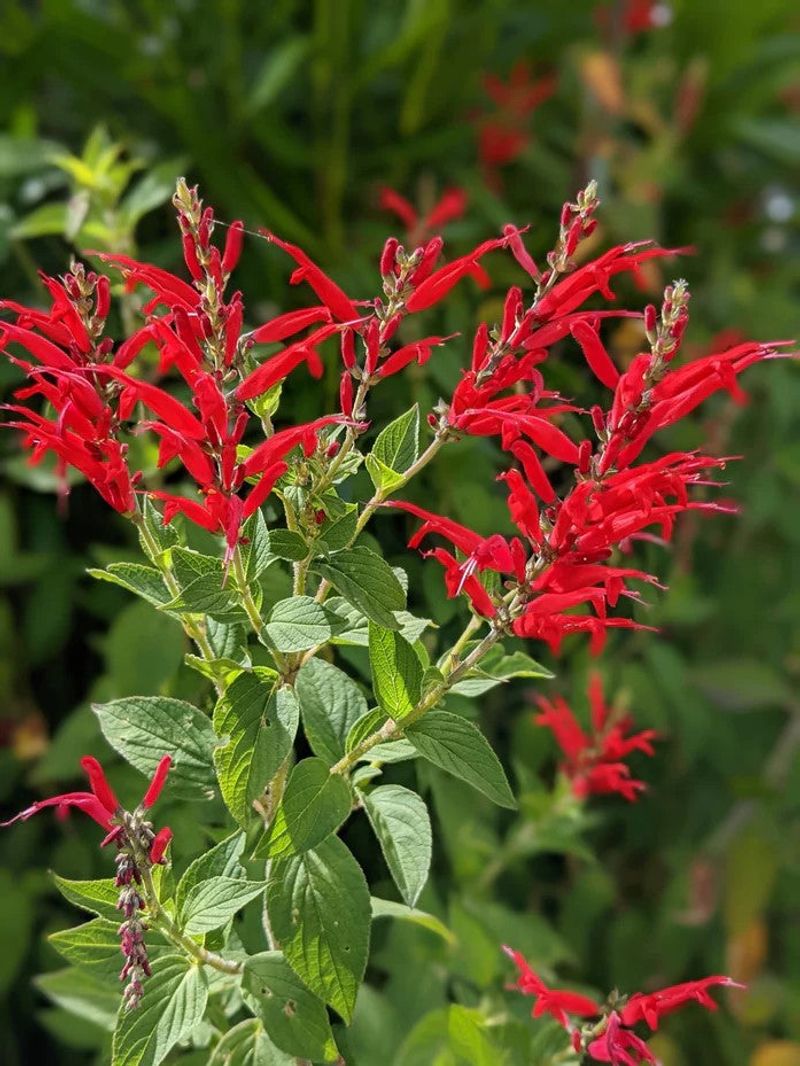
Crush a leaf and you will understand the name instantly, because it smells exactly like fresh pineapple. Late in the season, when many flowers are fading, this salvia sends up slender red tubes that arrive just in time for migrating hummingbirds.
The timing makes it a secret weapon for fall feeding. Birds bulking up for their long journey south find a fresh nectar source when other blooms have quit.
It grows tall and bushy in a sunny spot with decent drainage. You can even snip the edible flowers and leaves into fruit salads or iced tea for a fragrant twist.
6. Coral Honeysuckle (Lonicera sempervirens)
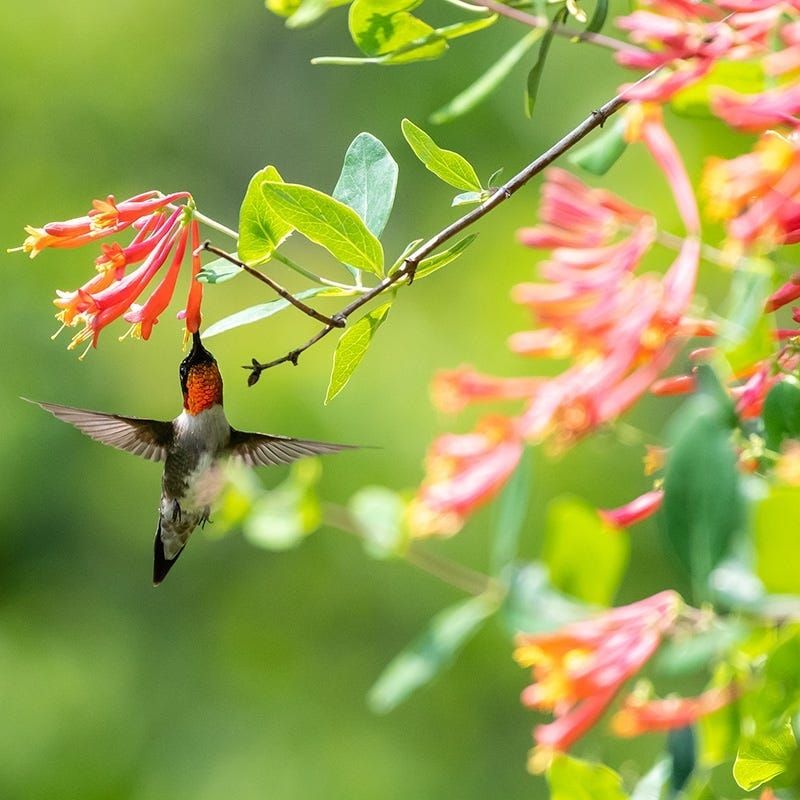
Unlike its invasive cousins, this well-behaved native honeysuckle won’t swallow your garden whole. Its coral-red tubular clusters bloom heavily in spring and keep coming in flushes through summer.
Hummingbirds returning north in spring rely on it as one of the earliest reliable meals. The vine twines politely up a trellis or mailbox post without strangling everything in sight.
Songbirds later feast on the small red berries, so you get double the wildlife value. Semi-evergreen in warmer southern zones, it keeps a bit of leafy cover even in the off-season.
7. Red Hot Poker (Kniphofia)
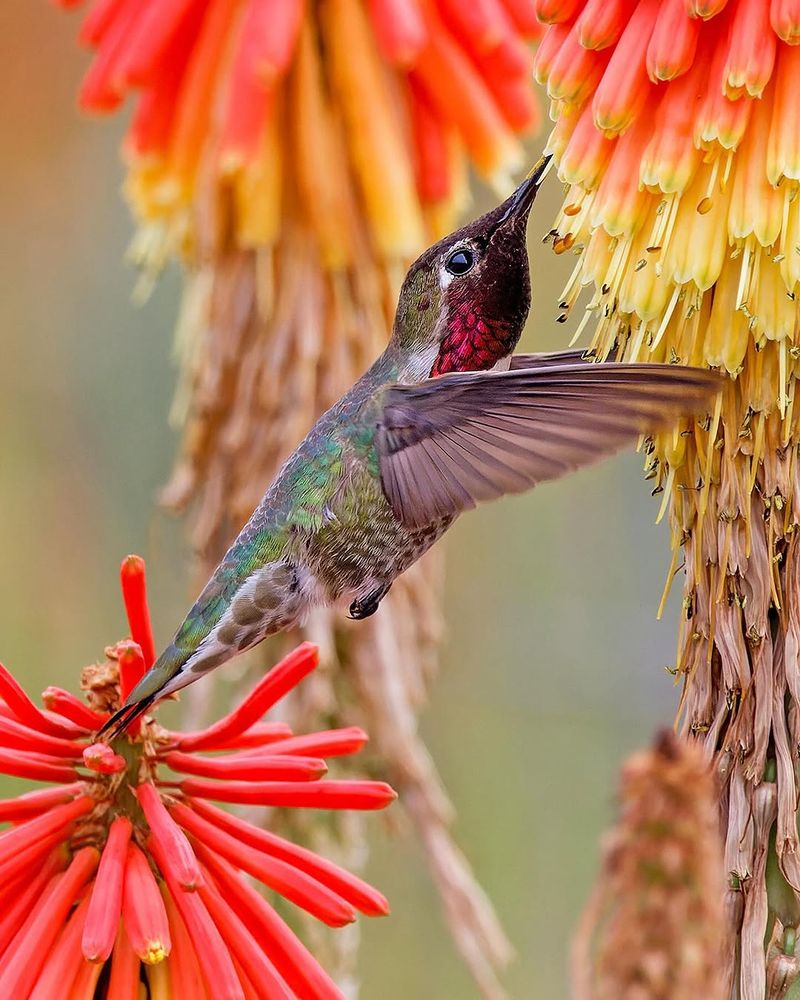
Picture a torch stuck in the ground and you have the shape of this striking perennial. Tall stalks hold rows of tubular flowers that glow red at the top and fade to yellow below, looking like a flame frozen in place.
The upward-facing tubes are a natural perch-and-sip station for hummingbirds, who work their way around each spike. Its bold vertical form also adds welcome drama to flat borders.
Drought tolerant once settled in, it shrugs off dry spells that wilt fussier plants. Give it full sun and sharp drainage, and it will send up torches summer after summer.
8. Firecracker Plant (Russelia equisetiformis)
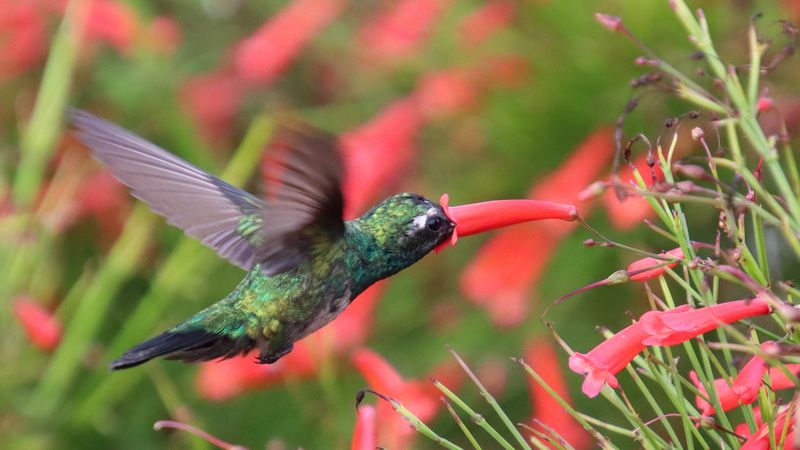
Cascading like a green waterfall dotted with red sparks, this plant lives up to its explosive name. Slender arching stems drip with tiny tubular flowers that dangle like little firecrackers.
Hummingbirds hover beneath the trailing branches, sipping from the pendant blooms with ease. It looks spectacular spilling over a wall, a hanging basket, or the edge of a raised bed.
Warm-climate gardeners in the South and Southwest can grow it year-round, while northern folks treat it as a summer container star. Heat and sun only make it flower harder.
9. Crocosmia Lucifer
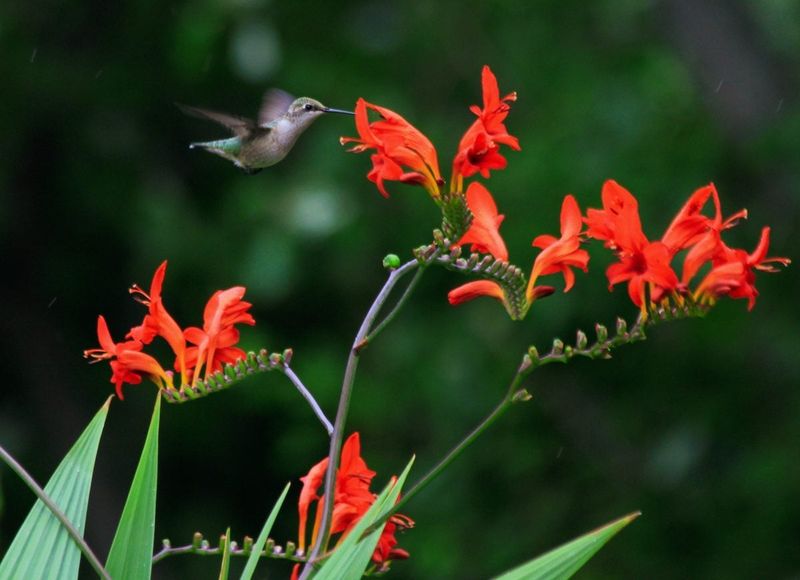
Named after the fallen angel, this fiery perennial earns its dramatic title with arching sprays of blazing red blooms held on wiry stems. The flowers open in sequence along the stalk, stretching the show over weeks.
Hummingbirds dart between the horizontally held blossoms, which are perfectly sized for their bills. Sword-shaped leaves add a vertical, grassy texture even before the flowers arrive.
Grown from corms that multiply underground, it forms bigger clumps each year with almost no effort. Plant a generous drift and the summer effect is downright theatrical.
10. Red Columbine (Aquilegia canadensis)
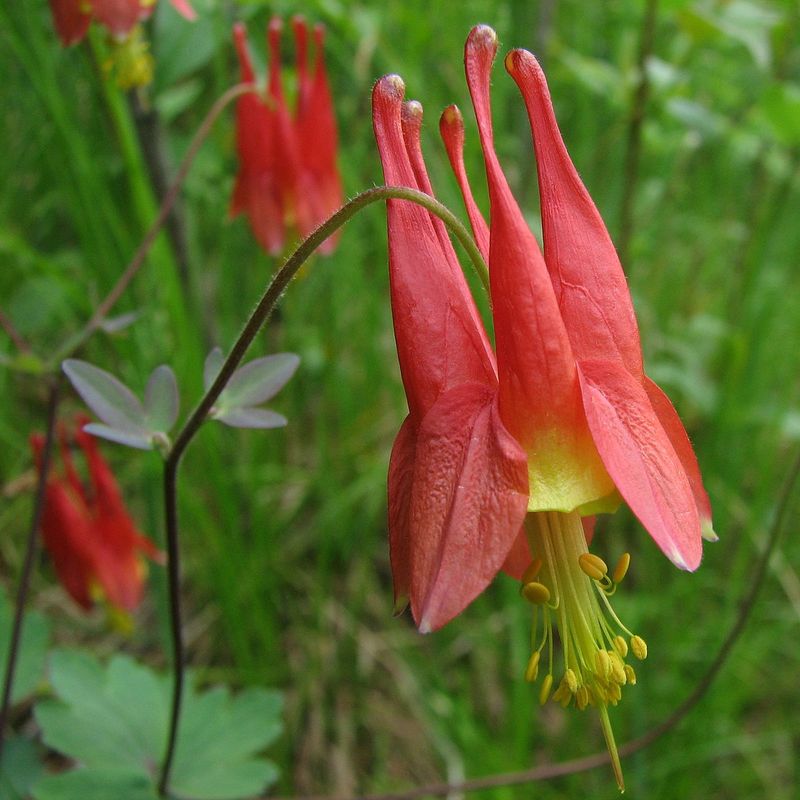
Delicate nodding lanterns of red and yellow give this woodland native an almost fairy-tale look. The flowers dangle upside down, with long spurs that hold nectar right where a hummingbird’s tongue can reach.
Blooming early in spring, it feeds the first birds returning from their winter travels. It thrives in the dappled light beneath trees where many showier flowers refuse to grow.
Self-seeding gently, it pops up in charming spots around a shade garden without becoming a nuisance. The intricate, spurred blooms are a botanical marvel worth a close look.
11. Zinnia (Red varieties)
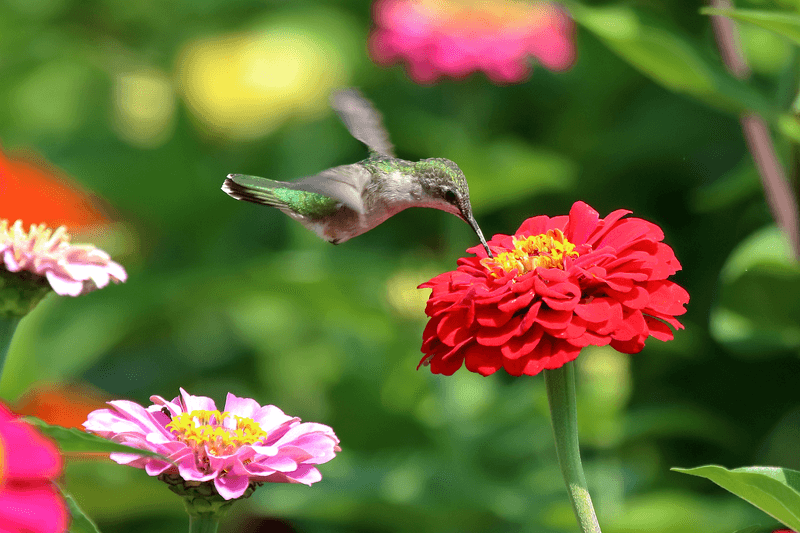
Cheerful and endlessly easy, red zinnias are the flower that beginner gardeners plant with total confidence. Scatter the seeds after frost and within weeks you have a bed bursting with bold red daisy-like blooms.
The flat, open flowers double as landing pads for hummingbirds and a magnet for butterflies too. Cut a few for a vase and the plants only produce more.
They laugh at summer heat and keep flowering right up to the first cold snap. For nonstop color on a tight budget, few plants beat a packet of red zinnia seeds.
12. Petunia (Red trailing types)
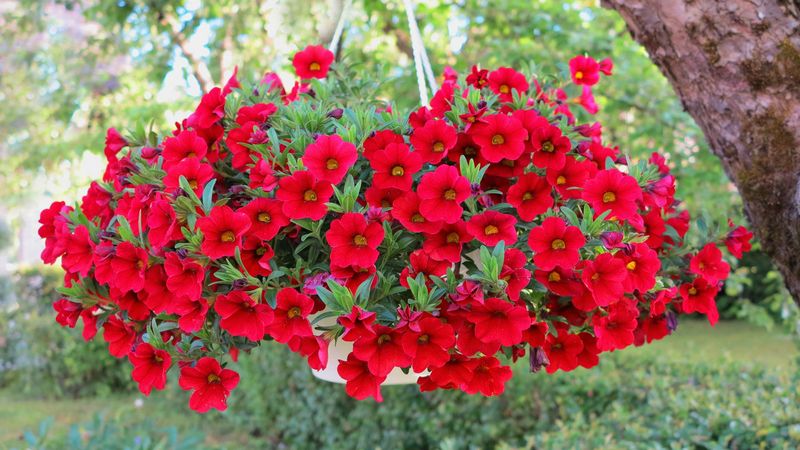
Spilling over the sides of baskets and window boxes, red trailing petunias turn any container into a hummingbird stop. Their funnel-shaped blooms fill the air with a light fragrance on warm evenings.
Because they flower relentlessly all season, they keep the nectar flowing without a break. Deadheading or a quick trim mid-summer keeps the plants full instead of leggy.
Hummingbirds especially favor the deep-throated wave and supertunia types that hold more nectar. Hang a basket near a window and you will have front-row seats to the show.
13. Cypress Vine (Ipomoea quamoclit)
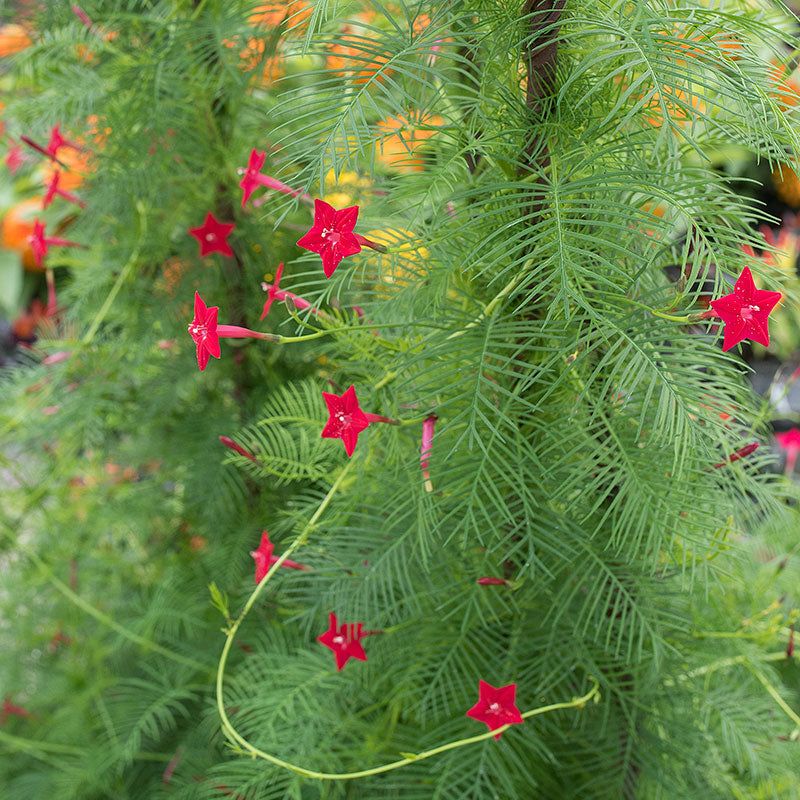
Ferny, feathery foliage sets this delicate climber apart from every other vine on the list. Threaded through the lacy leaves are dozens of tiny star-shaped red flowers that look hand-stitched onto the greenery.
Each little star is a perfect five-pointed cup that hummingbirds probe with precision. Grown easily from seed, it scrambles up strings or a light trellis in a single season.
The airy texture means it never feels heavy or overbearing, even when covered in blooms. Kids love the star flowers, making it a fun choice for a family garden project.
14. Cardinal Climber (Ipomoea sloteri)
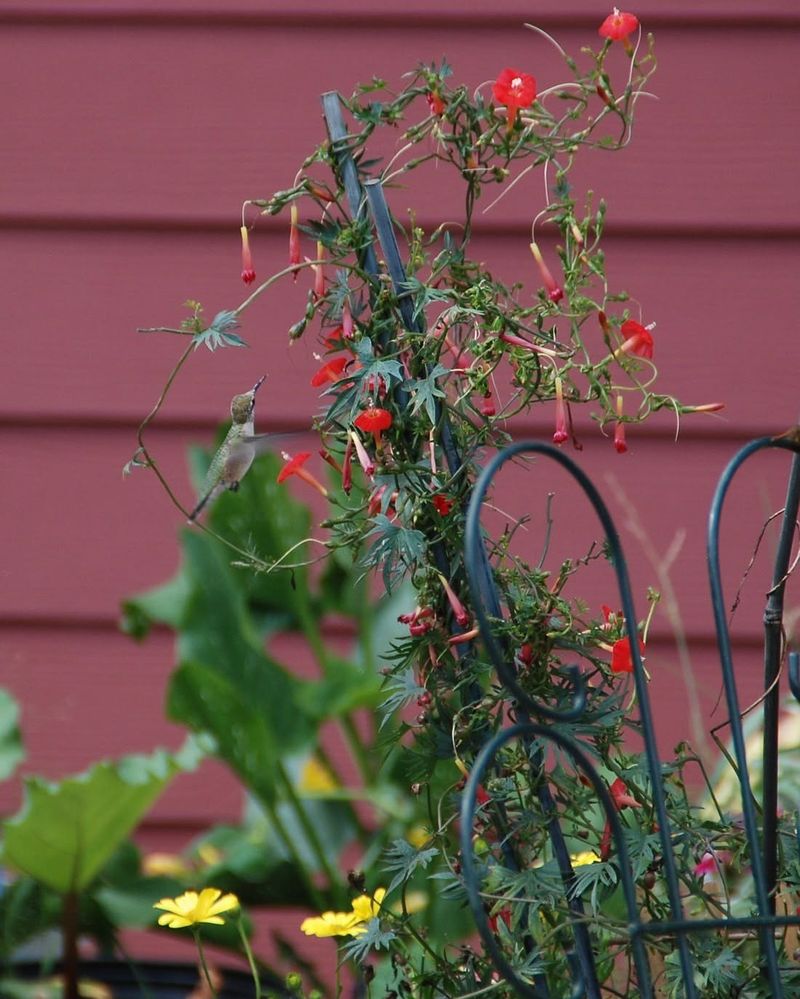
A cousin to cypress vine, this fast climber blends heart-shaped lobed leaves with brilliant red trumpet stars. It gives you a slightly bolder flower and lusher foliage while keeping the same easygoing nature.
Hummingbirds treat a wall of cardinal climber like an all-day snack bar, working the blooms from morning to dusk. It races up a fence or mailbox in weeks once the weather warms.
Sow the seeds directly where you want them and give them something to grab onto. By midsummer you’ll have a living red curtain alive with wings.
15. Red Salvia (Salvia coccinea)
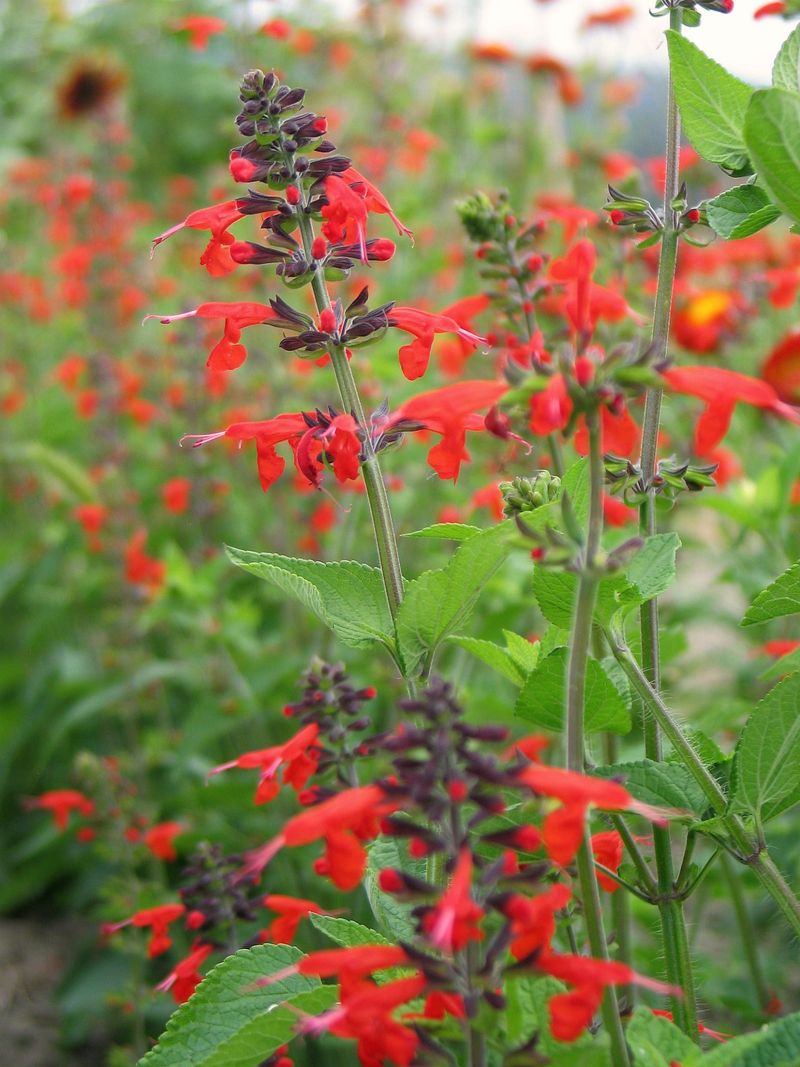
Airier and more natural-looking than its bedding-plant relatives, tropical sage sends up loose spikes of scarlet blooms on slender stems. It has a relaxed, meadow-like charm that suits informal gardens.
A tough native across the southern US, it reseeds itself and returns without any pampering. Hummingbirds visit the widely spaced tubular flowers throughout the long blooming season.
It handles heat, poor soil, and drought better than most flashy annuals. Let a few plants go to seed and you will have volunteers filling the gaps next year.
16. Hardy Fuchsia (Fuchsia magellanica)
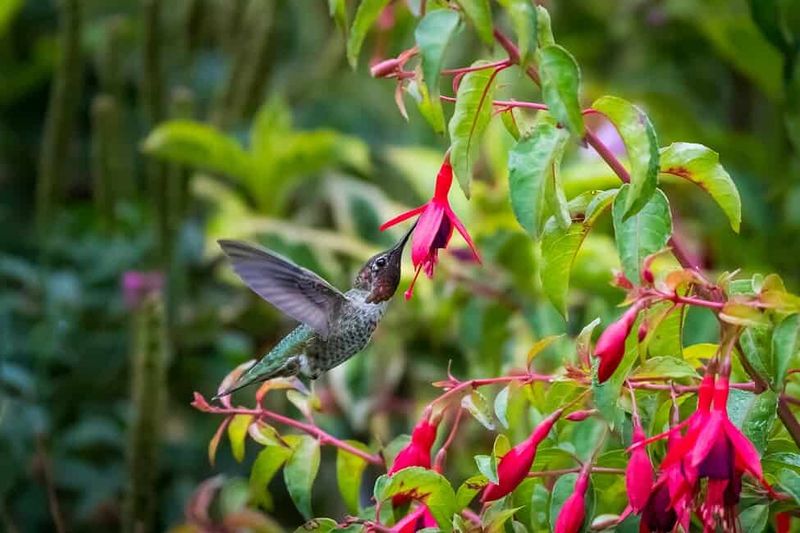
Dangling like tiny red ballerinas in mid-twirl, fuchsia blooms are among the most elegant on this list. The pendant flowers hang from arching branches, swaying with every breeze.
Hummingbirds hover beneath them, tipping upward to reach the nectar tucked inside. This hardy variety survives winters in milder zones where fussier fuchsias would fail.
It appreciates a cooler, partly shaded spot, which makes it handy for tricky north-facing beds. In coastal and Pacific Northwest gardens it can grow into a sizable, ever-blooming shrub.
17. Red Yucca (Hesperaloe parviflora)
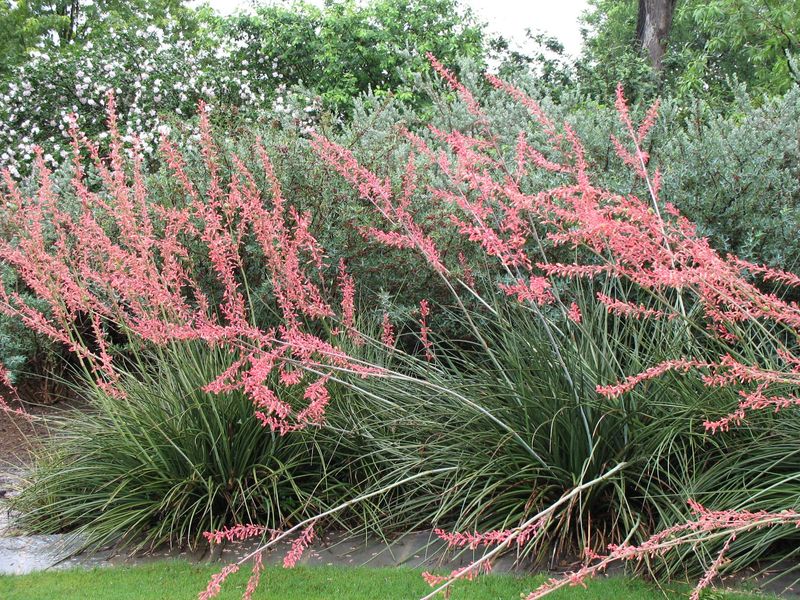
Tough as nails and built for brutal heat, red yucca thrives where almost nothing else blooms. Tall wands rise from grassy, succulent-like clumps, lined with coral-red bell flowers.
Southwestern hummingbirds depend on it during scorching summers when tender flowers shrivel. It needs almost no water once established, making it a champion for xeric and low-maintenance gardens.
Despite the name, it is not a true yucca, and it lacks the sharp, dangerous spines. The blooming wands can stretch for months, giving birds a long-lasting fuel source.
18. Bottlebrush (Callistemon)
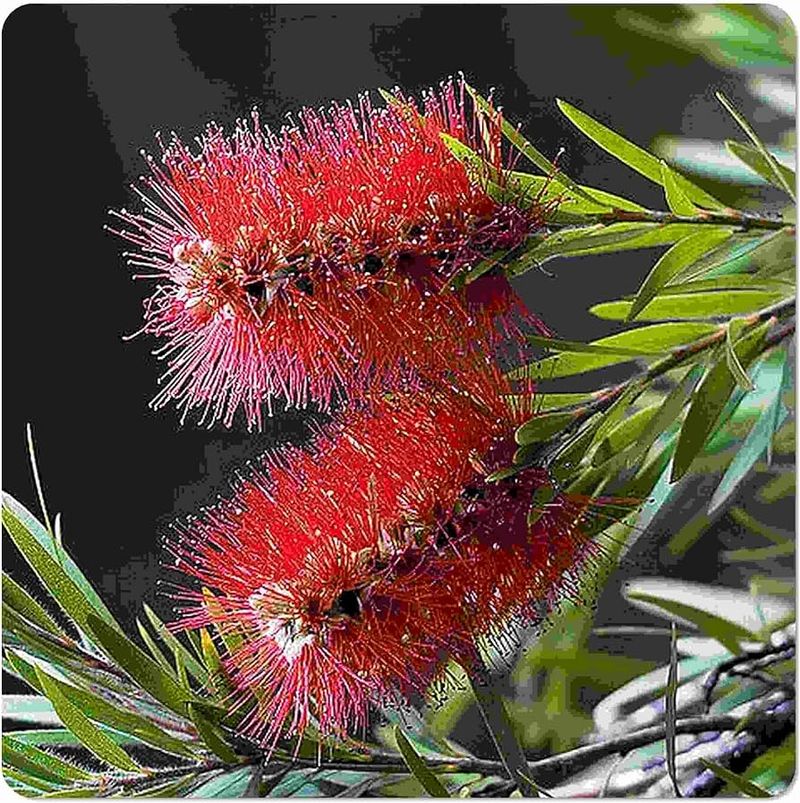
The name says it all, because the cylindrical red flower spikes look exactly like the brush you’d use to scrub a bottle. Each bristly bloom is packed with nectar-rich stamens that fan out in every direction.
Hummingbirds and songbirds both crowd around these shrubs in warmer regions of the country. The plant flushes with color several times a year given enough sun and warmth.
Gardeners in California, Florida, and the Gulf states can grow it as an evergreen shrub or small tree. Its unusual texture adds a playful, tropical feel to a border.
19. Scarlet Runner Bean (Phaseolus coccineus)
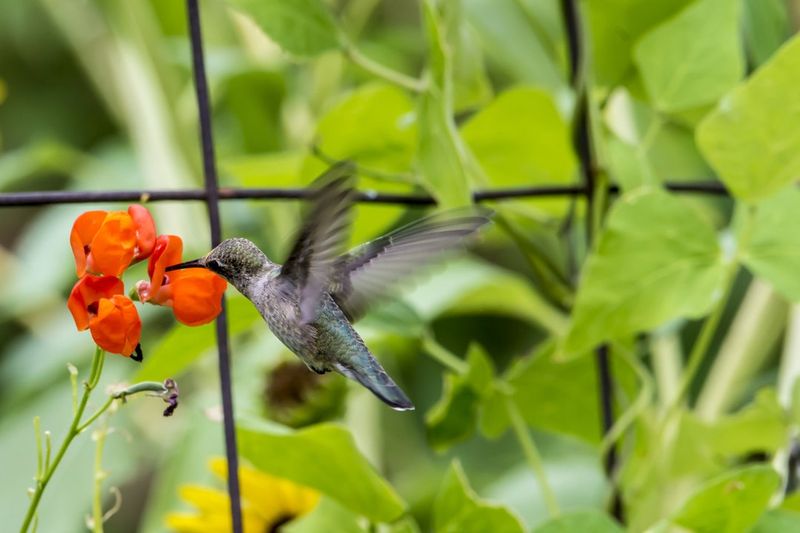
Here is a flower that feeds both you and the hummingbirds. This climbing bean produces sprays of brilliant scarlet blossoms before setting long, edible pods.
Hummingbirds work the flowers eagerly, and their visits actually help pollinate future beans. Twining quickly up a teepee or fence, it doubles as a shady screen in summer.
Thomas Jefferson grew it at Monticello, valuing it as much for its beauty as its harvest. Plant it along a veggie patch and you get color, food, and a nonstop bird show in one tidy package.
20. Hollyhock (Red Alcea rosea)
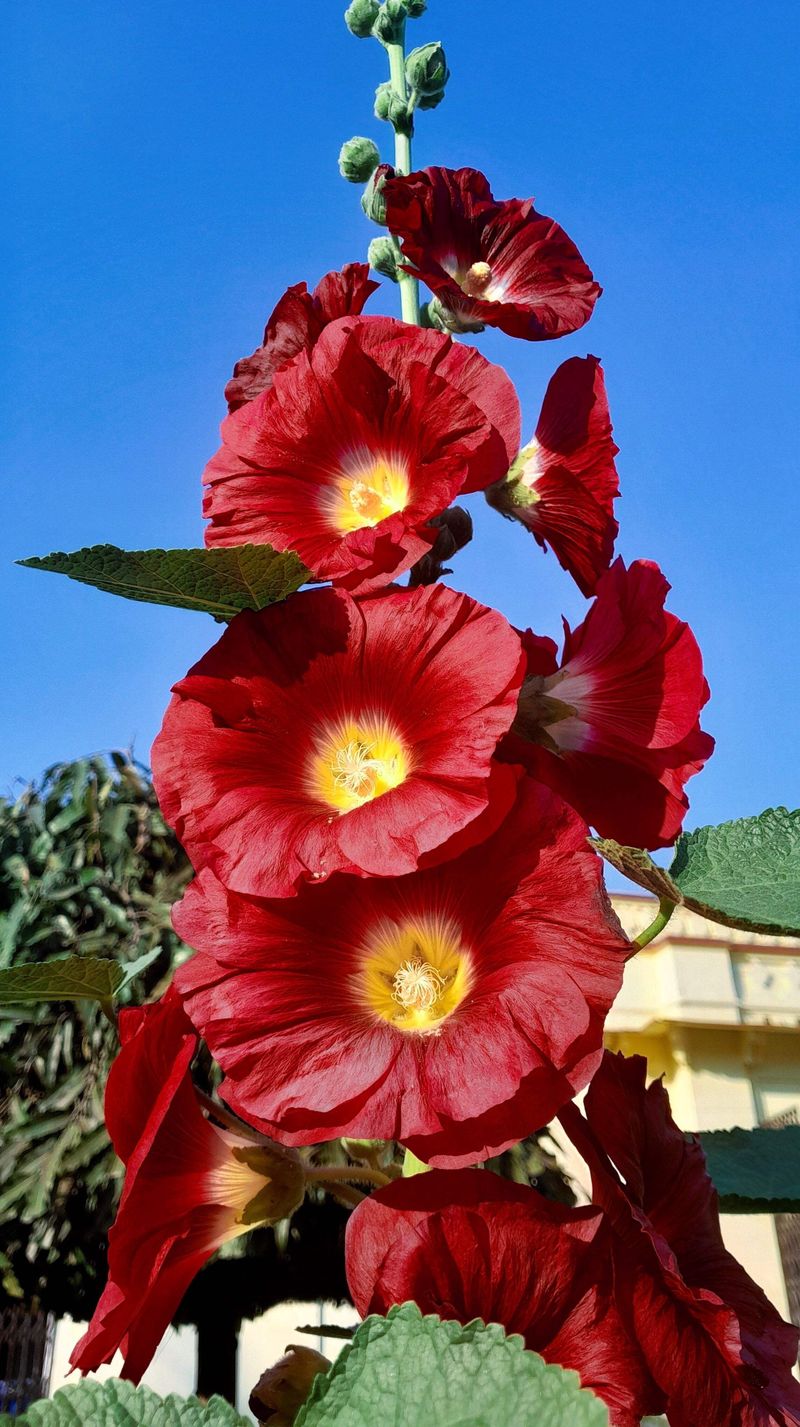
Standing tall against a fence or barn wall, red hollyhocks bring a nostalgic cottage-garden charm that few flowers match. Their stately spires can shoot up past six feet, covered in saucer-sized red blooms.
Hummingbirds dip into the open cups while the plant sways in summer breezes. Being a biennial, it often spends its first year growing leaves before exploding into flower the next.
Grandma’s garden probably had a row of these along the back fence for good reason. Let a few seed heads dry and scatter them to keep the tradition going year after year.
21. Red Penstemon (Penstemon barbatus)
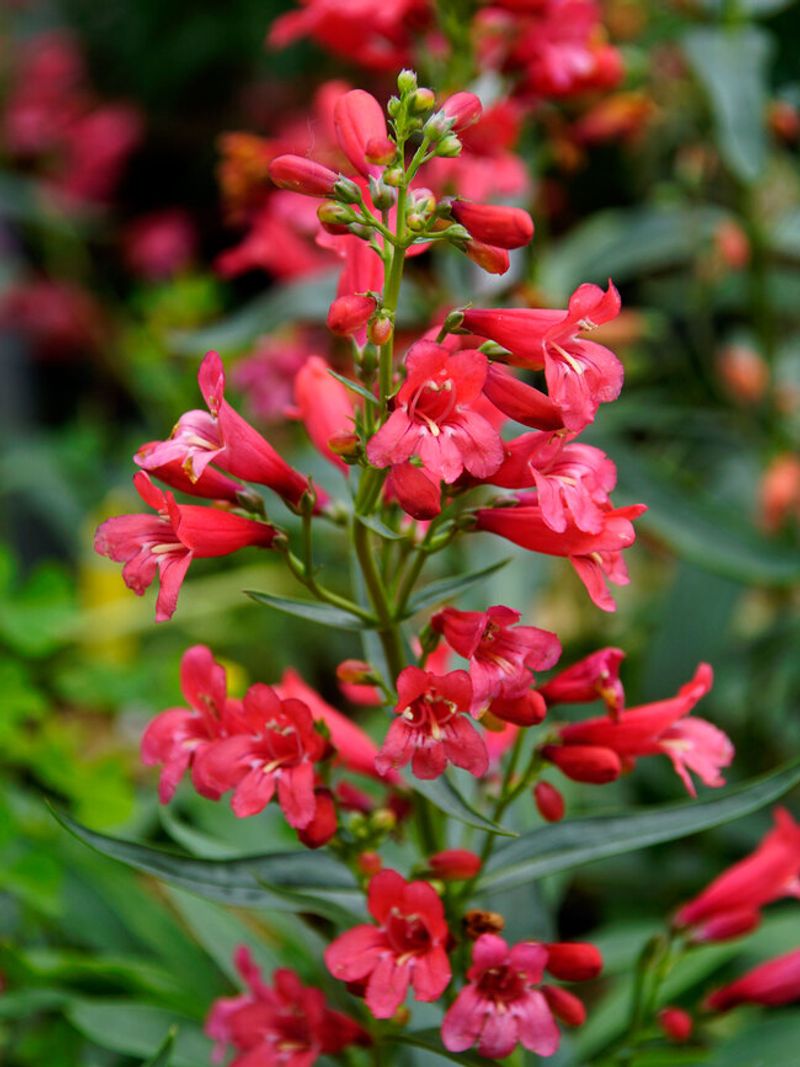
Slim and graceful, scarlet penstemon lifts loose spikes of tubular red flowers above tidy foliage. The blooms flare open at the tip like tiny trumpets waiting to be played.
Native to the western US, it is drought tolerant and beloved by hummingbirds across mountain and prairie regions. The narrow tubes are practically custom-built for their bills.
It shines in wildflower meadows and rock gardens where its airy form can breathe. Cut back the spent stalks and you may coax a second, lighter flush of bloom.
22. Weigela (Red-flowered)
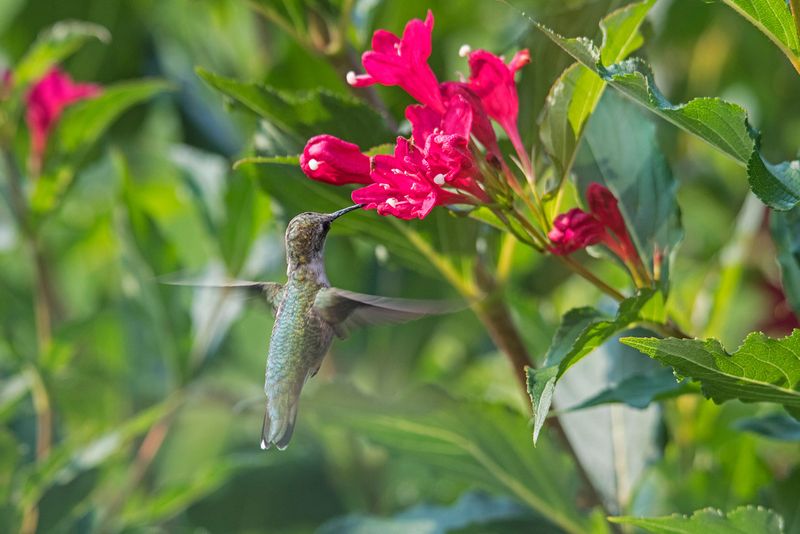
Come late spring, this old-fashioned shrub covers itself in trumpet-shaped red-pink blooms that seem to appear overnight. The arching branches bend gracefully under the weight of so many flowers.
Hummingbirds swarm the funnel-shaped blossoms during peak bloom, treating the whole shrub as a feeding station. Some varieties rebloom lightly through summer for an encore.
Easy to grow and adaptable to most US soils, it asks little beyond a sunny spot. Newer types add burgundy foliage that stays handsome long after the flowers fade.
23. Red Impatiens
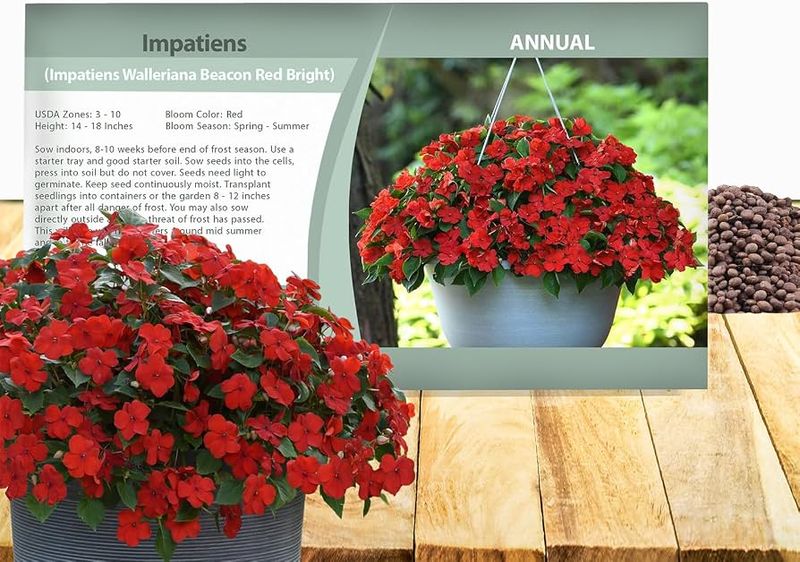
For shady corners where sun-loving reds refuse to bloom, red impatiens come to the rescue. These mounding annuals light up dark beds with a steady carpet of scarlet flowers.
Hummingbirds do visit them, especially the taller New Guinea types with their bigger, brighter blooms. Because they thrive in shade, they solve a problem few red flowers can touch.
Keep the soil consistently moist and they will bloom without a pause until frost. A row beneath a tree canopy transforms a dull spot into a glowing pocket of color.
24. Cigar Plant (Cuphea ignea)
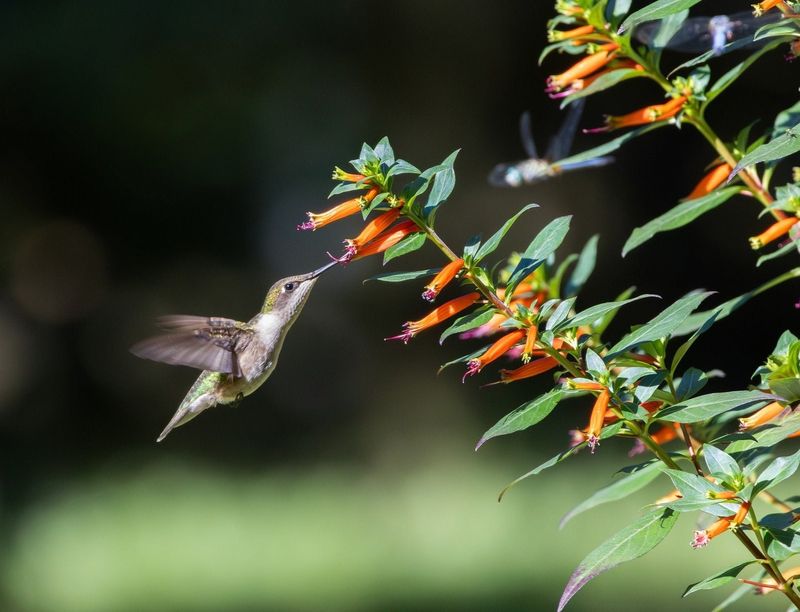
Look closely and you’ll see why it’s called the cigar plant: each little tubular flower is red-orange with a dark tip and white ring, resembling a lit cigar. The comparison is uncanny and always sparks a smile.
Tiny as the blooms are, they draw hummingbirds all season long thanks to their sheer number. The bushy little plant is loaded with hundreds of these quirky flowers at once.
It thrives in containers and edging spots, blooming happily through heat and humidity. A single plant becomes a nonstop buffet that never seems to run out.
25. Red Nasturtium
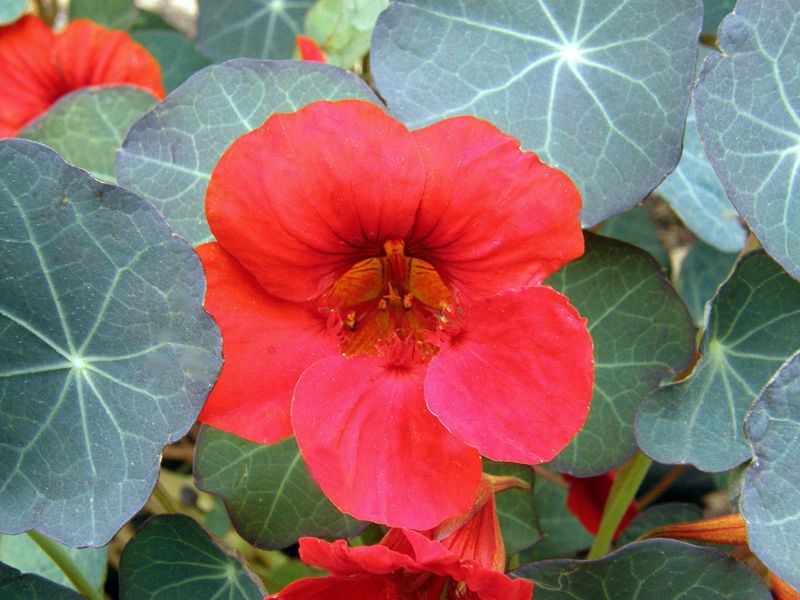
Sprawling and edible, red nasturtiums offer round leaves and vivid trumpet blooms that both end up welcome in the kitchen. The peppery flowers taste great in salads and add a punch of color to a plate.
Hummingbirds dip into the spurred flowers, which hide their nectar at the very back. The plants ramble happily over walls, along paths, or trailing from pots.
They actually flower better in poor soil, so skip the fertilizer and let them do their thing. Easy from seed, they are a foolproof pick for a first-time grower’s edible garden.
26. Coral Bells (Heuchera)
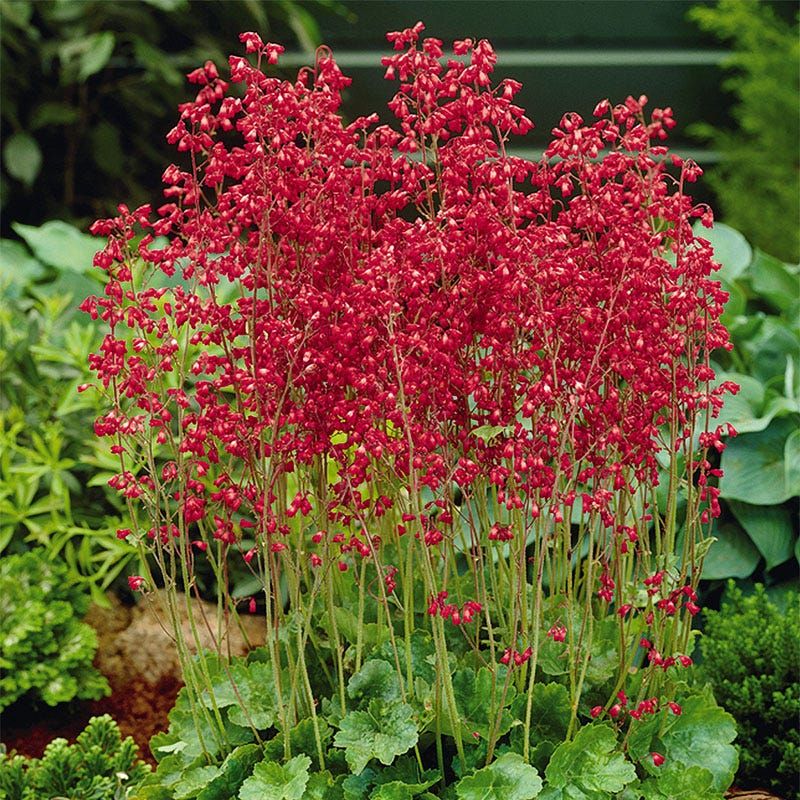
Grown mainly for their ruffled, colorful leaves, coral bells surprise many gardeners with delicate wands of tiny red bell-shaped flowers. The airy stems rise above the foliage like little strings of beads.
Hummingbirds seek out these small blooms even though people often overlook them. The plant earns its keep twice over, offering both foliage drama and a nectar bonus.
Happy in part shade, it tucks neatly into the front of a border or a woodland edge. Choose red-flowering types like Firefly for the best hummingbird appeal.
27. Red Dahlia (Single-flowered types)
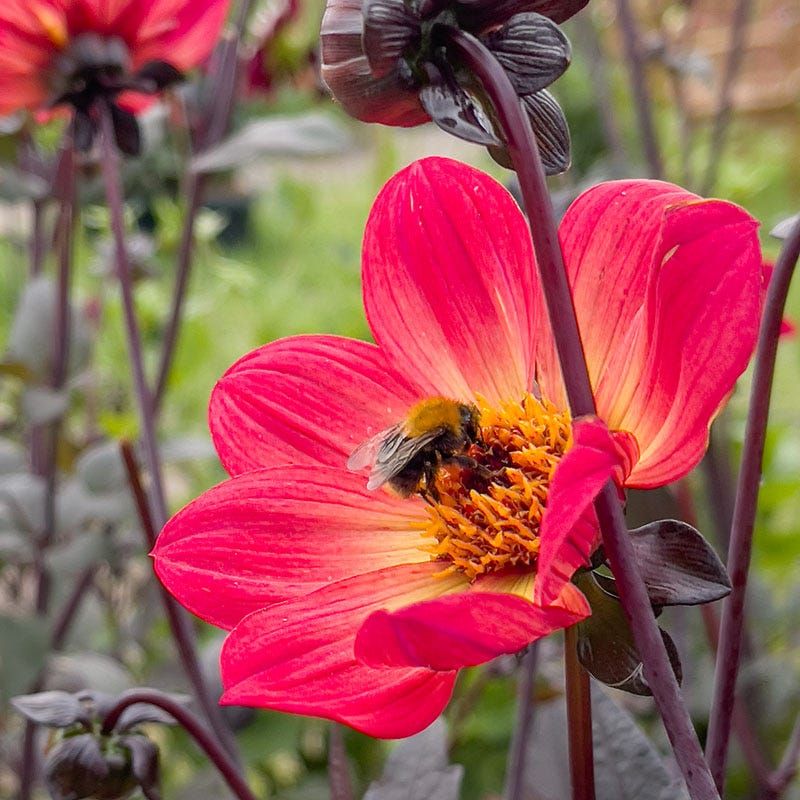
While the giant dinner-plate dahlias hog attention, it’s the simple single-flowered red types that hummingbirds actually use. Their open centers give birds and pollinators easy access to the goods.
Blooming from midsummer until frost, they extend the color season deep into fall. The tubers store easily over winter, so one purchase can supply flowers for years.
Skip the densely packed pompom kinds, which lock away their nectar behind too many petals. A patch of single red dahlias offers both cut flowers for you and fuel for the birds.
28. Flowering Quince (Chaenomeles)
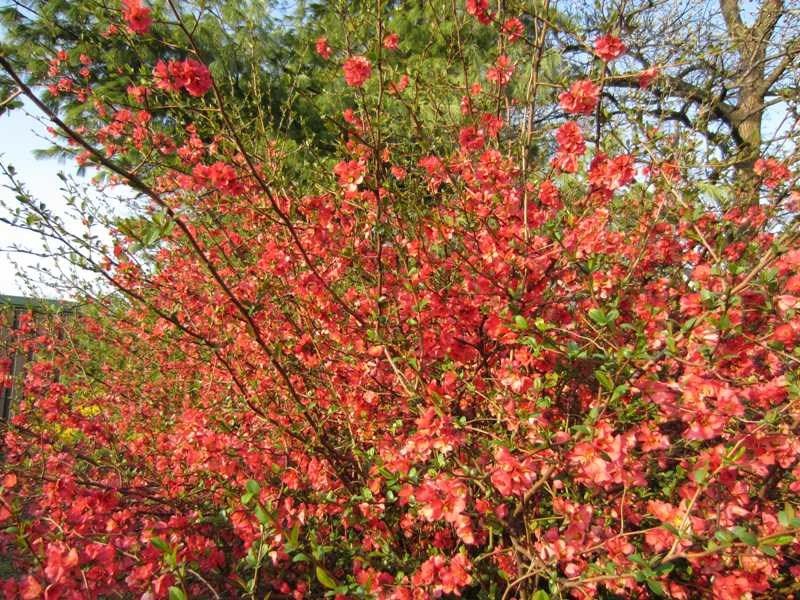
Long before most plants wake up, flowering quince bursts into fiery red blooms on bare, thorny branches. That early timing makes it a lifeline for the first hummingbirds of the year.
The cup-shaped flowers cling tight to the stems, creating a dramatic splash against still-leafless surroundings. Small edible fruits follow later in the season for making jelly.
A tough, adaptable shrub, it survives cold winters that would kill tender tropicals. Plant it as an early-season anchor and it will kick off your hummingbird calendar with a bang.
29. Red Turk’s Cap (Malvaviscus arboreus)
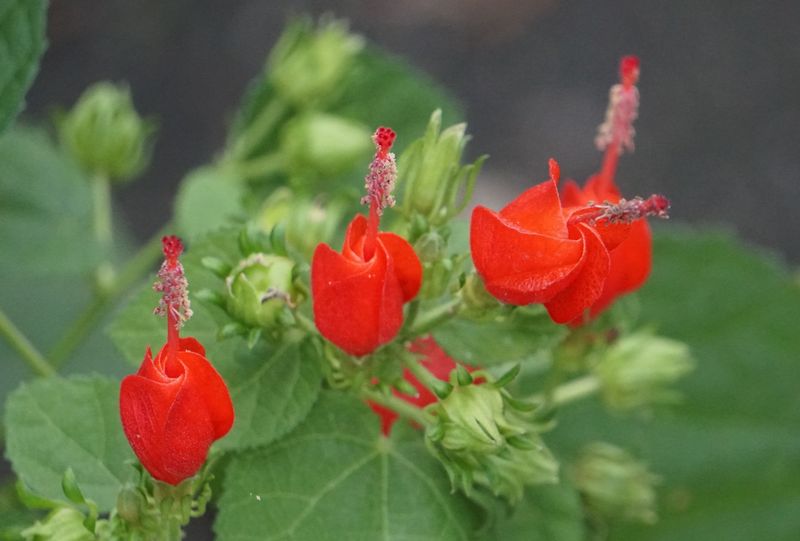
The flowers never fully open on this Southern favorite, staying twisted into a swirl that looks like a little turban or sultan’s cap. That quirky shape is exactly what hummingbirds slip their bills into.
It thrives in shade and heat where many flowers sulk, blooming steadily through the hottest months. Native to Texas and the Gulf region, it handles humidity without complaint.
The plant forms a soft, arching mound that fills shady corners with red all summer. Migrating hummingbirds especially count on it as a late-season nectar stop.
30. Red Canna Lily
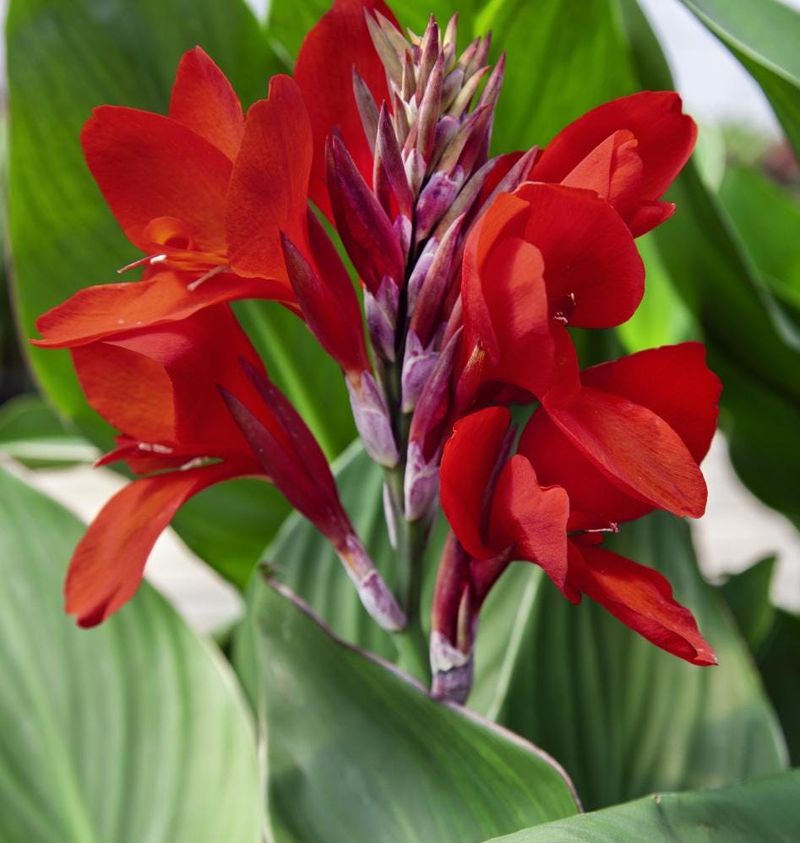
Bold, tropical, and impossible to ignore, red canna lilies bring big-leaf drama and towering red flower spikes to a sunny bed. They give a backyard an instant jungle vibe.
Hummingbirds visit the large flowers, which hold generous amounts of nectar. The paddle-shaped leaves, sometimes bronze or striped, look striking even between bloom flushes.
Grown from rhizomes, they multiply fast and can be lifted and stored over cold winters. Plant a cluster near a water feature for a lush, resort-like feel that birds love.
31. Scarlet Beebalm’s Cousin: Spotted Beebalm (Monarda punctata)
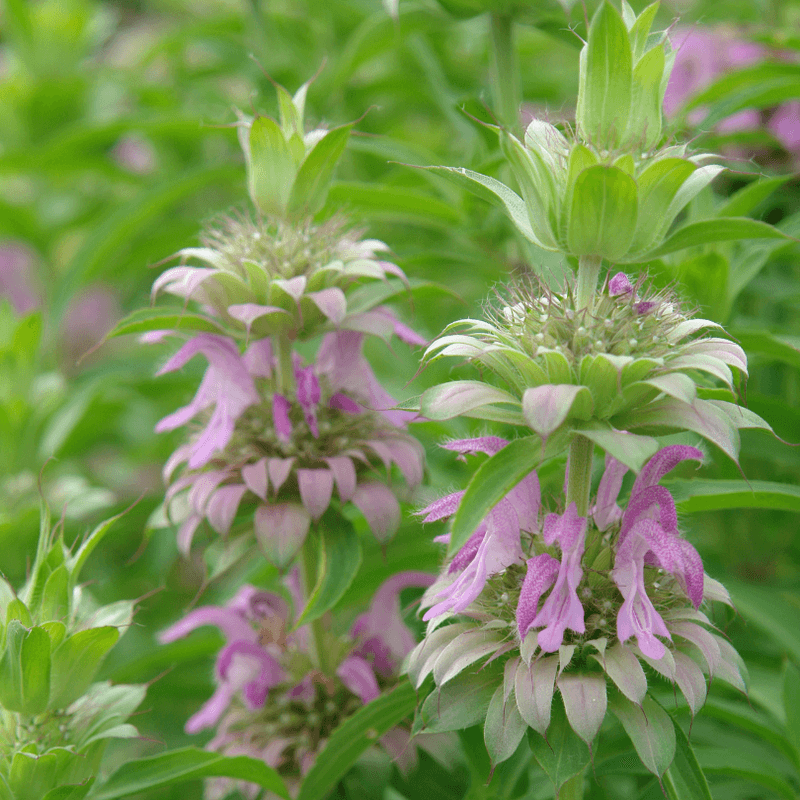
Stranger and more sculptural than the classic red bee balm, this native cousin layers tiered whorls of flowers topped with reddish-pink leafy bracts. The effect looks almost like a pagoda climbing the stem.
The colorful bracts and blooms together pull in hummingbirds along with a crowd of beneficial insects. It thrives in dry, sandy soils where showier flowers give up.
Herbalists have long valued it for its thymol-rich, oregano-scented leaves. Add it for texture and a wilder, prairie-inspired look that still keeps the birds coming.
32. Red Mandevilla
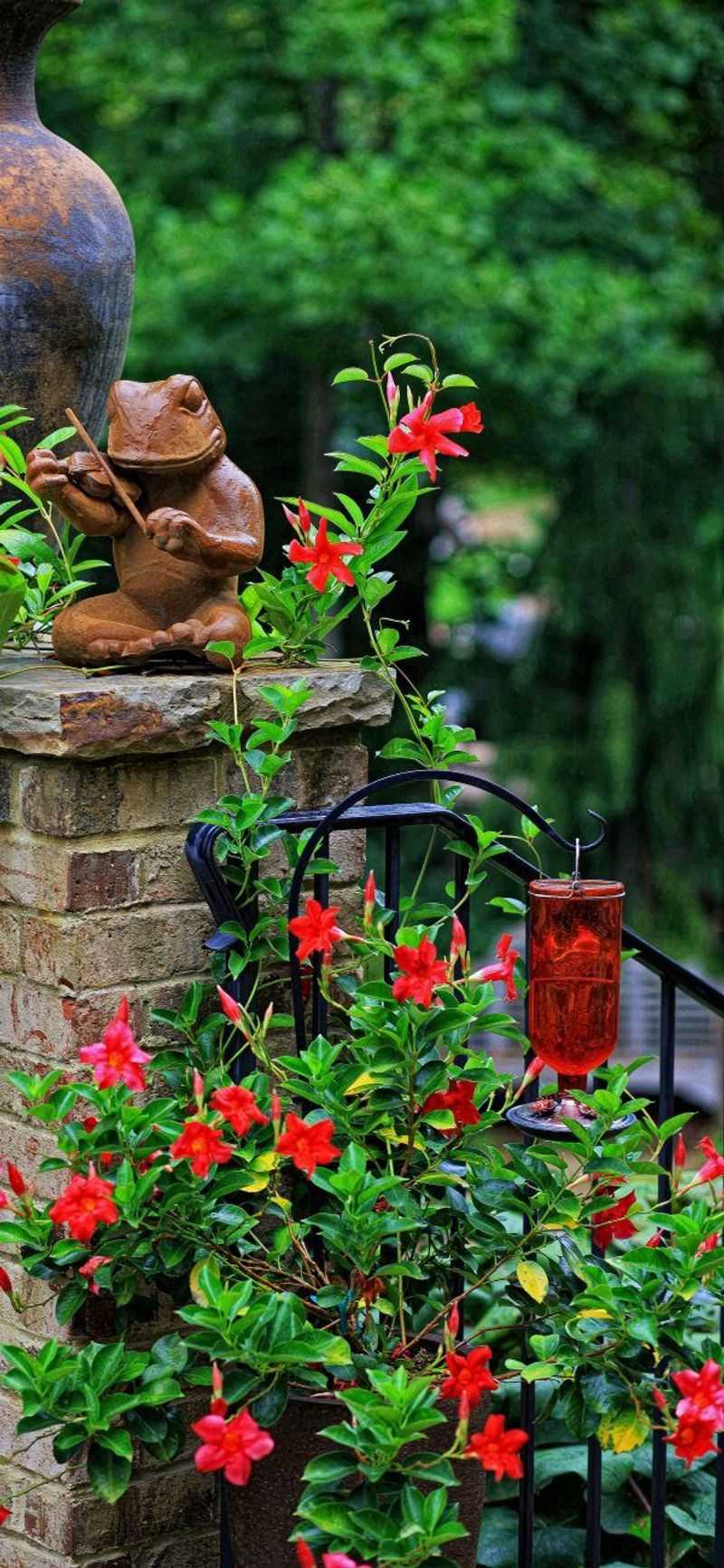
Glossy leaves and satiny red trumpets make mandevilla the diva of the summer patio. This tropical vine climbs a trellis or obelisk with elegant ease, blooming right through the hottest weeks.
Hummingbirds explore the wide-mouthed trumpets, which flash bright against the deep green foliage. In containers it becomes a portable focal point you can move to catch the sun.
Northern gardeners grow it as an annual or overwinter it indoors as a houseplant. Give it warmth, sun, and a sturdy support, and it rewards you with weeks of red-carpet glamour.
33. Red Gladiolus
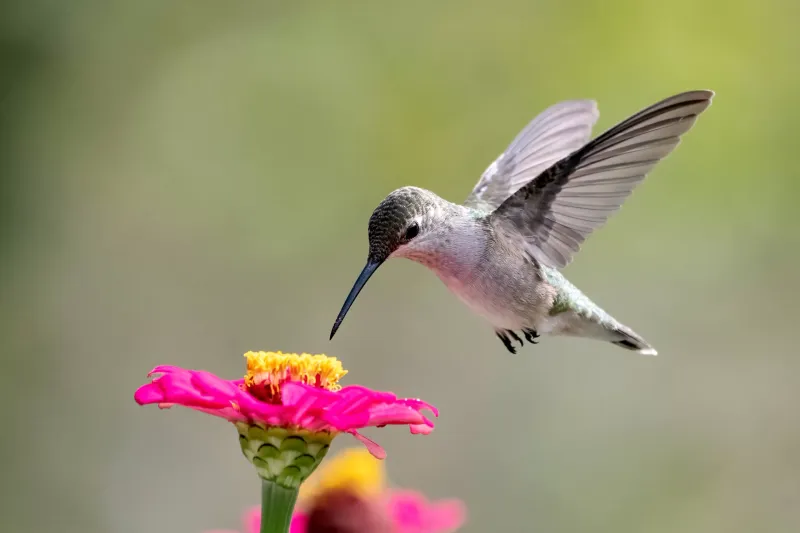
Marching up a tall stalk in orderly ranks, red gladiolus flowers open from bottom to top over many days. That staggered bloom gives hummingbirds a fresh flower to visit almost daily.
The funnel-shaped blossoms are roomy enough for a bird to probe deeply for nectar. Stagger your plantings a couple weeks apart and you can stretch the show across the whole summer.
Grown from inexpensive corms, they are a budget-friendly way to add vertical drama. They also make classic cut flowers if you can bear to share a few with the vase.
34. Red Lantana
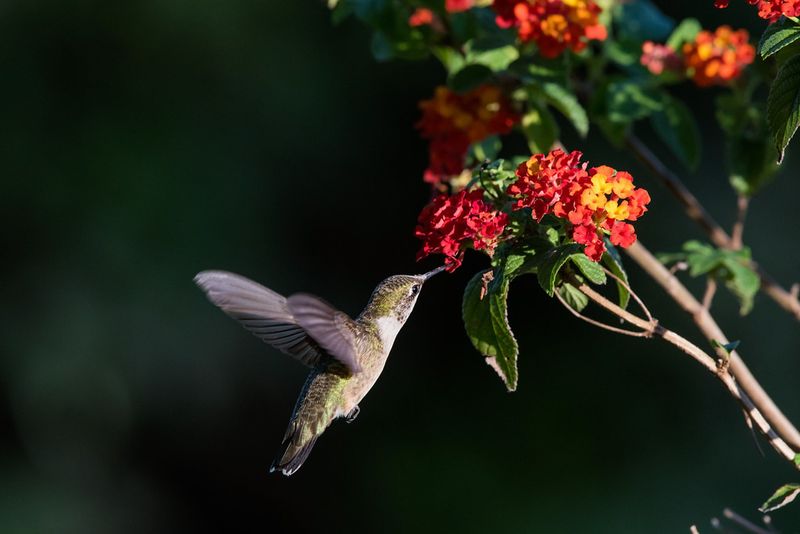
Small clusters of tiny florets that shift from red to orange to yellow give lantana its trademark multicolored pom-poms. Butterflies adore it, but hummingbirds happily join the crowd too.
Built for punishing heat and drought, it blooms without pause through the worst of summer. The rough, aromatic leaves also make it unappealing to browsing deer.
It works as a spreading groundcover, a mounding shrub, or a trailing basket filler depending on the variety. Once it settles in, it practically thrives on neglect while feeding a steady stream of visitors.
35. Indian Pink (Spigelia marilandica)
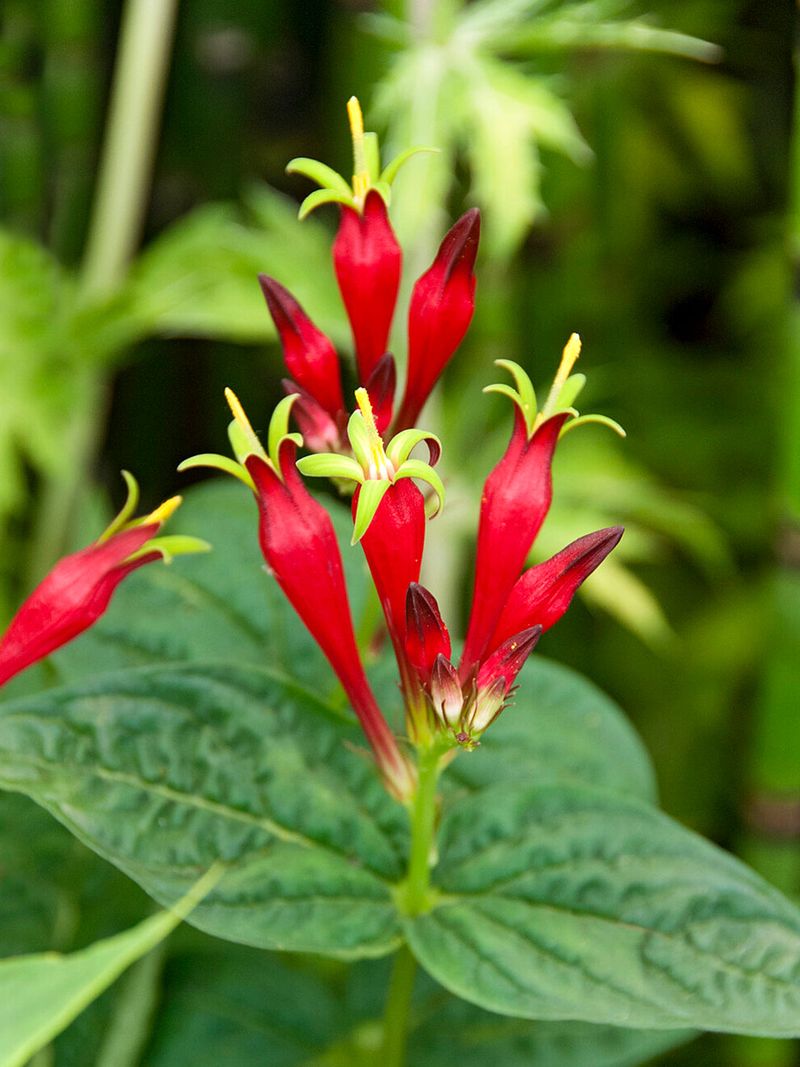
A hidden gem of Southern woodland gardens, Indian pink pairs vivid red tubes with bright yellow star-shaped tips that flare open at the mouth. The two-tone effect is genuinely eye-catching up close.
Hummingbirds find the upward-facing tubes irresistible during the late-spring bloom. It thrives in the part shade and moist soil beneath trees, filling a niche few red flowers can.
Long overlooked, it is finally gaining fans among native-plant enthusiasts across the eastern US. Plant a clump at a woodland edge and enjoy one of the region’s best-kept secrets.
36. Standing Cypress (Ipomopsis rubra)
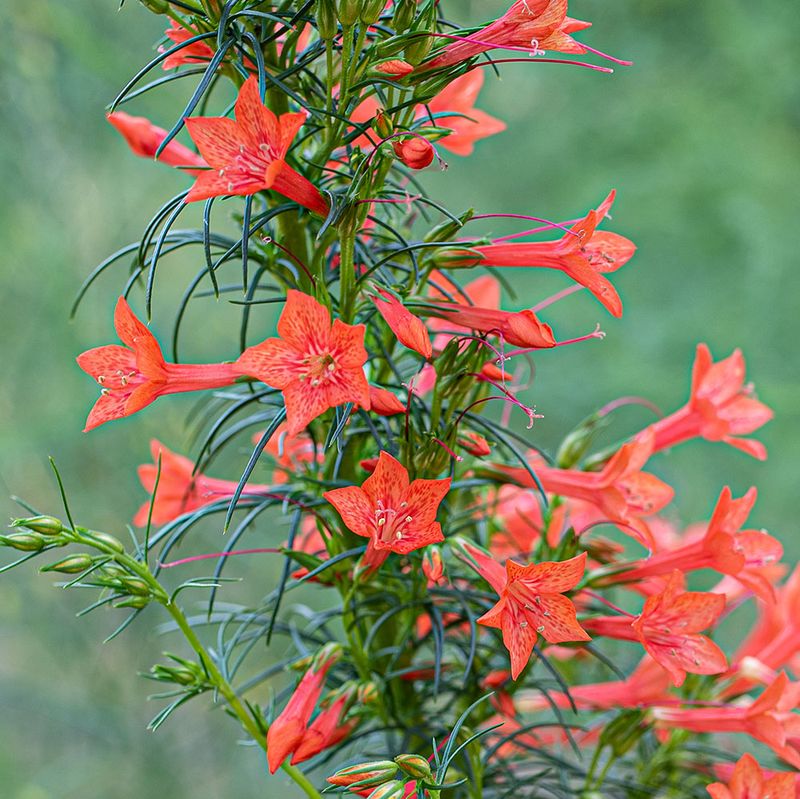
Towering and torch-like, standing cypress rockets up to five or six feet, then coats its upper stems in narrow red tubular flowers. From a distance a patch looks like a field of red-hot spires.
The tubes are custom-shaped for hummingbird bills, and the birds work each spike top to bottom. A biennial, it grows a feathery rosette its first year before flowering spectacularly the next.
Native to the central and southeastern US, it thrives in dry, sandy, sunny spots. Let it self-seed and you’ll have a rotating supply of these fiery columns for years to come.