
6 Space-Saving Ways To Grow Fuller Geraniums In Pots When You’re Short On Room
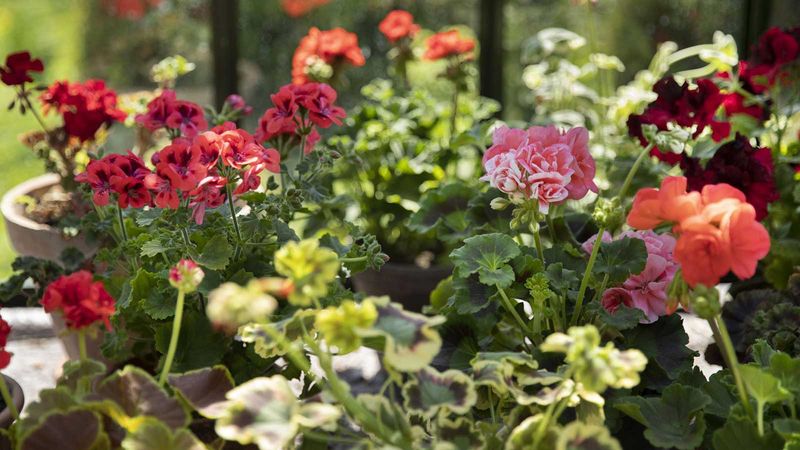
Geraniums are one of the friendliest flowers you can grow, but tiny balconies and crowded patios can make them look thin and leggy fast. The good news is that you do not need a big yard to enjoy thick, bushy plants covered in blooms. With a few smart tricks, even a single pot on a railing can burst with color all season long. Here are six space-saving ways to grow fuller geraniums when room is in short supply.
1. Pinch the Tips to Force Branching
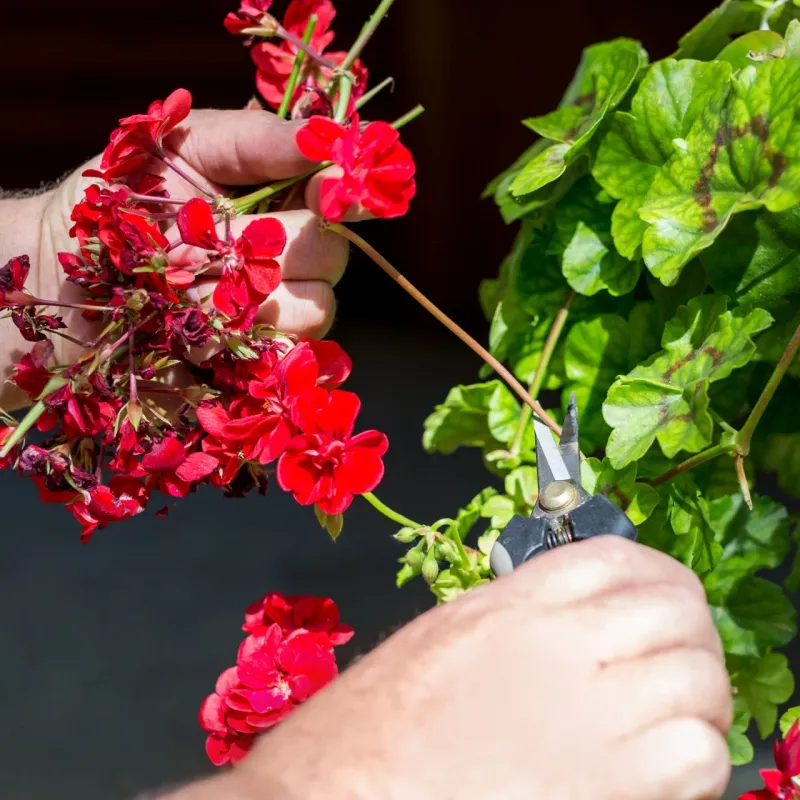
Snapping off the very top of a geranium stem feels wrong at first, almost like you are hurting the plant. In reality, that little pinch is the single fastest way to turn one skinny stalk into a bushy, multi-stemmed beauty.
When you remove the growing tip, the plant redirects its energy into the buds tucked along the sides of the stem. Those side buds wake up and shoot out new branches, which means more leaves and far more flower clusters in the same footprint. Use clean fingers or scissors and pinch just above a leaf node, taking off about half an inch.
Start pinching when your plant is young, roughly four to six inches tall, and repeat every few weeks through spring and early summer. A pinched geranium may look a bit bare for a week, but it fills back in twice as thick. For gardeners squeezed onto a small porch, this trick lets you grow up and out instead of needing extra pots.
2. Choose Compact and Dwarf Varieties
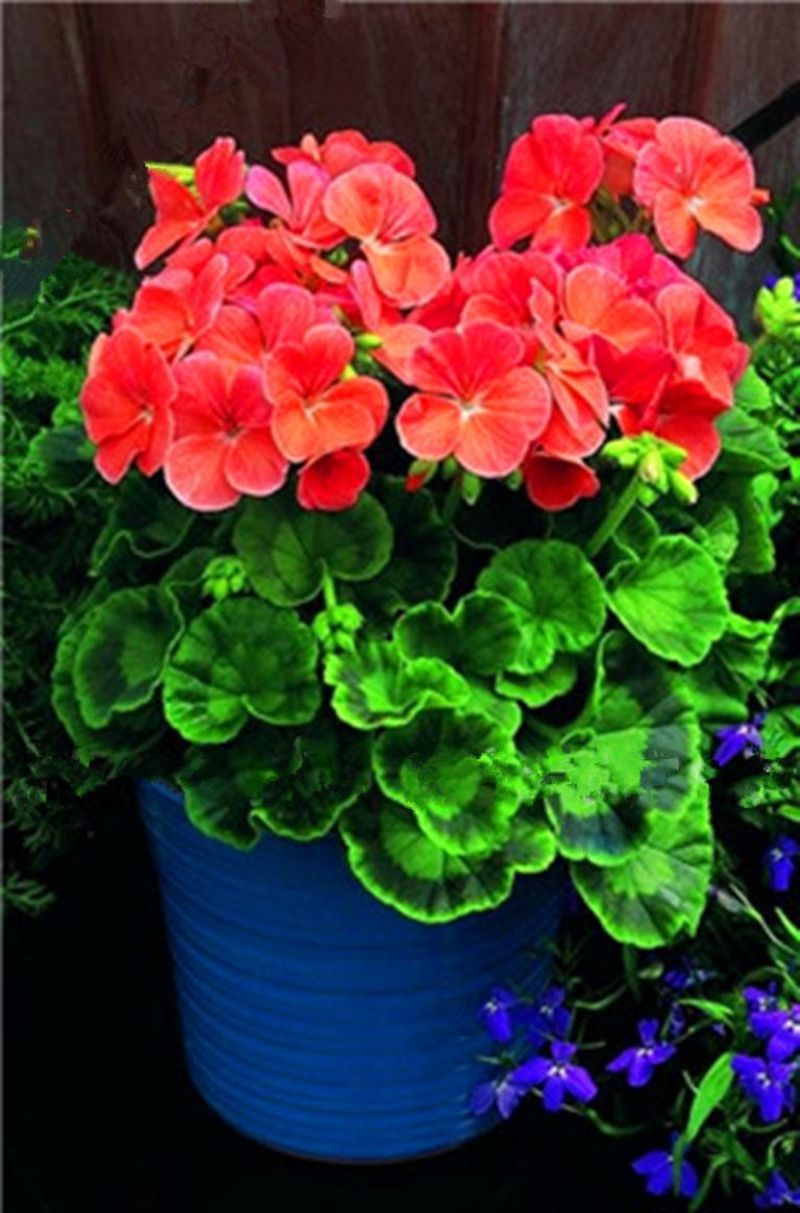
Not every geranium wants to sprawl across your whole balcony. Breeders have created compact and dwarf types that stay naturally rounded and tidy, which is a gift when your growing space is measured in inches.
Look for names labeled as dwarf, mini, or compact zonal geraniums, along with fancy-leaf types that mound instead of stretch. Varieties in the Pinto and Sarita series, for example, hold a neat shape and pack their blooms close together rather than flopping over the pot edge.
Because these plants put their energy into staying dense instead of tall and leggy, you get a full, flower-covered dome without constant trimming. A single dwarf geranium can fill a six-inch pot and still look lush on a crowded windowsill. Pairing the right variety with a small container from the start saves you the headache of taming an overgrown plant later, and it keeps your little garden looking intentional rather than wild.
3. Grow Vertically with Hanging Baskets and Wall Pockets
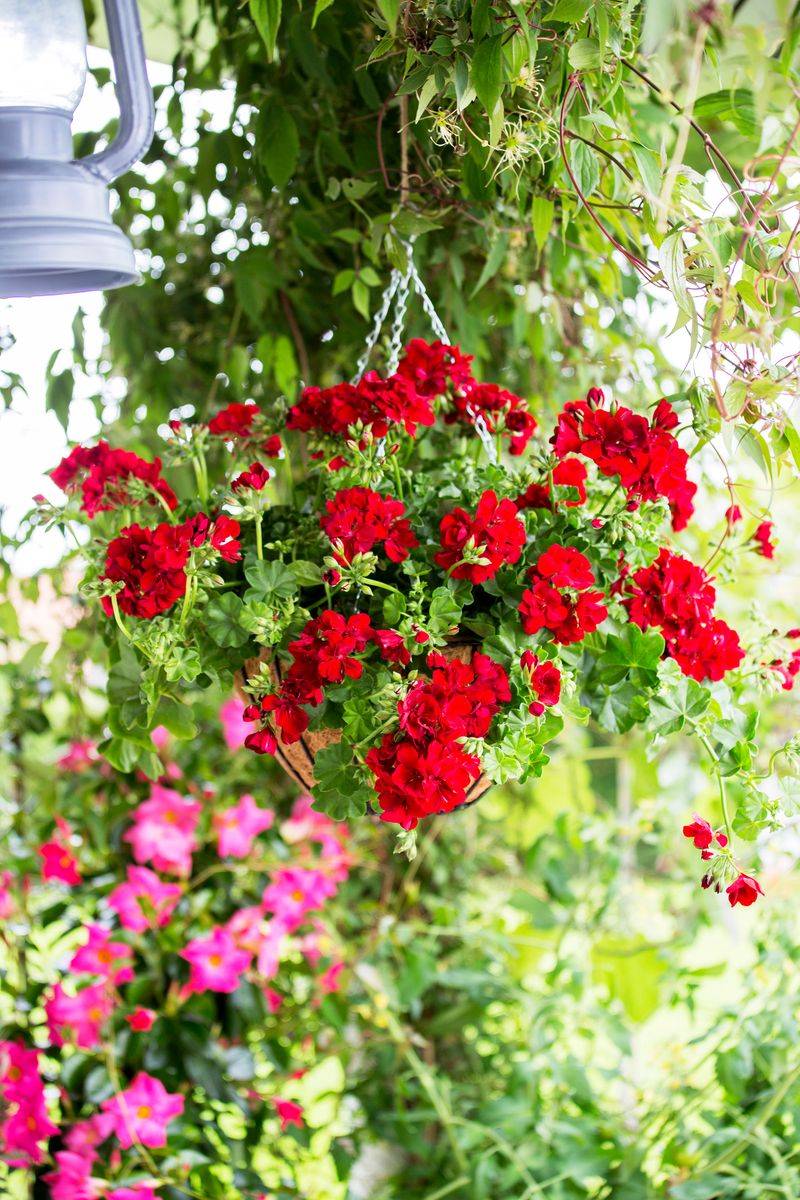
When the ground and railing are already full, look up. The airspace above and beside your seating area is prime real estate that most people forget about entirely.
Trailing and ivy-leaf geraniums are made for this. Tuck them into hanging baskets, wall-mounted pockets, or a tiered plant stand, and they cascade downward in a waterfall of blooms without stealing a single inch of floor space.
Vertical growing also improves airflow around each plant, which helps keep leaves dry and less prone to fungus. Choose lightweight fiber or plastic containers so your hooks and brackets can handle the weight once the soil is wet. Mount baskets where they still catch six hours of sun, and rotate them a quarter turn every week so every side fills in evenly.
A back wall or fence can hold several stacked pockets, turning a bare vertical surface into a living tapestry of color. For apartment dwellers, this is often the difference between one lonely plant and a whole hanging garden.
4. Feed Lightly but Often for Dense Growth
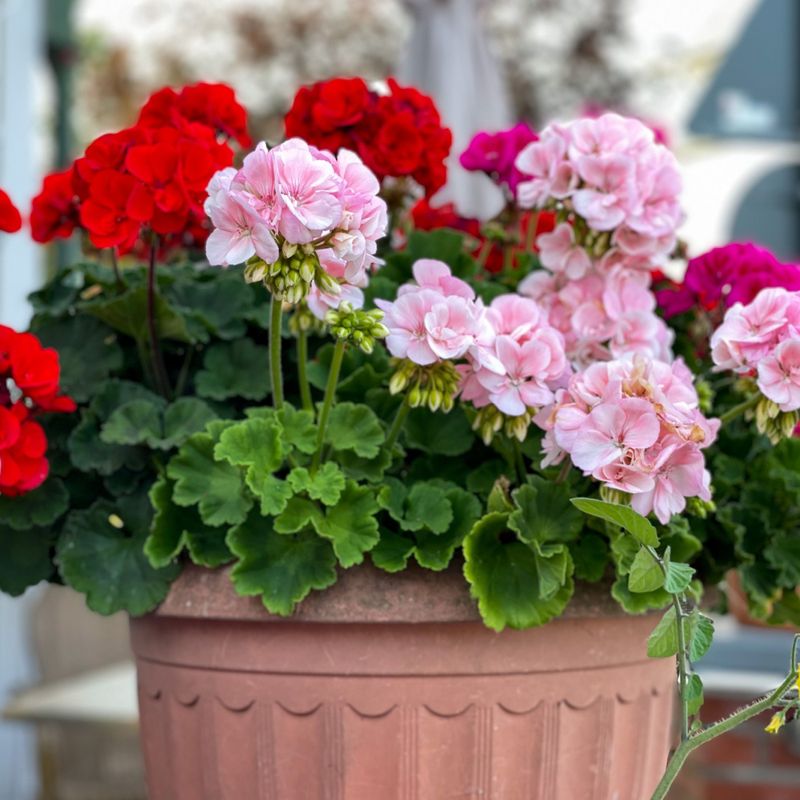
Container geraniums are a bit like kids at a growth spurt: they eat through their food fast because their roots are trapped in a small amount of soil. Skip the feeding and you end up with pale, spindly plants and only a handful of flowers.
The fuller-plant secret is small, frequent meals rather than one big dump of fertilizer. A balanced, water-soluble bloom food diluted to half strength every week or two keeps new leaves and flower buds coming steadily. Too much nitrogen, though, and you may get a jungle of leaves with barely any blooms, so pick a formula higher in phosphorus.
Watch the plant for clues. Yellowing lower leaves can signal it is hungry, while soft, floppy growth often means you are overdoing the nitrogen. Feeding lightly keeps the plant compact and bushy instead of leggy, which matters even more when every pot is on display in a tight space where thin, struggling plants stand out.
5. Repot Snugly and Refresh the Soil
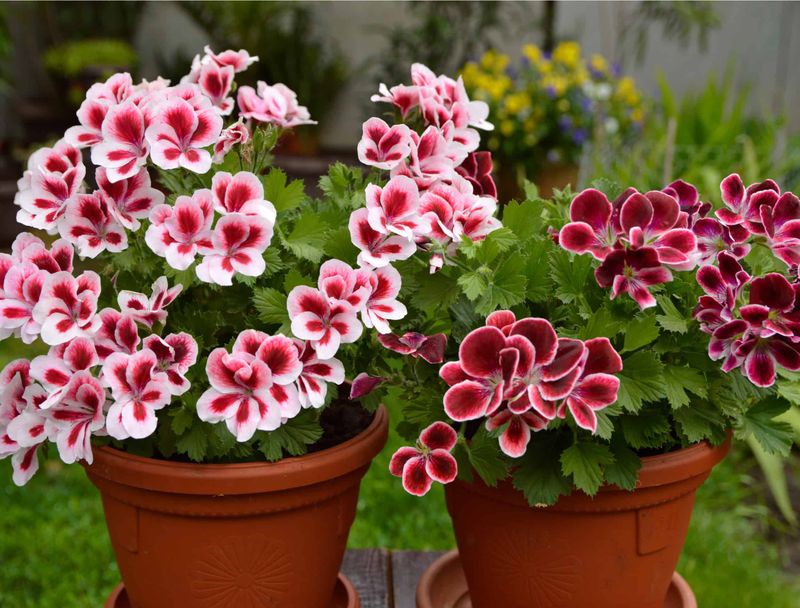
Ever notice how a geranium in a slightly tight pot seems to bloom its heart out? There is real logic behind it. Geraniums flower more freely when their roots are a little cozy, so cramming them into an oversized container actually works against you.
Choose a pot only an inch or two wider than the root ball. A snug fit encourages the plant to focus on top growth and flowers instead of endlessly filling empty soil with roots. It also means you can fit more plants into a small area without wasting space on giant containers.
Once a year, in early spring, gently lift the plant, tease apart circling roots, and repot with fresh, well-draining potting mix. Old soil compacts and loses nutrients, which quietly starves your plant into looking thin. A quick refresh gives roots room to breathe and sets the stage for a thick, blooming season. Add a handful of perlite to keep drainage sharp, since soggy roots are the enemy of a full geranium.
6. Deadhead Spent Blooms Regularly
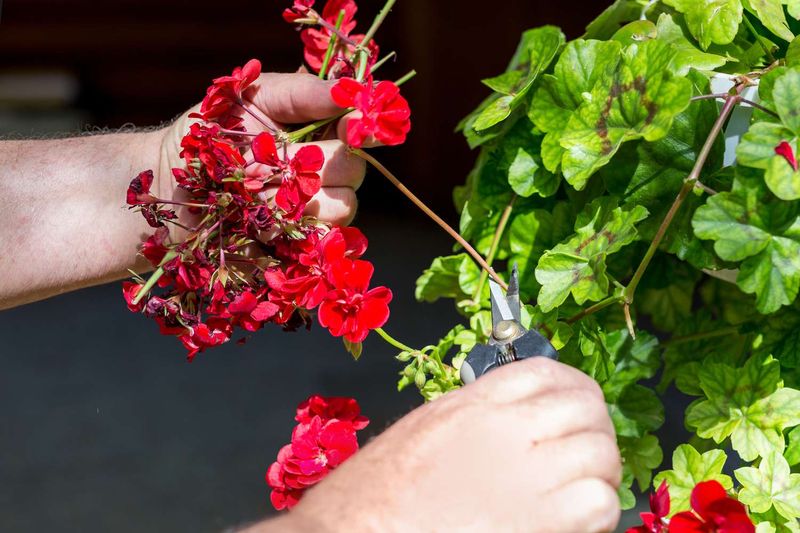
Faded flowers might not seem like a big deal, but leaving them on the plant is one of the quietest ways to end up with a thin, tired-looking geranium. Once a bloom fades, the plant starts pouring energy into making seeds instead of new flowers.
Removing those spent heads, a job called deadheading, flips that energy right back into fresh growth and buds. Snap or snip the whole flower stalk down to where it meets the main stem, not just the withered petals, so you avoid leaving stubby green stubs behind.
Doing this every few days keeps the plant tidy and pushes it to bloom again and again through the season. On a small balcony where every plant is in full view, that constant flush of new color makes a huge visual difference. Bonus: clearing away rotting petals also cuts down on mold and the gnats that love damp, decaying plant bits in tight, humid corners.