
7 Native North Carolina Ground Covers That Crowd Out Driveway Weeds Better Than Liriope
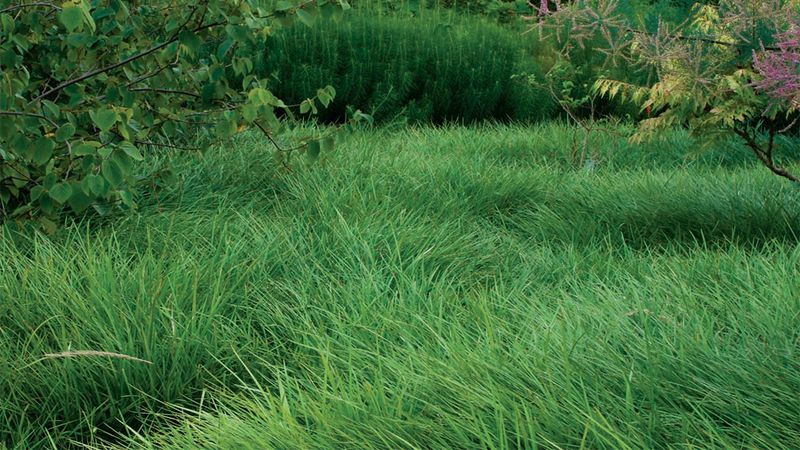
Liriope shows up along half the driveways in North Carolina, but that tidy green edge hides a problem: some kinds spread out of bounds and give almost nothing back to local wildlife. The good news is that our state grows plenty of native ground covers that pack in just as tightly, choke out driveway weeds, and actually feed the box turtles, bees, and songbirds you love watching.
Each plant on this list earns its spot for a different reason, from berries in winter to flowers that wake up early for hungry pollinators. Pick the one that fits your shade, sun, and soil, and you get a weed-fighting border that works for your yard instead of against it.
1. Allegheny Spurge (Pachysandra procumbens)
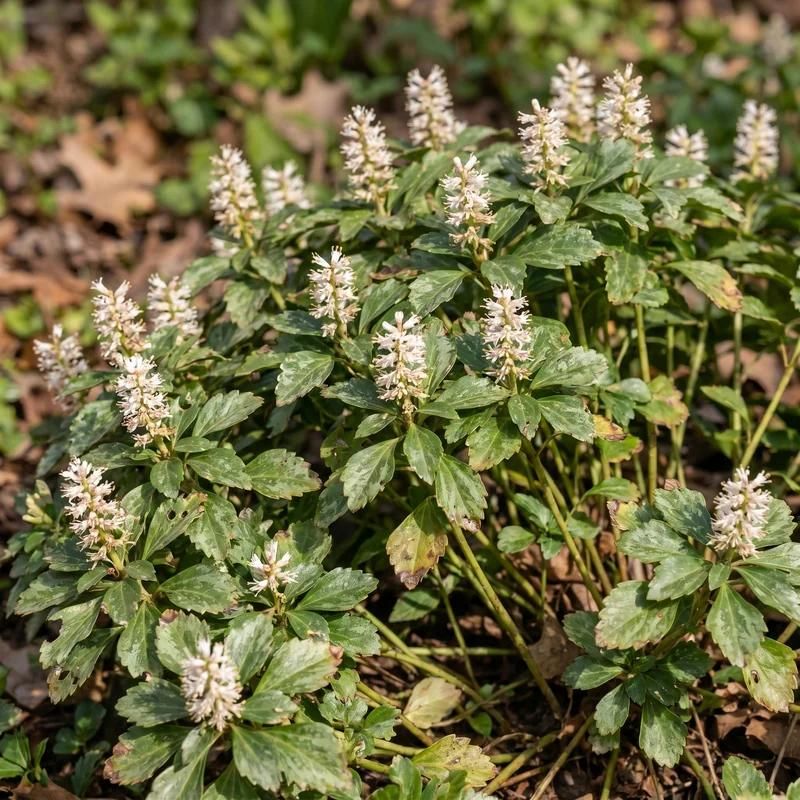
Gardeners who battle a shady strip beside the driveway where nothing seems to fill in will want to meet Allegheny Spurge. Described by growers as great for choking out other plants, this evergreen perennial creeps along by underground rhizomes and knits itself into a thick carpet that weeds simply cannot muscle through.
Shade is where it truly shines, so that damp north-side edge under a maple or oak becomes an asset instead of a bare patch. It even tolerates the occasional flooding that comes with a hard Carolina downpour, which is more than most border plants can promise.
Unlike the running Liriope it replaces, this native belongs here and behaves itself while still spreading with purpose. The leaves hold their soft green through winter, giving your driveway a finished look in every season.
Tuck a few plants in during spring, keep them watered the first summer, and let them do the crowding for you.
2. Green and Gold (Chrysogonum virginianum)
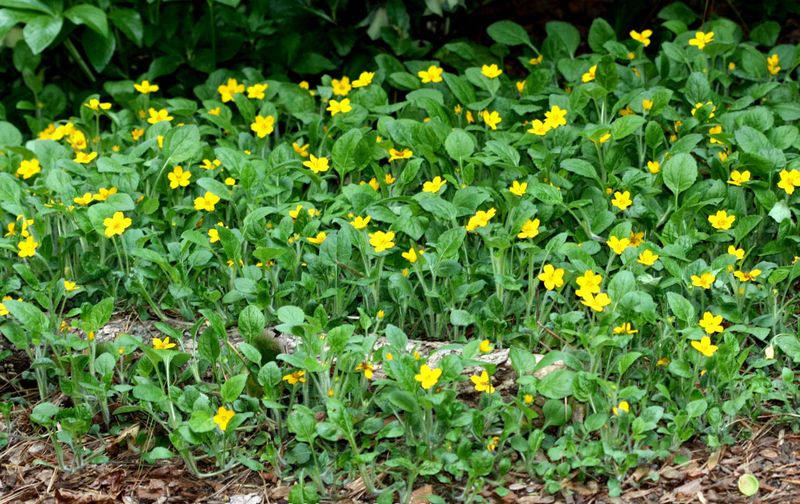
Cheerful yellow stars scattered across low green foliage in early spring, that is how Green and Gold announces itself long before most plants have shaken off winter. Those early blooms matter more than they look, because they feed native bees and other pollinators showing up hungry when little else is flowering.
Flexibility is this plant’s calling card. It grows happily across the Piedmont, Coastal Plain, and Mountains, handling part sun to part shade and soil that runs from average to dry.
That range means it can wrap around a driveway that gets patchy light through the day without sulking.
Deer tend to leave it alone, which spares you the frustration of watching your border get nibbled to nubs overnight. Evergreen foliage keeps the ground covered and weeds suppressed year-round, and the whole thing stays low enough that it never crowds a walkway.
For a tidy edge that still throws a party for pollinators, it is tough to beat.
3. Creeping Phlox (Phlox stolonifera)
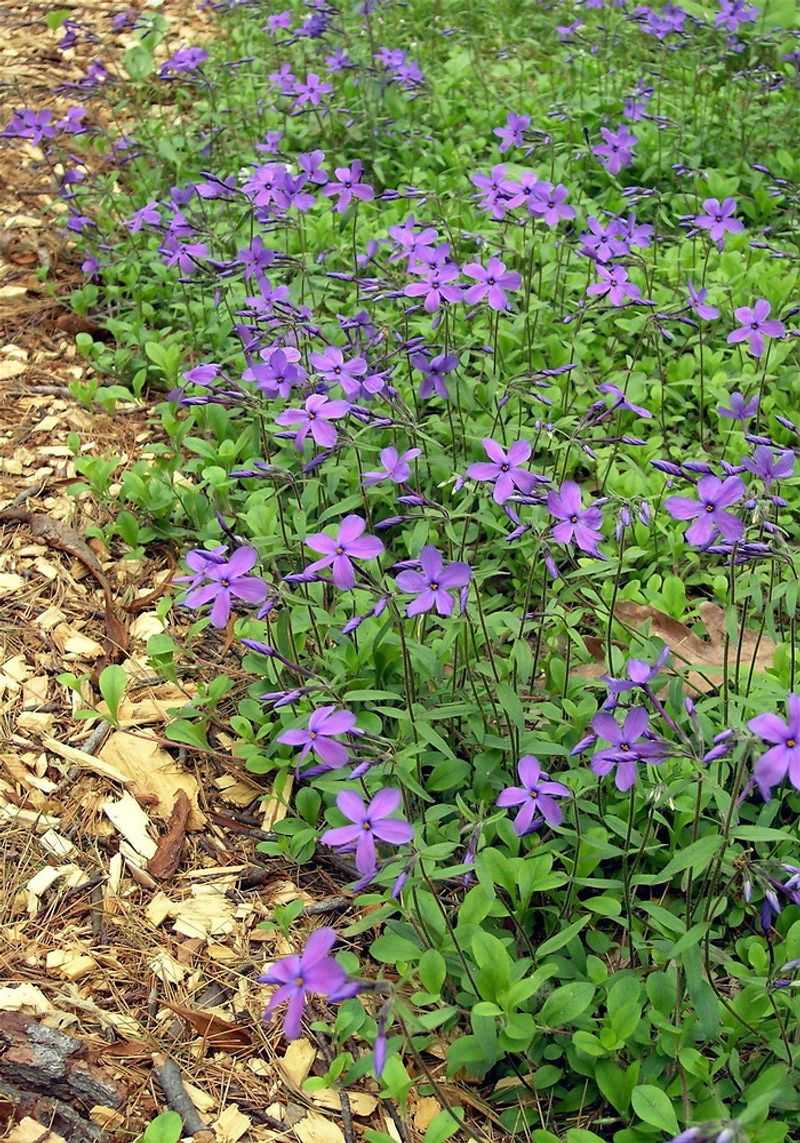
Picture a wave of lavender and pink washing over the ground each spring, and you have got Creeping Phlox at its peak. The flowers pull in butterflies and other insects, quietly boosting the pollinator population that keeps a backyard ecosystem humming.
What makes it such a workhorse along a driveway is the way it spreads. Rhizomes push it outward into dense, semi-evergreen mats that leave weed seeds no open dirt to sprout in.
Where a bare gap invites crabgrass, this phlox invites a solid sheet of foliage instead.
Fun bit of trivia: the stolonifera in its name points to the creeping stems that root as they travel, which is exactly why it fills space so well. Plant it in dappled shade with decent drainage and it settles in fast.
Come the following spring, that carpet of bloom will have neighbors asking what you did to your border.
4. Wild Strawberry (Fragaria virginiana)
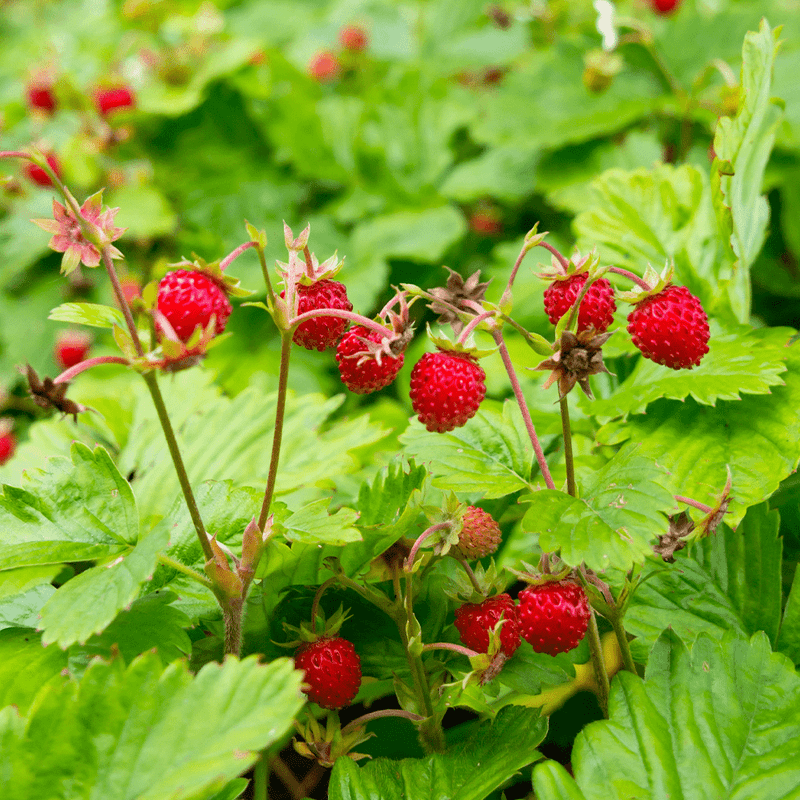
Here is a ground cover that feeds you and the wildlife at the same time. Wild Strawberry sends out runners in both sun and shade, spreading quickly into a dense green mat while never turning into the kind of bully that takes over the whole yard.
Those little red fruits are the real gift. Birds, box turtles, and small mammals treat them as a snack, so your driveway border doubles as a tiny buffet for the creatures you like seeing around.
You might even beat them to a few berries yourself.
Because it fills in fast, weeds rarely get a foothold once the runners connect. It handles the mixed light most driveways throw at it and asks for very little once established.
Swap it in where a struggling patch of Liriope used to sit, and you trade a plant that gives nothing back for one that earns its keep in bites and blooms.
5. Dwarf Lobed Coreopsis (Coreopsis auriculata ‘Nana’)
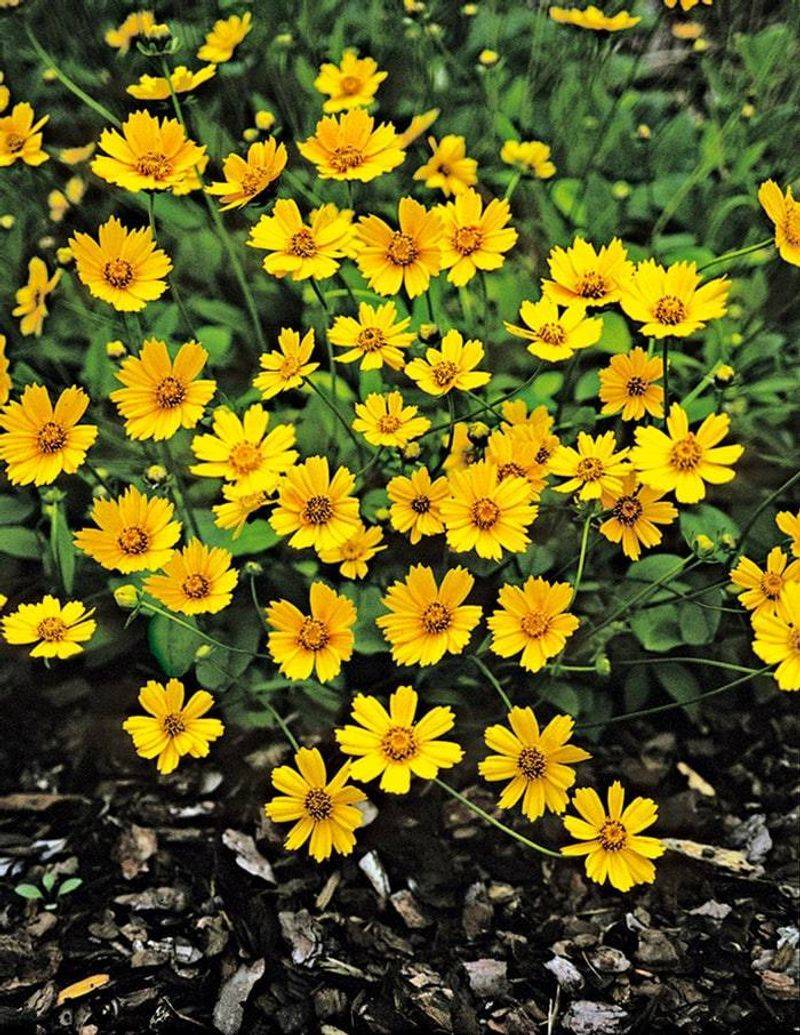
Small in stature, big on coverage, this dwarf coreopsis spreads densely enough to smother weeds while staying short enough to hug a driveway edge without flopping into the drive. The yellow-orange, daisy-like blooms sit above the foliage and light up the border from spring into summer.
Pollinators find those flowers irresistible, so a strip of it hums with bees and other beneficial insects on a warm afternoon. That is a lot of ecological payoff from a plant that mostly just wants sun and average to dry soil.
One of its best qualities is how forgiving it is across the whole state. Piedmont, Coastal Plain, or Mountains, it settles in wherever the light is bright and the drainage is decent.
If your driveway edge bakes in full sun where Liriope looks tired by August, this native brings color and a tight weed-blocking mat without the fussing.
6. Partridge Berry (Mitchella repens)
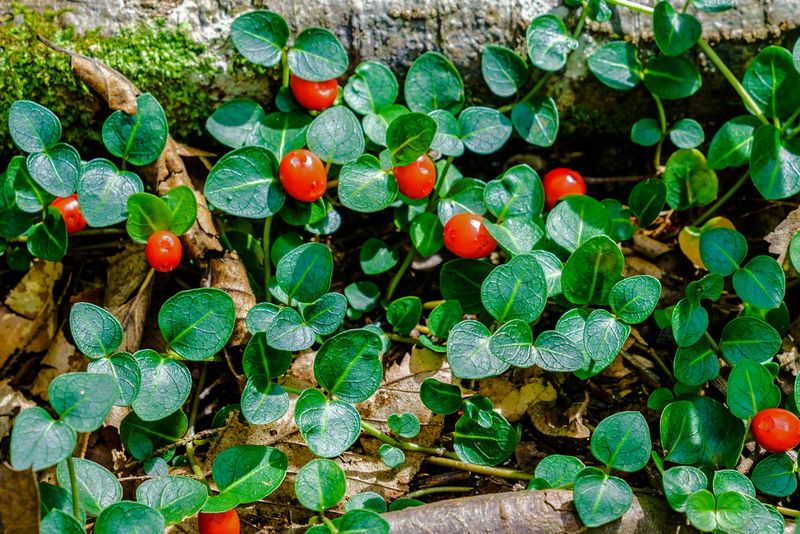
Come December, when most of the garden has gone quiet, Partridge Berry keeps a splash of bright red glowing at ground level. Those persistent berries feed birds and other wildlife straight through the lean winter months, which is exactly the kind of steady help a backyard ecosystem needs.
Evergreen and low-growing, it spreads by stolons that root as they run, weaving a flat mat over the soil. You will find it thriving across the Piedmont, Mountains, and Coastal Plain wherever there is mostly shade and acidic soil, the sort of spot under pines where turfgrass gives up.
It moves at a gentler pace than some of the others here, so give it a little patience as it fills in. The reward is a neat evergreen carpet that shrugs off weeds and offers winter color and food in one quiet package.
For that dim, root-filled edge of the driveway, few natives handle the job so gracefully.
7. Golden Ragwort (Packera aurea)
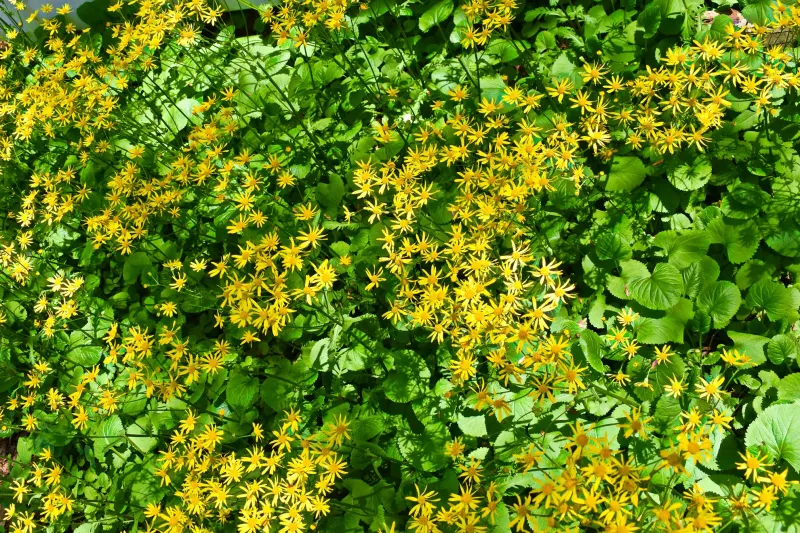
For a driveway edge that borders woods or a damp, shady corner, Golden Ragwort fills space with impressive speed. It spreads readily into a green blanket of low rosettes, then throws up cheerful yellow flowers in spring that native bees and beneficial insects flock to.
That fast-covering habit is the whole point along a driveway. Bare soil is an open invitation to weeds, and this plant closes that door by claiming the ground before anything unwanted can.
In a woodland setting it looks completely at home rather than plopped in.
Its spring show gives pollinators an early meal at a time of year when food can be scarce, tying your border into the wider rhythm of the yard’s wildlife. Give it moist to average soil and part shade, and it takes off.
Where invasive Liriope would offer little more than green, Golden Ragwort delivers coverage, blooms, and a genuine boost for the native insects your garden depends on.