
8 Reasons Your Cucumber Vines Keep Climbing But Stop Giving You Cucumbers
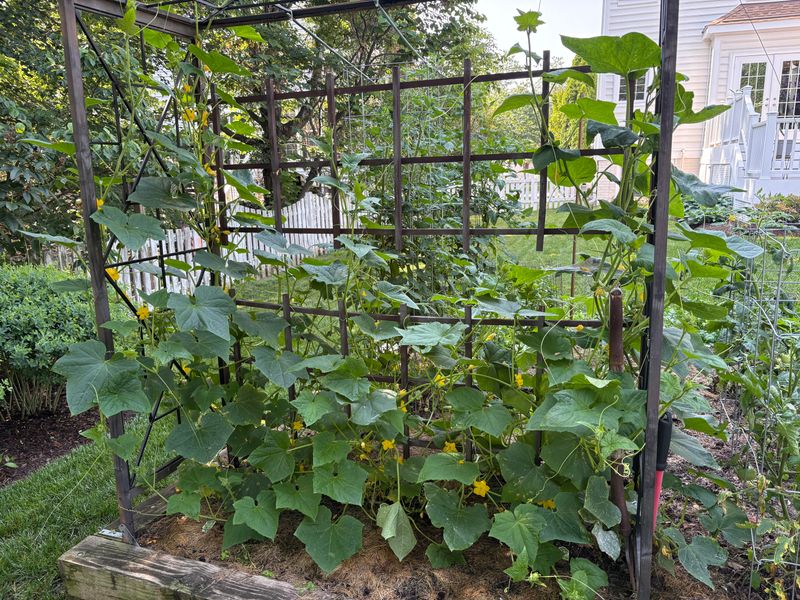
You planted cucumbers, and now the vines are shooting up like they own the trellis. But when you go looking for cucumbers to slice, all you find are leaves, curls, and maybe a few sad little nubs. A cucumber plant can look totally healthy while quietly refusing to make fruit, and the reasons are usually fixable once you know what to check. Let’s walk through the eight most common culprits so you can turn all that leafy growth into a real harvest.
1. Too Much Nitrogen in the Soil
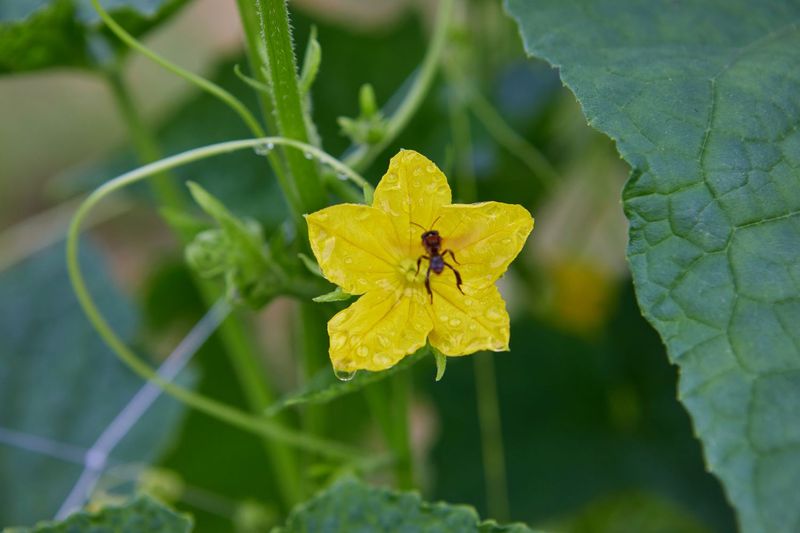
Ever fed your cucumbers a rich, nitrogen-heavy fertilizer and watched them explode with jungle-thick foliage? That lush green wall is actually a warning sign. When nitrogen levels run high, the plant pours all its energy into leaves and stems instead of flowers and fruit.
Most cucumbers grown in US backyards do best with a balanced or slightly phosphorus-leaning feed once they start setting fruit. A 5-10-10 blend, for example, tells the plant to slow the leafy sprint and start making cucumbers. If you have been reaching for lawn fertilizer or fresh manure, that could be the whole problem.
An easy fix is to stop the nitrogen for a couple of weeks and switch to a bloom-boosting formula. You can also work a little bone meal or compost tea into the root zone. Give it two to three weeks, and you should start seeing more yellow flowers showing up along the vine.
2. No Pollinators Are Visiting the Flowers
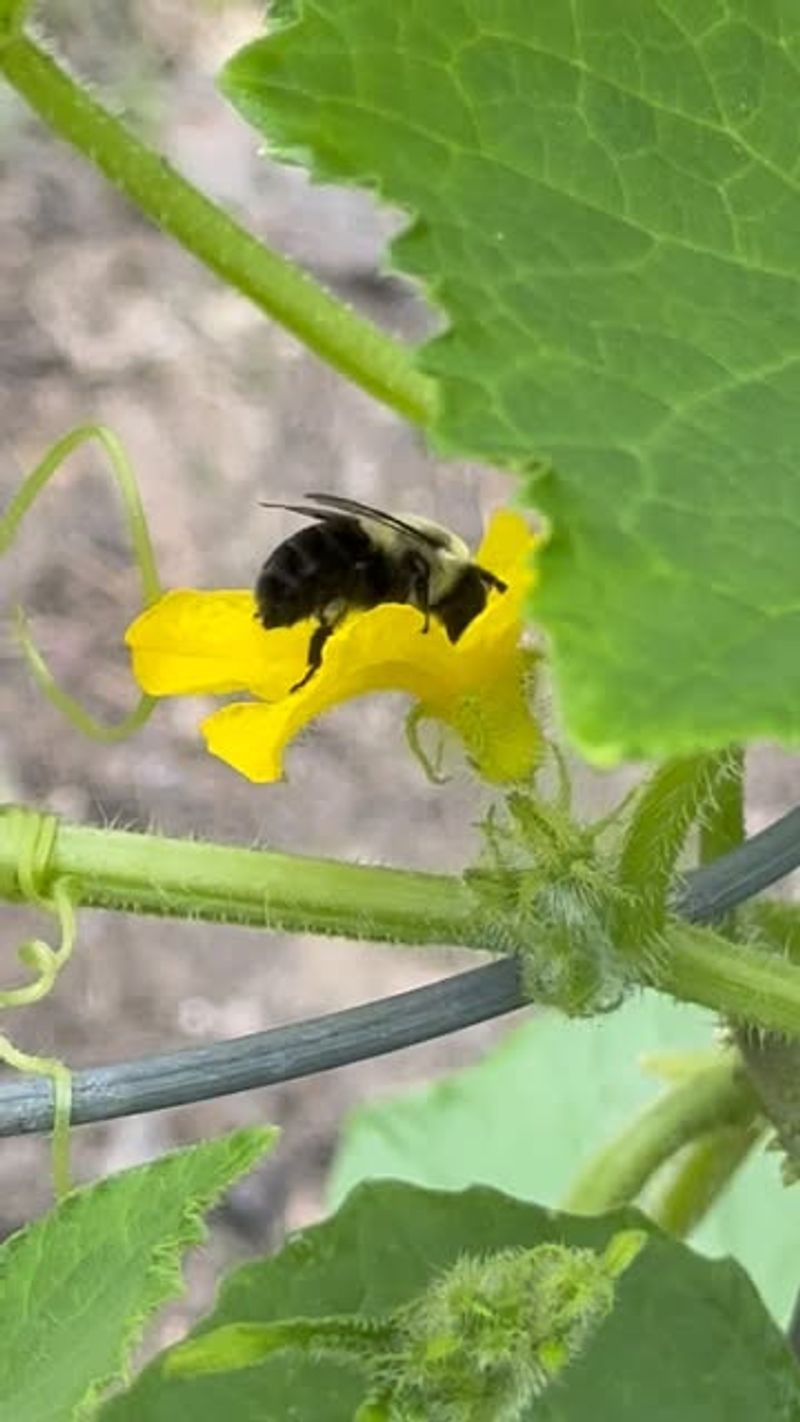
Picture a cucumber flower that opens up hopeful in the morning, waits all day, and closes at night without a single bee stopping by. No visit, no cucumber. Most garden cucumbers rely on bees to carry pollen from the male flowers to the female ones.
Fewer bees have been showing up in a lot of American neighborhoods, especially where lawns get sprayed or flowering plants are scarce. If your vine is loaded with blooms but nothing swells behind them, weak pollination is a likely suspect.
You can invite more pollinators by planting borage, zinnias, or marigolds nearby, and by skipping insecticides during morning bloom hours when bees are busiest. In a pinch, play bee yourself: use a small paintbrush or cotton swab to dab pollen from a male flower into the center of each female flower. The female ones are easy to spot because they have a tiny cucumber shape right behind the petals.
3. The Plant Is Only Making Male Flowers
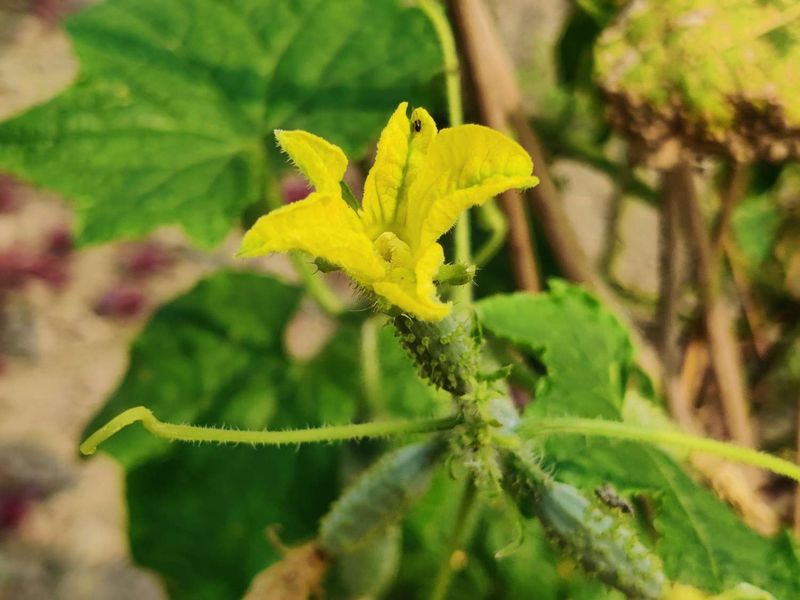
Here is a quirk that trips up almost every new grower: cucumber vines usually pop out a wave of male flowers first, sometimes for a week or two, before any female flowers show up. Male blooms cannot make fruit on their own, so an early flush of flowers with zero cucumbers is often just normal timing.
Telling them apart is simple once you look. Female flowers have a miniature cucumber swelling at the base, while male flowers sit on a plain, skinny stem. Early in the season, the ratio can be heavily tilted toward the boys.
Patience usually solves this one on its own as the plant matures and starts producing females. Heat waves and stress can also push a vine to make extra male flowers, so steady watering and a little shade during brutal afternoons can nudge the balance back. If weeks go by with still no females, consider a variety bred for heavy female flowering, sometimes labeled gynoecious on the seed packet.
4. Heat Stress Is Making Blossoms Drop
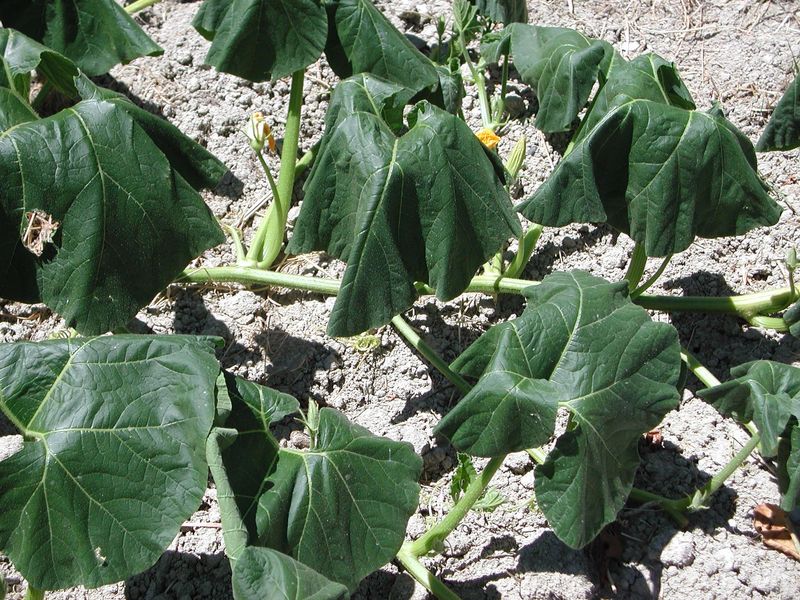
Cucumbers love warmth, but there is a line where love turns into misery. Once daytime temperatures push past the mid-90s Fahrenheit and nights stay muggy, pollen can turn sterile and young flowers drop off before they ever set fruit.
Southern and inland US gardens hit this wall regularly in late summer. You might notice flowers browning and falling, or tiny cucumbers that start to form then shrivel and yellow at the tip.
Shade cloth rated around 30 to 40 percent can take the edge off the hottest hours without starving the plant of light. Mulching the roots with straw or shredded leaves keeps the soil cooler and steadier, which also helps flowers hang on. Once temperatures ease back into the 70s and 80s, most healthy vines bounce right back and start setting fruit again, so a mid-season pause is not the end of your harvest.
5. Inconsistent Watering
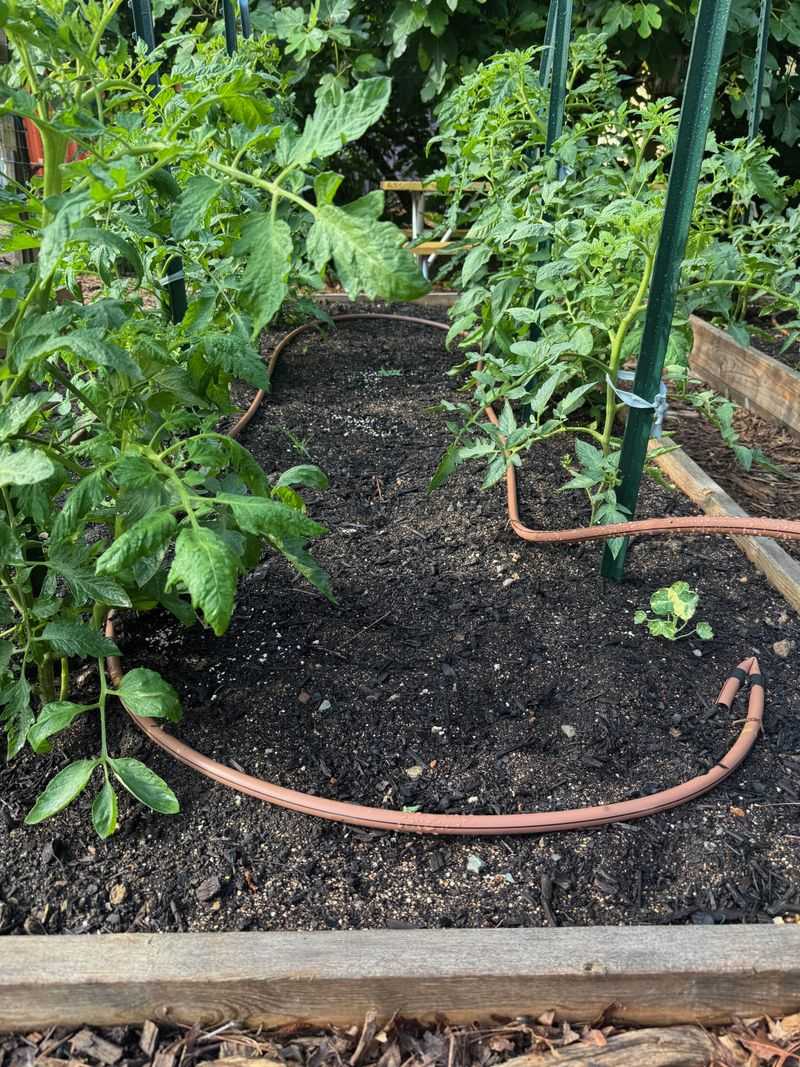
Cucumbers are basically water balloons on a vine, roughly 95 percent water, so how you water them matters more than almost anything else. Let the soil swing from bone dry to soaked and back again, and the plant reacts by dropping flowers and stalling fruit to protect itself.
Deep, steady moisture is the goal, usually about an inch to an inch and a half per week for backyard beds, more during heat. Splashy little daily sprinkles often wet only the surface and leave the deeper roots thirsty.
A soaker hose or drip line delivers water right at the roots and keeps things even, which flowers reward with better fruit set. Stick a finger two inches into the soil before watering: if it feels dry down there, it is time; if it is still damp, wait. Consistency beats volume every single time with this crop, and once the swings stop, the cucumbers usually follow.
6. Crowded Spacing and Poor Air Flow
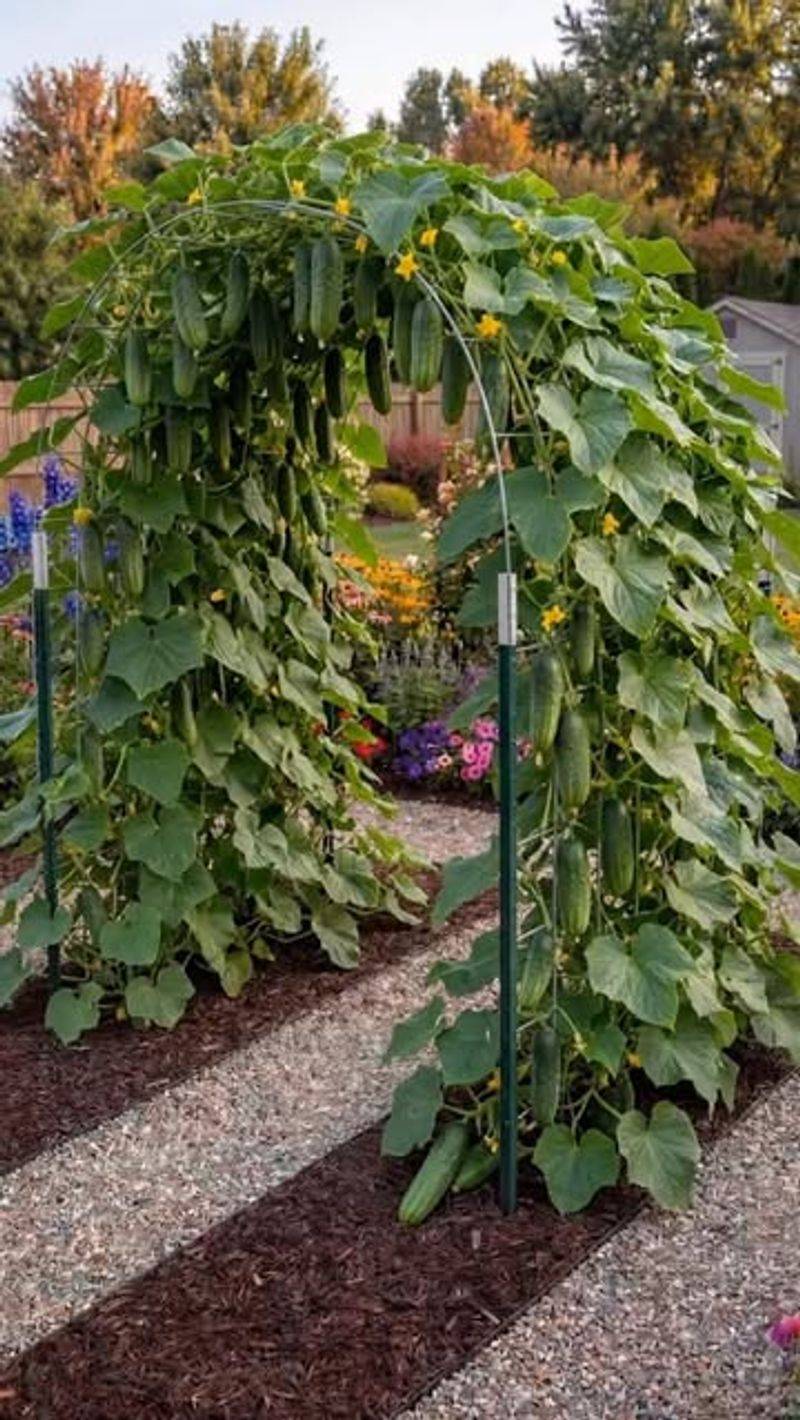
Cram too many cucumber plants into one bed and they will happily climb over each other in a tangled green pile. All that competition for light, water, and nutrients means each vine has less to give toward actual cucumbers.
Tight, jammed foliage also traps humid air, which invites powdery mildew and other problems that quietly drain the plant’s fruiting energy. Bees have a harder time reaching hidden flowers in a dense thicket too.
Give each plant room to breathe, generally 12 to 18 inches apart when trellised, and let air move freely between the leaves. Training vines up a trellis or cattle panel instead of letting them sprawl opens everything up and makes flowers easy for pollinators to find. Thinning out a few crowded runners and clipping the oldest lower leaves can revive a struggling patch faster than you would expect.
7. Reading the Leaves for Hidden Nutrient Trouble
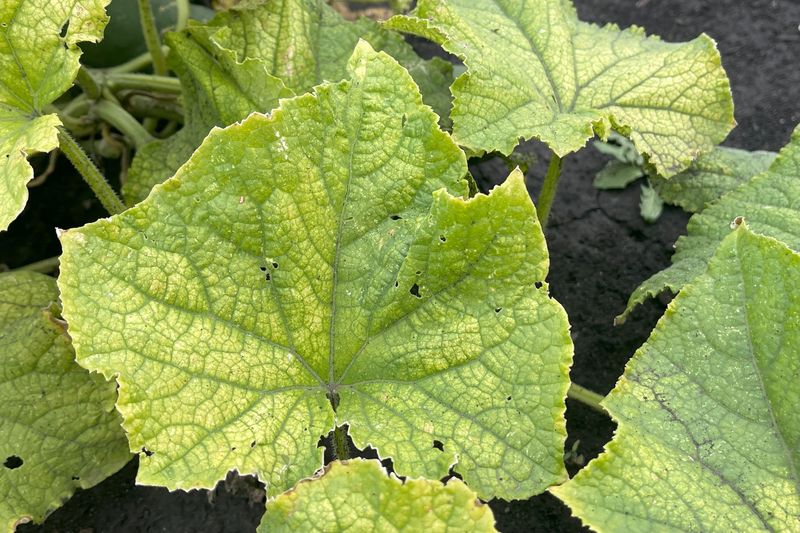
Your cucumber leaves are basically a status report, and they will flash warning signs long before the fruit gives up. Yellowing between the veins, cupped edges, or a dull bronze tint can all point to a nutrient the plant is missing while it keeps politely climbing.
Potassium shortages, which show as scorched, browning leaf margins, hit fruit production especially hard because potassium drives that fruit-filling process. A magnesium shortfall paints yellow stripes between still-green veins on older leaves. Pale new growth up top often whispers about micronutrients like iron.
Instead of guessing, match the pattern to the deficiency and correct it at the source. A dose of kelp meal or a balanced tomato-and-vegetable fertilizer can top up potassium, while a light Epsom salt drench may help with magnesium if a soil test confirms the need. Learning to read these leaf clues turns you from a worried onlooker into a gardener who catches trouble early, and healthier leaves almost always mean more cucumbers on the way.
8. Leaving Ripe Cucumbers on the Vine Too Long
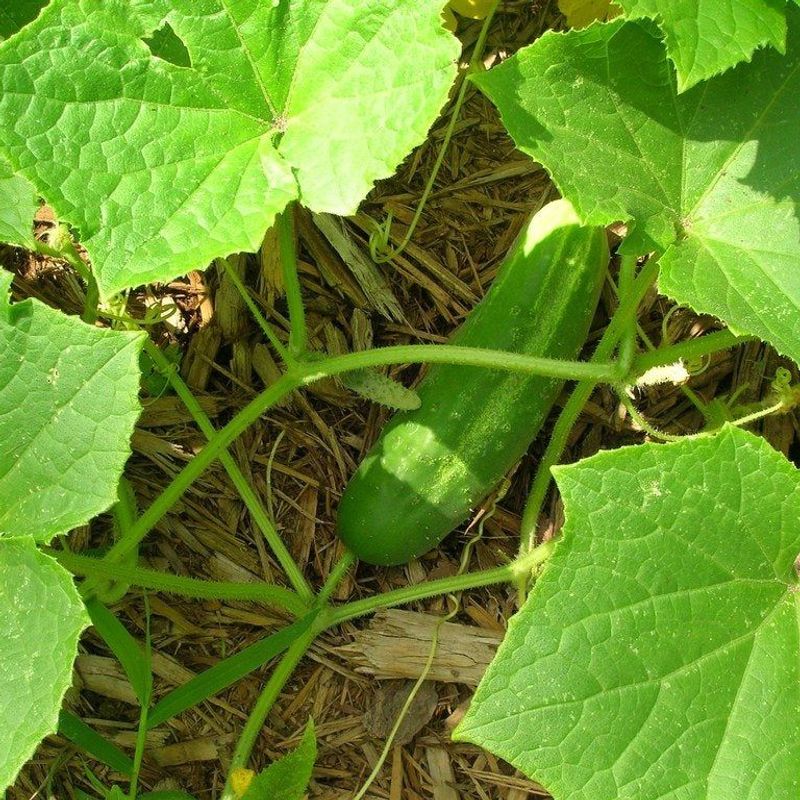
Funny enough, one of the quickest ways to shut down a productive vine is to be a lazy harvester. Once a cucumber is left to grow big, fat, and seedy, the plant reads it as mission accomplished and slams the brakes on making new fruit.
The plant’s whole goal is to produce mature seeds, so a single overgrown, yellowing cucumber can signal the vine to stop flowering and coast. Suddenly your once-generous plant goes quiet, and you cannot figure out why.
Pick early and pick often, ideally when fruits are still firm, green, and on the smaller side for their type. Slicers usually taste best around 6 to 8 inches, and pickling types much smaller. Checking the vine every day or two during peak season keeps it in production mode and, as a bonus, gives you crisper, less bitter cucumbers. Stay on top of harvesting and a single healthy plant can keep feeding you for weeks.