
15 Smart Reasons A Saucer-Shaped Feeder Brings More Hummingbirds To Your Yard
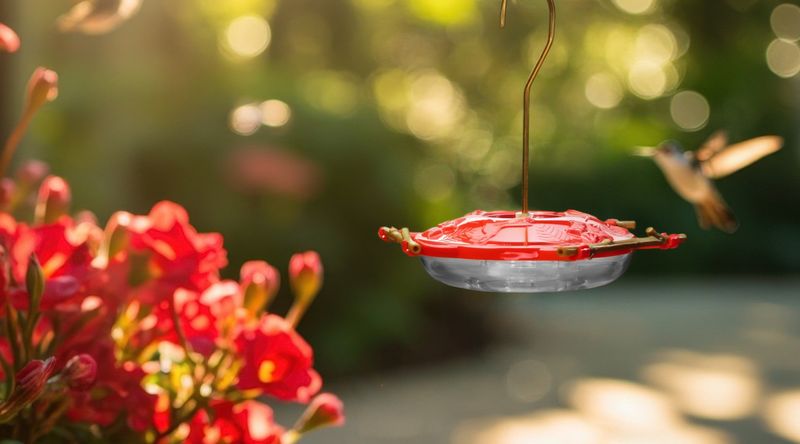
Hummingbirds are tiny, fast, and picky about where they stop for a snack. If you have been struggling to get them to visit, the shape of your feeder might be part of the problem. Saucer-shaped feeders sit flat like a shallow dish instead of hanging like an upside-down bottle, and that small difference can make a big impact on your backyard traffic. Here are fifteen practical reasons why switching to a saucer style could turn your yard into a hummingbird hotspot.
1. Ants Cannot Reach The Nectar
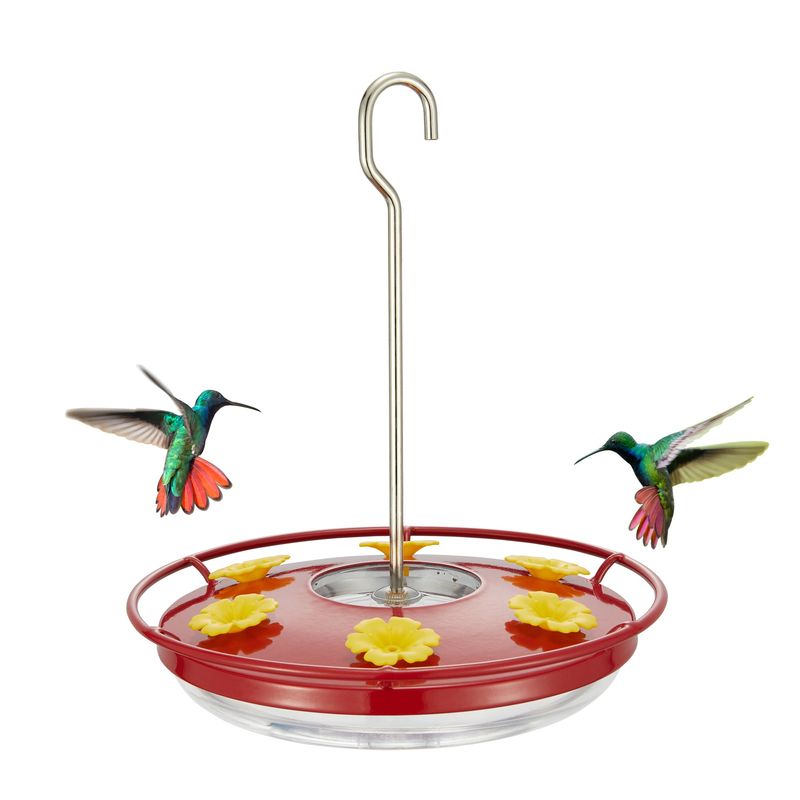
Picture a line of ants marching straight into your feeder and ruining the whole batch of nectar. With traditional bottle feeders, that scene plays out far too often because the sugar water sits right at the feeding port.
Saucer designs flip that problem on its head. The nectar pools at the bottom of a shallow basin, well below the feeding holes, so ants would have to swim to reach it. Many saucer models also include a built-in moat you can fill with plain water, creating a barrier crawling insects will not cross.
Cleaner nectar means happier birds, and happier birds keep coming back. Fewer ants also mean you spend less time scrubbing and refilling, which is a win for any busy backyard gardener.
2. Bees And Wasps Stay Away
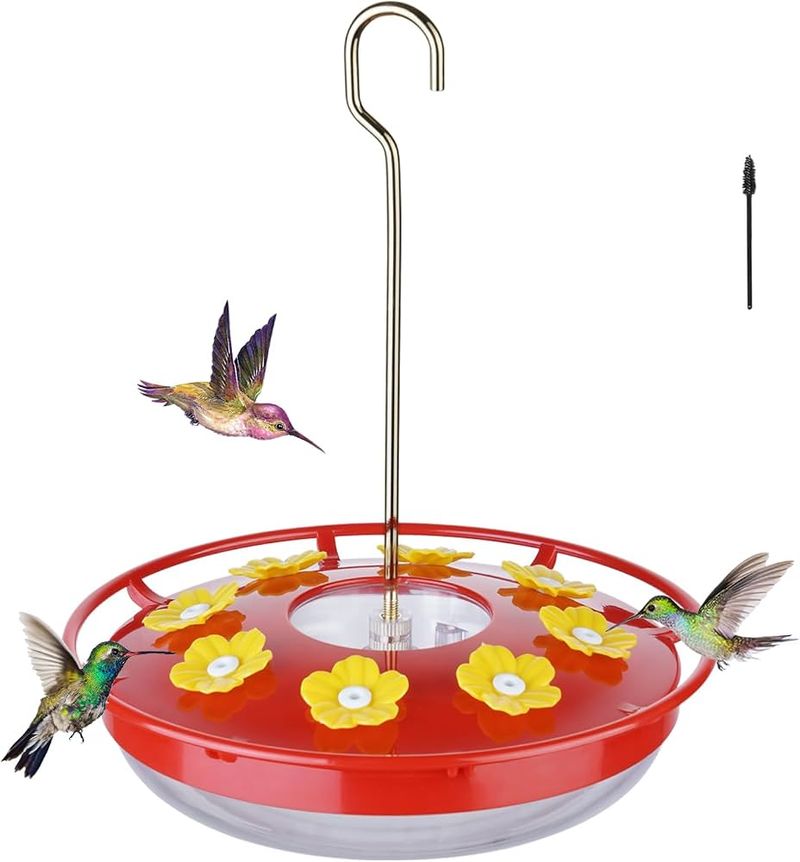
Nothing sends hummingbirds packing faster than a cluster of angry bees hogging the feeding ports. On tube feeders, gravity constantly pushes nectar up to the surface where stinging insects can sip freely.
The flat, recessed design of a saucer keeps the sweet liquid several inches below the ports. Bees and wasps have short tongues, so they simply cannot reach that far down.
Hummingbirds, on the other hand, have long, specialized tongues built exactly for this kind of deep sip. The result is a feeder that welcomes your feathered guests while gently discouraging the buzzing crowd that scares them off.
3. Leak-Proof Even In Summer Heat
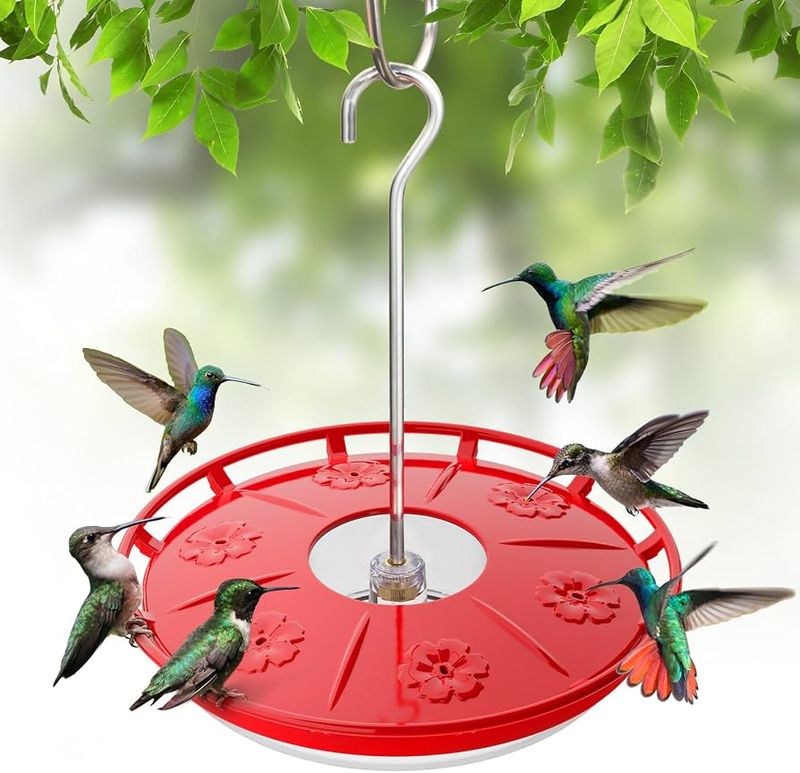
Ever notice how a bottle feeder starts dripping on a hot afternoon? Warm air expands inside the reservoir and forces nectar out through the ports, leaving a sticky mess below and an empty feeder above.
Saucer feeders sidestep this entirely because they hold nectar in an open, shallow dish rather than a sealed vacuum tube. There is no pressure to build up, so heat expansion does not cause dripping.
For gardeners in warmer US zones, this is a genuine relief. You get fewer wasted refills, less sugar-water staining on your deck, and a steady supply that stays right where the birds expect it.
4. Faster And Easier To Clean
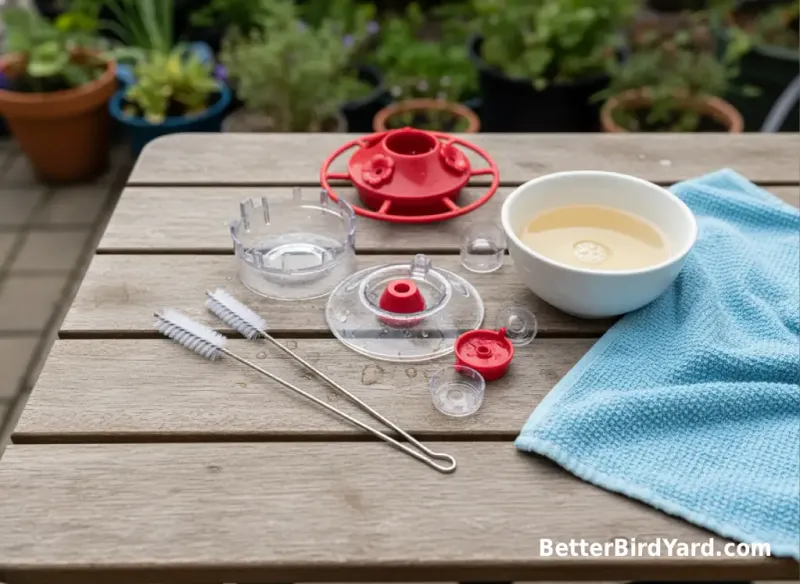
Anyone who has tried to scrub the inside of a narrow glass bottle knows the frustration of reaching those hidden corners. Mold and black gunk love to hide in spots your brush cannot touch.
Saucer feeders come apart into two simple pieces, usually a base and a lid that snap together. Wipe both with a sponge, rinse, and you are done in under a minute.
Regular cleaning matters more than most people realize, since spoiled nectar can actually harm hummingbirds. A feeder you can clean quickly is a feeder you will clean often, and that keeps your visitors healthy all season long.
5. More Feeding Ports Mean Less Fighting
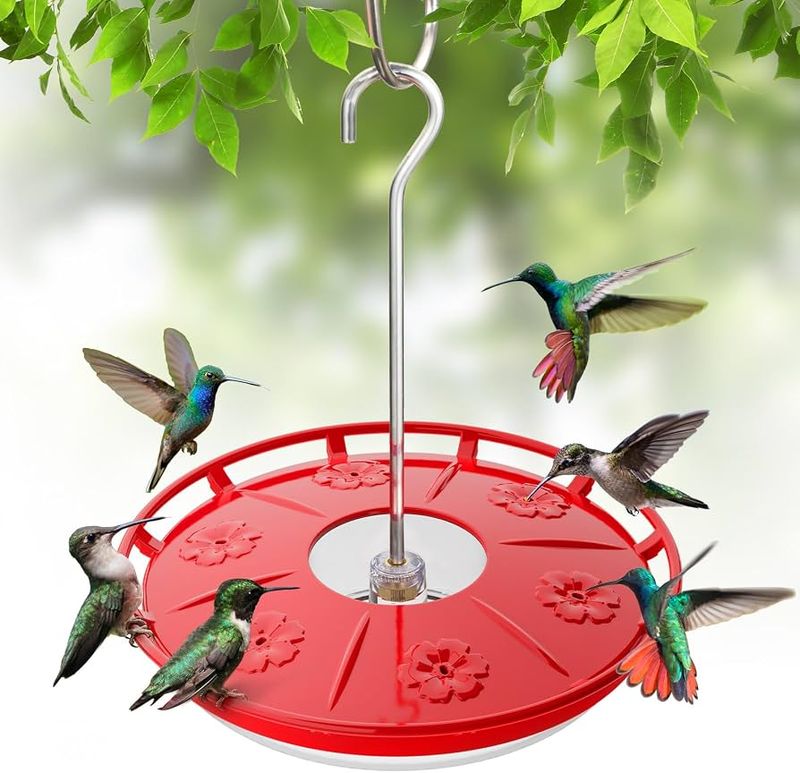
Hummingbirds can be surprisingly territorial, with one bossy bird guarding a feeder and chasing everyone else away. That behavior shrinks the number of birds you actually get to enjoy.
Wide saucer feeders often spread their ports around a broad, circular rim. The extra spacing makes it harder for a single bird to defend the whole thing at once.
When several birds can sip from opposite sides at the same time, the aggressive guarding tends to break down. You end up watching a lively crowd instead of a lonely bully, which is exactly the show most backyard birders hope for.
6. The Flat Shape Mimics Real Flowers
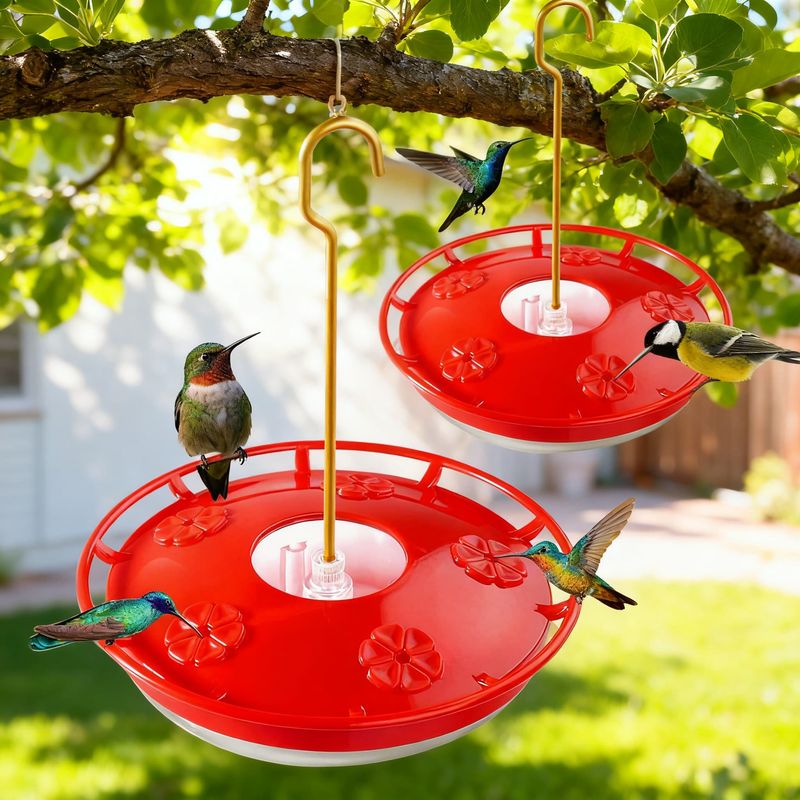
Out in nature, many of the blooms hummingbirds love open upward like little cups, catching sunlight and holding nectar in a shallow pool. A saucer feeder echoes that same natural silhouette.
Birds recognize the shape and the bright color combination as a familiar food source. That recognition can help newcomers find your feeder faster during migration.
Fun bit of trivia: hummingbirds have almost no sense of smell, so they rely heavily on sight to locate food. A feeder that looks like the flowers they already trust gives you an edge over the competition down the street.
7. Bright Colors Grab Attention From Far Away
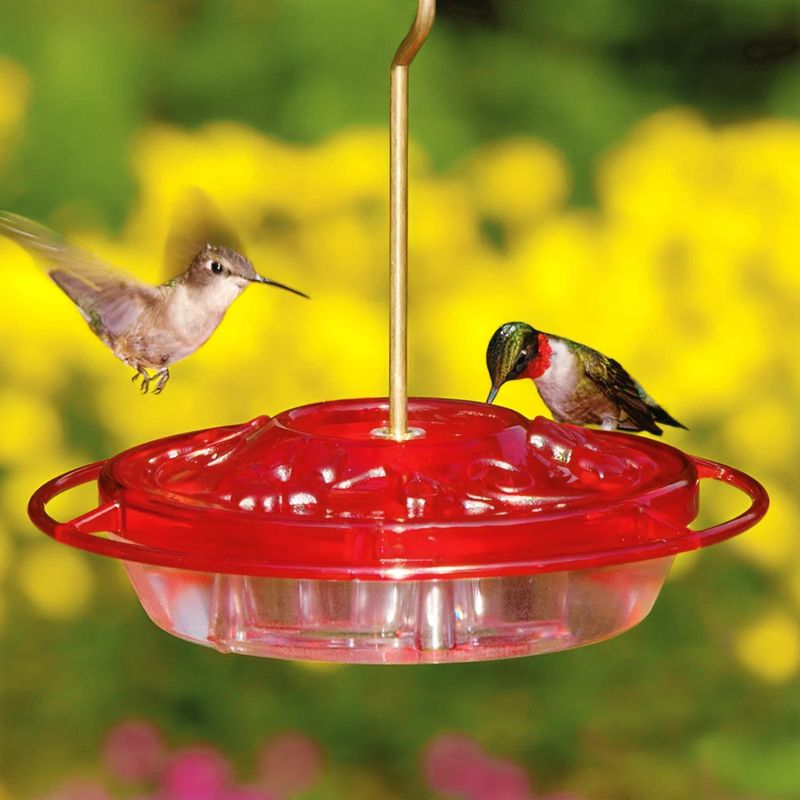
A splash of red across your yard works like a neon sign for passing hummingbirds. Saucer feeders typically feature big, bold red bases and lids that flash in the sunlight.
Because the design is wide and flat, there is more surface area to reflect that eye-catching color compared to a slim bottle. Birds cruising overhead can spot it from a considerable distance.
You do not need to add red dye to the nectar to attract them, which is actually healthier for the birds. Let the feeder itself do the advertising while you keep the sugar water clear and simple.
8. Built To Handle Wind And Weather
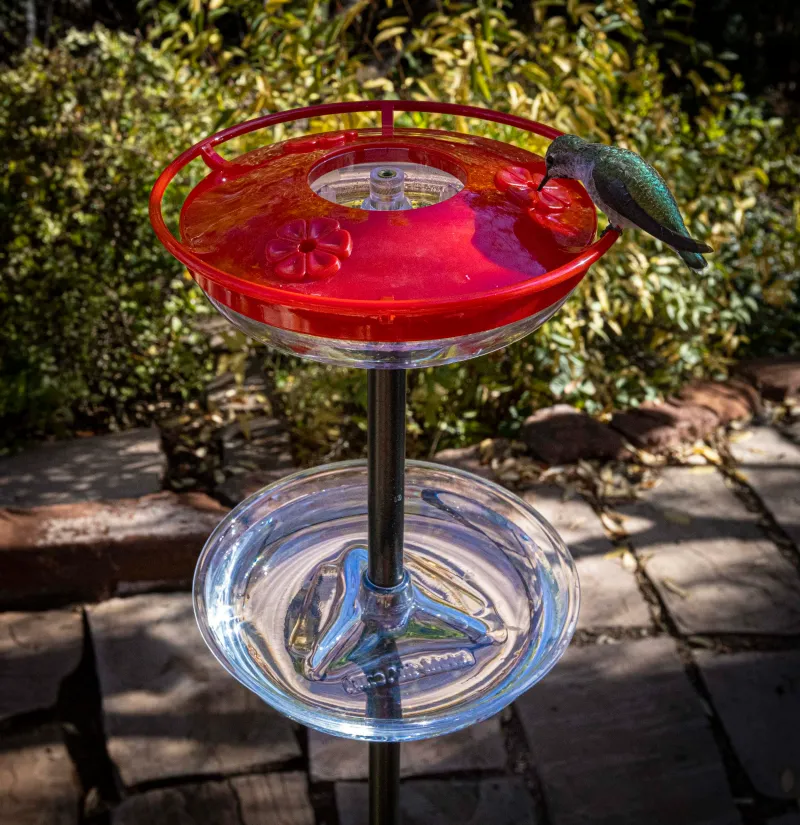
Tall bottle feeders swing wildly in a breeze and spill their contents every time a storm rolls through. A gusty afternoon can drain a full reservoir in no time.
The low, compact profile of a saucer keeps its center of gravity close to the mounting point, so it stays steadier when the wind picks up. Less sway means less spilled nectar.
For gardeners in breezy or open areas, that stability translates into fewer refills and a more reliable food source. Your birds learn they can count on your feeder no matter what the weather does.
9. Nectar Spoils More Slowly In The Shade Of The Lid
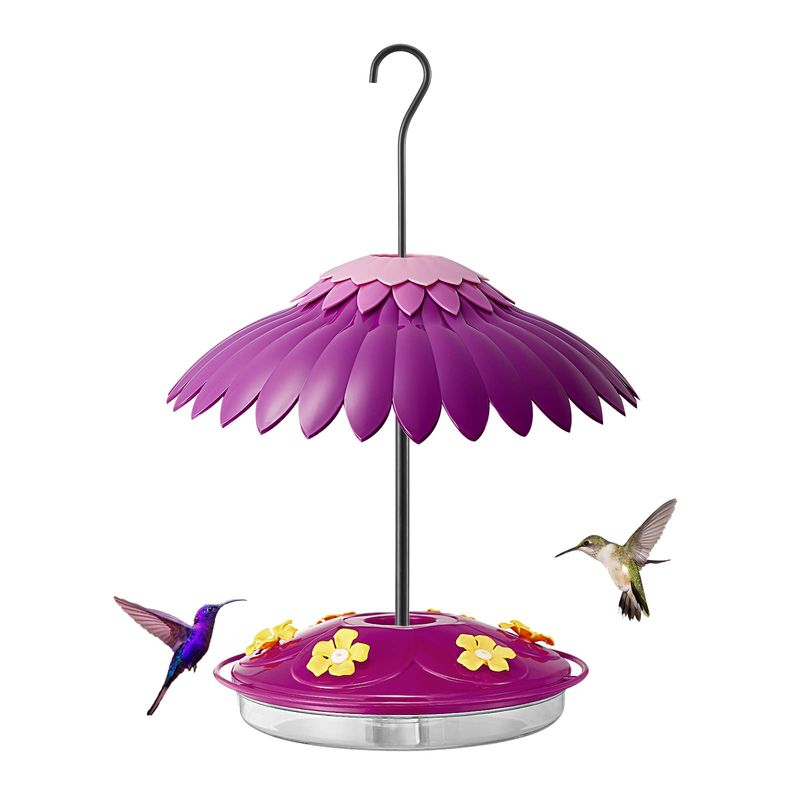
Sugar water is essentially a perfect breeding ground for mold and bacteria when it heats up and sits in direct sun. Spoiled nectar can genuinely make hummingbirds sick.
The overhanging lid on most saucer feeders casts a bit of shade over the nectar below, keeping it cooler than the exposed liquid in a clear glass tube. Cooler nectar stays fresh a little longer.
You will still want to change the batch every few days in hot weather, but the design buys you extra time. That small advantage adds up to healthier birds and fewer wasted trips to refill.
10. Easy To Fill Without Spills
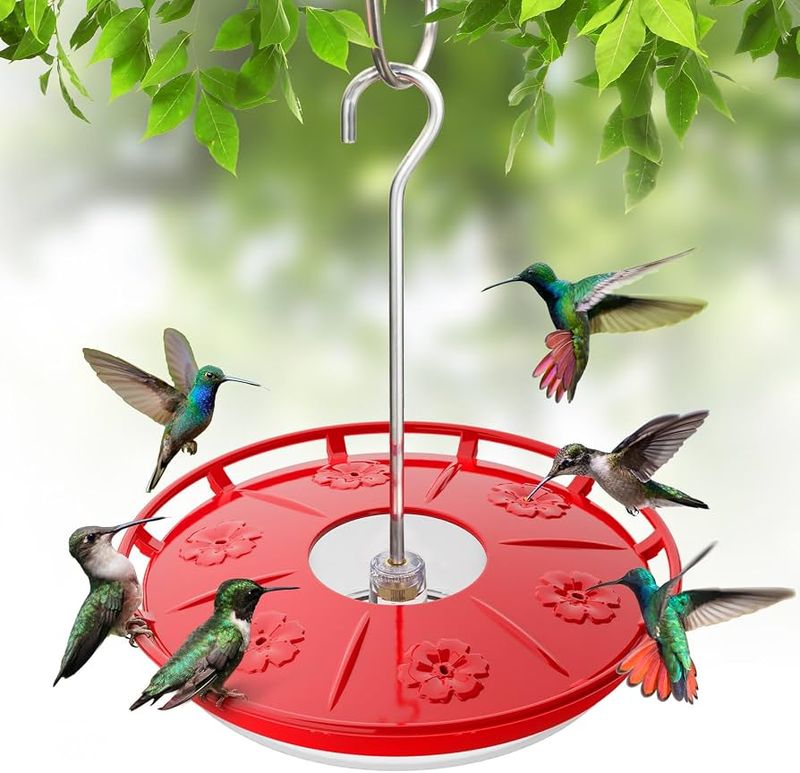
Filling a narrow-necked bottle feeder often turns into a funnel-fumbling, sugar-splashing ordeal. Half the nectar ends up on the counter instead of in the feeder.
Saucer bases are open and wide, so you can pour nectar straight in with no funnel and almost no mess. Snap the lid back on and you are ready to hang it.
Simple refilling encourages you to keep the feeder topped off, which keeps your regulars coming back day after day. Convenience for you quietly becomes reliability for the birds.
11. Versatile Mounting Options
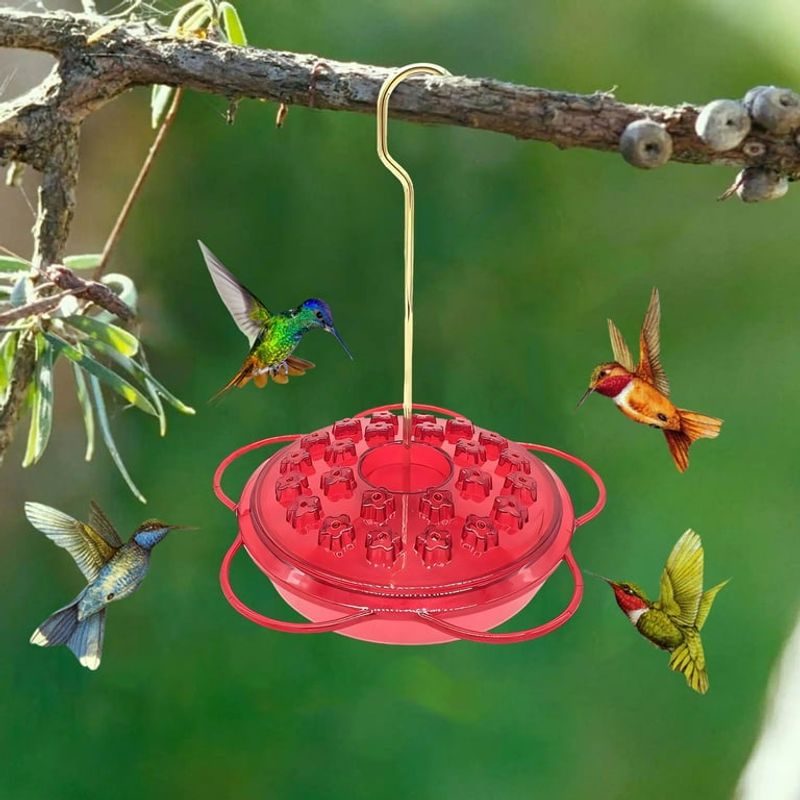
Some yards have a great tree branch, others have a deck rail, and some only have a spare pole in the flower bed. A rigid, one-way feeder limits where you can place it.
Saucer feeders usually come ready to hang from a hook or mount flat on a pole, giving you flexibility to put food exactly where birds already visit. You can move it to test different spots without buying new hardware.
Placing a feeder near favorite perching shrubs or blooming vines makes it far more likely to get discovered. Freedom to experiment with location is a quiet superpower for building steady traffic.
12. You Can See Exactly How Much Nectar Is Left
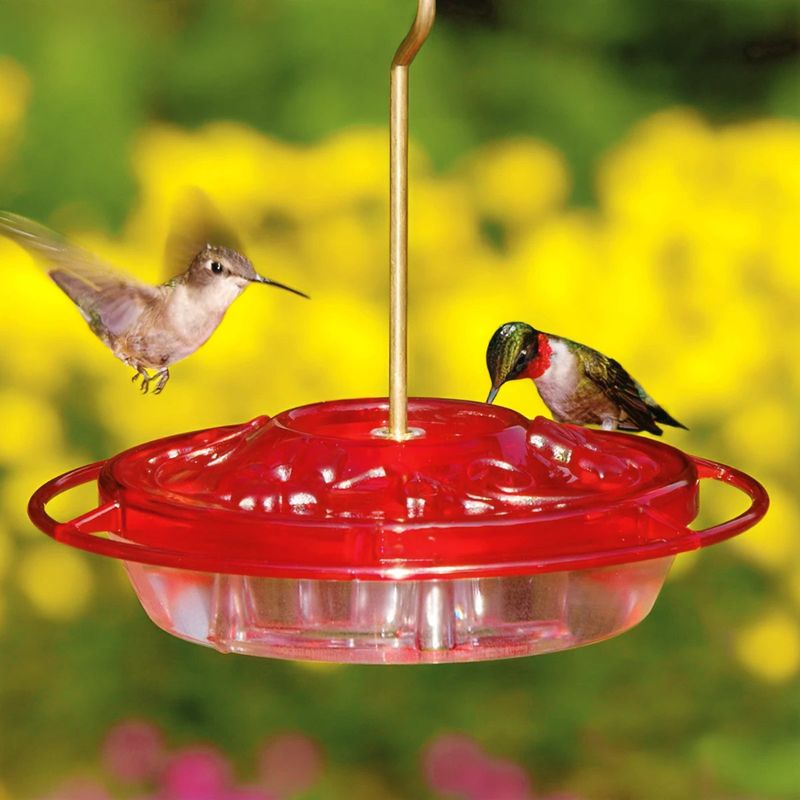
Guessing whether a feeder needs a refill wastes both your time and the birds’ energy. An empty feeder that looks full from a distance quietly turns visitors away.
Many saucer models use a clear or translucent base so you can glance out the window and instantly judge the nectar level. No need to walk out and pop it open.
Keeping tabs at a glance means you refill before the well runs dry, so hungry birds never arrive to disappointment. Consistency is what turns a one-time visitor into a daily regular.
13. Fewer Hiding Spots For Mold
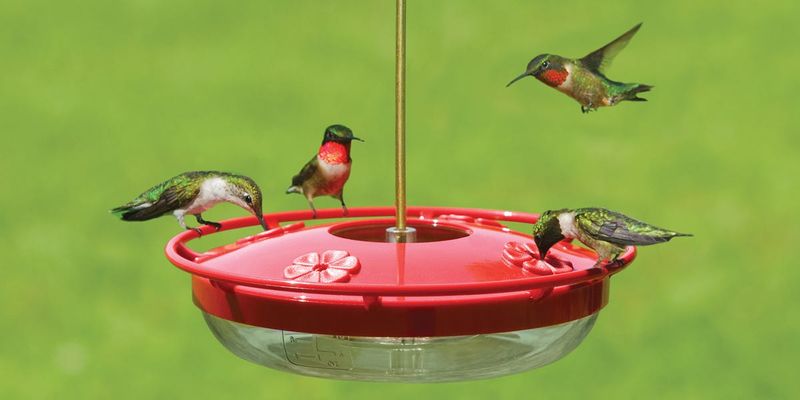
Traditional feeders come loaded with tiny crevices, rubber gaskets, and decorative ridges where black mold quietly takes hold. Those hidden spots are almost impossible to reach.
The stripped-down, two-part construction of a saucer leaves very few places for grime to build up. Smooth surfaces wipe clean and dry fast.
Healthier hummingbirds show up more often and stick around longer, plain and simple. A feeder that resists mold protects the very birds you are trying to attract, and that is the whole point.
14. Great For Beginners On A Budget
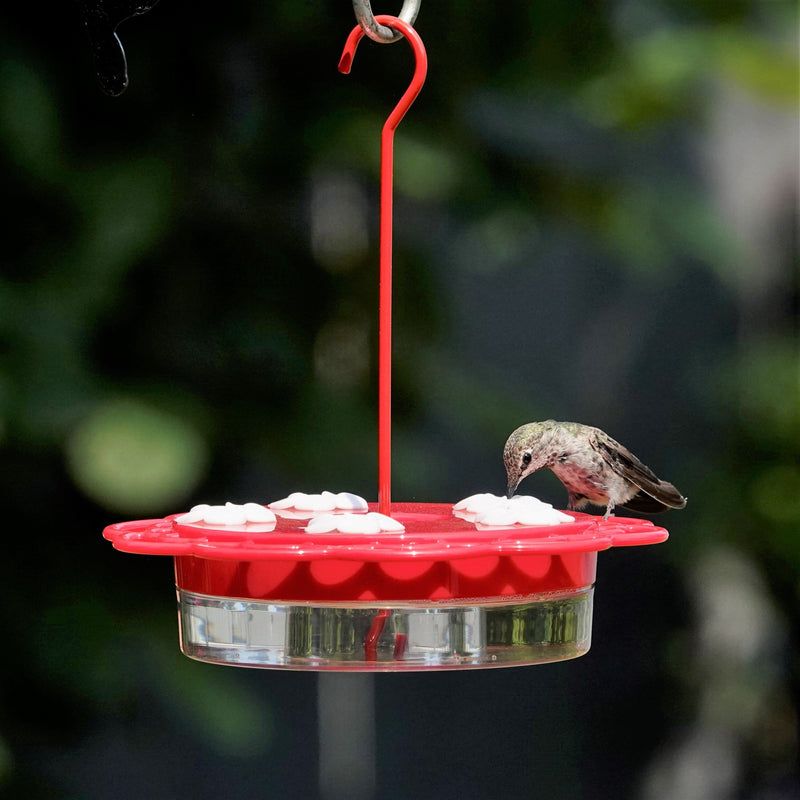
Starting out with backyard birding does not require an expensive setup, and saucer feeders prove it. Their simple molded design usually keeps the price friendly.
With fewer parts to break or replace, they tend to last through several seasons without fuss. That durability makes them a smart first purchase for anyone testing the hummingbird hobby.
Because they are so forgiving to clean, fill, and mount, new birders avoid the early frustrations that make some people give up. An easy win right out of the gate keeps you hooked on the hobby.
15. They Encourage Longer, Calmer Visits
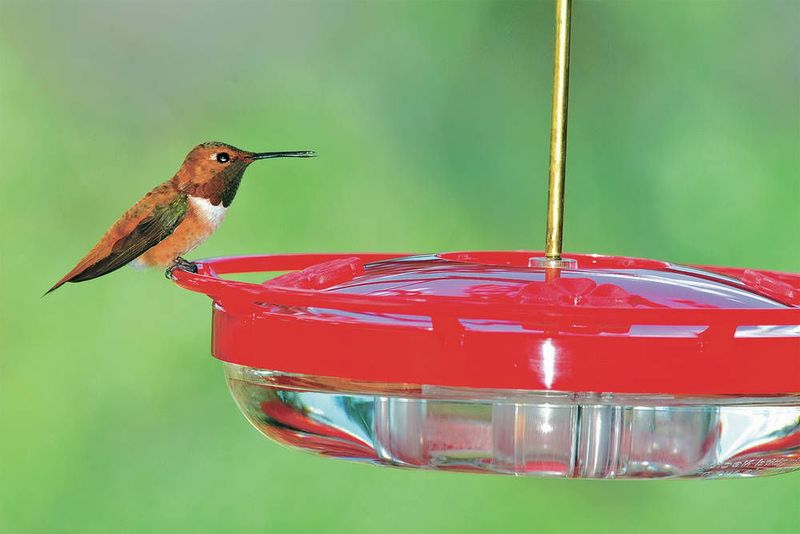
A hummingbird darting in for a two-second sip is fun, but a bird that settles in to feed is a treat worth watching. The stable, roomy design of a saucer invites birds to relax.
With perches built onto many models and a low, non-swaying platform, hummingbirds can rest their wings instead of hovering the whole time. Resting saves energy they badly need during migration.
Calmer, longer visits also mean better photo opportunities and more chances to notice individual birds returning. Over a season, those unhurried moments are what turn a plain backyard into a place hummingbirds truly call home.