
12 Flowers Hummingbirds Simply Can’t Resist In A Backyard Garden
Nothing beats the thrill of a hummingbird zipping through your yard, wings buzzing like a tiny helicopter. These little birds have big appetites, and they naturally gravitate toward bright, nectar-rich blooms that fit their long beaks. If you plant the right flowers, you can turn an ordinary backyard into a busy feeding station all season long. Here are twelve flowers that hummingbirds across the United States find nearly impossible to pass up.
1. Trumpet Vine
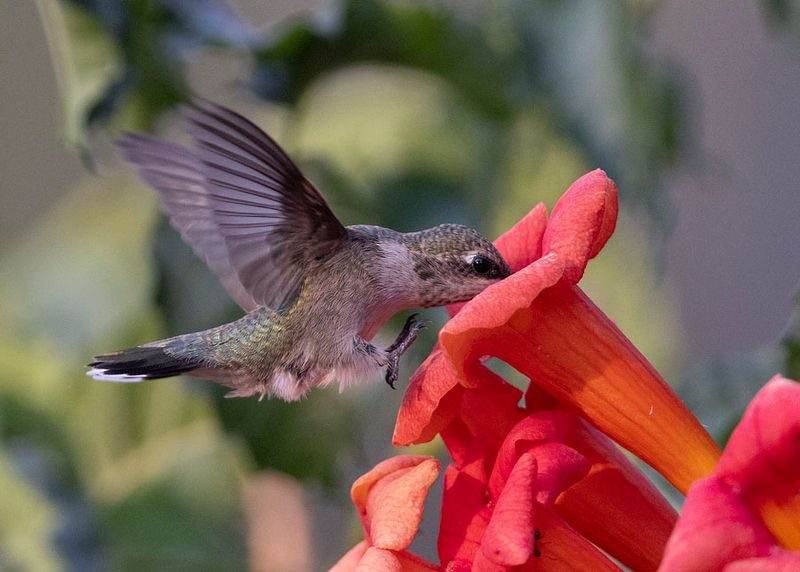
Few plants roll out the welcome mat for hummingbirds quite like trumpet vine. Its bold orange and red flowers open into deep tubes, which are shaped almost perfectly for a hummingbird’s slender beak to slip inside and sip.
Gardeners in the South and Midwest often see this vine covered in visitors from morning until dusk. It grows fast and climbs anything nearby, so give it a sturdy fence or trellis and plenty of room to sprawl.
One heads-up worth sharing: trumpet vine spreads eagerly and can pop up far from where you planted it. Keep an eye on stray shoots and trim it back each year, and you may find it becomes the single busiest corner of your whole yard.
2. Bee Balm
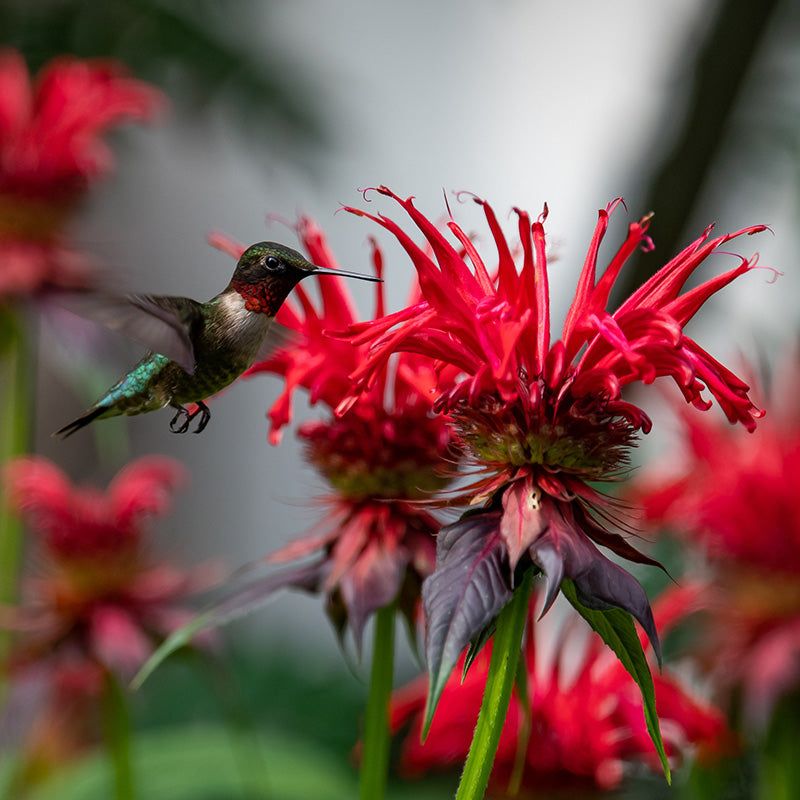
With its wild, shaggy blooms that look like little fireworks, bee balm grabs attention from both people and pollinators. The tubular petals sit up high on the stem, making them easy for hovering hummingbirds to reach.
Native across much of the eastern and central United States, bee balm handles cold winters well and comes back stronger each year. The red and pink varieties tend to pull in the most hummingbird traffic, though bees and butterflies crowd in too.
Did you know the leaves smell minty when you brush against them? Early American settlers brewed them into tea, which is how the plant earned its other nickname, Oswego tea. Plant it in a sunny spot with decent airflow to keep mildew away, and it will reward you for years.
3. Cardinal Flower
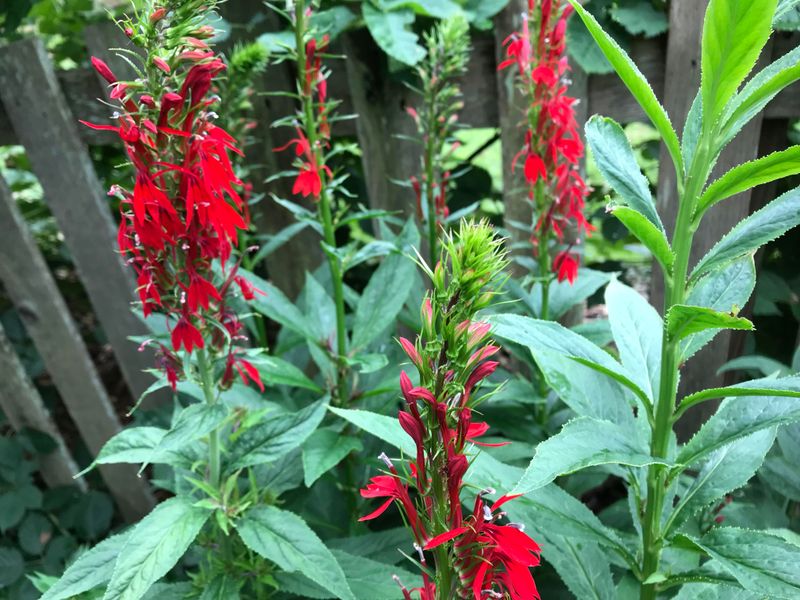
Picture a spike of the most intense scarlet you can imagine, and you have cardinal flower. That fiery color acts like a neon sign for passing hummingbirds, who happen to see red better than most other creatures do.
Unlike many sun-loving blooms on this list, cardinal flower actually enjoys damp soil and a little shade. Streamside spots, rain gardens, and low areas that stay moist are exactly where it thrives.
Naturalists have long noted that hummingbirds are one of the plant’s main pollinators, so the two evolved almost hand in hand. If your yard has a soggy corner you have struggled to fill, this native perennial may turn that trouble spot into a hummingbird magnet.
4. Salvia
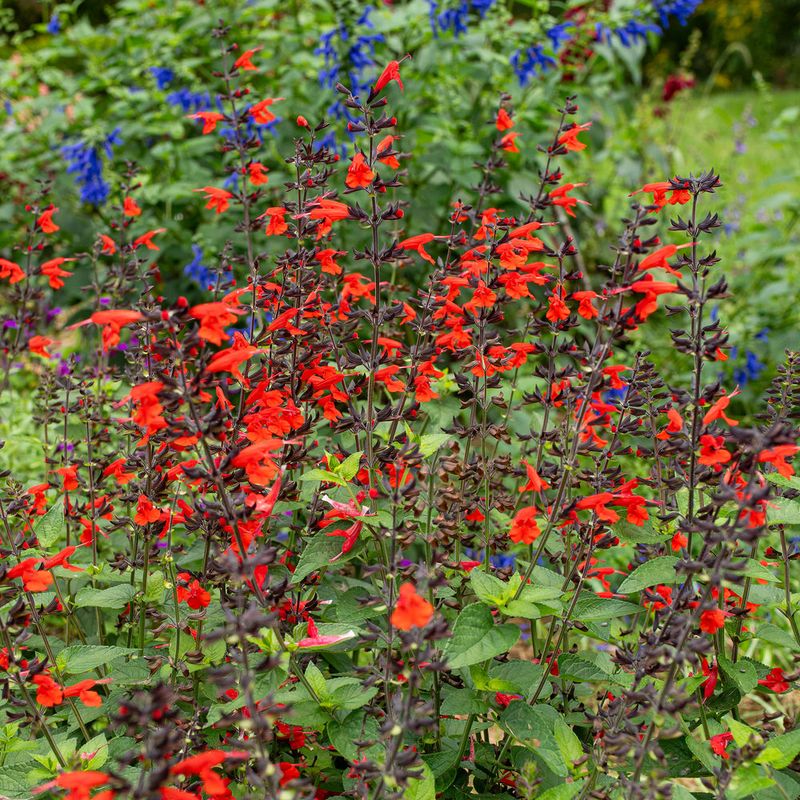
Ask any longtime gardener for a reliable hummingbird plant, and salvia usually tops the list. This huge family of flowers offers tall spires packed with tube-shaped blooms in red, purple, blue, and hot pink.
Many salvias bloom for months without much fuss, and they shrug off heat and dry spells better than most flowers. That long season means a steady food supply, which is exactly what keeps hummingbirds circling back.
Autumn sage and pineapple sage are two favorites for backyard beds, and both do well in containers on a patio. Snip off the spent flower stalks now and then, and fresh blooms will keep coming until frost.
5. Petunia
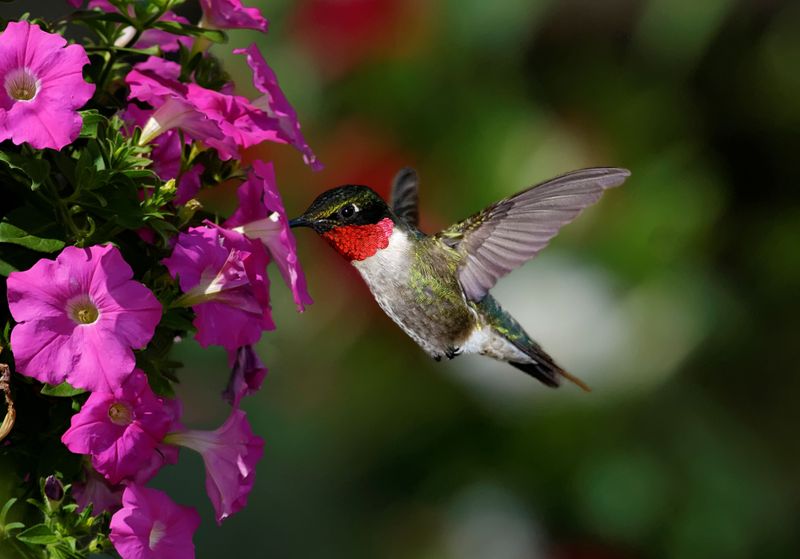
Sometimes the humble annuals in a hanging basket do the heavy lifting, and petunias prove it. Their funnel-shaped flowers hold sweet nectar, and hummingbirds happily dip in for a quick snack between bigger meals.
Because petunias bloom nonstop from spring through fall, they bridge the gaps when your perennials are between flushes. Bright red and deep purple shades seem to catch a hummingbird’s eye fastest.
Hang a basket right outside a window and you might catch the show up close. Pinch back leggy stems and give them a regular drink, and a single basket can stay loaded with color for the whole warm season.
6. Columbine
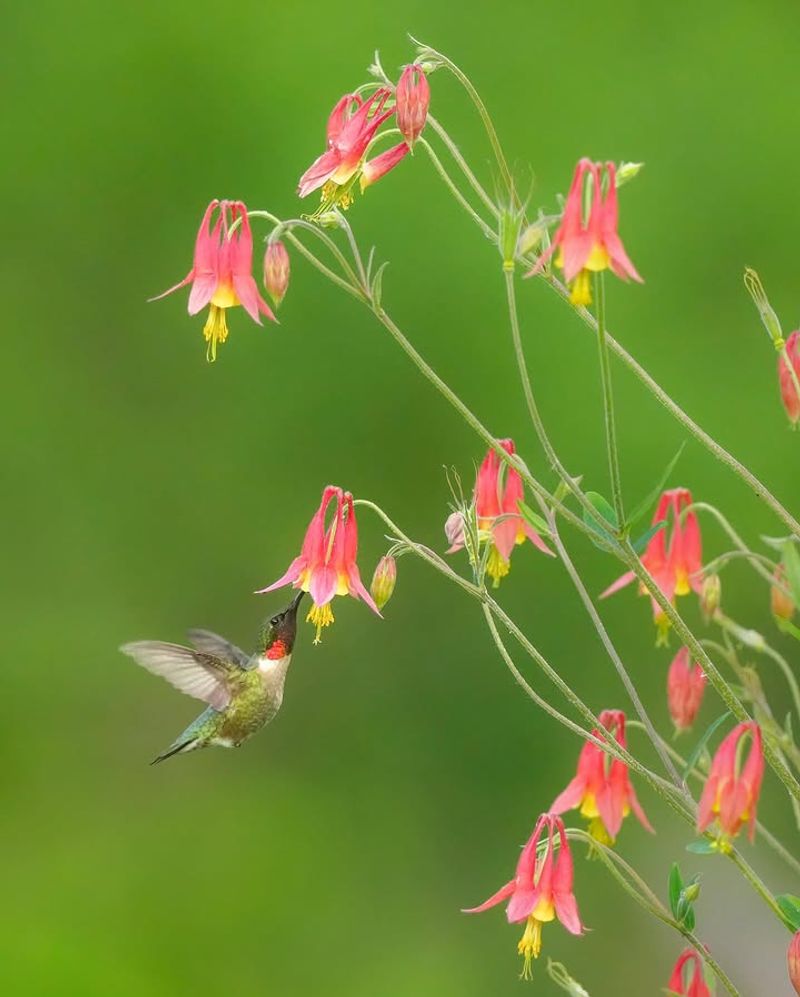
Delicate and a little old-fashioned, columbine brings some of the earliest nectar of the season to a backyard. The nodding flowers have long backward spurs that store nectar deep inside, a shape that rewards a hummingbird’s reach.
Its timing is what makes it special. Columbine often blooms in spring, right when hummingbirds return from their winter travels and are desperate for a reliable meal.
Native wild columbine wears cheerful red and yellow, while garden hybrids come in blues, pinks, and purples. Give it partial shade and well-drained soil, and it will happily reseed itself into charming little colonies over time.
7. Fuchsia
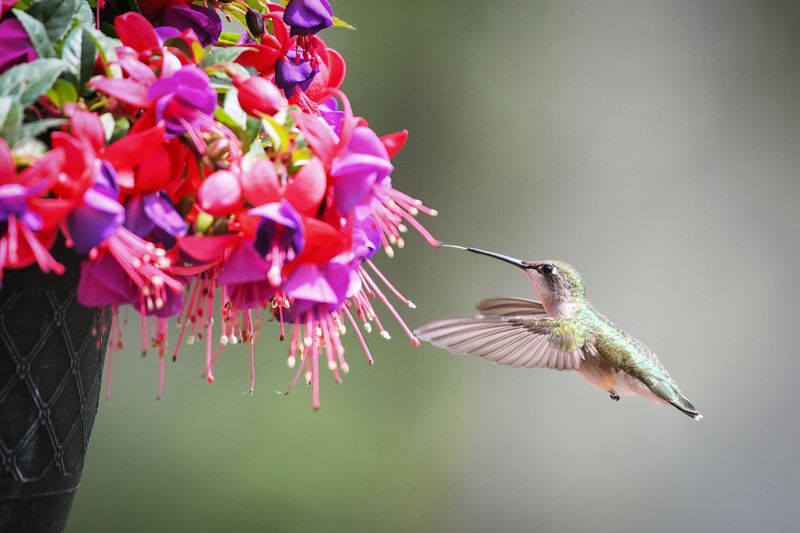
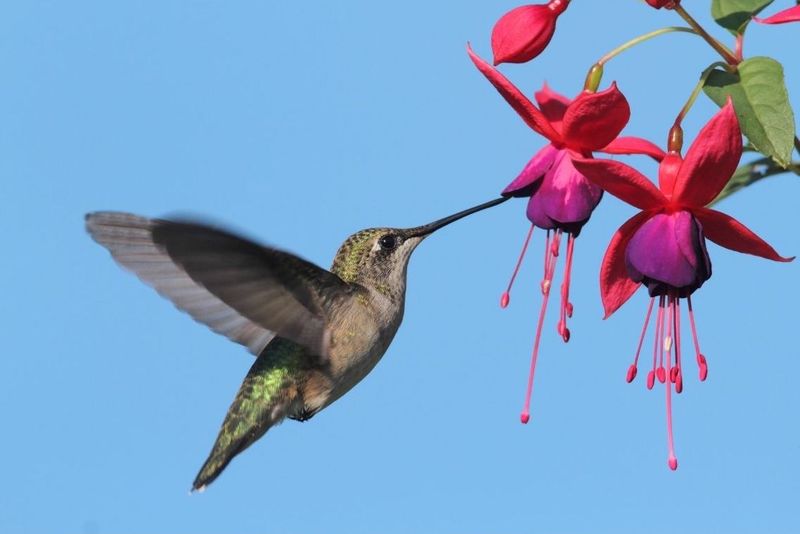
Dangling like tiny ballerinas in bright skirts, fuchsia blooms look almost too fancy to be real. Their drooping, two-toned flowers hang at just the right angle for a hovering hummingbird to feed underneath.
Fuchsias love cooler, shadier spots where many other nectar plants sulk, so they fill a niche in the garden that few flowers can. A shaded porch or a basket under a tree suits them perfectly.
Gardeners along the cooler Pacific Northwest coast can grow them almost year round, while folks in hotter regions treat them as a shade-loving summer treat. Keep the soil moist and out of harsh afternoon sun, and the flowers will keep dangling for months.
8. Honeysuckle
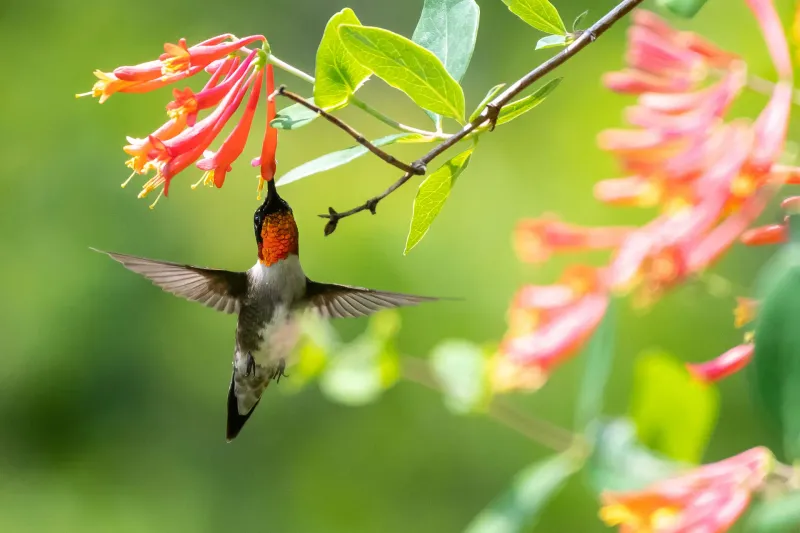
There is a reason childhood memories so often include pulling the sweet center from a honeysuckle bloom. That nectar humans chase is exactly what draws hummingbirds by the dozen to this fragrant climber.
Native trumpet honeysuckle is the one to seek out, since some imported types can turn invasive and choke out other plants. The native vine produces clusters of coral and orange tubes without taking over your whole fence.
Train it up an arbor or along a railing where you can enjoy the perfume on a warm evening. It blooms heavily in late spring and often sends out a second round later in summer, giving hummingbirds two feasts in one season.
9. Zinnia
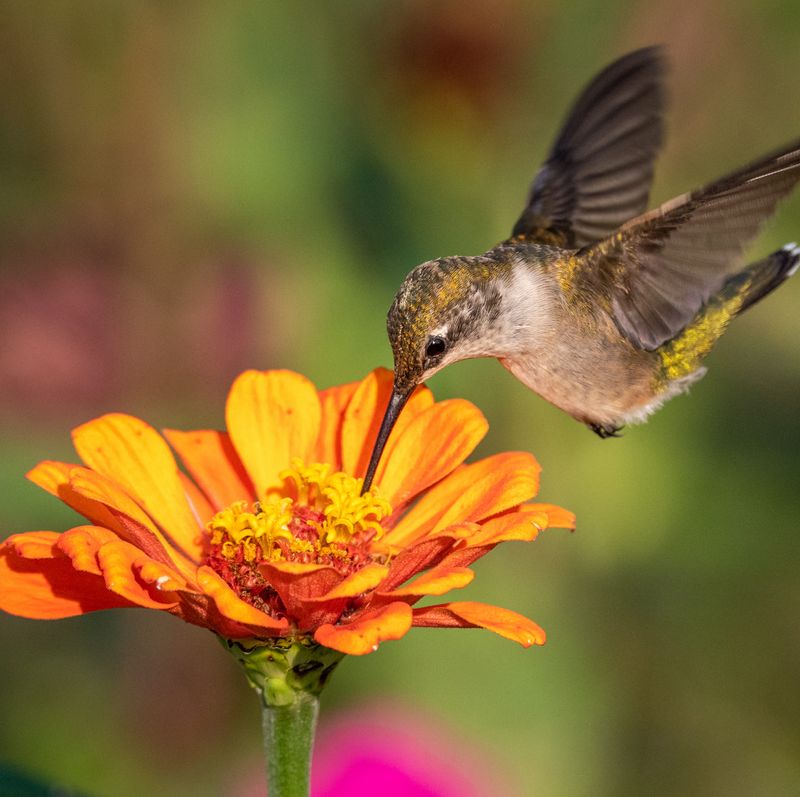
Cheerful, easy, and impossible to kill, zinnias might be the friendliest flower for a beginning gardener who also wants wildlife. While their flat, open faces do not hide nectar in deep tubes, hummingbirds still perch and probe the bright centers regularly.
Zinnias also pull in the small insects and spiders that hummingbirds eat for protein, so they feed the birds in two different ways. That double duty makes them more valuable than their simple looks suggest.
Sow a packet of seeds directly in warm soil and you will have blooms in a matter of weeks. Choose the tall, hot-colored varieties, keep cutting bouquets to encourage more flowers, and the birds will keep dropping by.
10. Hollyhock
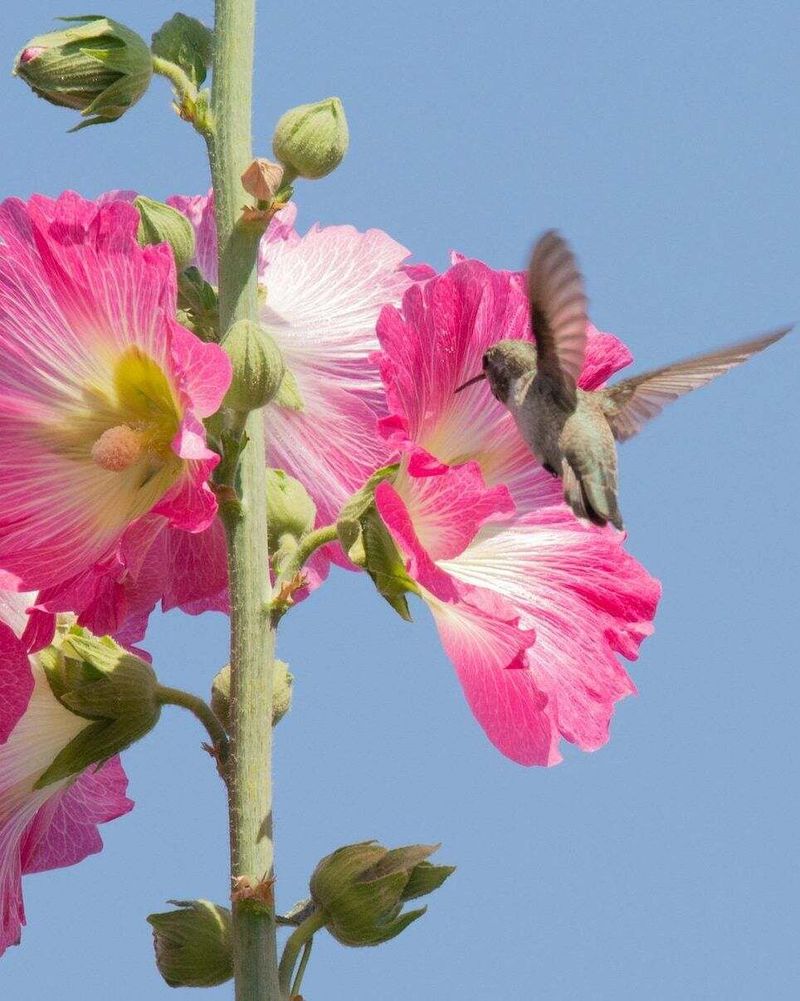
Towering along fences and old farmhouse walls, hollyhocks bring a bit of vintage charm that hummingbirds happen to adore. Their tall stalks lift big saucer-shaped blooms up high, giving hovering birds an open landing zone to feed from.
Because they can shoot up six feet or more, hollyhocks add vertical drama that lower flowers cannot match. Plant them at the back of a border where their height becomes an asset rather than a shade problem.
Technically short-lived, they scatter seed so freely that a patch tends to renew itself year after year. Give them full sun and a wall or fence to lean against, and you will have a classic cottage-garden scene buzzing with visitors.
11. Coral Bells
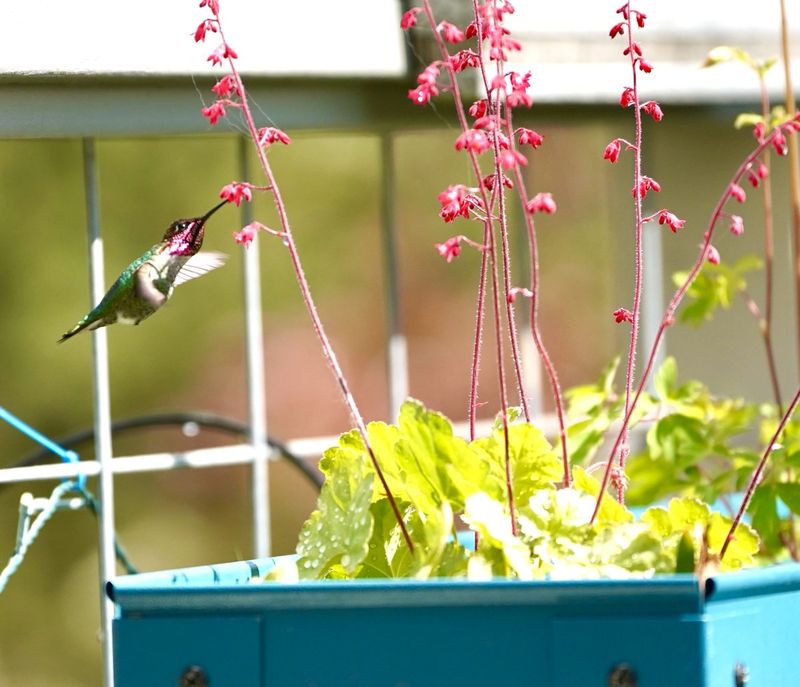
Best known for ruffled, colorful leaves, coral bells hide a secret hummingbird treat in their airy flower stalks. Thin stems rise above the foliage carrying rows of tiny bell-shaped blooms filled with nectar.
What sets this plant apart is that it works even in shadier corners where flashier nectar flowers refuse to bloom. The foliage stays handsome in purples, limes, and caramels long after the flowers fade.
Its dainty blossoms may look too small to matter, but hummingbirds work their way methodically up each delicate spike. Tuck a few along a shaded path or beneath taller plants, and you get year-round leaf color plus a bonus feeding stop.
12. Lupine
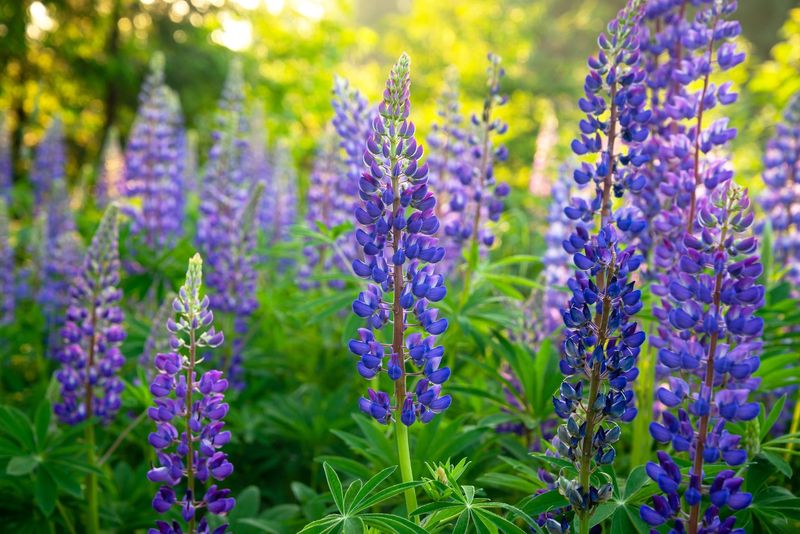
Standing tall like colorful candles in a spring meadow, lupines put on a show that hummingbirds cannot ignore. Each tall spike is stacked with dozens of small pea-shaped flowers, offering a whole buffet on a single stem.
Lupines fill an important early-to-mid season slot, blooming when many summer favorites are still just leaves. Cooler northern gardens and mountain regions grow them especially well.
As members of the pea family, they actually improve your soil by pulling nitrogen from the air and feeding it to the ground. Give them full sun and well-drained soil, avoid overwatering, and these spires will draw hummingbirds while quietly enriching the bed around them.