
15 Signs It’s Time To Deadhead Your Geraniums-And The Right Way To Make The Cut
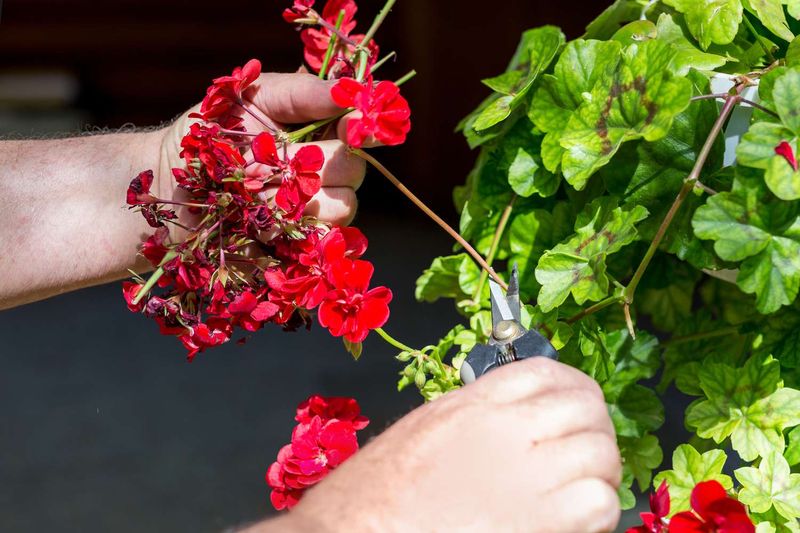
Geraniums are some of the most cheerful flowers you can grow, but they need a little help to keep those blooms coming all season long. Deadheading, which just means removing spent flowers, tells the plant to make new buds instead of wasting energy on old ones. The tricky part is knowing exactly when to snip and how to do it without harming your plant. Learn to read the signs your geraniums are giving you, and you will keep them looking full and colorful right into fall.
1. The Petals Have Faded to a Dull, Papery Brown
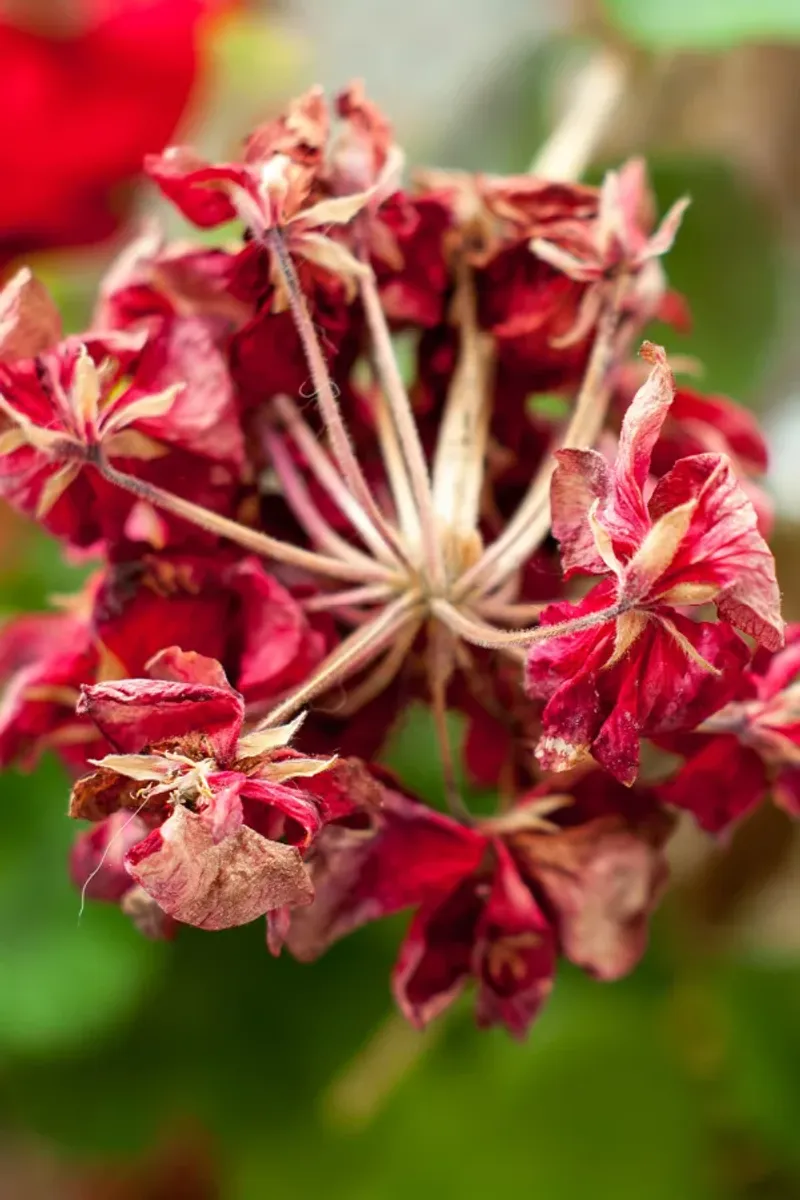
Picture the vivid red or pink cluster you admired last week, now looking like crumpled tissue paper stuck to the stem. That washed-out, crispy look is your geranium’s clearest hint that the bloom has done its job and is ready to go.
Once petals lose their color and turn dry, the flower is no longer feeding the plant with beauty. It is instead pulling resources toward making seeds, which slows down fresh flower production.
Snip the whole spent cluster off rather than picking petals one by one. Follow the flower stem all the way down to where it meets a main stem or a leaf node, then make a clean cut there. Your plant will redirect that saved energy into brand new buds within days.
2. Tiny Seed Pods Are Starting to Form
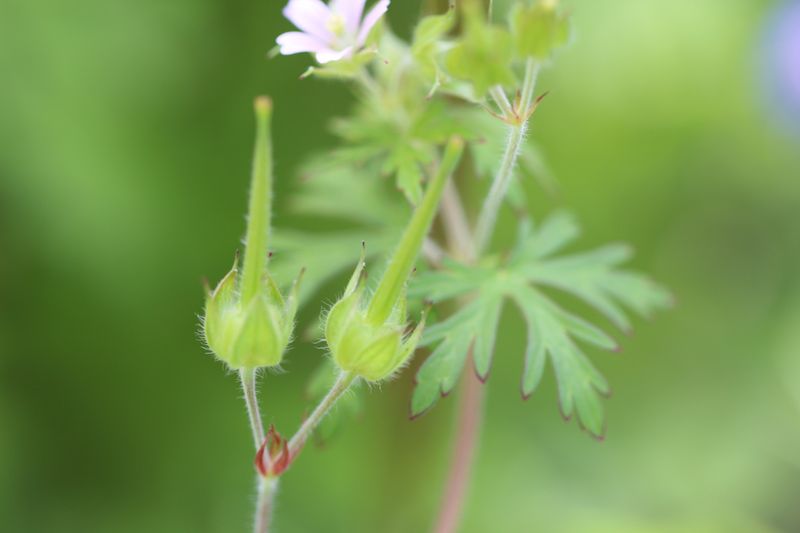
Look closely at a finished bloom and you might spot slender, beak-shaped pods poking out where the petals used to be. Gardeners sometimes call these stork’s bill pods because of their pointy shape.
Seed pods are a signal that your geranium has switched into reproduction mode. Making seeds takes a surprising amount of energy, and a plant busy setting seed will noticeably slow its flowering.
Removing these pods early tricks the plant into thinking its mission is not complete, so it keeps pushing out flowers to try again. Cut the stem below the developing pod cluster, and you may prevent unwanted volunteer seedlings scattering around your bed too.
Catch them at the green, immature stage for the best results. Waiting until they dry and split means the plant has already spent its energy.
3. Blooms Are Dropping Petals All Over the Place
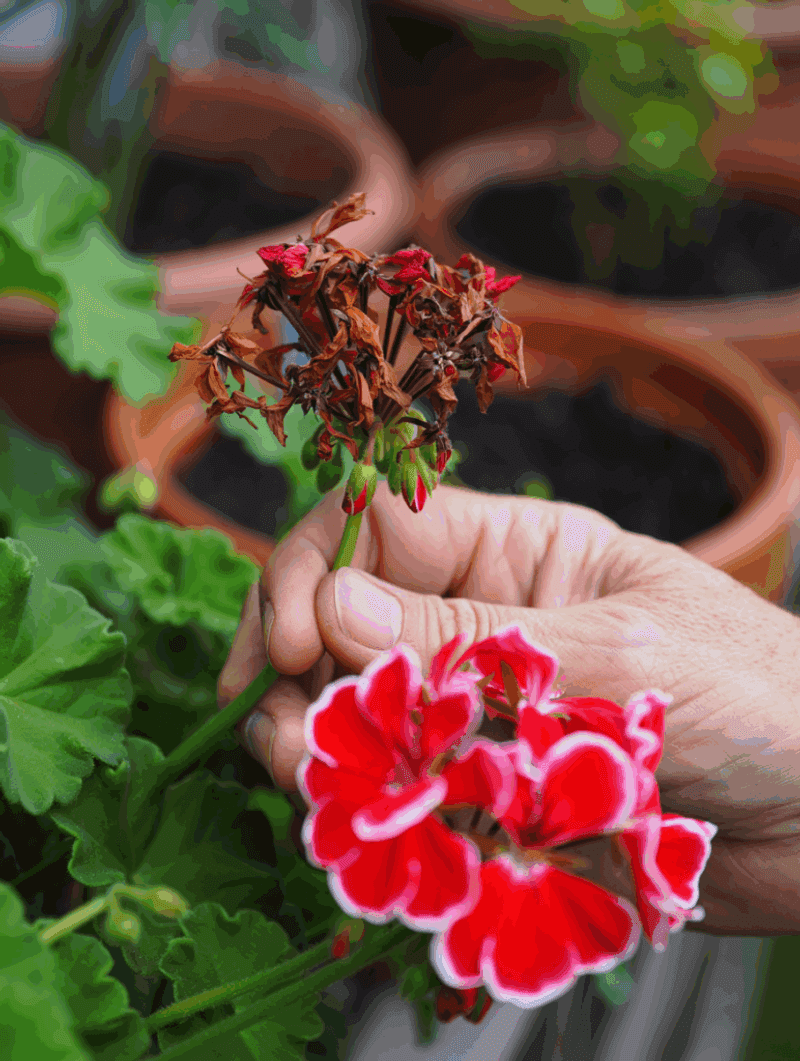
Finding a scatter of dropped petals on your patio table or windowsill is a mess most gardeners recognize. Geraniums, especially the zonal types, tend to shatter their old flowers rather than hold them neatly.
That petal drop is nature telling you the cluster is past its prime. Left alone, the falling petals can also collect moisture and settle on leaves below, which can invite fungal spots.
Give the whole flower head a gentle wiggle. If petals rain down with the lightest touch, that stem is ready for removal. Trace it down to the base and pinch or cut it off cleanly to keep both your plant and your surroundings tidy.
4. Fewer New Buds Are Appearing at the Top
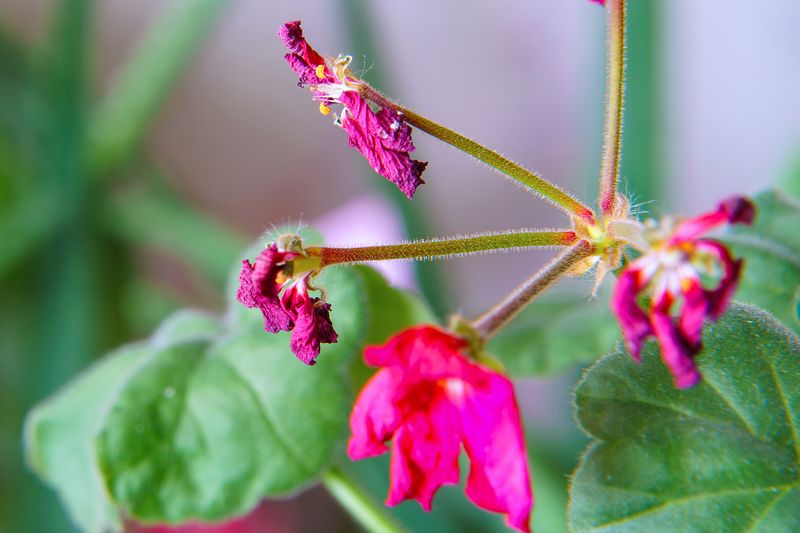
A healthy geranium in season should always have something waiting in the wings, a plump green bud getting ready to open. When you scan the plant and see nothing but open or fading flowers with no newcomers, that gap is worth noticing.
Stalled bud production usually means the plant is spending its budget on tired old flowers and seed formation. It simply cannot afford to start new blooms while carrying that load.
Clearing away the spent heads frees up that energy fast. Within a week or two of a good deadheading session, you can often watch fresh buds emerge from the growing tips. Think of it as clearing a crowded desk so the plant can finally get back to work.
5. The Flower Head Feels Mushy or Slimy
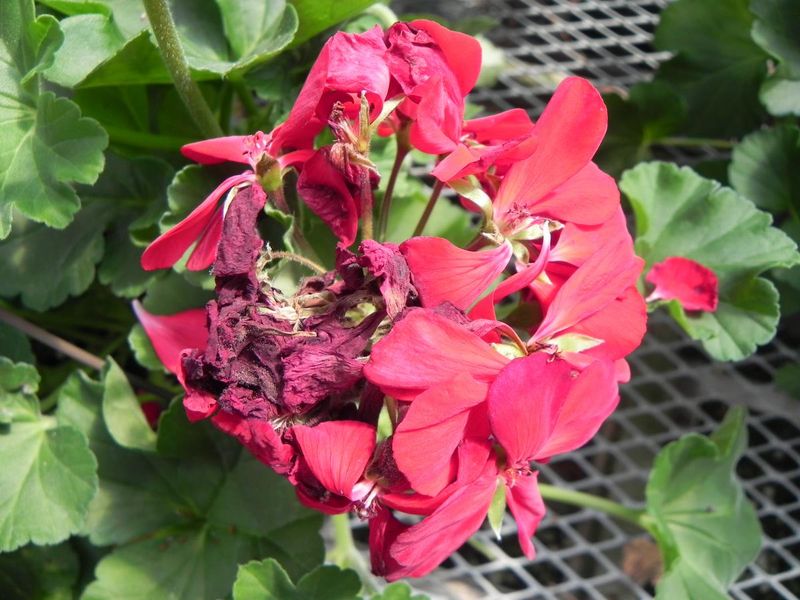
Run a fingertip over a suspect bloom and you may feel something soft, damp, and unpleasant. Overripe geranium flowers, particularly after a humid stretch or overhead watering, can turn to mush before they ever dry out.
Slimy blooms are more than just ugly. Damp, decaying tissue is a welcome mat for botrytis, a gray mold that spreads quickly through crowded, humid plants and can jump to healthy growth.
Do not wait on these. Remove any soft or discolored flower heads the moment you notice them, and drop them in the trash rather than the compost pile if mold is present. Cutting into clean, firm stem tissue helps stop the rot from creeping further down the plant.
6. Only Half the Cluster Is Blooming
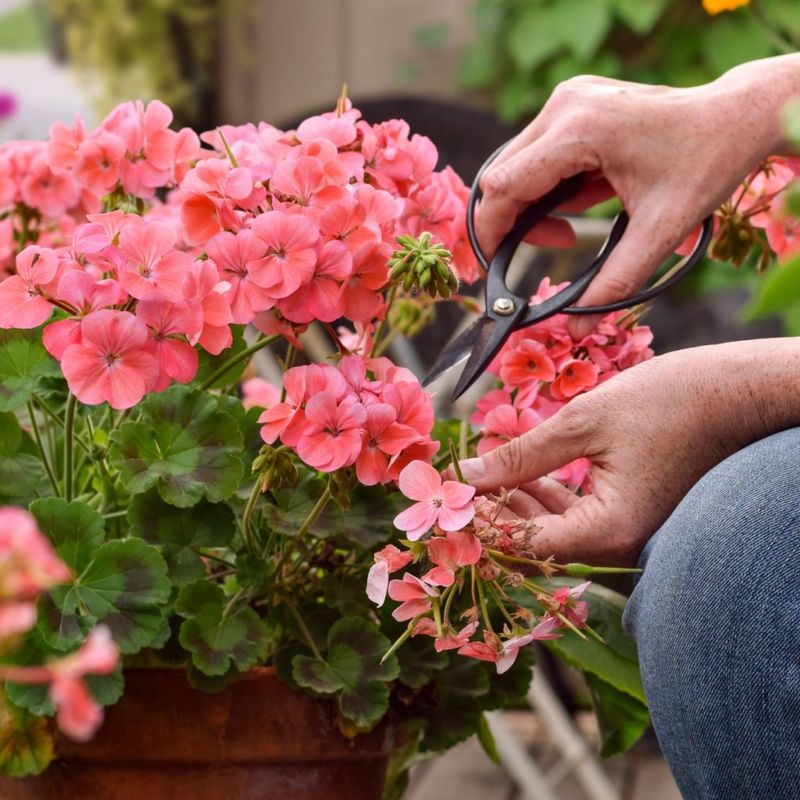
Geranium flowers open as a rounded cluster of many small florets, and they rarely all fade at once. You will often catch a head that is half fresh and half finished, with a few bright petals clinging on beside a patch of brown.
A partly spent cluster puts you in a judgment call. Since the whole head sits on one stem, waiting for the last florets to finish means those brown ones keep dragging down the plant’s energy.
The tidy move is to enjoy that head until the majority has faded, then remove the entire stem in one cut. Trying to pick out individual brown florets rarely looks good and often leaves stubs behind. One clean cut at the base keeps things simple and encourages the plant to send up a fresh replacement.
7. The Plant Looks Leggy and Stretched Out
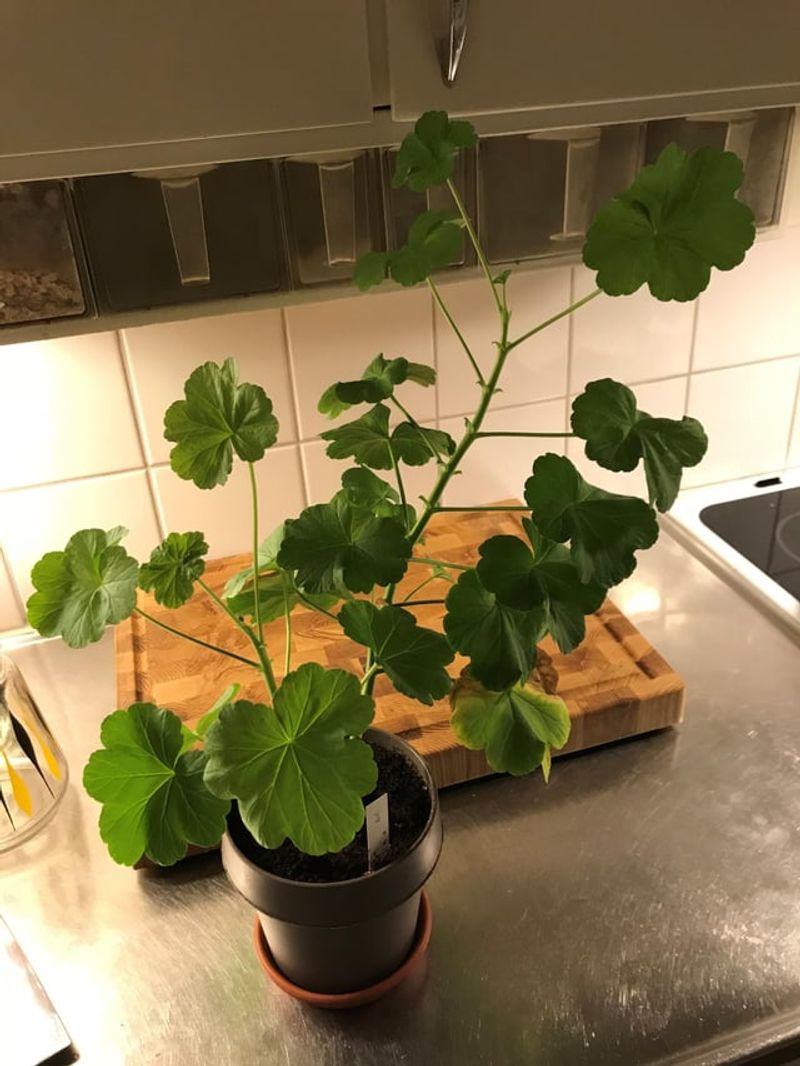
Ever notice your geranium reaching upward with long bare stems and a tuft of leaves way up top? That stretched, gangly shape is called legginess, and old flowers left on the plant can make it worse by pulling growth toward those tired tips.
Deadheading pairs beautifully with a light pinch-back here. When you remove a spent bloom, cut a little farther down the stem to a leaf node, and the plant will branch out from that point instead of shooting straight up.
More branches mean a fuller, bushier plant with far more places for flowers to form. A leggy geranium is basically asking for a haircut, so give it one while you clean up the faded heads. The result is a rounder, healthier shape by midseason.
8. Old Blooms Are Blocking Sunlight From New Growth
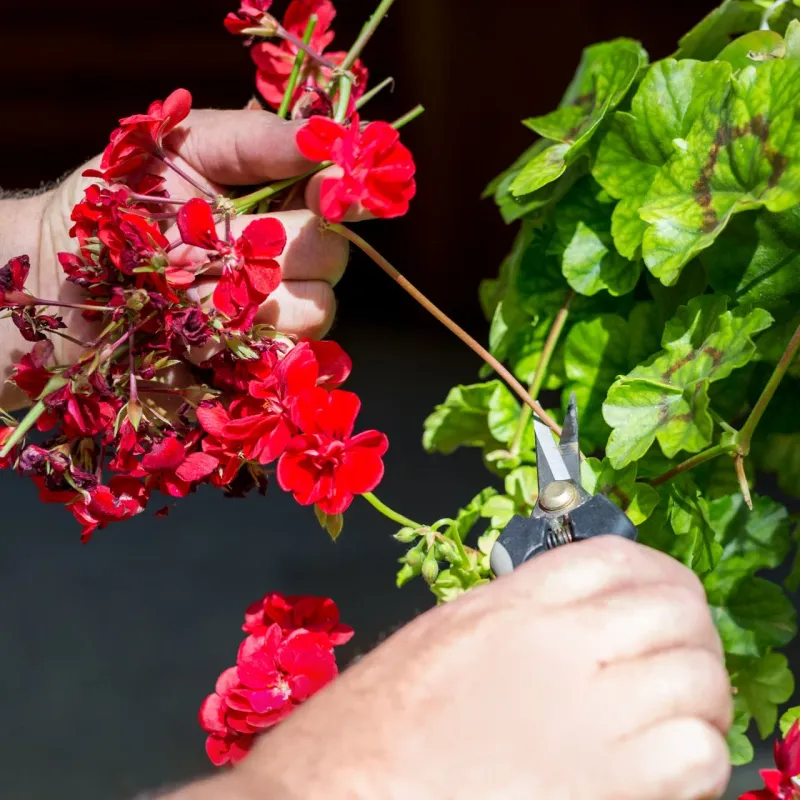
Big faded flower heads do not just look drab, they cast shade. On a bushy geranium, a cluster of spent blooms can hang right over young shoots and starve them of the light they need to develop.
Little buds trapped under a canopy of dead flowers tend to stay small and pale. Once you clear the old growth away, sunlight floods back in and those shaded shoots green up almost overnight.
Take a moment to look at your plant from the side. Anywhere a brown cluster is hovering over fresh growth is a spot that will benefit from a quick snip. Improving light and airflow at the same time is a two-for-one win for the whole plant.
9. You Spot Discolored Spots Spreading From a Dying Flower
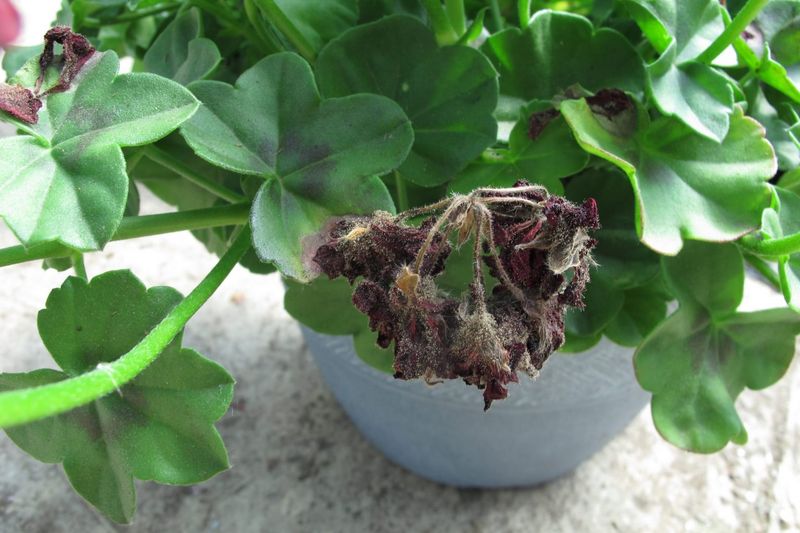
Reading your plant like a warning sign can save you a lot of trouble. When a fading flower develops dark or tan spots that seem to be creeping onto nearby leaves, that is a red flag for disease rather than simple aging.
Decaying blooms are prime entry points for leaf spot fungi and bacterial problems. What starts on one tired flower can travel down the stem and onto healthy foliage if it stays put.
Cut well below the affected area into clean, firm tissue, and dispose of the trimmings away from your plants. Wiping your snips with rubbing alcohol between cuts may help stop you from spreading spores to the next stem. Prompt removal here is less about looks and more about protecting the plant’s health.
10. Blooms Have Been Battered by Rain or Wind
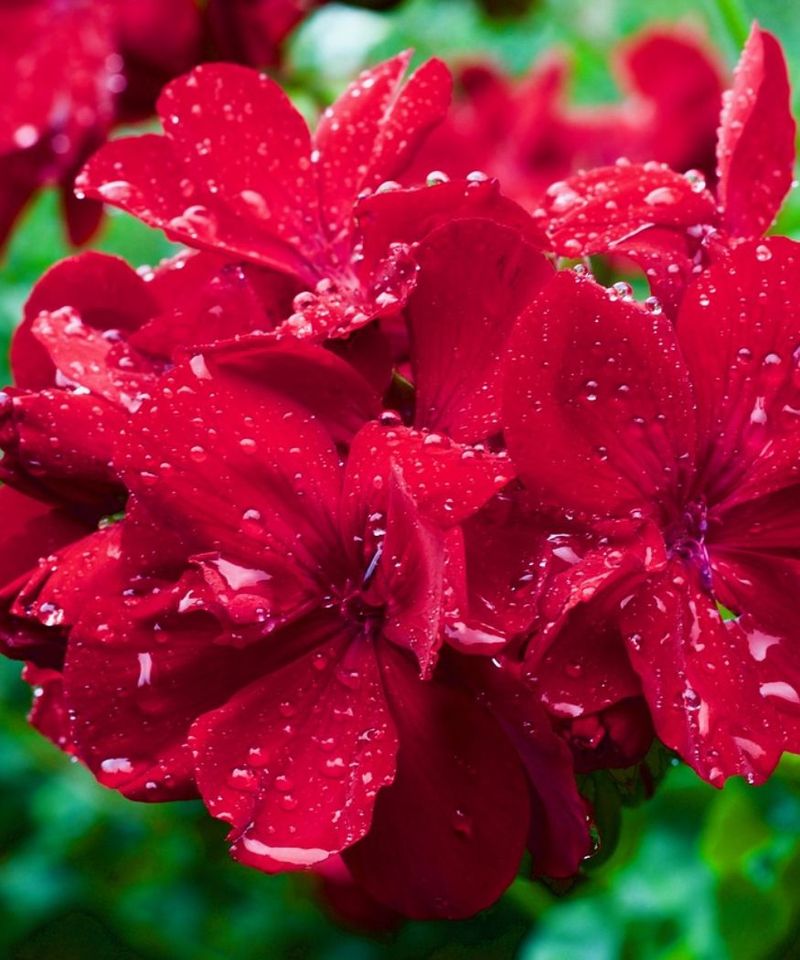
After a summer thunderstorm rolls through a US backyard, geraniums often look bedraggled with soggy, flattened flower heads. Storm-damaged blooms rarely bounce back to their former glory.
Wet, broken petals hold moisture against the plant and turn slimy fast, which invites the same rot problems as overripe flowers. Wind can also snap flower stems partway, leaving a dangling head that will never fully open.
Do a quick walk-through the morning after any rough weather. Snip off the crushed and waterlogged clusters, and remove any bent stems down to a healthy node. Your geranium will look instantly refreshed and will put its recovery energy into new buds instead of nursing broken ones.
11. The Stems Below the Flowers Are Turning Yellow
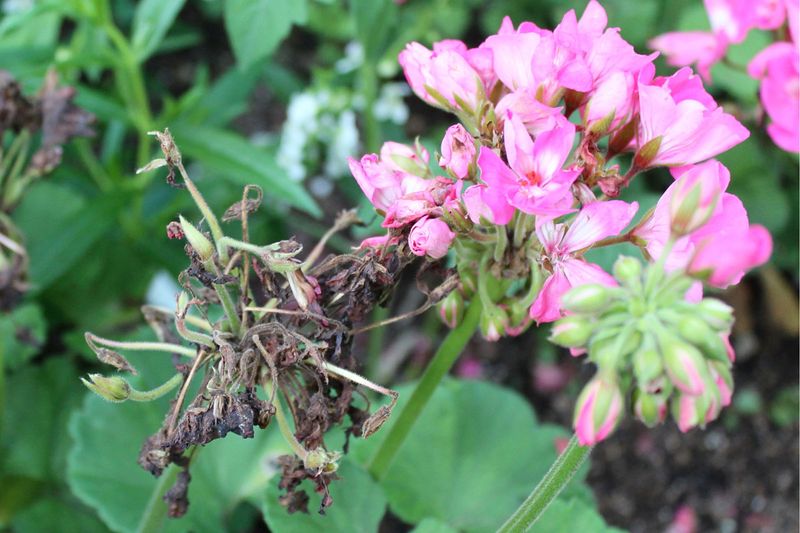
Sometimes the clue is not in the flower itself but in the little stalk holding it up. When that flower stem, called a peduncle, starts yellowing or browning below a finished bloom, the plant is signaling it has cut off support to that head.
A yellowing stalk is essentially the plant’s way of retiring the flower. Leaving it attached just gives pests and disease a dying foothold to exploit.
Follow that yellowing stem down until you reach firm green growth or the main stem, then make your cut there. Removing the whole spent stalk rather than just the flower head keeps the plant clean and prevents ugly brown stubs that never quite heal over.
12. Your Container Geraniums Look Crowded and Tired
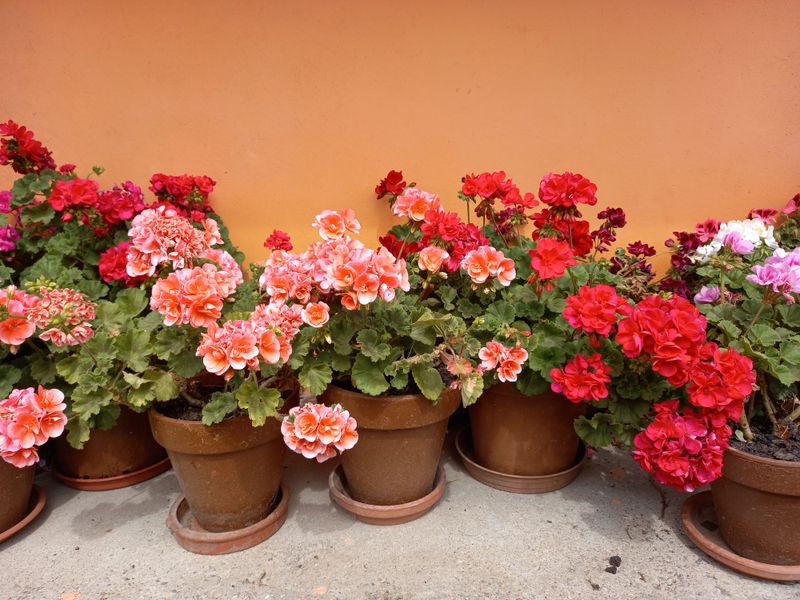
Potted geraniums on a porch or balcony work hard in a small space, and by high summer they can look downright exhausted. A crowded container packed with old and new blooms tends to trap humidity and stall performance.
Limited soil means limited energy, so every spent flower you leave on a container plant costs more than it would in a roomy garden bed. Deadheading is one of the kindest things you can do for a pot-bound geranium.
Go through the container weekly and clear out every finished head. While you are in there, pull off any yellow leaves and give the plant a quarter turn so all sides get even sun. A tidy pot breathes better, blooms harder, and looks far more inviting by your front door.
13. It Is the Cool of Morning, Not the Heat of Midday
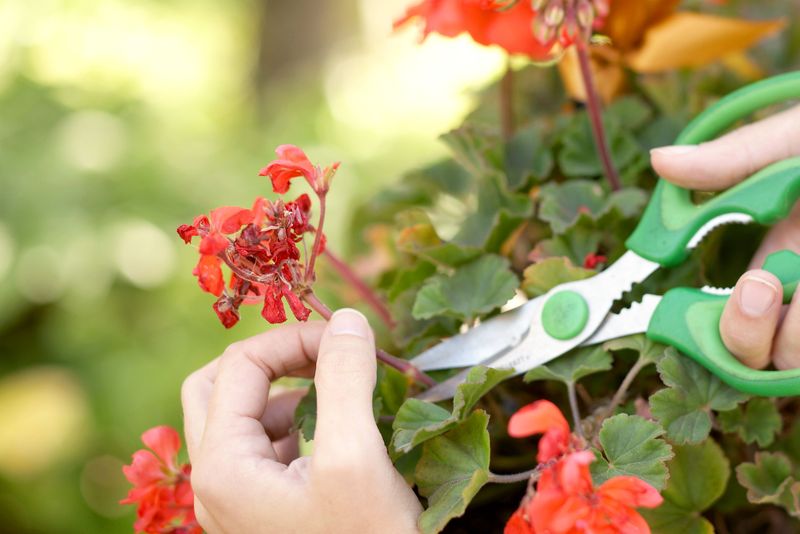
Timing your deadheading matters as much as spotting the right blooms. Early morning, while the air is still cool and the plant is full of moisture, is the sweet spot for making cuts.
Snipping in the blazing afternoon stresses an already warm plant and lets cut surfaces dry out or scorch. A morning cut heals cleaner and the plant recovers with far less shock.
Make it part of your coffee routine. A quick stroll with your snips before the day heats up lets you catch the spent heads while the stems are firm and easy to see. As a bonus, you will spot pests and problems early, when they are simplest to handle.
14. You Can Feel the Node With Your Fingers
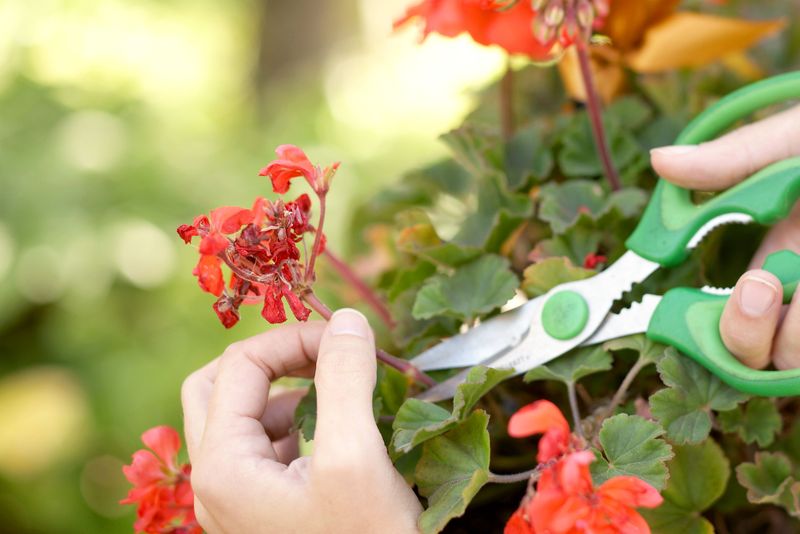
Here is where technique separates a good deadheading job from a great one. Run your fingers down a spent flower stem and you will feel small bumps or joints where leaves and side shoots emerge, those are the nodes.
Cutting just above a healthy node is the secret to a bushier plant. The node holds dormant buds that spring into action once the tip above them is removed, giving you new branches and more flowers.
Zonal geraniums with their thick, juicy stems are often easiest to snap cleanly by hand right at a node, no tools required. For the tougher, woodier stems, reach for sharp bypass pruners and cut about a quarter inch above the node. Aim your cut at a slight angle so water sheds off instead of pooling on the wound.
15. Your Snips Are Clean and Sharp Before You Start
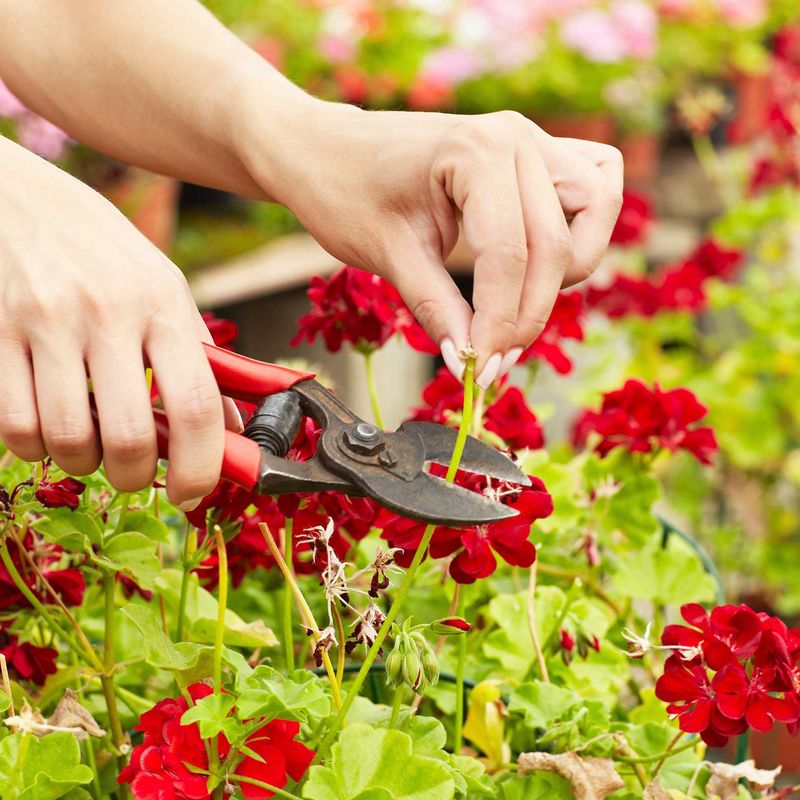
The final sign is really a promise to yourself before you touch a single flower. Reaching for dull, dirty pruners is a fast way to crush stems and carry disease from one plant to the next.
Clean blades slice instead of tear, leaving a neat wound the plant can seal quickly. A quick wipe with rubbing alcohol between plants can reduce the chance of spreading any lurking fungus or bacteria.
Before deadheading, give your tool a once-over. Sharpen it if the edge feels ragged, wipe the blades, and keep a small rag handy in your pocket. Well-cared-for snips make the whole job faster, kinder to your geraniums, and honestly more satisfying.
Keep up this rhythm through the season and your geraniums will reward you with wave after wave of color right up until the first frost.