
36 Beautiful Perennials To Plant Around Your Clematis For A Show-Stopping Wall Of Color
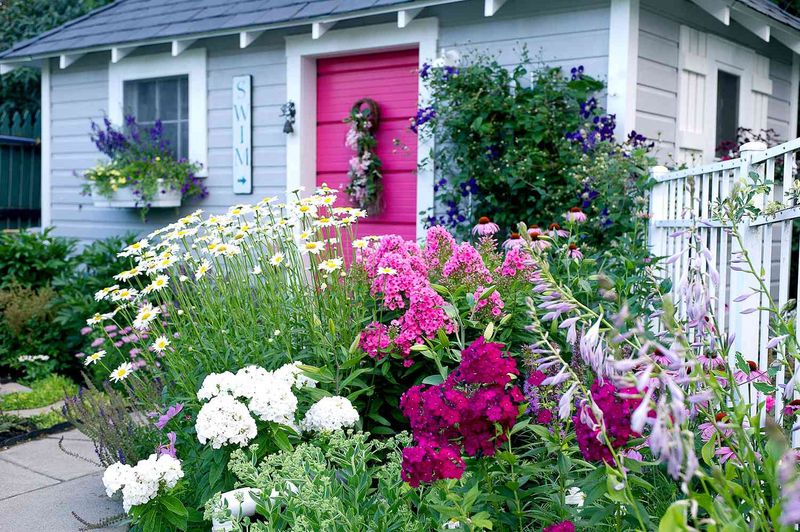
Clematis vines can climb walls and trellises like living curtains of color, but they look even better with the right friends planted at their feet. Pairing them with perennials helps shade their roots, fills empty gaps, and stretches the bloom season from spring all the way into fall. The best part is that most of these companions come back year after year, so you plant once and enjoy the payoff for a long time. Here are 36 perennials that team up beautifully with clematis to build a wall of color your neighbors will stop to admire.
1. Catmint (Nepeta)
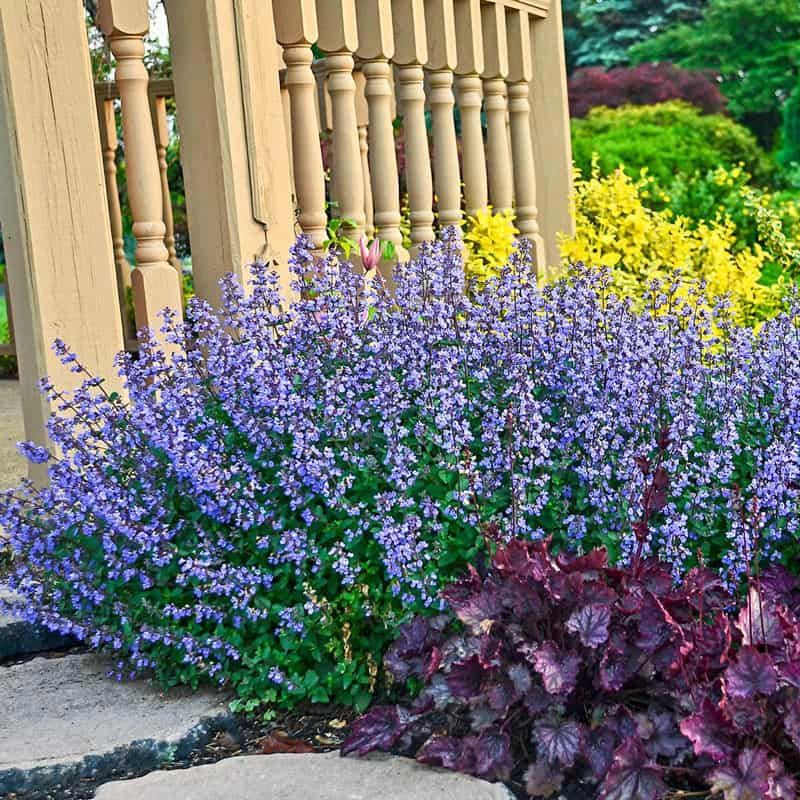
Few plants shrug off summer heat like catmint, and that toughness makes it a smart partner beneath a clematis vine. Its low, spreading mound of gray-green foliage keeps the soil cool and shaded, which clematis roots absolutely love.
The hazy blue-purple flower spikes bloom for weeks and echo the cooler tones of purple clematis varieties beautifully. Bees and butterflies swarm it, so you get pollinator traffic as a bonus.
Cut it back after the first flush and it will rebloom, keeping the base of your wall looking full instead of leggy. In most US zones it thrives on neglect, asking only for sun and decent drainage.
2. Hardy Geranium (Cranesbill)
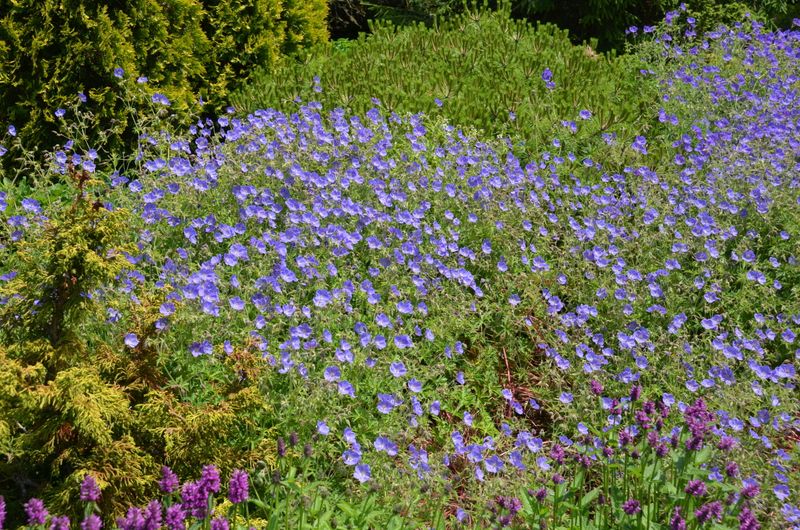
Reliable to a fault, hardy geranium spreads into a tidy carpet that hides the bare knees of a clematis without ever getting pushy. The saucer-shaped flowers come in blues, pinks, and magentas that pick up colors already climbing the wall above.
Because it forms a living mulch, it shades the root zone and cuts down on weeds you would otherwise be pulling all summer.
Give it a haircut when blooms fade and fresh foliage fills back in fast. It handles part shade, which is handy since the base of a tall clematis often sits in the vine’s own shadow.
3. Salvia (Perennial Sage)
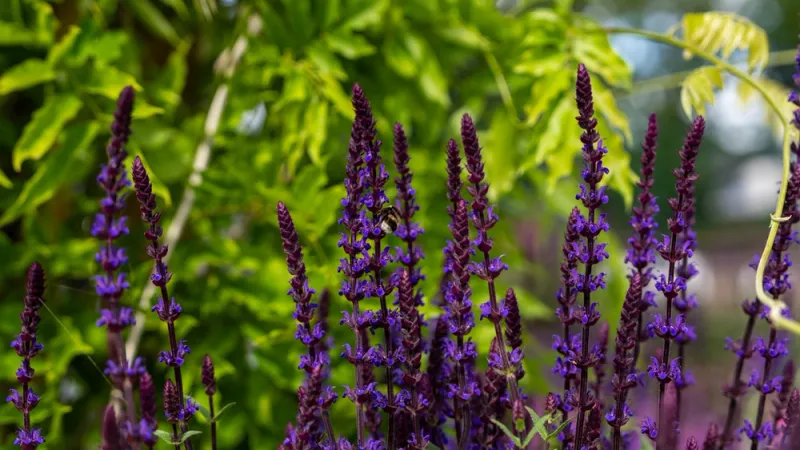
Upright spikes of deep purple, blue, or hot pink give salvia a vertical rhythm that plays nicely against the climbing lines of clematis. The two seem to sing the same tune, especially when a violet clematis meets a violet salvia below.
Drought-tolerant and long-blooming, it keeps color coming from late spring into fall with a simple midseason shear.
Hummingbirds treat perennial sage like a roadside diner, dropping in constantly. Plant it toward the front edge where its spikes can rise without hiding the vine’s own show.
4. Coral Bells (Heuchera)
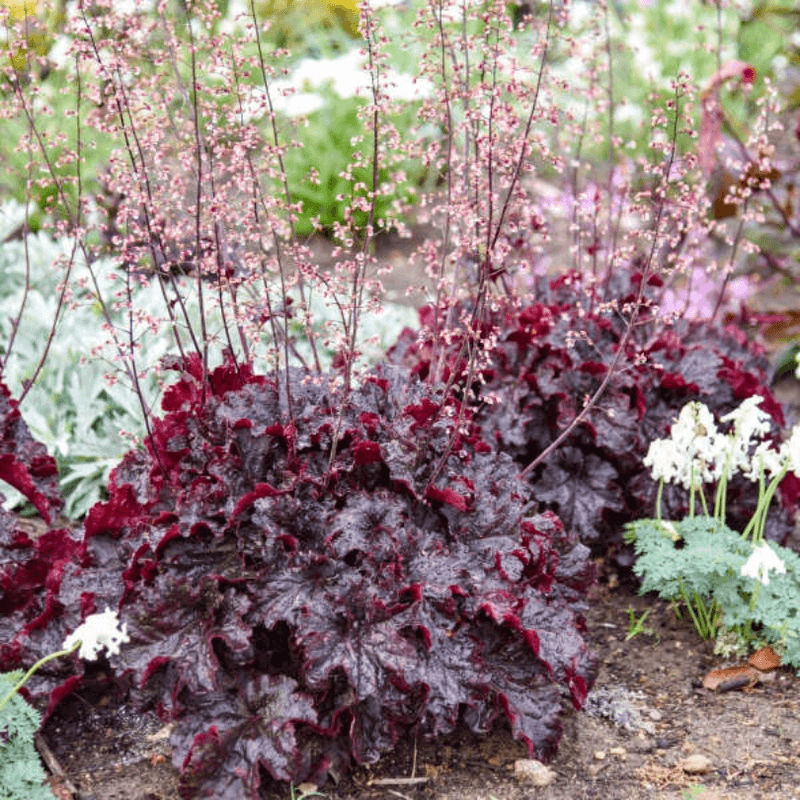
Grown mostly for its foliage, coral bells brings color to the party even when nothing is blooming. Leaves range from lime and caramel to plum and near-black, giving you a way to underline whatever shade your clematis flowers happen to be.
Because it tolerates part shade, it handles the dimmer footing at a vine’s base without sulking.
Airy wands of tiny bell flowers float above the mound in early summer, adding a soft haze of texture. Tuck a few different leaf colors together and the base of your wall reads like a painter’s palette.
5. Lavender
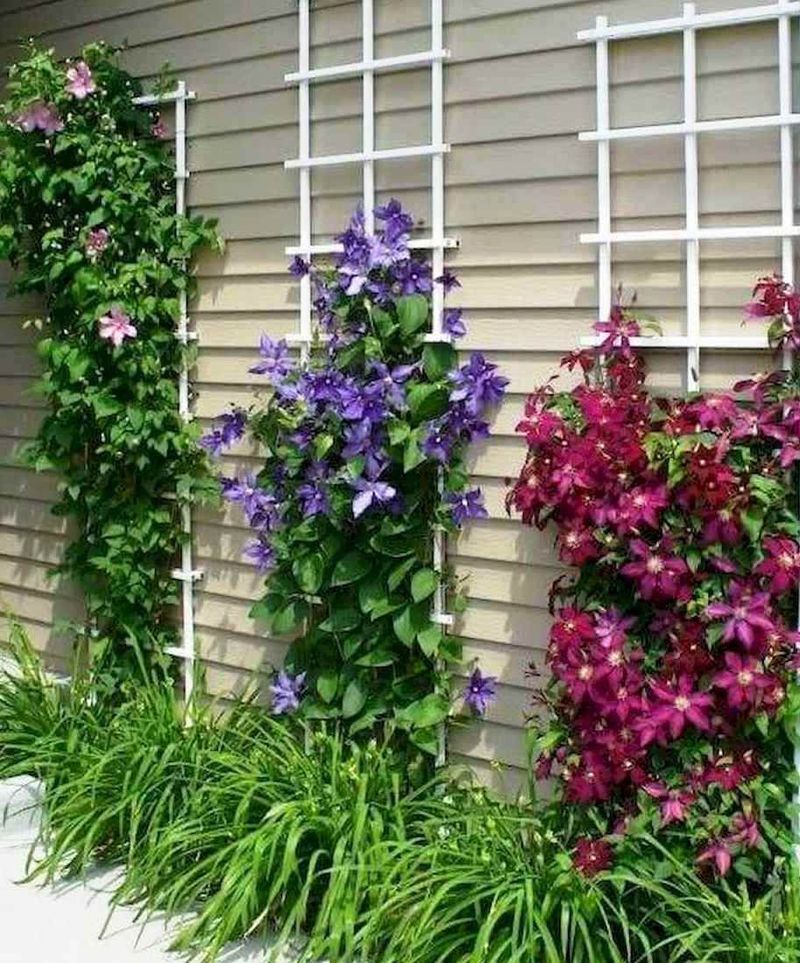
Run your hand across lavender and the scent alone earns it a spot near any seating wall draped in clematis. The silvery foliage and soft purple wands add a Mediterranean calm that softens the vine’s bold climbing color.
It craves the same thing a healthy clematis planting appreciates: sun up top and sharp drainage below.
The fragrance may help deter a few nibbling pests while pulling in bees by the dozen. Plant it along a sunny path so every brush past releases that unmistakable perfume.
6. Peony
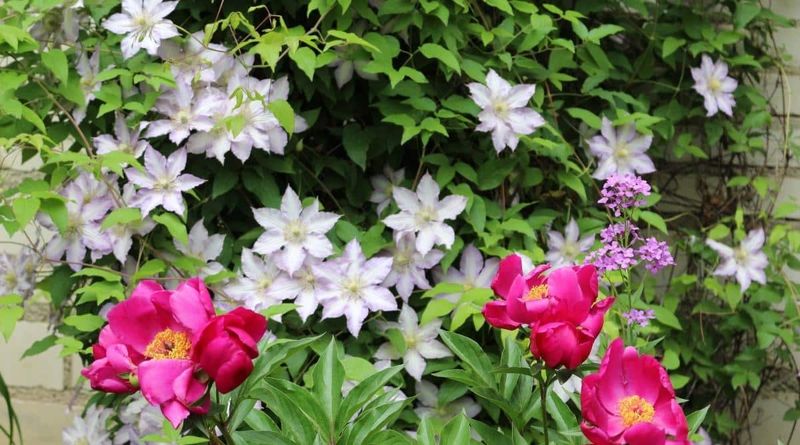
Old-fashioned and unforgettable, peonies bring a heavyweight bloom to the front of the border while clematis handles the height. Their lush spring flowers open before many clematis hit full stride, so the two hand off the spotlight.
Once the peony finishes, its bushy green mound keeps working as a handsome shade-giver over the vine’s roots.
Plant one and it can outlive you, faithfully returning for decades with almost no fuss. Just resist crowding the crown too deep, or you will trade flowers for foliage.
7. Daylily (Hemerocallis)
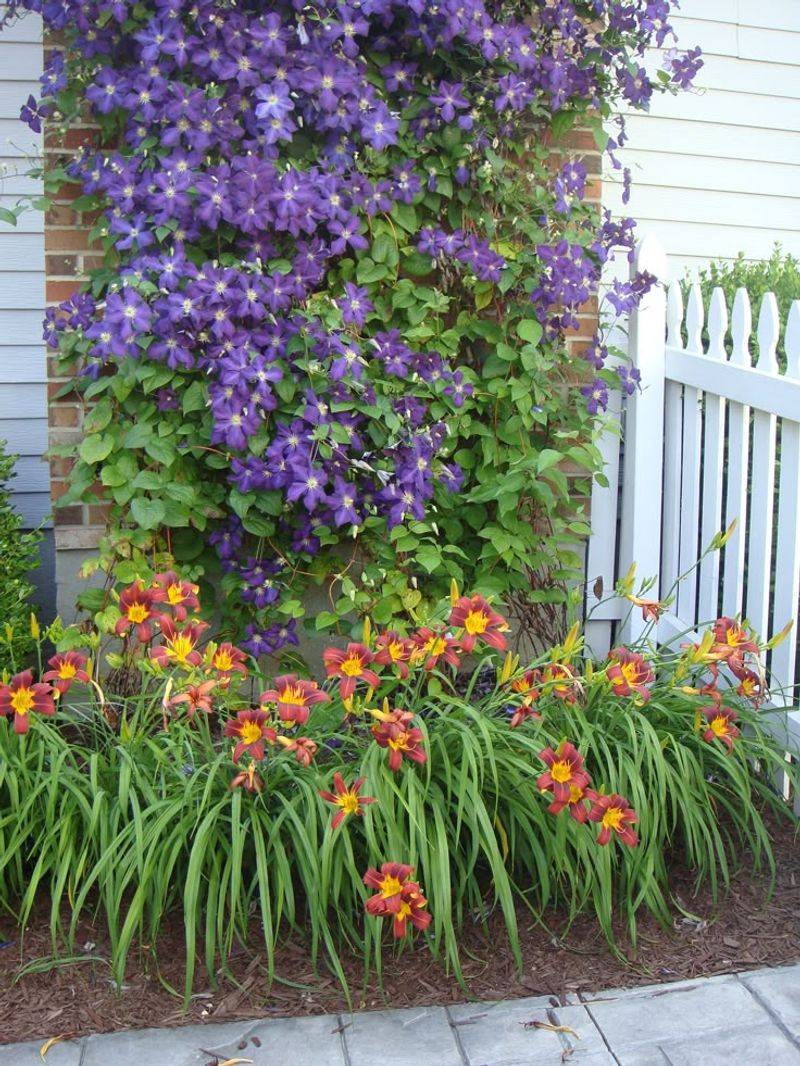
Nearly impossible to kill, the daylily is the plant you hand to a friend swearing they have a black thumb. Each trumpet lasts a day, but the plant pumps out so many buds that the show rolls on for weeks.
Warm oranges, reds, and golds create a bright counterpoint to cool-toned clematis climbing above.
The arching strappy leaves fill space fast and smother weeds around the vine’s base. Reblooming types like the classic gold favorite keep the color coming after the first wave fades.
8. Hosta
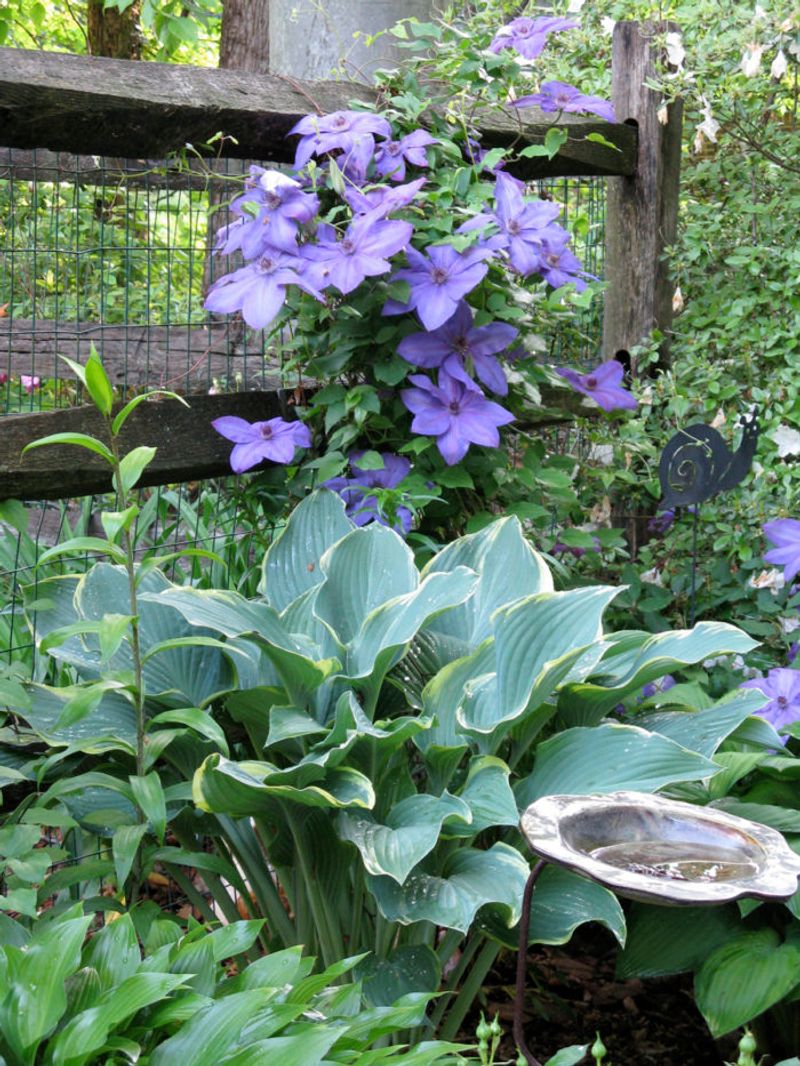
When the base of your clematis sits in shade, hosta steps in where sun-lovers would sulk. Broad leaves in blue, gold, and variegated stripes create a lush, layered floor that makes the whole wall look intentional.
The bold foliage contrasts perfectly with the fine, twining stems of a clematis, giving the eye a place to rest.
Late-summer flower spikes are a quiet bonus rather than the main act. Watch for slugs, and a ring of grit or crushed eggshell can keep the leaves looking clean.
9. Shasta Daisy
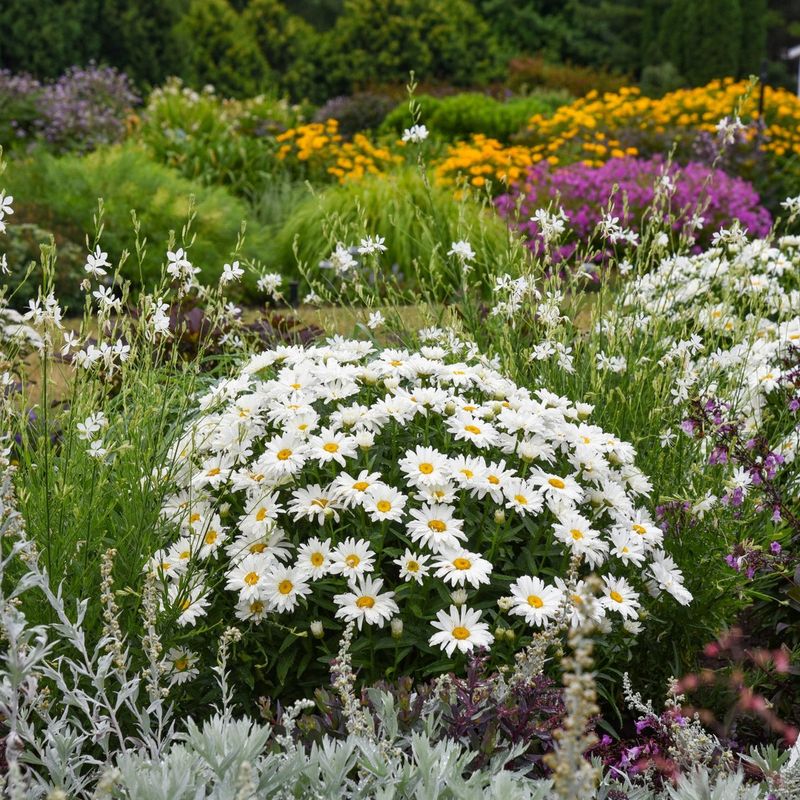
Crisp white petals around a sunny yellow center make the Shasta daisy a fresh, clean anchor for any color scheme. Against a jewel-toned clematis, that white acts like a spacer that keeps the palette from feeling muddy.
It blooms for a long stretch in midsummer and rebounds quickly when you deadhead spent flowers.
Cut stems last for days in a vase, so you can bring the wall’s mood indoors. Divide the clumps every few years and you will have free plants to spread the effect down the whole bed.
10. Russian Sage (Perovskia)
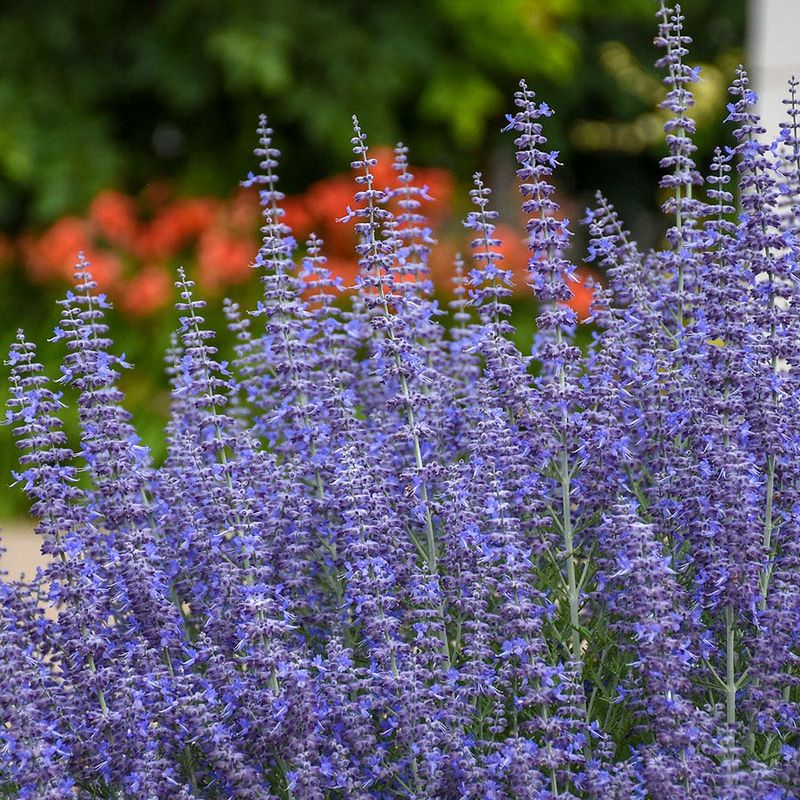
Airy and cloudlike, Russian sage sends up silvery stems topped with a haze of tiny lavender-blue flowers that seem to float. Set below a clematis, that soft blur softens the vine’s structure like mist around a mountain.
It laughs at heat and drought once established, making it a low-maintenance workhorse for hot US beds.
The whole plant carries a sagey scent that many nibbling pests can find off-putting. Give it room, because a happy clump can reach four feet wide and tall by late summer.
11. Black-Eyed Susan (Rudbeckia)
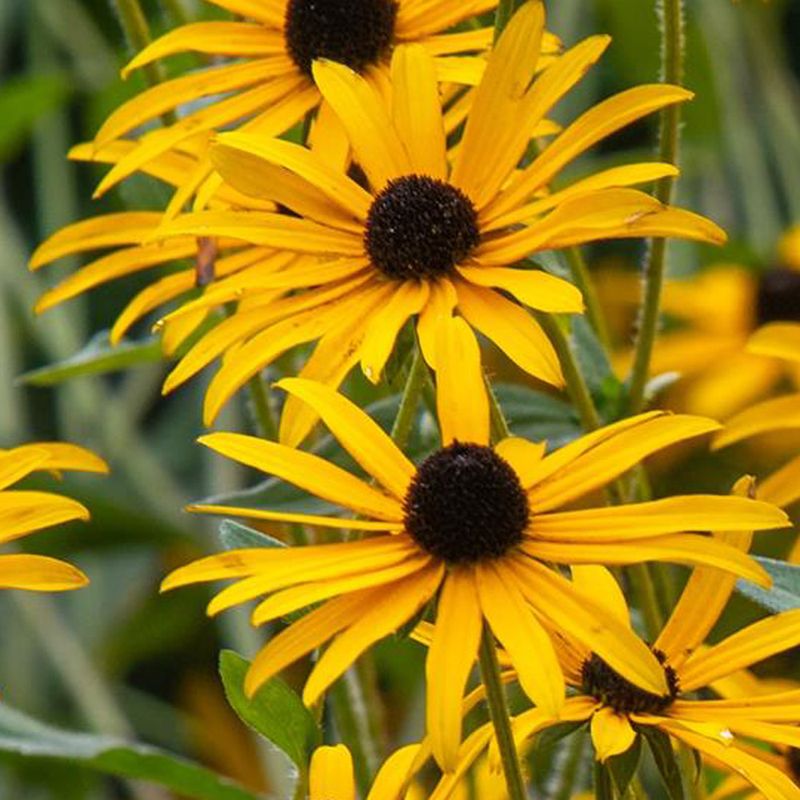
Golden petals with a chocolate-brown eye give black-eyed Susan a cheerful, sunlit glow that pops against purple or blue clematis. It waves the flag for late summer, blooming just as some spring companions call it quits.
Butterflies and finches love it, the latter picking at the seed heads well into fall.
Tough and self-sowing, it often shows up in new spots as a welcome surprise. Leave the spent cones standing for winter interest and free birdseed.
12. Coneflower (Echinacea)
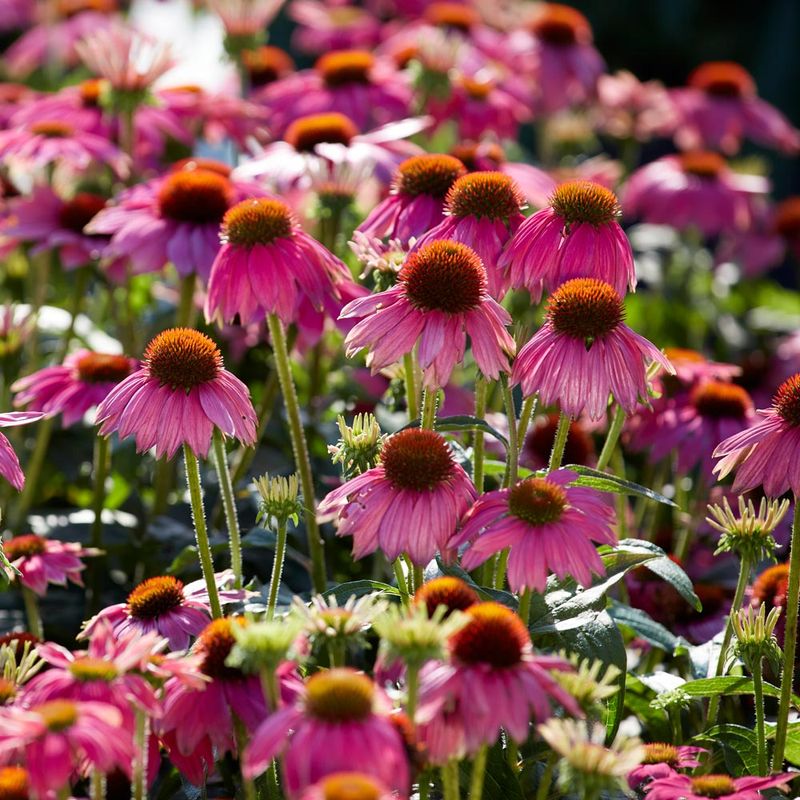
Sturdy stems and daisy-shaped blooms make coneflower a dependable pillar in the summer border below a clematis. Classic purple-pink varieties tie right into a lavender vine, while orange and yellow types add contrast.
Pollinators flock to the raised central cone, and goldfinches crack the seeds long after the petals drop.
Drought-tough and prairie-hardy, it holds up through the muggiest US summers without flopping. Leave the seed heads standing and you gift the birds a winter buffet.
13. Bearded Iris
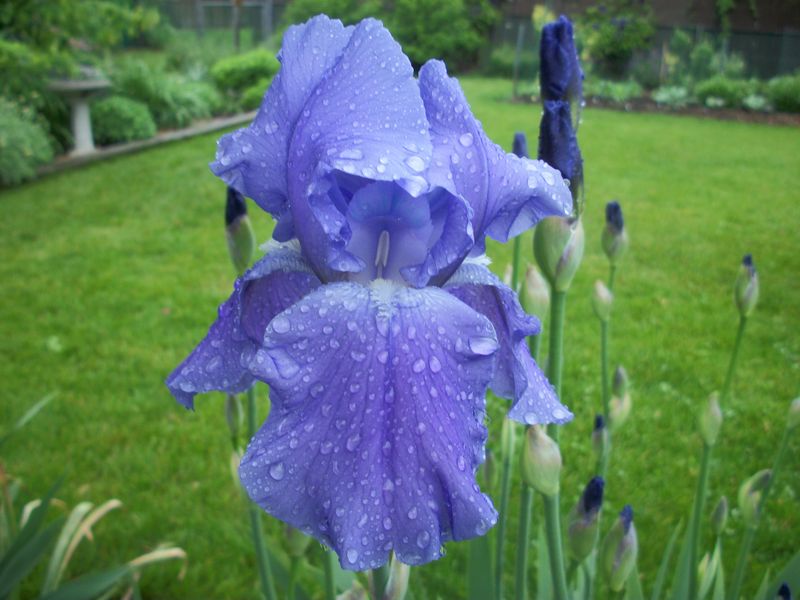
Regal and ruffled, bearded iris opens in late spring like something out of a painting, right when climbing vines are just getting going. Its sword-shaped leaves add an upright architectural line that stays useful after the flowers fade.
Colors range across the whole rainbow, so you can match or deliberately clash with your clematis for drama.
Plant the rhizomes shallow, with their backs kissed by the sun, and they multiply generously. Every few years you can lift and split them to carpet more of the wall’s base.
14. Phlox (Garden Phlox)
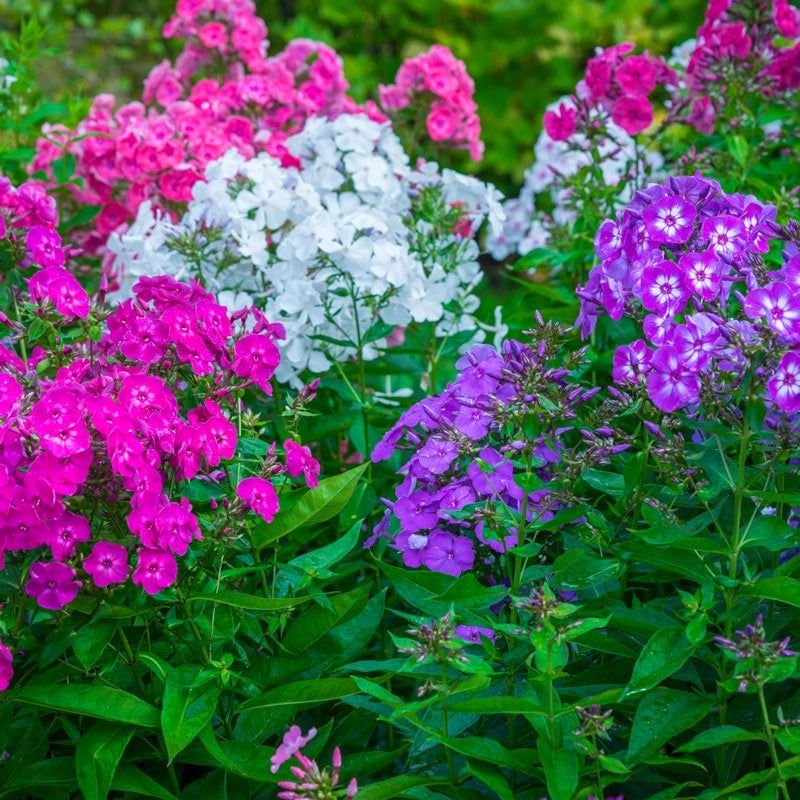
Fragrant clusters of garden phlox perfume the air on warm evenings, drawing hummingbird moths at dusk. Blooming in pinks, whites, and lavenders through high summer, it fills the middle layer between low groundcovers and the towering clematis.
The rounded flower heads add a fullness that keeps the bed from looking spindly.
Choose mildew-resistant varieties and give it air circulation to keep the foliage clean in humid regions. A midsummer deadheading nudges out a second round of bloom.
15. Yarrow (Achillea)
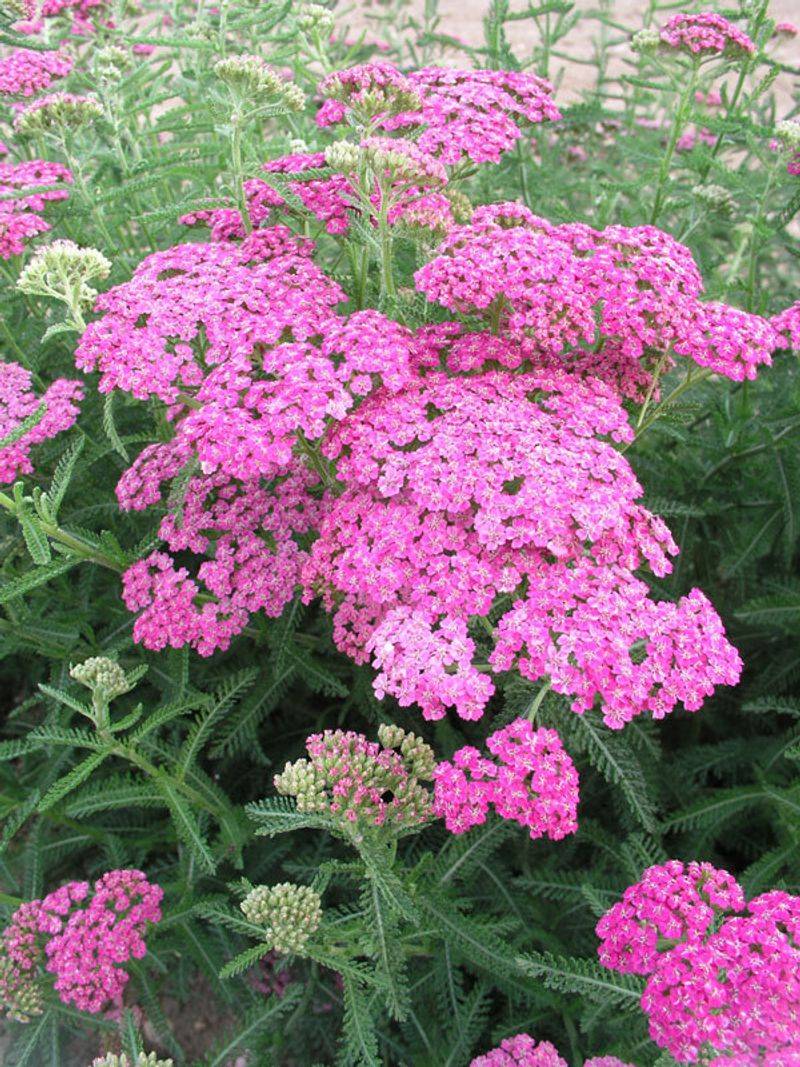
Flat-topped flower clusters give yarrow a distinctive landing pad look that pollinators can’t resist. Golds, reds, and soft pastels let you dial the color to whatever your clematis is doing overhead.
The ferny, aromatic foliage may help throw off a few browsing pests while adding fine texture at ground level.
It thrives in lean, dry soil where fussier plants would pout, making it perfect for that hot strip along a wall. Snip the blooms for drying and they hold their color for months.
16. Bellflower (Campanula)
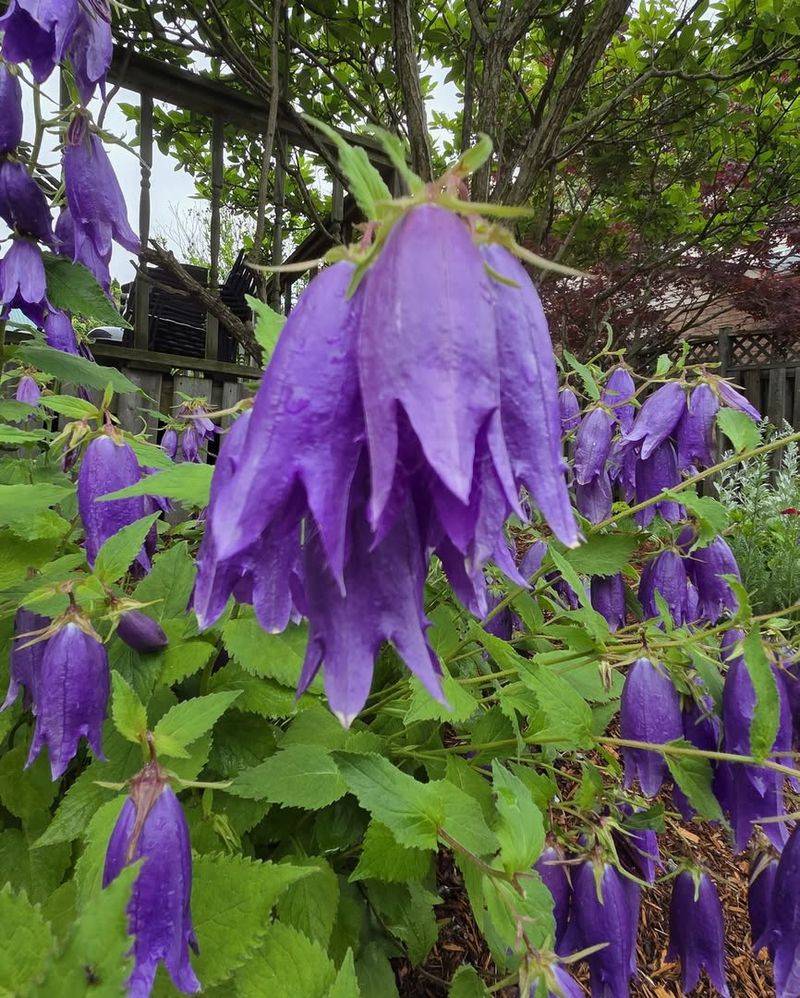
Charming little bell-shaped blooms give campanula a cottage-garden sweetness that suits a clematis wall perfectly. Many varieties share the same blue-violet range as clematis, so the two seem to blend into one continuous wash of color from ground to sky.
Low, spreading types spill over edges and hide the vine’s bare base, while taller ones fill the mid-border.
Deadhead regularly and it keeps flowering for weeks on end. It handles part shade, which suits the shadier footing near a big vine.
17. Astilbe
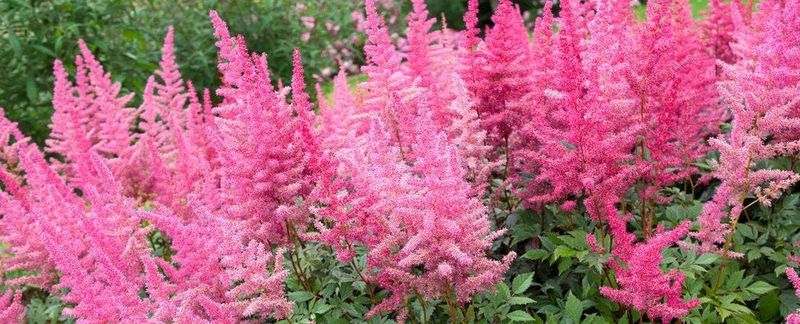
Feathery plumes rising above fern-like foliage give astilbe a soft, airy elegance that shines in shadier spots. Where the base of your clematis stays damp and dim, this is the plant that turns a problem corner into a highlight.
Plumes in pink, red, white, and lavender add a vertical wispiness that contrasts the vine’s twining stems.
Keep the soil consistently moist and it rewards you with weeks of bloom. The dried plumes even hold up as quiet winter structure once summer ends.
18. Sedum (Autumn Joy Stonecrop)
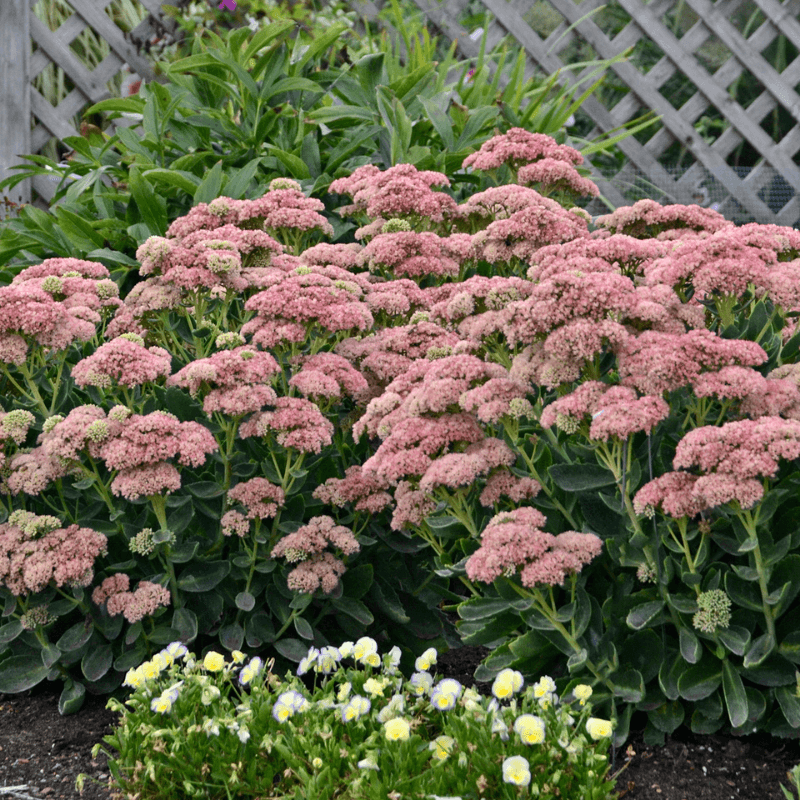
Fleshy leaves and broccoli-like flower heads make sedum a sculptural presence that shifts color as the season turns. Green buds mature to dusty pink and finally deep rust, giving you a slow-motion show as your clematis winds down.
Bees mob the late blooms when little else is flowering, making it a fall lifeline for pollinators.
It stores water in those thick leaves, so drought barely registers. Leave the rusty heads up through winter for frost-dusted interest.
19. Lady’s Mantle (Alchemilla)
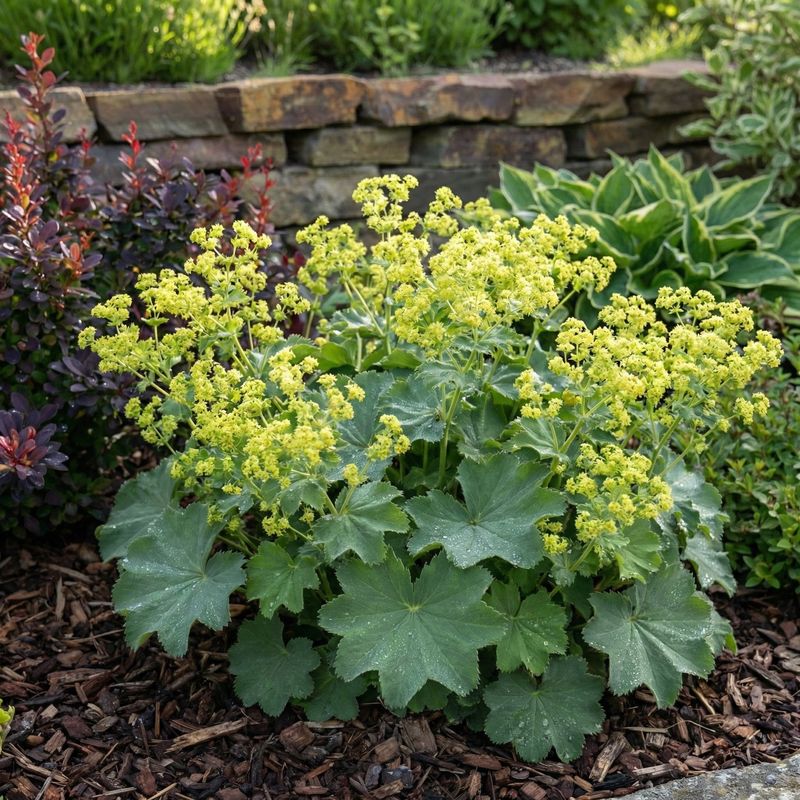
Rain turns lady’s mantle into a jewel box, with silvery water beads sitting on its softly pleated leaves like scattered pearls. Frothy chartreuse flowers spill over the front of the border, and that acid-green shade makes purple clematis practically glow.
The dense mounding foliage shades the vine’s roots and smothers weeds along the way.
It self-seeds gently, filling gaps without becoming a nuisance. Shear it back after flowering for a fresh, tidy flush of leaves.
20. Baptisia (False Indigo)
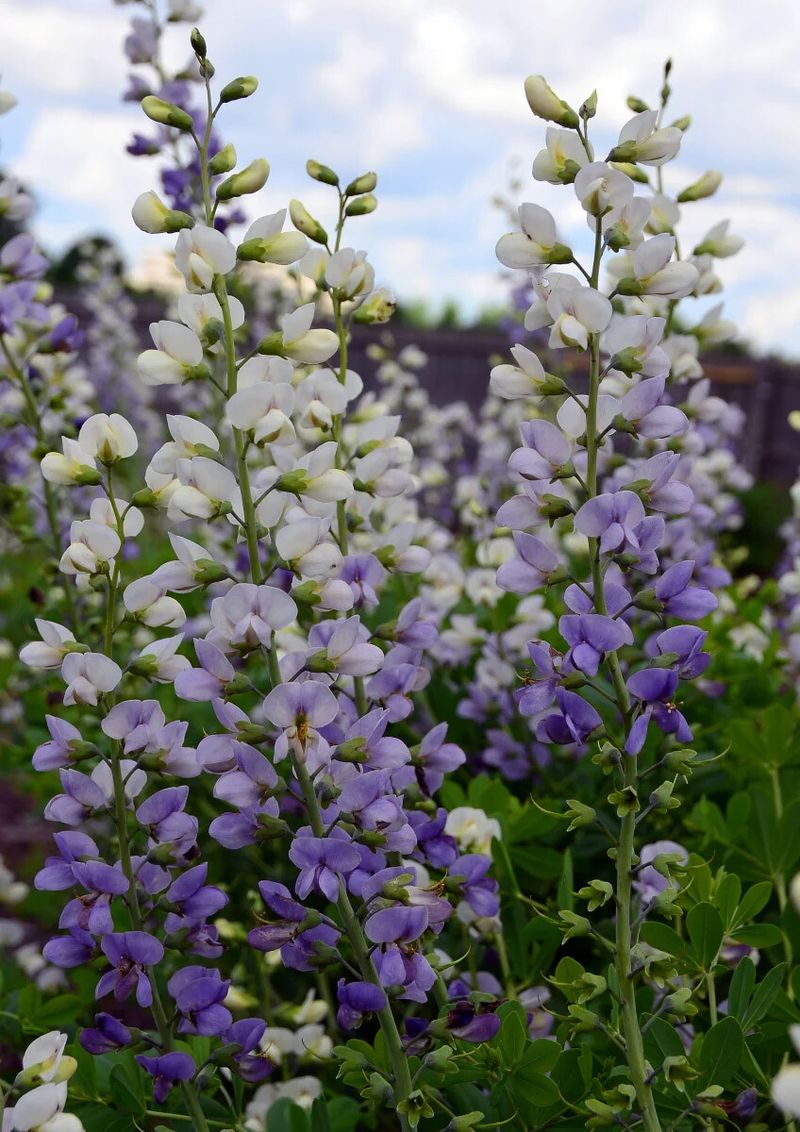
Built like a shrub but dying back each winter, baptisia gives you real presence without the permanence. Lupine-like spikes of indigo, yellow, or purple rise in late spring, echoing a blue clematis climbing behind them.
The blue-green foliage stays handsome all season and needs almost no attention once the deep taproot settles in.
Charcoal seed pods rattle in the breeze come fall, adding sound and texture. Give it a permanent home, because moving a mature plant is a genuine wrestling match.
21. Bleeding Heart (Dicentra)
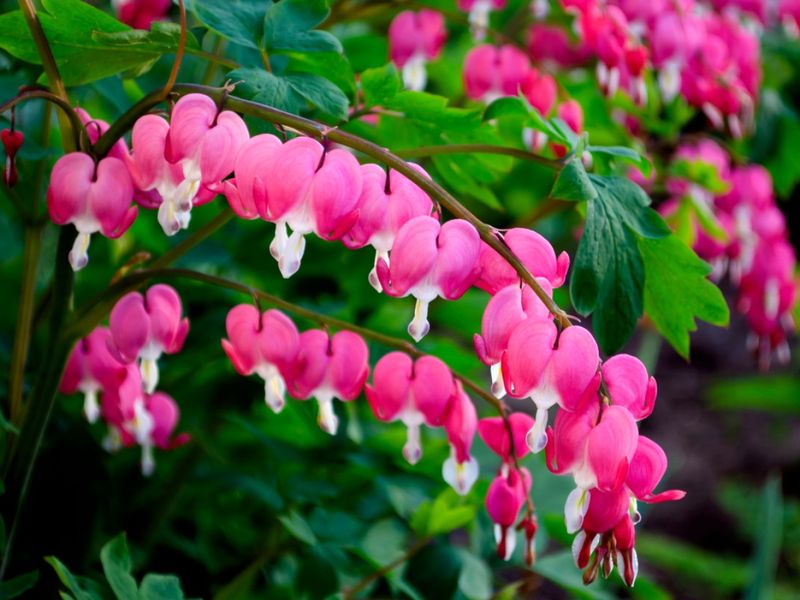
Dangling heart-shaped lockets line the arching stems of bleeding heart, a spring charmer that steals hearts before most clematis even wake up. In pink or white, it brings early romance to the shaded base of a wall.
By midsummer the foliage often fades back, so plant it where later companions can grow up and cover the gap.
It thrives in the same cool, moist shade that keeps clematis roots happy. Tuck it near a path so those little hearts catch the eye up close.
22. Coreopsis (Tickseed)
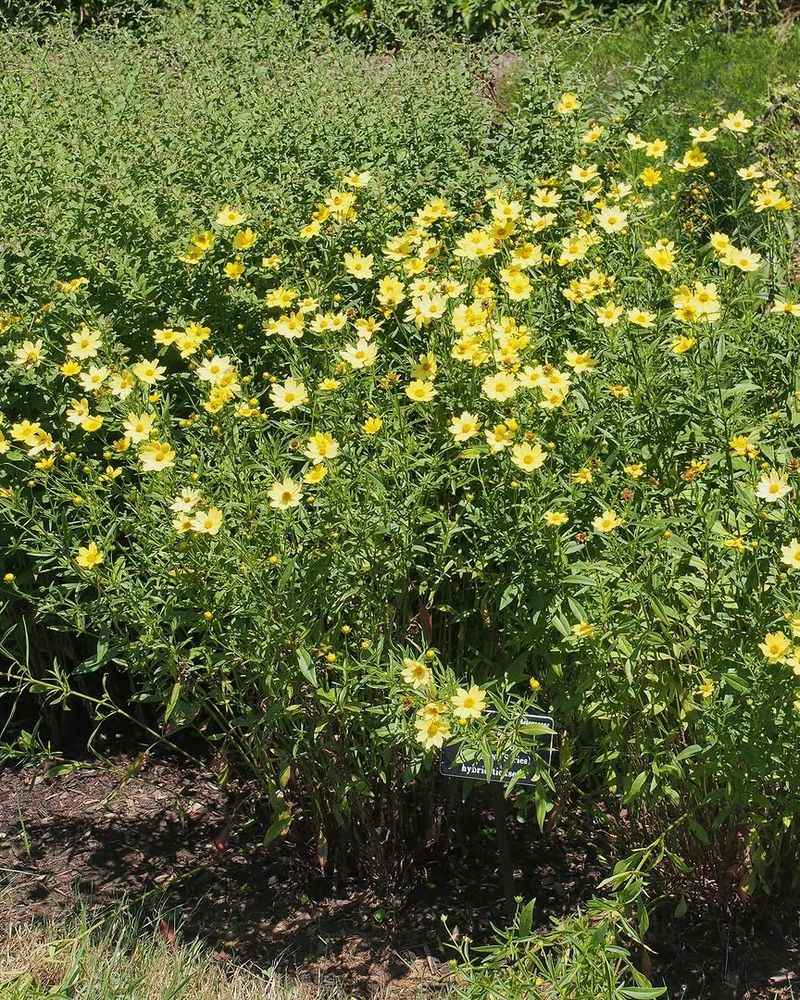
Sunshine on a stem, coreopsis scatters cheerful yellow and gold daisies across a low, airy mound all summer long. That warm glow lights up the cooler blues and purples of a clematis without a hint of clash.
Threadleaf types add a fine, feathery texture that fills space between chunkier neighbors.
It shrugs off heat and poor soil, blooming hardest exactly when the weather is toughest. A quick shear midseason resets it for a strong second act.
23. Speedwell (Veronica)
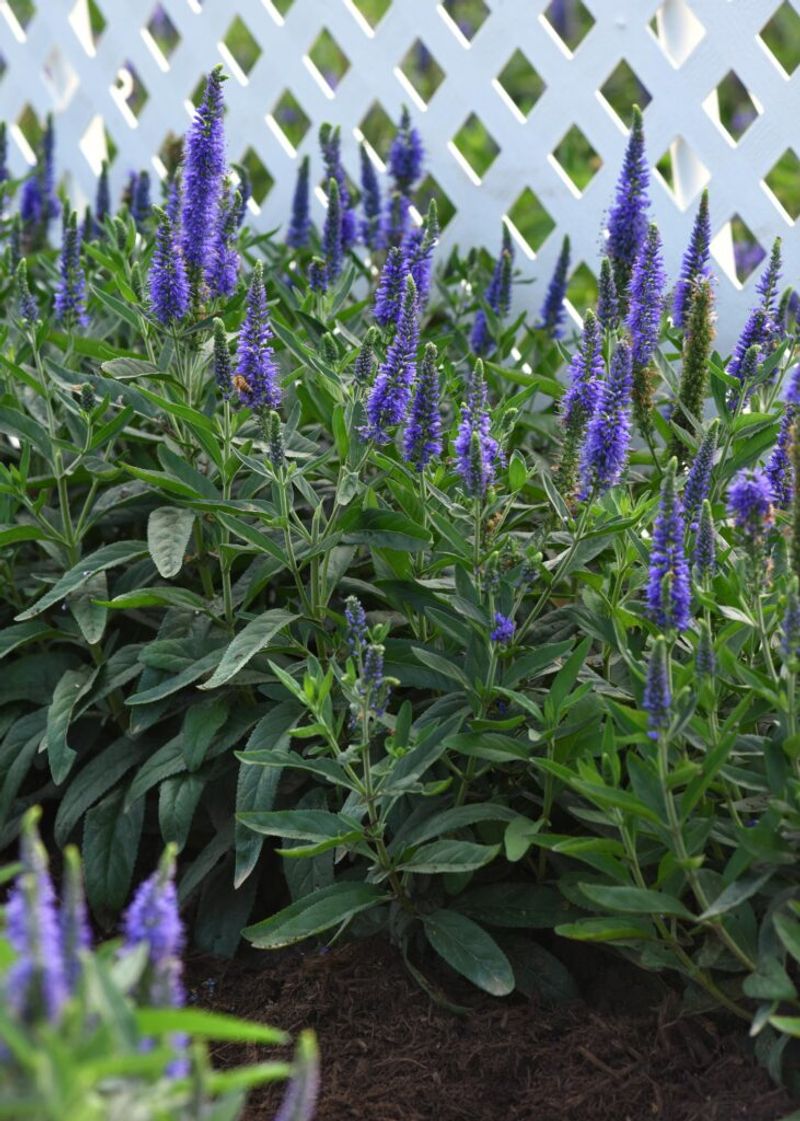
Slender flower spikes give veronica a candle-flame shape that adds vertical spark to the front of a border. Blues, pinks, and whites let it either match or gently contrast with the clematis above.
The tidy, upright habit keeps it from flopping, so the bed stays neat even in a downpour.
Pollinators work the spikes from bottom to top, and deadheading brings a fresh flush. It bridges the mid-border gap between sprawling groundcovers and the vine’s soaring line.
24. Dianthus (Pinks)
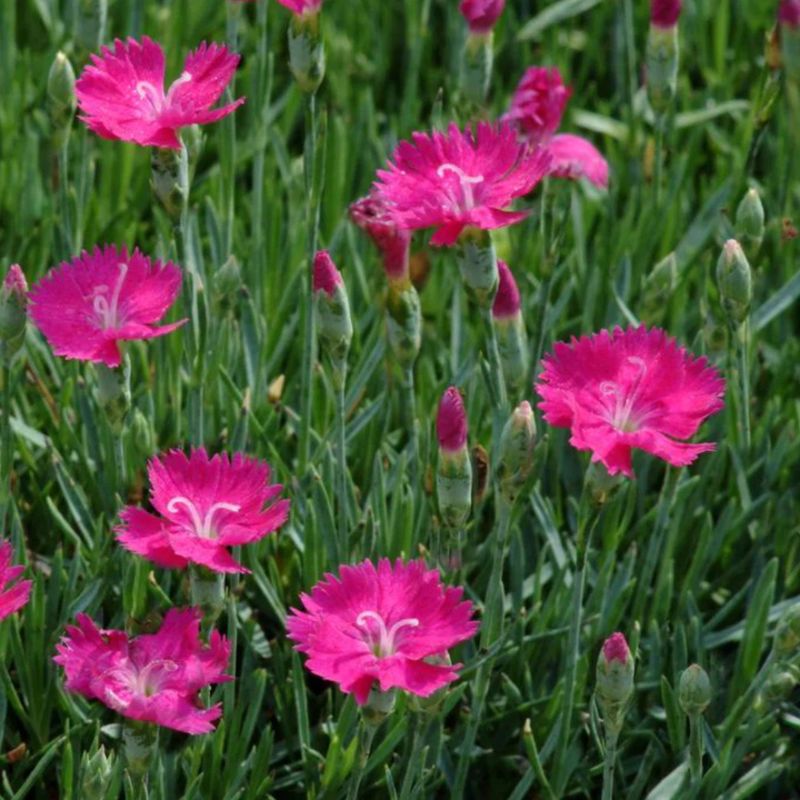
The clove-like fragrance of dianthus catches you off guard, sweet and spicy in a way most flowers never manage. Its low mats of blue-gray foliage stay evergreen in mild zones and edge a clematis bed like living trim.
Frilly pink, red, and white flowers hover just above the mound in late spring and early summer.
Keep deadheading and many varieties rebloom well into fall. It loves the same sharp drainage that keeps clematis crowns from rotting.
25. Lamb’s Ear (Stachys)
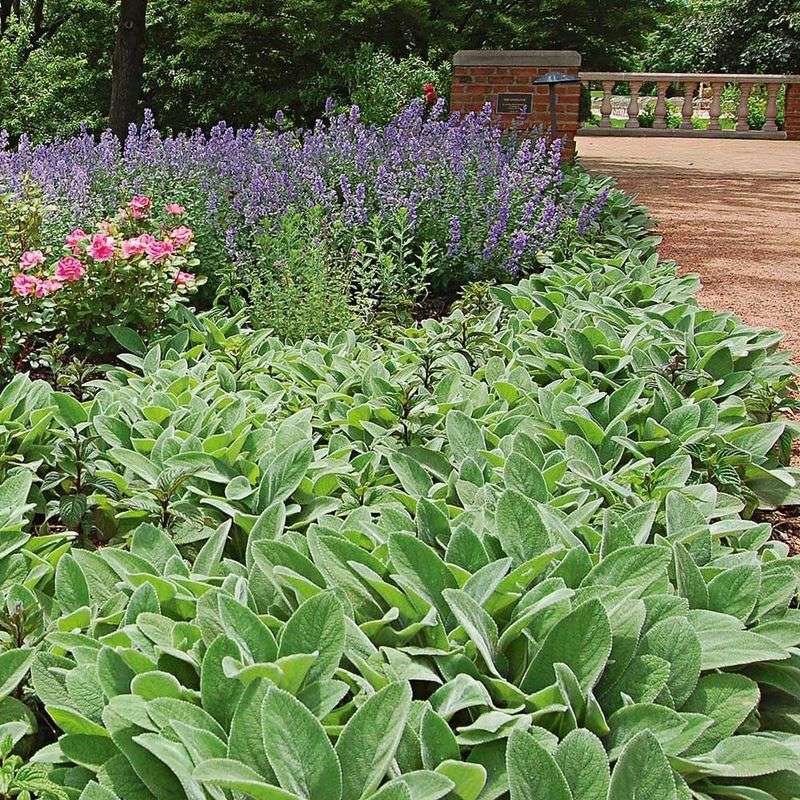
Everyone wants to touch lamb’s ear, and who can blame them when the leaves feel like the softest velvet. That silvery, fuzzy foliage cools down a hot color scheme and makes rich clematis purples look even richer.
It creeps into a soft, weed-smothering mat that keeps the vine’s roots shaded and comfortable.
The silvery haze reads beautifully at dusk, almost glowing in low light. Snip the flower stalks if you prefer to keep the focus on that luscious foliage.
26. Geum
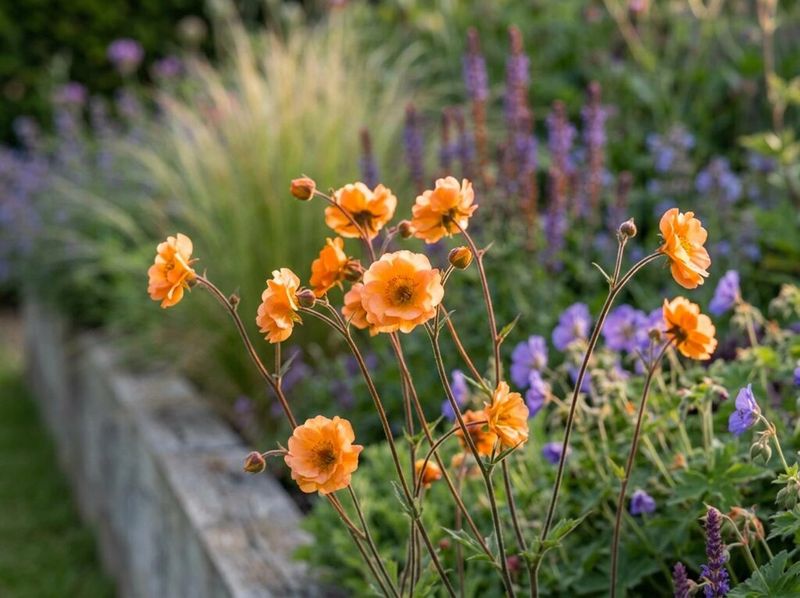
Cheerful little cups of tangerine, scarlet, and butter-yellow bob on wiry stems, giving geum a playful, dancing quality. It flowers early and keeps going, filling the awkward gap between spring bulbs and summer’s main event.
The warm, fiery tones make a punchy contrast against cool blue and violet clematis.
A low rosette of scalloped leaves stays neat at the front of the border year-round in mild zones. Deadhead often and it rewards you with weeks more bloom.
27. Hardy Hibiscus (Rose Mallow)
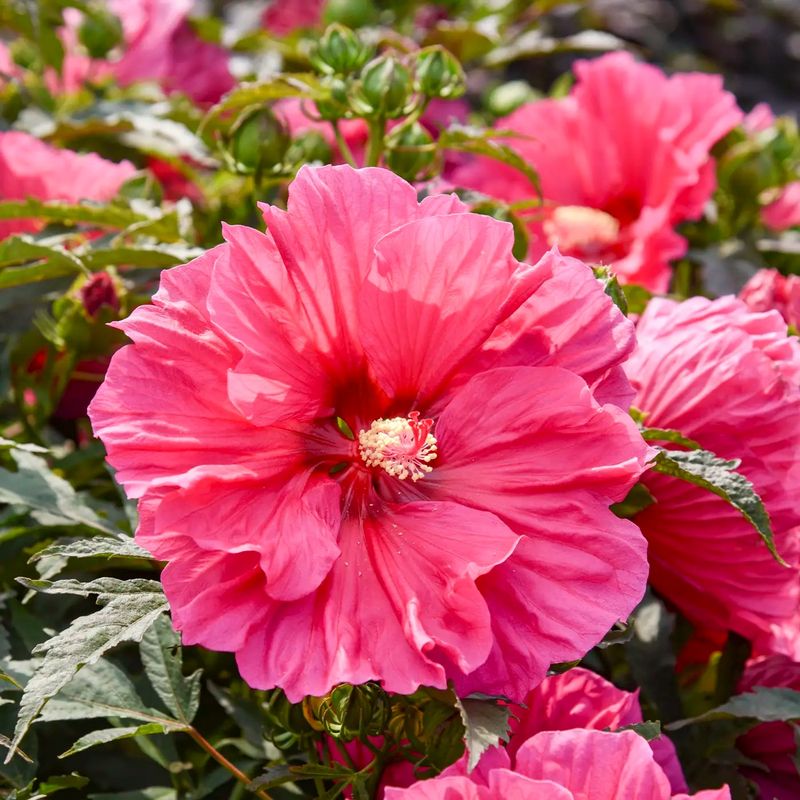
Dinner-plate blooms the size of your hand make hardy hibiscus the show-off of the late-summer border. When it opens, it steals the scene right as a clematis might be starting to fade, keeping the wall dramatic into September.
Reds, pinks, and whites the size of saucers create a tropical mood in surprisingly cold-hardy plants.
It wakes up late in spring, so mark its spot and don’t panic when neighbors leaf out first. Give it moisture and full sun and it puts on a truly jaw-dropping display.
28. Columbine (Aquilegia)
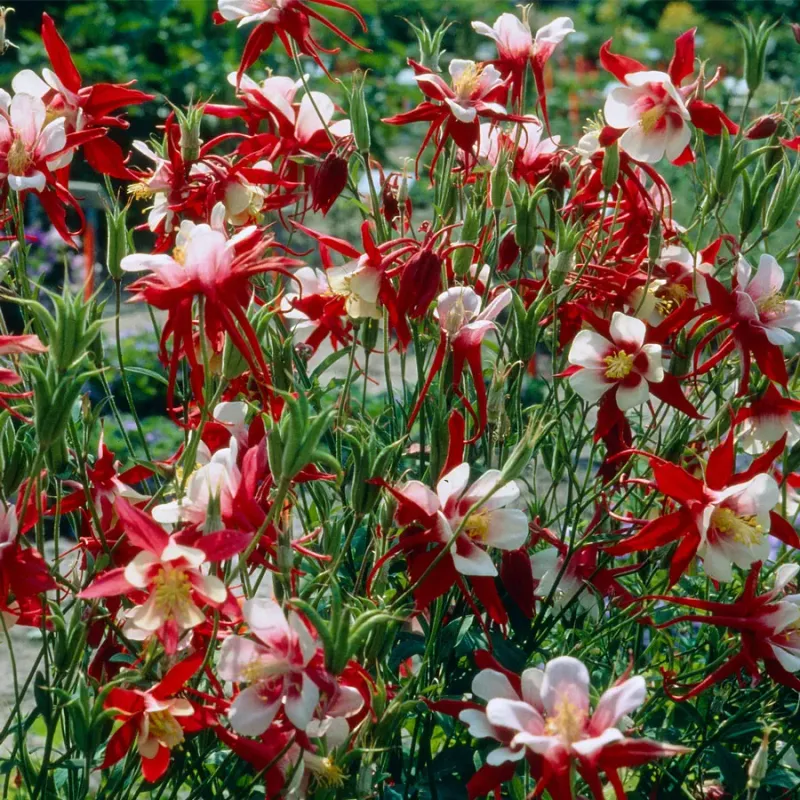
Spurred, lantern-like flowers give columbine a whimsical shape that seems to hover in midair. It blooms in late spring in an endless range of two-tone combinations, adding fairy-tale charm to the base of a clematis.
Hummingbirds adore the nectar tucked deep in those curved spurs.
It self-sows freely, so a single plant can wander and surprise you in new corners each year. The delicate, cloverlike foliage stays pretty long after the flowers fade.
29. Japanese Anemone
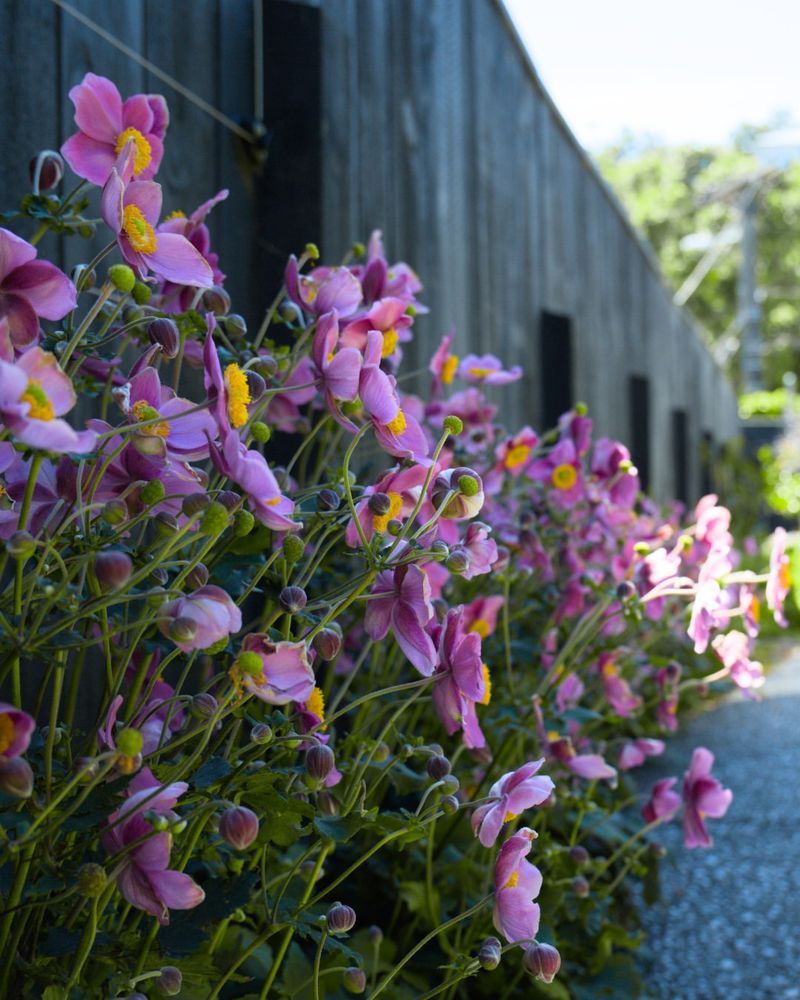
Just when the garden starts winding down, Japanese anemone lifts its wiry stems and opens fresh, poppy-like blooms as if summer forgot to end. Pink and white flowers with golden centers dance well above the foliage in a light breeze.
Blooming in late summer into fall, it bridges the gap as clematis and other companions fade.
It prefers part shade and moist soil, thriving in the cooler footing near a wall. Once settled, it spreads into a generous, reliable colony.
30. Foxglove (Digitalis)
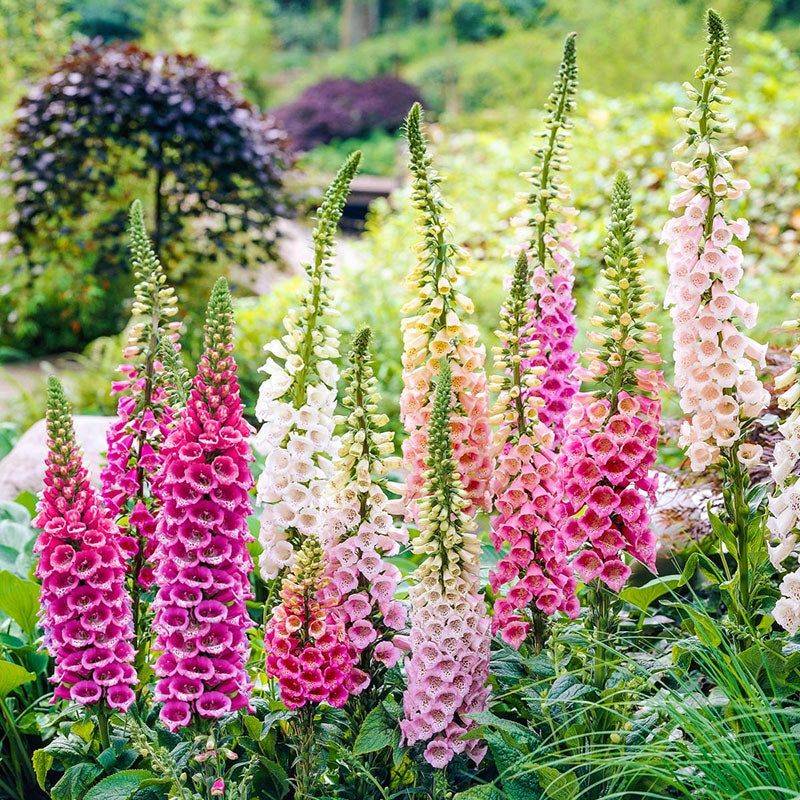
Towering spires studded with speckled bells give foxglove a stately, storybook drama unlike anything else in the bed. Those tall spikes echo the vertical climb of clematis, drawing the eye up the wall in one sweep.
Bumblebees crawl right inside the tubular flowers, disappearing for a moment before backing out dusted in pollen.
Most are biennial or short-lived, but they self-sow to keep the show going year after year. Plant them toward the middle where their height fills the space between low edgers and the vine.
31. Blanket Flower (Gaillardia)
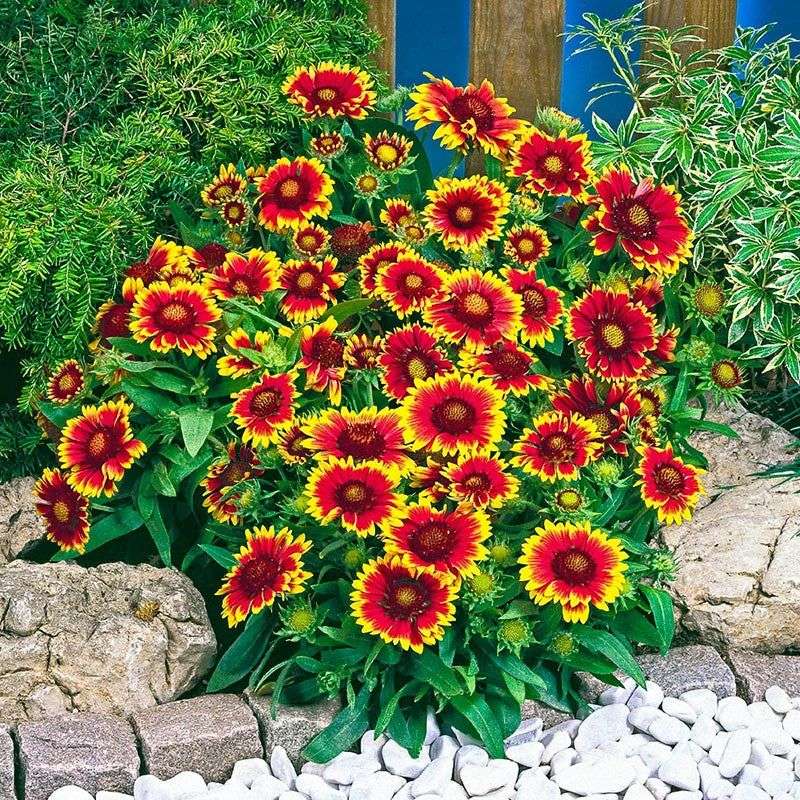
Fiery pinwheels of red and yellow give blanket flower the look of a tiny sunset frozen in petals. That heat blazes against cool clematis blues and keeps the border feeling energetic through the dog days.
It blooms nonstop from early summer to frost with barely a pause, especially if you deadhead.
Native to open US prairies, it handles heat, drought, and lean soil without complaint. Butterflies treat it like a favorite pit stop all season long.
32. Cranesbill ‘Rozanne’
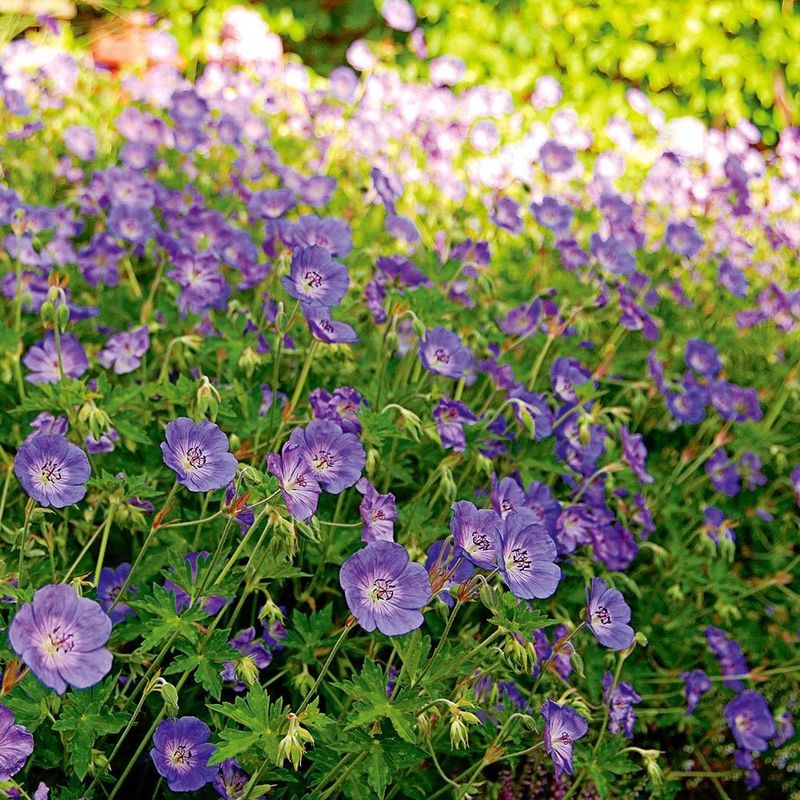
If one plant deserves its own spotlight, it’s Rozanne, the geranium that simply refuses to quit. Violet-blue saucers keep appearing from early summer straight through frost, matching a purple clematis note for note.
The sprawling, weaving stems knit themselves through neighboring plants and scramble up into the vine’s lower reaches.
No deadheading required, which makes it a dream for busy gardeners who still want constant color. It shrugs off heat and part shade, holding its own where fussier plants fade.
33. Aster
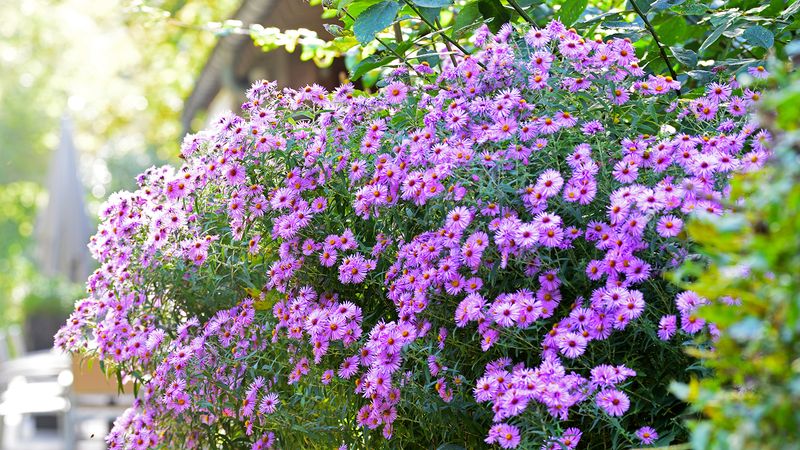
As the calendar tips toward autumn, asters explode into clouds of purple, blue, and pink stars just when the garden needs a fresh jolt. They keep the wall colorful long after summer perennials have called it a season.
Migrating monarchs and late bees rely on the nectar, so you feed pollinators when other sources dry up.
Pinch the stems back in early summer for a bushier, more flower-packed plant. Paired with a fall-blooming clematis, they extend the color show right up to frost.
34. Brunnera (Siberian Bugloss)
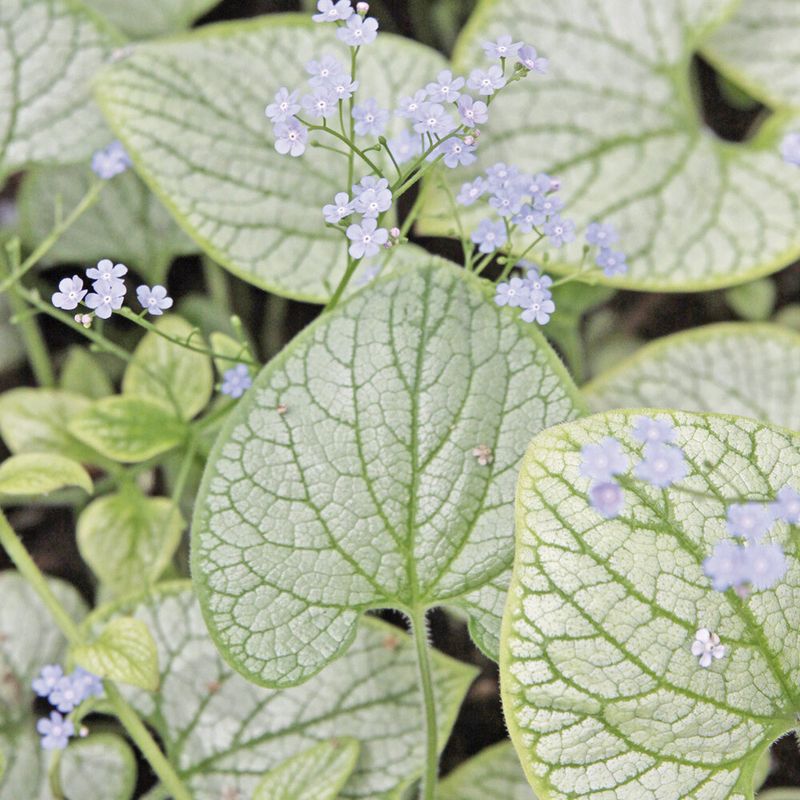
Sprays of tiny sky-blue flowers make brunnera look like forget-me-nots that decided to stick around. Come summer, the show shifts to its heart-shaped, silver-frosted leaves that light up a shady corner near a wall.
That silvery foliage keeps working long after the blooms fade, brightening the vine’s dim footing all season.
It thrives in moist shade, exactly the tricky spot where many bloomers give up. Slugs mostly leave the tougher-leaved varieties alone, which is a relief.
35. Anise Hyssop (Agastache)
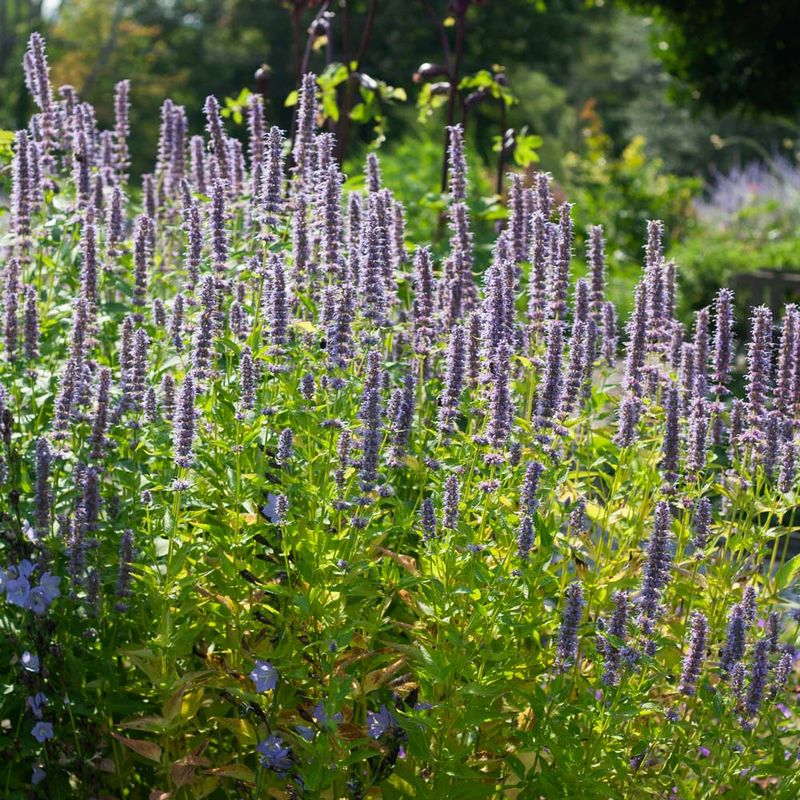
Crush a leaf of anise hyssop and a sweet licorice scent rises up, one that pollinators track from across the yard. Slender spikes of purple-blue bloom for months and hum with bees from dawn to dusk.
That fragrance may help nudge a few browsing pests to look elsewhere while it draws in the good bugs.
Drought-tough and long-flowering, it fills the mid-border with a soft, upright haze beneath the clematis. Leave the seed heads for finches and winter texture.
36. Threadleaf Bluestar (Amsonia)
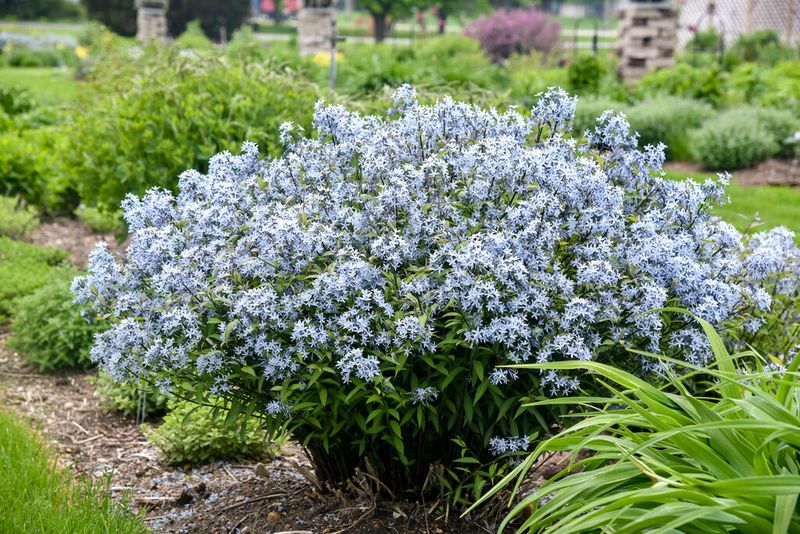
Few perennials pull double duty like bluestar, offering steely blue spring flowers and then stealing the fall show entirely. When autumn arrives, the fine, needle-like foliage turns a blazing golden-yellow that sets the whole border alight.
The soft, feathery texture contrasts beautifully with a clematis vine’s bolder flowers overhead.
It forms a rounded, shrub-like mound that stays tidy without staking. Tough and long-lived, it settles in for the long haul and only looks better with age.