
This One Stunning Ground Cover Can Reduce Weeds in Sunny, Well-Drained Gardens After Establishment
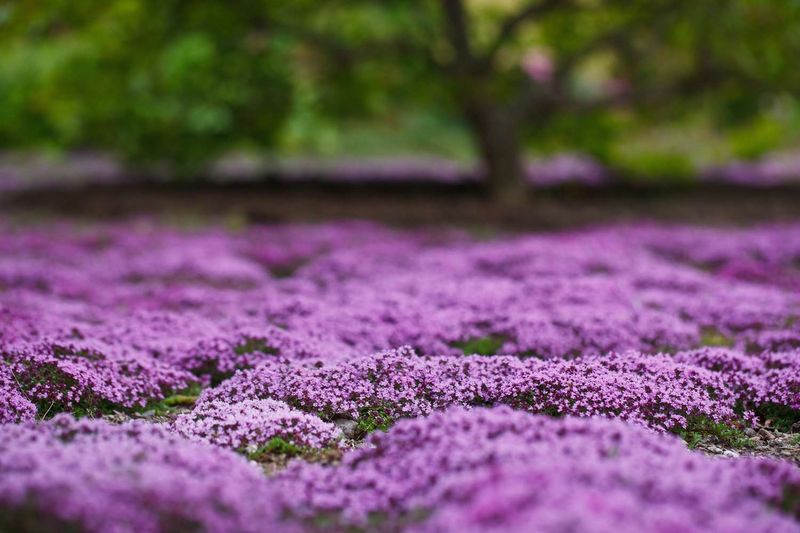
Weeding is one of the most tedious chores in any garden, and the idea of a plant that handles most of that work for you is genuinely appealing. Creeping thyme is a low-growing, mat-forming herb that gardeners use in sunny spots, rock gardens, path edges, and the gaps between stepping stones to crowd out weeds over time. The catch is that “over time” matters: a dense thyme mat can reduce how often you weed, but it cannot promise a weed-free garden all year with barely any effort. Understanding what this plant can and cannot do will help you decide whether it is the right fit for your yard.
Creeping thyme offers a living-mulch alternative
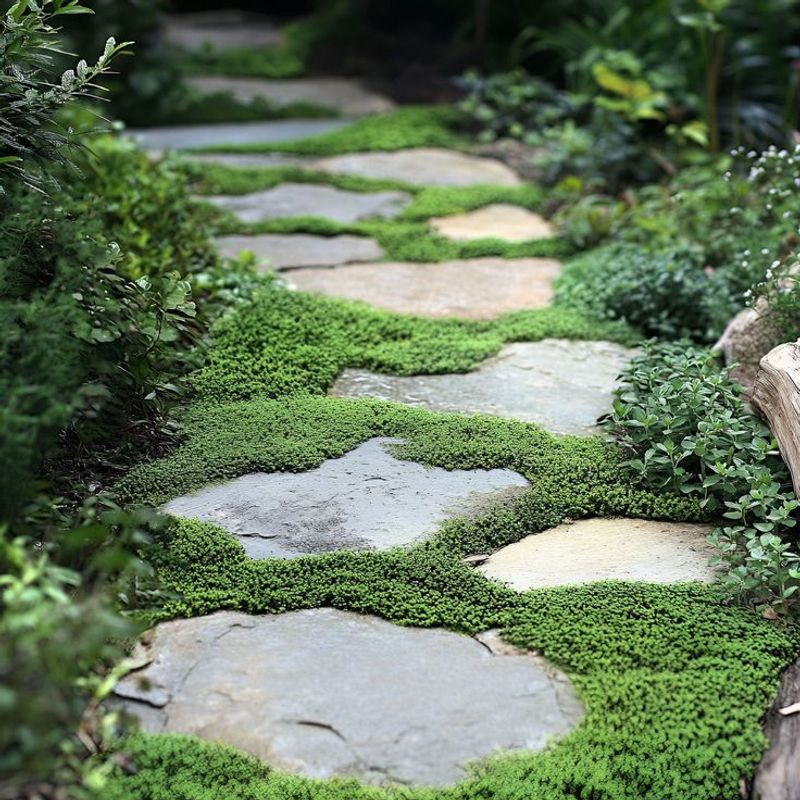
Creeping thyme, most often Thymus serpyllum or a related cultivar, is a mat-forming ground cover that stays only 2 to 3 inches tall and spreads across the soil through rooting stems. Missouri Botanical Garden describes it as a low spreader suited to small areas, path edges, rock gardens, and the spaces between stepping stones. Those tight, defined spots are exactly where it tends to perform best.
Gardeners reach for creeping thyme in those situations because the plant eventually knits together into a soft, fragrant carpet that makes bare soil harder for weeds to claim. When the mat is dense enough, it shades the ground and competes with seedlings for the light and moisture they need to take hold. That is the living-mulch idea: the plant itself does the shading work that bare soil or thin plantings cannot.
The headline on this article overstates the promise, so that needs to be said plainly upfront. A dense creeping thyme planting can reduce weed pressure after it fills in, but it cannot guarantee a weed-free garden or eliminate the maintenance that comes with any ground cover. Colorado State University Extension notes that all ground-cover plantings require maintenance and that weeds remain a significant problem if not managed from the start. The plant is a useful tool, not a permanent fix.
A dense mat blocks some new weeds
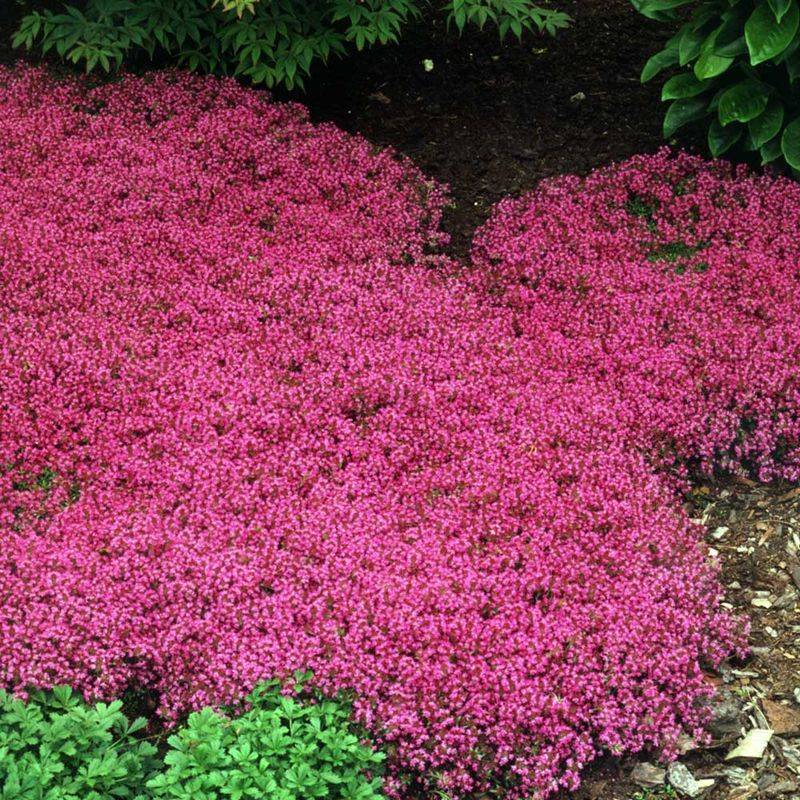
The weed-suppressing effect of creeping thyme comes from what happens below the foliage. Once the mat becomes dense, it shades the soil surface and competes with any plant trying to germinate nearby for light, water, nutrients, and space. Colorado State University Extension identifies density as a key characteristic of an effective ground cover, which is why a sparse or newly planted thyme patch does not yet deliver meaningful weed control.
The effect is strongest against small, newly emerging weeds, particularly annual weeds that sprout from seed. When a weed seed lands on shaded, covered soil with little open space, it has a much harder time getting the light it needs to push through. That is the real mechanism at work, and it is a useful one in the right setting.
Where this protection falls short is with established perennial weeds. A plant that already has deep roots, a persistent rhizome, or underground runners does not need to germinate from seed. It can push up through or around a thyme mat regardless of how dense the foliage looks from above. Penn State Extension explains that perennial weeds with persistent underground structures require separate control and will not simply stop growing because a ground cover is planted over them.
Windblown seeds, weeds that exploit open gaps in young plantings, and seeds carried in by birds or irrigation water can also reintroduce weeds even after the mat fills in. The living-mulch benefit is real, but it is tied to the plant reaching genuine density, and it works best as one layer of a broader weed-management approach rather than as a standalone guarantee.
Match the plant to sun and drainage
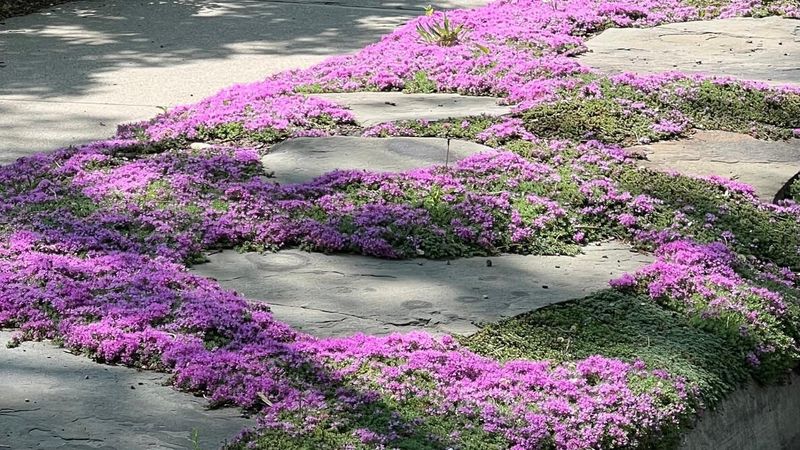
Before buying a single plant, run a quick site test. Creeping thyme performs best in full sun, dry-to-medium moisture, and soil that drains quickly, whether sandy, gritty, rocky, or otherwise sharply drained. Those conditions match the plant’s natural habitat and give it the best chance of spreading into the dense mat that reduces weeding.
Shade is a hard stop. In low light, creeping thyme tends to grow thin, patchy, and weak rather than forming a solid cover. Persistently wet soil creates a different problem: poor drainage can lead to root rot, which will thin or kill the planting before it ever has a chance to suppress anything. Missouri Botanical Garden flags wet conditions as a specific concern and confirms that well-drained soil is a non-negotiable preference for this plant.
Hardiness is another factor worth checking carefully. Creeping thyme is commonly listed for USDA Zones 4 through 8, which covers a wide swath of the country, but that range does not mean the plant performs equally well in every climate within it. Cold winters at the colder end of that range, or humid summers at the warmer end, can affect how well the planting holds together. Foliage may stay evergreen in mild winters, but in harsher climates it can thin, discolor, or lose visual density during the coldest months, which also reduces its weed-suppressing coverage at that time of year.
Colorado State University Extension advises selecting ground covers based on sun exposure, soil type, winter conditions, intended use, and foot-traffic expectations. Creeping thyme is well suited to rock gardens, path edges, and stepping-stone gaps, but it is not a replacement for every lawn area or garden bed. High-traffic paths where people walk regularly need a separately designed surface because most ground covers, including creeping thyme, do not hold up well under repeated foot pressure.
Remove existing weeds before planting
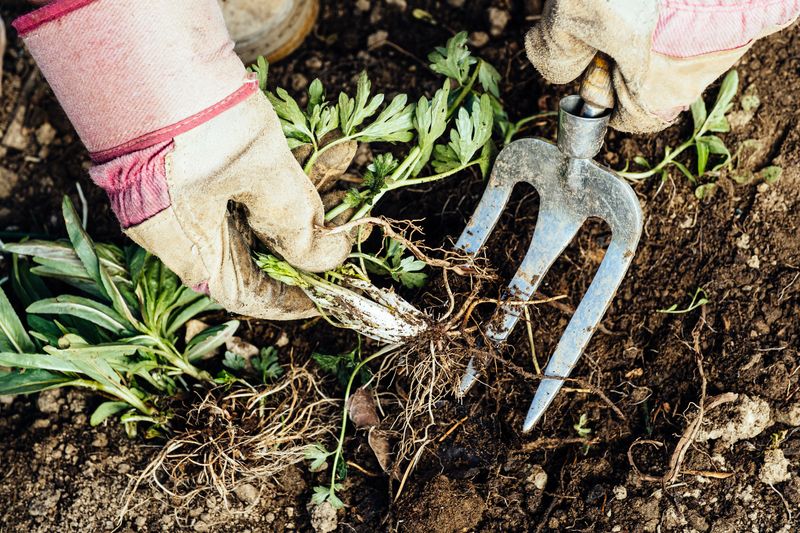
Site preparation is the most important weed-control step you can take, and it happens before a single thyme plant goes in the ground. Any weed growing in the bed at planting time has a head start on your new ground cover. Young thyme plants are small, their roots are shallow, and they cannot immediately outcompete an established weed that is already drawing on soil moisture and nutrients.
Perennial weeds deserve special attention. Dandelions, bindweed, creeping Charlie, and similar plants have deep roots or underground runners that allow them to regrow even after the top growth is pulled. Penn State Extension notes that perennial weeds with persistent underground structures will continue growing through or around a ground-cover planting if they are not fully removed first. Cutting them back at the surface does not solve the problem.
For annual weeds, thorough removal before planting reduces the seed bank in the top layer of soil, which lowers how many seedlings emerge during the establishment period. Colorado State University Extension is direct on this point: existing weeds should be controlled before planting, because sparse new plants cannot immediately take over the space weeds already occupy.
Penn State also notes that careful site preparation matters more to long-term success than the act of planting itself. The bare spaces between young thyme plants will still produce weeds during the establishment period, so removing as much competition as possible before day one is the most effective leverage point you have. The work put in before planting directly reduces how much weeding you face afterward.
Water the young planting until it fills in
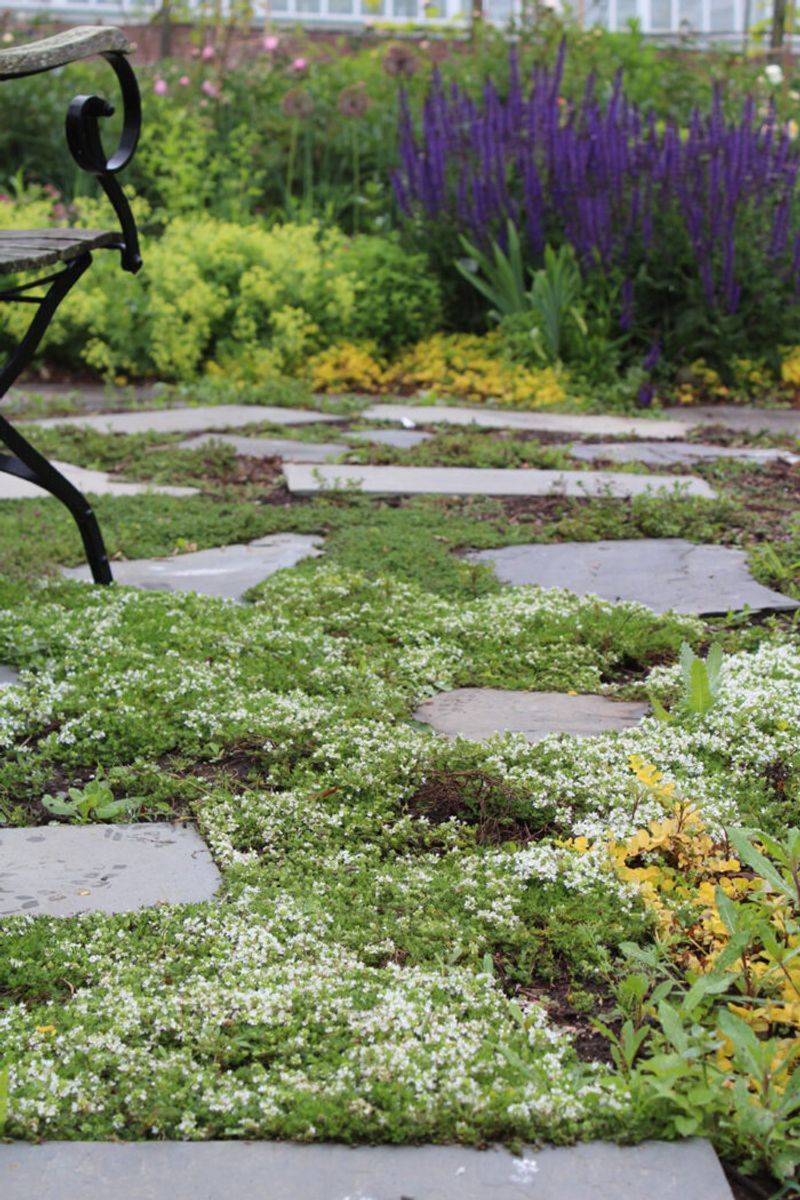
Planting creeping thyme is the beginning of a process, not the end of one. Young plants need supplemental water while their roots are developing, even though mature, established thyme is relatively drought-tolerant. Skipping water during this early phase stresses the plants and slows the spreading that eventually produces the weed-suppressing mat.
Missouri Botanical Garden confirms that drought tolerance applies after establishment, not during it. Penn State Extension similarly notes that newly planted ground covers require regular watering until their root systems are developed enough to sustain the plant on their own. The interval between waterings can increase as roots settle in, but the early weeks call for consistent attention.
While the mat is still sparse, open soil between plants is an invitation for weeds. Those gaps are the most vulnerable part of any new ground-cover planting, and they require the same vigilance as a bare bed would. Pull weeds by hand as soon as you spot them, before they set seed or develop deeper roots that are harder to remove without disturbing nearby thyme.
Progress is best measured by increasing density rather than by how quickly the plants spread. Some cultivars and growing conditions produce faster coverage than others, and pushing plants too hard with heavy fertilizing can encourage weak, floppy growth rather than the tight mat that actually suppresses weeds. Patience and consistent early care are the most reliable path to the low-maintenance phase that comes later, once the planting is genuinely established.
Use moderate mulch while thyme spreads
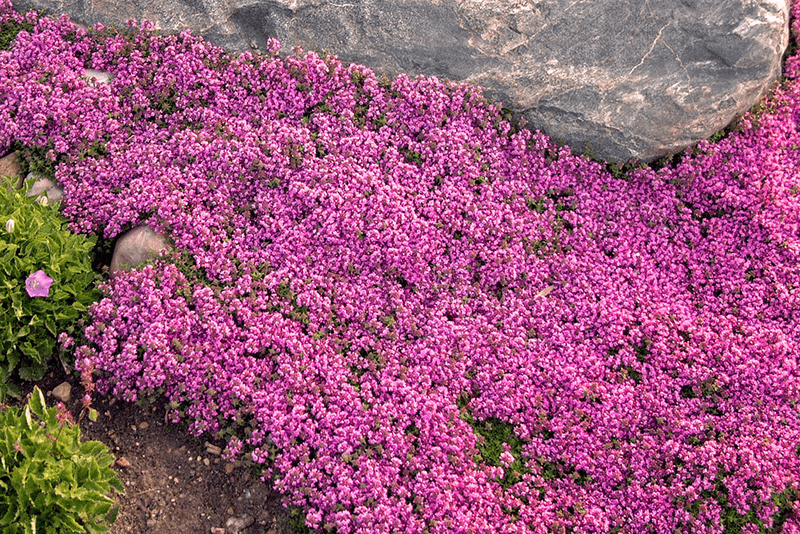
Organic mulch can serve as a helpful partner while creeping thyme works toward full coverage. Spread between young plants, it shades bare soil, conserves moisture, and makes it harder for weed seeds to reach the soil surface and germinate. University of Minnesota Extension recommends roughly 2 to 4 inches of mulch for weed suppression, with the mulch kept away from plant stems to prevent rot and moisture buildup at the crown.
Staying within that range matters. Piling on more than 4 inches does not improve control and can actually cause problems. Excessively deep mulch can stay too wet, interfere with the thyme’s own spread, and create a seedbed for weed seeds that blow in and sit on top of the mulch layer rather than reaching the soil below.
Mulch also has real limits against perennial weeds. Penn State Extension points out that perennial weeds with underground roots or rhizomes can push through a mulch layer and will not be stopped by it. Mulch that has decomposed unevenly or that contains weed seeds from a poorly sourced supply can introduce new problems rather than solve them. Checking the source and quality of bulk mulch before applying it is a worthwhile step.
Penn State recommends applying at least 2 inches of mulch after planting to help suppress weeds and conserve moisture during establishment. Think of mulch as temporary assistance that bridges the gap between a sparse new planting and a dense, established mat, not as a permanent replacement for site preparation, consistent watering, and follow-up weeding in the gaps.
Keep expectations realistic after establishment
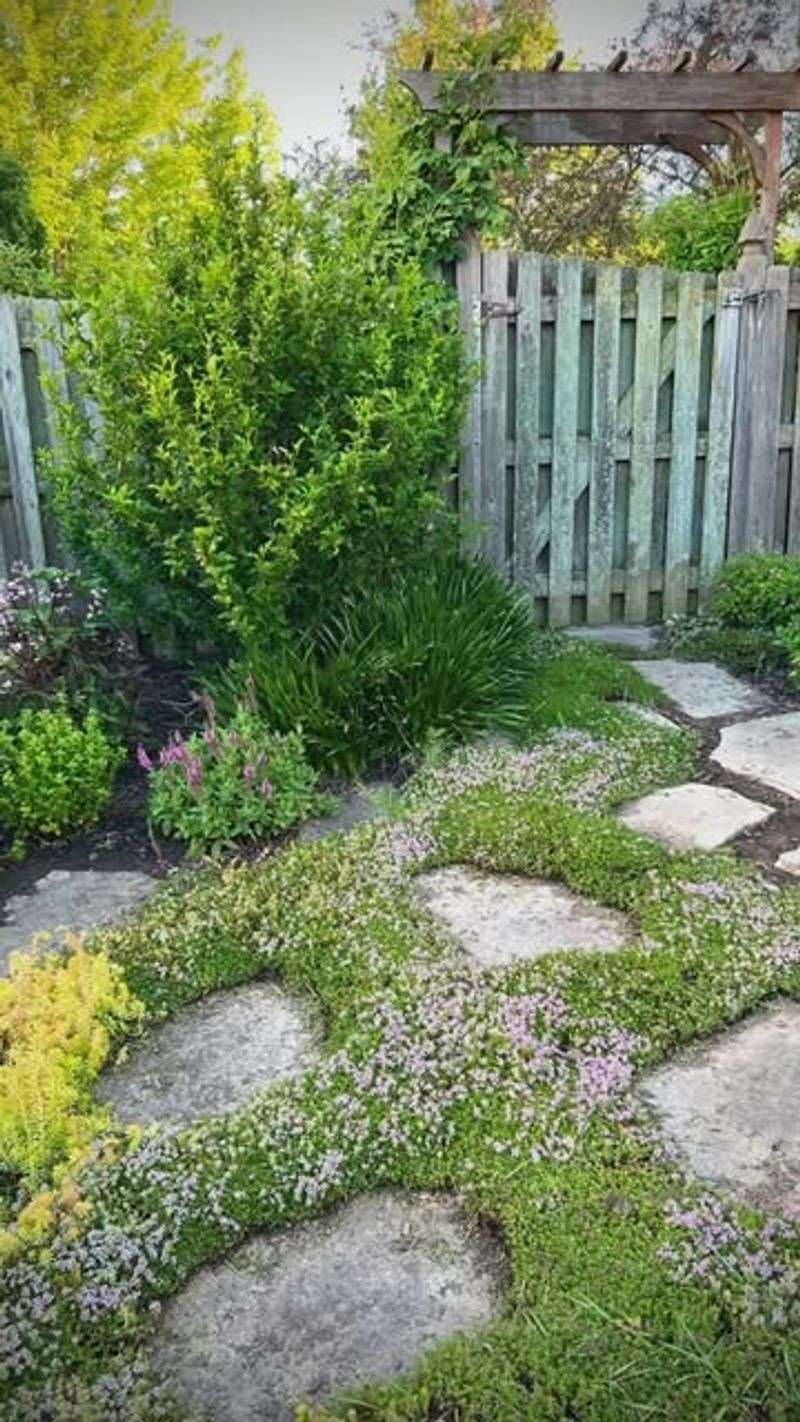
Even after creeping thyme fills in well, certain conditions can interrupt its weed-suppressing effect. Open gaps left by winter thinning, sections where foot traffic has worn the mat thin, or spots where the soil stays wetter than the plant prefers can all allow weeds to reestablish. Windblown seeds do not stop arriving just because there is a ground cover in place, and birds, irrigation water, and even mulch can deliver new weed seeds to the surface of the mat.
Persistent perennial weeds are the most stubborn challenge. If any were missed during site preparation, they will continue pushing up through the thyme rather than giving up. Pulling them promptly, before they spread further, is still necessary even in a well-established planting. The mat reduces how often you need to weed, but it does not replace the gardener’s eye for problems.
High foot traffic is another honest limit. Colorado State University Extension notes that ground covers vary in their tolerance for foot pressure, and most do not hold up under regular walking. If a path crosses your thyme planting, adding stepping stones or a defined surface for that route will protect the mat and keep it dense where you need it.
Two broader cautions apply to any ground-cover strategy. First, a fast-spreading plant is not automatically a safe one everywhere. Colorado State’s xeriscape guidance and general extension advice both flag that some ground covers can become overly aggressive in certain regions. Creeping thyme is not universally listed as invasive, but checking its behavior in your specific region before planting widely is a reasonable precaution.
Second, Penn State advises against planting one single species across an entire large area because a pest or disease that affects that species could damage the whole planting at once. Mixing in other low-growing plants suited to your site adds resilience. Realistic expectations do not make creeping thyme a poor choice; they make it a better one by steering it toward the spots where it genuinely delivers.
Choose creeping thyme for fewer weeds, not no weeds
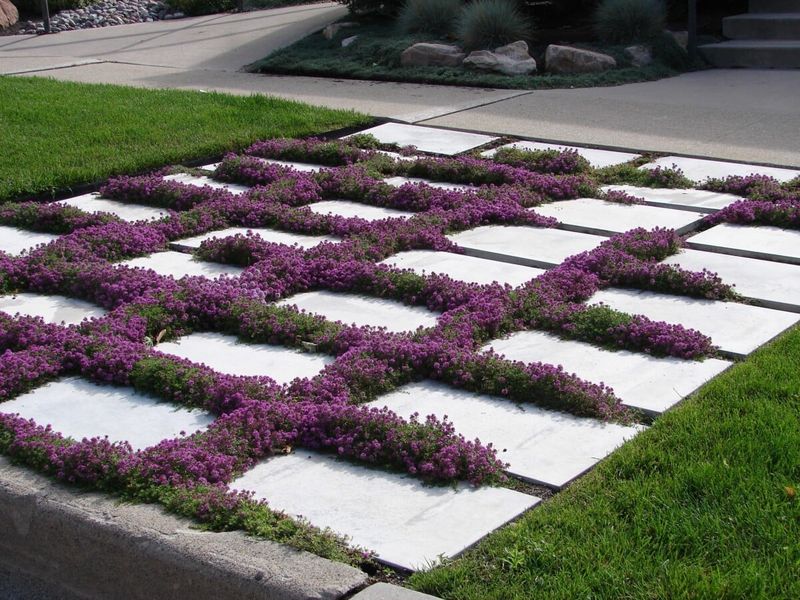
Creeping thyme earns a place in the right garden, but that place has clear boundaries. Colorado State University Extension and Missouri Botanical Garden both point to sunny, sharply drained, small-scale spots as its best fit: rock gardens, path edges, and stepping-stone gaps where the soil stays dry to moderately moist and the sun hits most of the day.
If your site meets those conditions, the decision rule is straightforward. Accept the upfront work of removing existing weeds thoroughly, water the new planting consistently until the roots develop, protect open gaps with 2 to 4 inches of moderate mulch kept away from stems, and check the bed regularly during the establishment period. Penn State Extension confirms that this kind of attentive early care is what gives a ground-cover planting its best chance of reaching the density that actually reduces weeding later.
The realistic payoff, once the mat becomes genuinely dense, is less weeding rather than no weeding. The plant handles competition against newly sprouting annual weeds in covered soil; you handle the perennial weeds it cannot crowd out, the windblown seeds that land on top of the mat, and the gaps that open over time. Creeping thyme is living competition for weed seedlings, not a substitute for the gardener who keeps an eye on the planting. In the right sunny, well-drained spot, that partnership is a genuinely good deal.