
5 Reasons Your Hanging Petunias Wilt By Afternoon Even When They Looked Perfect At Sunrise
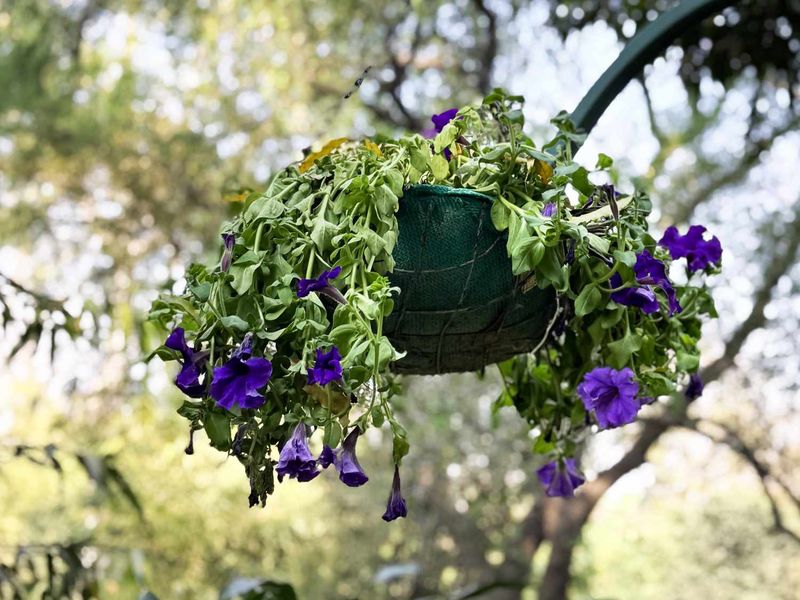
You walk out in the morning and your hanging petunias look absolutely stunning, full of color and standing tall. Then you check on them a few hours later and the whole basket is drooping like it forgot how to be a plant. This pattern happens to backyard gardeners all over the country, and the good news is that it usually has a clear explanation. Understanding what drives that sunrise-to-afternoon collapse is the first step toward fixing it without accidentally making things worse.
The timing of the wilt provides the first clue
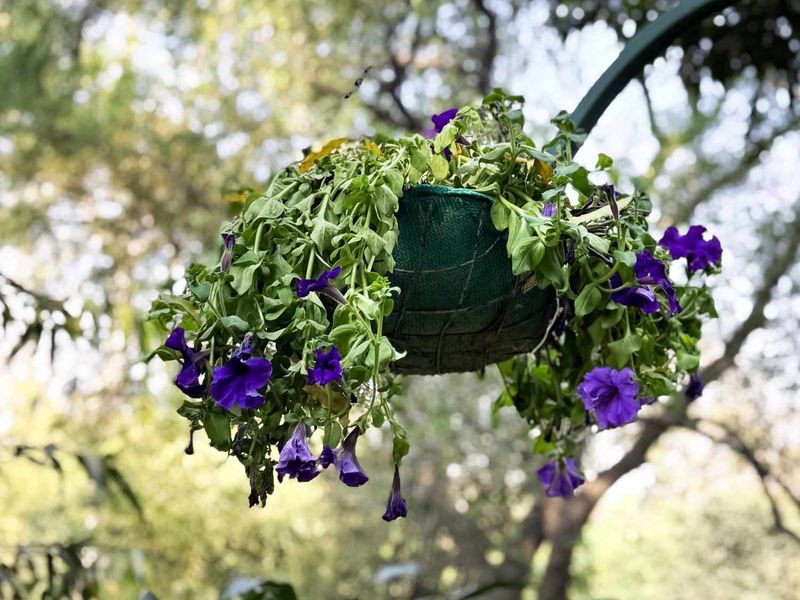
A petunia that stands bright and full at 7 a.m. but collapses by 2 p.m. is sending a message worth reading carefully. The timing itself narrows down the likely cause before you even touch the basket. Plants lose water through tiny pores in their leaves all day long, but that process speeds up dramatically once temperatures climb, direct sun intensifies, and any breeze picks up. Oregon State University Extension guidance on heat stress in plants notes that plants can wilt temporarily during the hottest part of the day even when soil moisture is adequate, because leaf water loss temporarily outpaces what roots can supply.
Evening recovery is a helpful clue here. A basket that looks limp at 3 p.m. but perks back up by 8 p.m. or looks fine again the next morning is more consistent with temporary heat stress than with irreversible damage. That said, treat recovery as a useful signal rather than a guaranteed verdict. Persistent wilting that does not ease overnight, or wilting paired with yellowing, browning, or visible lesions, points toward something beyond a simple afternoon demand spike.
The other thing to hold in mind is that a wilted plant is not automatically a thirsty plant. Colorado State University’s vegetable gardening guide reinforces that afternoon wilt can occur even when the soil holds adequate moisture. Root health, drainage, and environmental conditions all shape how well a plant moves water from the medium to the leaves. Watching the clock tells you when the problem peaks; checking the root zone tells you why.
Heat makes the leaves lose water faster than roots can replace it
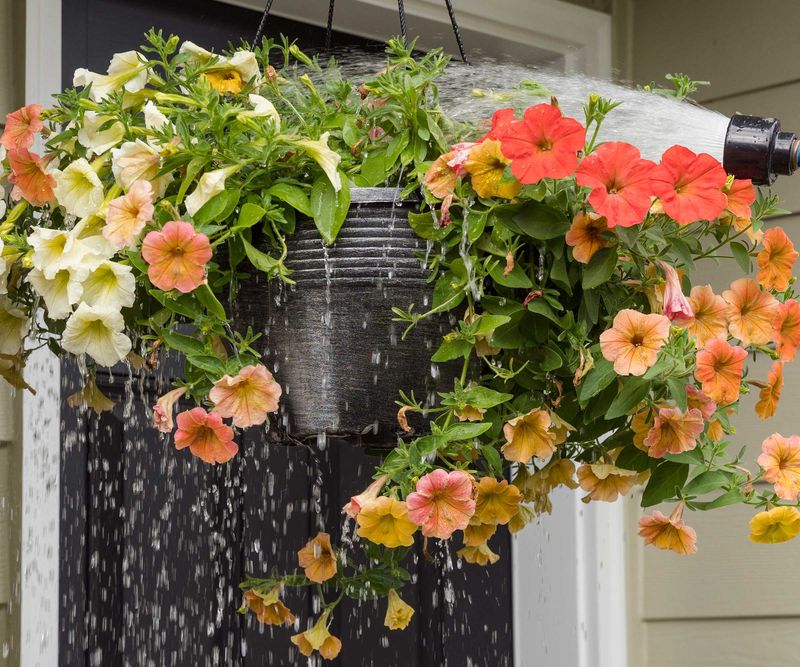
Petunias are genuinely heat-tolerant plants. University of Minnesota Extension’s petunia growing guide describes them as performing well in full sun, which makes the afternoon collapse feel confusing. The real culprit is not the plant’s inability to handle warmth. The problem is a mismatch between how fast the leaves shed water and how fast the roots can pull replacement water up through a small, exposed basket.
Every plant loses water vapor through tiny pores called stomata, and that process, called transpiration, accelerates when temperatures rise, sunlight intensifies, or wind moves across the leaves. Colorado State University Extension’s overview of water’s role in plant growth explains that water moves through a plant in a continuous stream from roots to leaves, and when atmospheric demand pulls water out of leaves faster than roots can absorb and deliver it, the plant loses turgor and wilts. A hanging basket compounds this because the root zone is small, surrounded by air on all sides, and exposed to the same heat and wind that are driving the leaves to lose water in the first place.
The sunrise timing makes sense once you picture this mechanism. Early in the morning, temperatures are lower, sunlight is angled and less intense, and the plant had all night to rehydrate from whatever moisture the mix holds. As the sun climbs and heat builds, the demand side of the equation overtakes the supply side, and the plant droops visibly. Once afternoon shifts into evening and conditions cool, the rate of water loss slows, roots catch up, and the plant recovers.
When that evening bounce-back happens consistently and no other symptoms appear, the most likely explanation is a demand-and-supply mismatch driven by heat and sun rather than a damaged or diseased plant.
The basket may dry out long before its surface shows it
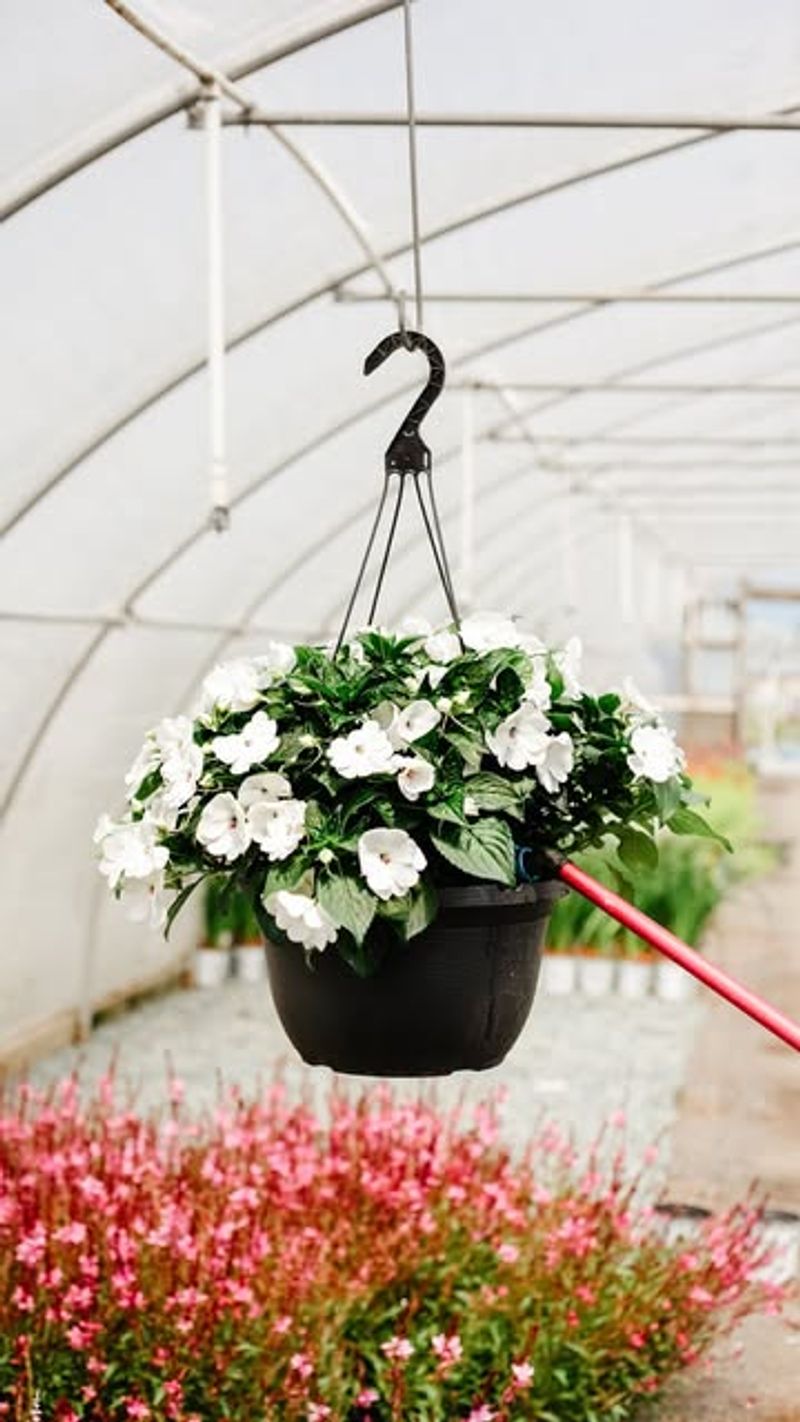
Hanging baskets are not like garden beds. A bed holds a large volume of soil that buffers against rapid moisture loss, but a basket holds only a small amount of potting mix that is exposed to sun and air from the top, sides, and bottom all at once. Wire baskets lined with coco fiber or moss dry out especially fast because air moves through the liner material. Even solid plastic baskets heat up quickly in direct sun, which speeds evaporation from within the mix itself.
Vigorous trailing petunia varieties, including the popular Wave types, add another layer of demand. University of Minnesota Extension notes that spreading petunias have higher water and fertilizer demands than some compact types, which means a lush, full basket is actively pulling more moisture than a younger or smaller planting. The surface of the mix can look dark and feel slightly cool while the interior a few inches down is already dry enough to limit root uptake.
The fix starts with getting accurate information. Push a finger two to three inches into the mix rather than judging by the surface. Oregon State University Extension’s watering basics guidance recommends checking the root zone directly, and in hot summer weather that check may need to happen more than once a day. When the mix is dry and the plant is wilted, water thoroughly until the root zone is wetted and some water drains from the bottom holes.
A brief splash at the surface does not reach the roots.
University of Minnesota Extension’s container watering guidance emphasizes that frequency cannot be reduced to a fixed schedule. Basket size, liner type, sun exposure, wind, temperature, and plant size all interact to determine how quickly the mix dries. The same university recommends using a lightweight, high-quality potting mix designed for containers, since garden soil is too dense for hanging baskets and restricts both air and water movement through the root zone.
Crowded roots leave too little moisture reserve
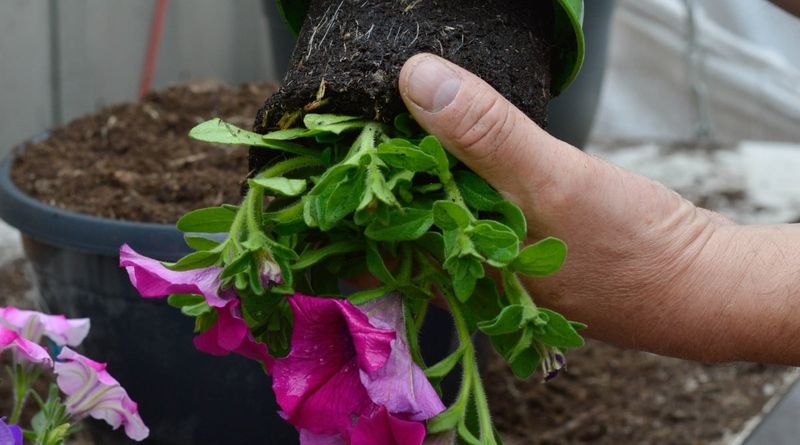
A basket that worked perfectly in May can start struggling by July for a reason that has nothing to do with the weather changing. As petunia roots grow and fill the available space, they gradually displace the potting mix they depend on for water storage. Less mix means less reserve, and a plant that handled the morning-to-afternoon temperature swing easily when it was young may start wilting predictably once the root system has claimed most of the container volume.
Utah State University Extension’s container gardening guidance identifies crowded roots as a general container-plant problem that can limit water availability and overall plant performance. Penn State Extension also notes that root crowding affects how well a plant can access water and nutrients from the medium. It is worth treating this as a contributing possibility rather than a guaranteed diagnosis, since the research base connects root crowding to container plants broadly rather than specifically to afternoon wilt in petunias.
The practical question is whether the basket size matched the ambition of the planting. A small basket packed with multiple vigorous trailing plants can become root-bound faster than a single plant in a generously sized container. University of Minnesota Extension’s petunia guide recommends giving petunias adequate space to develop. Repotting into a larger basket with fresh mix may help, but it is not a guaranteed fix for afternoon wilt if heat, wind, or dry media are the primary drivers.
Checking the root zone and addressing moisture first is still the right starting point before concluding the basket is the problem.
Wet roots can create the same wilted appearance
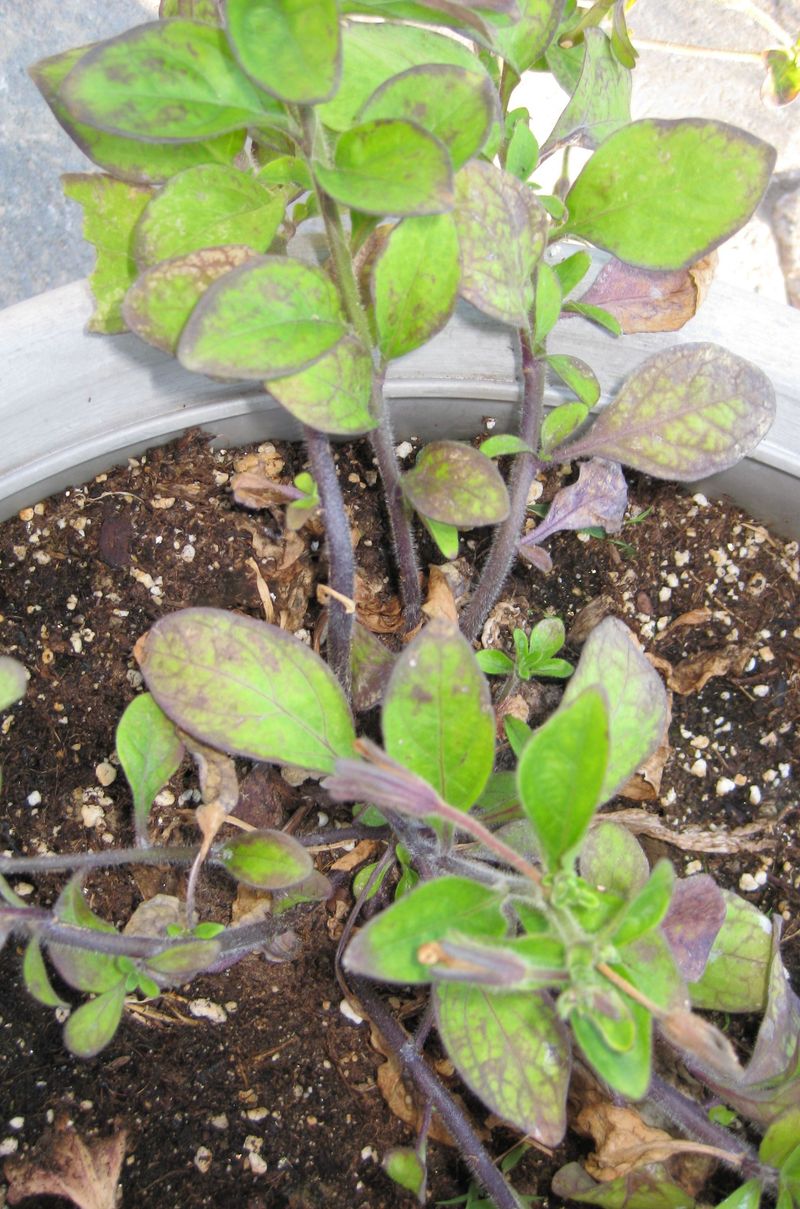
One of the most counterintuitive things a hanging basket can do is wilt while sitting in soggy soil. Roots need both water and oxygen to function. When the potting mix stays saturated for extended periods, the air spaces that roots depend on fill with water, oxygen becomes scarce, and the root tissue begins to deteriorate. A damaged root system cannot move water upward efficiently, so the plant wilts even though the medium is wet.
Adding more water at that point makes the situation worse, not better.
Penn State Extension’s petunia disease resource identifies Phytophthora crown rot as a specific disease concern for petunias, noting that it thrives in waterlogged conditions and can cause rapid collapse. Phytophthora and related pathogens are not caused solely by overwatering; poor drainage, a basket without adequate holes, water pooling in a saucer, or a dense mix that holds moisture too long can all create the saturated conditions these organisms prefer.
The inspection clues are worth knowing before you reach for the watering can. University of Minnesota Extension advises keeping roots out of standing water and ensuring baskets drain freely. If the mix feels wet and the plant is still wilting, remove the basket from any saucer, check the drainage holes, and let the medium dry somewhat before watering again. Gently examining the roots and stem base can reveal soft, brown, or slimy roots, a rotting crown, or a dry lesion near the soil line.
Penn State Extension’s container gardening guidance reinforces that effective drainage holes are a basic requirement, not an optional feature. Any of those signs call for investigation rather than another round of irrigation.
Salt, disease, and pests add symptoms beyond the afternoon slump
Fertilizer is an easy thing to reach for when plants look stressed, but applying more of it to a wilting petunia can backfire. Fertilizer salts accumulate in the potting mix over time, especially in containers that get watered frequently without thorough flushing. When salt concentration in the mix rises high enough, it creates a condition sometimes called chemical drought, where the plant cannot pull water into its roots even when moisture is present. Penn State Extension’s plant nutrition resource explains that excess fertilizer salts can injure roots and interfere with normal water uptake.
University of Minnesota Extension’s container fertilizing guidance recommends following the product label and not using fertilizer as an emergency response to wilting. Visible signs of salt injury often include browned or scorched leaf margins rather than simple afternoon drooping. Nutrient deficiency is a separate issue and is less likely to explain a plant that looks completely healthy at sunrise and collapses on a predictable schedule. Deficiencies more commonly produce yellowing, stunting, poor flower production, or general slow decline across the whole plant.
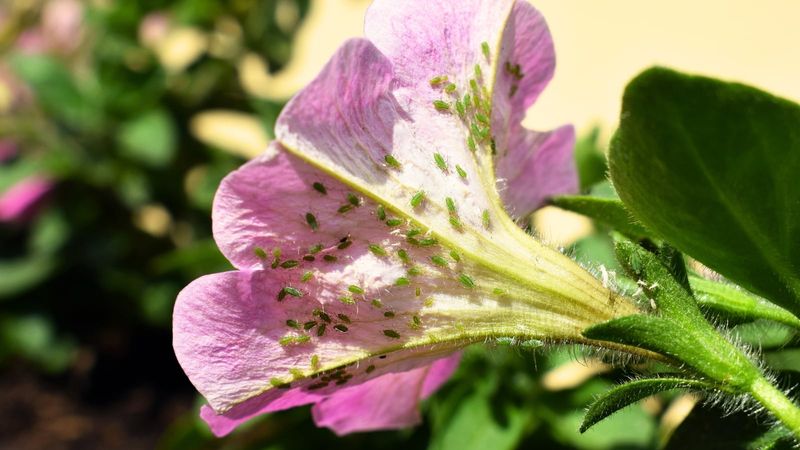
Penn State Extension’s bedding plant disease guide covers a range of petunia problems including viruses that can produce leaf etches with dark halos and overall decline. These diseases usually come with visible markings beyond simple wilting. Pests are worth checking when the plant is not recovering normally or when you notice distorted growth, stippling on the leaf surface, or sticky residue. University of Minnesota Extension’s aphid resource describes how aphid feeding causes curling, yellowing, and stunting.
Thrips can cause similar stippling and distortion on petunias. Check the undersides of leaves and the growing tips carefully. Penn State Extension’s petunia disease page notes that these additional symptoms are the key signal that something beyond heat stress is at work. A predictable afternoon slump that resolves each evening without any other signs is unlikely to be a pest or disease problem, but extra symptoms or a failure to recover overnight justify a closer look.
Check the mix first, then match the remedy to the evidence
Before doing anything else, push two or three fingers into the potting mix. Surface appearance is not reliable in a hanging basket, especially after a hot afternoon. Oregon State University Extension’s watering basics page recommends checking the root zone directly rather than guessing from the surface, and in hot summer weather that check may be needed more than once a day. The result of that check should drive every decision that follows.
If the mix is dry and the plant is wilted, water thoroughly. Penn State Extension’s container gardening guide recommends watering until the root zone is fully wetted and some water drains from the bottom, then allowing the excess to escape. A shallow splash at the surface does not reach deep roots and gives the plant little real relief. Morning is a good routine time to water because the plant can absorb moisture before the hottest hours arrive, but Oregon State University Extension’s heat stress guidance is clear that a genuinely dry, wilted plant should be watered as soon as reasonably possible rather than waiting for the next scheduled morning.
If the mix is wet and the plant is still wilting, stop and inspect. Check that the drainage holes are open and functioning, look at the roots and stem base for soft or discolored tissue, and let the mix dry somewhat before adding more water. Moving the basket to a spot with less intense afternoon exposure during a heat wave is a practical short-term option. University of Minnesota Extension’s container care page also suggests applying a thin layer of suitable mulch over the potting mix surface, kept away from the stems, to slow moisture loss and moderate temperature at the root zone.
A few other habits pay off over the season. University of Minnesota Extension recommends starting with a lightweight, high-quality potting mix designed for containers. Make sure the basket has effective drainage holes and never leave it sitting in standing water. Follow the fertilizer label rather than applying extra product when the plant looks stressed, because excess salts can worsen wilting rather than relieve it.
Let recovery—or its absence—guide the next step
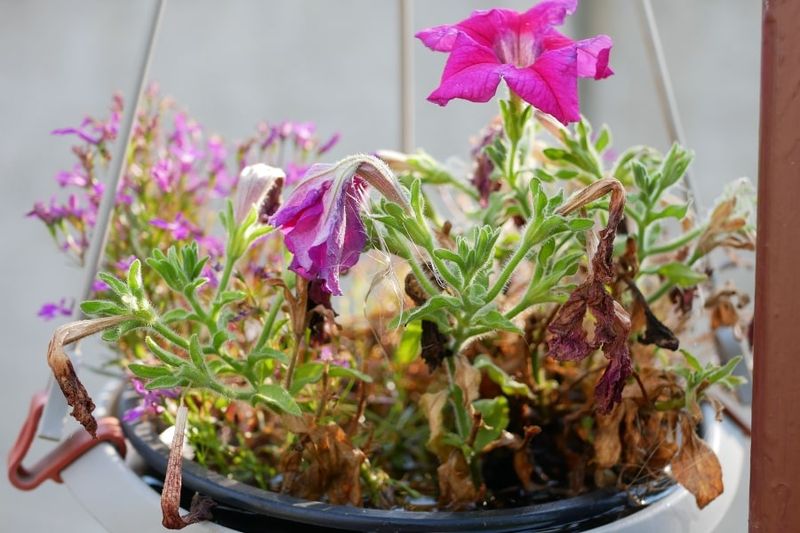
Evening is when the pattern reveals itself most clearly. A petunia that droops through the hottest afternoon hours and then stands back up as temperatures fall is demonstrating a temporary supply-and-demand mismatch. The root zone could not keep pace with what the leaves were losing, but cooler conditions slowed that loss and the plant rebalanced on its own. That kind of recovery, consistent and complete, is the clearest sign that heat stress rather than root damage or disease is driving the problem.
A plant that stays wilted overnight, looks worse each morning, or develops yellowing, browning, stem lesions, or root discoloration alongside the wilt is telling a different story. Penn State Extension’s petunia disease resource and their bedding plant disease guide both identify persistent decline with additional symptoms as the signal to look beyond simple heat stress toward root damage, crown disease, salt injury, pests, or other problems. Oregon State University Extension reinforces that the condition of the potting mix, not the time of day, should determine whether watering is the right response. The clock alone is not a reliable guide.
A petunia that bounces back reliably each evening just needs attentive watering and some shade on the hardest days; one that does not recover is asking for a closer look before the next watering cycle begins.