
16 Quick-Growing Flowers You Can Sow Now For A Yard Hummingbirds Can’t Resist
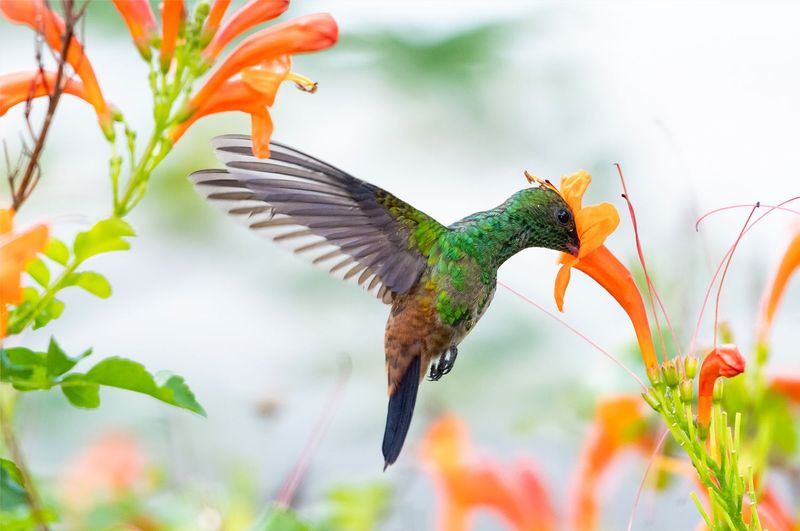
Watching a hummingbird zip through your yard feels a little like spotting a tiny jewel with wings. The good news is that you do not need a fancy garden or years of patience to bring these busy visitors around. A handful of fast-sprouting flowers, sown right now, can turn a plain backyard into a buzzing hummingbird hangout by the time the season peaks. Here are 16 speedy bloomers that give these birds exactly the tube-shaped, nectar-rich blossoms they love.
1. Zinnia
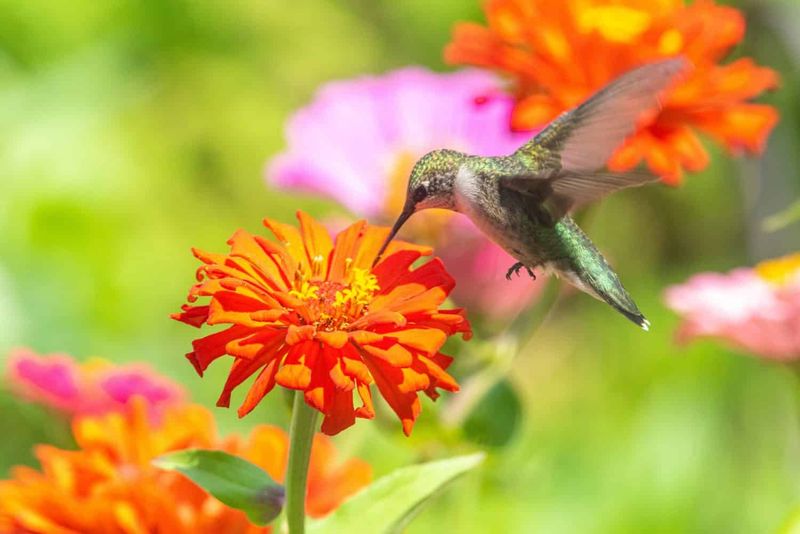
Toss a pack of zinnia seeds into warm soil and you will have color within weeks, which is exactly why beginners fall for them. Their flat, wide-open faces sit on sturdy stems that hummingbirds treat like little landing pads while they sip.
Bright reds, oranges, and hot pinks pull the birds in from across the yard, and the more you snip blooms for a vase, the more the plant pushes out. Zinnias shrug off summer heat across most US zones and keep flowering right up until frost.
Fun bit of trivia: they were once nicknamed poor-man’s marigold because they thrived with almost no fuss. Scatter them along a fence or the edge of a bed and let them do the heavy lifting.
2. Cardinal Flower
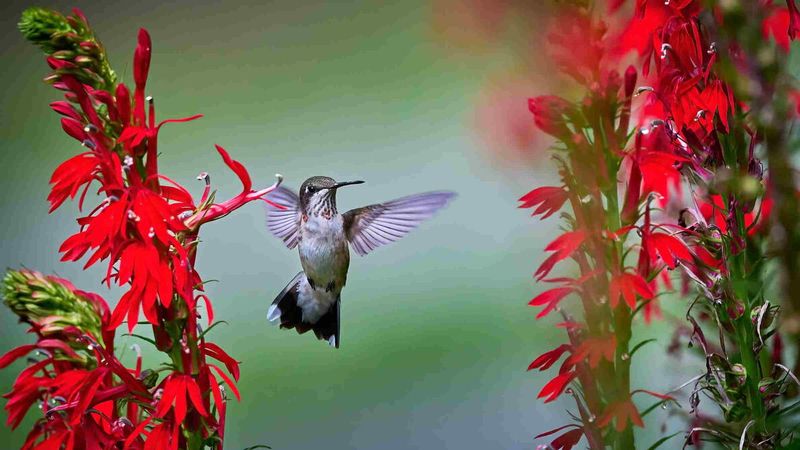
If you had to design a flower purely to please a hummingbird, it would probably look a lot like the cardinal flower. Its towering spikes of intense scarlet blooms are shaped like slender tubes, which happens to fit a hummingbird’s long bill perfectly.
Unlike many list-mates, this native beauty actually enjoys damp ground, so a soggy spot near a downspout or pond edge becomes a feature instead of a problem. It grows quickly from seed in moist, rich soil and rewards you with vertical drama that other bedding plants cannot match.
Native bees mostly skip these blossoms because the nectar sits too deep for them, which leaves the buffet almost entirely to hummingbirds. Plant a small stand and you may find the same bird returning to the same spike day after day.
3. Salvia
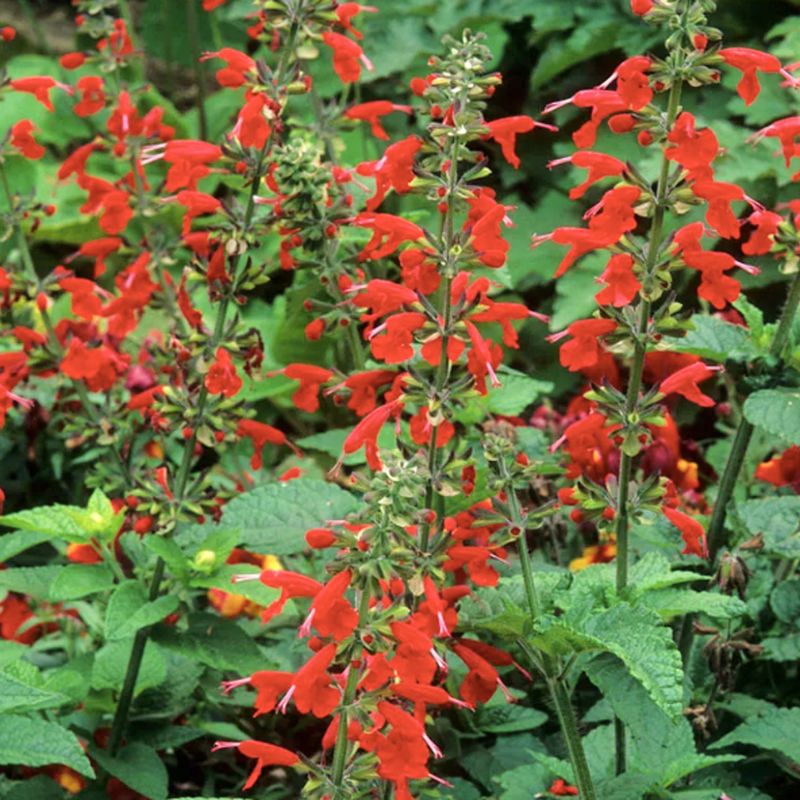
Gardeners who want reliable hummingbird traffic without babysitting their beds often swear by salvia. The plant sends up loose spires of tubular flowers in fiery reds, purples, and blues, and hummingbirds work each spike from bottom to top like they are reading a menu.
Many varieties bloom within a couple months of sowing and keep going through the hottest stretches of summer. Because the stems are so nectar-loaded, you will often see birds squabbling over territory around a single patch.
Try a scarlet sage for maximum red-flower pull, or mix in a few blue types for a color contrast that still keeps the feeders happy. Deer and rabbits tend to leave salvia alone thanks to its slightly minty scent, so it may help protect your other plantings too.
4. Cypress Vine
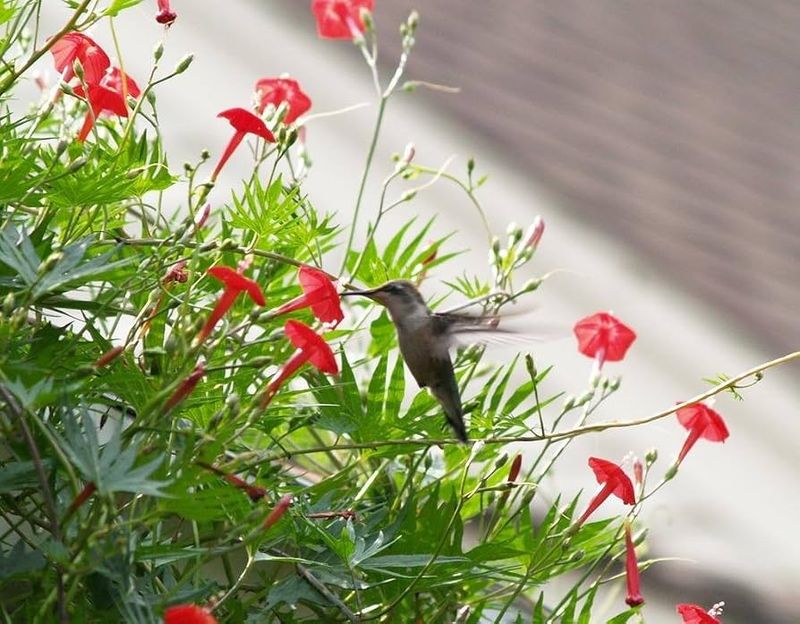
Give this delicate climber a trellis and it repays you with feathery, fern-like leaves and dozens of tiny red star-shaped flowers. Hummingbirds adore the narrow tubes, and the vine grows so fast that it can cover a mailbox post or fence panel in a single season.
Seeds sprout quickly once the soil warms, especially if you nick them and soak them overnight first. By midsummer you get a living curtain of green dotted with scarlet stars that reseeds itself gently for next year.
Because it climbs upward, cypress vine adds a whole vertical layer of nectar to a yard that might otherwise stay flat and low. Hang it near a window and you will have front-row seats to the show.
5. Nasturtium
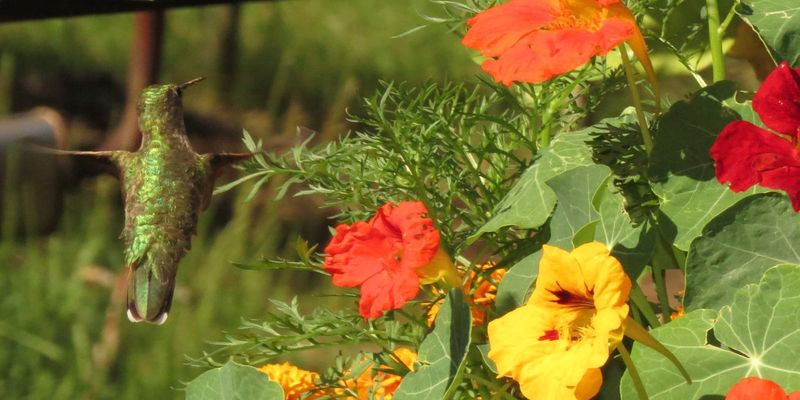
Few flowers are as generous as the nasturtium, which grows fast, blooms hard, and even tosses edible, peppery petals into your salad. Its funnel-shaped orange and red flowers hide sweet nectar deep in a spur that hummingbirds probe with ease.
You can direct-sow the big, easy-to-handle seeds right where you want them, and they thrive in poor soil that would sulk under heavier feeders. Let them trail from a hanging basket or sprawl as a ground cover under taller plants.
Aphids sometimes flock to nasturtiums, which sounds bad but actually works in your favor since gardeners use them as a trap crop to lure pests away from prized vegetables. That means a double win: happy birds and a decoy for garden troublemakers.
6. Petunia
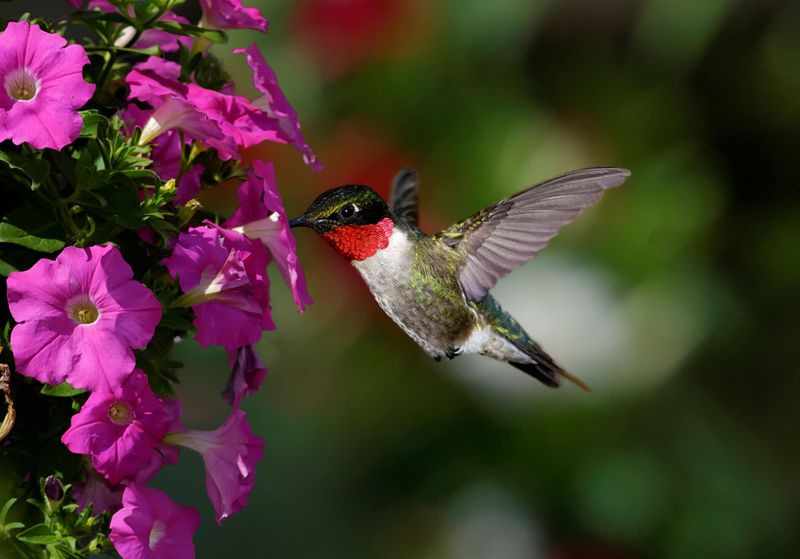
Container gardeners already know petunias for their nonstop parade of trumpet-shaped blooms. Those trumpets are the whole point for hummingbirds, whose bills slide neatly into the flared throats for a quick nectar drink.
Reds and deep pinks tend to catch a hummingbird’s eye first, so lean into warm shades if attracting birds is your goal. Petunias fill a hanging basket or window box in no time and keep pumping out flowers all season with regular deadheading.
Position a basket right outside a porch or kitchen window and you turn an ordinary flower pot into a private viewing station. The birds get their meal at eye level, and you get your coffee with a show.
7. Bee Balm
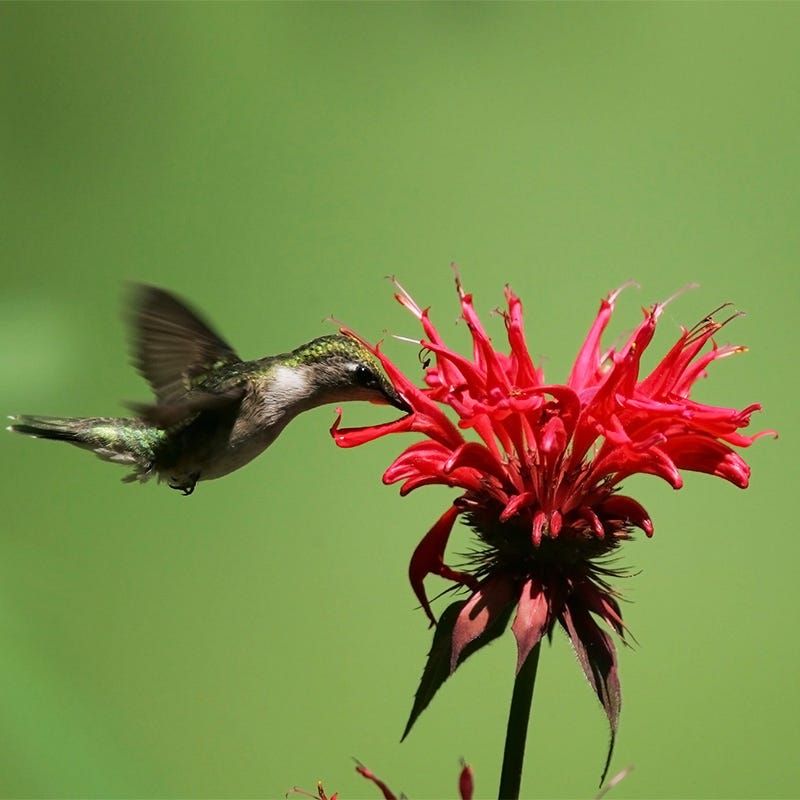
Wild and a little unruly, bee balm crowns itself with shaggy, firework-like blooms that hummingbirds cannot seem to ignore. Each flower head is a crowd of slim tubes, so a single plant offers dozens of sips in one stop.
A North American native, it settles into backyard beds fast and comes back bigger every year once established. The leaves smell like a cross between mint and oregano, which is where the old name bergamot comes from.
Beyond feeding birds, its strong minty aroma may help keep some browsing pests at a polite distance. Give it decent airflow to fend off powdery mildew and it will reward you with color from midsummer on.
8. Morning Glory
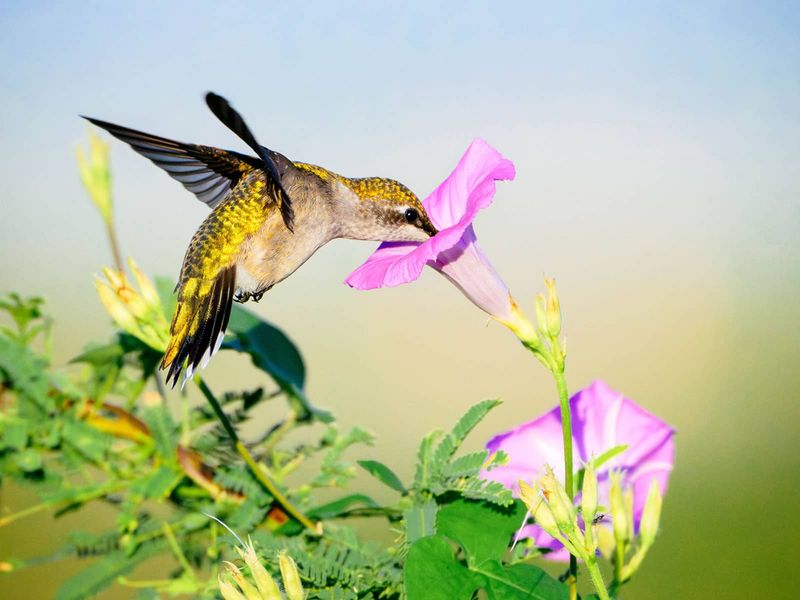
Race the sunrise and you will catch morning glories at their best, their wide trumpet flowers unfurling in blues, purples, and reds before the day heats up. Hummingbirds make early rounds to these blossoms, sipping while the nectar is fresh.
The vine grows almost startlingly fast, scrambling up strings, fences, and arbors to create a screen of heart-shaped leaves within weeks. Soak the hard seeds overnight to speed sprouting, and give the plant something to climb before it takes matters into its own tendrils.
Because the blooms fade by afternoon, this is a flower that rewards early birds, both feathered and human. Plant it where you take your morning coffee and you will rarely miss the visitors.
9. Four O’Clock
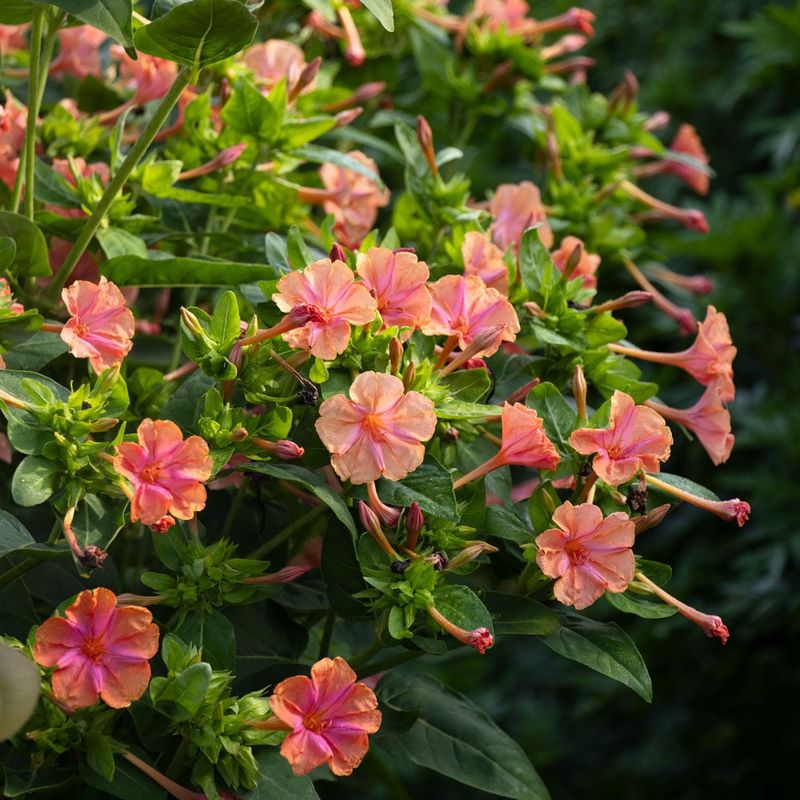
Named for their odd habit of opening in late afternoon, four o’clocks time their fragrant trumpet blooms for the evening shift. That schedule suits hummingbirds beautifully, since they often make a last feeding run before dusk.
Grown from seed, these bushy plants fill out quickly and produce flowers in candy shades of magenta, yellow, and white, sometimes several colors on one plant. The sweet scent grows stronger as the sun drops, pulling in both birds and evening moths.
Old-timers loved them because they reseed and pop up faithfully year after year with almost no effort. Tuck a few near a patio where you unwind in the evening and let the flowers open right on cue.
10. Cosmos
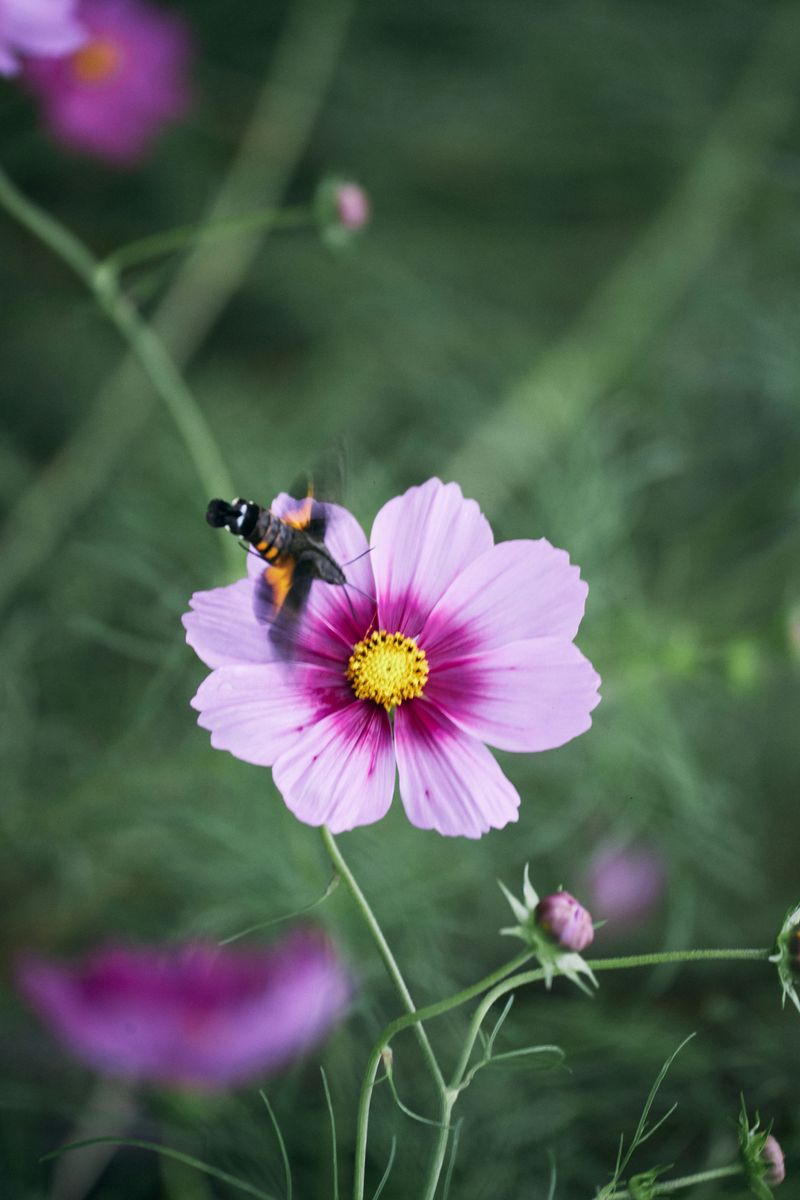
Airy and cheerful, cosmos wave on tall wispy stems that sway with the slightest breeze. While the daisy-shaped flowers look open rather than tubular, hummingbirds still visit for nectar and for the tiny insects the blooms attract as a protein snack.
Seeds germinate in days and the plants shoot up fast, filling a sunny gap with pink, white, and crimson right through late summer. They actually flower better in lean soil, so skip the fertilizer and let them be a little hungry.
Their loose, meadowy look softens the stiff lines of a formal bed and gives smaller birds cover to perch. Plant them in drifts for the biggest visual and buffet impact.
11. Snapdragon
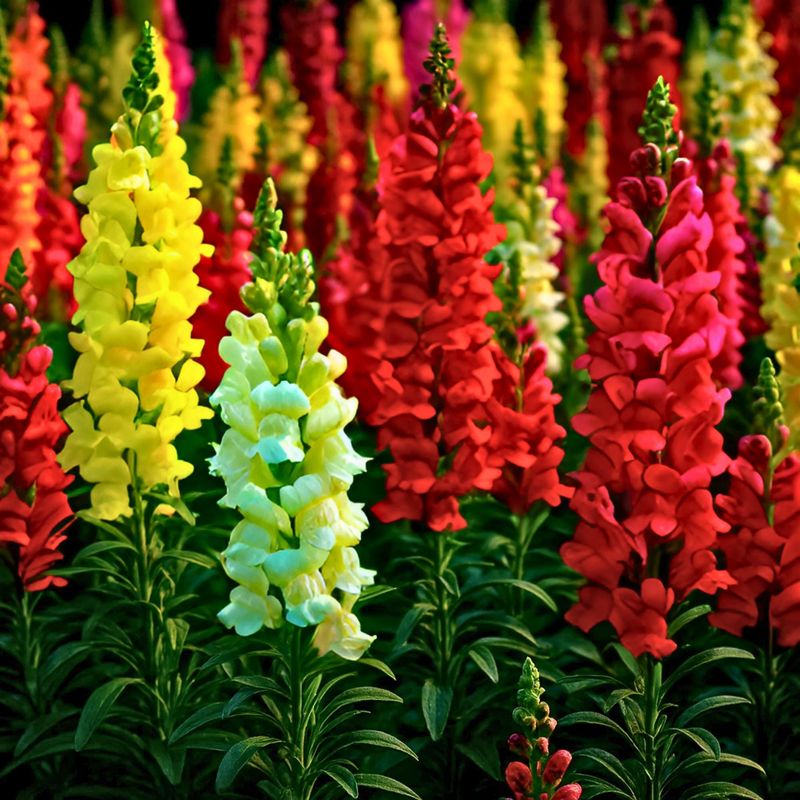
Squeeze a snapdragon blossom and the little dragon-jaw pops open, a trick that has delighted kids for generations. Hummingbirds skip the squeezing and simply reach into the pouched, tubular flowers for a hidden nectar reward.
Sown in cooler weather, snapdragons come on strong and offer a spectrum of reds, corals, and pinks that read as an open invitation to passing birds. They grow in neat vertical spikes that add structure to a bed while still feeding the wildlife.
Because they tolerate a light chill better than most, they bookend the season nicely, blooming when many summer annuals have quit. Cut a few for a vase and the plant answers with a fresh flush.
12. Scarlet Runner Bean
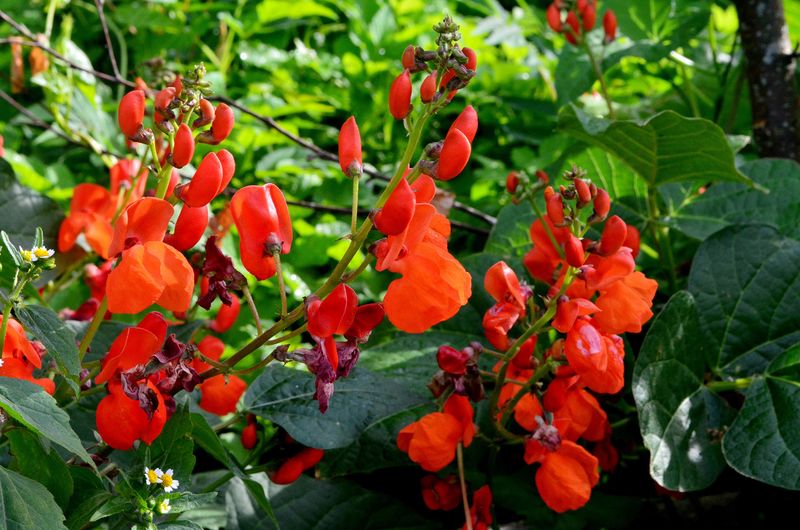
Two harvests in one plant make the scarlet runner bean a backyard overachiever. Its clusters of vivid red flowers act like magnets for hummingbirds, and once the birds move on, those same blooms turn into edible beans for your kitchen.
The vine climbs eagerly up poles, teepees, or strings, giving you a leafy privacy screen studded with red all summer. Big, colorful seeds make it a satisfying one to plant with children, and they sprout within a week or two in warm soil.
Grow it on a sunny fence and you get flowers at hummingbird height, food for the table, and shade for a garden bench underneath. Few plants pull triple duty this gracefully.
13. Fuchsia
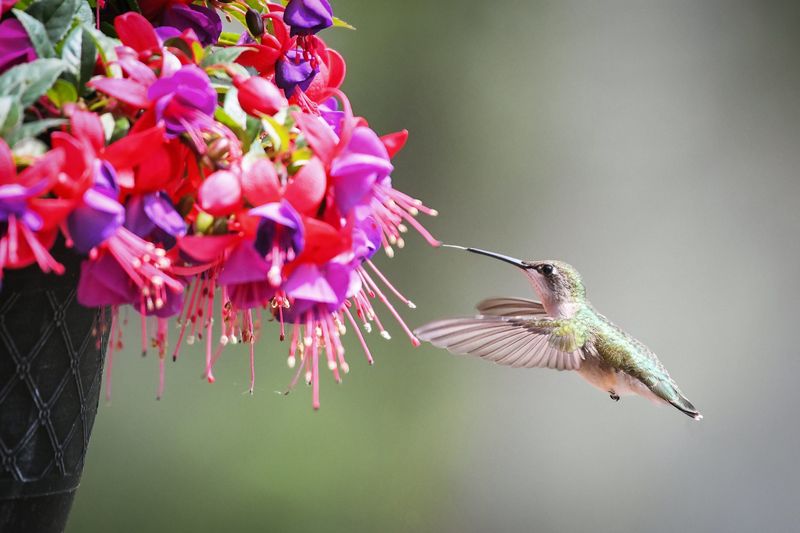
Dangling like tiny ballerinas in mid-twirl, fuchsia blooms are almost too pretty to be real. Their pendant, two-tone flowers hang at the perfect angle for a hovering hummingbird to sip without ever landing.
Fuchsias prefer a bit of afternoon shade and cooler air, making them a smart pick for a porch corner or a spot under a tree where sun-lovers would scorch. Hanging baskets let the flowers dangle freely, which is exactly how the birds like to find them.
Keep the soil evenly moist and pinch back the tips early to encourage a fuller, more flower-heavy plant. In milder regions they can bloom for months, keeping the aerial visitors coming back.
14. Hollyhock
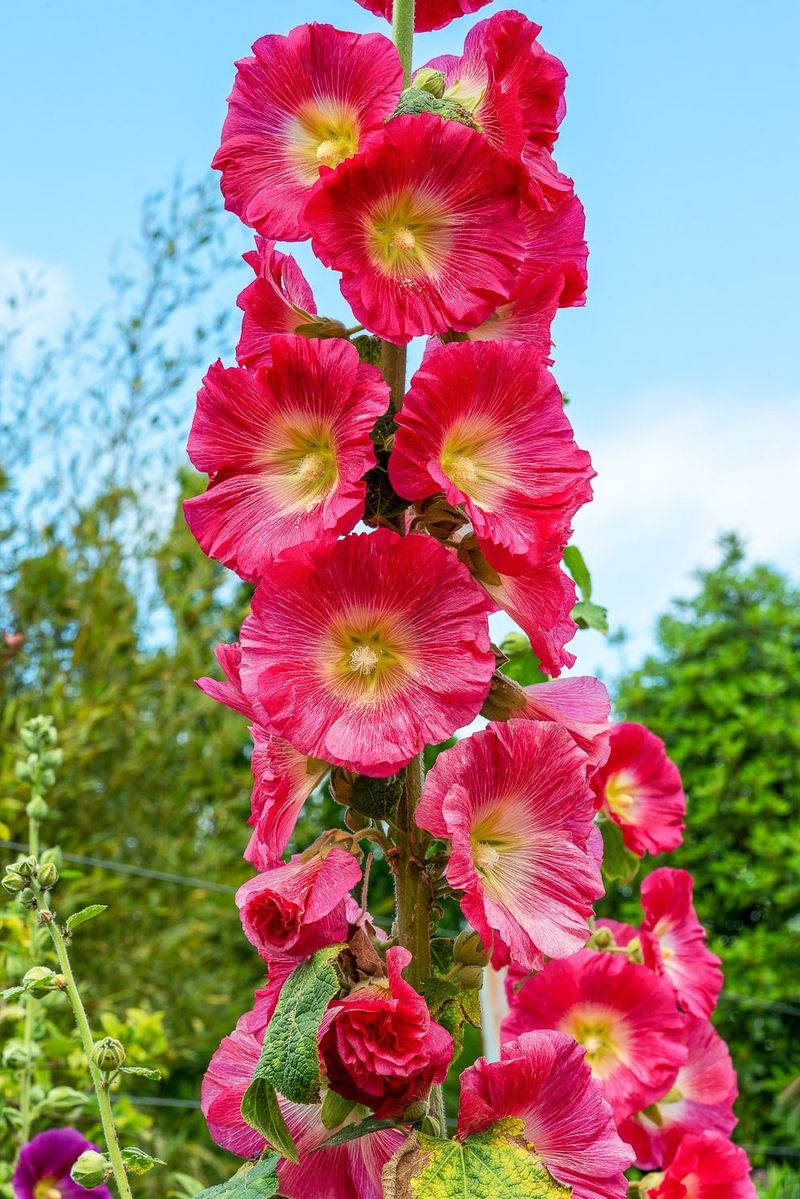
Standing tall against a wall or fence, hollyhocks bring an old-fashioned cottage charm that few flowers can rival. Their broad, cupped blossoms climb stems that can reach well over your head, giving hummingbirds a towering column of nectar to explore.
Though sometimes grown as a biennial, many strains bloom fast enough to flower their first season from an early sowing. The stately spikes turn a bare fence line into a backdrop worthy of a painting.
Grandmothers famously planted them by the back door and outhouse, both for beauty and to mask the view. Give them full sun and a little support in windy spots, and they will loom over your garden like friendly giants.
15. Lantana
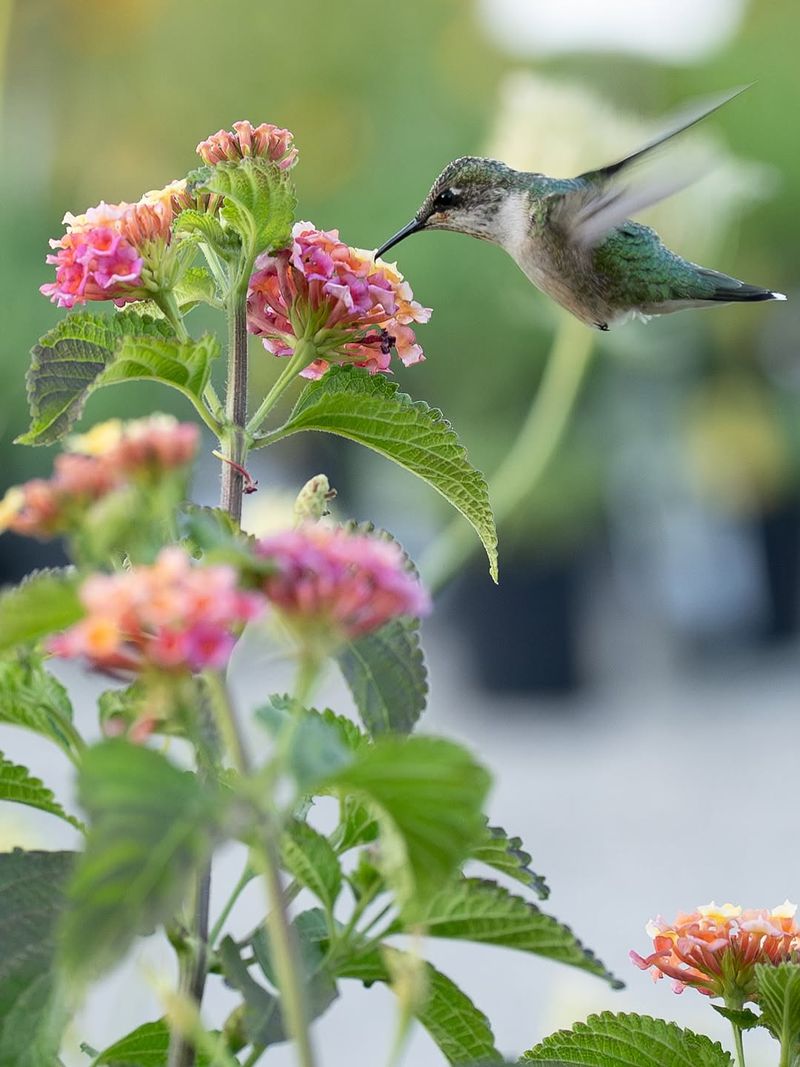
Heat that wilts other flowers only seems to make lantana happier. Its rounded clusters of tiny multicolored florets shift shades as they age, so a single flower head can show yellow, orange, and pink all at once, a color party hummingbirds and butterflies both crash.
Fast to establish and famously drought-tough, lantana thrives in the hottest, driest corners of a US backyard where you would rather not fuss with the hose. The nonstop blooms mean a near-constant food source once summer settles in.
Its pungent, slightly spicy foliage may help deter certain nibbling pests, which is a handy bonus. Plant it along a walkway and enjoy the steady stream of winged traffic all day long.
16. Flowering Tobacco
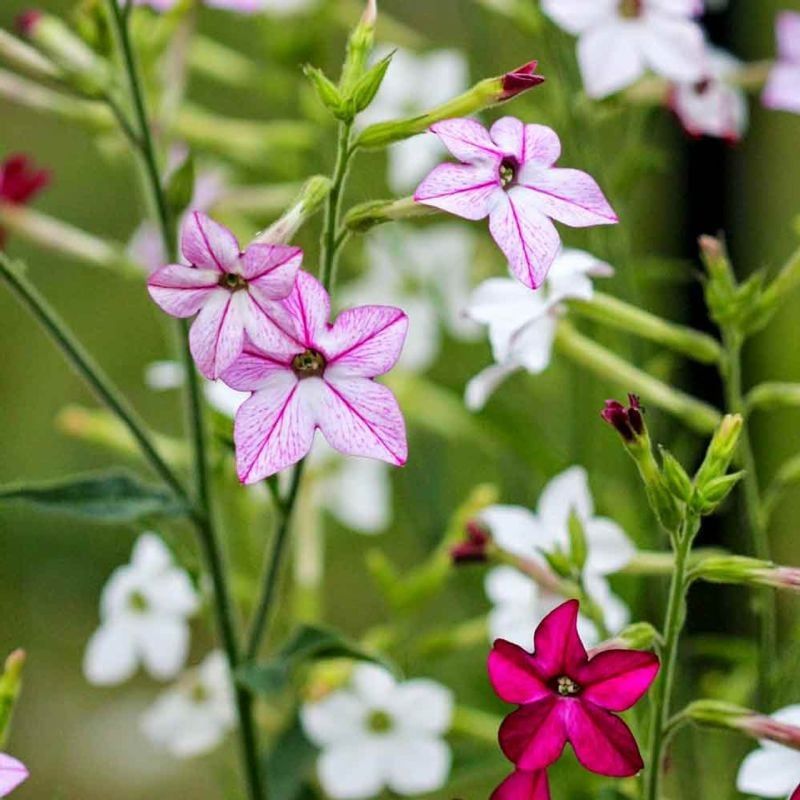
As daylight fades, flowering tobacco quietly steals the show with star-shaped, long-throated blooms and a perfume that carries across the yard. Hummingbirds work the deep tubes during the day, then the fragrance takes over for the evening pollinators after they clock out.
The plants grow up fast from seed and hold their flowers on airy stems in white, lime green, red, and soft pink. Longer-tubed types practically require a hummingbird’s slender bill to reach the nectar, so the birds get a meal with little competition.
Set them near a patio or open window where the scent can drift indoors on a warm night. It is one of those plants that feeds the eyes, the nose, and the local wildlife all at once.