
7 Reasons Your Clematis Won’t Bloom-And The Simple Fix Hiding Behind Each One
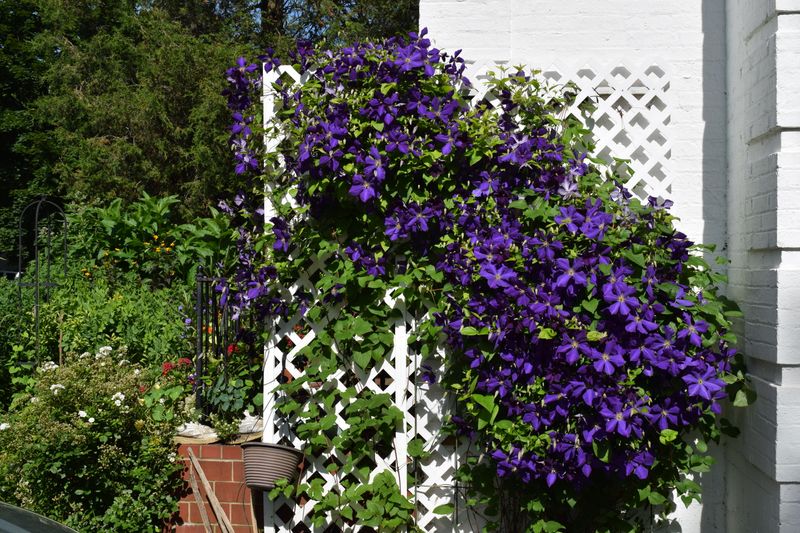
A clematis vine that climbs beautifully but refuses to flower can drive any backyard gardener a little crazy. You water it, you wait, and still you get leaves instead of those big, showy blooms you were promised. The good news is that a blooming problem almost always traces back to one small, fixable cause. Walk through these seven reasons and you’ll likely spot exactly what’s holding your vine back, along with the quick change that turns things around.
1. You Pruned It at the Wrong Time
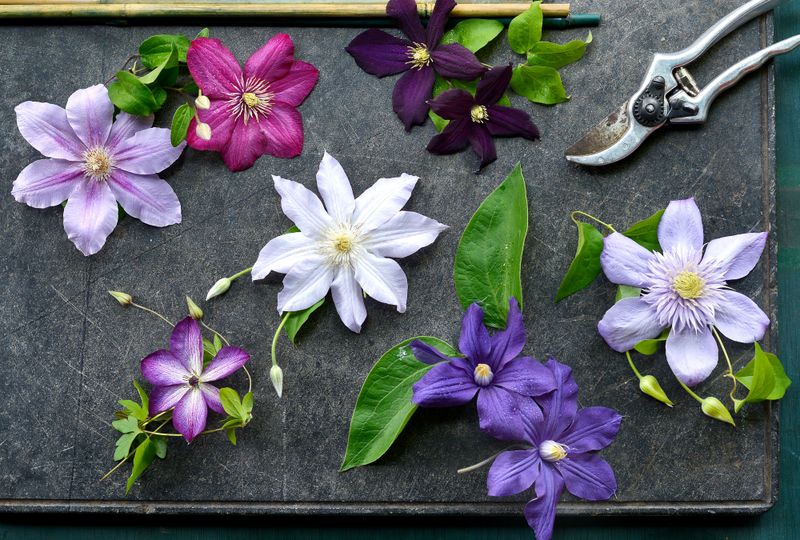
Snip at the wrong moment and you can accidentally cut off every flower before it ever opens. Clematis fall into three pruning groups, and each one blooms on different wood. Group 1 flowers on last year’s growth, Group 2 blooms on both old and new stems, and Group 3 flowers only on fresh growth from the current season.
Here’s where folks get tripped up. If you hard-prune a Group 1 or Group 2 variety in early spring, you’re slicing away the exact stems that were about to bloom. Meanwhile, a Group 3 clematis actually wants that heavy cutback to perform its best.
The fix is simple once you know your group. Check the plant tag or note when it naturally flowers, then prune accordingly. Group 3 gets cut back hard to about a foot in late winter, while Groups 1 and 2 need only light shaping right after they finish blooming. When in doubt, wait a full season and watch when flowers appear before you reach for the shears.
2. The Roots Are Cooking in the Sun

Clematis live by an old gardening rhyme: feet in the shade, face in the sun. The vine loves bright light on its leaves and flowers, but its roots hate being baked by hot afternoon rays. When the root zone overheats, the plant pours its energy into survival instead of setting buds.
Bare soil around the base is the usual culprit. Dark mulch or exposed dirt can climb well past comfortable temperatures on a summer day, stressing the shallow roots just when the vine should be flowering.
Cool those roots and blooms often follow. Spread a two to three inch layer of light-colored organic mulch around the base, keeping it a couple inches off the stems. Better yet, tuck a few low, leafy perennials or a small shrub in front of the crown to shade the ground naturally. A flat stone laid over the root zone works too, giving that cool shelter the plant craves while the top of the vine soaks up all the sun it wants.
3. Too Much Nitrogen Is Feeding Leaves, Not Flowers
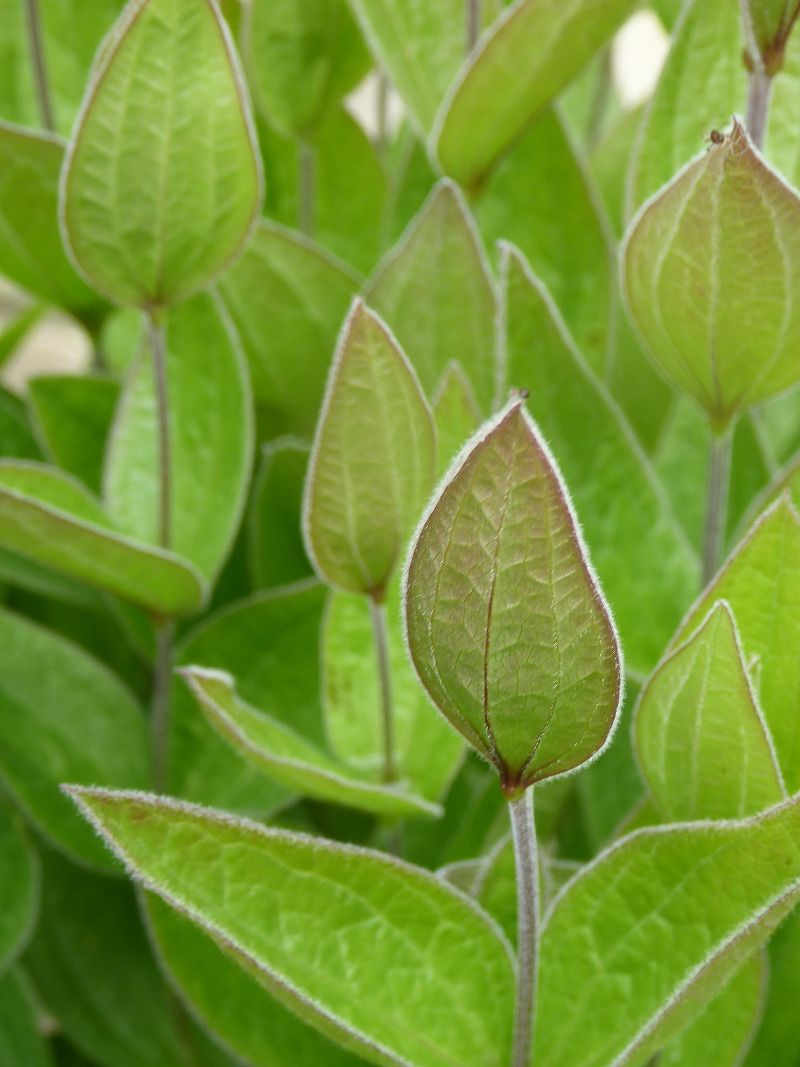
Lush, jungle-thick foliage with barely a bud in sight is a classic sign of a nitrogen overdose. Nitrogen is the nutrient that drives green, leafy growth, so when there’s too much of it the vine happily builds stems and leaves while skipping the flowers entirely.
Lawn fertilizer is often the sneaky source. If your clematis grows near a lawn you feed regularly, all that nitrogen-rich runoff may be reaching its roots without you realizing it.
Switch the menu and you’ll see a difference. Reach for a fertilizer higher in phosphorus, the middle number on the bag, since phosphorus supports flower and root development. A formula like a bloom-boosting 5-10-10 encourages buds rather than more leaves. Feed lightly in spring and again after the first flush of flowers, and keep high-nitrogen lawn products well away from the root zone.
A little restraint here can flip a leafy green vine into a blooming showpiece within a season.
4. It’s Still a Baby and Needs Time
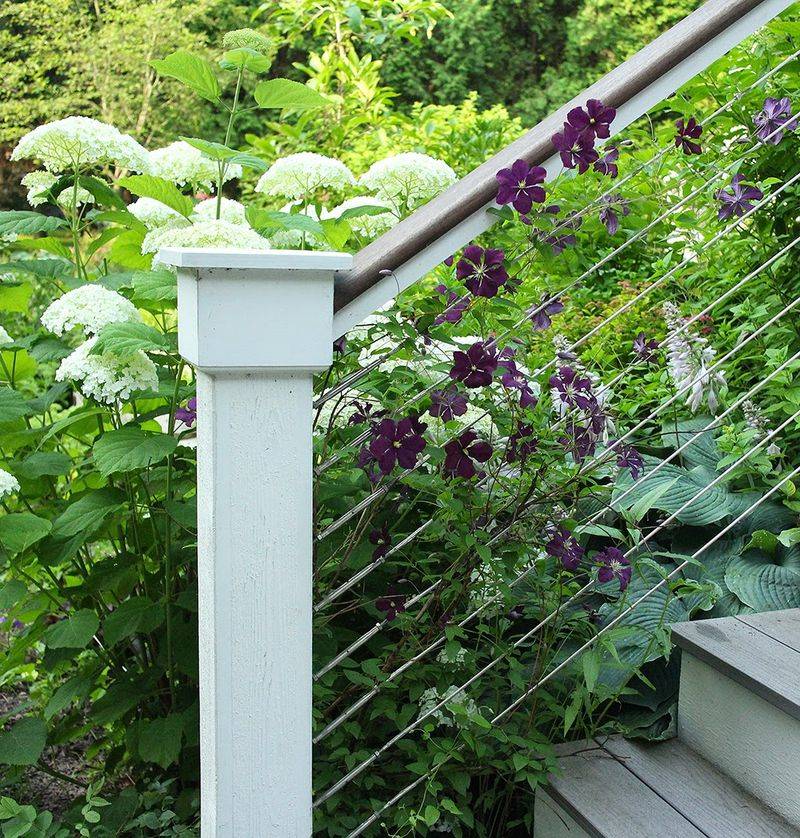
Patience is hard when you’ve paid good money for a flowering vine, but young clematis often spend their first year or two building roots instead of putting on a show. A brand-new plant is quietly establishing itself underground, and that hidden work matters far more than early blooms.
Gardeners sometimes call this the sleep, creep, leap pattern. Year one it sleeps as roots settle in, year two it creeps with modest growth, and by year three it leaps into full, generous flowering.
The best move is often to do less. Resist the urge to overfeed or overwater a struggling young vine in hopes of forcing flowers. Instead, give it a steady drink during dry spells, mulch to keep roots cool, and provide a sturdy support to climb. Some growers even pinch back the tips of a first-year plant to encourage bushier, stronger growth that pays off later.
Trust the timeline, and your patience usually gets rewarded with a vine that eventually blooms harder every year.
5. There Isn’t Enough Sun Reaching the Vine
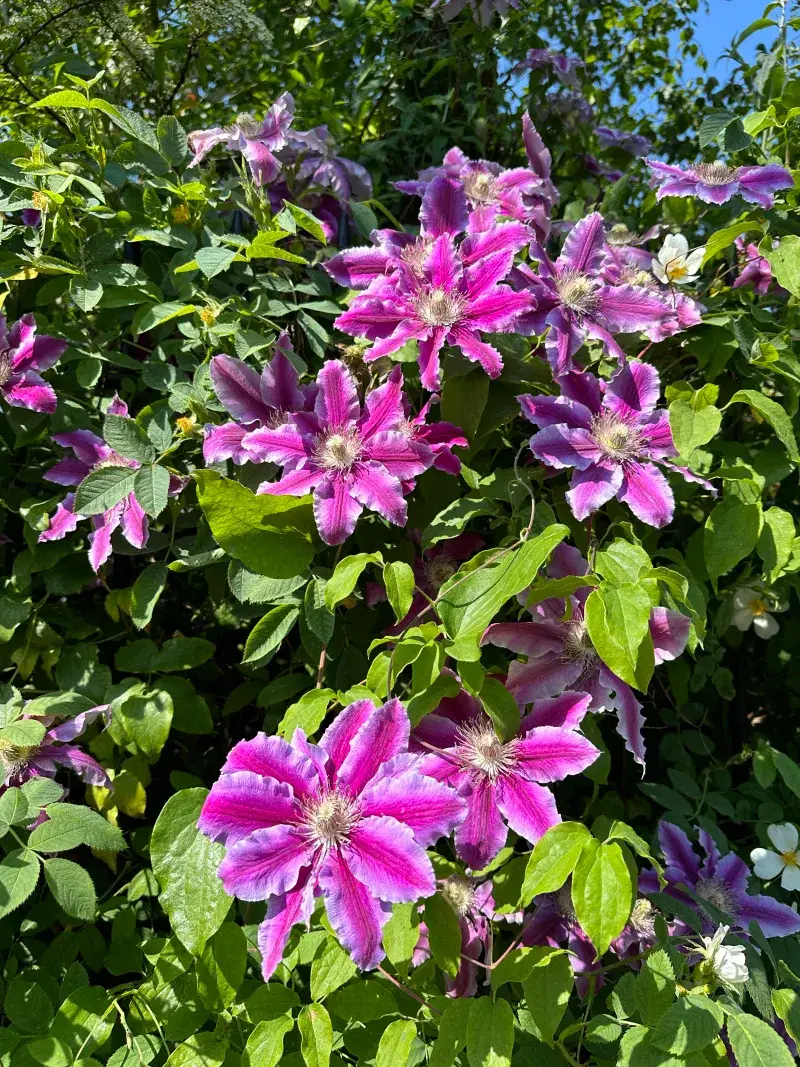
Shade-loving is not a phrase that describes clematis flowers. While the roots want cool shelter, the vine itself needs plenty of light on its top growth to fuel those blooms. Most varieties want at least six hours of direct sun a day, and skimping on that light is one of the quietest bloom killers around.
Trees leaf out, neighboring shrubs grow taller, and a spot that was sunny two years ago can slowly slip into shadow. A vine tucked against a north-facing fence or buried behind bushy plants may simply never gather enough energy to flower.
Chase the light and the flowers usually come. Trim back overhanging branches or crowding neighbors to open up the sky above your vine. If the location is hopelessly shady, transplant the clematis in early spring or fall to a brighter spot with morning-to-midday sun. Even shifting the direction of its trellis so more of the vine faces the light can nudge a stubborn bloomer back into action.
6. Wilt Disease Sneaked In
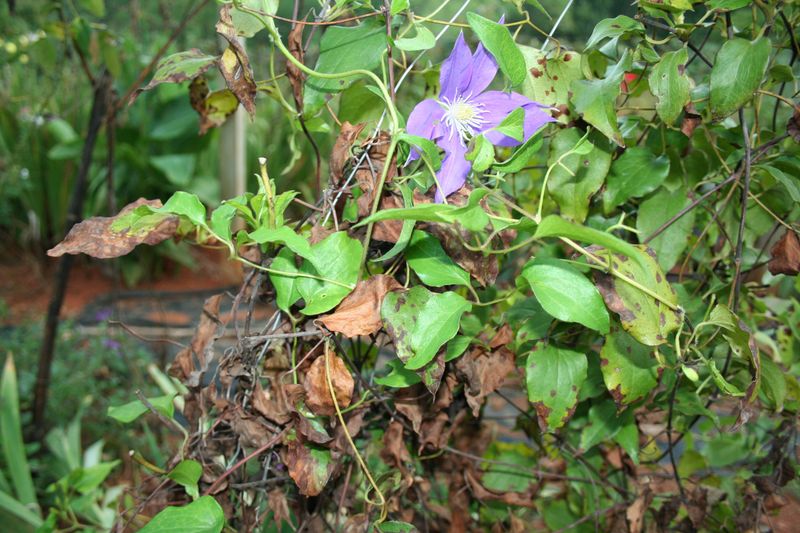
Nothing rattles a clematis grower quite like watching a healthy stem collapse overnight. Clematis wilt is a fungal problem that causes stems to blacken and flop suddenly, often right as buds are forming. The vine can look fine one morning and dramatically droop by evening, which understandably kills the blooming you were counting on.
The reassuring part is that wilt rarely finishes off an established plant. The roots usually survive even when the top growth caves in, so the vine can bounce back if you respond quickly.
Act fast when you spot trouble. Cut affected stems all the way back to healthy tissue or down to ground level, and dispose of the clippings in the trash rather than the compost pile to avoid spreading spores. Keep the foliage dry by watering at the base instead of overhead, and give the vine good air circulation so leaves dry quickly after rain. Many gardeners find their plant sends up fresh, wilt-free shoots later the same season and blooms again as if nothing happened.
7. A Late Frost Zapped the Buds
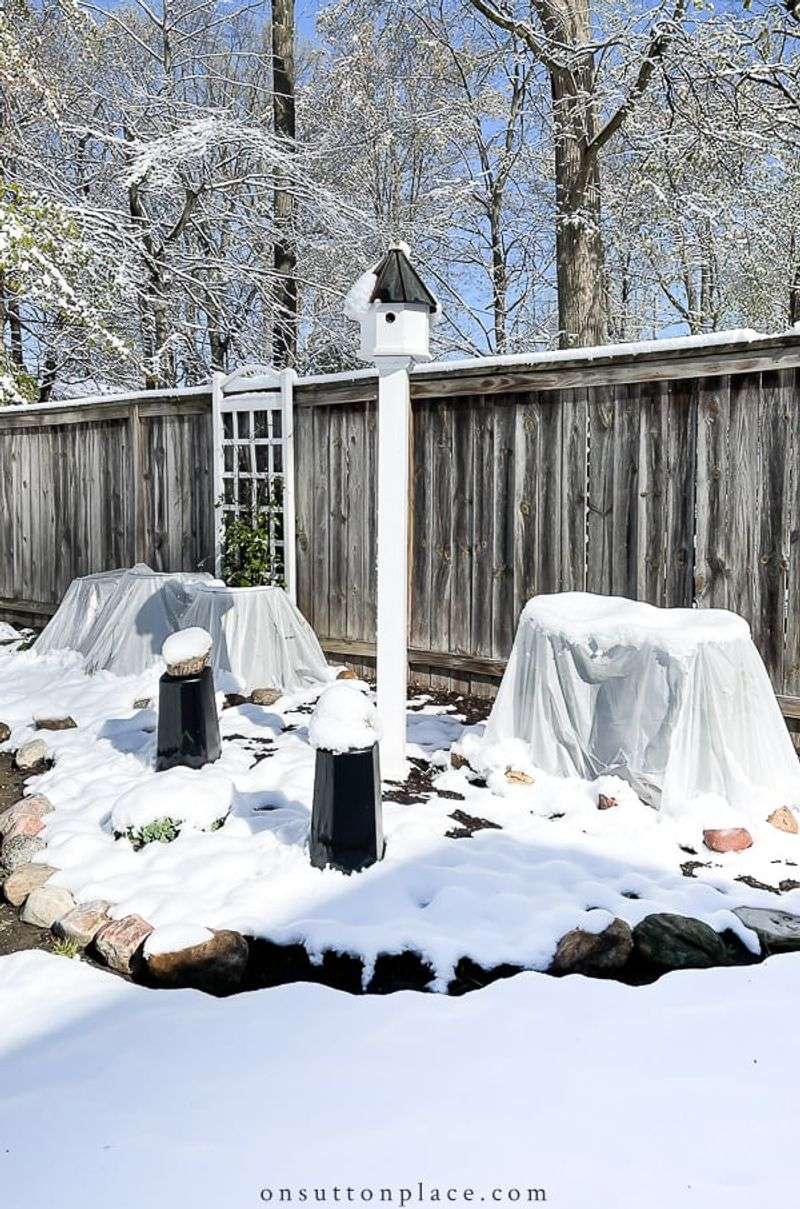
Spring in much of the US loves to tease gardeners with a warm week followed by a surprise cold snap. That sudden dip can nip tender flower buds right off a clematis just as they swell, leaving you with an otherwise healthy vine that mysteriously refuses to flower that year.
Varieties that bloom early on old wood are the most vulnerable. Their buds form before the danger of frost has fully passed, so an unexpected freeze in April or May can wipe out the whole first flush.
Protection is easier than it sounds. Keep an old bedsheet or lightweight frost cloth handy and drape it over the vine whenever the forecast dips near freezing after growth has started, removing it once temperatures climb back up. For gardeners in colder zones, choosing later-blooming Group 3 varieties sidesteps the problem, since they flower on new growth well after frost season ends. Watching your local frost dates and reacting to that one cold night can be the difference between a bare vine and a wall of blooms.