
If Your Fall Lawn Looks Green On Top But Feels Spongy Underfoot, A Thatch Layer May Be Suffocating The Roots
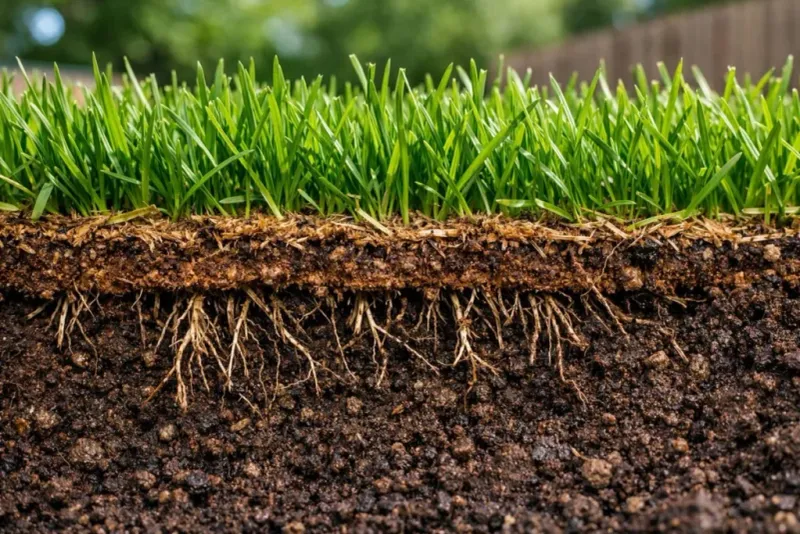
Walking across a lawn that looks perfectly green but bounces oddly underfoot is one of those surprises that makes a homeowner stop and wonder what is going on below the surface. That springy sensation can point to a thatch problem, but it does not prove one is there. Before renting a power rake or scheduling a dethatching service, a quick plug test will tell you far more than your feet ever could.
Start with a plug, not a power rake
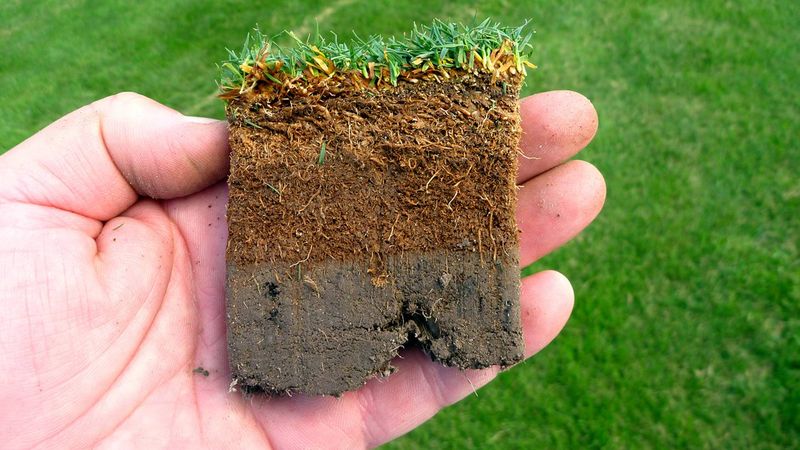
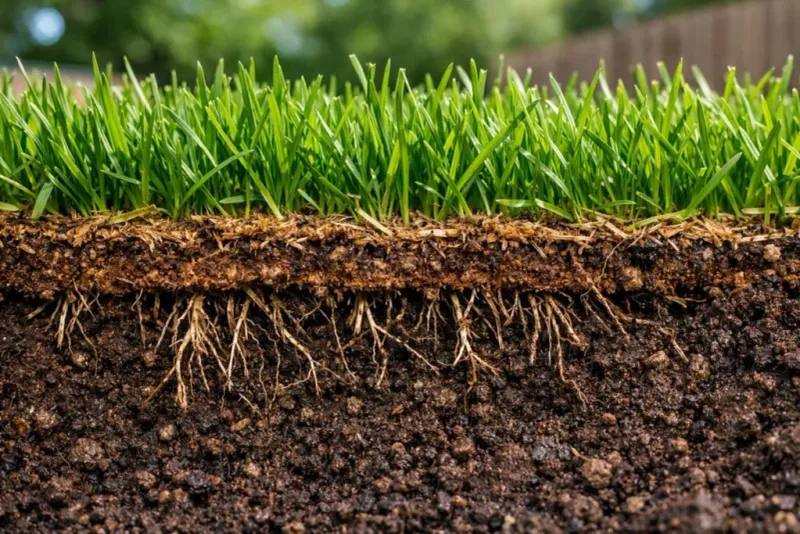
Grabbing a shovel before grabbing a dethatcher is the smartest move you can make. Cut several plugs or wedges about 2 to 3 inches deep from different spots across the lawn, then lay each one on its side so you can see the full profile from the green blades at the top down to the mineral soil at the bottom.
The layer you are looking for sits between the green canopy and the soil itself. It will appear as a distinct horizontal band of brown, stringy, or felt-like material, sometimes spongy to the touch. Measure only that layer, not the entire root zone, and not the loose clippings sitting on top of the grass.
Take plugs from at least three or four spots, because thatch depth can vary from one corner of the yard to another. A shaded area near the fence may read very differently than a sunny, high-traffic strip near the driveway. University of Missouri Extension guidance on thatch recommends this side-profile inspection as the reliable way to confirm whether a problem actually exists before choosing any treatment.
The plug test replaces guesswork with a real measurement. A lawn that feels bouncy underfoot may have excess thatch, or it may have compacted soil, saturated ground, or a weak organic layer that has nothing to do with thatch at all. The only way to know which situation you are dealing with is to look at what the grass is actually rooted in.
A little thatch helps; too much changes the root zone
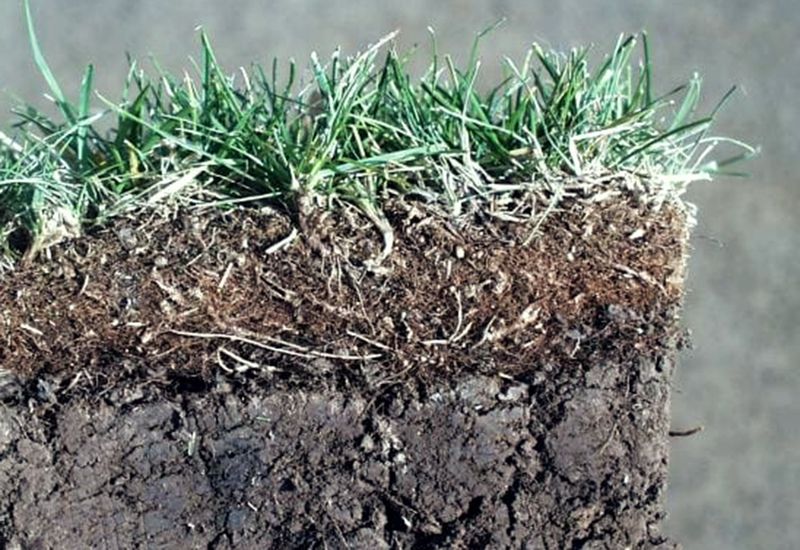
Thatch is not simply a pile of dead grass clippings. It is a tightly interwoven layer of living and dead stems, crowns, roots, rhizomes, and stolons that accumulates between the green canopy above and the mineral soil below. Some of that material resists decomposition naturally, which is why it builds up even in well-managed lawns.
A thin layer, roughly a quarter to just under a half inch, can actually work in the lawn’s favor. It cushions foot traffic, reduces moisture loss from the soil surface, and moderates soil temperature during temperature swings. Illinois Extension’s thatch management guidance notes that not every brown layer between the grass and soil is a problem worth solving.
The concern starts when the layer grows dense enough that roots begin concentrating inside it rather than pushing down into the soil. Roots living in a thick thatch mat are far more exposed to drying out during drought, overheating in summer, freezing in winter, and attack from surface pests and disease organisms. The thatch environment is much less stable than mineral soil, and roots anchored there have less to hold onto during stress.
Most university extension programs use roughly half an inch as a practical screening point, meaning that a layer measuring around that depth or less often needs no intervention. Penn State Extension’s thatch management resource puts the threshold for likely problems at about one inch, while Oklahoma State uses different cutoffs for cool-season and warm-season grasses. The takeaway is that half an inch is a useful starting point for your own plug measurement, not an absolute rule that applies equally to every lawn in every region.
What else could make the lawn feel spongy?
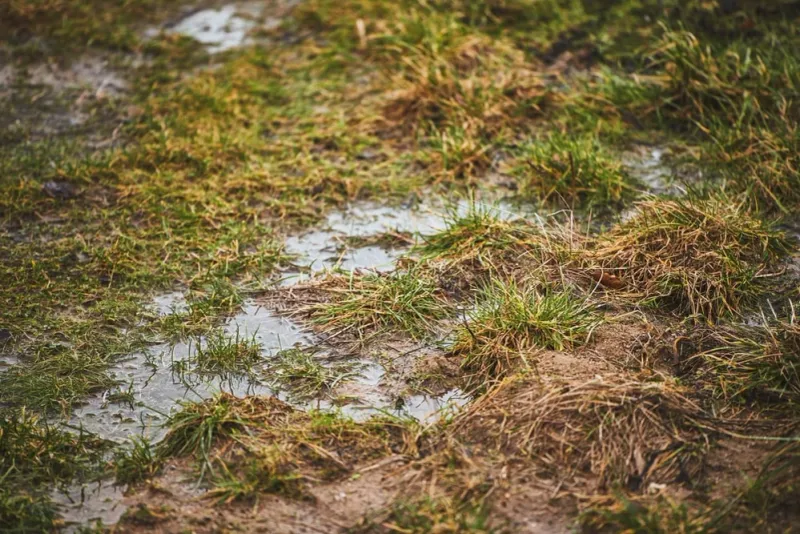
Excess thatch is only one reason a lawn can feel like a gym mat underfoot. Compacted soil that has lost its structure, ground saturated from recent rain or poor drainage, and thick layers of decomposing organic matter that never quite became soil can all produce that same bouncy sensation. Attributing the feeling automatically to thatch and reaching for a power rake can make some of these other problems worse, not better.
When you pull your plugs, pay attention to the relationship between three distinct zones: the green canopy, the brown layer, and the soil. If the brown layer is thin or absent but the soil feels wet and dense, compaction or drainage is the more likely culprit. If the brown layer is clearly measurable and the roots are concentrated inside it rather than reaching into the soil below, then excess thatch is a reasonable diagnosis worth addressing.
Oklahoma State University’s thatch management fact sheet treats sponginess as a clue that warrants further inspection, not as standalone proof of a thatch problem. Excessive or dense thatch can restrict air movement and alter the way water moves through the profile, but research on Kentucky bluegrass and red fescue found that thatch’s effect on water is more complicated than a simple blockage. University of Idaho turfgrass thatch research showed that thatch delayed initial infiltration but also held moisture near the surface and reduced evaporation in some conditions. The honest description is that excessive thatch can make moisture management less predictable, not that it blocks every drop of water from reaching the roots.
Core aeration may be the gentler first move
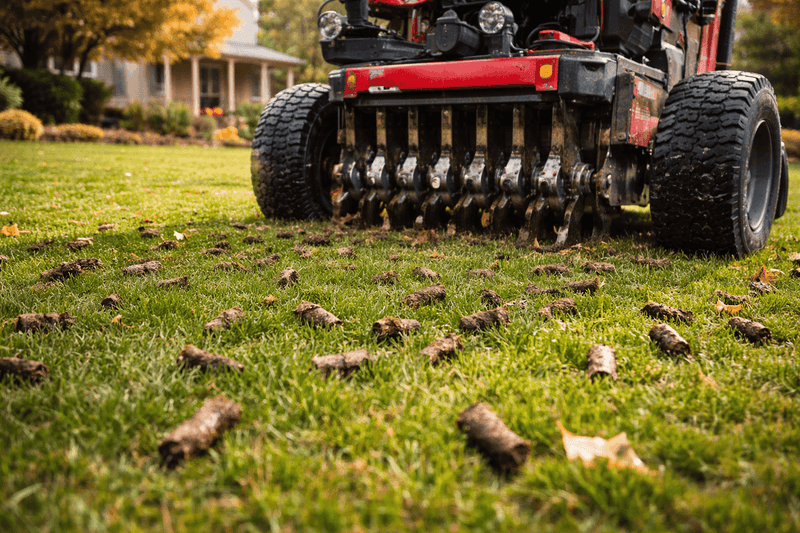
When the plug shows compaction, moderately dense thatch, or roots that are struggling to penetrate the soil, core aeration is often the right tool to reach for first. A core aerator pulls small cylindrical plugs of soil out of the ground, typically a few inches deep, and leaves them on the surface to break down. That process opens channels for air, water, and nutrients to move into the root zone without tearing through living grass the way a dethatcher does.
The soil cores left on the surface serve a second purpose that often goes unnoticed. They contain microorganisms that, once they mix back into the thatch layer through rain and foot traffic, help accelerate decomposition of the organic material. Missouri Extension’s lawn thatch publication specifically notes that coring causes less lawn stress than power raking or vertical mowing, which makes it a reasonable starting point for lawns where the thatch layer is present but not extreme.
Core aeration and dethatching are not the same operation, and the distinction matters. Dethatching physically removes or cuts through organic material and can pull out living crowns and roots along with the dead matter. Aeration leaves the organic layer in place and works on the soil structure underneath. If your plug shows that roots are already growing in the thatch layer, pulling that layer out aggressively could remove the grass itself.
Aeration works best when the lawn is actively growing and soil moisture is moderate, conditions that allow the turf to fill in the holes quickly. It is not a universal cure for every lawn, but for a lawn with moderate buildup and some compaction, it can reduce the need for more aggressive treatment while still improving the root environment meaningfully.
Heavy buildup turns dethatching into a recovery project
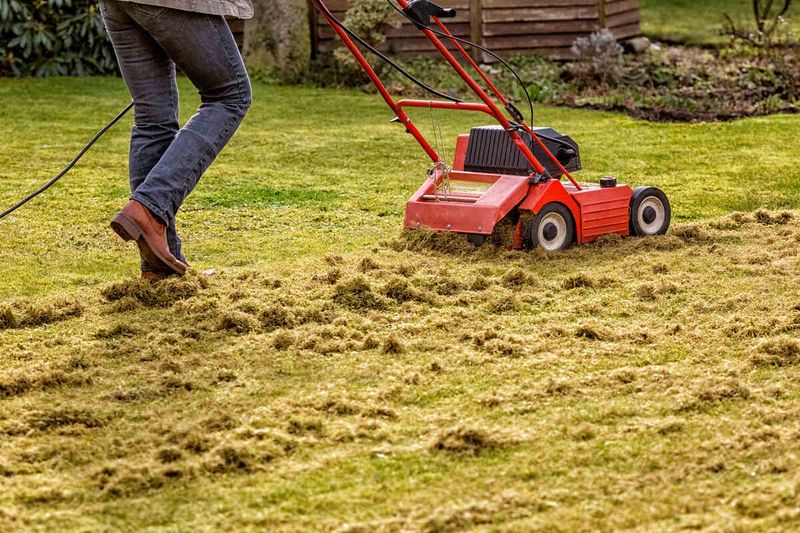
Mechanical dethatching, sometimes called power raking or vertical mowing, earns its place in lawn care when the plug confirms that the thatch layer is genuinely excessive and the turf is healthy enough to survive the operation. These machines use rotating tines or blades to cut through and lift organic material out of the lawn, which sounds straightforward until you consider what else is down there.
When roots have grown into a thick thatch mat, which happens more often than most homeowners expect, the dethatcher does not distinguish between dead organic matter and living crowns. Illinois Extension warns that mechanical removal can be destructive, particularly in lawns where the grass is already rooted primarily in the thatch layer rather than the soil below. The lawn may look worse after dethatching than it did before, and reseeding or full renovation can become necessary.
After running the dethatcher, rake up and remove all the loosened debris rather than letting it sit on the surface. That material is mostly resistant organic matter, and leaving it in place simply re-deposits the problem. Plan for a recovery window: the lawn will need adequate moisture, appropriate fertilization timed to the grass type, and possibly overseeding in bare or thin areas.
Missouri Extension notes that when thatch is severe, moderate treatment spread over two or three years is often preferable to stripping everything out in a single aggressive pass. Removing too much at once can expose the soil, stress the crowns, and set back the lawn further than the thatch itself ever did. Think of heavy-buildup management as a multi-season project rather than a single fall afternoon.
The right calendar depends on the grass
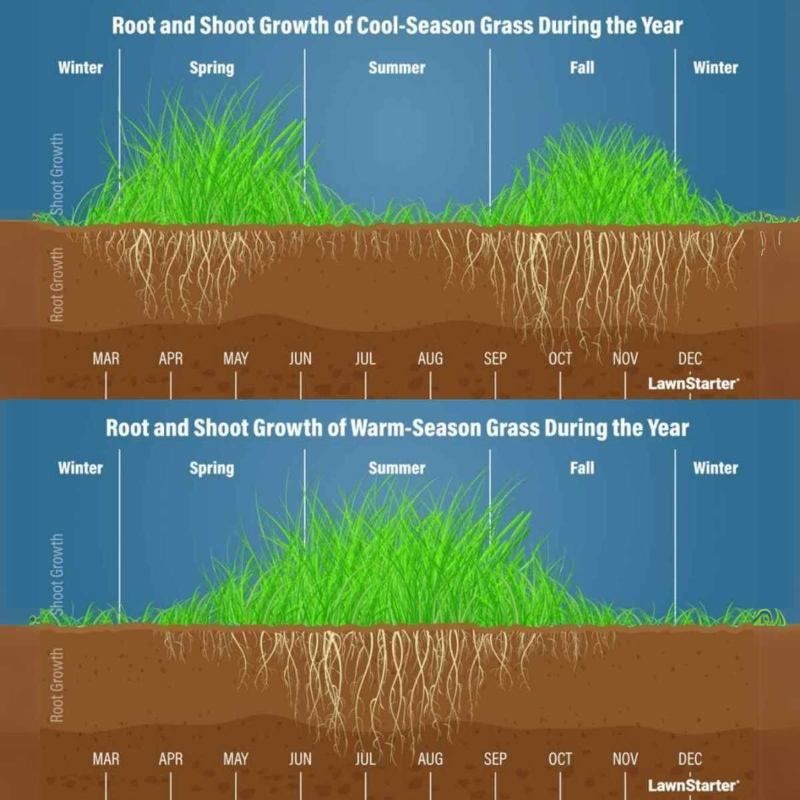
Fall dethatching advice gets repeated so often that it starts to sound like a universal rule, but the calendar that works for a Kentucky bluegrass lawn in Ohio does not apply to a bermudagrass lawn in Georgia. Matching the treatment window to the grass type is one of the most practical ways to protect the lawn from unnecessary stress.
Cool-season grasses, including Kentucky bluegrass, fine fescue, and tall fescue, grow most actively in the cooler temperatures of late summer and early fall. That active growth period gives them the recovery capacity they need after a disruptive operation like dethatching or aeration. Penn State Extension’s seasonal lawn management guide recommends mechanical removal only when buildup is excessive and cautions against dethatching during heat, drought, or periods of weak turf growth.
Warm-season grasses such as bermudagrass, zoysiagrass, and St. Augustinegrass follow a different rhythm entirely. They thrive in summer heat and go dormant or semi-dormant as temperatures drop in fall. Dethatching a warm-season lawn as it approaches dormancy leaves little time for recovery before the grass stops growing for the season. Spring green-up or active summer growth is generally the safer window for these species, though regional variation is real and local extension guidance should take priority over any general rule.
Regardless of grass type, avoid dethatching during drought stress, when the turf looks thin or weak, or when nighttime temperatures are dropping quickly toward freezing. A lawn that cannot recover actively from the operation will carry the damage into the next season. When in doubt, a phone call to your local cooperative extension office can confirm the right timing for your specific region and grass variety.
Correct the conditions that keep rebuilding the mat
Removing thatch without addressing what caused it to build up in the first place is like bailing water without fixing the leak. Thatch accumulates faster than it decomposes when certain conditions tip the balance, and those conditions are often within the homeowner’s control.
Excessive nitrogen fertilization is one of the more common contributors. When grass grows very rapidly, it produces stems, crowns, and lateral shoots faster than soil microbes can break them down. Overwatering creates a similar imbalance by keeping the thatch layer wet and compressing the air pockets that decomposer organisms need to do their work. Penn State Extension’s thatch resource identifies excessive nitrogen, overwatering, compaction, poor drainage, and unsuitable soil conditions as factors that can favor accumulation or slow decomposition.
Grass species and cultivar choice also matter. Grasses that spread aggressively through rhizomes and stolons, including Kentucky bluegrass, bermudagrass, and zoysiagrass, naturally produce more of the resistant tissue that thatch is made of. That does not mean these grasses are wrong for a lawn, but it does mean they need more consistent monitoring.
A soil test is a low-cost starting point for longer-term management. Highly acidic or otherwise unbalanced soil slows microbial activity, which slows decomposition of organic matter. Correcting pH and nutrient levels creates a better environment for the organisms that naturally break thatch down over time.
One myth worth clearing up directly: regularly mowed grass clippings are not a meaningful source of thatch. Missouri Extension’s thatch publication states that clippings decompose quickly when no more than one-third of the blade is removed at each mowing. The real contributors are the more resistant stems, crowns, stolons, and root tissue that standard mowing never touches.
Let the inspection decide the fall treatment
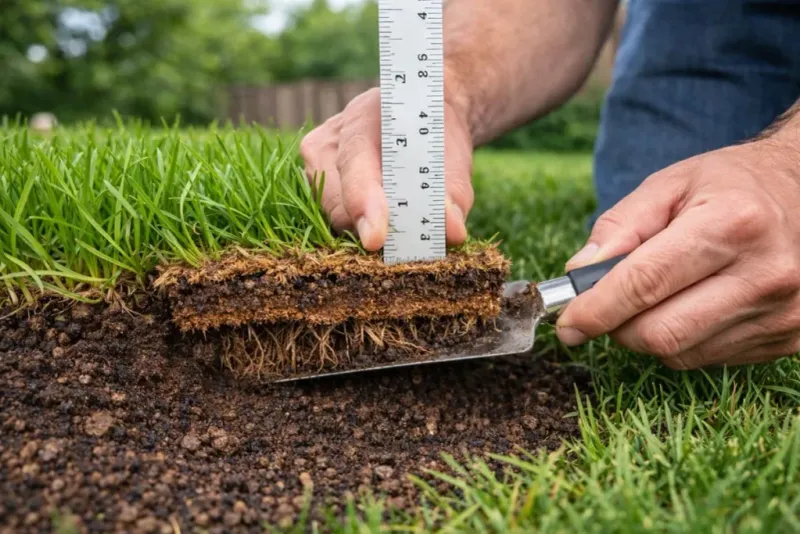
The plug test is the decision point the rest of this process depends on. Cut the plugs, measure the distinct brown layer, identify whether you are working with a cool-season or warm-season grass, and honestly assess how strong and healthy the turf looks right now. Those four pieces of information together will tell you which path makes sense.
A layer under roughly half an inch with healthy-looking turf? No dramatic action is needed this fall. A layer in the moderate range with some compaction evident in the plug? Core aeration is a reasonable, lower-risk choice.
A layer that clearly exceeds the threshold for your grass type, combined with roots that appear to be living in the thatch rather than the soil, and a turf that is actively growing with enough season left to recover? That is when carefully timed mechanical dethatching or a staged multi-year plan becomes a real option. Missouri Extension and Penn State Extension both support this measured, condition-specific approach over any single blanket prescription.
A spongy lawn is worth investigating, but the investigation itself is the valuable part. The plug test costs nothing and takes ten minutes, and it protects the lawn from being treated with a tool that could cause more disruption than the problem it was meant to fix. The best fall lawn care decision is always the one that fits what is actually happening underground.