
Your Snake Plant Stays Green But Never Grows New Leaves – Light and Root Crowding May Be Why
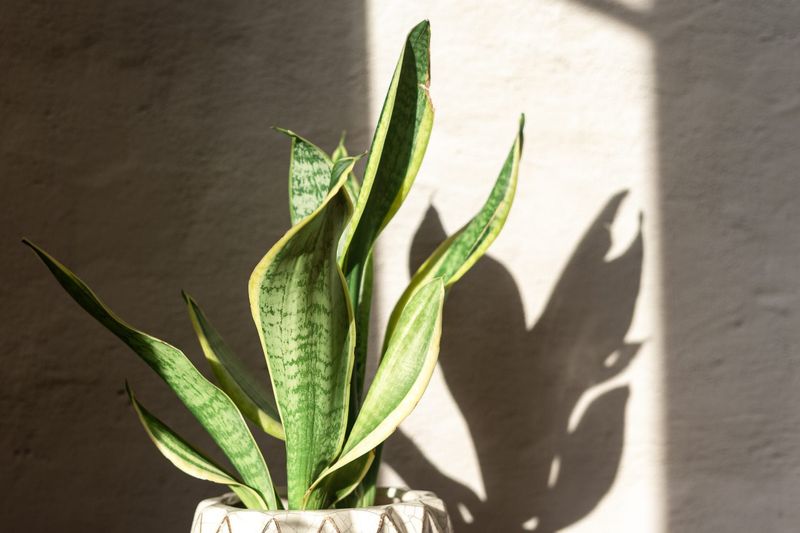
A snake plant that holds its color but never seems to push out a new leaf can leave you wondering what you are doing wrong. The good news is that a firm, green plant is not a failing plant – it is surviving, and possibly just growing on its own quiet schedule. Snake plants are naturally slow, and the fix is rarely as dramatic as an emergency repot. Working through a short checklist of light, watering, and root conditions will tell you far more than the plant’s still surface ever could.
No new leaf does not prove a problem
Firm, upright, green leaves are a sign that your snake plant is alive and managing its environment. What they do not tell you is whether the plant has ideal light, unrestricted roots, or any urgent need for repotting. Surviving and actively growing are two different things, and a snake plant can do the first for a long time without doing the second.
Extension guidance on snake plant growth habits notes that these plants are very slow growers and that seasonal slowdowns are completely normal, with many pausing during shorter, cooler days and resuming more visible growth in spring. A plant that has not pushed a new leaf in several months may simply be following that natural rhythm rather than signaling a crisis.
Cultivar matters here too. Dwarf forms stay compact by nature, and some plants sold as snake plants are propagated from leaf cuttings or belong to slow-growing varieties that take considerable time to produce offsets. If you are not sure what type you have, that uncertainty is worth keeping in mind before you start troubleshooting.
The practical decision rule for the rest of this article is straightforward: assess light and routine care first, then inspect the roots only when physical evidence points you in that direction. Penn State Extension’s low-light houseplant guide reinforces that snake plants tolerate unusually dim conditions, which means low light alone does not automatically explain stalled growth without additional context. Starting with the least disruptive checks protects a plant that may already be doing fine on its own terms.
Why the plant may look unchanged
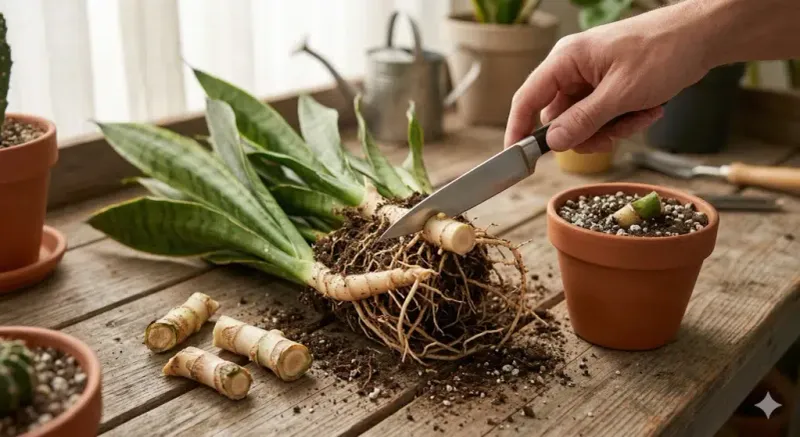
Snake plants grow from underground rhizomes, horizontal stems that spread through the soil and generate new leaf clusters called offsets. Because individual leaves do not emerge from separate stalks the way a tropical foliage plant might, early rhizome development can happen entirely below the soil surface with nothing visible above it for weeks or longer.
Ask Extension’s snake plant resource explains this clumping growth habit clearly: the plant forms clusters of leaves from those rhizomes, and a new offset may be developing at soil level or just beneath it while the surface of the pot looks completely static. Pale or lighter-colored new growth is also normal when it does appear, so a small emerging tip that looks different from mature foliage is not automatically a sign of nutrient trouble.
This growth structure matters for diagnosis because it disconnects the visible surface from what is actually happening in the root zone. A plant that looks unchanged is not the same as a plant that is doing nothing. Rhizome activity, root extension, and offset formation can all be underway without producing an obvious new leaf blade above the soil.
The Royal Horticultural Society’s Sansevieria growing guide describes the same pattern, noting that these plants develop slowly and that visible change is not a reliable real-time indicator of root or rhizome health. Before concluding that the plant has stopped growing entirely, it helps to remember that the most active part of its growth system is the part you cannot see without removing it from the pot.
Test light before disturbing the roots
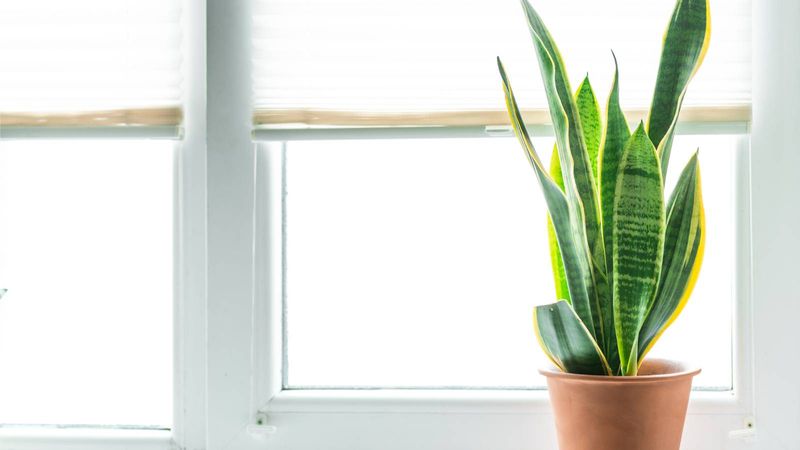
Light is worth checking before you touch the pot. Snake plants tolerate dim conditions better than most houseplants, but tolerating low light is not the same as growing well in it. University of Minnesota Extension’s indoor lighting guide explains that reduced light limits photosynthesis, which in turn reduces the energy available for producing new tissue. A plant in a dim corner may stay green indefinitely while adding little or no new foliage.
Moving the plant gradually toward better light is the lowest-risk first step. A bright north- or east-facing window works well because it provides consistent indirect light without the intensity of afternoon sun. If you only have west- or south-facing windows available, positioning the plant several feet back or using a sheer curtain to filter the light gives you the brightness benefit without the risk of leaf scorch.
Penn State Extension’s low-light houseplant resource reports that snake plants kept in medium light produced new growth, which supports the idea that a modest lighting upgrade can make a real difference. The key word is gradual. Moving a plant that has spent months in a dim spot directly into bright, unfiltered afternoon sun can cause bleaching or scorched patches on leaves that were never conditioned for that intensity.
For rooms without useful natural light, a basic grow light on a timer is a practical option. University of Vermont Extension’s houseplant guidance mentions supplemental lighting as a workable solution for low-light interior spaces. Give any lighting change several weeks before expecting visible results. Snake plants respond slowly even under improved conditions, and patience here prevents the temptation to add more interventions before the first one has had time to work.
Audit watering and drainage
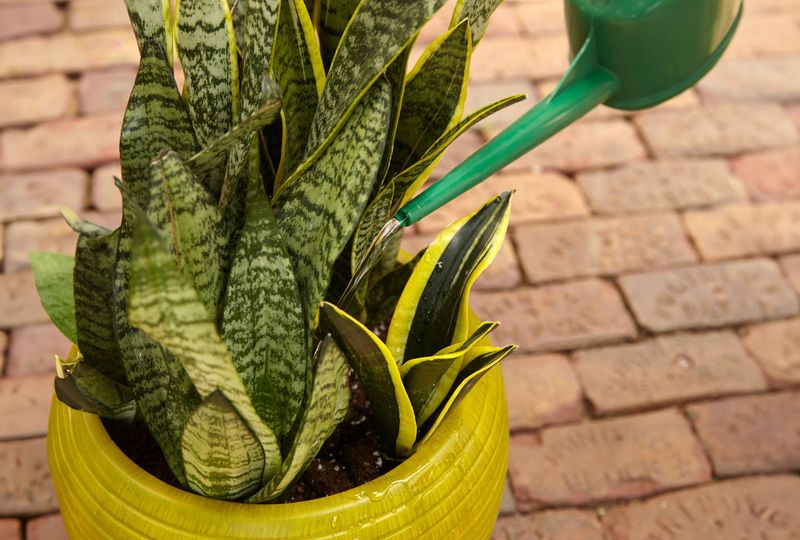
Any lighting adjustment works better when the plant’s soil and drainage situation is already sound. Penn State Extension’s snake plant care page is direct on this point: snake plants prefer free-draining soil and a container with drainage holes, and consistently wet soil is one of the most common causes of root damage in this species. Before changing anything else, confirm that water can actually exit the pot and that the soil is not staying soggy between waterings.
The right watering trigger is soil dryness, not a calendar date or the fact that you moved the plant to a brighter spot. Press a finger an inch or two into the potting mix. If it still feels noticeably moist, wait. The RHS Sansevieria growing guide recommends watering only after the potting mix has dried substantially, and that standard applies regardless of season or placement.
A common mistake after a lighting change is to start watering more frequently because the plant is now in a brighter spot. Increased light does raise a plant’s water use slightly over time, but the soil-dryness test remains the correct guide. Watering on a fixed schedule in wetter soil is how root rot starts quietly, well before any visible symptom appears above the soil line.
Ask Extension’s snake plant disease entry distinguishes slow growth from moisture stress by noting that rot-related decline usually comes with soft or discolored tissue, not just a pause in new leaf production. A plant that is green, firm, and stable but simply not growing is a different situation from one showing soft spots, yellowing at the base, or a foul smell from the soil.
Inspect the roots when the evidence points there
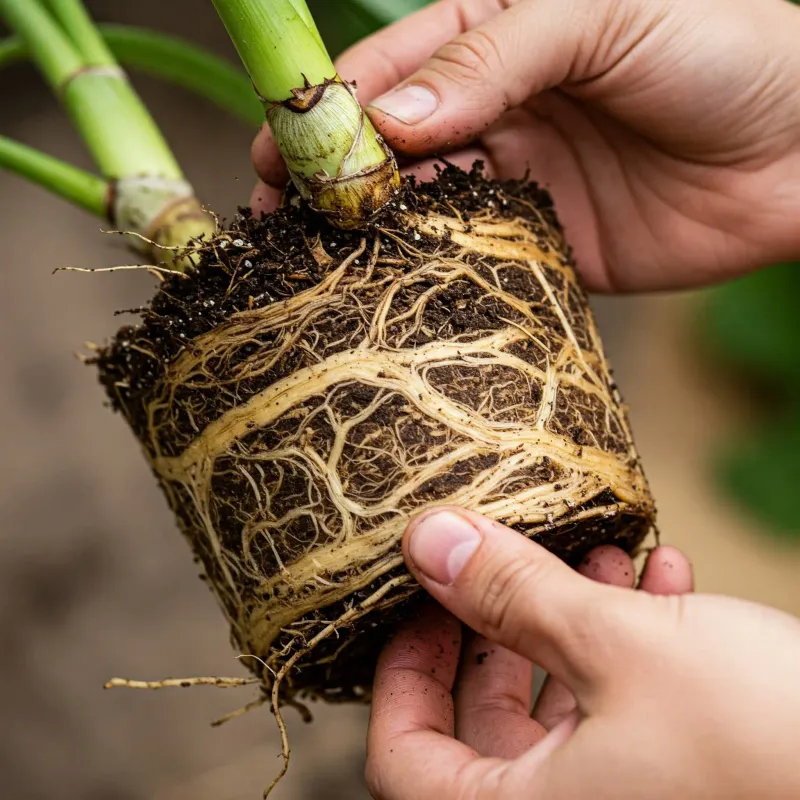
Stalled growth by itself is not enough to justify pulling a snake plant out of its pot. Snake plants are well-known for tolerating, and even preferring, a fairly snug container, so the presence of some root crowding is not automatically a problem. What warrants a closer look is when stalled growth comes alongside other physical signals that together suggest the roots have run out of workable space or have been damaged by excess moisture.
Penn State Extension’s repotting guide identifies the most useful indicators: tightly circling roots that fill most of the root ball, roots emerging from drainage holes, soil that dries out unusually fast after watering, a plant that has become top-heavy or unstable in its container, or a pot that is visibly cracked from root pressure. Any one of these alongside slow growth gives you a stronger reason to inspect. Growth stalling alone does not.
University of Minnesota Extension’s winter houseplant tips echo this approach, noting that multiple corroborating signs together justify a closer look rather than any single symptom in isolation. If you decide inspection is warranted, gently tip the plant out of its pot and examine what you find.
Root color and texture tell you which problem you are actually dealing with. Firm, pale, or whitish roots generally reflect a healthier root system that may simply be crowded. Dark, soft, mushy roots, or any foul smell coming from the root ball, point toward excess moisture or rot rather than ordinary crowding. Penn State Extension’s plant health diagnosis resource draws this same distinction, and the difference matters because the corrective action for crowding and the corrective action for rot are not the same.
Repot only when inspection justifies it
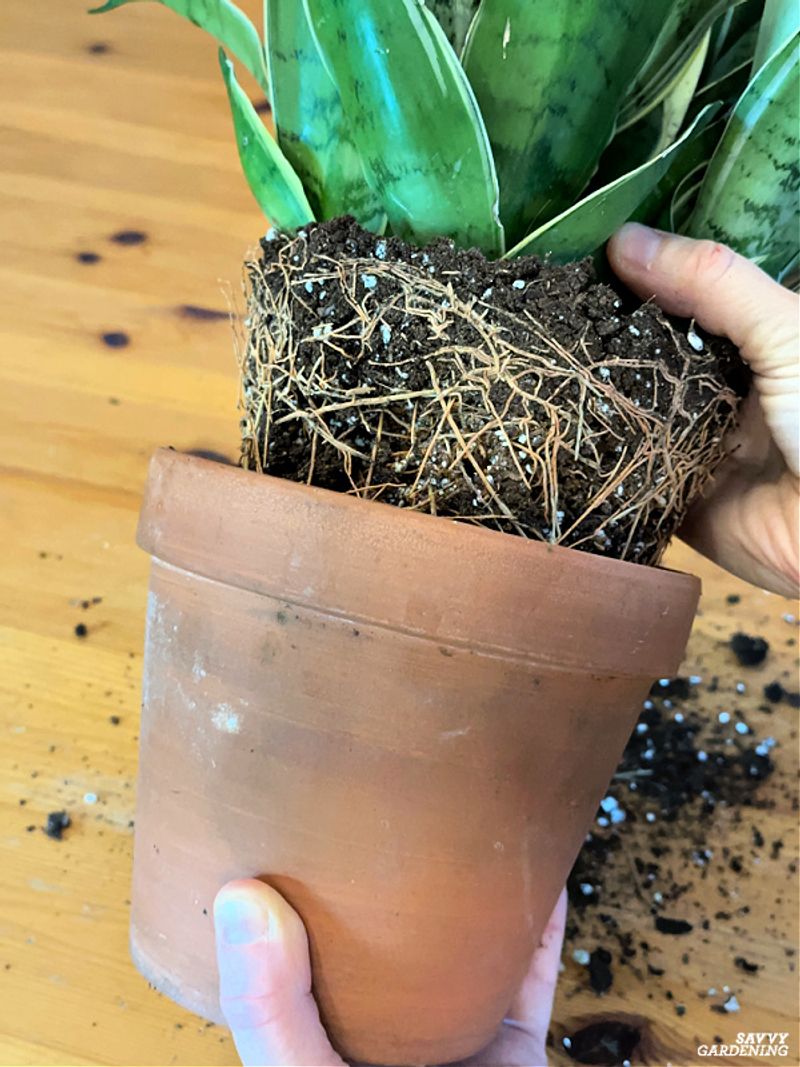
When your inspection confirms genuine crowding, with roots densely circling or filling most of the root ball, or you find damaged roots that need to be addressed, repotting becomes the right call. The goal at that point is to give the root system a modest amount of additional space without creating conditions that invite new problems.
Penn State Extension’s repotting guidance recommends choosing a container only slightly larger than the current one, typically one to two inches wider in diameter. A much larger pot holds more soil than the roots can use, and that unused soil stays wet longer, raising the risk of the same root rot you were trying to avoid. Drainage holes are non-negotiable regardless of pot size.
Soil choice matters as much as pot size. The RHS growing guide for Sansevierias recommends a loose, free-draining medium, and a cactus or succulent mix fits that description well. Standard garden soil is too dense and retains too much moisture for an indoor container. University of Minnesota Extension also reinforces the slightly-larger-pot rule, noting that excess soil volume in an oversized container contributes to waterlogging.
Routine aggressive root pruning is not necessary for a snake plant with ordinary crowding. Remove visibly dead or rotted roots if you find them, but healthy firm roots do not need to be cut back. Two safety points apply any time you are handling or dividing a snake plant: wear gloves, because the sap can irritate skin, and keep the plant out of reach of pets. ASPCA toxicity information for snake plants confirms that ingestion can cause vomiting and diarrhea in dogs and cats, so placement and handling both matter.
Use patience instead of a stronger intervention
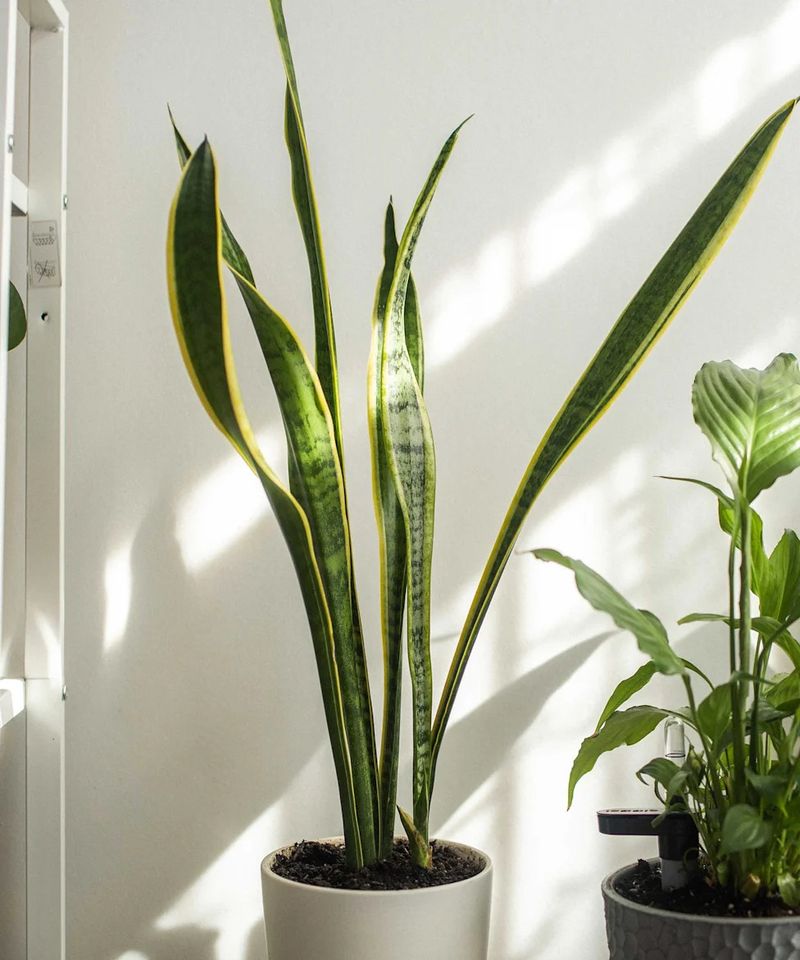
After improving light, confirming drainage, and addressing any genuine root issues, the most productive thing you can do is wait. Ask Extension’s snake plant resource is clear that these are slow-growing plants with no guaranteed timetable for producing new leaves after a change in conditions. Expecting rapid results and then reaching for fertilizer or another repot when they do not appear is one of the most common ways to overtreat a plant that was already on the right track.
Fertilizer is not the first tool to reach for when growth is slow. University of Minnesota Extension’s spring houseplant care guide notes that low-light plants need less feeding, and that overfertilizing can cause salt buildup or produce weak, stretched growth. If you do want to feed, a light, balanced houseplant fertilizer during active spring or summer growth is reasonable. Feeding a plant in dim light or during a seasonal slowdown offers little benefit and some risk.
The maintenance sequence that protects the most plants is also the simplest: keep light adequate, water when the soil has dried substantially, check that drainage is working, and monitor leaf condition over time. Penn State Extension describes the snake plant as genuinely forgiving, which means consistent moderate care outperforms repeated interventions. A plant that stays green, holds firm leaves, shows no soft tissue or foul smell, and has no corroborating root-crowding signs is telling you something useful: it is stable, and stability sometimes deserves more credit than we give it.