
12 Fast-Growing Shrubs That Fill Awkward Yard Gaps Into Full, Green Spaces Fast
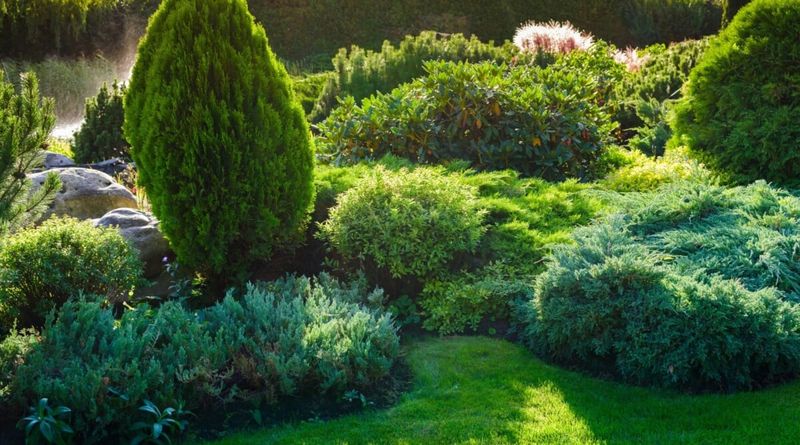
Every yard seems to have that one bare spot that just looks unfinished, whether it’s a gap along the fence, a thin corner, or a patch where an old plant gave up. The good news is you don’t have to wait years to fix it, because some shrubs grow surprisingly fast and fill in like they’ve always been there.
Picking the right one saves you money and keeps you from replanting the same empty spot over and over. Here are 12 quick-filling shrubs that turn those awkward gaps into lush, green privacy in a hurry.
1. ‘American Pillar’ Arborvitae
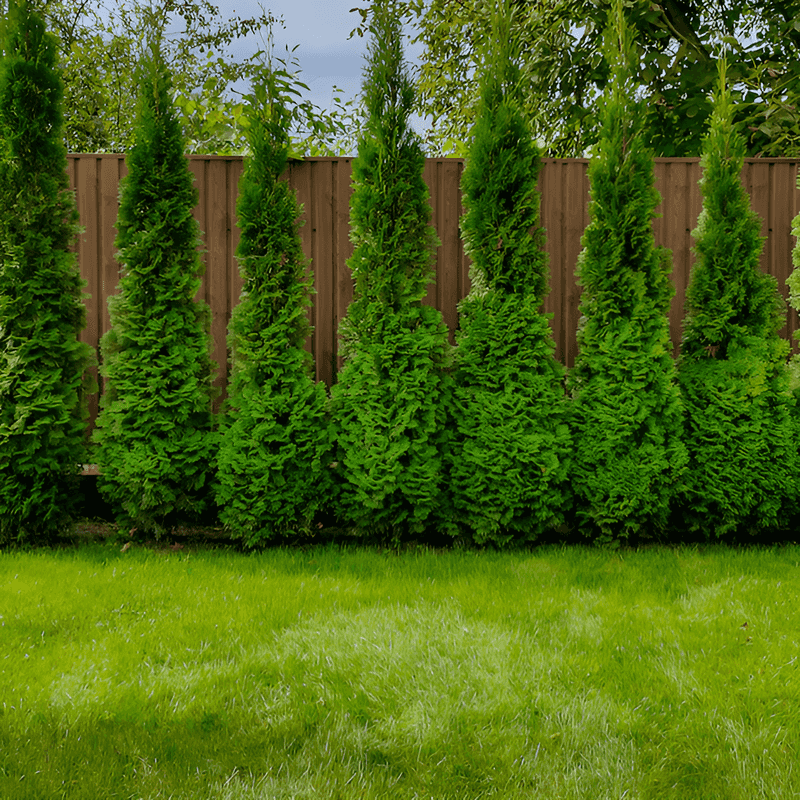
Need a living privacy fence yesterday? ‘American Pillar’ Arborvitae is about as close to instant as a plant gets, putting on up to 2 feet of new height in a single good year.
Its narrow, columnar shape is the real trick here. You can line several up shoulder to shoulder in a tight strip along a property line, and they’ll knit together into a solid green wall without eating up half your yard.
Snow-heavy winters won’t wreck it either. The branching is strong and springy, so a wet snowfall tends to bend it rather than snap it, which is a common complaint with other columnar evergreens.
Plant it where you want year-round screening and don’t want to fuss with constant shaping. It naturally holds that skinny pillar form, so pruning stays minimal even as it climbs.
2. Virescens Western Red Cedar
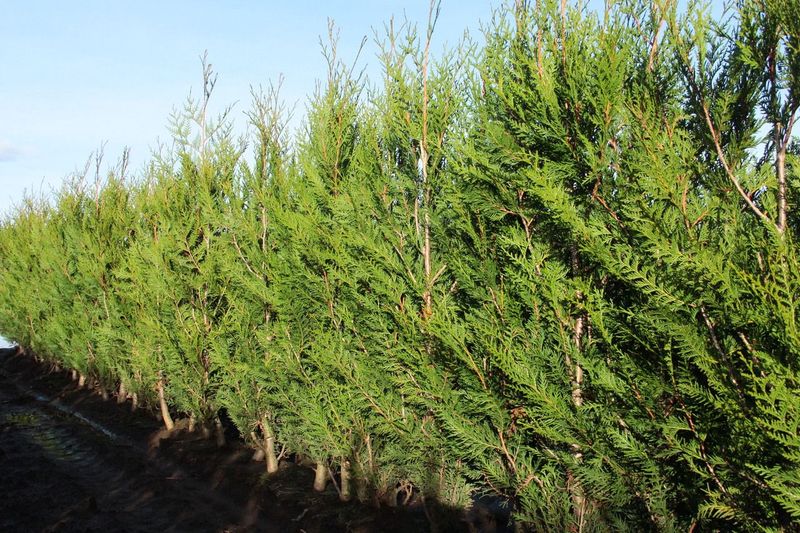
Gardeners in warmer regions who want fast height without a chunky footprint tend to fall for Virescens Western Red Cedar. It shoots upward with an upright-branching habit that naturally grows tall and slim.
What makes it a standout for gaps is how gracefully it takes to hedging. Trim it and it responds by filling in denser, so you can shape a narrow living screen exactly where a wall would feel too harsh.
The foliage carries a soft, feathery texture and a rich green color that reads lush rather than stiff. That gives a hedge some movement in the breeze instead of the flat, boxy look you sometimes get from formal evergreens.
If your awkward spot is a long, thin run between yours and a neighbor’s yard, this cedar handles that geometry beautifully. It gains height quickly while staying tidy at the base.
3. Wax Myrtle (Morella cerifera)
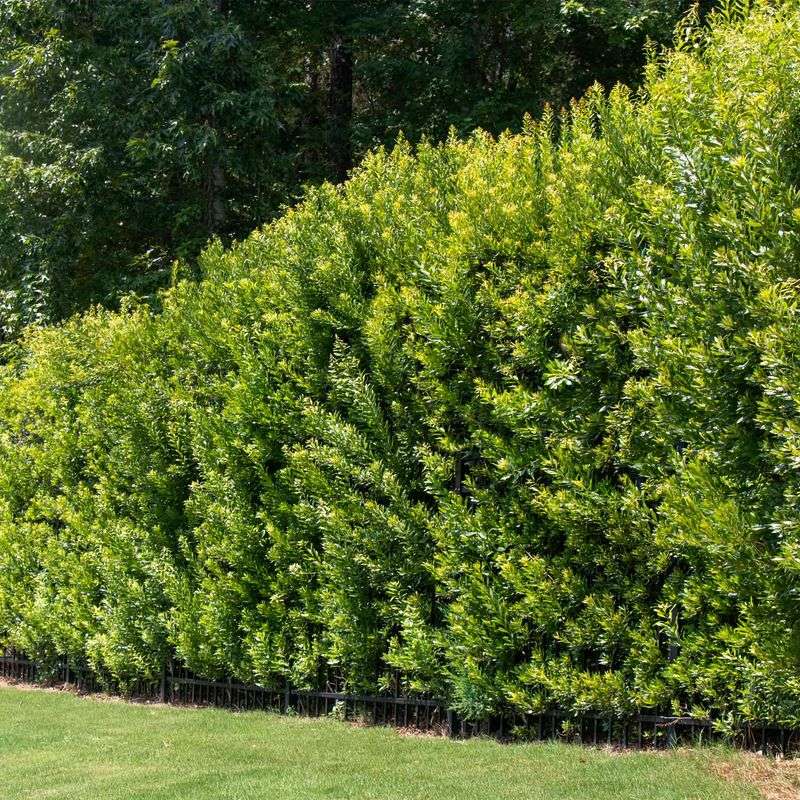
Coastal gardeners, this one’s your problem-solver. Wax Myrtle shrugs off salt spray, drought, and stubborn poor soil that would starve out fussier shrubs, which makes it a lifesaver for those tricky spots nothing else will fill.
Native to the southeastern U.S., Central America, and the Caribbean, it grows fast into a dense evergreen shrub or small tree. Brush against its leaves and you’ll catch a pleasant, spicy aroma that’s a nice bonus in a screening plant.
Its thick foliage does double duty. Along a slope or a wet, low corner, the root system helps hold soil in place and slow erosion while the top fills in as a privacy screen.
Because it tolerates so much abuse, it’s forgiving for anyone who worries about killing a new planting. Give it a spot with drainage on the rough side and it’ll reward you by thriving where you least expect it.
4. Emerald Green Arborvitae
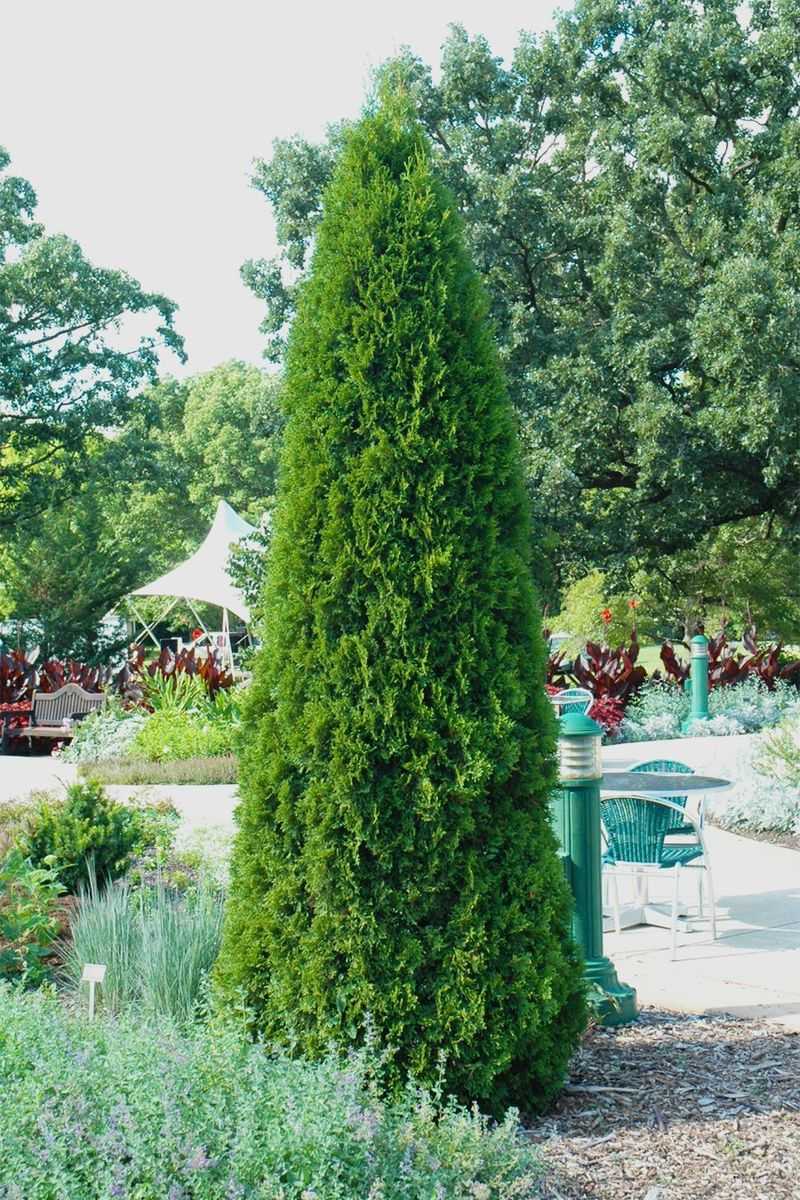
Ask ten gardeners for a reliable hedge and Emerald Green Arborvitae comes up again and again, and there’s a good reason for that popularity.
Its narrow, pyramidal shape packs a lot of foliage into a small base, so you get a tall screen without the plant sprawling into your walkway or lawn. Rows of them create that clean, uniform green wall people love for framing a yard.
The color is where it earns real loyalty. While plenty of evergreens go dull or bronze in cold weather, this one holds its bright emerald tone straight through winter, so your gap-filler still looks alive in January.
Low drama is the whole appeal. Plant it, water it while it settles in, and it does the quiet work of screening season after season with barely any shaping required.
5. Waxleaf Privet
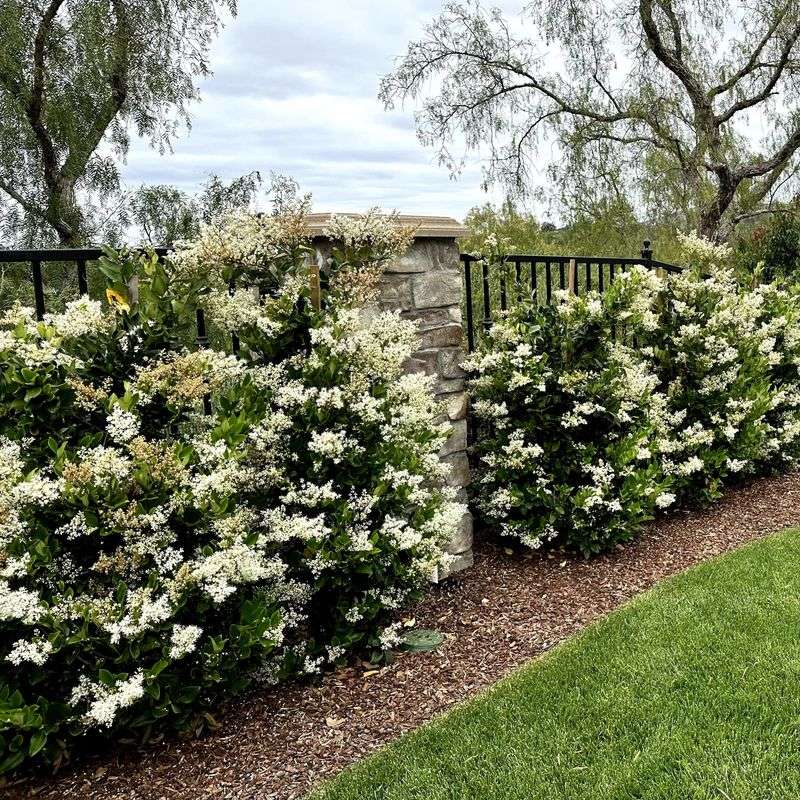
Fast, flexible, and forgiving pretty much sums up Waxleaf Privet. It races to fill space, quickly reaching around 10 feet tall and 6 feet wide, which makes short work of a big empty stretch.
Glossy green leaves give it a polished look, and it takes pruning like a champ. You can shape it into a crisp formal hedge or let it grow loose and informal as a windbreak, depending on your mood and the spot.
Spring brings a bonus most screening shrubs skip. Clusters of fragrant white blooms cover the plant, so your privacy hedge suddenly smells wonderful for a few weeks.
Suited to Zones 7 through 11, it’s a workhorse for warmer gardens. If you’ve got an awkward gap that needs to disappear fast without a lot of babying, this evergreen delivers.
6. Red Dynamo Photinia
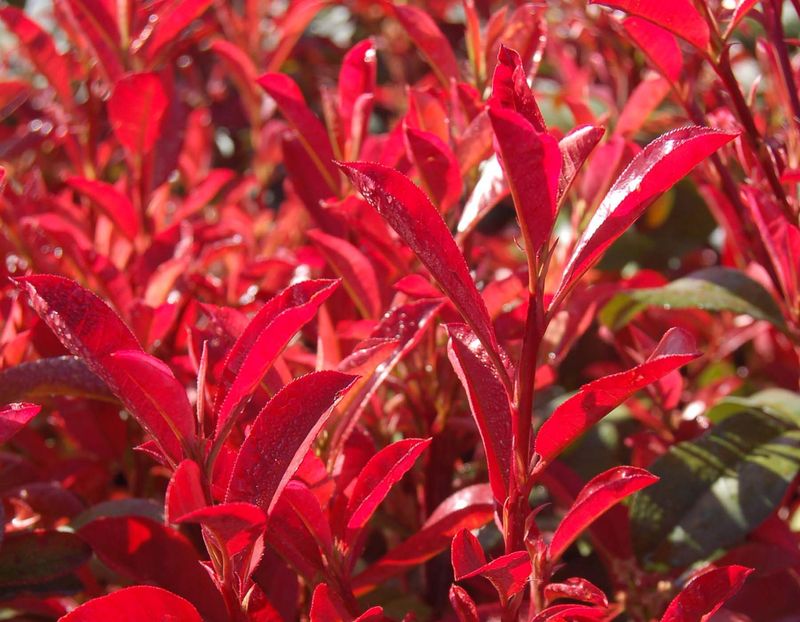
Color lovers who still want function should look hard at Red Dynamo Photinia. Its new growth emerges a lustrous burgundy-red, so the hedge practically glows every time it pushes fresh leaves.
Beyond the good looks, it’s genuinely low-maintenance. This variety resists the pests and diseases that plague some older photinias, which means less worry about spots, dieback, and the mistakes that make gardeners nervous.
It grows dense and upright in a hurry, topping out around 10 feet tall and 7 feet wide. That combination makes it a natural for a quick privacy screen in southern gardens, where it feels right at home in Zones 7 through 11.
Use it anywhere you want screening with a splash of drama. The rotating show of red-to-green foliage keeps the gap you filled from ever looking plain.
7. Abelia
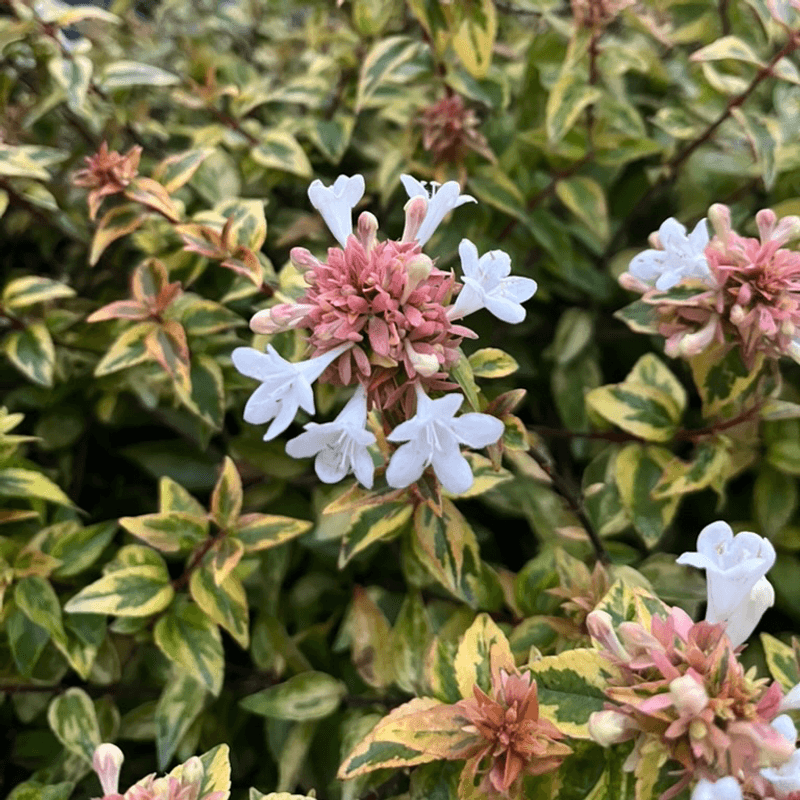
Here’s a shrub that refuses to be boring. Abelia sends out arching branches lined with dainty, bell-shaped flowers that keep coming from late spring all the way to late fall.
Its long bloom season is the headliner. While many gap-fillers give you green and nothing else, Abelia hands you months of soft color plus pollinators buzzing around, turning a dead corner into a lively one.
Variety is another selling point. Some types show off variegated leaves or brightly colored new growth, and sizes range from tidy 2-footers to nearly 10 feet tall and wide, so there’s an Abelia to match almost any gap.
Low-maintenance by nature, it doesn’t demand much once established. Pick the size that fits your space, plant it, and enjoy a shrub that earns its keep three seasons a year.
8. ‘Blue Point’ Juniper
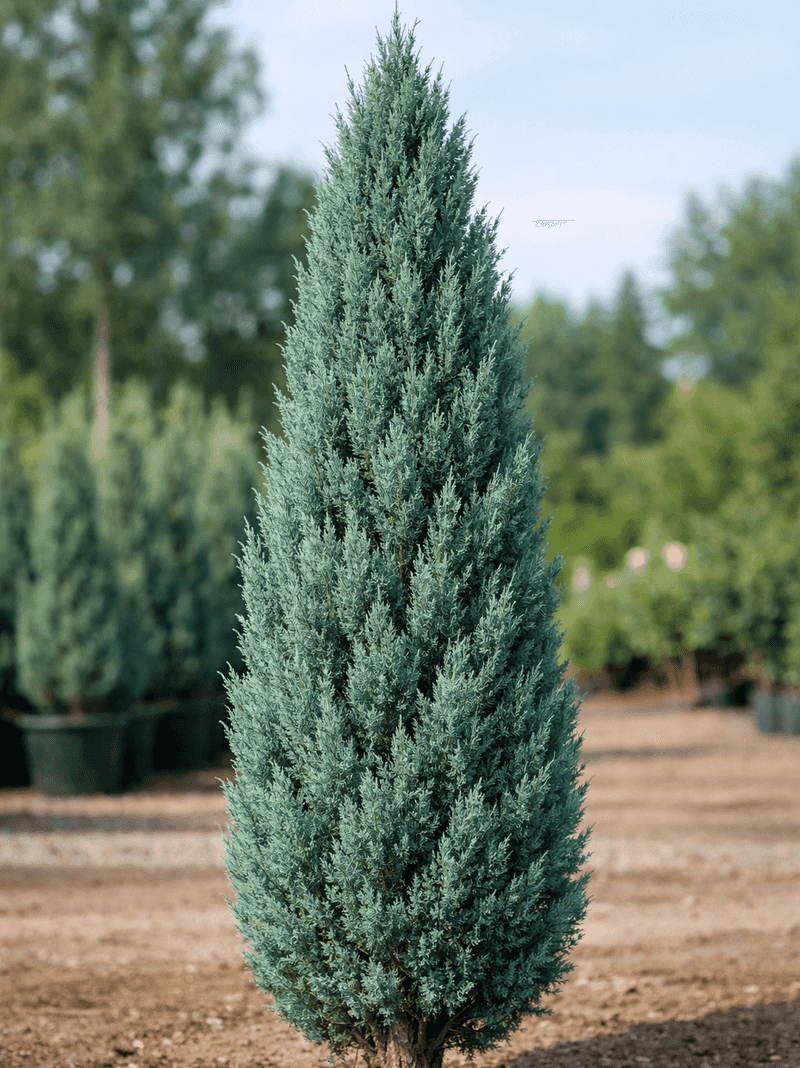
For a shrub that looks like you spent hours shaping it without lifting a single pruner, ‘Blue Point’ Juniper is hard to beat. It forms a dense, neat pyramid all on its own.
That self-tailoring habit is exactly why it slots into awkward spots so well. Reaching about 15 feet high but only 3 to 5 feet wide, it gives you real height in a narrow footprint, perfect for a slim screen or a bold specimen anchoring a corner.
The lush blue-green foliage adds a cool, slightly formal note that plays nicely in both manicured and wild, naturalistic gardens. It’s the kind of color that makes a planting look intentional.
Set one where you want structure, or line up a few for a striking living column. Either way, you get a polished evergreen without the ongoing trimming most formal shapes demand.
9. Roman Candle® Podocarpus
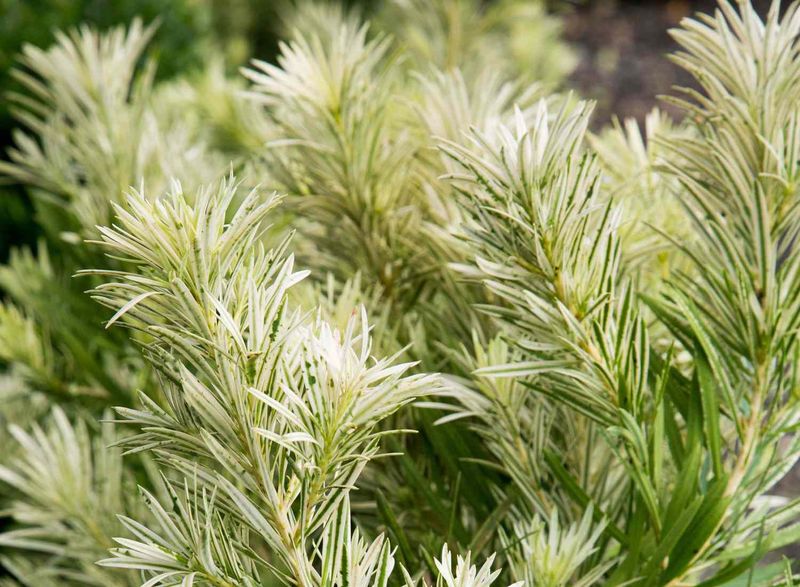
Got a hot, sunny gap that fries everything you plant there? Roman Candle® Podocarpus laughs at high heat and keeps its cool, making it a smart pick for those baking spots.
Its tall, upright profile is built for privacy, maturing to 10 to 15 feet high while staying a manageable 4 to 6 feet wide. That gives you a strong vertical screen without the plant taking over the bed.
Creamy white variegation runs through the foliage, adding a subtle glow that breaks up a wall of solid green. It’s a color accent that reads elegant rather than loud.
Deer wandering through your yard? They tend to leave this one alone.
Toss in its low-maintenance nature and suitability for Zones 7 to 10, and you’ve got a durable, good-looking answer to a stubborn gap.
10. Red Sky™ Ilex
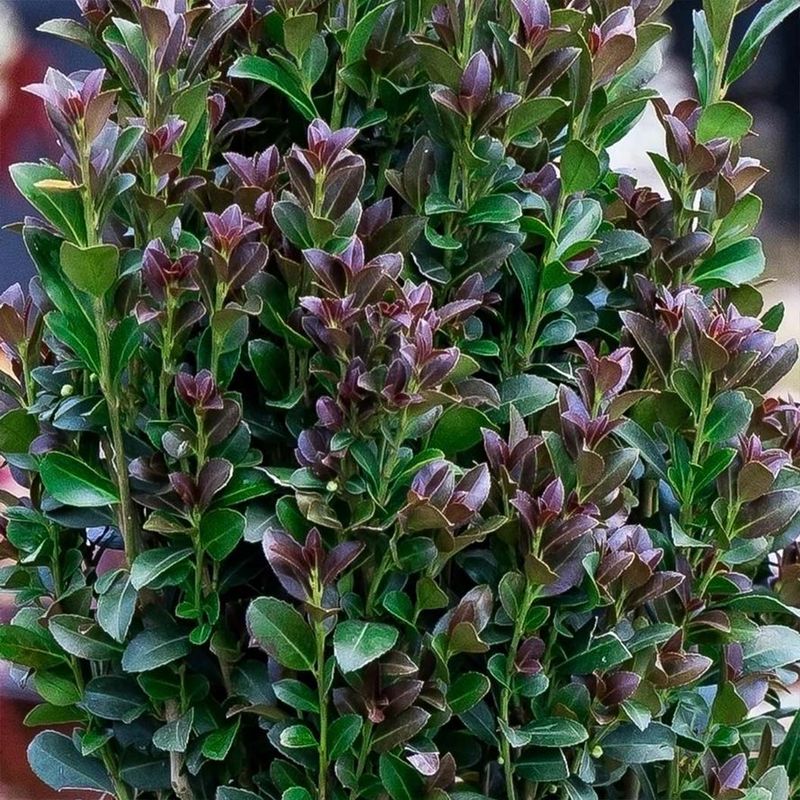
Structure with a little seasonal surprise is the pitch for Red Sky™ Ilex. This dense, upright holly relative brings clean architectural lines to a landscape that feels flat or unfinished.
Reddish new growth gives it a warm, changing look as it leafs out, and later in the season glossy black berries appear for extra interest. Birds notice those berries even when your neighbors don’t.
Its dimensions are what make it a gap specialist. Growing to about 8 feet high and just 3 feet wide, it slips into narrow slots along foundations, fences, and tight side yards where wider shrubs simply won’t fit.
Comfortable in Zones 6 to 9, it handles a broad swath of the country. Plant it where you need a slim, upright green column that still gives you something to look at through the seasons.
11. Early Bird™ Crapemyrtles (Purple, Lavender, and White)
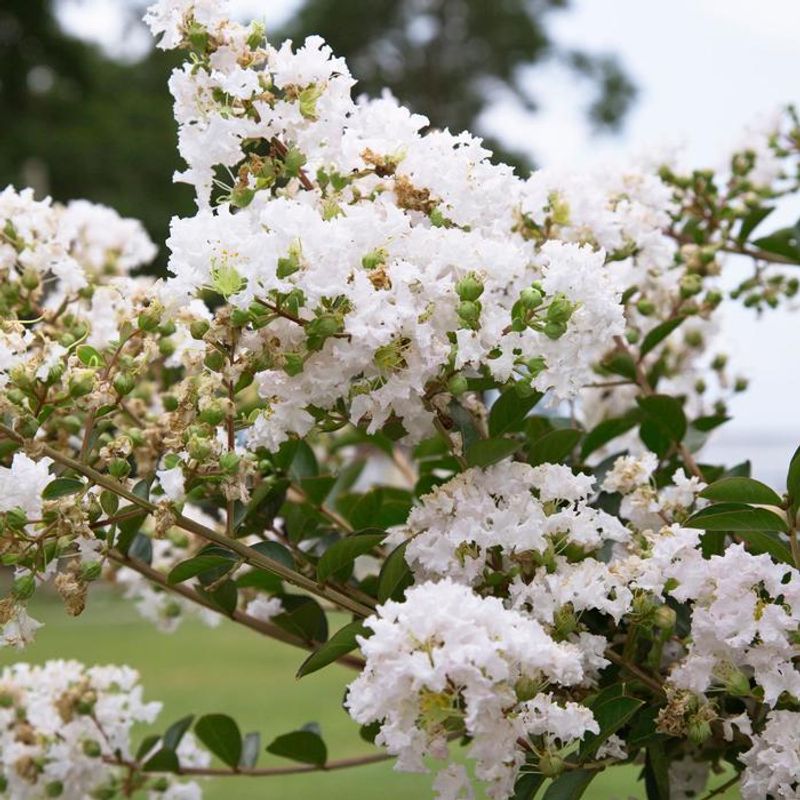
Want your gap-filler to put on a flower show that outlasts the summer? Early Bird™ Crapemyrtles bloom shockingly early, sometimes by Mother’s Day, and keep going right through fall for over 100 days of color.
Available in purple, lavender, and white, they let you match the mood of your yard or mix all three for a playful splash. That long run of blooms means a formerly boring corner stays cheerful for months.
Their compact size is a big part of the appeal. Maturing to about 6 feet tall and 3 to 4 feet wide, they tuck neatly into small garden pockets where a full-size crapemyrtle would overwhelm the space.
Well-suited to Zones 7 to 10, they thrive in warm gardens with plenty of sun. If you’d rather fill a gap with flowers than a plain green screen, these compact bloomers are made for the job.
12. Bonsai Blue Jacaranda
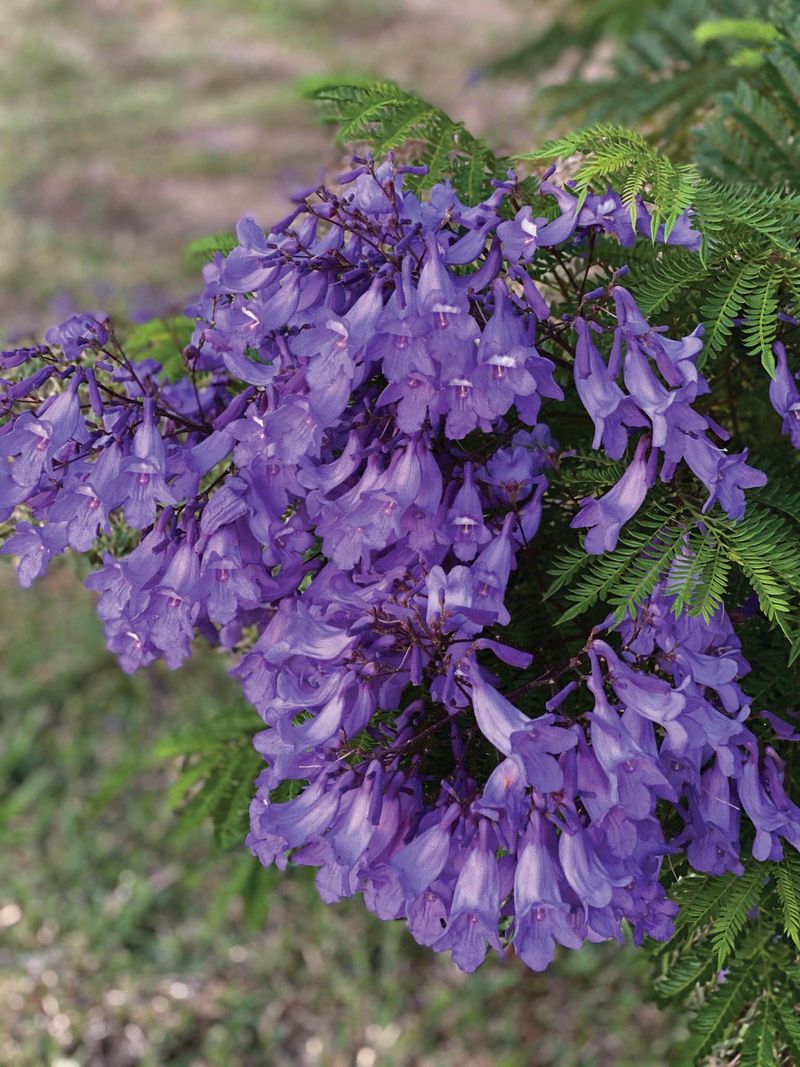
Saving a showstopper for last, Bonsai Blue Jacaranda drapes itself in clusters of rich purple flowers that stop passersby in their tracks.
Don’t let the delicate blooms fool you into thinking it’s fragile. Once established, this dwarf variety takes heat and drought in stride, making it a bold choice for a sunny, dry gap that needs personality.
Fast is the operative word here. It can climb to about 12 feet tall and 8 feet wide in short order, filling a wide open space with lush, ferny foliage and those unforgettable purple blossoms.
Fun fact: full-size jacarandas are famous for carpeting whole streets in purple, and this compact version brings that same drama down to backyard scale. In Zones 9 to 11, it’s a fast, flowering way to make an empty spot the star of the yard.