
14 Drought-Tough Plants That Shrug Off Blazing Summer Days (And 5 That Can’t Keep Up)
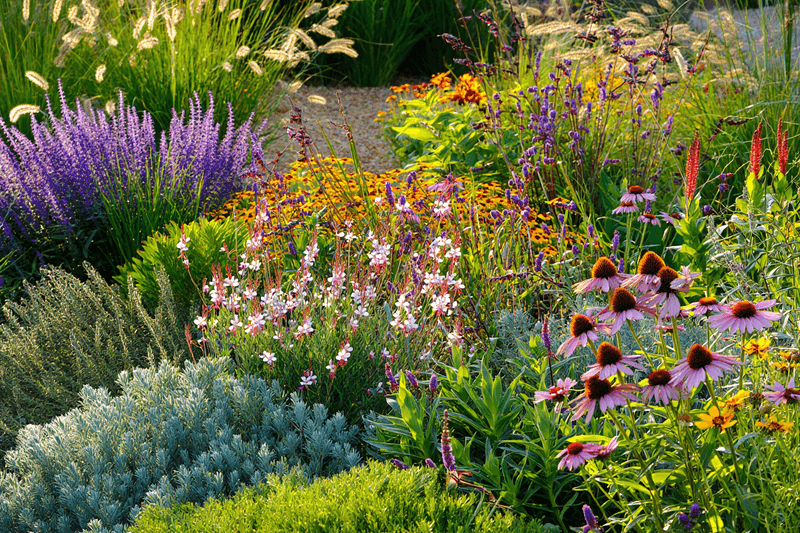
Summer heat can turn a healthy garden into a stressed-out patch of brown and crispy leaves almost overnight. The good news is that some plants barely notice a heatwave, while others need a little extra help to survive the hottest weeks.
Below you’ll find 14 tough plants that keep going strong when the sun is relentless, plus 5 popular favorites that tend to struggle (with easy fixes so you don’t lose them). Whether you want to plant something new or rescue something you already love, there’s a spot on this list for you.
1. Lavender (Lavandula spp.)
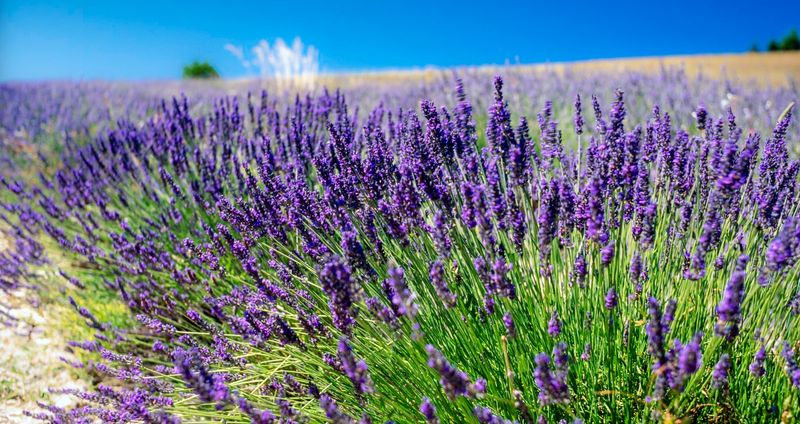
Few plants make drought look as good as lavender does. Those fragrant purple spikes wave happily in full sun while thirstier neighbors droop, and the plant actually rewards you for holding back on water and fertilizer.
The secret lies in its Mediterranean roots. Lavender evolved on dry, rocky hillsides, so it wants sharp drainage and plenty of light more than it wants pampering.
Overwatering is the fastest way to kill it, which makes it perfect for gardeners who forget to reach for the hose.
Once established, a lavender plant hums with bees and butterflies all summer long. Snip a few stems for your kitchen and the plant just keeps producing more, no coddling required.
2. Coneflower (Echinacea)
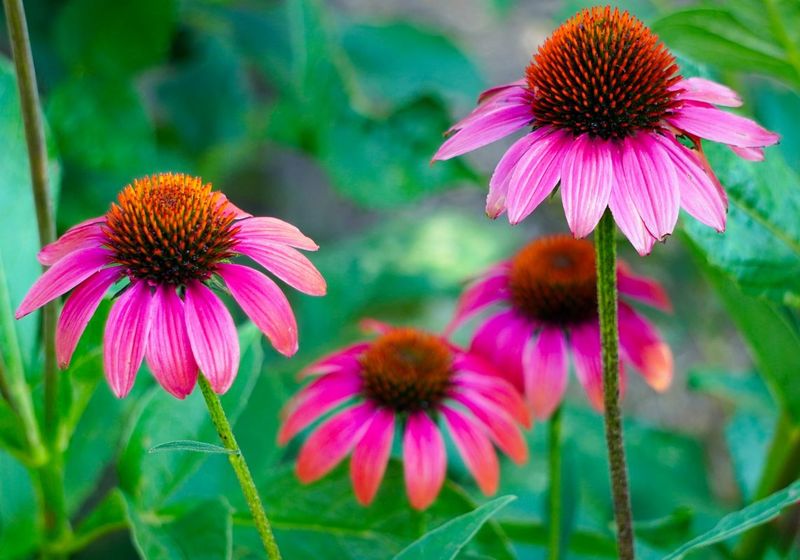
Bold, cheerful, and impossible to discourage, coneflowers bloom their way straight through summer’s worst days. The pink and purple daisy-like flowers stand tall on sturdy stems even when the soil bakes hard.
What sets Echinacea apart is its willingness to grow where fussier perennials sulk. Heavy clay soil?
Long dry spells? No problem.
These prairie natives have deep roots that pull moisture from far below the surface.
Pollinators adore them, and if you leave the seed heads standing into fall, goldfinches will show up for a snack. You get color from summer into autumn with almost no effort on your part.
3. Black-Eyed Susan (Rudbeckia)
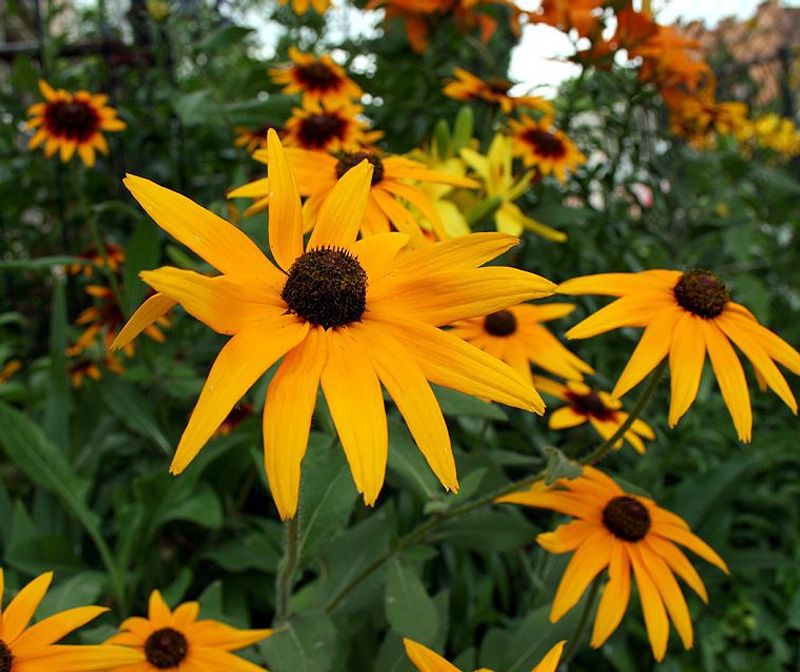
Bright golden petals ringing a dark chocolate center make black-eyed Susans one of the most recognizable flowers in the summer garden. They arrive in midsummer and keep the show going until the first frost.
Heat and drought barely register with these plants. While other blooms fade in a dry August, Rudbeckia holds its color and shrugs off conditions that would flatten more delicate flowers.
They also spread happily on their own, filling gaps and giving you more plants for free. For a low-maintenance splash of sunshine in a tough spot, few flowers deliver like this one.
4. Russian Sage (Perovskia atriplicifolia)
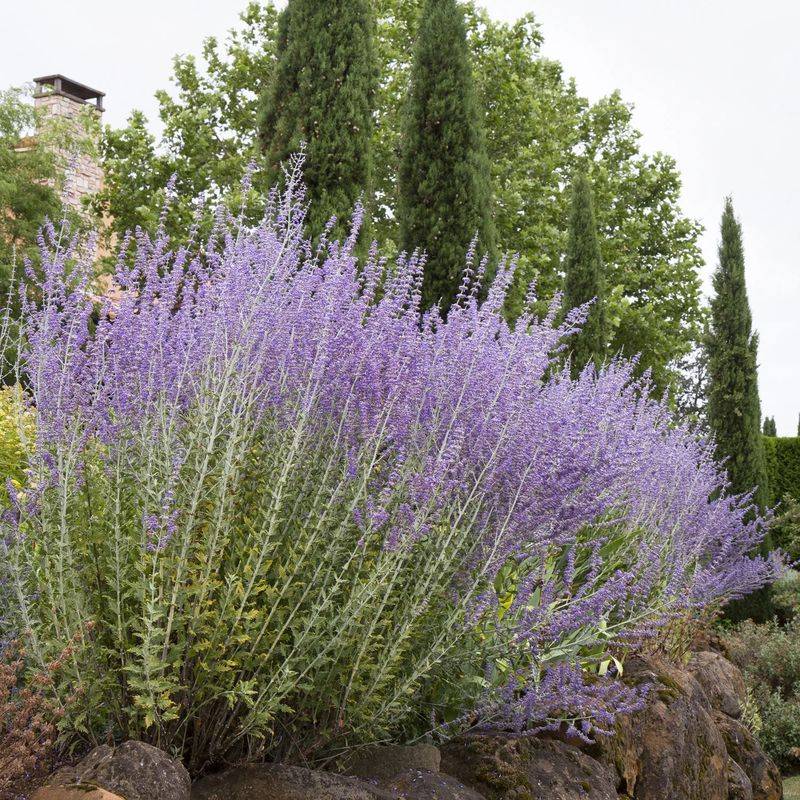
Imagine a soft cloud of lavender-blue flowers floating above silvery stems, and you have Russian sage. It brings a hazy, romantic texture to the garden that most drought-tough plants can’t match.
Blazing heat is exactly where this plant shines. The silvery foliage reflects harsh sunlight and reduces water loss, so Russian sage keeps blooming for weeks while temperatures climb.
Deer tend to walk right past it, and its airy form softens stiff garden beds beautifully. Plant it once in a hot, sunny corner and it becomes a dependable summer anchor you rarely have to think about.
5. Sedum (Stonecrop)
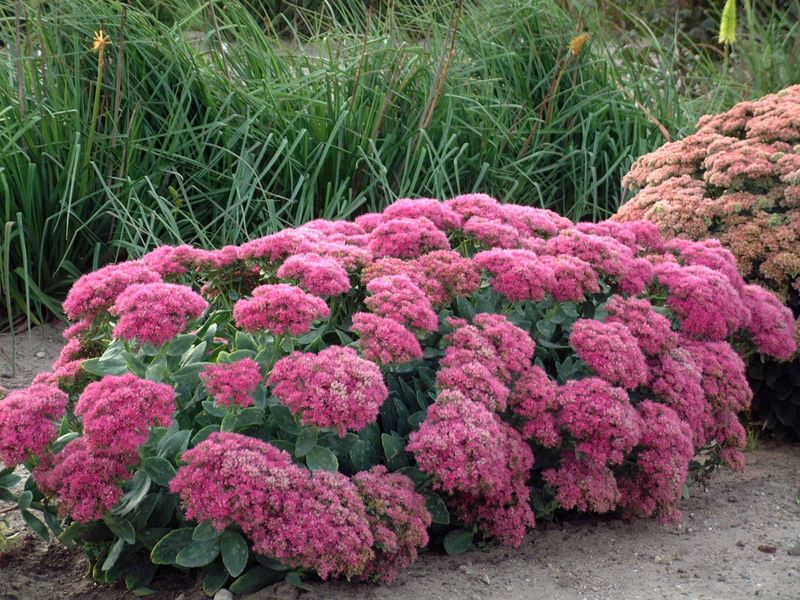
Here’s a plant that carries its own water supply. Sedum stores moisture inside thick, fleshy leaves, so it stays plump and healthy long after nearby plants have wilted into sad little heaps.
Its succulent design makes it a natural fit for rock gardens, sunny slopes, and dry spots where nothing else wants to grow. The architectural leaves look good all season, then upright varieties top off with rosy flower clusters that catch the eye in fall.
Fun bit of trivia: bees and butterflies flock to those late blooms right when other food sources are drying up. Sedum basically asks for nothing and gives back generously.
6. Yarrow (Achillea)
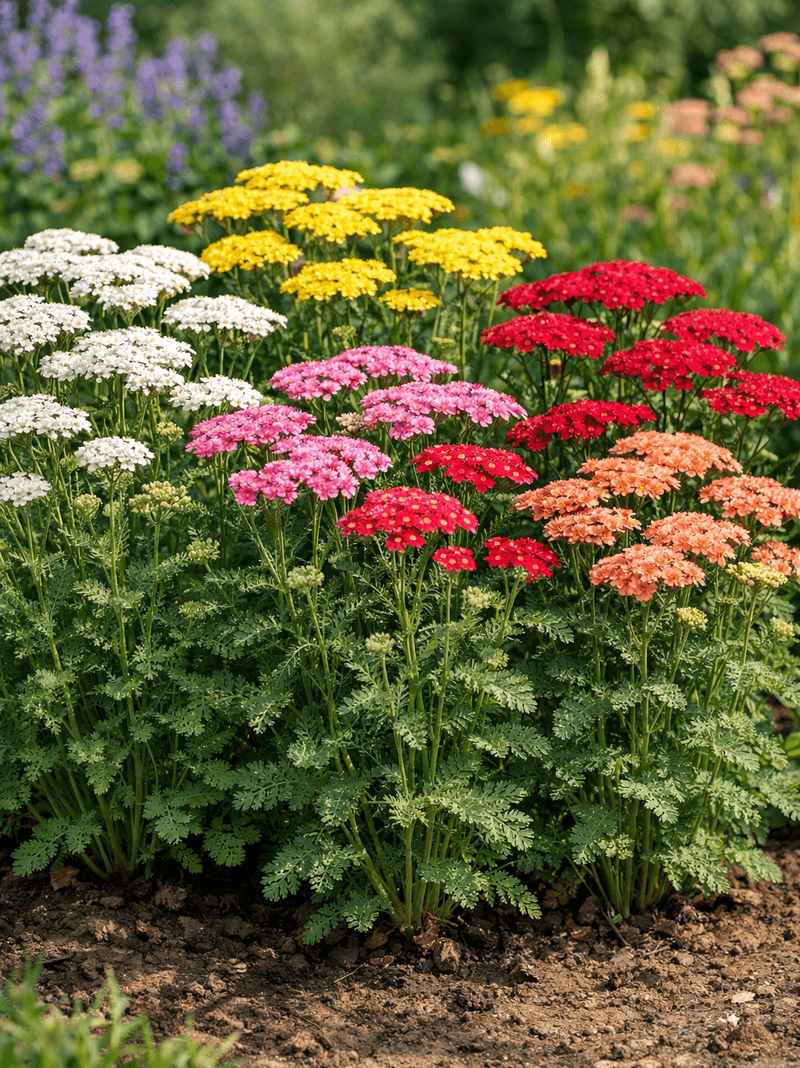
Feathery, fern-like leaves and flat clusters of tiny flowers give yarrow a delicate look that hides a surprisingly tough personality. Heat and drought simply don’t faze it.
Yarrow naturalizes with ease, spreading gently to fill space and reward pollinators with a steady buffet. Bees, butterflies, and beneficial insects all show up, while deer and rabbits usually leave it alone.
Available in warm yellows, soft pinks, and creamy whites, it fits almost any color scheme. For a pollinator-friendly plant that laughs off dry weather, yarrow earns its spot easily.
7. Lantana
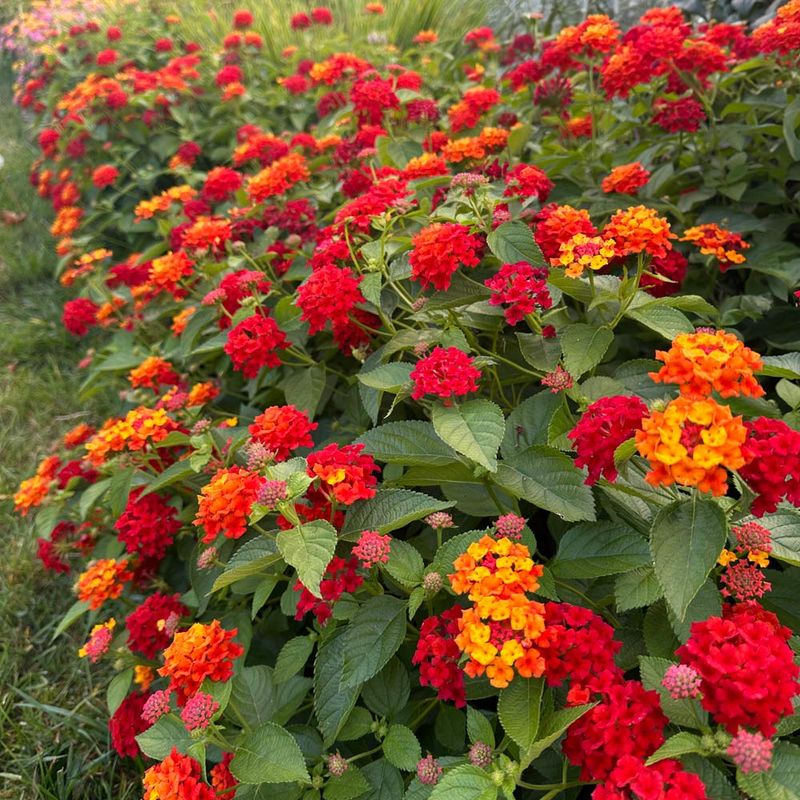
Talk about a nonstop bloomer. Lantana keeps pushing out clusters of tiny multicolored flowers from spring all the way to fall, even when water is scarce and the sun is punishing.
The color combinations are half the fun. Single clusters often blend orange, pink, yellow, and red, and butterflies can’t resist them.
In hot climates this plant becomes a reliable magnet for winged visitors all season.
Because it thrives on neglect, lantana is a smart pick for that scorching spot by the driveway or mailbox where nothing else survives. Less water, more flowers, happy gardener.
8. Arkansas Blue Star (Amsonia hubrichtii)
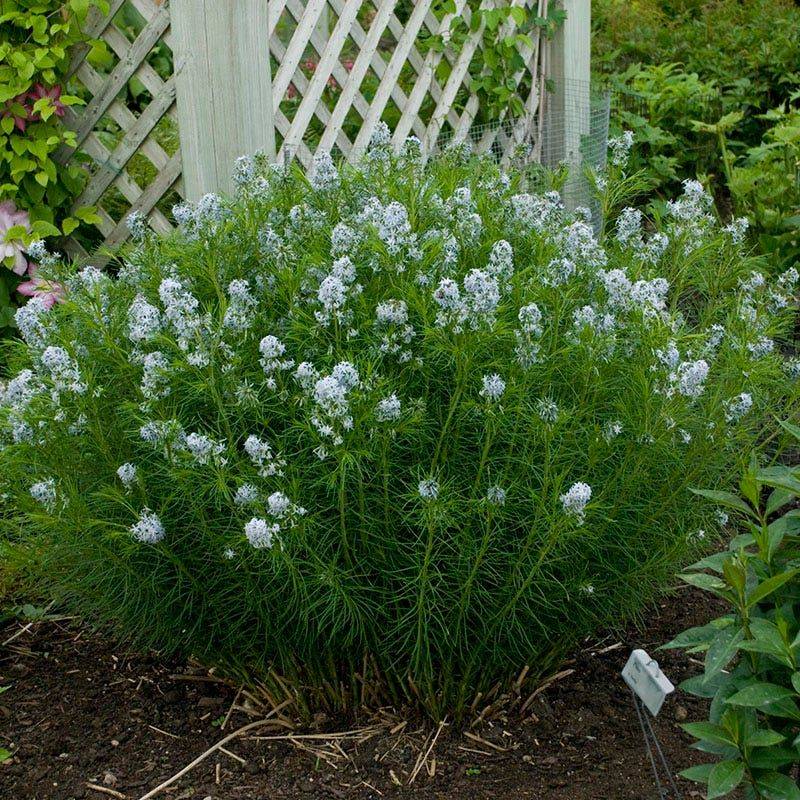
A native of Arkansas with a real talent for handling summer heat, Amsonia hubrichtii offers something a little different from the usual drought crowd. Soft, needle-shaped leaves give it a fine, feathery texture that stands out in any bed.
Light blue, star-shaped flowers open in late spring, but the real magic comes later. When autumn arrives, the whole plant turns a brilliant gold that glows in the fall light like a small bonfire.
Two seasons of interest from one tough, low-care plant make Arkansas blue star a quiet overachiever. It handles the heat without complaint and saves a showstopper finale for fall.
9. Shasta Daisy (Leucanthemum)
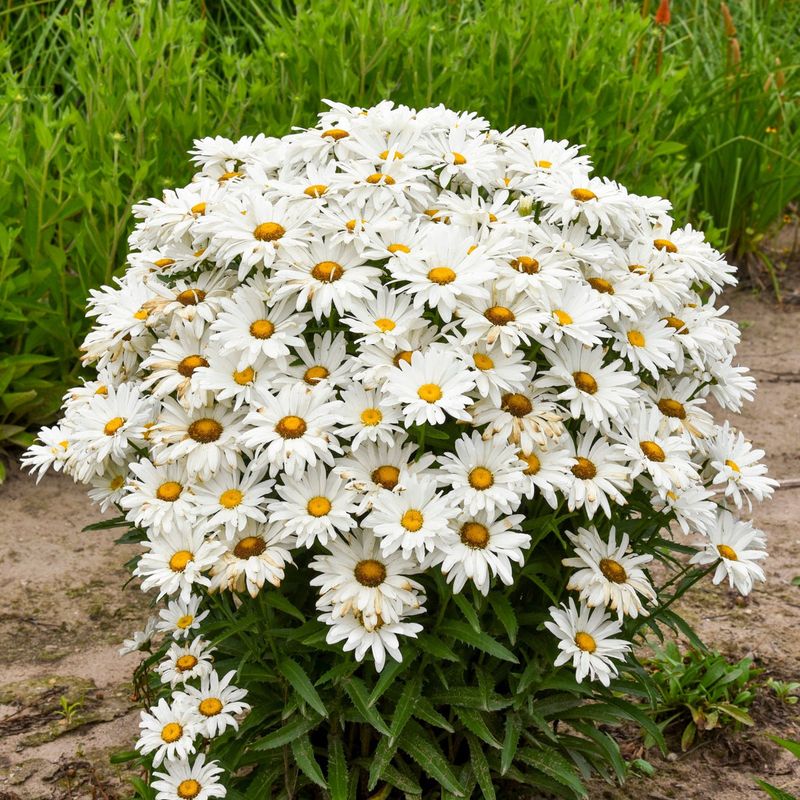
Crisp white petals around a sunny yellow eye, that’s the classic look of a Shasta daisy, and it’s every bit as cheerful in a dry garden as it sounds. The bright blooms rise above tidy green foliage in generous numbers.
What makes them so handy is versatility. You can find tall varieties for the back of a border or compact types for edging and containers, all with the same easygoing attitude toward heat.
They also make excellent cut flowers, so a few stems bring that fresh-picked look indoors. Dependable, sunny, and forgiving, Shasta daisies fit almost any summer garden.
10. Penstemon (Beardtongue)
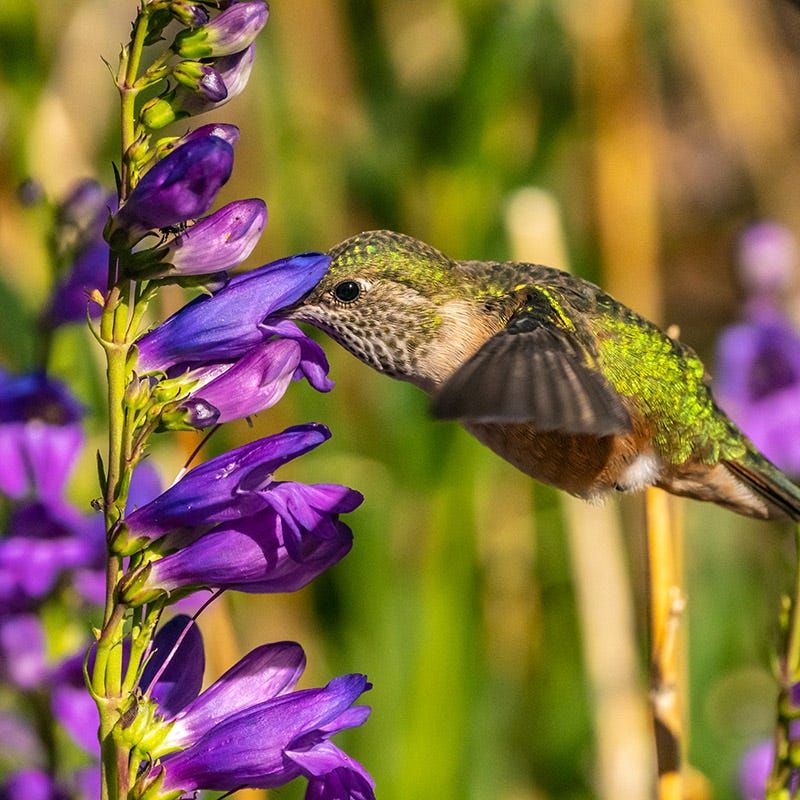
Hummingbirds have a favorite, and it might just be penstemon. Varieties like ‘Midnight Masquerade’ pair deep purple foliage with darker purple, tubular flowers that both bees and hummingbirds line up to visit.
Native to prairies, this plant is built for hot, dry conditions. It thrives where the soil drains fast and the sun beats down, asking for very little water once its roots settle in.
The rich, moody foliage gives it standout appeal even between bloom cycles. If you want to invite pollinators while surviving a drought, beardtongue does both jobs with style.
11. Rose of Sharon (Hibiscus syriacus)
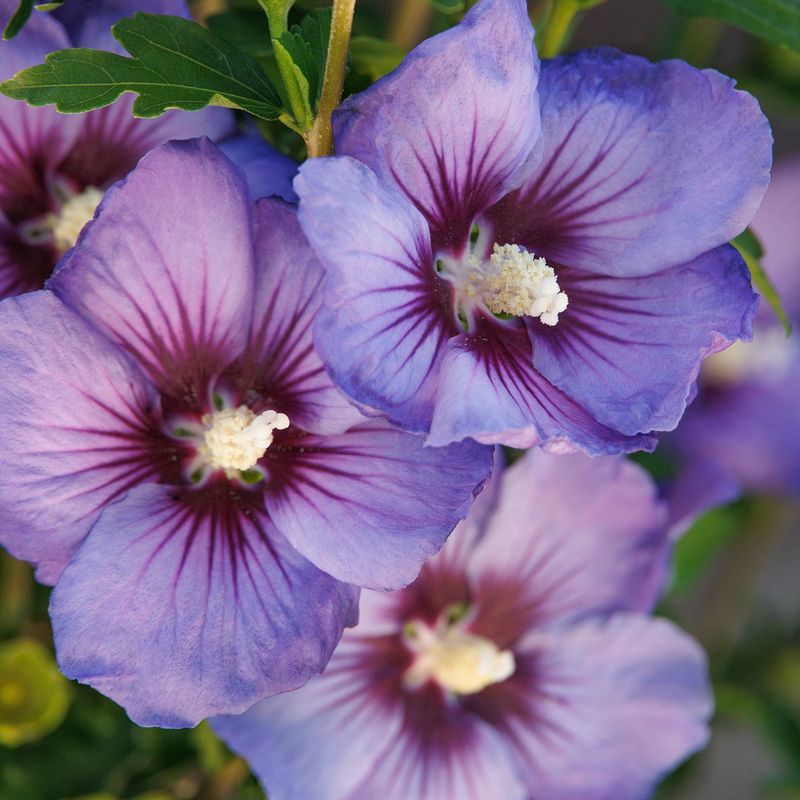
When most summer flowers are winding down, Rose of Sharon is just getting started. This tough shrub bursts into bloom in late summer and fall, filling the late-season gap with big, showy hibiscus-style flowers.
Heat, dry spells, and poor soil don’t scare it off. Newer varieties in particular tolerate hot, dry climates and still deliver an impressive flush of color when you need it most.
Because it grows tall and full, it doubles as a living privacy screen or a bold focal point. For late-season drama that survives the heat, this shrub is hard to beat.
12. Ornamental Grasses (Little Bluestem, Switchgrass)
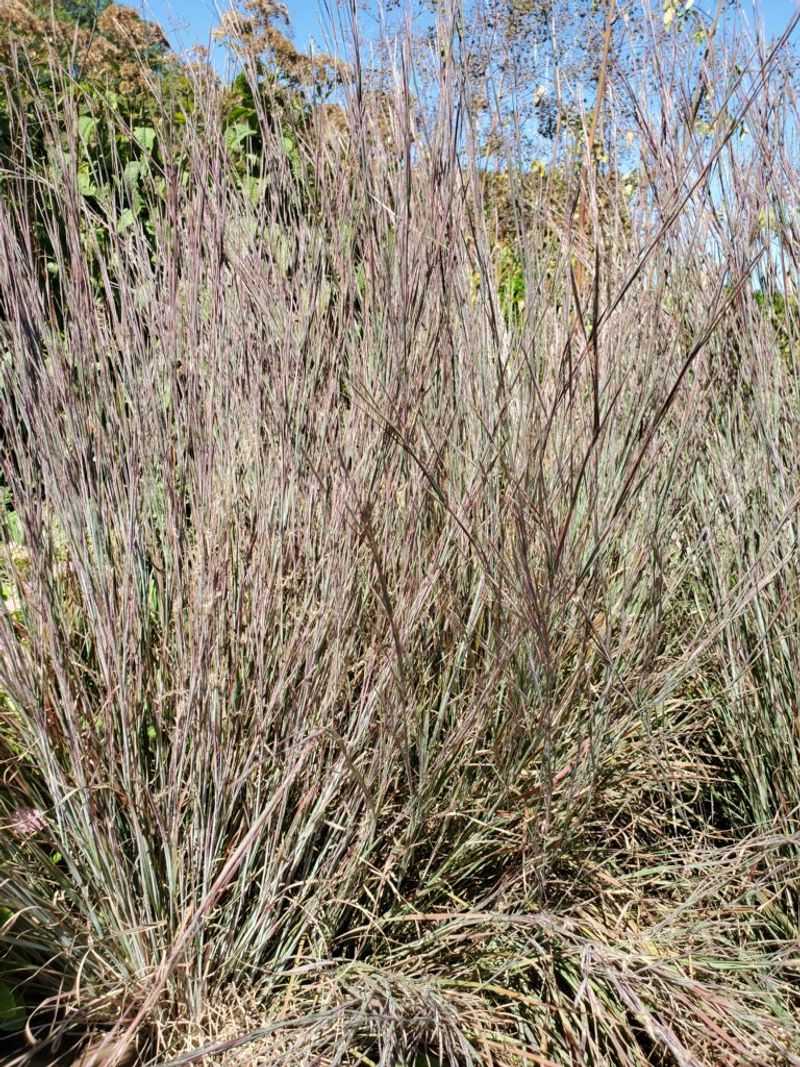
Movement, texture, and toughness all in one, ornamental grasses like little bluestem and switchgrass bring a whole different feel to the drought garden. They sway in the slightest breeze and glow when backlit by the sun.
Prairie plants at heart, they flourish in full sun, poor soil, and hot, dry weather without any extra fertilizer. In fact, feeding them too much just makes them flop.
Many turn gorgeous shades of copper, gold, and burgundy as fall approaches, and their seed heads feed birds through winter. As dependable xeriscape workhorses, they earn their keep year-round.
13. Texas Sage (Leucophyllum species)
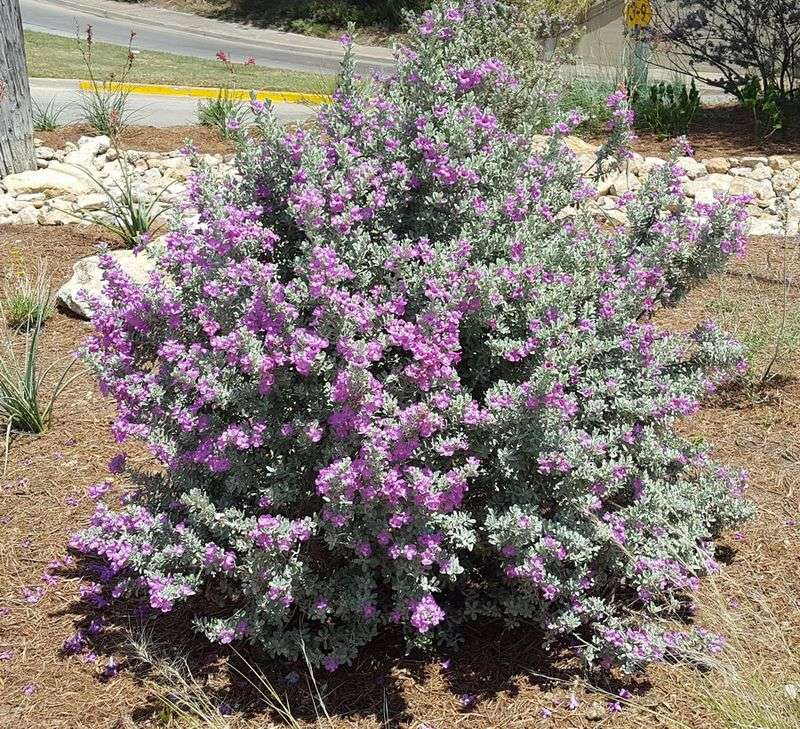
Built for the desert, Texas sage handles blazing heat and dry soil like it was made for exactly this challenge, because it was. This evergreen shrub hails from arid regions and stays silvery-green even in punishing sun.
Its party trick is timing. After a burst of humidity or rain, the whole plant erupts in prolific violet blooms, earning it the nickname barometer bush.
Adaptable across the Southwest and even into the Pacific Northwest, it works as a hedge, a filler, or a standout specimen. For hot, water-starved yards, few shrubs are as at home.
14. Creeping Thyme (Thymus serpyllum)
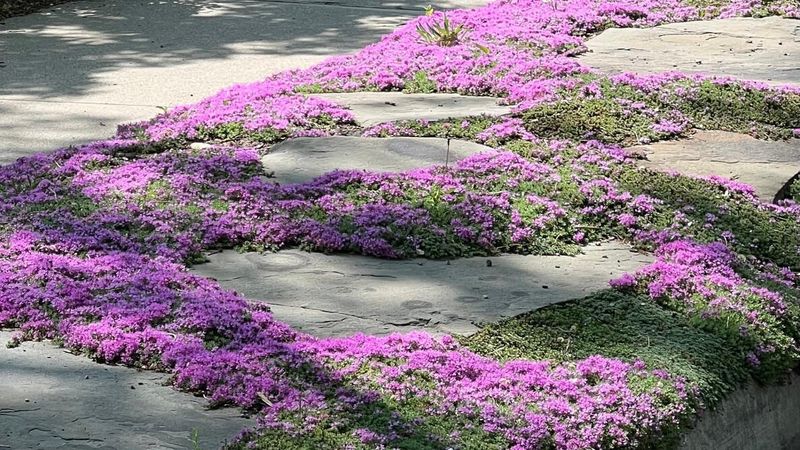
Low, spreading, and covered in tiny flowers, creeping thyme carpets the ground in a fragrant mat of purple and pink. Step on it and you’re rewarded with a wonderful herbal scent.
A deep root system lets it thrive in dry soils where turf grass would give up. It fills the cracks between pavers, tumbles over walls, and smothers weeds while it spreads, all without needing much water.
Bees love the blooms, and you get a soft, walkable ground cover that shrugs off the heat. As a tough alternative to thirsty lawns, creeping thyme is a clever choice.
15. Hydrangeas (The Wilters)
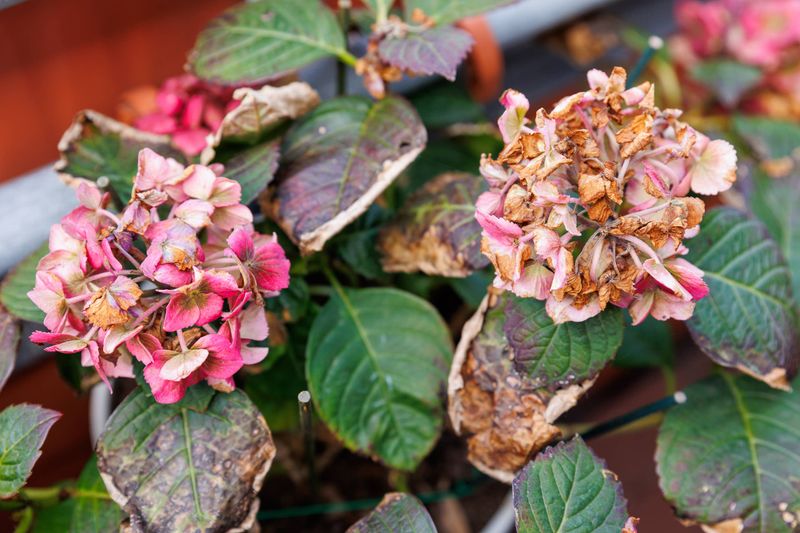
Now we turn to the plants that struggle, and hydrangeas top that list for good reason. On the hottest afternoons, their big leaves and flower heads flop dramatically, and older leaves may yellow or develop brown, crispy edges as the sun scorches them.
Hydrangeas come from woodlands and forests, so intense sun and rapid water loss go against everything they’re built for. Those large, thin leaves lose moisture fast, and shallow roots dry out quickly in hot surface soil.
The rescue is straightforward. Water deeply and evenly whenever the top inch of soil feels dry, then spread mulch around the base to hold moisture and cool the roots.
Give plants in harsh sun some afternoon shade, move potted hydrangeas somewhere shadier during heatwaves, and skip pruning until the heat breaks. Consistent moisture is the real key to keeping them happy.
16. Tomatoes (The Fruit-Droppers)
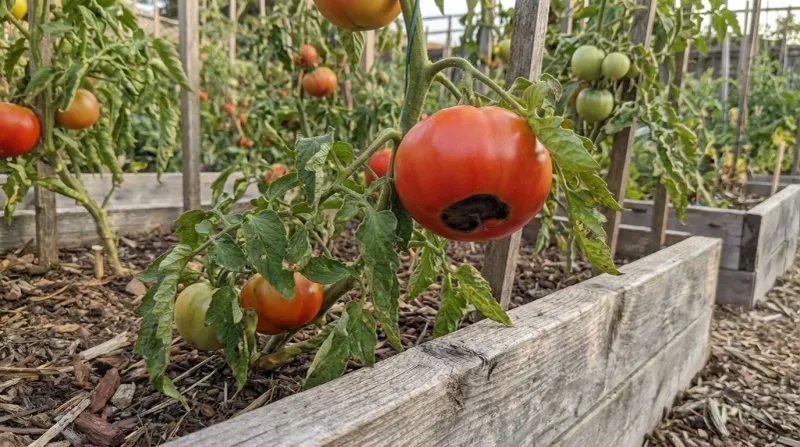
Every backyard gardener knows the frustration of a tomato plant that flowers beautifully, then drops those flowers without setting a single fruit. Extreme heat is often the culprit, along with sunscald patches on fruit, uneven ripening, and blossom-end rot.
Tomatoes grow best between 68 and 86 degrees Fahrenheit. Above 86 their growth slows way down, and above 104 it basically stops, which is why a heatwave can bring your harvest to a halt.
To help them cope, choose heat-tolerant varieties and stagger plantings so not everything peaks in the worst heat. Provide afternoon shade, go easy on pruning so the leaf canopy shields the fruit from sunscald, and water deeply and consistently to prevent blossom-end rot.
A light-colored mulch cools the soil and holds moisture, and cutting back on late-season nitrogen helps fruit ripen instead of stalling.
17. Petunias (The Deceptive Wilters)
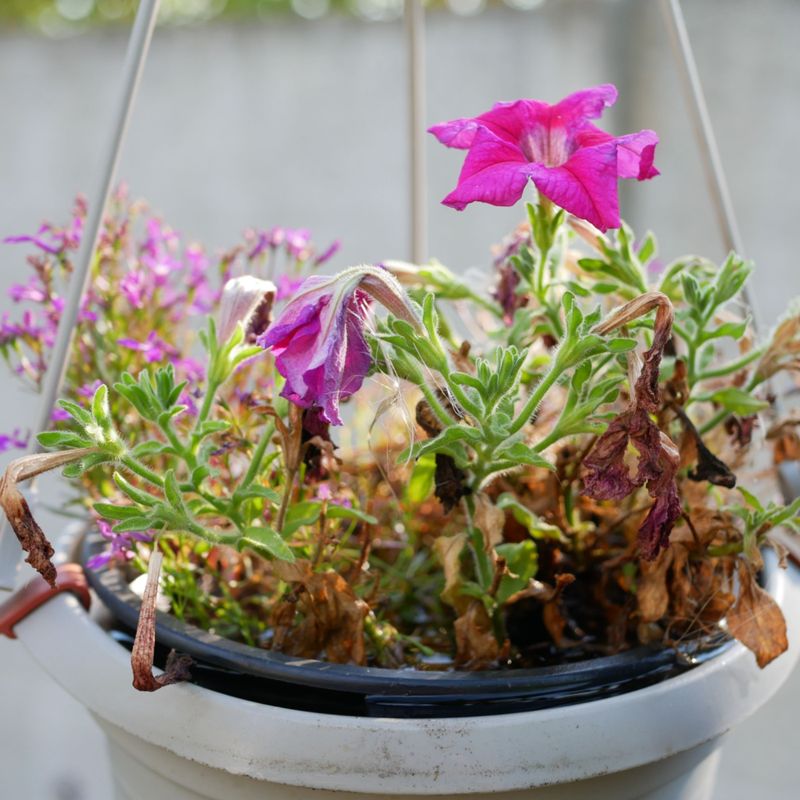
Petunias can play tricks on you. They wilt in the heat even when the soil is perfectly moist, because closing their pores is actually a survival tactic, not a cry for more water.
Watering a wilting petunia that already has damp soil can suffocate the roots and make things worse. Leggy stems, fewer flowers, and yellowing leaves can also creep in when the plant is stressed by heat or overwatering.
Before you grab the hose, check the soil about two inches down. If it’s still moist, hold off.
A light misting at dawn helps with heat defense, and temporary shade between roughly 1 and 4 PM during extreme heat gives them a break. Make sure containers drain well, water hanging baskets more often since their small root zone dries out fast, and deadhead spent blooms to keep new flowers coming.
18. Clematis (The Tired Climber)
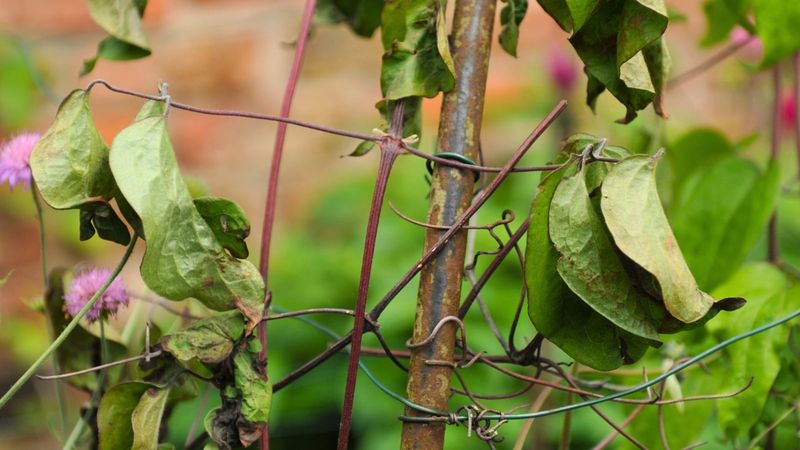
A clematis vine in trouble looks weary. During the hottest stretch of summer it may wilt, its leaves turning yellow, brown, or crunchy as its roots battle to keep up with the heat.
These climbers simply don’t handle drought well. Their roots crave steady moisture, and once they dry out the whole vine starts to sag and struggle.
Rescue starts underground. Water deeply and slowly when the soil is dry below the surface so moisture reaches the roots and encourages them to grow deeper.
Mulch around the base with organic material to keep those roots cool and shaded, leaving a small gap around the stems. Water early in the morning, avoid splashing the foliage, hold off on fertilizer while the plant is stressed, and only trim clearly dead stems rather than hard-pruning a heat-weakened vine.
19. Geraniums (The Heat-Curlers)
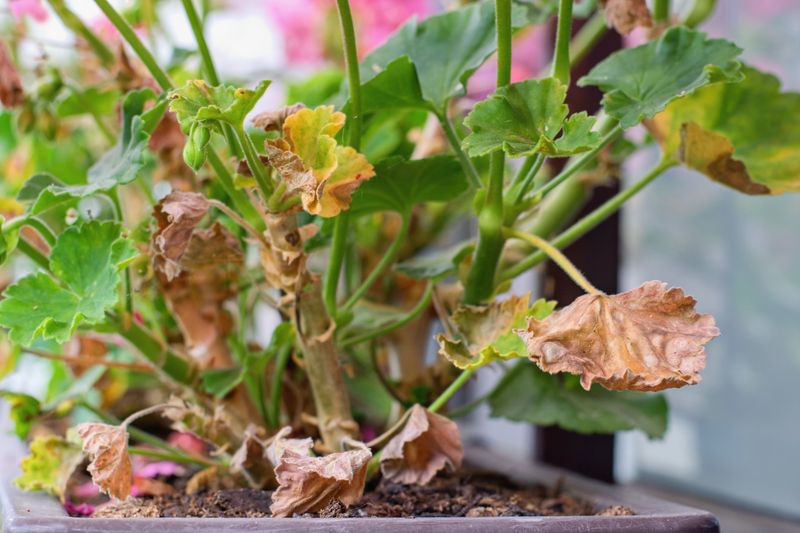
When your geraniums start curling their leaves inward and dropping their lower foliage to yellow, heat stress is usually the reason. Brown crispy leaf margins, fewer blooms, and wilting even in moist soil all point to a plant that’s overheating.
Geraniums feel the strain once temperatures climb past 85 degrees Fahrenheit, and potted plants suffer most because their shallow roots dry out fast in the sun.
Give them relief by moving containers to a spot with morning sun and afternoon shade. Water deeply at dawn with room-temperature water, waiting until the top inch and a half of soil feels dry before watering again, and add mulch to hold moisture.
Trim only fully brown, brittle leaves and spent flower stems, leaving healthy green growth alone. Quality potting soil that drains well, a self-watering planter or drip line, and a bit of shade cloth can all help geraniums push through the worst of the heat.