
26 Clematis Varieties You’ll Regret Planting (And How To Keep The Aggressive Ones In Check)
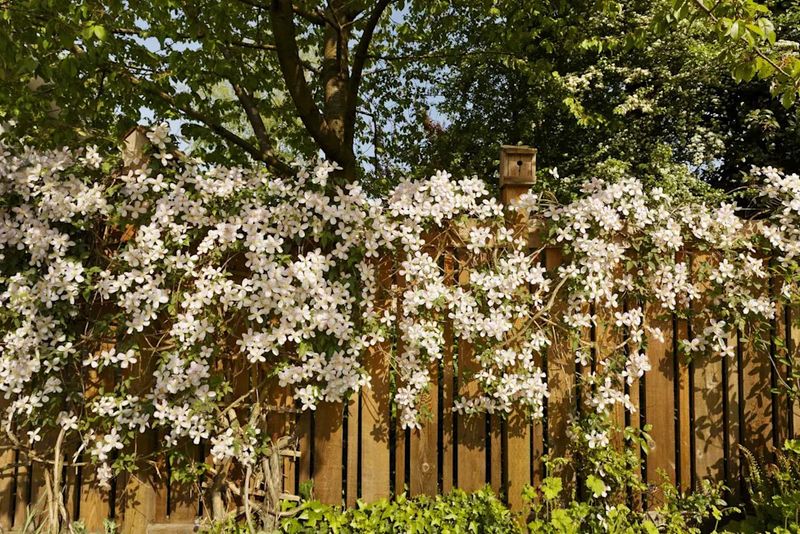
Clematis can look like the perfect climbing vine, covering fences and trellises with dreamy flowers every summer. But some varieties grow so fast and spread so wide that they smother your other plants and take years to fully remove.
Before you plant one, it helps to know which ones can become a headache and how a little pruning keeps them behaving. Here are 26 clematis to think twice about, plus simple tricks to keep the pushy ones under control.
1. Sweet Autumn Clematis (Clematis terniflora)
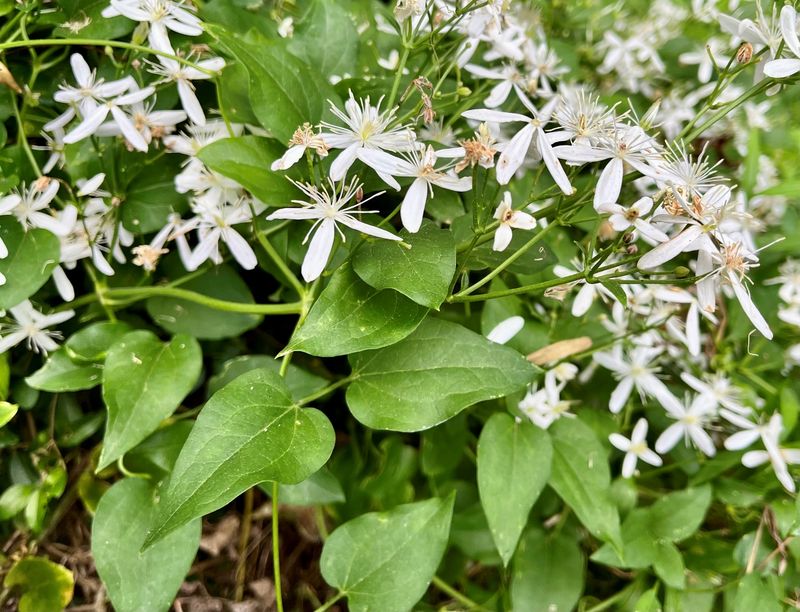
If there were a most-wanted poster for garden bullies, this vine would be front and center. Sweet Autumn Clematis blankets late-summer fences in a cloud of tiny white flowers, and gardeners fall in love before they realize what they’ve unleashed.
Those pretty blooms turn into thousands of fluffy seeds that scatter everywhere. New seedlings pop up in your lawn, your neighbor’s yard, and cracks in the driveway.
It can climb up to 30 feet and smother shrubs and small trees underneath it.
Many U.S. states now list it as invasive, and once it settles in, digging it out feels like a part-time job. The blooms also attract clouds of wasps, which is not what you want near a patio.
Your best defense is to snip off the seed heads before they open. Since it flowers on new growth, cut every stem back to about 12 to 18 inches above the ground in late winter.
Removing seeds each fall may prevent it from taking over the whole block.
2. Clematis montana
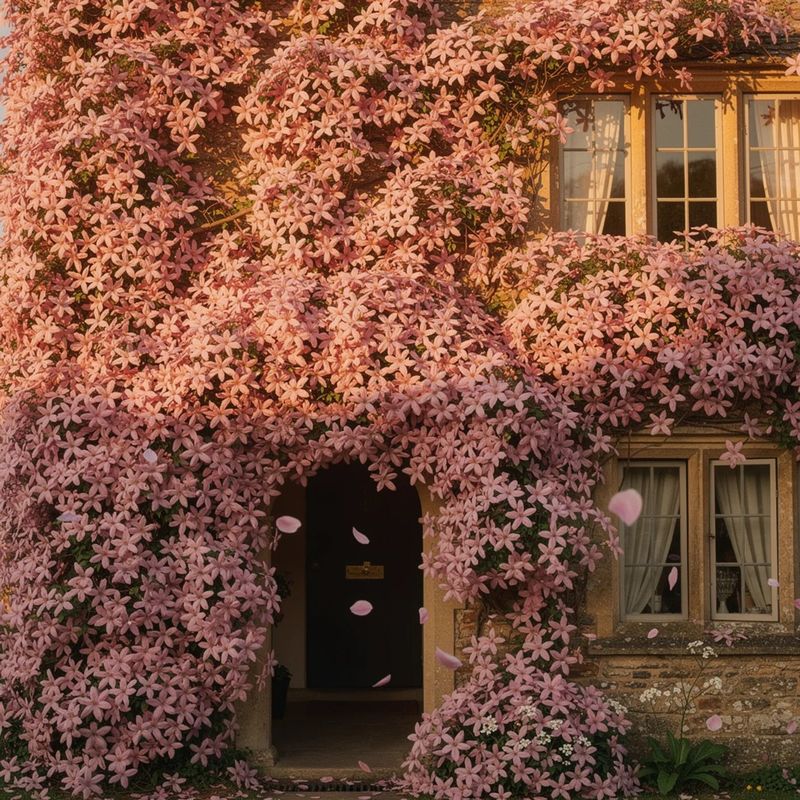
Picture a single plant swallowing an entire garage wall in one season, and you’ve met Clematis montana. Come spring, it erupts in a waterfall of pink or white blossoms that smell faintly of vanilla, and honestly, it’s stunning.
The problem is the sheer size. A happy montana can rocket to 20 or 30 feet and keep going, piling stems on top of stems until the base becomes a woody tangle.
Give it a flimsy trellis and it will pull the whole thing down.
Because it blooms on old wood from the previous year, timing your cuts matters. Wait until right after the flowers fade, then prune hard to remove wandering stems and thin out the mess.
Skip pruning in fall or early spring, or you’ll snip off next year’s flowers. A sturdy support and a yearly haircut keep this beauty from becoming a monster.
3. Clematis armandii
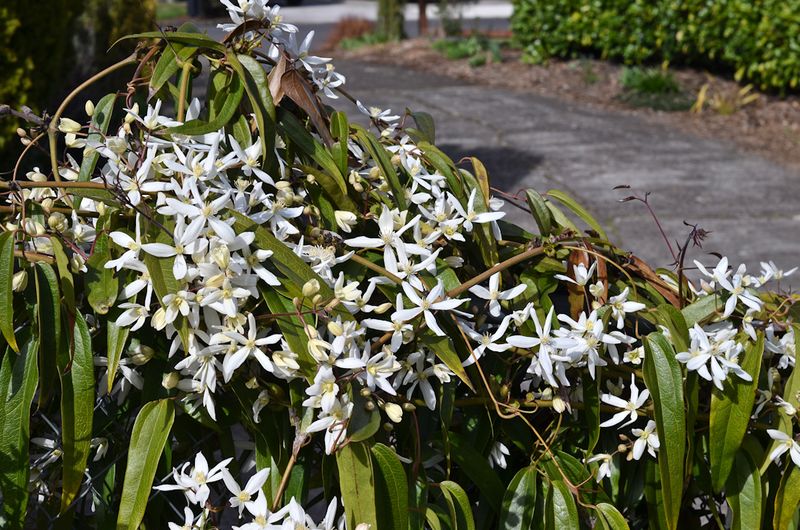
Evergreen and glossy, Clematis armandii is the vine people plant for year-round cover, then quietly start to fear. Its leathery leaves and early, almond-scented white flowers look elegant against a warm wall.
Left alone, it bulks up into a dense green wave that can reach 15 to 30 feet, with heavy stems that get woody and awkward fast. The weight alone can strain fences and gutters.
Regular pruning is the only way to keep it reasonable. Right after it finishes blooming, trim back overgrown shoots and open up the center so air can move through the tangle of foliage.
Because it holds its leaves all winter, you notice every messy branch, so a shaping cut each year pays off. Plant it somewhere with real room and a strong structure, not a dainty little arch.
4. Virgin’s Bower (Clematis virginiana)
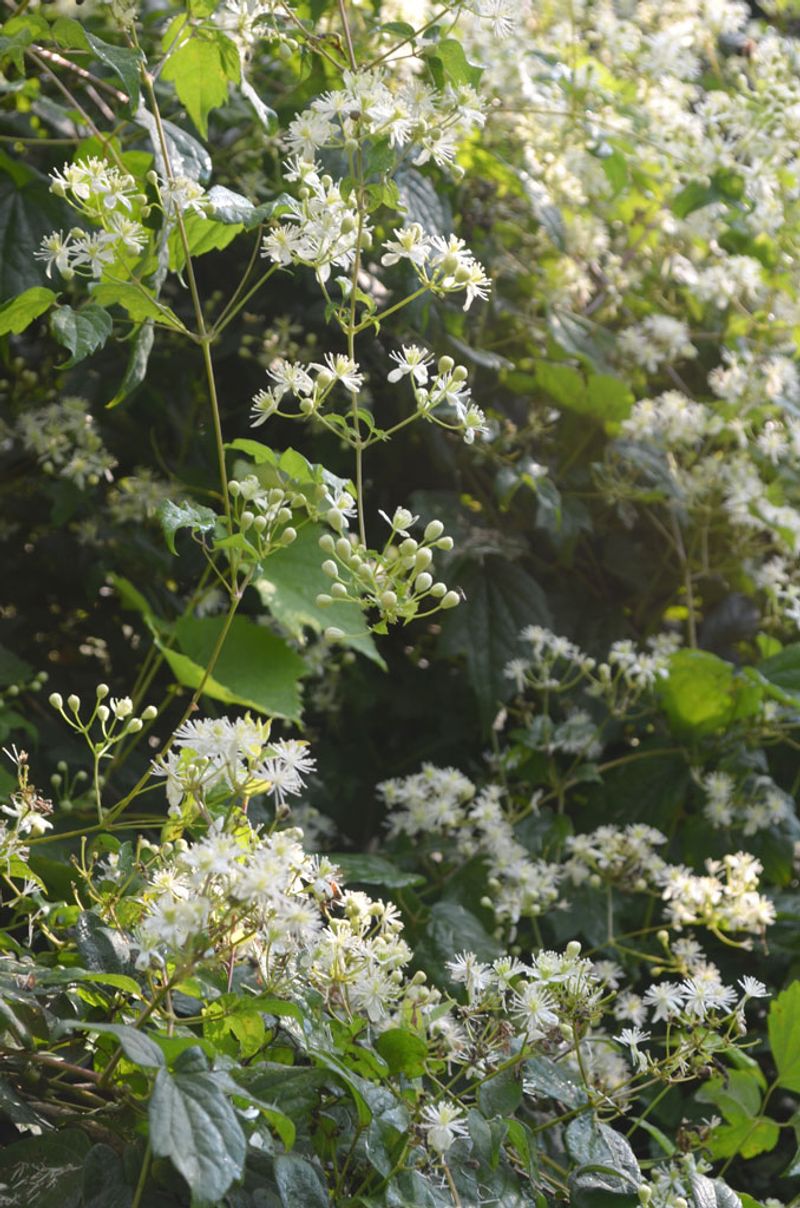
Here’s the native cousin that still manages to cause trouble. Virgin’s Bower belongs in North American woodlands, so it’s not invasive in the strict sense, but it grows with real enthusiasm.
Climbing 10 to 20 feet, it spreads both by seed and by underground root suckers, which means it can pop up a few feet away from where you planted it. Along a wild fence line it looks charming, yet in a tidy bed it wanders.
The good news is that it self-seeds far less aggressively than Sweet Autumn Clematis, so it’s a step down in chaos. Clipping off the fluffy seed heads before they ripen keeps volunteers to a minimum.
Since it flowers on the current year’s growth, a hard late-winter cut resets it and controls the height. Give it a spot where a little roaming won’t bother anyone.
5. Yellow Clematis (Clematis tangutica)
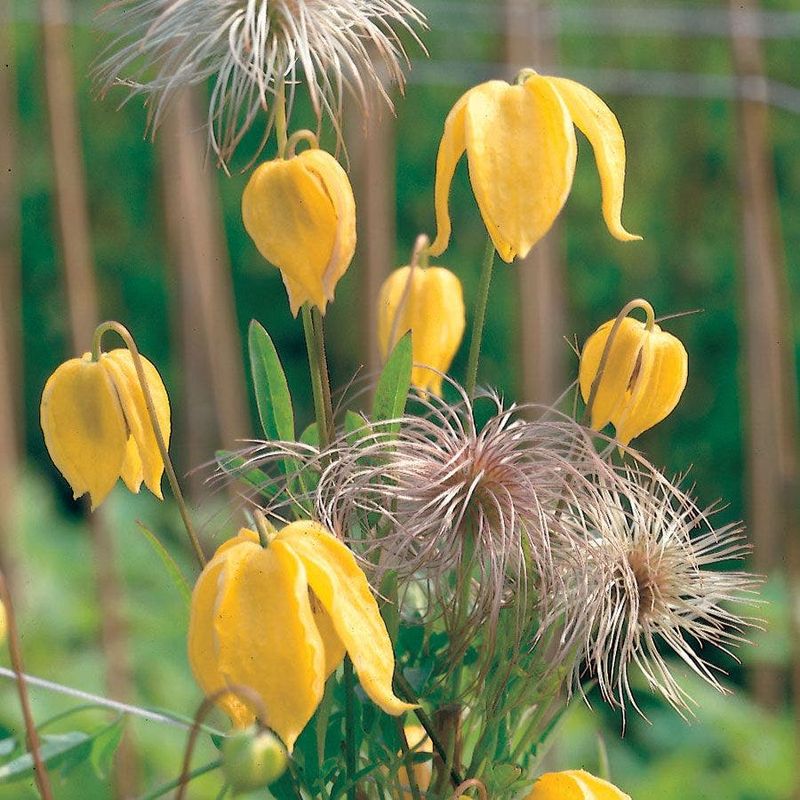
Those cheerful nodding yellow lanterns hide a sneaky spreader. Yellow Clematis charms gardeners with bell-shaped flowers followed by silvery, swirled seed heads that catch the light beautifully.
The catch is that those decorative seeds are exactly how it takes over. Given a season or two, it can blanket a slope or fence and seed itself into places you never intended.
In some regions it has escaped gardens and become a nuisance in wild areas, so it deserves caution. Removing the seed heads before they dry and scatter can reduce the spread dramatically.
It blooms on new wood, which makes it forgiving to prune, so cut it back hard in late winter without worry. A confined bed with a defined edge keeps this sunny climber from claiming the whole yard.
6. Jackmanii
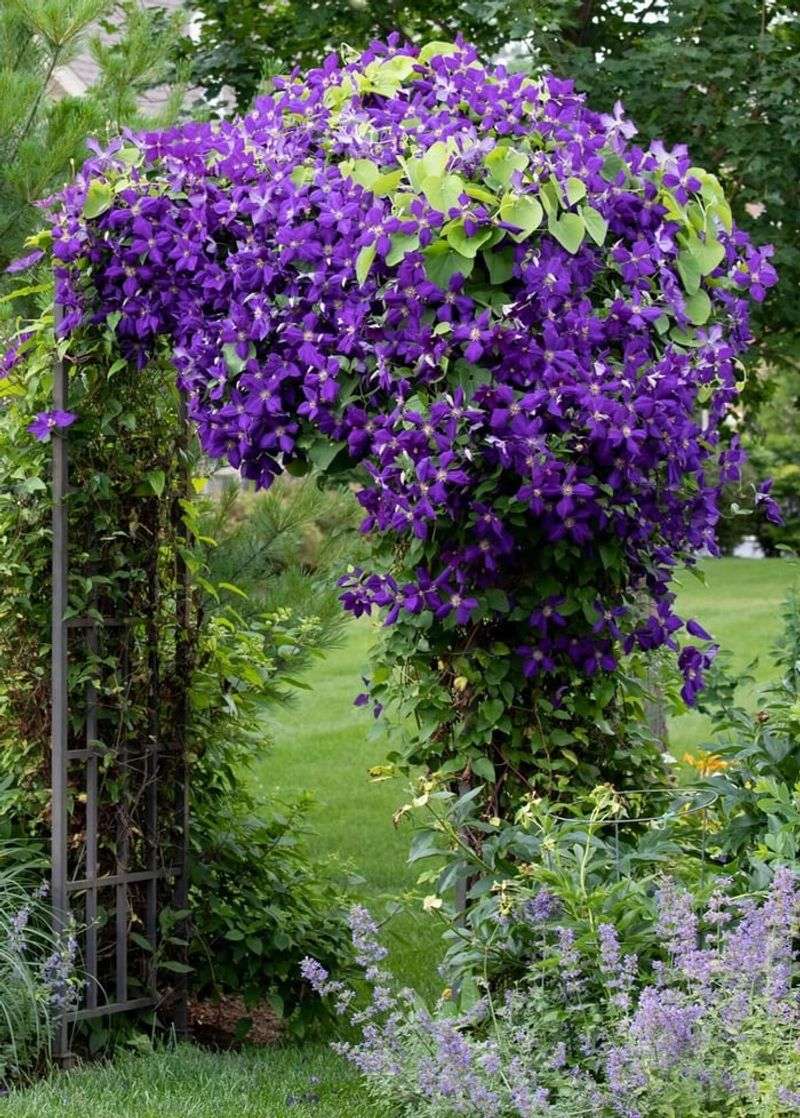
The classic purple clematis everyone recognizes also has a habit of going rogue at the top. Jackmanii covers arbors in rich violet blooms and has been a garden favorite since Victorian times.
Its downside isn’t invasiveness so much as bad manners when neglected. Skip the pruning and it grows top-heavy, dumping all its flowers 10 feet up while the base turns into a bundle of bare, brittle stems.
Because it flowers on new growth, it belongs to the group that loves a hard chop. Each late winter, cut every stem down to about 12 to 18 inches from the soil.
That drastic trim forces fresh shoots from low down, so blooms fill the whole plant instead of just the ceiling. Fun fact: Jackmanii was one of the first big-flowered hybrids ever bred, back in the 1860s.
7. Polish Spirit
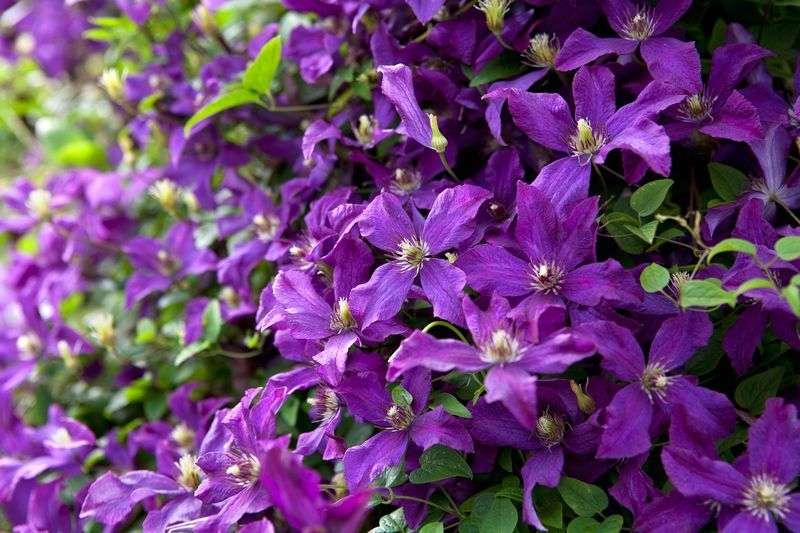
Bred for toughness, Polish Spirit rewards you with deep purple blooms from midsummer into fall, and it does not slow down. Vigorous is the word breeders use, but gardeners sometimes call it relentless.
Left to its own devices, it climbs fast and stacks growth high, leaving the lower half naked while the top gets crowded with flowers. On a small trellis it quickly outgrows its welcome.
The fix is pleasantly simple because it flowers on this year’s stems. A firm late-winter cut back to knee height keeps it bushy and blooming at eye level.
Weaving new shoots through the support as they climb also spreads the flowers out nicely. Give it something solid to grip, because a lightweight frame won’t hold this energetic performer.
8. Clematis vitalba (Old Man’s Beard)
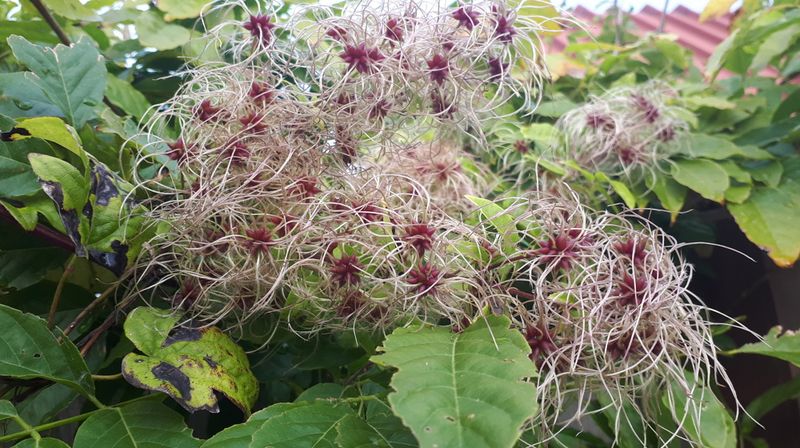
Nicknamed Old Man’s Beard for its wispy winter seed heads, this European native is downright notorious where it has escaped. In parts of the world it’s treated as a serious invasive weed.
It grows with alarming speed, draping trees and hedges in a heavy curtain that can block sunlight from whatever lies beneath. A single vine produces staggering numbers of parachute-like seeds.
Once established, its woody stems and deep roots make removal a genuine chore. Pulling seedlings early and cutting off seed heads before they fluff up may prevent a small patch from becoming a jungle.
As a late-flowering type, it responds to a hard annual cut in late winter to keep the size down. Honestly, most home gardeners are better off admiring this one from a safe distance.
9. Clematis flammula
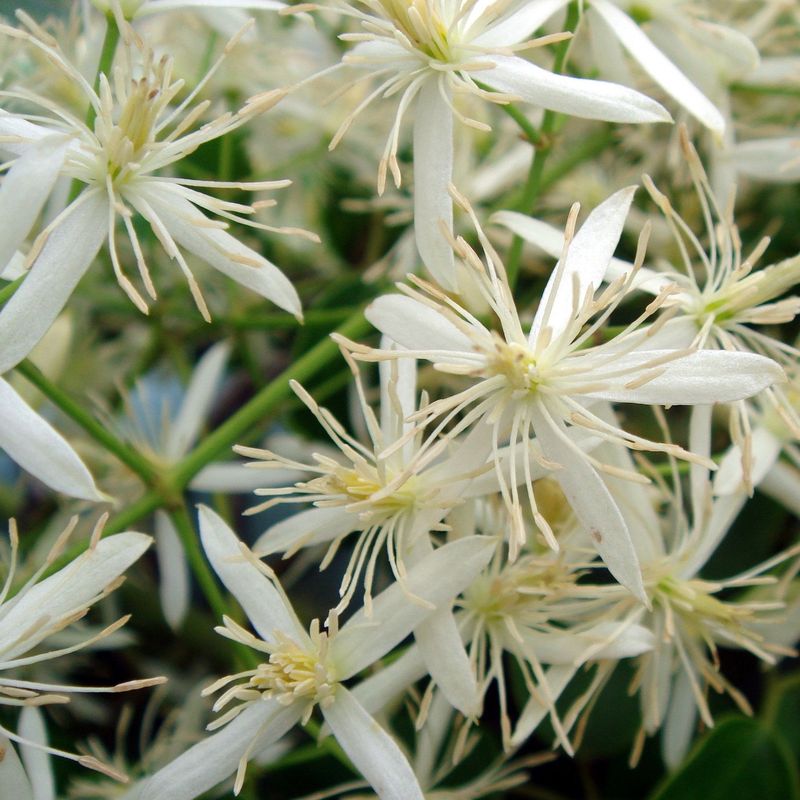
Fragrance is the trap with Clematis flammula, whose airy white flowers smell sweetly of almonds in late summer. One whiff and you want it everywhere, which is part of the problem.
Behind that gentle scent sits a fast, twiggy grower that piles up into a dense mound and seeds itself around freely. It shares a lot of habits with its rowdier relative, Sweet Autumn Clematis.
The seed heads are the thing to watch, because they carry the plant to new corners of the garden. Snipping them off after flowering keeps the surprise seedlings in check.
Being a new-wood bloomer, it takes a hard spring pruning in stride and comes back tidier. Pair it with a robust support, since its lightweight stems love to sprawl sideways.
10. Clematis montana ‘Rubens’
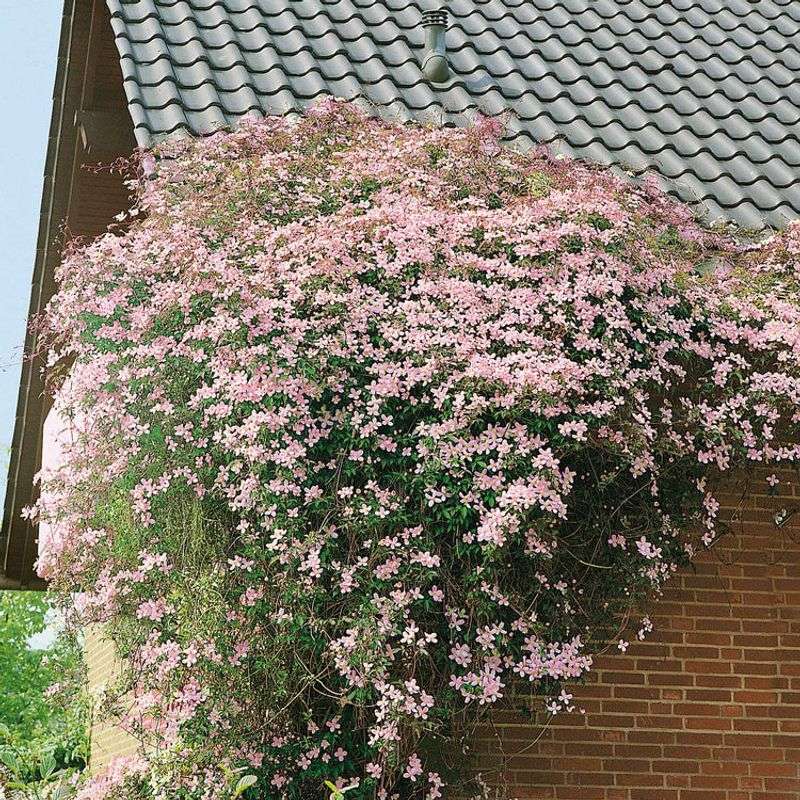
All the drama of standard montana comes wrapped in blushing pink with ‘Rubens’, a selection that clothes walls in soft rosy flowers each spring. Gardeners plant it for the show and then scramble to contain it.
It carries the same runaway vigor as the species, easily reaching 25 feet and turning skinny at the base as it ages. The lower stems get woody and tangled while the flowers migrate upward.
Since it blooms on old wood, the safe moment to prune arrives just after the petals drop. Take out crossing stems and shorten the longest runners to keep the frame manageable.
Cutting at the wrong time robs you of next spring’s display, so patience pays. On a strong pergola with room to stretch, ‘Rubens’ is glorious rather than terrifying.
11. Clematis montana ‘Grandiflora’
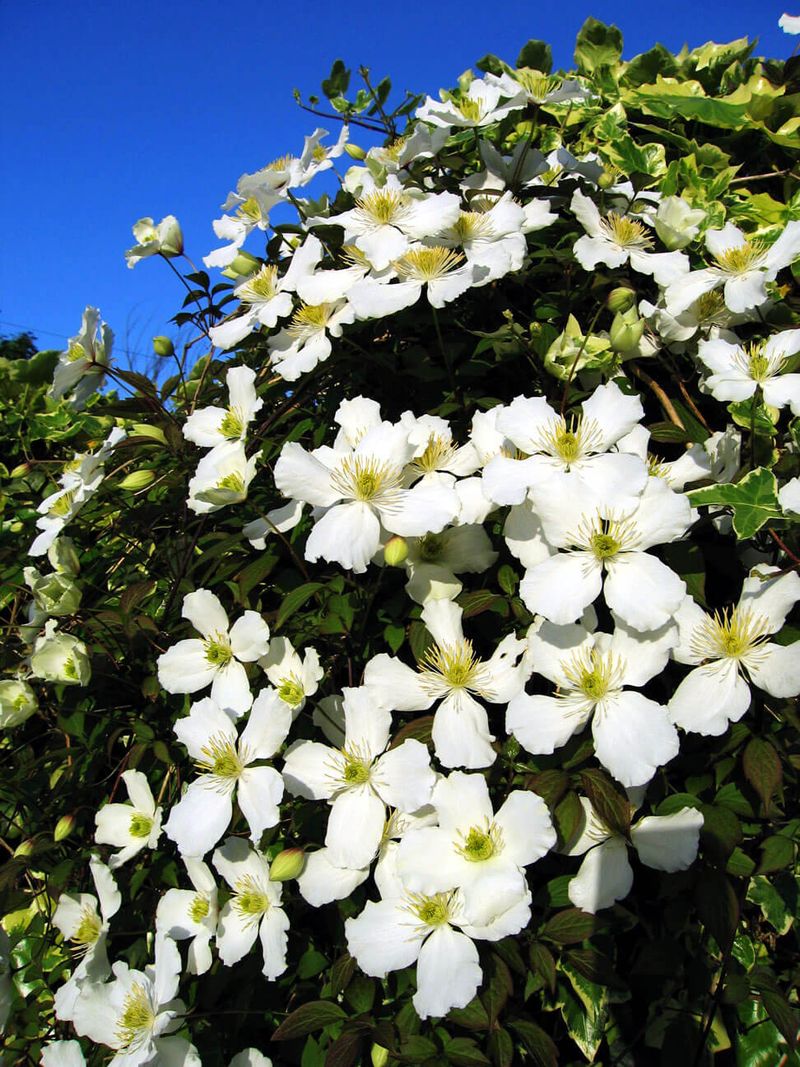
Bigger flowers, bigger appetite for space. ‘Grandiflora’ pushes out generous white blooms and matches them with the montana family’s legendary spread, so it never stays small for long.
Plant it against a house wall and within a few years it may be knocking on the second-floor windows. The weight of all that growth can tug at trellises and downspouts if the support isn’t serious.
Prune it only after the spring flowers finish, thinning old stems and reining in the wanderers. Because it flowers on wood made the year before, an ill-timed cut means a flowerless spring.
Think of it as a plant for big blank walls and pergolas, not fussy little garden nooks. Match its ambition with structure and it behaves like a dream.
12. Clematis ‘Ville de Lyon’
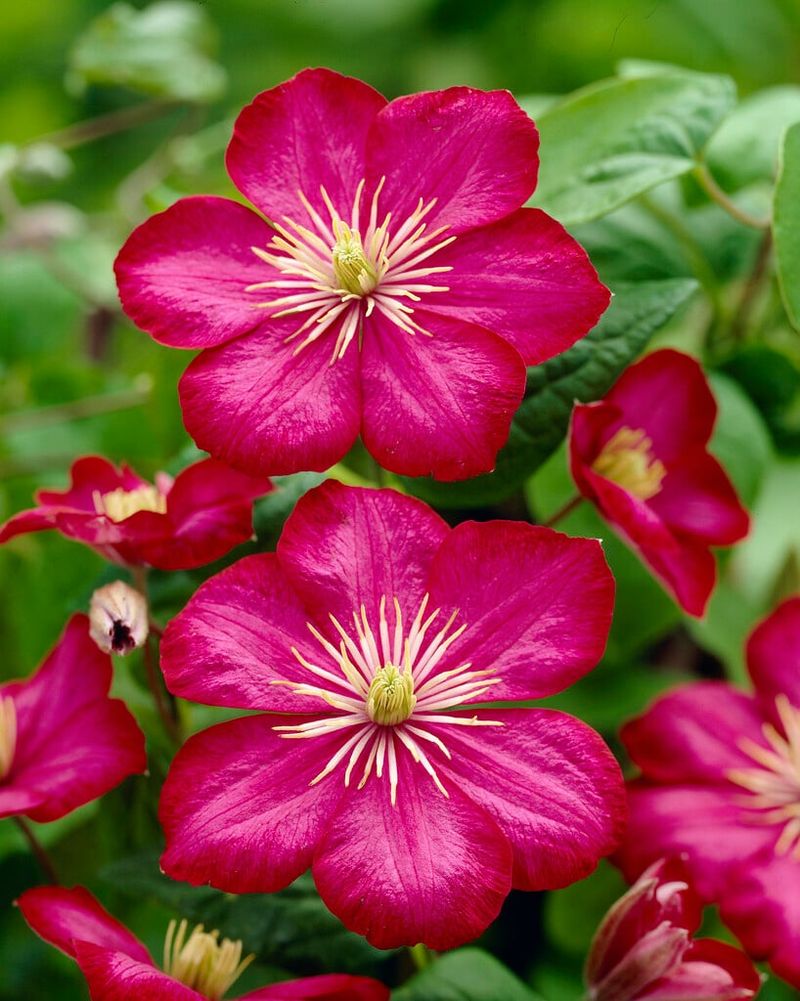
Bold carmine-red flowers make ‘Ville de Lyon’ a stunner, but this vintage hybrid has a well-known habit of going bald at the ankles. The color draws you in; the leggy base tests your patience.
Without regular attention, its lower leaves brown and drop, leaving a stretch of bare stem beneath a crown of blooms. The effect is a flower show floating awkwardly above nothing.
Fortunately, it flowers on new wood, so a hard late-winter cut solves most of the problem. Trim it to around 12 inches and let fresh shoots fill in from the base.
Tucking a low, leafy plant at its feet hides any remaining bare stems. With that combo, this old French favorite looks lush from top to bottom.
13. Clematis ‘Nelly Moser’
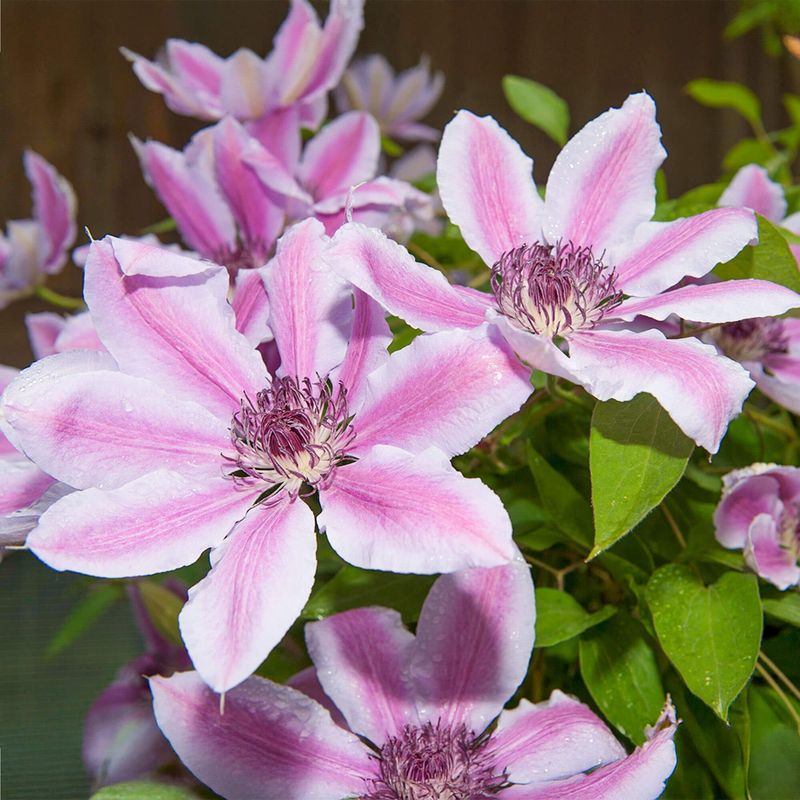
Pale pink petals with a bold rosy stripe make ‘Nelly Moser’ instantly recognizable, and instantly disappointing to anyone who plants it in full sun. The gorgeous colors fade to a washed-out pale in strong afternoon light.
Beyond the fading, it can grow enthusiastically and turn top-heavy if you ignore it, sending all its flowers to the upper reaches. Gardeners often expect a neat display and get a lopsided one instead.
Belonging to the mid-season group, it wants only a light late-winter tidy rather than a brutal chop. Remove dead stems and weak growth to keep it balanced.
Site it in part shade where the pink stays vivid and the plant stays happy. Get the location right and ‘Nelly Moser’ becomes a showpiece rather than a letdown.
14. Clematis ‘The President’
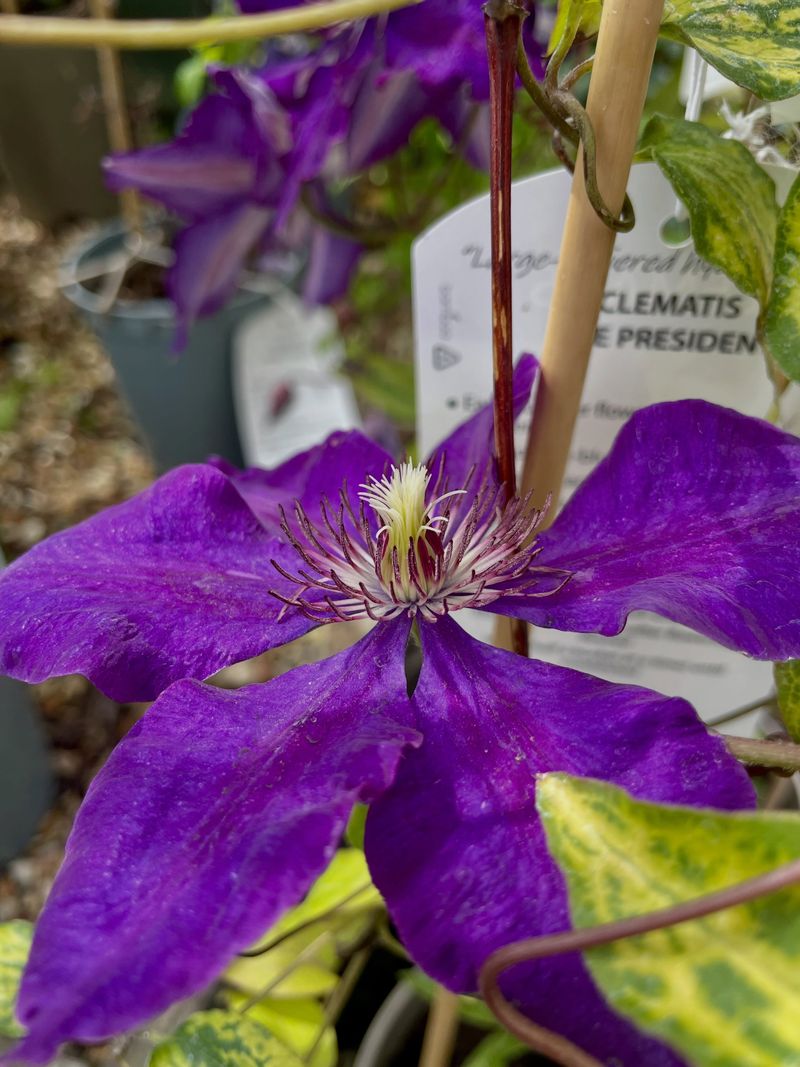
Regal name, regal flowers, and a real weakness for clematis wilt. ‘The President’ shows off deep purple blooms with silvery undersides, and large-flowered hybrids like this are the ones wilt hits hardest.
The heartbreak arrives fast: healthy shoots suddenly droop, blacken, and shrivel in early summer, often just before the big flush. A soil fungus enters through nicks near the base and blocks the plant’s plumbing.
Catching it early makes all the difference. Cut out affected stems right down below the damage and throw them in the trash, never the compost pile.
Planting deep, keeping the roots cool with mulch, and avoiding stem injuries can reduce the risk of an attack. Many plants push out fresh, healthy shoots from below the soil after a wilt episode, so don’t give up.
15. Clematis ‘Dr. Ruppel’
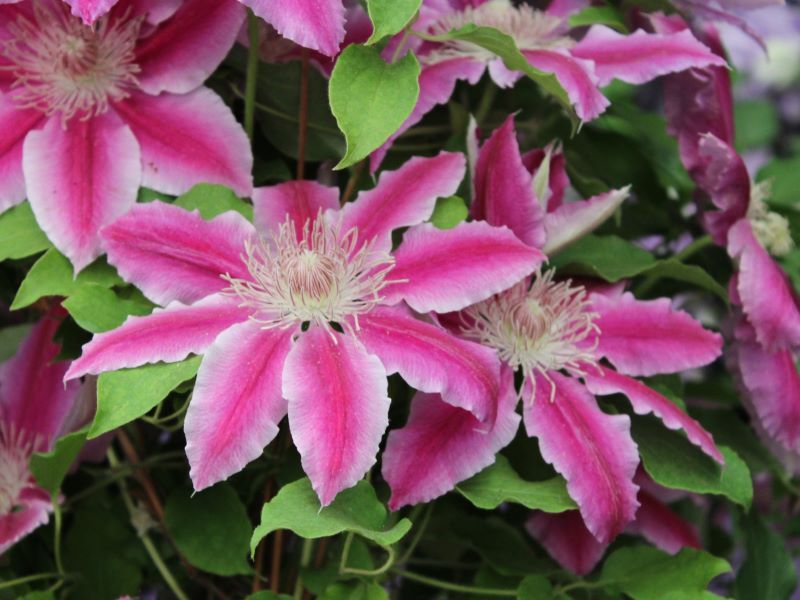
Show-stopping two-tone flowers, striped deep pink on a rosy background, make ‘Dr. Ruppel’ a favorite for that first big spring flush. The catch is that large early-flowering hybrids like this are prime targets for clematis wilt.
One week it’s covered in buds, and the next a whole shoot collapses and turns black at the tip. The fungus thrives in damp, crowded conditions, so a soggy, airless spot invites trouble.
Prompt removal of any wilting stem, cut back to healthy tissue or into the soil, keeps the disease from spreading. Improving airflow by thinning tangled growth can also help.
As a mid-season bloomer, it only needs a gentle late-winter trim to shape it. Keep it watered evenly, mulched, and unbruised, and it usually shrugs off setbacks with a strong rebound.
16. Clematis ‘Henryi’
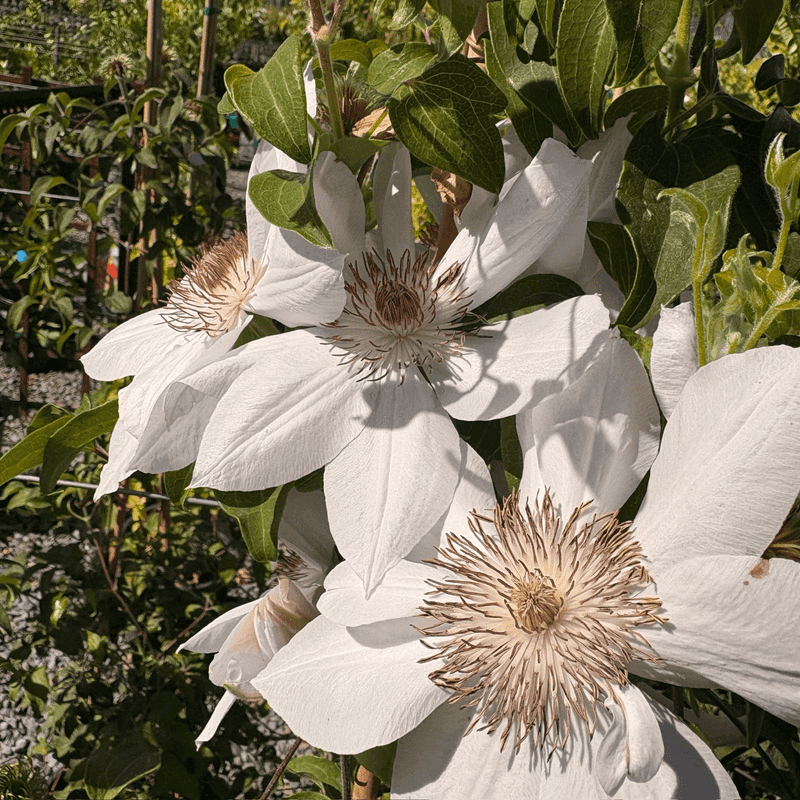
Big, pure white blooms the size of dinner plates give ‘Henryi’ real wow factor, along with a stubborn streak that frustrates new growers. It sulks when the growing conditions aren’t just right.
Plant it in a hot, exposed spot with dry roots and it rewards you with leaves and hardly any flowers. Clematis famously want their feet in the shade and their heads in the sun, and this one insists on it.
Mulching over the root zone or tucking low plants around the base keeps the roots cool and the buds coming. A spring feeding high in potassium, like a tomato fertilizer, can encourage flowering.
Give it only a light late-winter shaping, since it blooms partly on old wood. Meet its demands and those enormous white flowers become the star of the border.
17. Clematis ‘Multi Blue’
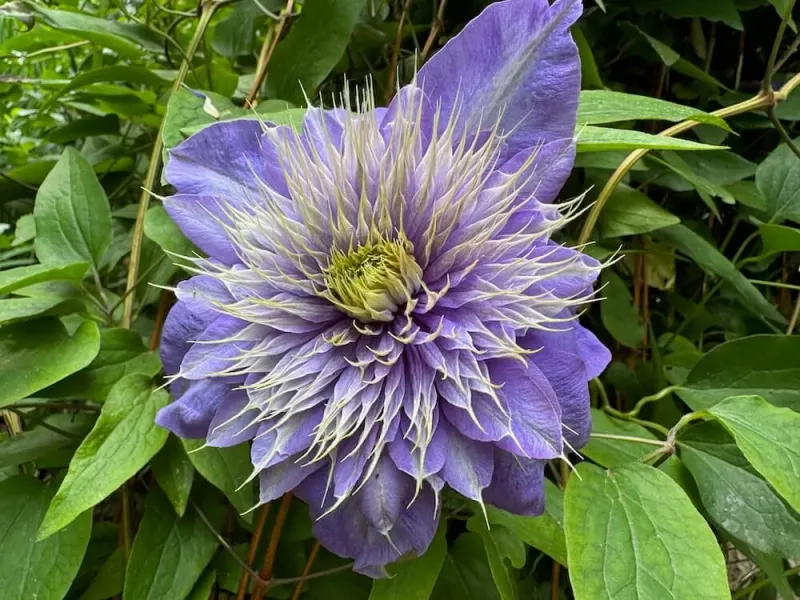
The novelty of ‘Multi Blue’ is a puffed-up, almost spiky double flower in electric blue-purple that looks like nothing else on the fence. That quirky charm comes with a temperamental side.
Its blooms can be unpredictable, sometimes doubling beautifully and sometimes flopping open or arriving oddly single. Poor feeding and shaded, cramped roots make the disappointing results more likely.
To coax out the best flowers, keep the roots cool and shaded while the top basks in sun. A balanced slow-release feed in spring supports the heavy blooming this cultivar tries to do.
Being a mid-season type, it likes only a light late-winter trim to remove weak stems. Baby it a little and ‘Multi Blue’ becomes a conversation piece; ignore it and it just looks confused.
18. Clematis ‘Ernest Markham’
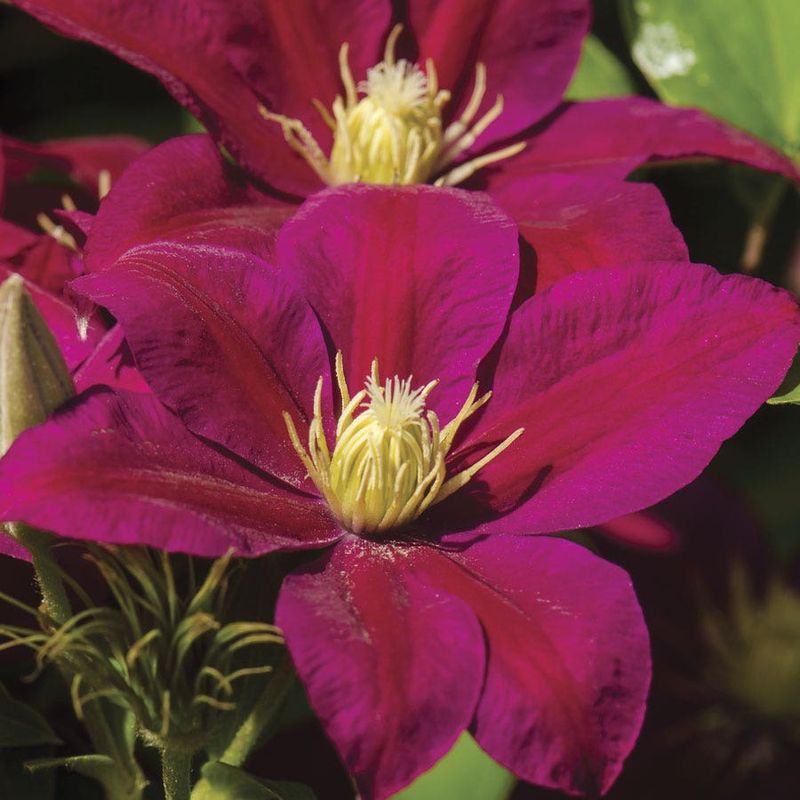
Glowing magenta-red flowers make ‘Ernest Markham’ pop against greenery, yet this vigorous hybrid can leave gardeners waiting and waiting for blooms. It tends to flower late and lightly if it isn’t sited well.
Plant it in too much shade and it produces plenty of leaf and stingy flowers, since it craves warmth and sun on its top growth. A cool, dim corner brings out its worst behavior.
It also grows strongly and can turn bare-legged, so it benefits from a firm late-winter cut back to low buds. Fresh shoots then fill in and flower closer to eye level.
A warm, sunny wall really wakes it up and boosts the flower count. Feed it in spring and give it heat, and the magenta show finally delivers.
19. Clematis ‘Comtesse de Bouchaud’
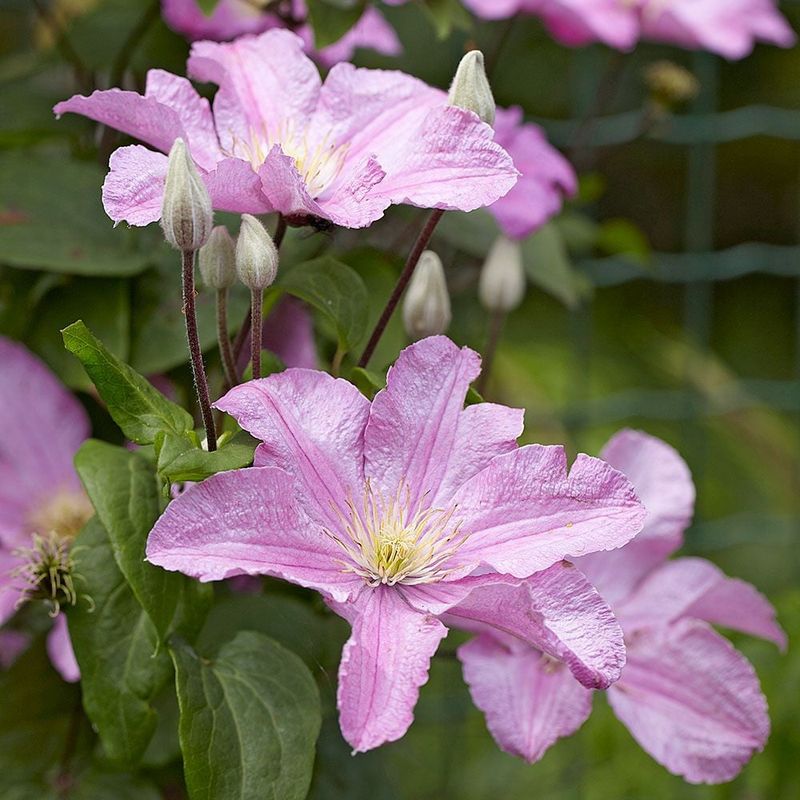
Soft mauve-pink flowers give ‘Comtesse de Bouchaud’ a gentle, old-fashioned appeal, and it blooms so freely that it can exhaust its own base. The vine pours energy upward and forgets its lower half.
Without pruning it grows tall and thin at the bottom, presenting its generous flowers well above where you’d like them. The bare ankles become obvious against a plain fence.
Since it flowers on new wood, it welcomes a hard reset in late winter down to about a foot tall. That encourages dense, low branching packed with blooms.
Underplanting with something leafy screens any remaining bare stems for good measure. Managed this way, the Comtesse stays charmingly full rather than gangly.
20. Clematis ‘Rouge Cardinal’
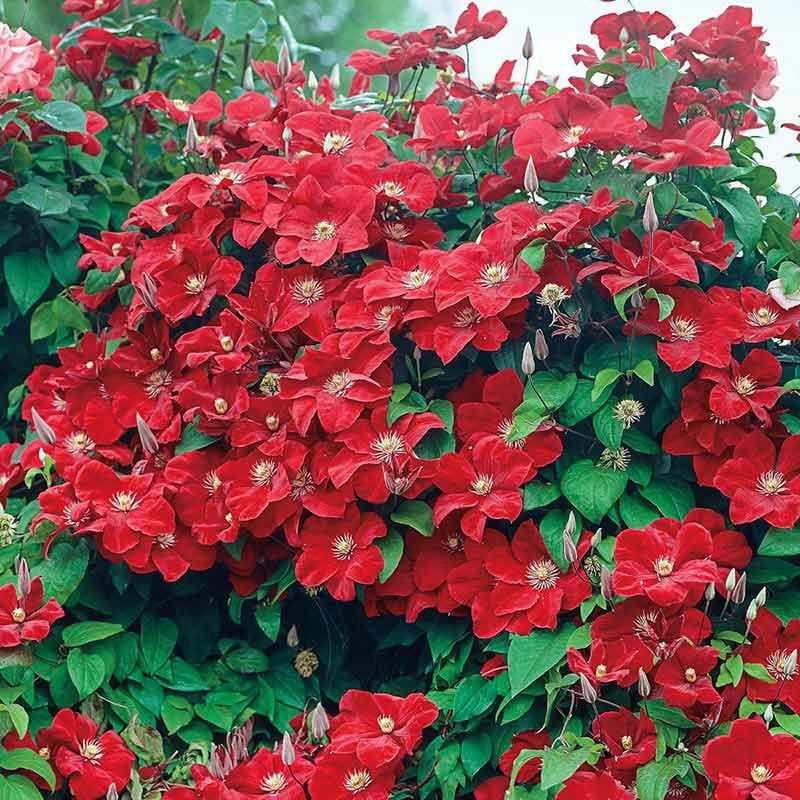
Velvety crimson flowers give ‘Rouge Cardinal’ a luxurious, deep-red glow that photographs beautifully and fades fast in harsh sun. The rich color is its selling point and its fragile spot.
In blazing afternoon heat the petals can scorch and dull, losing that jewel-like intensity. Baking, dry roots make matters worse and can leave the plant stressed and sparse.
Keeping the roots cool and moist with mulch protects both the plant and the color. A hard late-winter prune suits it, since the flowers come on new growth each year.
Position it where it gets good light but a little shelter from the fiercest midday sun. Treated kindly, that deep cardinal red stays saturated all season.
21. Clematis ‘Niobe’
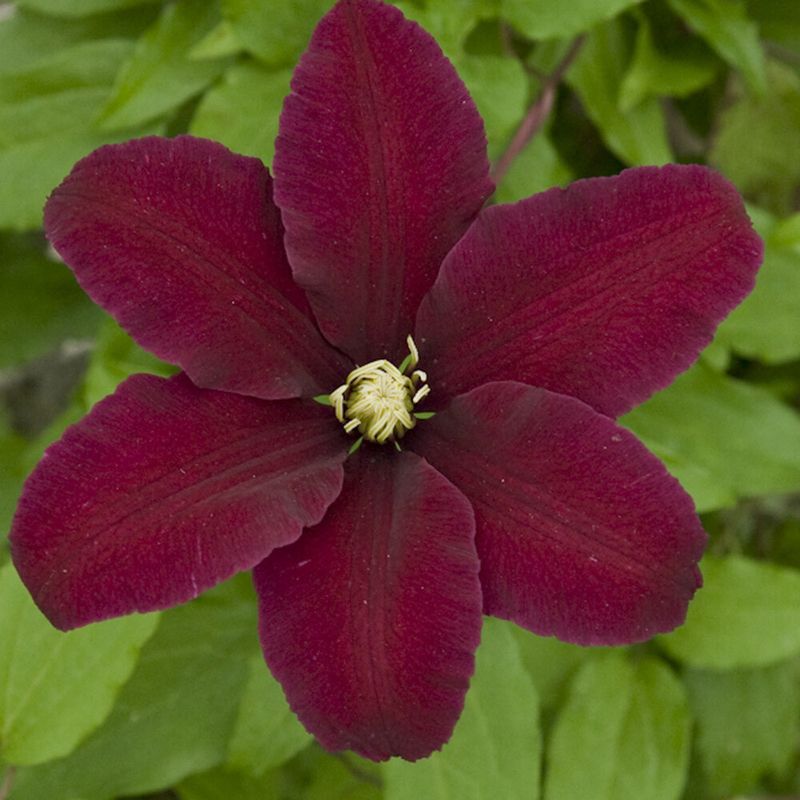
Nearly black-red when it opens, ‘Niobe’ brings a moody drama few other clematis can match, but it demands the right home to shine. Newly planted specimens in particular can be touchy about their start.
Fresh vines have brittle stems that snap easily during planting, and a broken main stem can set the whole plant back or even kill young roots. Rough handling is a common cause of early failure.
Gentle planting makes a real difference. Soaking bare-root stock and trimming overly long stems encourages side branching and reduces the risk of snapping.
As a compact new-wood bloomer, it prunes hard in late winter without complaint and even suits a large container. Handle it with care at planting and ‘Niobe’ rewards you with those dark, glowing flowers for years.
22. Clematis ‘Hagley Hybrid’
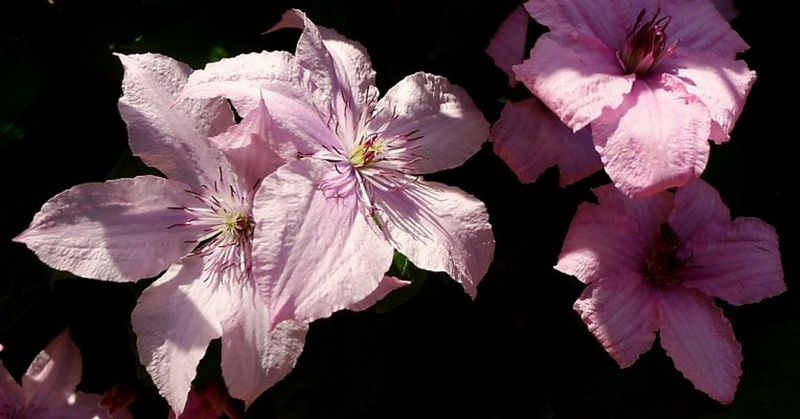
Shell-pink flowers give ‘Hagley Hybrid’ a delicate, romantic look that turns disappointingly pale in strong sunshine. The soft color that draws people in is also its weakness.
Under intense sun the pink bleaches toward a tired off-white, so a spot with some afternoon shade keeps it looking fresh. Too much exposure just washes out the whole effect.
It also flowers reliably on new wood, which makes maintenance easy. A hard late-winter cut down to low buds keeps it compact and blooming from top to bottom.
Even in a container it performs well, making it handy for patios and small yards. Give it gentle light and cool roots, and that shell-pink glow stays lovely all summer.
23. Clematis ‘Perle d’Azur’
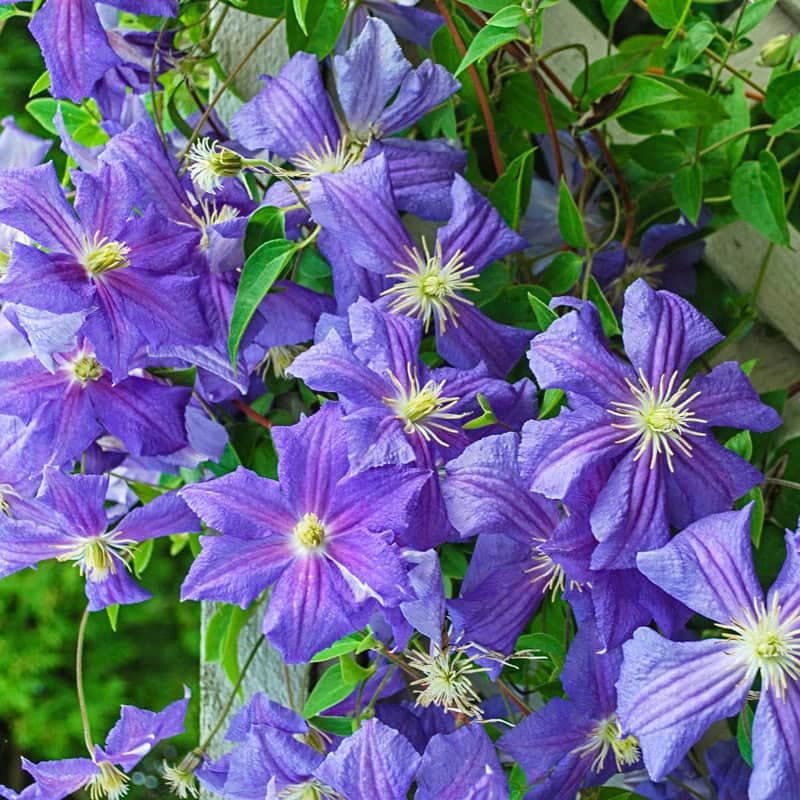
Sky-blue flowers have made ‘Perle d’Azur’ a legend in cottage gardens, yet its sprawling vigor surprises anyone who plants it on a modest support. It wants to roam.
Given a small trellis, it quickly overflows and drapes its stems every which way, hunting for something new to climb. On the right structure that looseness is charming; on the wrong one it’s a mess.
The plant flowers on new growth, so a firm late-winter chop keeps its size in bounds. Weaving the fresh shoots across a pergola or wide fence spreads the blue blooms evenly.
For big structures, wrapping the uprights in chicken wire or jute netting gives its stems something to grab. Aim it at a generous support and ‘Perle d’Azur’ becomes a river of blue.
24. Clematis ‘Etoile Violette’
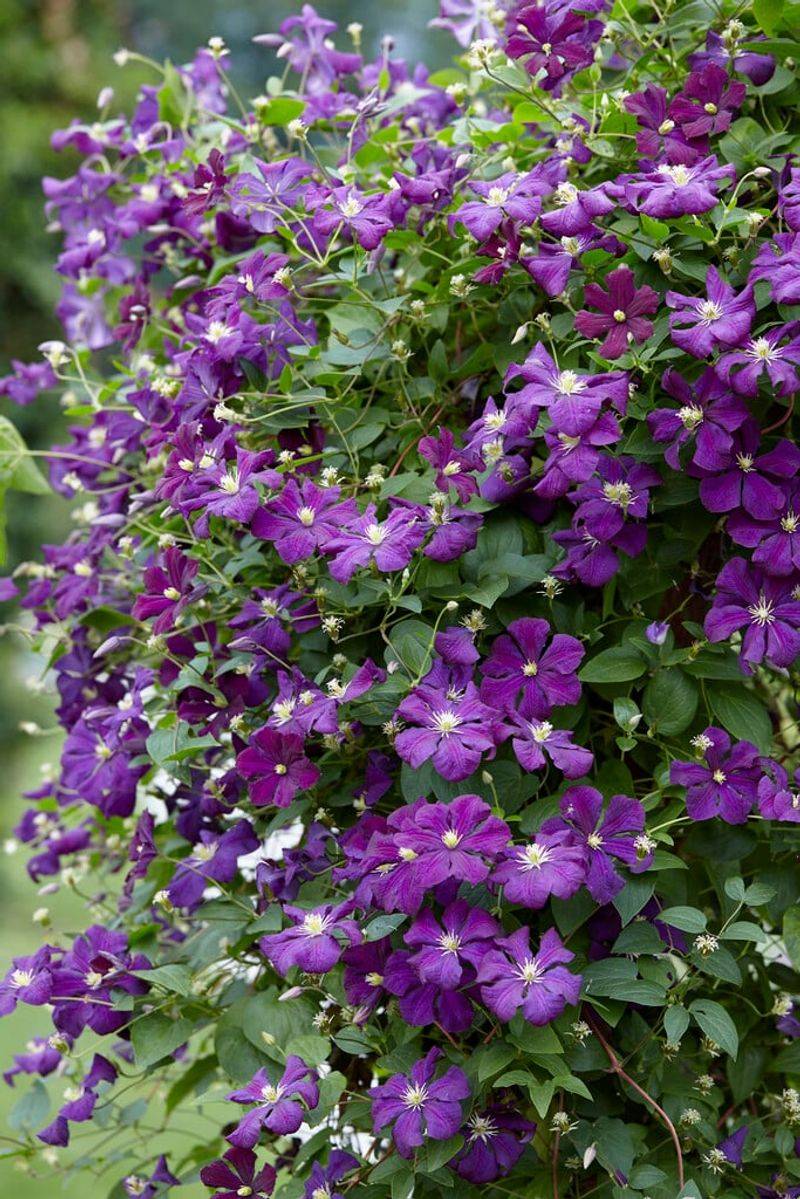
A viticella-type workhorse, ‘Etoile Violette’ throws out dozens of small deep-purple flowers and grows with real gusto once it settles in. Vigorous and healthy, it can still overwhelm a dainty setup.
Its enthusiastic climbing means it can bury a small arch or cover a neighbor’s shrub if you’re not paying attention. The upside is that it resists wilt far better than the big-flowered hybrids.
Pruning could not be simpler, since everything comes on new wood. Chop it to around a foot tall each late winter and let it rebuild from scratch.
In the first season, tie new growth to its support every couple of weeks so it climbs where you want. Point that vigor at a big fence or pergola and it becomes a low-fuss star.
25. Clematis ‘Bill MacKenzie’
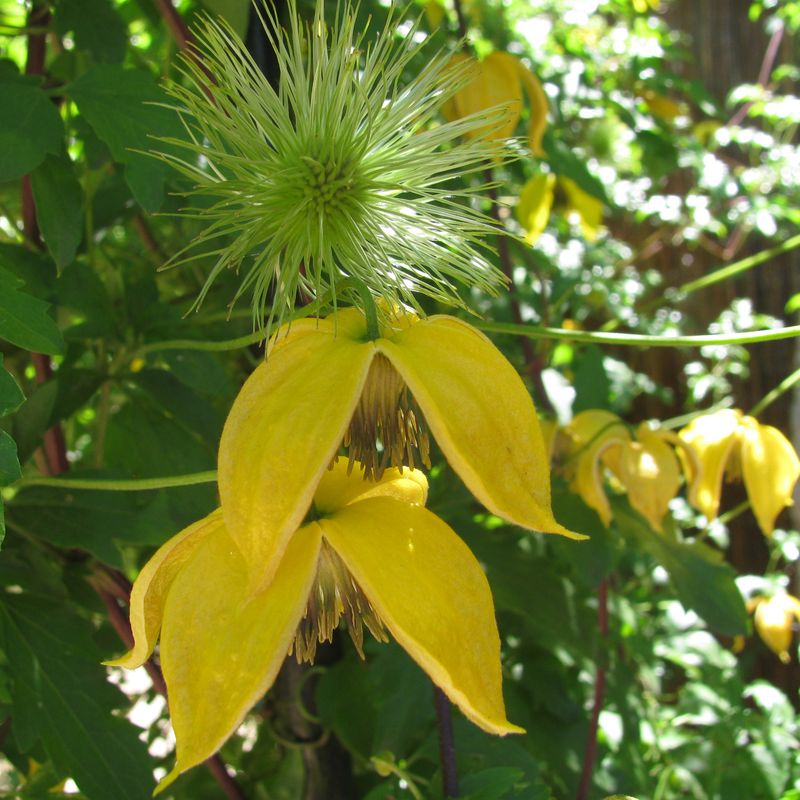
Chunky yellow lanterns and thick, twisted seed heads make ‘Bill MacKenzie’ a standout, and a genuinely powerful grower related to the yellow tangutica types. It covers ground fast.
Left unchecked, it can reach 15 to 20 feet and pile into a dense thicket that seeds itself into the garden. The ornamental seed heads that everyone loves are also how it multiplies.
Trimming off spent seed heads helps limit surprise seedlings, though many gardeners enjoy the winter show too much to remove them all. A balance works fine.
Being a late-flowering, new-wood plant, it takes a hard late-winter cut in stride and bounces right back. Give it a big, strong support and space to spread, and its size becomes an asset rather than a worry.
26. Clematis ‘Sweet Summer Love’
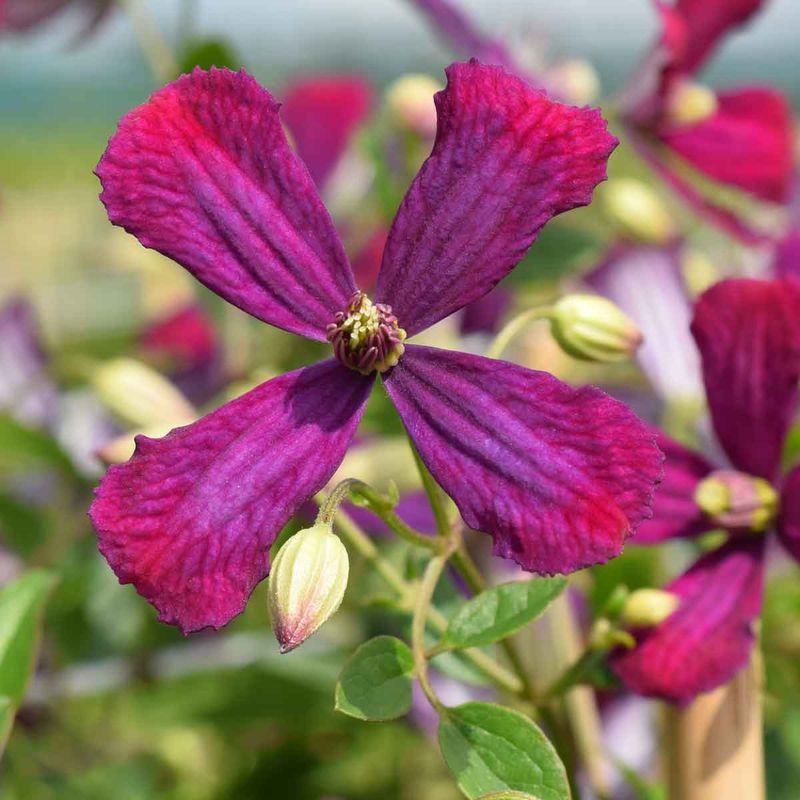
Marketed as a tamer, cranberry-purple answer to Sweet Autumn Clematis, ‘Sweet Summer Love’ still carries a strong appetite for growth and a heady fragrance. Sweeter behavior, but not saintly.
It blooms in a huge fragrant flush and can climb 10 to 15 feet in a season, so a flimsy support quickly disappears under it. The perfume that fills the yard also, unfortunately, draws in wasps.
While it sets fewer viable seeds than its terniflora parent, snipping off spent flowers keeps any wandering seedlings under control. It’s a lower-drama choice, not a no-drama one.
Since it flowers on new wood, an easy hard cut in late winter keeps it compact and floriferous. Plant it on a sturdy trellis with elbow room, and it delivers the autumn-clematis look with far less regret.