
Why Adding A Little Epsom Salt Makes Your Cucumbers Thrive Without Fancy Products
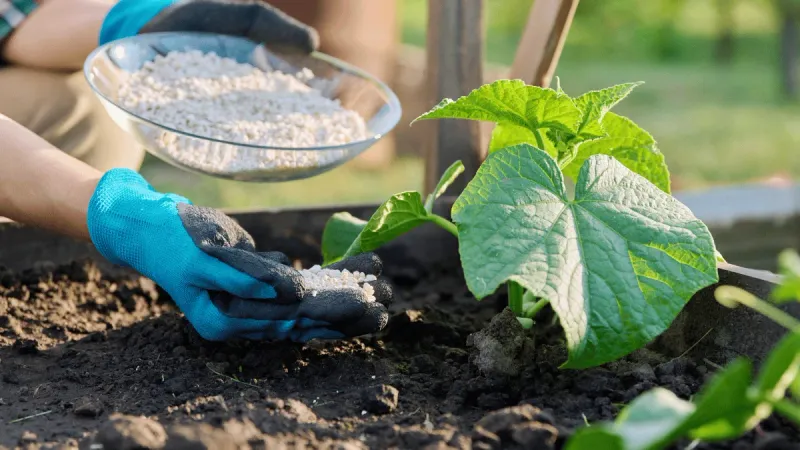
Epsom salt has quietly become one of the most talked-about pantry remedies in backyard gardening, and cucumber growers are among its biggest fans. The appeal makes sense: it is cheap, easy to find, and sounds like a simple shortcut to healthier plants.
But before you dissolve a scoop into your watering can, there is something worth knowing about what this product actually does and when it genuinely helps. The truth is more useful than the hype, and understanding it can save your cucumbers from the wrong fix at the wrong time.
Epsom Salt Is a Targeted Amendment, Not a Complete Cucumber Feed
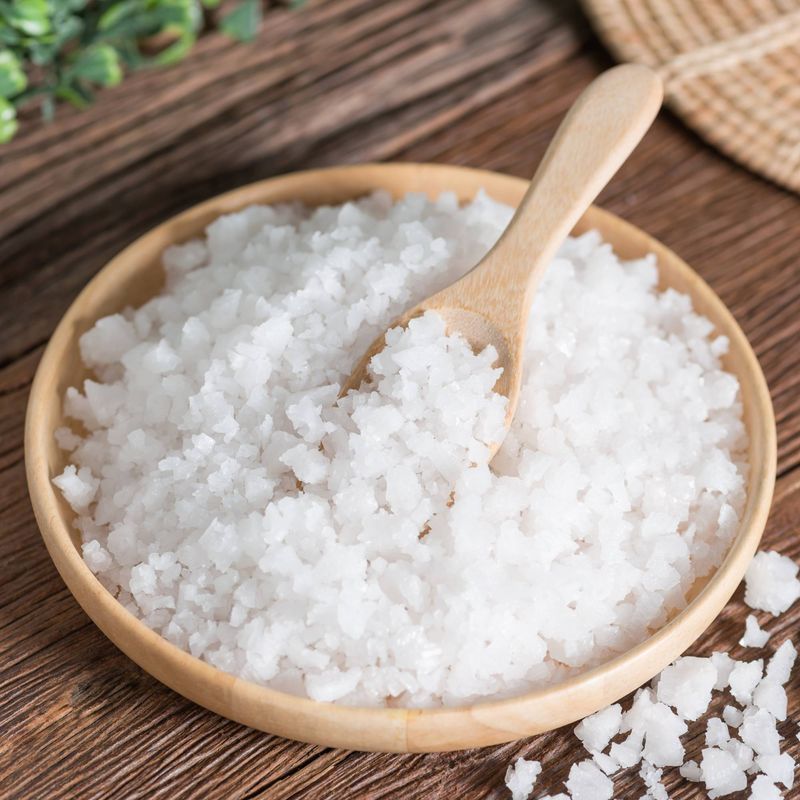
Magnesium sulfate is the chemical name for Epsom salt, and that name tells you exactly what it delivers: magnesium and sulfur. Both nutrients matter to plants, but neither one covers what a cucumber needs most to grow vigorously from seed to harvest.
Nitrogen drives leafy growth, phosphorus supports roots and flowering, and potassium regulates water movement and fruit quality. Epsom salt supplies none of those three.
That gap matters a lot when a cucumber is struggling. If the plant is pale, slow, or producing poorly because it lacks nitrogen or potassium, adding magnesium sulfate will not move the needle.
University of Minnesota Extension is direct on this point: Epsom salt is not a complete fertilizer, and applying it without a confirmed deficiency is unlikely to help and may cause harm over time. A cucumber fed only magnesium sulfate is still a hungry plant.
Part of the product’s reputation comes from how confidently it circulates in gardening forums and social media, where individual success stories travel faster than the conditions that made them work. North Dakota State University Extension describes many of these broad Epsom-salt claims as gardening myths rather than established practice.
The cases where it genuinely helped almost certainly involved a soil that was actually low in magnesium.
Penn State Extension’s cucumber production guide bases fertility recommendations on soil-test results, not on adding amendments by habit. Epsom salt earns a place in cucumber care only when testing confirms the soil is short on magnesium.
Until that confirmation exists, a balanced fertilizer tailored to what the soil actually lacks will do far more for your plants than any pantry shortcut.
Check Growing Conditions Before Blaming Magnesium
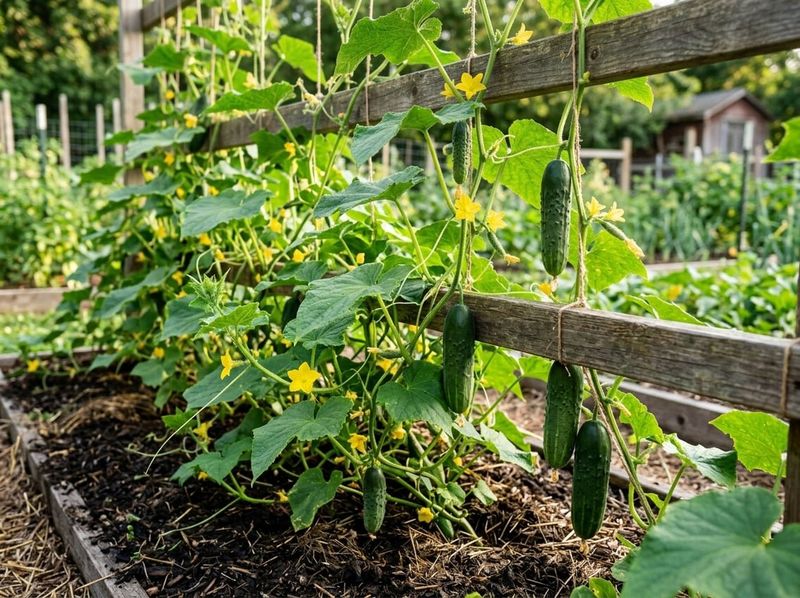
Slow growth, pale leaves, and poor fruit production are frustrating to see, but they rarely point straight to magnesium. Cucumbers are warm-season crops with a fairly specific set of requirements, and several common growing conditions can produce those same discouraging symptoms without any nutritional deficiency being involved at all.
Temperature is one of the first things to check. Penn State Extension identifies roughly 65 to 95 degrees Fahrenheit as the productive growing range for cucumbers.
Push below 50 or above 95 degrees, and growth slows or stalls regardless of what you add to the soil. A cold snap in early spring or a heat dome in midsummer can explain a week of standstill better than any nutrient test result.
Watering consistency matters just as much. Cucumbers that receive uneven moisture, too much one day and too little the next, can develop weak stems, misshapen fruit, or bitter flavor without ever being nutrient-deficient.
Poor drainage compounds the problem by keeping roots waterlogged, which limits their ability to absorb any nutrient, magnesium included.
Pests and disease are also common culprits that look like nutrient trouble from a distance. Cucumber beetles, spider mites, and aphids can cause wilting and yellowing that mimics a fertility problem.
Bacterial wilt and powdery mildew produce visible decline that no soil amendment can reverse. University of Minnesota Extension notes that poor fruit set can result from inadequate pollination, cold or cloudy weather, or a shortage of pollinating insects, none of which Epsom salt can address.
Nitrogen and potassium shortfalls can also cause symptoms that look a lot like magnesium deficiency. Texas A&M AgriLife Extension’s cucurbit problem-solver shows how potassium deficiency in cucumbers produces leaf discoloration patterns that overlap with other nutrient disorders.
Working through the full list of possible causes before reaching for Epsom salt is the most reliable way to give your plants what they actually need.
Older-Leaf Yellowing Can Signal Magnesium Stress—but Cannot Confirm It
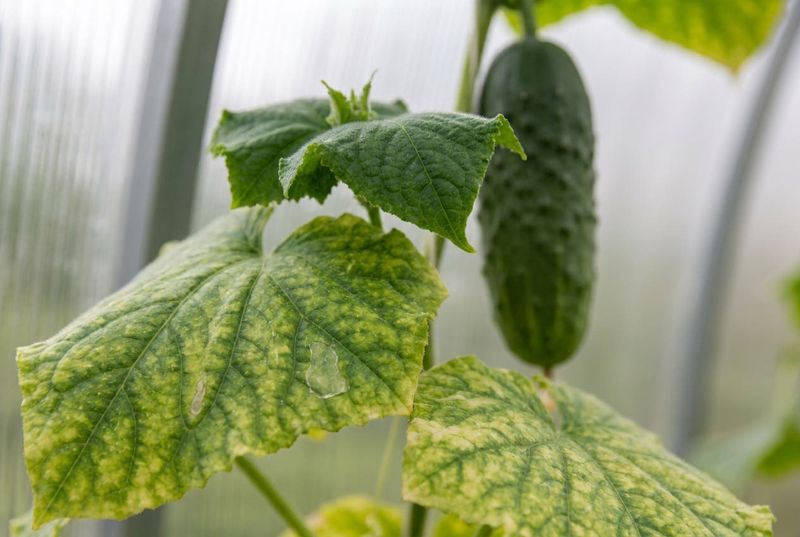
Magnesium deficiency does have a recognizable pattern, and knowing it helps you decide whether testing is worth pursuing. The symptom typically starts on the older, lower leaves rather than on new growth at the top of the plant.
What you see is interveinal chlorosis: the tissue between the leaf veins turns yellow while the veins themselves stay green. Penn State Plant Science describes more severe cases progressing to curling, necrotic spots, or premature leaf drop as the deficiency deepens.
That pattern is a useful clue, but a clue is not a diagnosis. Iowa State University Extension notes that iron deficiency, potassium deficiency, disease, salt injury, and watering stress can all produce yellowing that looks similar to magnesium deficiency on a visual check.
Guessing wrong and adding Epsom salt when the real problem is something else delays the correct fix and can make conditions worse.
There is also a straightforward reason why older cucumber leaves yellow that has nothing to do with nutrition. As the plant matures and puts energy into fruit production, the lowest leaves naturally decline.
University of Maryland Extension advises that yellowing of older, lower cucumber leaves can be a normal part of the plant’s life cycle rather than a sign of disease or deficiency. Younger leaves showing the same interveinal pattern deserve closer attention and a follow-up soil or tissue test.
Treating the symptom pattern as the starting point for investigation, rather than the endpoint, keeps you from wasting money on an amendment that may not help and from missing the actual problem while the plant continues to decline.
Use Soil and Tissue Tests to Confirm a Nutrient Problem
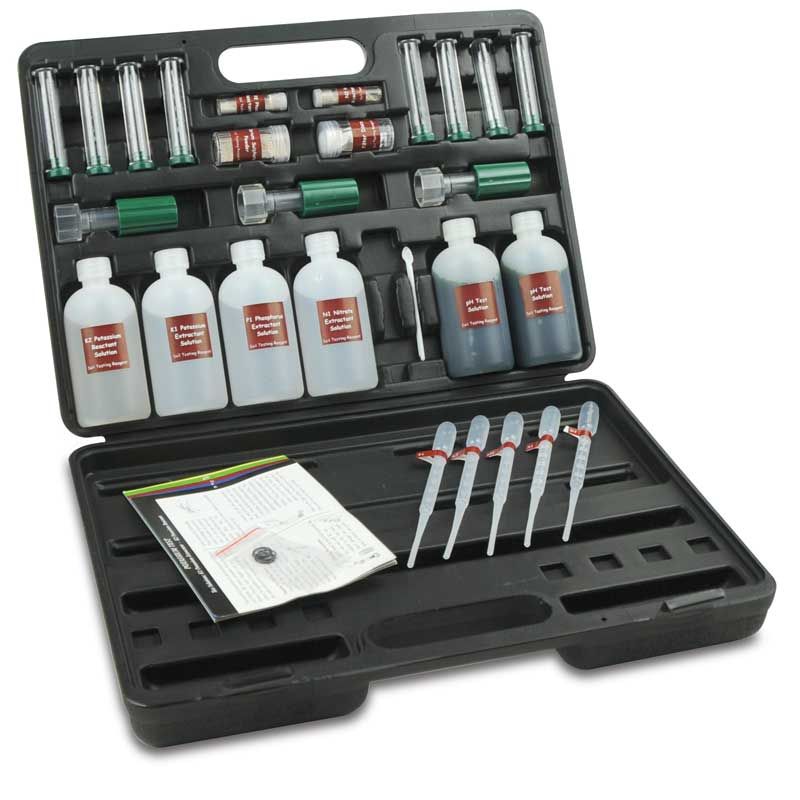
A soil test is the most reliable tool a home gardener has for understanding what the soil actually contains. Without one, adding any amendment is a guess, and guessing with soluble salts like magnesium sulfate carries real risk, especially in containers, raised beds, and other confined growing spaces where nutrients concentrate rather than leach away.
Penn State Extension recommends annual soil testing for cucumber growers, and Oklahoma State University Extension likewise directs growers to base fertility and pH decisions on test results rather than general recipes. Most cooperative extension services offer affordable soil testing through state labs, and the results come with specific amendment recommendations calibrated to your soil type and crop.
Visual inspection alone cannot reliably separate magnesium deficiency from iron or potassium deficiency, disease, salt injury, or moisture stress. The overlapping symptoms mean that even an experienced gardener looking at a yellowing leaf cannot say with certainty which problem is present.
Iowa State University Extension’s nutrient deficiency guide presents this complexity clearly, showing how similar patterns can stem from very different causes.
Tissue analysis adds another layer of confidence when soil results are inconclusive or when symptoms persist despite correcting obvious environmental factors. Tissue testing measures what the plant is actually absorbing, not just what is present in the soil, and it can reveal whether a nutrient is locked up by pH or competing ions rather than genuinely absent.
University of Minnesota Extension points out that magnesium deficiency is far more plausible in sandy, acidic, nutrient-poor soils than in typical backyard garden beds, which means many gardens that look like they need Epsom salt actually do not.
Choose an Amendment Based on Both Magnesium and Soil pH
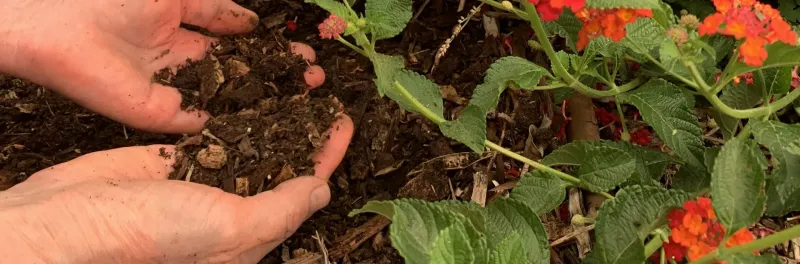
Getting a confirmed magnesium deficiency on a soil test is good information, but it is only half of what you need before choosing an amendment. Soil pH shapes which nutrients are available to plants and which correction makes sense.
Applying the wrong fix can shift pH in an unhelpful direction or add something the soil already has in excess.
Dolomitic lime and magnesium sulfate are both legitimate sources of magnesium, but they behave very differently in the soil. Dolomitic lime contains calcium and magnesium carbonate, so it supplies magnesium while also raising soil pH, which is useful if the soil is too acidic.
Magnesium sulfate supplies magnesium and sulfur without the same pH-raising effect, making it the appropriate choice when magnesium is low but pH is already in the right range. Using dolomitic lime on a soil that is already near neutral or slightly alkaline could push pH too high and create new nutrient availability problems.
Oregon State University’s cucumber production guidance does include magnesium sulfate as a possible treatment when deficiency symptoms appear, but this recommendation is written for commercial growers operating in a soil-test-based production system, not as a universal home-garden instruction. The commercial foliar rate cited in that guidance, 10 pounds of Epsom salt dissolved in 100 gallons of water per acre, reflects crop scale, spray coverage, and water volumes that do not translate directly into a backyard recipe.
Converting that figure into a tablespoon-per-gallon home dose would require adjustments that the original source does not provide.
Oklahoma State University Extension similarly frames magnesium corrections as part of a soil-test-driven fertility plan rather than a routine addition. The practical takeaway is straightforward: get both your magnesium reading and your pH reading from a soil test, share them with your local extension office if you are unsure how to interpret them, and follow product label directions for any amendment you apply.
That sequence protects your plants and your soil far better than any fixed home recipe.
Maintain Moisture and Pollination Without Adding Unneeded Salts
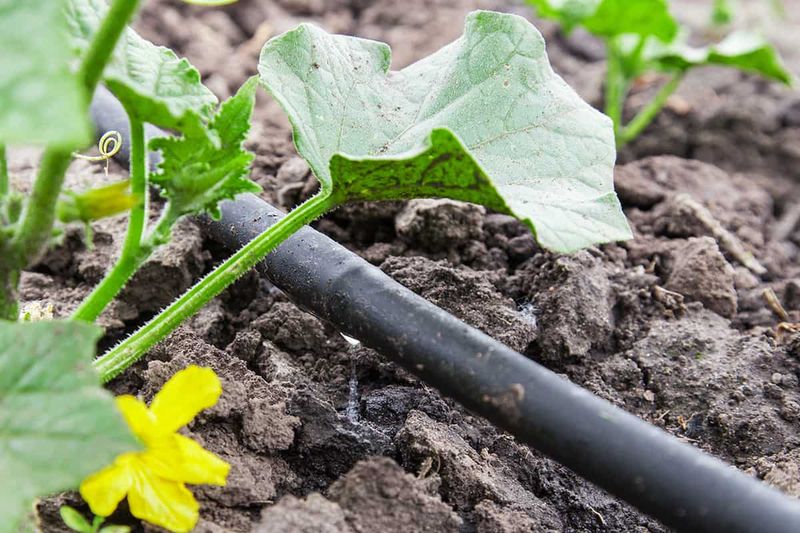
Two of the most common reasons cucumbers underperform have nothing to do with soil chemistry. Consistent moisture and reliable pollination are the foundation of a productive cucumber crop, and both can go wrong quietly without producing obvious warning signs until yield drops or fruit quality suffers.
Cucumbers are thirsty plants, especially during flowering, fruit set, and active fruit development. University of Minnesota Extension recommends keeping soil moisture consistent throughout the growing season and notes that water stress can reduce yield, cause misshapen fruit, and produce bitter flavor.
Letting the soil dry out between waterings and then soaking it heavily creates the kind of boom-and-bust moisture cycle that stresses roots and affects fruit quality even when nutrition is fine.
Mulch is one of the simplest tools for smoothing out moisture swings. A two- to three-inch layer of straw, shredded leaves, or wood chips over the root zone slows evaporation, moderates soil temperature, and reduces the frequency of watering needed.
Clemson Cooperative Extension’s cucumber factsheet recommends drip irrigation or soaker hoses as an efficient way to deliver water directly to the root zone while keeping foliage dry, which also reduces the risk of fungal disease.
Pollination failures are another independent cause of poor fruit set that Epsom salt cannot fix. Cucumber flowers need bees and other pollinators to transfer pollen between male and female blooms.
Cold temperatures, extended cloudy weather, or a shortage of pollinators in your area can leave female flowers unfertilized, producing fruit that shrivels and drops before it develops. Iowa State University Extension’s vegetable garden watering guide reinforces that moisture management is a foundational step that no soil amendment can substitute for.
Checking both moisture and pollination before reaching for any product keeps you focused on the factors most likely to move the needle on your harvest.
Avoid Universal Doses and Quick-Fix Sprays
The most popular Epsom-salt advice online tends to arrive with a confident, specific dose: a tablespoon per gallon, one application per plant per week, or a foliar spray whenever leaves look off. None of those universal recipes come from the authoritative sources reviewed here, and applying them without a confirmed deficiency introduces risks that are easy to overlook.
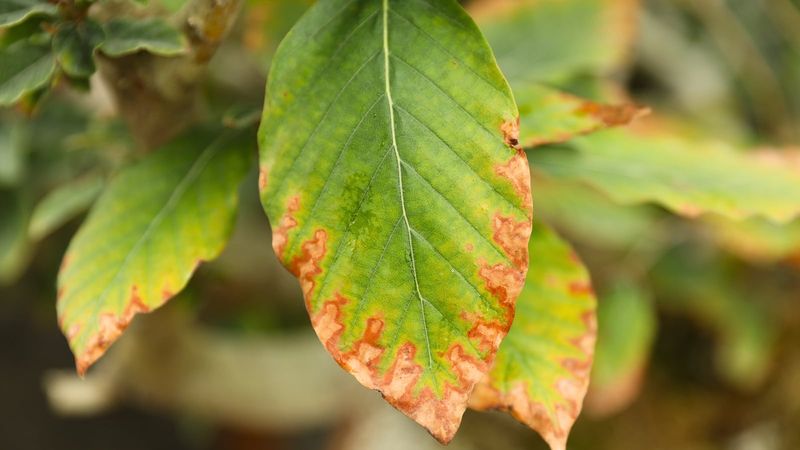
Foliar sprays are a particular concern. University of Minnesota Extension warns that Epsom-salt foliar applications can cause leaf scorch, especially when applied in direct sun or at concentrations higher than the plant can handle.
A spray that looks like a fast cure can leave visible burn marks on leaves and stress the plant further, making the original problem harder to diagnose.
Excess magnesium in the soil creates a different set of problems. High magnesium levels can interfere with calcium uptake, and too many soluble salts in the root zone can injure plant roots directly.
Penn State Extension’s high-tunnel cucumber guide highlights salt accumulation as a real concern in enclosed or poorly drained growing environments, where salts cannot leach away between waterings. Containers and raised beds face the same risk, and repeated Epsom-salt applications in those spaces can push salt levels high enough to damage the very plants you are trying to help.
Washington State University Extension makes one additional point that often gets lost in gardening discussions: Epsom salt is not a registered pesticide, and WSU’s published guidance on Epsom salt use in home gardens states it should not be used as one. Applying it to control cucumber beetles, fungal disease, bacterial wilt, or other pests and pathogens is not supported by evidence and may delay the correct treatment while the problem worsens.
Treating yellow leaves with a spray before identifying the cause is the gardening equivalent of taking the wrong medication because the symptoms looked familiar.
Follow a Diagnosis-First Cucumber Recovery Plan
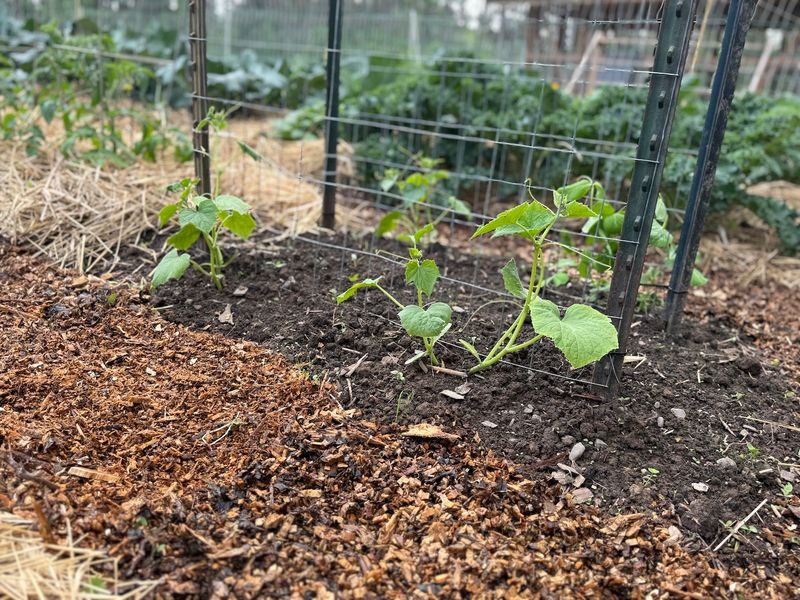
When cucumbers are struggling, the most productive first step is observation rather than application. Start by noting which leaves show symptoms and whether the pattern fits normal aging or something more specific.
Check soil moisture at root depth, not just at the surface, and confirm that temperatures have been within the productive growing range. Look for pests on leaf undersides and stems, and watch whether female flowers are setting fruit or dropping off.
If environmental and pest factors look fine and symptoms persist, that is the right moment to submit a soil sample to your state cooperative extension lab. Penn State Extension and University of Minnesota Extension both anchor fertility decisions in test results rather than visual guesses.
If the test confirms low magnesium and pH is in an appropriate range, University of Minnesota Extension and other extension sources support magnesium sulfate as one targeted option, applied according to product directions and local guidance.
Epsom salt is a real tool with a real but narrow job. Keeping it in that lane, reserved for confirmed magnesium deficiency rather than general cucumber worry, means it works when you use it and does not create new problems when you do not need it.
A cucumber that gets the right diagnosis recovers faster than one that gets the popular remedy.