
The Most Underrated North Carolina Native Shrub That May Complement Your Yard’s Tick-Management Edge
Ticks are a real problem for North Carolina homeowners, and most people are always looking for smarter ways to protect their yards. American beautyberry is a native shrub that has been getting attention lately because of a genuine scientific finding about compounds in its leaves.
Before you rush out to plant a row of it along your property line, though, the full story is more nuanced and more interesting than the headline suggests. Understanding what the research actually says will help you make better decisions about your yard and your family’s safety.
Meet American beautyberry, the shrub behind the claim
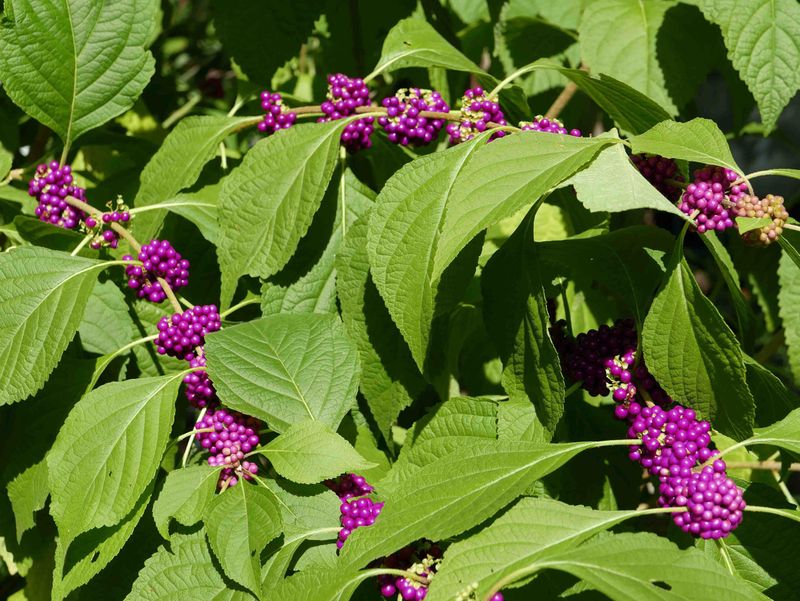
Walk the wooded edges of almost any North Carolina county in late summer and you will likely spot a shrub that stops you mid-stride. American beautyberry, known botanically as Callicarpa americana, produces clusters of metallic purple berries so vivid they look almost artificial.
NC State Extension’s plant profile confirms it grows across all three of the state’s major regions: the Coastal Plain, Piedmont, and mountains, making it one of the most widely adaptable native shrubs a North Carolina homeowner can choose.
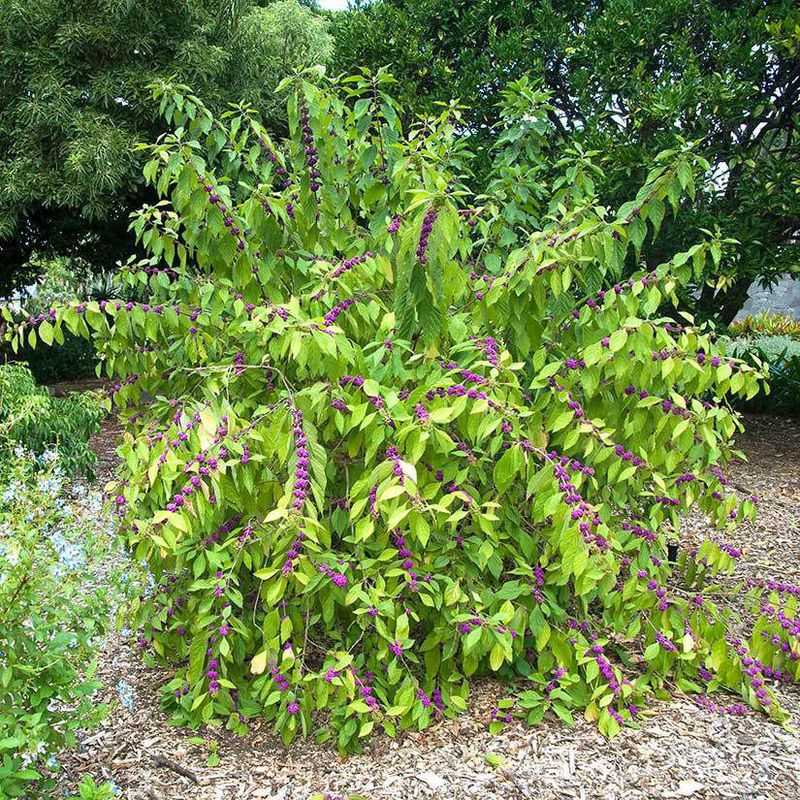
At maturity, a beautyberry typically reaches three to eight feet tall and spreads three to six feet wide. The stems arch outward gracefully rather than growing straight up, giving the plant a loose, open silhouette.
It thrives in full sun to partial shade and handles a range of soil types as long as drainage is adequate, so it fits comfortably along the sunny edge of a lawn where it meets a tree line, a fence row, or a naturalized border.
The berries ripen from roughly August through October and attract an impressive list of wildlife. Robins, brown thrashers, purple finches, eastern towhees, squirrels, raccoons, and opossums all feed on the fruit.
That wildlife value is real and worth celebrating on its own terms. It has nothing to do with proven tick control, and this article will keep those two things clearly separate throughout.
The premise worth correcting right away is that a beautyberry planting creates a tick-free yard boundary. No field study has shown that.
What research has found is narrower and still genuinely interesting: specific compounds isolated from beautyberry leaves showed strong repellent activity against one tick species in a laboratory setting. Beautyberry earns a place in a thoughtful North Carolina yard as a native, wildlife-supporting shrub that may complement a well-maintained edge, not as a proven tick barrier on its own.
The laboratory result is narrower than the headline
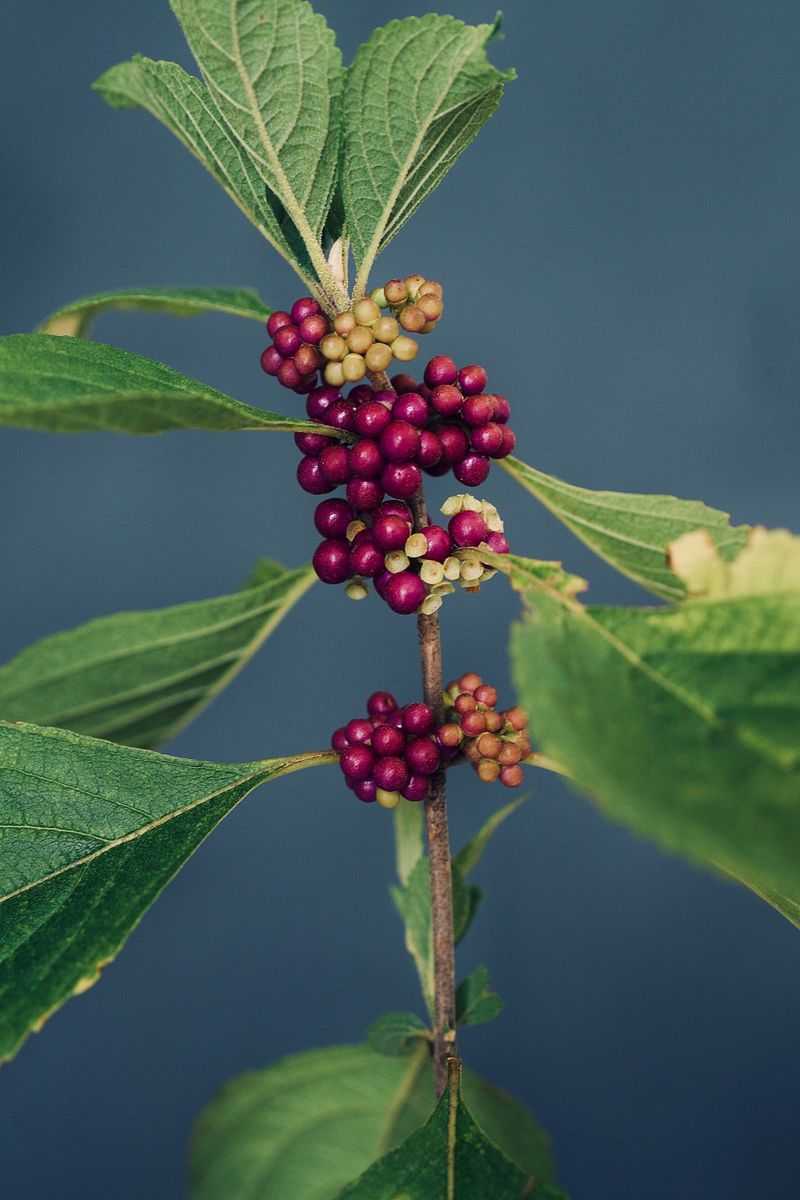
The excitement around beautyberry and ticks traces back to a real piece of science, but the details matter enormously. Researchers identified two terpenoid compounds in beautyberry leaves, callicarpenal and intermedeol, and tested their repellent activity against tick nymphs under controlled laboratory conditions.
The published study reported that at a specified concentration applied to treated cloth, these isolated compounds repelled 96 to 98 percent of blacklegged tick nymphs. That is a striking number, and it is the honest foundation of beautyberry’s reputation.
Two things about that result deserve equal attention. First, the compounds were isolated from the leaves and applied to cloth in a laboratory assay.
The study did not test a living shrub planted in a yard, an odor plume drifting from a beautyberry hedge, or a property edge lined with the plants. The gap between “isolated compounds on treated cloth” and “shrubs growing in your yard” is large, and no follow-up residential study has closed it.
Second, the same study found substantially weaker activity against lone star tick nymphs. That distinction matters a great deal in North Carolina, where lone star ticks are common and medically significant.
The USDA described these findings as preliminary when the research was released, signaling that more work would be needed before practical recommendations could follow.
Historical accounts suggest that people once rubbed crushed beautyberry leaves on their skin and on horses to deter insects, and that folk use is part of what prompted the laboratory investigation. However, the USDA’s preliminary framing and the absence of EPA registration mean that applying crushed leaves to skin, children, or pets is not a recommended or evaluated practice.
The science gave us a promising lead about specific compounds. Translating that lead into a planted-shrub yard strategy requires steps the research has not yet taken.
One study cannot represent every North Carolina tick
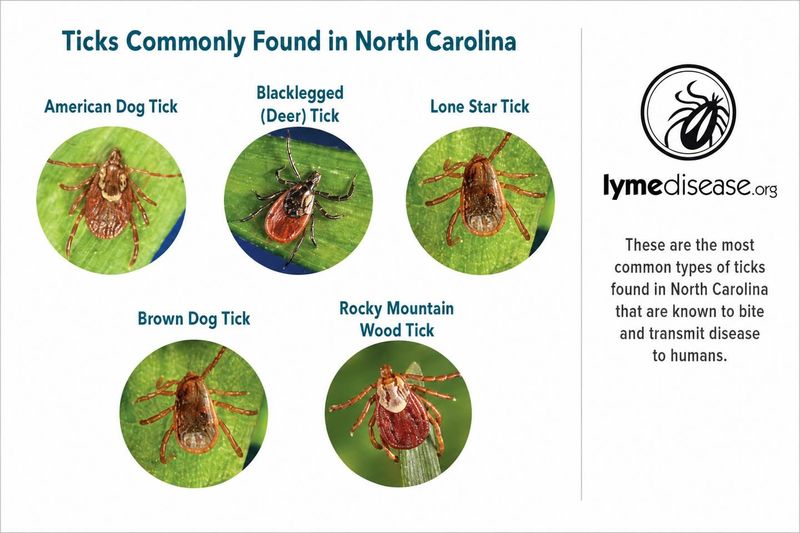
North Carolina is home to several medically important tick species, and their biology, host preferences, and disease associations differ enough that a result against one species tells you only so much about the others. The state’s 2024 tick-borne disease surveillance summary tracks cases linked to blacklegged ticks, lone star ticks, American dog ticks, and additional species across all regions of the state.
Each carries different pathogens and poses different risks depending on where you live and how much time you spend outdoors.
The 96 to 98 percent repellency figure from the beautyberry study applied to blacklegged tick nymphs under laboratory conditions. Lone star tick nymphs in the same study responded much less strongly to the same compounds.
Extending that single result to every tick species in the state, or treating it as proof that a beautyberry planting will reduce your overall residential tick exposure, goes well beyond what the data support.
There is also a meaningful difference between a chemical that repels ticks in a lab assay and a reduction in the number of ticks present around a home. A repellent keeps ticks from climbing toward a target on treated material.
Reducing residential tick abundance involves changing the habitat, host access, and movement patterns of tick populations across a property over time. Those are different problems requiring different kinds of evidence, and beautyberry has been tested for the first but not the second.
For North Carolina homeowners, the practical takeaway is straightforward. Beautyberry’s leaf chemistry is genuinely interesting and may one day contribute to a registered repellent product.
Right now, a shrub planted along your yard edge does not stand in for that chemistry, and it certainly does not address every tick species that might cross your lawn.
Build a maintained edge that may reduce exposure
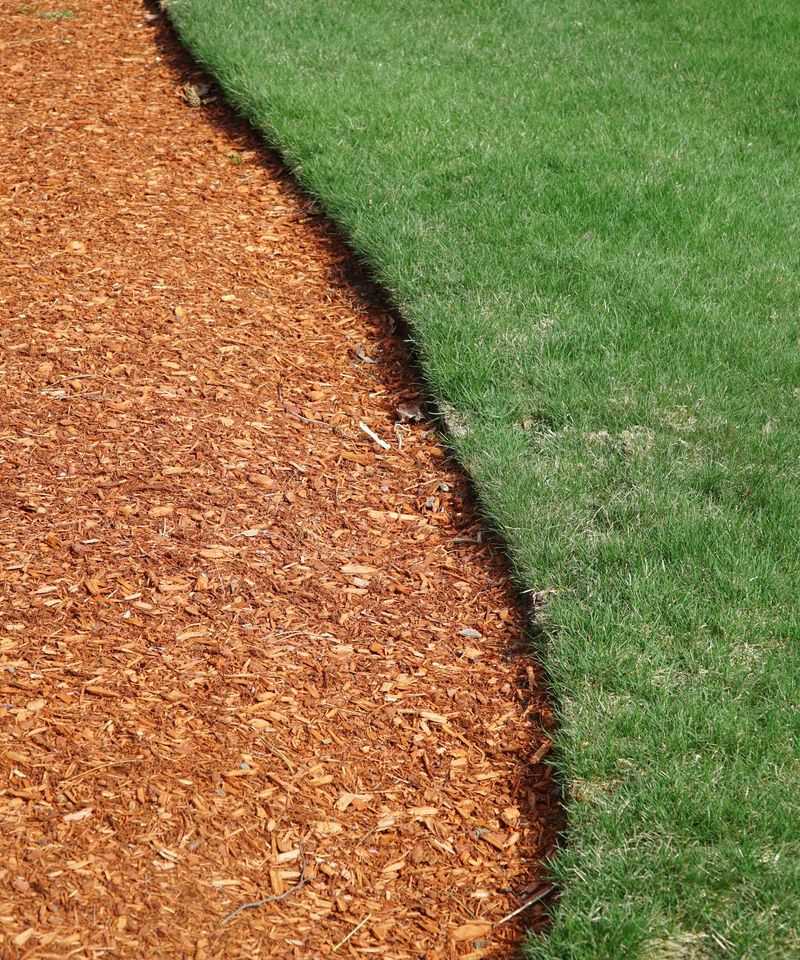
Regardless of which plants grow along your property line, the physical condition of your yard edge matters more than any single species. CDC guidance on preventing tick bites recommends a set of landscape practices that work together: remove leaf litter and brush regularly, mow grass and keep it short, and install a maintained three-foot-wide strip of wood chips or gravel between your lawn and any wooded or brushy habitat.
Patios, decks, play equipment, and the spots where your family spends the most time outdoors should sit away from wooded or brushy edges whenever the layout of your yard allows.
These steps are framed by public health authorities as exposure-reduction measures, not as a system that eliminates ticks entirely. Results vary with shade levels, proximity to surrounding woods, initial tick density on your property, and how consistently you maintain the edge.
A wood-chip strip that goes unattended through a wet fall can accumulate fallen leaves and break down into a damp, leaf-litter-like layer. The CDC’s Tick Management Handbook explicitly notes that landscape management alone may not eliminate many ticks or prevent disease transmission, which is an honest framing that should stay with you as you plan.
Leaf litter removal deserves particular emphasis. A peri-domestic tick study found that frequent leaf-litter removal was associated with reduced likelihood of tick presence around homes, making it one of the more practically supported maintenance habits in the residential tick literature.
That kind of consistent, repeated action tends to outperform any single planting decision.
Think of the maintained edge as a system with several working parts: cleared ground, managed vegetation, a dry buffer strip, and thoughtful placement of outdoor living areas. Beautyberry can sit within that system as a native, wildlife-supporting element.
The system itself, maintained over time, is what provides whatever exposure reduction a well-kept yard edge can reasonably offer.
Place beautyberry in an open, manageable transition zone
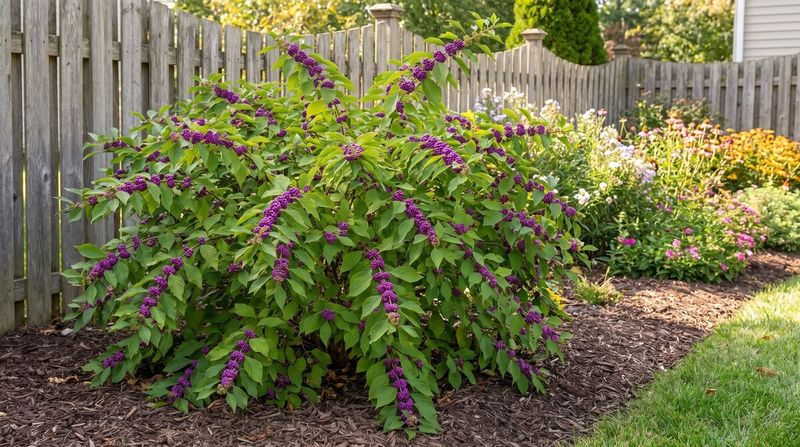
Knowing where and how to plant beautyberry makes a meaningful difference in how well it fits a tick-management-conscious yard. The shrub’s horticultural needs point toward the same conditions that broader tick research suggests are less favorable for tick activity.
Beautyberry needs adequate light and well-drained soil, which means it belongs in a sunny to partially shaded transition zone rather than tucked under a dense tree canopy where shade, moisture, and leaf accumulation tend to be heaviest.
Its broad, arching form is worth understanding before you plant. A mature beautyberry can spread three to six feet wide, and the branches arch outward rather than growing upright.
NC State Extension’s beautyberry profile notes that it is deciduous and drops its leaves in winter, so it does not function as an evergreen screen. Treating it as a compact, tight hedge without regular pruning will lead to disappointment and, more practically, to a dense, shaded base that can hold moisture and leaf litter.
Placing beautyberry in an open transition zone, spaced to allow air movement and light to reach the ground beneath it, is a cautious inference drawn from what researchers know about the vegetation conditions that tend to support tick presence. Studies linking shade, woody vegetation, canopy cover, and leaf litter with residential tick presence suggest that open, maintained plantings are a more defensible choice than dense, unmanaged thickets, though none of those studies tested beautyberry specifically.
The berry display and the wildlife it attracts are reasons enough to grow this shrub well. Position it where it gets the light it needs, keep the ground beneath it clear of accumulated debris, and let it do what it genuinely does well: add native character, seasonal color, and food for birds and small mammals to a yard edge that you are already managing thoughtfully.
Balance wildlife benefits with site-specific tick considerations
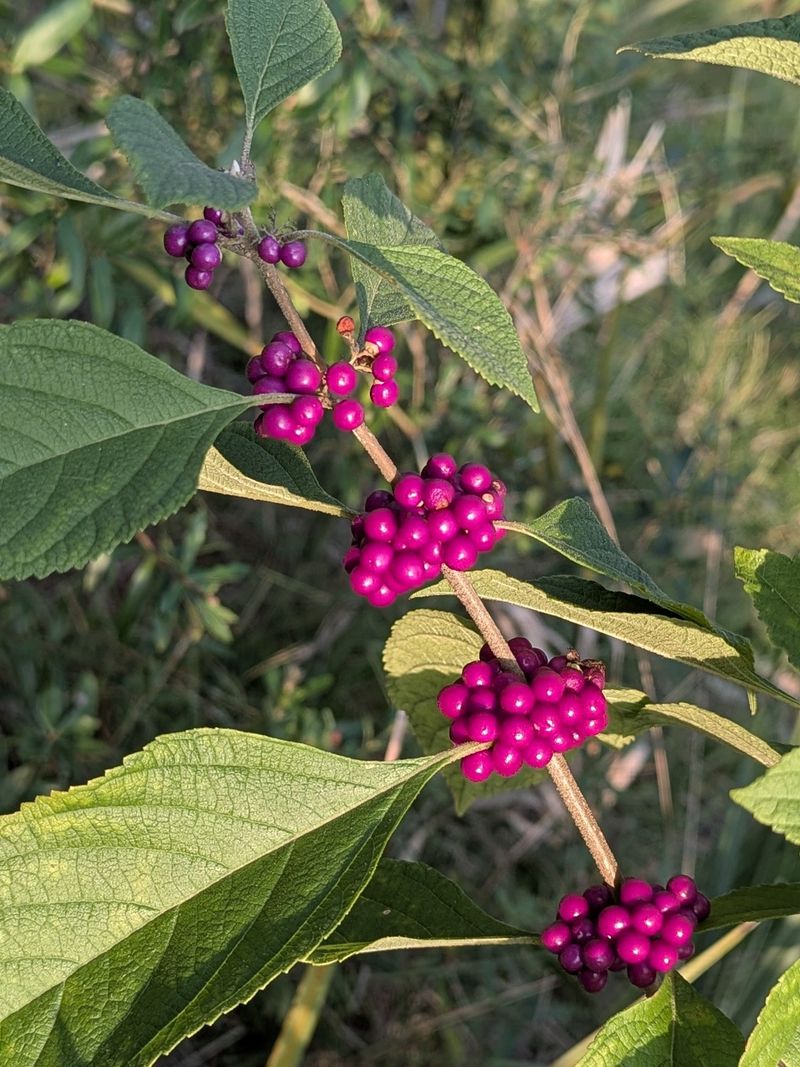
Beautyberry’s wildlife credentials are genuine and worth pursuing on their own merits. Songbirds including robins, brown thrashers, purple finches, and eastern towhees eat the berries alongside squirrels, raccoons, and opossums.
NC State Extension’s plant profile documents this range of species, and for homeowners who want to support native wildlife, that list alone makes beautyberry a worthwhile addition to the yard.
At the same time, wildlife presence and tick risk are connected in ways that are complex and site-specific. Some of the animals attracted to beautyberry berries, including small mammals, can serve as tick hosts.
Deer, which do not eat beautyberry fruit but may pass through a yard with attractive plantings, are well-documented tick carriers. The relationship between wildlife habitat and residential tick exposure is not a simple equation, and it would be misleading to suggest that planting beautyberry either increases or decreases your tick risk through the animals it feeds.
Deer exclusion is one measure that CDC yard management guidance includes among recommended practices where it is practical. Fencing is not realistic for every property, and it does not stop every tick-carrying host, but where deer pressure is high and fencing is feasible, it can reduce one significant vector of tick introduction.
Japanese barberry is a separate and instructive case. Research on residential yard management measures has linked dense Japanese barberry habitat with higher blacklegged tick abundance in some forest settings, and removal experiments have reduced tick counts.
That is a strong reason to remove Japanese barberry where it grows. It does not mean that substituting beautyberry will produce the same measured reduction, because the studies tracked barberry removal, not beautyberry addition.
Each plant is its own variable, and the evidence should be read that way.
Keep personal and pet protection in the plan

A beautyberry planting, however thoughtfully placed and maintained, does not replace the personal and pet protection measures that public health authorities recommend. CDC tick prevention guidance lists EPA-registered repellents including DEET, picaridin, IR3535, oil of lemon eucalyptus or PMD, and 2-undecanone for human use, along with protective clothing such as long pants tucked into socks, light-colored clothing to spot ticks more easily, and thorough tick checks after time spent outdoors.
These practices remain necessary regardless of what grows along your yard edge.
For dogs, the standard of care is veterinarian-recommended tick prevention, not a landscaped yard. EPA’s framework for flea and tick products governs which treatments are evaluated and labeled for use on animals.
Products that carry that label have been through a review process that a folk remedy or a planted shrub has not. Crushing beautyberry leaves and applying them to a dog or a child is not a practice supported by that regulatory framework, and it should not be treated as one.
NC State Extension’s guide to insect repellent products offers practical guidance on choosing and using registered repellents correctly for different situations and age groups. That kind of product-specific, label-directed use is what complements a well-managed yard, not a substitute for it.
Beautyberry offers something real: a native shrub with documented leaf chemistry that caught the attention of USDA researchers, genuine wildlife value, and a natural fit in a North Carolina yard edge that you are already working to keep open and maintained. The shrub brings the native character; consistent maintenance, a dry buffer strip, registered repellents, and tick checks bring the defensible protection.
Those two things working together make a more honest and more effective yard strategy than any single plant ever could.