
Why North Carolina Gardeners Generally Should Leave a Box Turtle Where They Find It
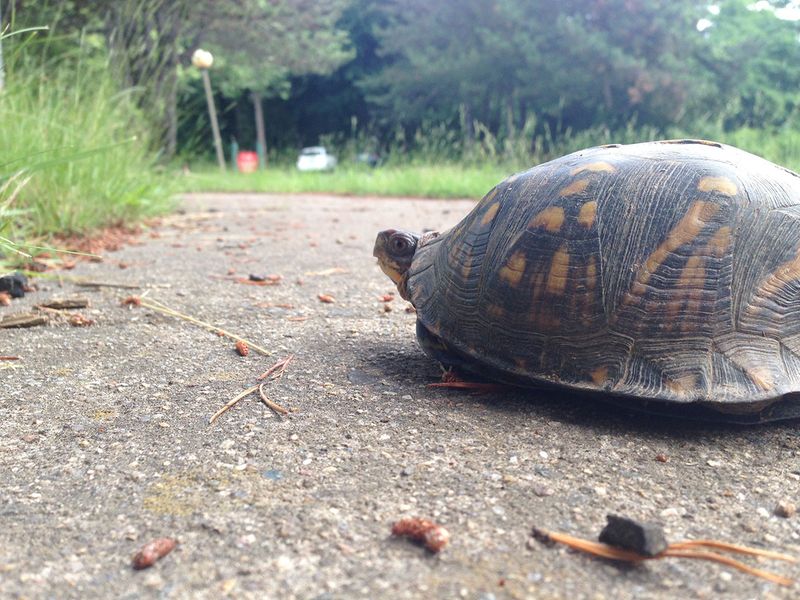
Spotting a box turtle crossing your yard on a warm spring morning can feel like a small wildlife emergency, but for most North Carolina gardeners, the kindest thing to do is also the easiest: leave it alone. Eastern box turtles are a familiar part of the state’s forests, fields, and suburban neighborhoods, and a turtle wandering through your garden is usually doing exactly what box turtles do.
Understanding why well-meaning relocation can cause real harm helps you become a better backyard steward without lifting a finger.
A Box Turtle in the Yard Is Usually Not Lost
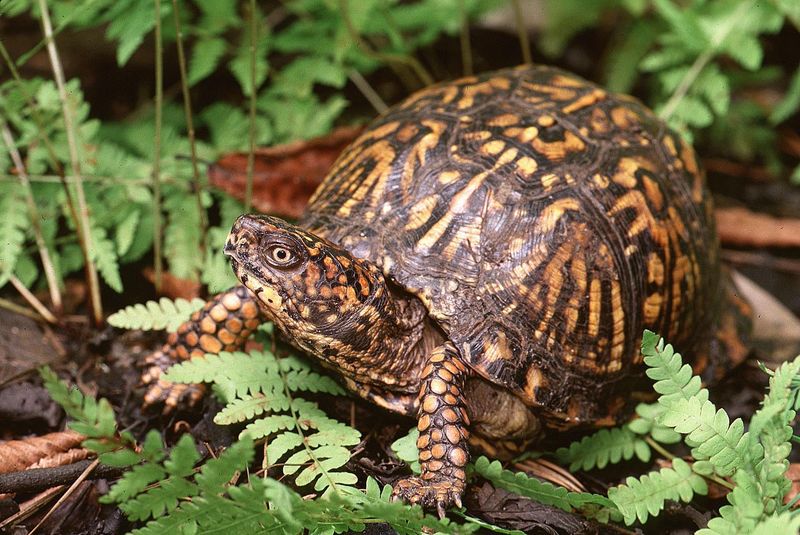
Eastern box turtles are not woodland-only animals that accidentally stumble into human spaces. North Carolina Wildlife Resources Commission (NCWRC) guidance confirms that the species naturally uses forests, open fields, neighborhoods, and residential backyards across the state.
A turtle moving through your Piedmont garden or Coastal Plain yard is behaving normally, not signaling that something has gone wrong.
Many gardeners assume a turtle in the yard must be disoriented, abandoned, or in need of a rescue. That assumption is rarely correct.
Box turtles routinely cross lawns, move between patches of cover, and pass through developed areas as part of their ordinary daily and seasonal movements. Seeing one near your vegetable bed or flower border is not evidence of distress.
The better response is to watch from a respectful distance and let the animal continue on its way. NCWRC’s guidance on injured and orphaned wildlife is clear that the first and best response to encountering a wild animal is usually to leave it alone or return it to where it was found.
That principle applies directly here: a healthy box turtle crossing your yard is already where it needs to be.
There are two situations that change this default advice. An obvious hazard, such as a turtle sitting in a driveway with a car about to back out, may call for a brief, short-distance assist.
And a turtle showing clear signs of injury, like a cracked shell or active bleeding, warrants a call to a licensed wildlife rehabilitator. Outside those narrow exceptions, the yard sighting you are watching is not an emergency, and stepping in to relocate the animal is more likely to cause harm than prevent it.
Its Home Range Holds Familiar Resources
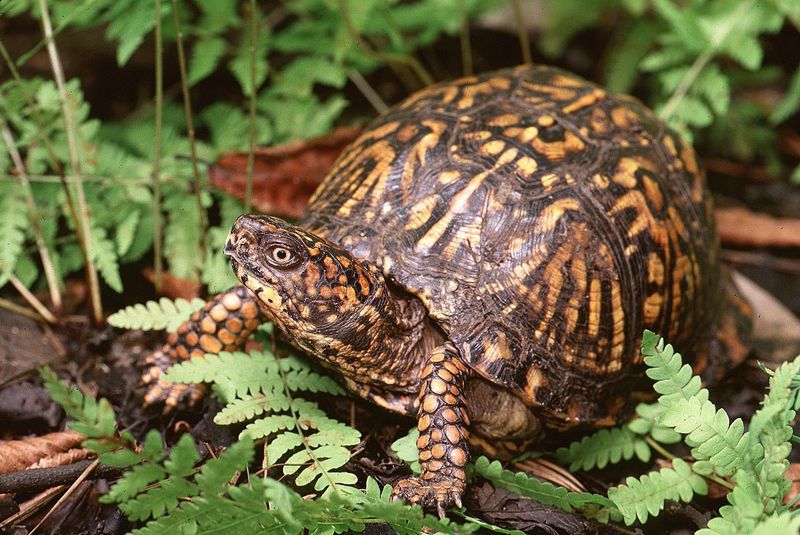
A box turtle does not roam randomly. Over months and years, it learns a specific patch of landscape, and that familiarity is not incidental; it is the foundation of the animal’s survival.
Researchers use the term “home range” to describe the area an individual uses over time for feeding, sheltering, nesting, and overwintering. Unlike the defended territories of some birds or mammals, a box turtle’s home range is not aggressively guarded, but it is deeply known.
NCWRC describes box turtles as typically spending their entire lives within a relatively small area, often under 2 acres, though home-range size varies considerably among individuals and populations. A study of eastern box turtles in North Carolina’s Piedmont Ecological Province documented habitat preferences that varied by site and individual, reinforcing that no single acreage figure applies universally.
What matters more than the exact size is what the range contains.
Inside that familiar area, the turtle knows where to find ripe berries and mushrooms, where moist leaf litter stays cool through summer, where soft soil supports nesting, and where to settle in for winter dormancy. Research on habitat selection in eastern box turtles shows that these preferences vary by region and population, meaning a habitat that looks ideal to a person may not match what a specific turtle has learned to use.
Moving a box turtle to a nearby pond, a wooded corner of the yard, or a patch of trees down the street is not a neutral habitat upgrade. It strips the animal of the spatial knowledge it has built over years and drops it into an unfamiliar landscape where food, cover, nesting spots, and safe overwintering sites are all unknown quantities.
The new location may look lush and natural from the outside while offering the turtle none of the resources it actually knows how to find.
Relocation Can Turn Normal Movement Into Extra Risk
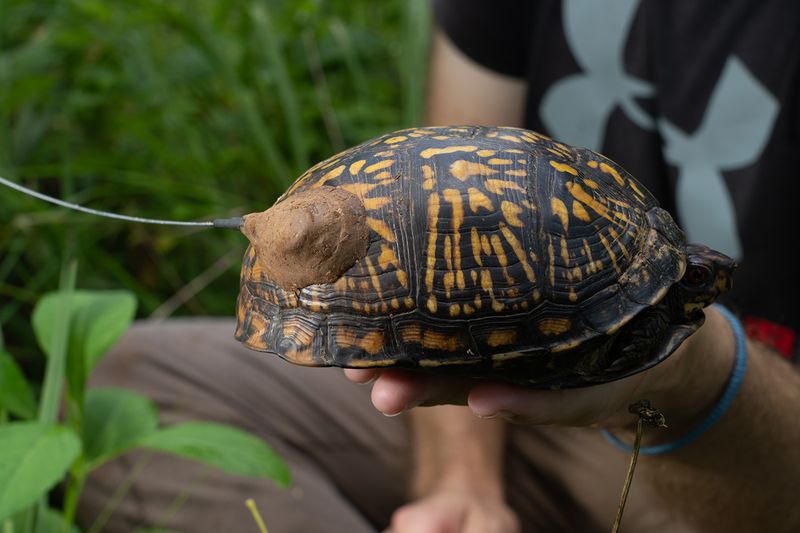
The clearest North Carolina evidence for avoiding unnecessary relocation comes from a study conducted near Davidson. Researchers tracked 10 resident eastern box turtles and 10 turtles that had been relocated, comparing their movements and outcomes over the study period.
The contrast was striking: relocated turtles used substantially larger home ranges and logged significantly more daily movement than resident turtles, while five of the 10 relocated individuals died or disappeared during the study. None of the 10 resident turtles died or disappeared.
That is a meaningful result from a small study, and it deserves careful framing. Ten turtles per group is not a large sample, and the five deaths or disappearances among relocated animals should not be read as a universal mortality rate for any turtle that gets moved.
Still, the direction of the finding is consistent with what researchers expected: turtles dropped into unfamiliar landscapes moved more, used more energy, and faced more exposure to hazards.
What caused those outcomes? The researchers pointed to several possible explanations rather than a single proven cause.
Unfamiliar surroundings may have forced turtles to search longer for food, water, and shelter, increasing energy expenditure. Animals navigating unknown terrain face greater contact with roads, predators, and other urban threats.
A summary of the relocation study findings also raised disease susceptibility as a possible contributing factor. None of these explanations was proven as the definitive cause of every loss, but together they describe a plausible picture of what happens when a turtle’s learned landscape is suddenly replaced by an unfamiliar one.
For a North Carolina gardener, the practical takeaway is straightforward. A new location that looks perfectly suitable, with trees, leaf litter, and a water source nearby, may still disrupt the turtle’s established movements in ways that are invisible to a human observer.
The yard the turtle was already crossing was already part of its world.
Strong Homing Does Not Mean Every Turtle Walks Home Forever
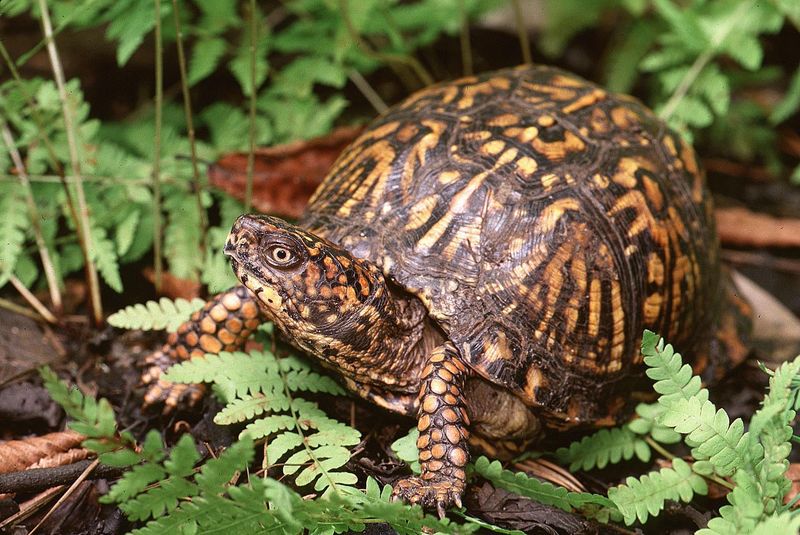
Box turtles have a well-documented pull toward their familiar ground. Laboratory and field research has shown that individuals can orient toward their home range after being displaced, and early research on box turtle orientation suggested geomagnetic cues may play a role in this homing ability, though the exact sensory mechanism remains an open question.
The homing behavior is real, but the version of it that circulates in popular advice, where every relocated turtle spends the rest of its life trying to walk back to a place it can never reach, is stronger than the science actually supports.
The Davidson study showed that relocated turtles moved more and used larger areas than resident turtles, which is consistent with homing behavior, searching for resources, or both. Researchers could not always separate those motivations from one another.
Increased movement after relocation tells us that something changed for the animal, but it does not prove that every individual was locked in a futile homeward march.
A study of box turtles relocated during construction of the Intercounty Connector Highway in Maryland adds useful contrast. Off-site turtles in that project moved more and used larger areas, similar to the Davidson findings.
But those turtles did not permanently leave the study area, did not show difficulty locating overwintering sites, and survival differences among treatment groups were not statistically significant. Some managed conservation translocations have even resulted in turtles successfully establishing new home ranges and reproducing.
The distinction between a professionally designed translocation and a homeowner carrying a turtle across the neighborhood matters here. Managed projects involve careful site selection, monitoring, health screening, and timing in ways that a well-intentioned backyard intervention cannot replicate.
The Davidson study’s findings apply most directly to the kind of casual relocation a gardener might perform, not to a supervised conservation program. The practical lesson stands: moving a turtle to a new location can disrupt its normal life, even if the outcome is not always fatal and not always a permanent failed homeward journey.
Protect the Ground the Turtle Already Uses
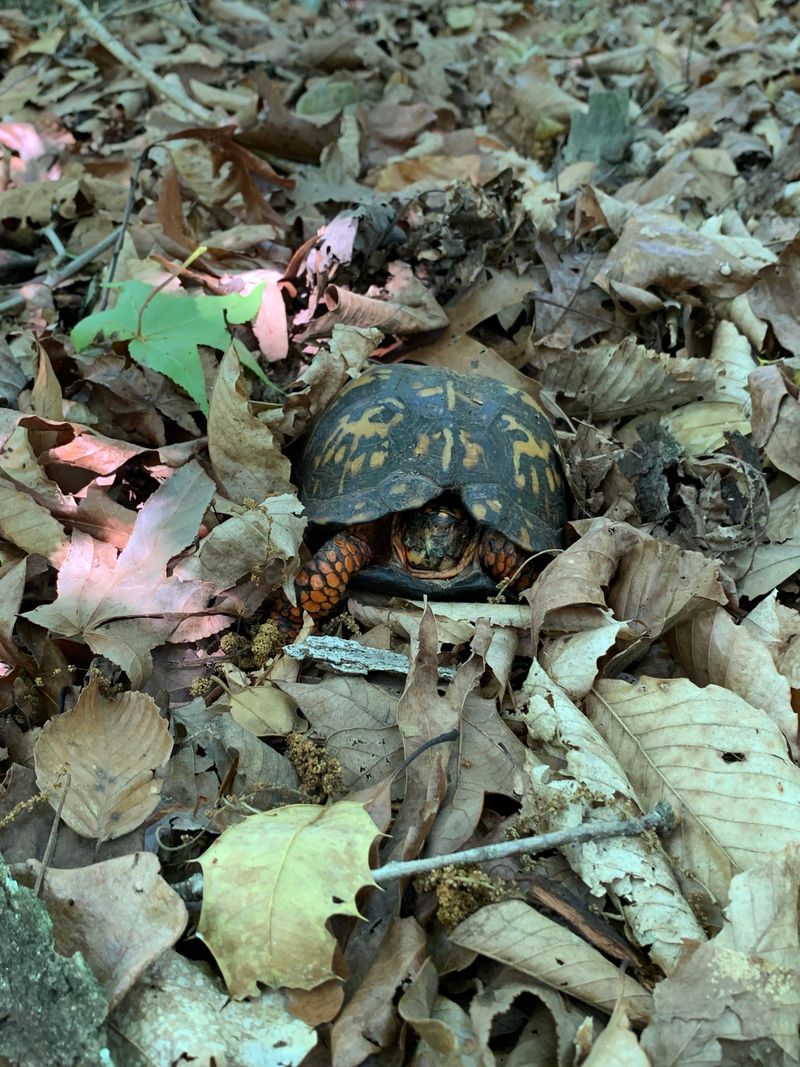
Leaving a box turtle alone is the most important thing a gardener can do, but the habitat surrounding that turtle also deserves attention. Eastern box turtles depend on undisturbed leaf litter, low-growing understory cover, and natural shelter like brush piles and fallen logs.
Research on habitat selection in eastern box turtles shows that preferences vary significantly by region and population, which means a generic habitat improvement, like clearing brush to create a tidy garden edge, can remove resources a local turtle actually uses.
Yard maintenance habits matter more than most gardeners realize. Rotary mowers and string trimmers are a serious hazard to turtles moving through low cover, particularly during spring and early summer when box turtles are most active in North Carolina.
Walking a mowing path before starting the engine and slowing down near known cover areas costs little time and can prevent a fatal encounter.
Vehicles present a similar risk. A box turtle resting under a car in a driveway or moving through a gravel parking area is not visible from the driver’s seat.
NCWRC notes that eastern box turtles use varied habitats across North Carolina, including neighborhoods where vehicle traffic is a daily reality. Checking before backing out, especially during warm months, is a simple habit that protects an animal you may never see.
Gardeners can also support the turtle’s home range by keeping some areas of the yard deliberately unmanicured. A corner with leaf litter, a low brush pile, or a patch of native ground cover costs nothing and provides cover, foraging habitat, and potential shelter.
Moving the turtle to a different part of the property to give it “better” habitat ignores the fact that it already knows where to go.
Move It Only When an Immediate Hazard Requires Help
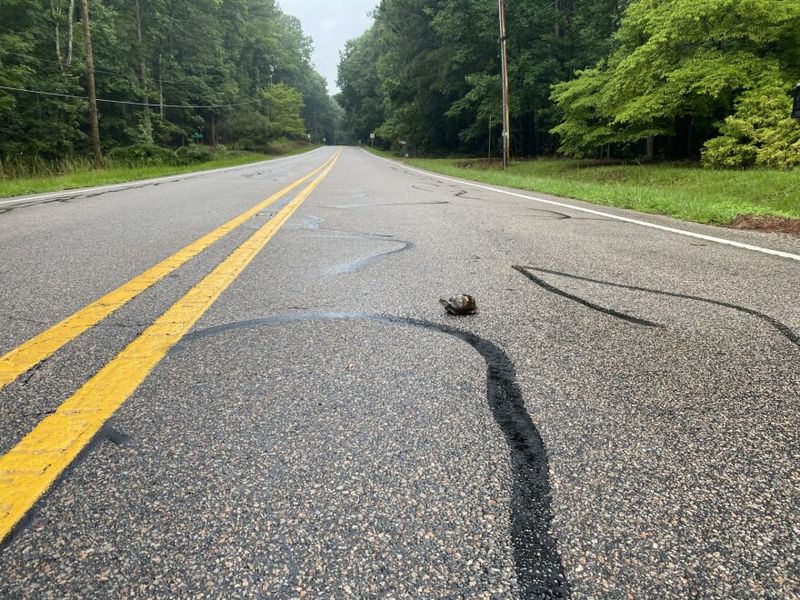
The hands-off rule has one clear exception: a turtle facing an immediate hazard that a brief, safe intervention can remove. The most common scenario is a turtle in a roadway.
If traffic conditions allow you to act without putting yourself at risk, you can pick the turtle up and carry it to safety, but the direction and distance of that move matter.
NCWRC advises moving a turtle only the shortest distance necessary, ideally less than 50 feet, and placing it on the side of the road toward which it was already heading. That last detail is easy to get wrong.
A turtle crossing from left to right should be placed on the right shoulder, not carried back to the left side. Returning it to the side it came from, or moving it to what looks like a safer spot farther away, can prompt the animal to re-enter the road and cross again.
The 50-foot guideline is a practical rule of thumb designed to minimize disruption to the turtle’s movements, not a precise biological threshold at which harm suddenly begins. Moving a turtle 60 feet is not dramatically worse than moving it 40 feet.
The principle behind the number is to keep the animal as close to its familiar ground as possible while removing the immediate danger.
Personal safety comes before any turtle rescue. NCWRC road-safety guidance is explicit that you should never enter a busy roadway or attempt an assist when traffic makes intervention unsafe.
A box turtle that you cannot safely reach is a turtle you cannot safely help. Waiting for a safe gap in traffic, or accepting that intervention is not possible, is the right call when road conditions are dangerous.
No wildlife assist is worth a serious injury.
Obvious Injury Calls for a Rehabilitator
A box turtle that pulls into its shell and stays motionless is not automatically injured. NCWRC notes that threatened wild animals may remain completely still for extended periods, sometimes for hours, as a defensive response to a perceived threat.
The right move when you encounter a motionless turtle is to back away, give it space, and watch from a distance. In most cases, once it feels safe, it will resume moving on its own.
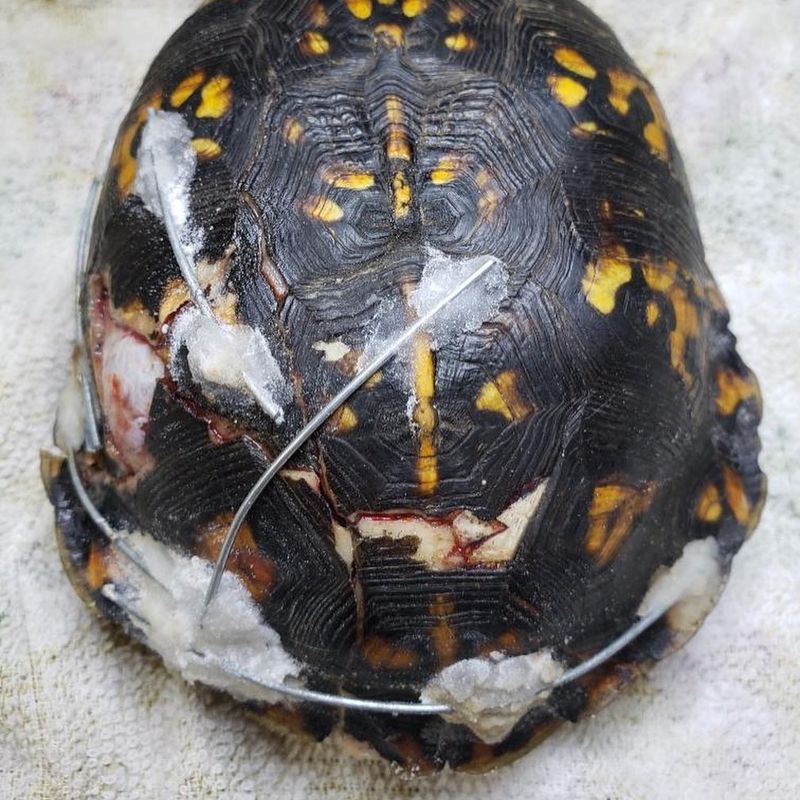
Genuine injury looks different from defensive stillness. A cracked or broken shell, visible bleeding, a limb that hangs at an abnormal angle, or fly eggs around a wound are signs that the animal needs professional attention.
In those situations, the appropriate step is to contact a licensed reptile wildlife rehabilitator, not to take the turtle home, attempt home treatment, or release it somewhere that seems more suitable.
NCWRC specifically cautions against taking a box turtle home, both because possession of wildlife in North Carolina generally requires authorization and because well-meaning home care rarely provides what an injured turtle actually needs. A rehabilitator has the training, equipment, and legal authority to stabilize the animal, treat its injuries, and plan an appropriate release.
Finding a licensed reptile rehabilitator in North Carolina can be done through the NCWRC website or by calling a local wildlife office. When you make contact, describe what you observed as specifically as possible: where the turtle was found, what the injury looks like, and whether the animal is still in the same location.
That information helps the rehabilitator decide whether the turtle needs to be transported or whether remote guidance is sufficient. Acting quickly on an obvious injury matters, but acting correctly matters just as much.
Use a Simple Rule for the Next Yard Sighting
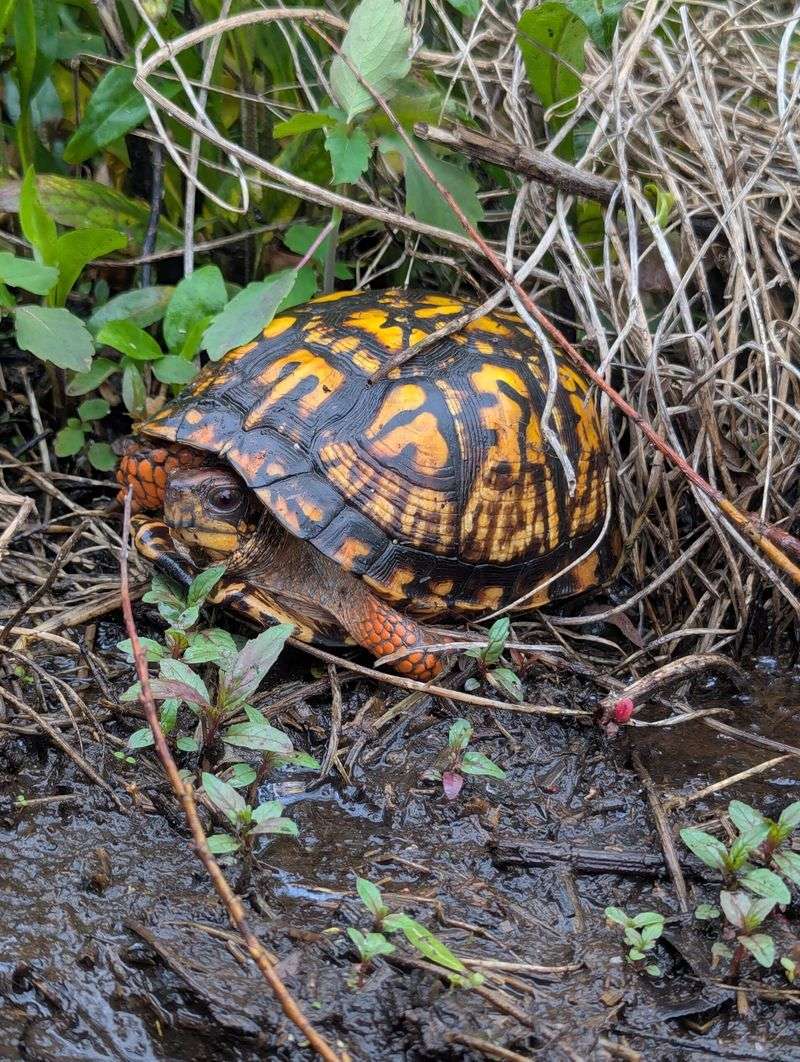
When a box turtle appears in your yard, a short mental checklist covers almost every situation. Is the turtle healthy and moving normally?
Observe it from a distance and leave it alone. Is it resting in a spot where a vehicle, mower, or foot traffic poses an immediate risk?
Move it the shortest safe distance, in the direction it was already heading. Does it show obvious signs of injury like a broken shell or bleeding?
Contact a licensed reptile wildlife rehabilitator rather than attempting home treatment.
NCWRC’s guidance and the available research both point toward the same core principle: unnecessary relocation can disrupt a box turtle’s established movements, increase its exposure to hazards, and separate it from the food, shelter, and overwintering sites it has spent years learning to find. That disruption is real even if it does not doom every moved turtle to a lifetime of failed homeward wandering.
Good stewardship, according to NCWRC, usually means doing less rather than more. The turtle crossing your yard already knows its way around your neighborhood far better than you do.