
What It Really Means When A Carpenter Bee Keeps Hovering Around Your North Carolina Yard
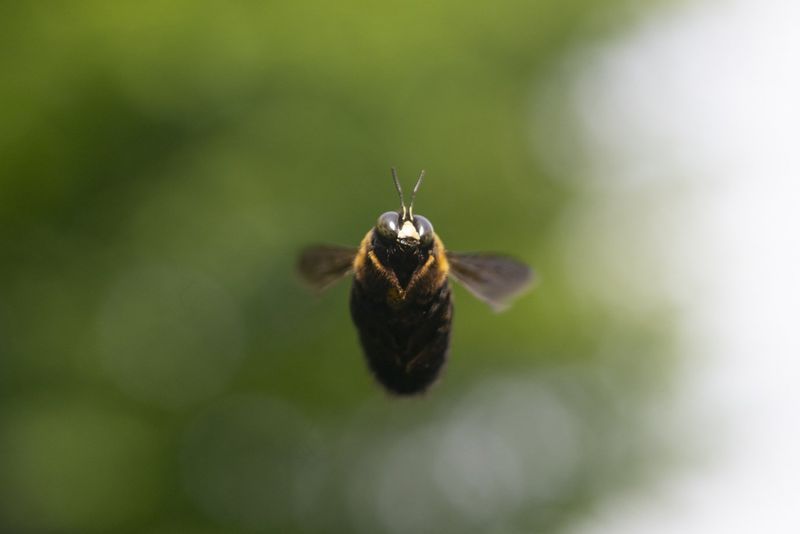
That big, buzzing bee circling your porch or deck can stop you in your tracks, especially when it seems to be zeroing in on you. Before you reach for a flyswatter, there is a much simpler explanation for what is going on.
Understanding why that bee keeps hovering can help you protect your wood structures, make smarter decisions about your yard, and give North Carolina’s native pollinators a fair shot at the same time.
Hovering usually marks territory, not a yard-health score
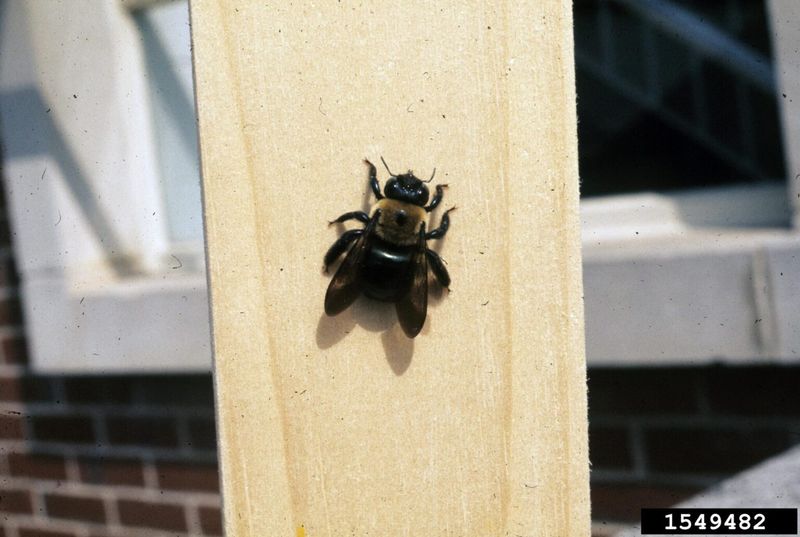
Male carpenter bees are the ones putting on that dramatic aerial show near your porch, deck, or fence. Penn State Extension’s carpenter bee guidance explains that males routinely hover and dart toward people, pets, and other bees as a way of defending mating territory near a nesting site.
The flight looks threatening, but male carpenter bees have no stinger, so that mid-air standoff carries no actual sting risk from the male himself.
Female carpenter bees do have a stinger and can use it, though they generally do so only when handled directly or cornered. Seeing a bee hover persistently does not tell you whether you are watching a male or a female from a distance, so the safest habit is to let any hovering carpenter bee go about its business rather than swatting at it.
A startled or grabbed female is more likely to sting than one flying freely.
The hovering is most directly a sign of territorial behavior near a mating or nesting area, often centered on a piece of exposed wood somewhere close by. That observation is a useful ecological clue: something in the vicinity is meeting the bee’s needs, whether that means nestable wood, nearby flowers, or both.
What it cannot do is serve as a reliable score for your yard’s overall pollinator health.
A territorial male may be patrolling an area while the actual nest sits in a fence post down the road, a neighbor’s shed, or a dead limb at the edge of your property. The bee’s presence does not prove that your specific yard is supplying the nesting habitat or the forage.
Treat the hovering as a prompt to look more carefully at your surroundings rather than as a verdict about your landscape’s ecological value.
First, make sure it is the large carpenter bee
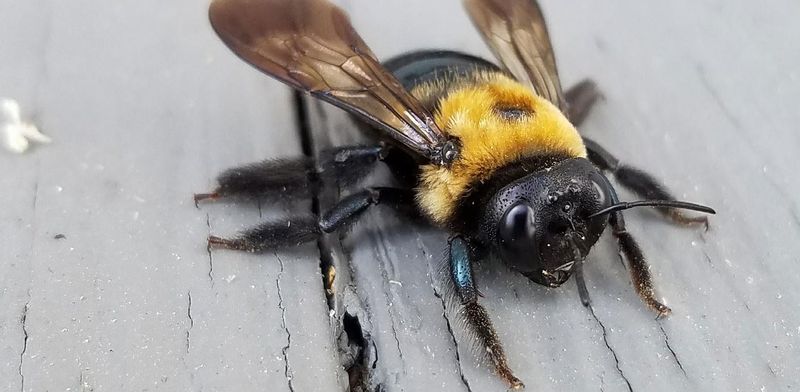
Getting the identification right matters before you inspect a single board or change anything about your yard. The large eastern carpenter bee, Xylocopa virginica, is the species most likely responsible for the hovering and any wood damage you might find in a North Carolina yard.
NC State Extension’s guide to non-honey bee stinging insects describes the key visual marker: a large carpenter bee has a glossy, hairless black abdomen, while a bumble bee of similar size has a noticeably hairy abdomen, usually banded with yellow. Males of the eastern carpenter bee often show a pale or white patch on the face, which can help you sort them out at close range.
North Carolina also has small carpenter bees in the genus Ceratina. These are metallic blue-green to black, considerably smaller than the eastern carpenter bee, and they nest in the pithy stems of plants rather than in structural wood.
If the hovering bee near your porch is small and iridescent, the guidance about half-inch holes in eaves and deck rails does not apply. NC State’s bee hotel resident guide notes that small carpenter bees are common North Carolina natives with very different habits from their larger relatives.
Confusing the two groups leads to unnecessary alarm or misplaced action. A small metallic bee working through dead flower stems in your garden border is going about its business in a way that requires no intervention at all.
Reserve the wood-inspection steps and any protective measures for situations where you have confidently identified the larger, thumb-sized, glossy-abdomen bee that is the actual candidate for boring into your porch rail or shed wall.
The nearby nest explains more than the hovering does
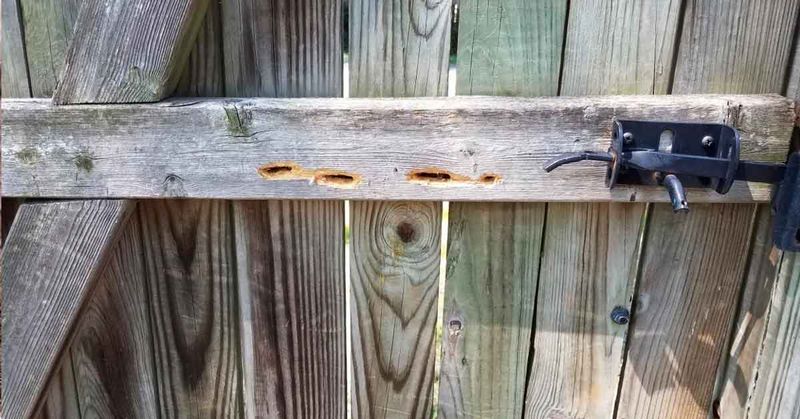
Carpenter bees excavate wood to create shelter and brood chambers, but they do not eat the wood they remove. Penn State Extension’s overview of stinging insect nesting behavior points out that carpenter bees are solitary nesters, meaning each female provisions her own nest rather than sharing the work with a colony the way honey bees or bumble bees do.
A female chews a nearly round entrance hole, then tunnels along the wood grain to create a series of separate brood cells, each packed with a mixture of pollen and nectar before an egg is laid and the cell is sealed.
In North Carolina, NC State Extension reports that carpenter bees typically emerge in April and May, with females constructing or enlarging tunnels through the spring. New adults appear later in summer, which can bring a second wave of bee activity around structures even after the spring nesting push has wound down.
Before concluding that the nest is somewhere in your house, work through the more likely locations first. Penn State Extension’s carpenter bee resource notes that these bees favor bare, weathered wood in relatively exposed spots.
That description fits fence posts, dead limbs, garden sheds, deck edges, fascia boards, porch rails, eaves, and outdoor furniture at least as well as it fits the walls of a home.
A hovering bee near a flower bed may be foraging rather than nesting anywhere on your property at all. Walk the perimeter and look at the wood surfaces that get the most sun and weather exposure.
Finding an actual entrance hole and the sawdust or yellowish-brown staining that often appears beneath it gives you far more actionable information than watching a bee hover ever will.
What the bee may reveal about your yard—and what it cannot
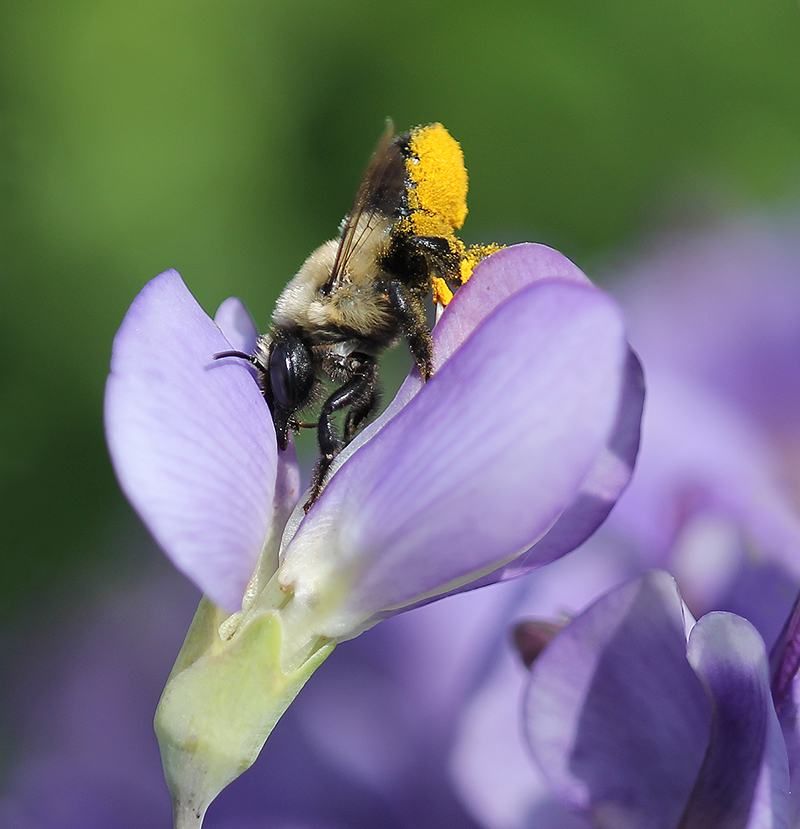
Seeing a carpenter bee working your yard is a limited but real clue. It suggests that something in the area is meeting at least one of the bee’s needs, whether that is a piece of nestable wood, a patch of accessible flowers, or both.
Penn State Extension’s profile of the eastern carpenter bee is careful to frame the sighting as evidence of nearby territory or habitat rather than as proof that the yard has been assessed as ecologically healthy.
A territorial male may be patrolling an area that includes your yard while nesting and feeding somewhere entirely off your property. Even if the nest is on your land, a single species using one resource does not tell you whether your yard supports a broad or stable community of pollinators.
USDA Forest Service research on pollinator habitat and wild bees shows that different native bee species rely on different combinations of floral resources and nesting substrates, so the presence of one species cannot stand in for a full habitat assessment.
Native bees as a group use an impressive range of nesting sites. Some nest in bare or sparsely vegetated ground.
Others require hollow plant stems, dead wood, or brush piles. University of Minnesota Extension’s woodland pollinator guidance reinforces that a yard needs varied nesting substrate, not just flowers, to support a genuinely diverse bee community.
Carpenter bees do visit flowers and can transfer pollen in the process, making them useful for some plants. However, they sometimes approach long-tubed flowers by slitting the base of the bloom to reach nectar directly, bypassing the reproductive structures entirely.
USGS research on nectar robbery by the eastern carpenter bee documents this behavior in blueberry crops, illustrating that “beneficial pollinator” is accurate in many contexts but not a blanket description of every flower interaction the bee makes.
Inspect the wood before deciding there is a problem
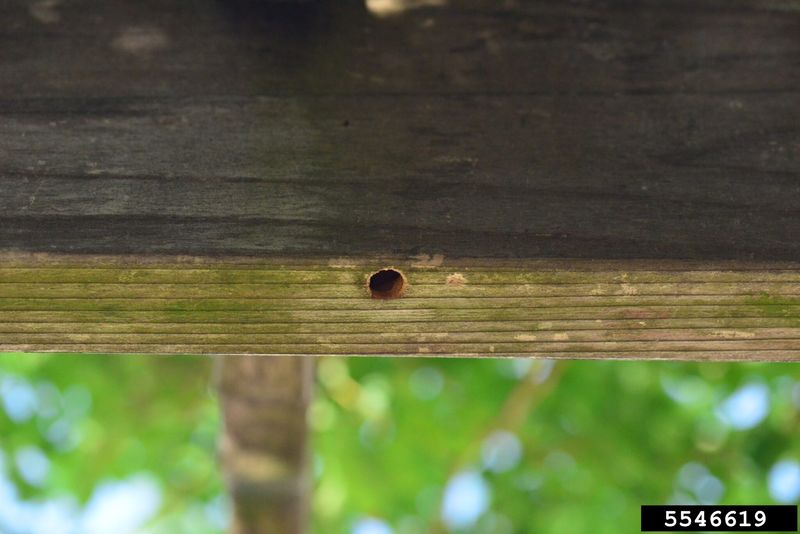
Hovering alone does not make a pest problem. The stronger case for action comes from what you find when you actually look at the wood nearby.
NC State Extension’s stinging insect guide describes the entrance hole of a large carpenter bee as nearly round and roughly one-half inch wide. Look below the hole for fresh sawdust or a yellowish-brown staining on the wood surface, which is a reliable sign of recent activity.
Bare, weathered, and relatively soft wood draws the most attention from nesting females. Unpainted porch rails, the exposed ends of deck boards, fascia boards that have lost their finish, old fence posts, and the siding on unfinished sheds are all worth checking.
Painted or well-finished wood is less attractive, though it is not completely protected. A bee that is determined to reuse an existing tunnel may return to treated wood if the entrance is already there.
A single hole near a flower bed is a very different situation from a cluster of tunnels accumulating in a load-bearing post or a thin fascia board that has been worked over for several seasons. Repeated tunneling in the same piece of wood can weaken or disfigure it over time, and woodpeckers sometimes enlarge existing holes while searching for larvae, compounding the damage.
Moisture can also enter open tunnels and accelerate decay.
Run through a proportionate checklist before reaching any conclusion. Is the hole in structural wood or decorative trim?
Is it a single entrance or one of many? Is there fresh sawdust indicating current activity, or does the hole look old and weathered?
Has the same spot been worked over in previous years? A yes to those last two or three questions moves the situation from “interesting observation” to “worth addressing,” while a lone hole in a fence post with no other evidence is usually a much smaller concern.
Protect structures without treating the whole yard
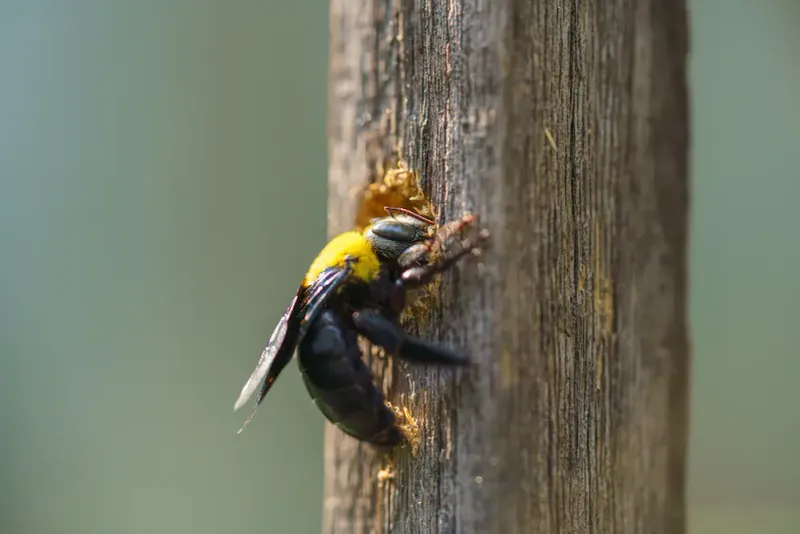
When the inspection turns up minor activity and no meaningful structural damage, the most reasonable response is to leave the bees alone. Male hovering is not evidence of a sting hazard, and a single tunnel in a fence post does not call for yard-wide treatment.
NC State Extension specifically states that spraying hovering carpenter bees is not a sensible or particularly safe use of pesticides, because it exposes non-target pollinators to unnecessary risk without addressing the actual nesting site.
Finishing exposed wood is the most straightforward preventive step. Paint, stain, or a quality exterior sealant on bare porch rails, deck edges, eaves, and fascia boards makes those surfaces less appealing to nesting females.
University of Georgia Extension’s carpenter bee guidance notes that finishing wood can discourage nesting, but frames it as a deterrent rather than a guarantee. A bee that has already established a tunnel in treated wood, or one that finds a missed patch of bare wood, may still nest there.
If activity is genuinely ongoing and causing accumulating damage to structural or highly exposed wood, targeted treatment at the nest opening is a more defensible approach than spraying the broader area. Any product used must carry a label that legally authorizes the specific site and application method you intend to use.
The 2026 North Carolina Agricultural Chemicals Manual directs applicators to verify current labels and comply with all current regulations before use.
EPA guidance on pollinator protection strategies advises avoiding pesticide applications when pollinators are actively foraging or when blooming plants could intercept drift, and following any label-specified timing, protective equipment, and application restrictions. Keep any treatment confined to the affected wood, not the lawn or flowering plants, and consider timing applications for early morning or evening when foraging activity is lower.
When in doubt about product selection or application details, contact NC State Extension or a licensed pest management professional familiar with North Carolina requirements.
A stronger pollinator yard offers more than carpenter-bee wood
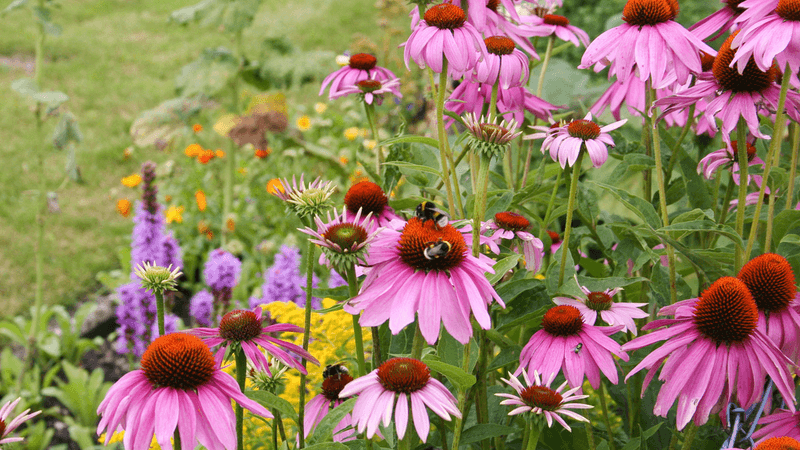
Once you have addressed any legitimate wood concerns, the more rewarding project is improving the yard for the full range of native pollinators that share North Carolina with you. NC State Extension’s native plant landscaping guide recommends building successive bloom from early spring through fall so that something is always flowering when bees are active.
For Piedmont and Coastal Plain yards, that might mean wild bergamot, beebalm, and mountain mint in summer, followed by coneflowers and blazing star, then goldenrod and asters carrying the season into fall. Mountain gardeners in the Blue Ridge can draw on many of the same genera, adjusting for elevation and local growing conditions.
Choosing region-appropriate plants is easier with a good filter tool. NC State Extension’s native plant selection resource lets you sort by native status, bloom time, wildlife value, and regional suitability, so you can match choices to your specific corner of the state rather than picking from a generic list.
Flowers alone do not complete the picture. University of Minnesota Extension’s pollinator nest guidance explains that many wild bees need undisturbed bare or sparsely vegetated ground for nesting, hollow or pithy plant stems left standing through winter, dead wood, or brush piles.
A perfectly manicured yard with no structural complexity beyond a flower bed leaves most ground-nesting and stem-nesting bees without a place to raise young.
When filling gaps in your planting plan, avoid reaching for non-native plants that can spread beyond your yard. NC State identifies Japanese honeysuckle, multiflora rose, bicolor lespedeza, and autumn olive as non-native plants introduced into North Carolina, and replacing them with native alternatives protects the wider landscape your pollinators move through.
Retaining a small brush pile, a section of unmowed ground, or a few standing dead stems costs nothing and can meaningfully expand the habitat value your yard offers to bees beyond the carpenter bee itself.
Read the sign, then choose the smallest effective response
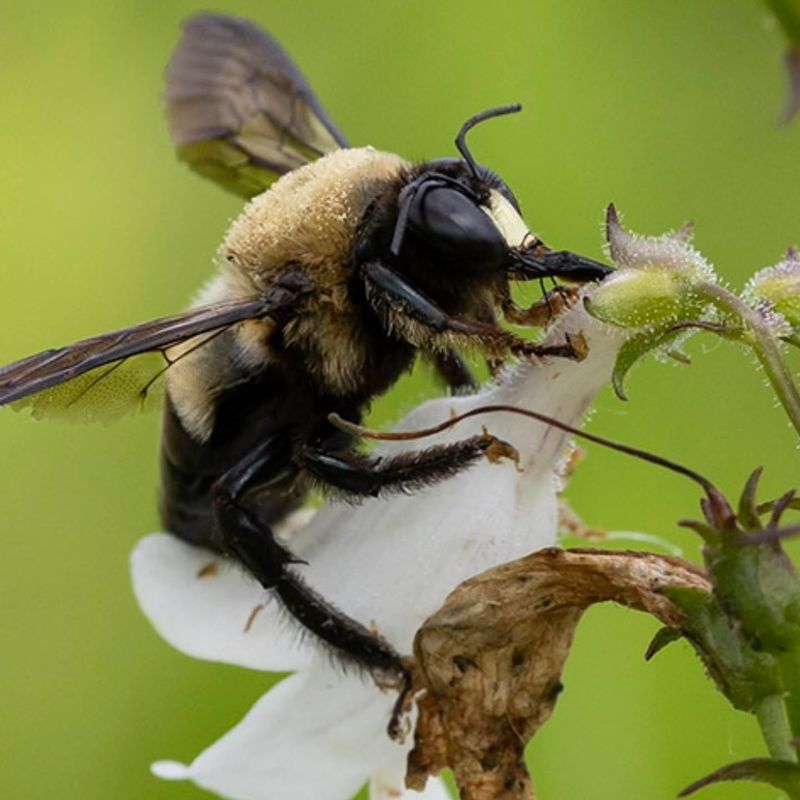
A hovering carpenter bee is a prompt to pay attention, not a reason to panic or spray. The bee is most likely a territorial male near a mating or nesting site, telling you that some piece of exposed wood or patch of flowers in the vicinity is worth investigating.
Penn State Extension’s eastern carpenter bee overview frames the insect as something between a beneficial visitor and a potential maintenance issue, depending entirely on what you find when you look more carefully.
The practical sequence is straightforward. Confirm the species, then walk the wood surfaces most likely to attract nesting females.
If you find active tunneling in structural or repeatedly targeted wood, address it selectively with a finish or, when necessary, a properly labeled targeted treatment. NC State Extension is clear that minor activity with no meaningful damage does not require intervention.
Beyond the wood question, use the sighting as motivation to add successive native blooms and varied nesting habitat so the yard serves a wider range of pollinators over the long term.
A yard that reads the signs carefully and responds in proportion ends up protecting both its structures and the native bees that move through the surrounding North Carolina landscape, which is a better outcome than either ignoring the damage or reaching for a spray can at the first hover.