
The Most Underrated North Carolina Native Shrub That Feeds Songbirds Right Through The First Frost
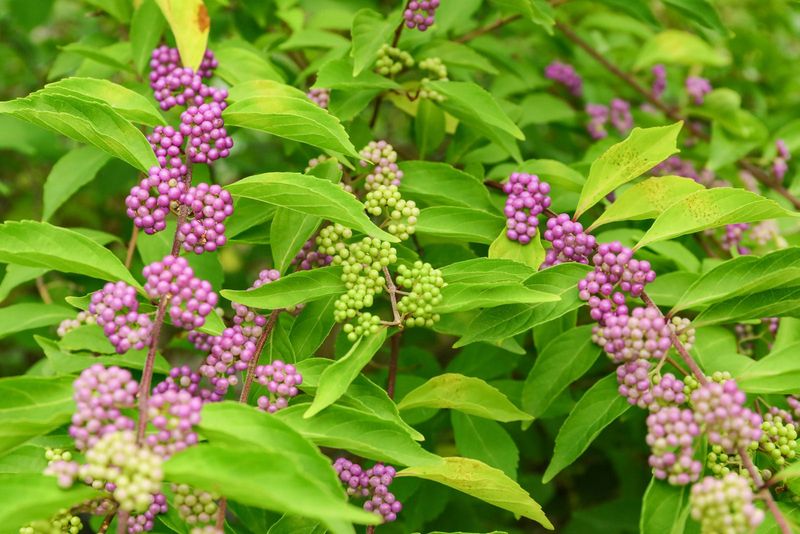
Walk through a North Carolina yard in late October and most shrubs have already given up their fruit, leaving branches bare and birds searching. American beautyberry is one native option that can still be loaded with clusters of vivid purple berries when that happens, drawing in thrashers and robins before the season fully closes.
Knowing how to choose, place, and care for this plant can make a real difference for the wildlife in your yard.
A practical native choice for late-fall color
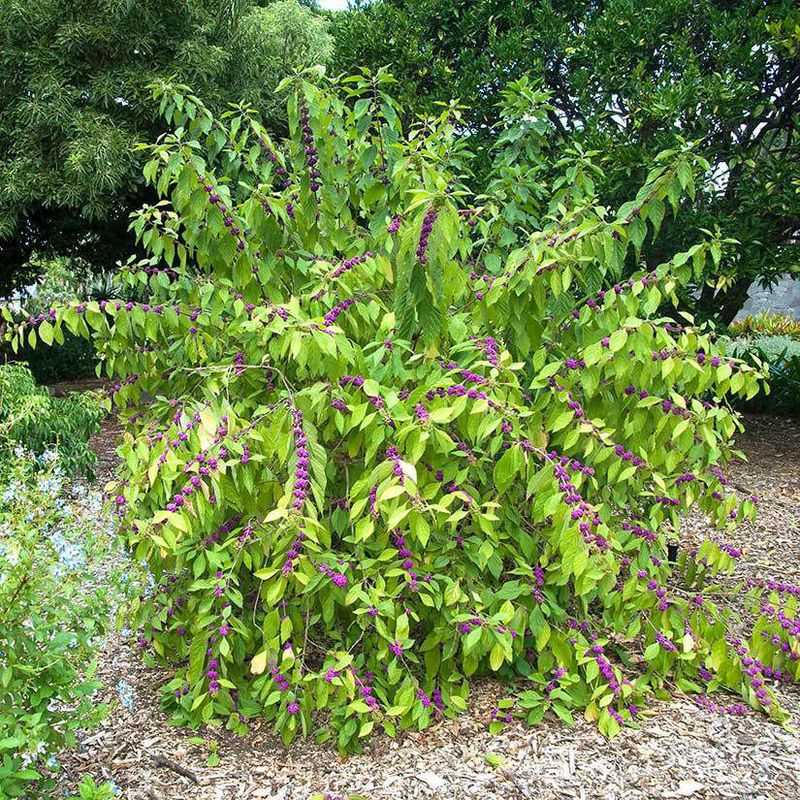
American beautyberry (Callicarpa americana) deserves a closer look from North Carolina homeowners who want late-season wildlife value without a lot of fuss. Listed by N.C.
State Extension for the Coastal Plain, Piedmont, and mountains, it is a broadly adaptable native shrub that fits into residential yards across the state. Calling it “underrated” is an editorial judgment rather than a botanical fact, but it is fair to say that this plant gets passed over in favor of more familiar ornamentals that offer far less to local wildlife.
The most striking feature is the fruit. By late summer, tight clusters of purple-to-bluish berries press against the stems in a way that stops people mid-stride.
The loose, arching branches give the plant a naturalistic silhouette rather than a clipped, formal shape, which suits a wildlife garden or a mixed shrub border better than a tidy foundation planting.
One detail that matters before you shop: the species to seek out is Callicarpa americana, the American beautyberry native to the southeastern United States. N.C.
State Extension identifies American beautyberry as native to North Carolina and suitable across all three of the state’s main regions. Do not confuse it with purple beautyberry (Callicarpa dichotoma), which N.C.
State identifies as native to China, Japan, Korea, and Vietnam. That species may look similar at the nursery, but it is not a native North Carolina plant and should not be treated as an equivalent choice for a wildlife planting.
The article’s title suggests that beautyberry feeds songbirds reliably right through the first frost. The honest version is more qualified: the fruit may hold on into early winter and can sometimes survive past the first frost, but neither outcome is guaranteed at every site or in every season.
Weather, wildlife pressure, and plant condition all play a role. What is well supported is that beautyberry can be a practical late-fall resource for many North Carolina yards, particularly when the goal is distinctive purple fruit and habitat value in the weeks after summer ends.
Why the berries matter after leaf drop
Beautyberry moves through its seasons in a fairly predictable rhythm. Flowers appear in late spring or early summer, small and pinkish, easy to overlook.
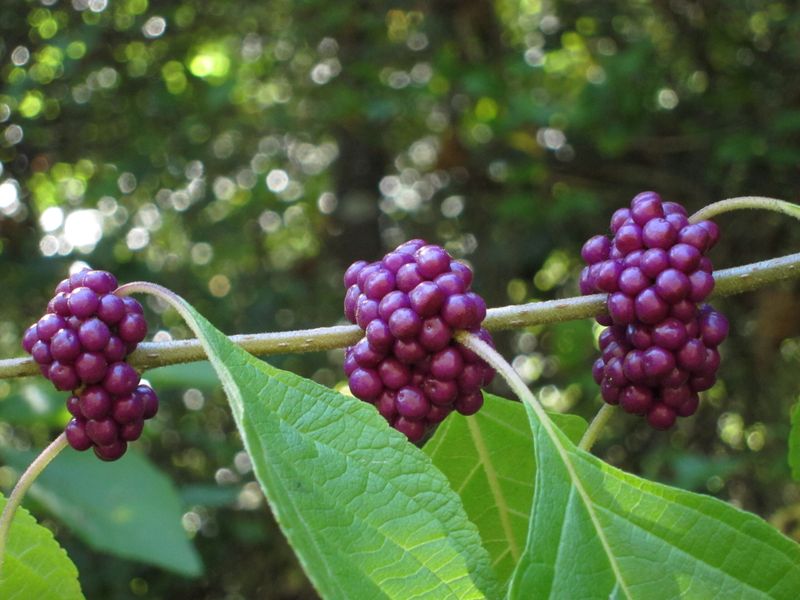
Then the real show begins: purple-to-bluish fruit develops along the stems from roughly August through October, building into the dense clusters that make the plant recognizable from across a yard.
What gives beautyberry its particular appeal in a wildlife planting is what happens next. After the leaves drop in fall, the berries stay visible on bare branches, sometimes well into early winter.
N.C. State Extension describes the fruit as persisting into early winter, which can mean the plant is still offering food when many other shrubs have been stripped clean.
Whether the berries last past the first frost at any particular site depends on a combination of factors: how aggressively local birds and mammals feed on them, what the weather does, the overall health and age of the plant, and when the first hard frost actually arrives in that part of North Carolina.
Fruit persistence and fruit availability are not the same thing. Berries can remain on the branches, but a wave of hungry robins or cedar waxwings can clear a shrub in a single afternoon.
Mississippi State Extension notes that beautyberry fruit persistence is relatively short in some landscape settings, a reminder that the timeline is variable rather than fixed. The Coastal Plain, Piedmont, and mountains also experience different frost timing, so a plant in Charlotte may behave differently from one in Boone or Wilmington.
None of that makes beautyberry a poor choice. It simply means that “may hold fruit after the first frost” is a more accurate description than “always feeds birds through the first frost.” Planting several shrubs and combining them with other native fruit producers gives the most reliable late-fall and early-winter coverage.
Songbirds use the fruit, but every yard differs
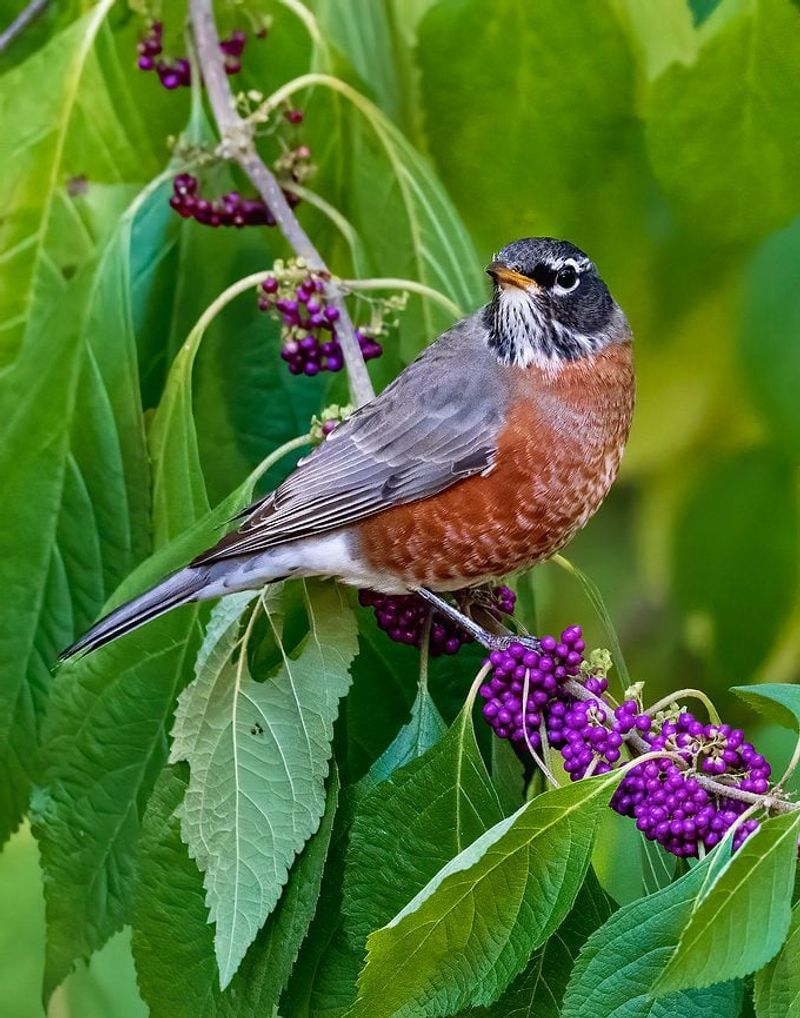
Several songbirds are documented eating beautyberry fruit. N.C.
State Extension specifically names American robins, brown thrashers, purple finches, and eastern towhees among the birds that use the fruit. Audubon also associates beautyberry with mockingbirds, thrushes, and other species across the plant’s native range.
Small mammals visit too, which is worth knowing if you notice berries disappearing quickly without obvious bird activity nearby.
Those species names are examples, not a checklist of guaranteed visitors. A beautyberry in a Piedmont subdivision and one at a mountain woodland edge will likely attract different birds at different times, depending on what is already living and moving through that neighborhood.
No shrub, however well chosen, can promise that a particular species will show up. What the plant can do is put a documented food resource in the right place at the right time of year.
Beautyberry provides soft fruit, and that is its primary wildlife contribution. It does not replace seeds, insects, nuts, nesting cover, or shelter.
N.C. State Extension’s backyard bird guidance emphasizes retaining multiple food types and plant layers, including woody understory for nesting and cover, as well as fruit- and seed-producing plants that span different seasons.
Beautyberry fits well into that picture as a late-summer and fall fruit source, but it works best as one component of a layered habitat rather than as a standalone feeding station.
For homeowners who want to support goldfinches specifically, N.C. State’s native plants guidance points to seed-producing plants like coneflowers as a better match, since goldfinches are more strongly associated with seeds than with soft fruit.
Thinking about which birds you most want to support, and what they actually need, helps you build a yard that delivers on that goal rather than one that looks like a wildlife planting but functions as a single-season snack stop.
Choose sun, drainage, and enough room
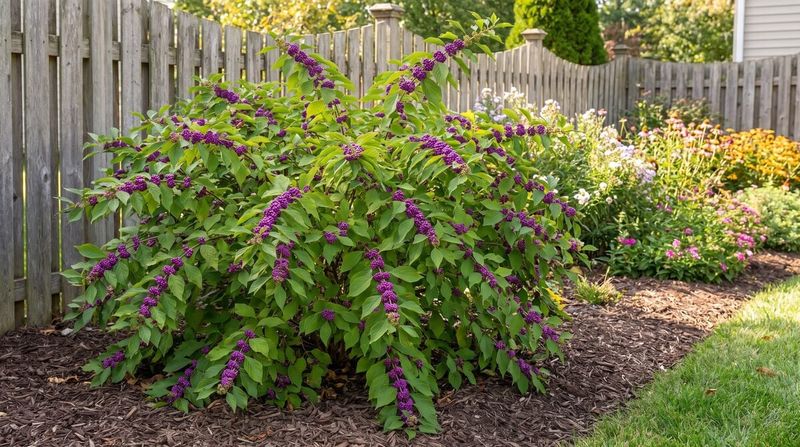
Placement decisions made at the start will shape how well beautyberry performs for the next decade. Full sun to part shade suits the plant across most North Carolina sites, and fuller sun generally produces more fruit.
N.C. State Extension notes that American beautyberry is intolerant of deep shade, and Mississippi State Extension similarly reports better fruiting in full-sun conditions.
A spot that gets at least four to six hours of direct sun each day is a reasonable target; a planting tucked under a dense canopy is likely to disappoint.
Drainage matters almost as much as light. Beautyberry tolerates a fairly broad range of soil types, but it performs best where water does not pool after rain.
Consistent moisture during the establishment period helps roots develop, but soggy ground over the long term can stress the plant. A naturalized edge, a wildlife garden bed, or a mixed shrub border with good air circulation and reasonable drainage are all practical settings.
Pond margins can work if the soil stays moist rather than waterlogged.
Give the plant room from the start. Mature American beautyberry typically reaches somewhere between 3 and 8 feet tall and 3 to 6 feet wide, with larger specimens possible under particularly favorable conditions.
Its naturally loose, arching habit means it spreads outward as well as upward, and crowding it against a fence or a neighboring shrub will limit both its form and its fruit production. Placing it where it can develop without interference also makes it easier to observe from a window or patio, which is one of the underappreciated pleasures of planting for wildlife.
Elevation, summer heat, and local exposure all influence performance across North Carolina’s three main regions. A mountain yard at higher elevation may experience earlier frosts and a shorter fruiting window than a Coastal Plain yard.
A south-facing slope in the Piedmont may dry out faster in summer, requiring closer attention during establishment. Matching the plant to the specific conditions of your site, rather than treating the whole state as uniform, gives beautyberry its best chance to fruit reliably and hold berries into late fall.
Plant a small group for a fuller wildlife feature
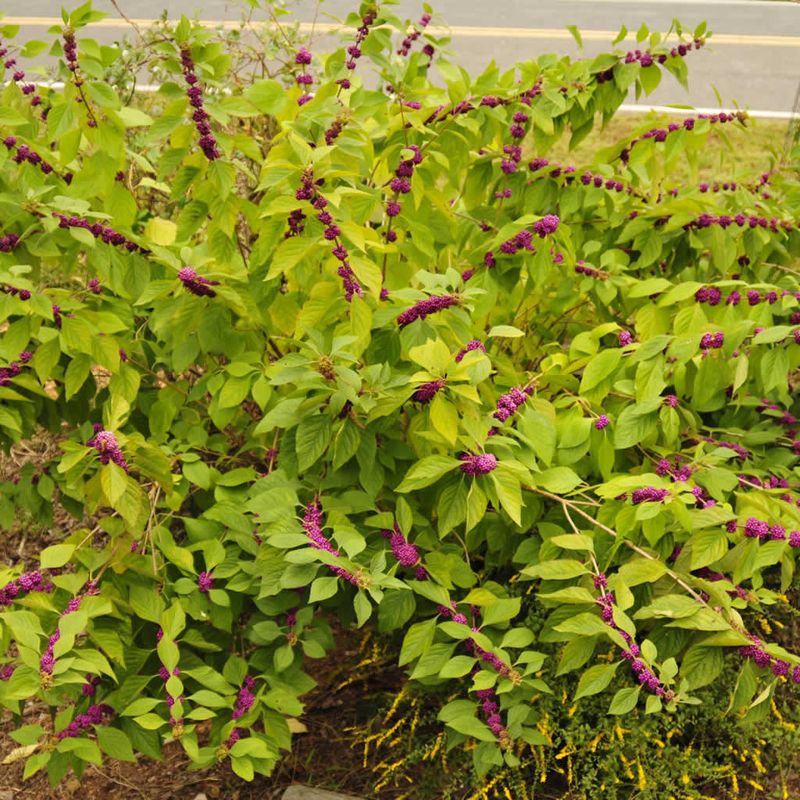
A single beautyberry can be striking, but a small group of plants tends to deliver more fruit and a stronger visual presence. N.C.
State Extension notes that several plants of the same type planted nearby may produce more fruit, likely because of improved pollination among neighboring shrubs. In a residential yard, three plants spaced to allow their natural spread, while still remaining close enough to read as a group, can create the kind of dense, berry-laden display that attracts birds from farther away than a single shrub would.
Practical spacing matters. Given a mature width of roughly 3 to 6 feet, placing plants about 4 to 5 feet apart lets them fill in without immediately overcrowding.
A corner of a backyard, a transition zone between lawn and a wooded edge, or the back of a mixed border are all good candidates. The goal is a setting where the plants can develop their arching form, hold their berries visibly, and be seen from inside the house during the weeks when outdoor time is limited.
Fall is a favorable planting window in North Carolina. Audubon North Carolina identifies fall as a good time to plant native plants because cooler temperatures and seasonal rainfall can support root establishment before winter.
That does not make fall planting foolproof. Proper site preparation, thorough watering during dry spells after planting, and a layer of mulch to moderate soil temperature still determine whether roots settle in successfully.
A plant dropped into dry, compacted soil in October with no follow-up watering will struggle regardless of season.
Buying from a nursery that stocks locally sourced or regionally grown plants gives the best start. Plants propagated from North Carolina stock are more likely to be adapted to local soils, humidity patterns, and seasonal rhythms than those shipped from distant growing regions.
Prune in late winter for new fruiting growth
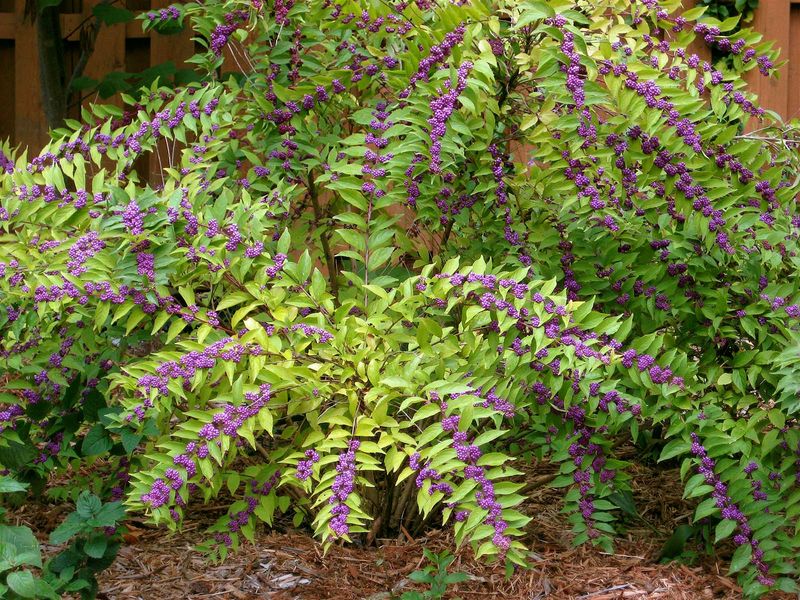
Beautyberry fruits on new growth, which makes pruning timing straightforward once you understand that one fact. Cut the shrub back in late winter, before spring growth begins, and you encourage the vigorous new shoots that will carry this season’s berry clusters.
N.C. State Extension confirms that late-winter pruning can maintain size and stimulate new fruiting shoots, and many gardeners cut plants back hard, to within a foot or so of the ground, to keep them manageable and productive.
The timing warning is equally important. Pruning after the plant has flowered in late spring or early summer removes the stems that were going to carry this year’s fruit.
A well-intentioned mid-summer trim to tidy up the shape can eliminate the entire berry crop before it develops. If you want to see berries in the fall, put the pruning shears away once flowering begins and leave them alone until late winter.
Beautyberry’s naturally loose, arching form does not respond well to heavy shaping into a tight ball or formal hedge. The plant looks best when pruning respects its tendency to arch outward and allows some of that character to remain.
Removing dead or crossing branches and cutting back overall size in late winter is usually all the maintenance the plant needs in a typical year.
Avoid the temptation to tidy up fallen leaves or spent stems around the base of the plant in fall. That leaf litter supports the insects and ground-level habitat that birds, including the towhees that scratch through debris looking for food, depend on.
Leaving the area around the shrub a bit wild is not neglect; for a wildlife planting, it is part of the plan.
Compare the shrub with longer-lasting native berries
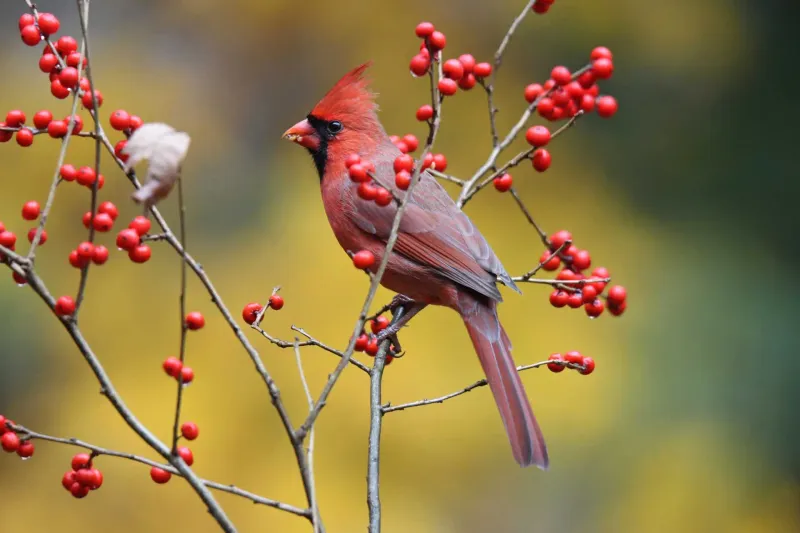
Beautyberry earns its place in a late-fall planting, but honest expectations help more than enthusiasm. Its fruit window runs roughly from August through October, with possible persistence into early winter depending on the site, the season, and how quickly birds and mammals work through the crop.
Other North Carolina native shrubs can carry berries deeper into winter, and knowing the differences helps you build a yard that offers something for wildlife across more of the cold season.
Possumhaw holly (Ilex decidua) is one strong comparison. N.C.
State Extension notes that possumhaw berries can persist through winter until approximately mid-March, giving it a substantially longer display than beautyberry in most years. The tradeoff is site requirements: possumhaw tends to prefer moist to wet soils and performs best near stream edges or in low spots where moisture is reliable.
It is also mostly dioecious, meaning female plants produce the showy berries but need a compatible male plant nearby for reliable fruit set.
Winterberry holly (Ilex verticillata) is another option valued specifically for fall and winter fruit. N.C.
State Extension describes common winterberry as preferring moist, acidic conditions, and like possumhaw, it generally requires cross-pollination between male and female plants for a reliable berry crop. N.C.
State Extension’s deciduous holly guidance covers the male-female planting requirements in practical detail for homeowners considering either holly species.
Beautyberry’s advantage is adaptability. It grows across a wider range of soil types and moisture conditions than either holly, making it a more straightforward choice for the average residential yard that does not have a wet corner or a stream edge.
N.C. State’s backyard bird resource lists beautyberry fruit from August through November, native viburnums from August through December, and American holly from September through February, illustrating how a mix of native shrubs can provide sequential fruit availability across the season rather than relying on any single plant to carry the whole window.
Build a habitat instead of chasing a guarantee
A yard that works for birds in late fall is built over several seasons, not planted in a weekend. American beautyberry is a practical starting point: choose the native species by its full name, Callicarpa americana, source it from a reputable nursery, and place it where it will receive adequate sun and reasonable drainage.
Allow enough room for its natural arching form to develop without crowding, and resist the urge to prune it after it flowers.
Leave the fruit alone once it sets. The berries are the point, and every cluster left on the branch is a potential meal for a thrasher or a robin passing through on a cold morning.
Prune in late winter before growth resumes, and combine beautyberry with other native plants, such as viburnums, native hollies, or seed-producing perennials, to extend the food available across more of the fall and winter calendar. N.C.
State Extension’s bird habitat guidance consistently points to plant diversity and layered structure as the foundation of a yard that supports wildlife reliably.
American beautyberry can keep a North Carolina yard visually active and provide songbird fruit well into late fall, with possible early-winter or post-frost persistence at favorable sites. It does not guarantee a fixed date, an all-winter food supply, or a particular bird visitor.
What it does offer is a native shrub that earns its space, asks for little once established, and gives back something vivid and useful in exactly the season when most yards go quiet.