
What It Really Means When Green Anoles Take Over Your North Carolina Yard In Late Summer
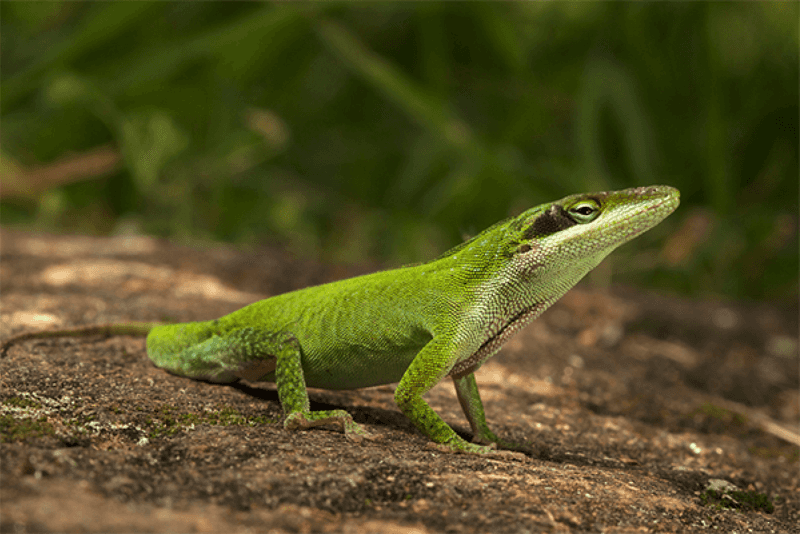
Around late summer, many North Carolina homeowners start noticing small green lizards everywhere, on porch railings, potted plants, fences, and window screens. These quick little reptiles seem to appear out of nowhere, and it is easy to wonder whether something unusual is happening in the yard.
The truth is more interesting than a sudden invasion, and understanding what is actually going on can help you become a better steward of the wildlife already living on your property.
The Porch Visitor Is Probably North Carolina’s Green Anole
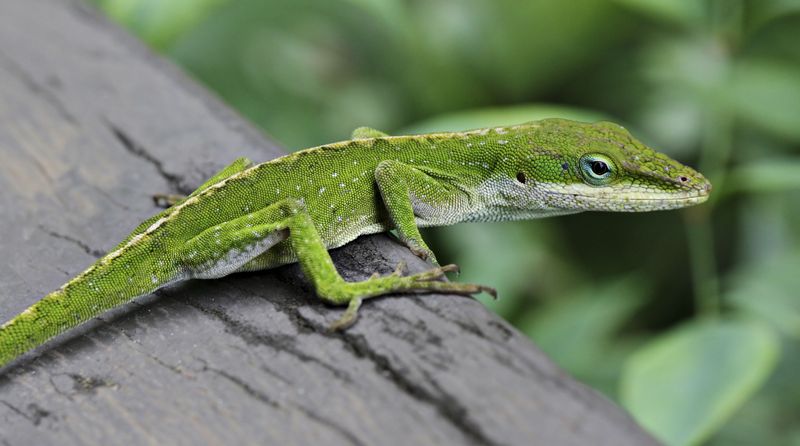
Chances are the small lizard watching you from your porch plant is the native green anole, Anolis carolinensis, sometimes called the Carolina anole. North Carolina’s reptile records confirm that this species ranges across the state, from the lower slopes of the Blue Ridge to the barrier islands of the Outer Banks, turning up in forest edges, shrubby thickets, residential gardens, fences, walls, and the sides of buildings.
Physically, green anoles are slender and small, generally measuring about 5 to 8 inches from snout to tail tip. They are active during the day, quick to dart up a vertical surface, and almost always found above ground in shrubs, vines, or woody plants rather than moving along bare soil.
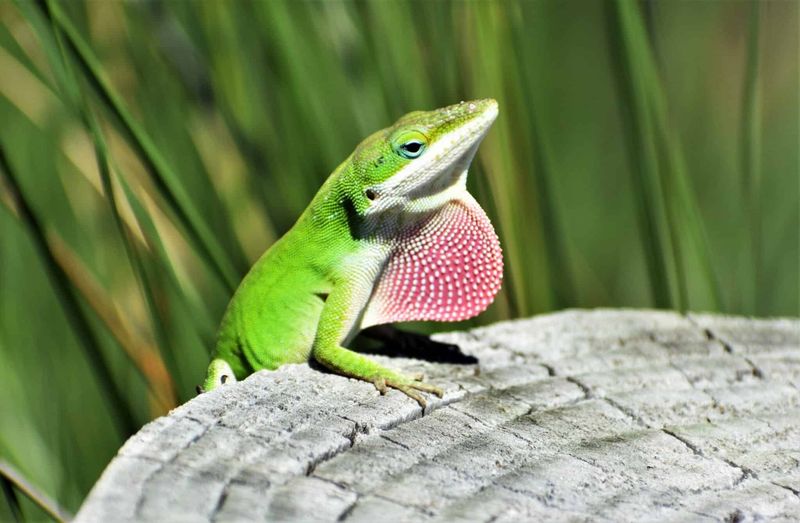
Males have a noticeable pink or reddish throat fan called a dewlap, which they extend during territorial or courtship displays. Females have one too, though it is smaller and less colorful.
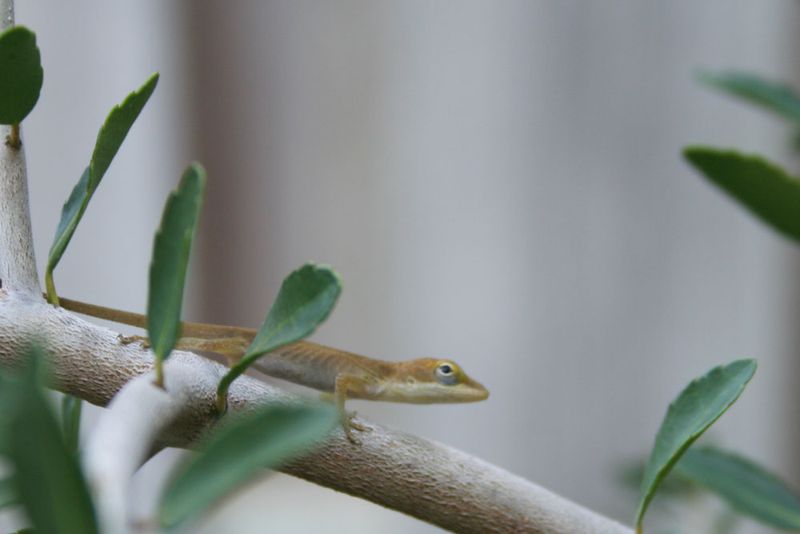
One of the most common misidentifications involves color. Green anoles are not always green.
They shift between green, brown, and gray depending on temperature, light, stress, and social context, so a brown lizard on your fence post is not automatically a different species. National Park Service guidance on anoles notes that brown anoles, the non-native species, tend to stay closer to the ground and often show bolder, more contrasting dorsal patterns, while green anoles are more comfortable climbing into shrubs and trees.
These are useful clues, not foolproof rules, so use body shape, habitat position, and overall pattern together before drawing conclusions.
Green anoles eat insects, spiders, and other small invertebrates, and NC Wildlife confirms they are neither venomous nor harmful to handle, though handling is still best avoided. Knowing what you are actually looking at is the right first step before trying to interpret why so many seem to be showing up at once.
Why Late Summer Can Bring More Anole Sightings
Several forces converge in late summer to make green anoles more visible, and none of them require a dramatic population explosion to explain what you are seeing. Warm temperatures are the starting point.
Reptiles are ectotherms, meaning they depend on external heat to power their activity, so the long, hot days of a North Carolina August push anoles out into open basking spots more often and for longer stretches than cooler months allow.
Reproduction adds another layer. Animal Diversity Web’s account of Anolis carolinensis describes a breeding season that runs roughly from April through late summer, during which females lay single eggs at intervals of about one to three weeks.
Each egg incubates for approximately five to seven weeks before hatching. That staggered schedule means young anoles do not appear all at once; they trickle into view over a span of weeks, and by late summer the cumulative output of a whole season’s worth of clutches can make a yard feel suddenly crowded with tiny lizards.
Hatchlings are especially easy to spot because they are small, active, and often bold about claiming sunny perches on exposed foliage, railings, and pot rims. An adult blends into deep shade more reliably than a juvenile still sorting out its territory.
At the same time, late summer typically brings more human outdoor time, more open windows, and more hours sitting on the porch, all of which raise the odds that you notice the animals that were already there.
Weather and local habitat also shape the timing. A wet spring that supported good insect emergence, a yard with dense layered shrubs, or a stretch of unusually warm nights can all nudge the pattern earlier or later.
The increase in sightings is real, but its size and timing vary enough across the Piedmont, Coastal Plain, and mountain foothills that no single calendar date marks the moment it begins.
What Anoles May Be Reading in Your Yard
Noticing more anoles around a particular porch or corner of the yard is worth paying attention to, because their presence does carry some information about local conditions. NatureServe’s range account for Anolis carolinensis describes the species as a habitat generalist that uses disturbed residential areas, fences, and buildings alongside more natural settings, so their appearance alone does not signal a pristine ecosystem.
What it more likely signals is that this part of your property offers the basic ingredients they need: vertical surfaces to climb, foliage to hide in, shade to retreat to when temperatures spike, open spots to bask, and enough small arthropods to make foraging worthwhile.
Prey access does shape how anoles use space. Research on green anole territory use found that prey availability influenced territory size, with lizards in lower-prey areas covering more ground to find food.
That finding suggests anoles concentrate where invertebrate food is accessible, but it does not mean a high anole count translates directly into a measurable insect surplus or a yard that outperforms its neighbors in biodiversity.
A homeowner’s casual count is not a controlled ecological survey. The same number of anoles could reflect a dense local population, a handful of individuals moving through a small area repeatedly, or a cluster of newly hatched juveniles all settling into the same shrub row.
Temperature, shade patterns, the height of nearby vegetation, and the position of sunny walls all influence where lizards show up and whether they are easy to see.
The most honest reading of more porch anoles is this: some part of your yard appears to offer usable structure and food for these lizards right now. That is a reasonable ecological inference, and it is worth building on through habitat stewardship.
It is not a confirmed health score, a measurement of insect diversity, or proof that the soil, native plants, or overall yard is functioning better than the one next door.
A Wildlife-Friendly Porch Offers More Than a Plant Pot
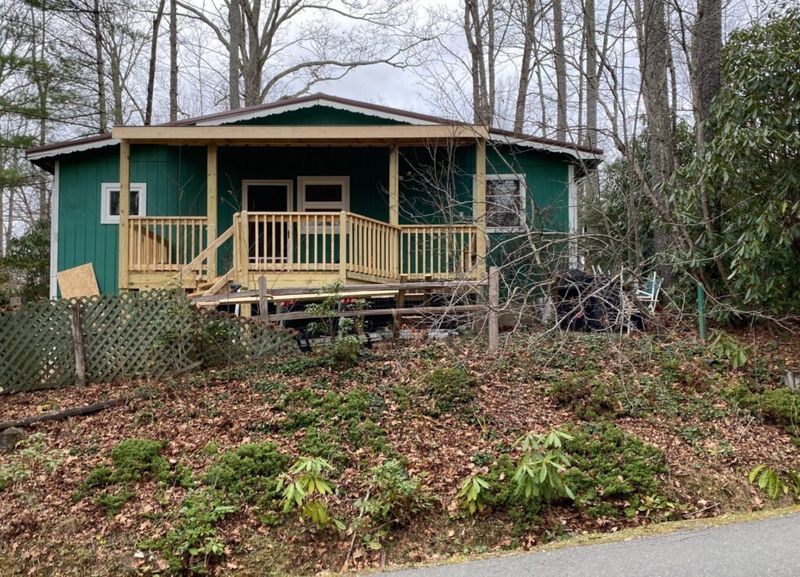
Keeping anoles around is less about adding a specific plant and more about maintaining the kind of layered, textured yard structure they can actually use. NC Wildlife’s suburban backyard guidance recommends preserving shrubs, native groundcovers, leaf litter, and varied vegetation heights as components of residential wildlife habitat.
That kind of structure provides climbing surfaces, protected retreats, shaded resting spots, and access to the insect food webs that small lizards depend on.
On a porch specifically, a mix of potted plants at different heights, a trellis or wooden railing, and a nearby shrub or vine gives an anole the vertical range it prefers. Keeping a strip of unmowed or loosely managed vegetation along a fence line or foundation adds both cover and foraging ground.
The goal is not to build an anole enclosure but to avoid stripping the yard down to bare lawn and container plants, which leaves little for any small wildlife to use.
Diverse plantings can support broader insect food webs, which in turn can make a yard more useful to anoles and other insectivores. North Carolina Department of Natural and Cultural Resources guidance on native plants frames native plantings as a way to support the insects, birds, and other animals that evolved alongside them.
That is a reasonable stewardship rationale, but it should not be read as a guarantee that planting native species will produce a measurable increase in anole sightings or insect counts.
Tolerating some insect presence is part of the same philosophy. A yard managed to eliminate every bug removes the food supply that supports lizards, birds, and beneficial predatory insects alike.
The aim is a yard with enough complexity to sustain the connections between layers, not a maximized anole count or a perfectly curated wildlife display.
Let Integrated Pest Management Set the Pace
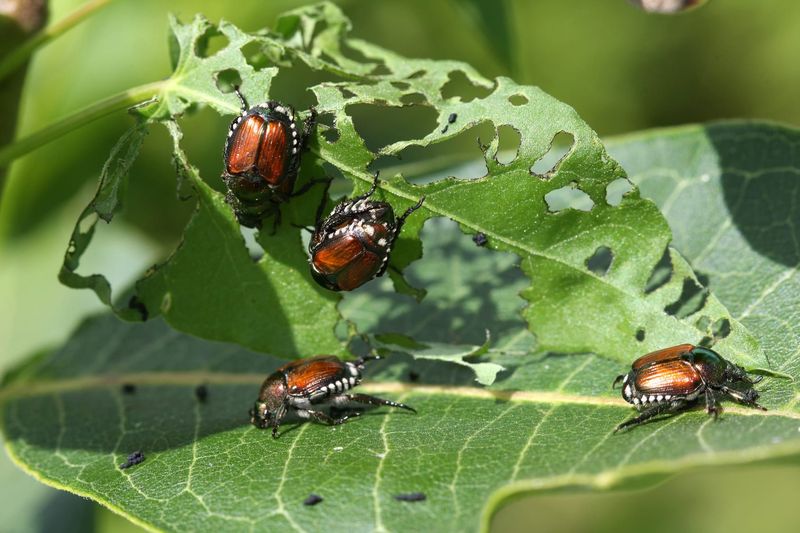
Seeing anoles on porch plants while also noticing chewed leaves or aphid clusters can create a tempting but misleading logic: the lizards are here, so the bugs must be handled. Anoles do eat insects and spiders, but they are generalist hunters following their own foraging priorities, not targeted pest controllers.
Relying on lizard presence to manage a real plant problem is likely to leave the problem unaddressed.
NC State Extension’s integrated pest management guidance lays out a more reliable sequence: identify the actual pest or disease causing the problem, monitor it over time to understand its severity, correct any cultural conditions that are making plants vulnerable (such as overwatering, poor drainage, or crowded spacing), and try nonchemical or targeted controls before reaching for a spray. That process works whether anoles are present or not.
Nonchemical controls worth considering for common porch-plant problems include removing pests by hand, adjusting watering schedules, improving air circulation, and using physical barriers. If treatment becomes necessary, targeted application to the affected plant or area is preferable to broad coverage of the entire porch or yard.
Predatory insects, parasitic wasps, and other beneficial arthropods are part of the pest-management system in any residential yard, and broad-spectrum spraying can disrupt them as thoroughly as it disrupts the pests you are targeting.
Anole sightings should not push the decision in either direction. They are not evidence that a damaging infestation is already under control, and they are not a reason to skip treatment when a plant is genuinely at risk.
The right trigger for action is the condition of the plant and the identity of the pest, assessed on its own terms. A healthy IPM approach keeps that sequence intact regardless of how many lizards are working the railing nearby.
Avoid Managing the Wildlife Into Trouble
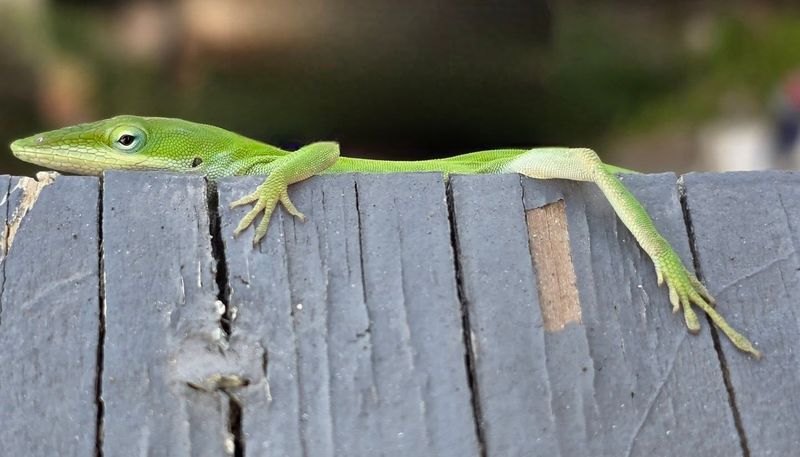
One of the fastest ways to undo the habitat value your yard has quietly built is to reach for a pesticide at the first sign of insects near the anoles. Broad-spectrum sprays applied to porch plants, railings, or surrounding vegetation can coat the surfaces where lizards hunt, rest, and thermoregulate.
Laboratory research on pyrethrin toxicity in green anoles found that exposure to this commonly used natural insecticide can be lethal, with temperature affecting how severe the effects are. That study used controlled laboratory conditions, so it does not estimate the risk from a single porch application, but it does support a straightforward precaution: avoid spraying directly on or around areas where lizards are active, and never assume a product is safe for wildlife simply because it is marketed as natural or organic.
NC State Extension’s backyard reptile and amphibian guidance recommends keeping outdoor cats indoors and limiting dogs’ access to newly created wildlife habitat areas. Free-roaming cats are effective predators of small lizards and can significantly reduce local populations of the same native wildlife a yard steward is trying to support.
Capturing, moving, or purchasing anoles to stock a yard is another response to avoid, both for the animals’ welfare and for legal reasons. Wild green anoles do not adapt well to being handled or relocated.
North Carolina also regulates possession and release of reptiles, and NC Wildlife’s restricted species permit page specifically lists the brown anole as a restricted exotic species whose possession and release are regulated. Releasing any captive reptile, whether purchased or caught locally, into a North Carolina yard is not a safe or legal yard-management strategy.
The animals already present found their way to your porch on their own terms, and the best response is to leave that process undisturbed.
Read the Rush as a Clue, Not a Report Card
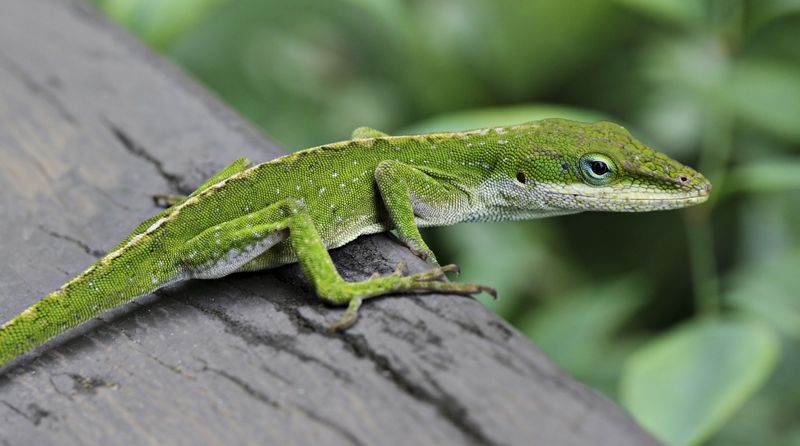
A sudden uptick in small green lizards on the porch is best understood as a seasonal convergence rather than a verdict on the yard’s overall health. Warm late-summer temperatures push the native green anole into longer, more visible activity windows, while a spring-and-summer breeding season delivers waves of hatchlings that accumulate in plain sight by August and September.
Add a porch structure that happens to offer foliage, climbing surfaces, shade, and accessible prey, and the combination can make a small number of lizards feel like a crowd.
What the observation cannot tell you is whether the yard’s insect population genuinely spiked, whether the soil is healthier than last year, or whether your planting choices outperformed a neighbor’s. Green anoles are habitat generalists that use fences, buildings, and disturbed lots alongside more naturalistic settings, so their presence points to usable conditions in one corner of the yard, not a confirmed ecosystem upgrade.
The practical response is straightforward: keep watching, preserve the layered cover and climbing structure that drew them in, manage any genuine pest problems through careful integrated pest management, and leave the lizards exactly where they are. A yard that earns a few extra anoles in late summer has done something quietly right, and the wisest move is simply not to undo it.