
What It Really Means When A Screech Owl Starts Roosting Near Your North Carolina Yard
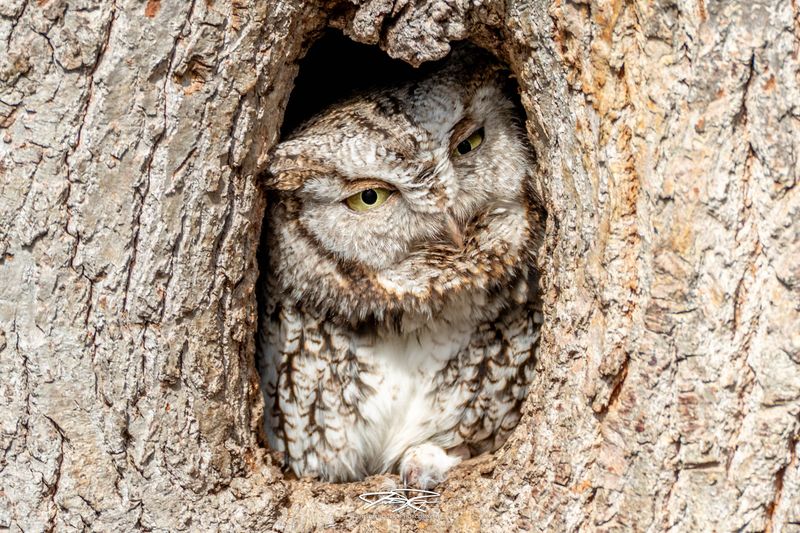
Spotting a tiny owl tucked into a tree hollow near your yard is one of those moments that stops you in your tracks. That small, camouflaged bird is most likely an Eastern Screech-Owl, and its choice to rest near your property says something real about the habitat you have.
Understanding what that signal actually means, and what it does not mean, can help you protect a genuinely useful piece of North Carolina wildlife without drawing the wrong conclusions or making changes you will later regret.
A daytime roost reveals a usable yard, not a diagnosis
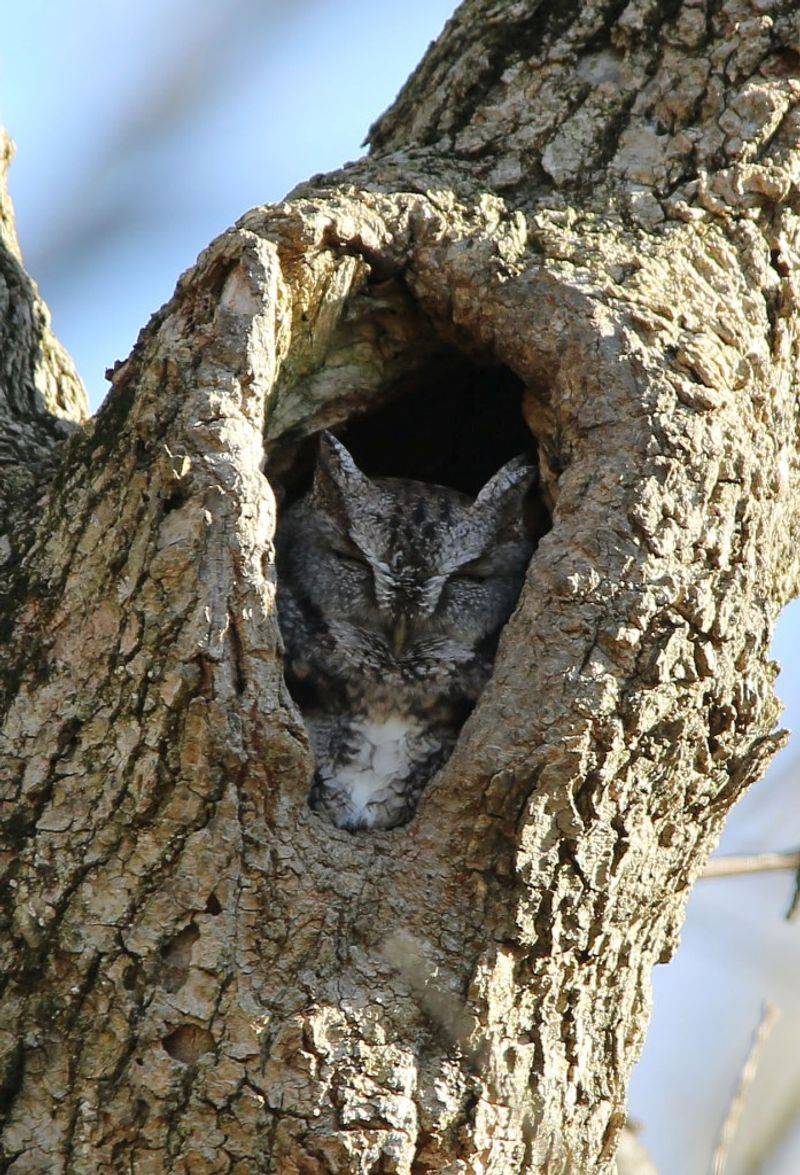
Tucked into a hollow limb or pressed against a rough bark seam, an Eastern Screech-Owl can be almost invisible until you know what to look for. The bird is small and stocky, typically around eight or nine inches tall, with prominent ear tufts that point upward, bright yellow eyes, and a streaked pattern that blends almost perfectly into tree bark.
North Carolina birds appear in two color morphs, gray and reddish-brown, with gray being the more common form across much of the state. According to Cornell Lab’s Eastern Screech-Owl species account, the species is primarily nocturnal and routinely spends daylight hours hidden inside cavities or tucked against thick cover, which is exactly the behavior you are observing.
When the same bird shows up in the same spot on multiple days, the most straightforward explanation is that the property offers what the owl needs for a safe daytime roost, meaning adequate cover that is close enough to nighttime hunting habitat to make commuting worthwhile. The Carolina Bird Club’s North Carolina account confirms that Eastern Screech-Owls are year-round residents statewide and regularly use wooded residential areas, parks, and backyard trees.
That repeated presence is a genuine and encouraging habitat clue. However, it cannot tell you how many rodents live nearby, what chemicals may or may not have been applied to the yard, or whether the property meets some broader ecological standard.
The owl chose the spot because a cavity or dense cover was available and hunting habitat was accessible, not because it performed any kind of environmental audit. Treat the sighting as a positive sign of structure worth preserving, and resist the urge to read more into it than the bird’s own behavior actually supports.
Cavities and nearby hunting habitat explain the visit
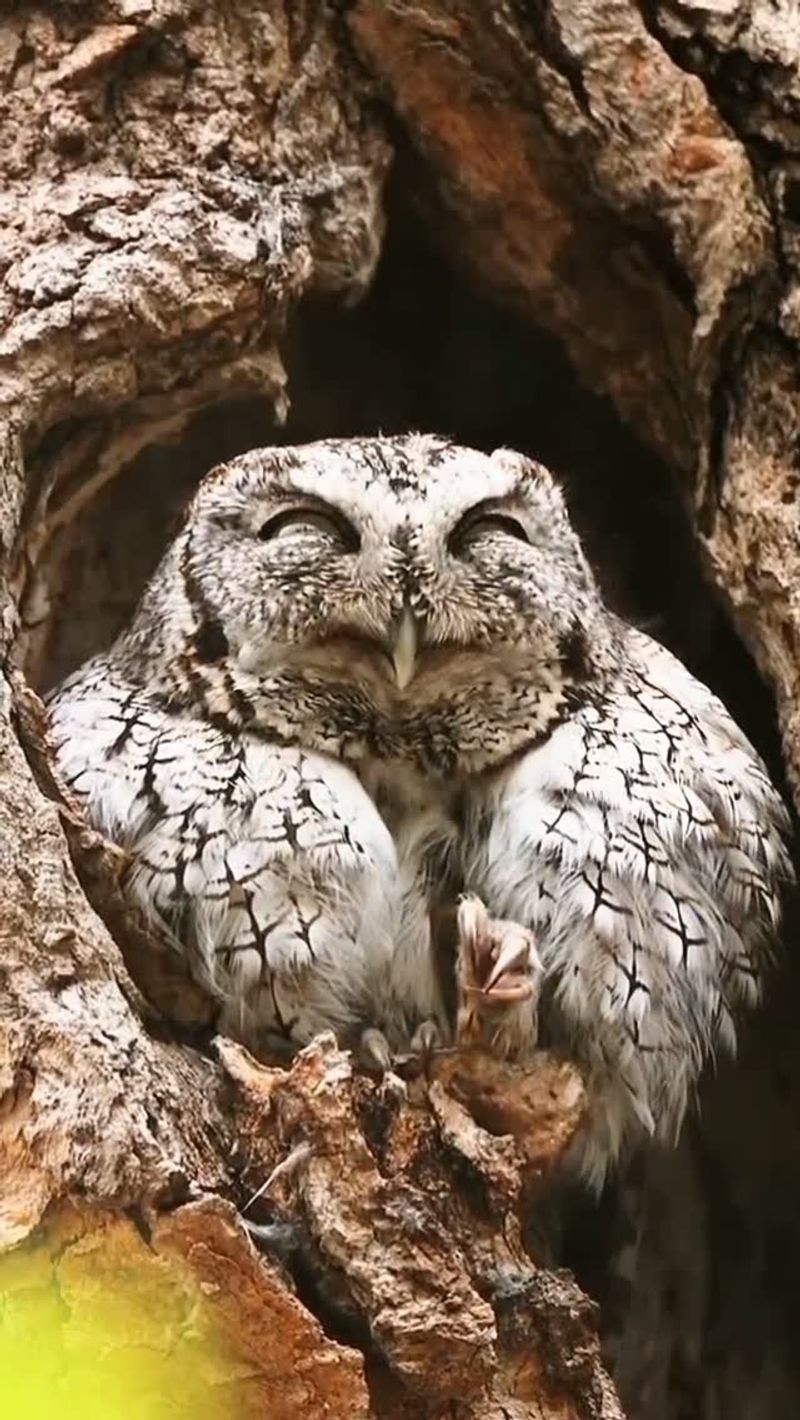
Before an Eastern Screech-Owl can settle into a yard, two things generally need to be true: there must be a place to hide during the day, and there must be somewhere productive to hunt at night. The daytime shelter almost always means a cavity, whether a natural hollow formed where a limb broke away, an old woodpecker excavation, or a nest box installed by a homeowner.
Eastern Screech-Owl life history data from Cornell Lab confirms that the species depends heavily on tree cavities and will use abandoned woodpecker holes and other natural openings wherever they are found.
Mature trees are the primary source of these cavities in residential settings. A large oak, hickory, or sweetgum that has been standing long enough to develop hollow limbs, loose bark, or old woodpecker work provides exactly the kind of structure screech-owls seek.
Cavity-bearing snags, meaning standing dead or partially dead trees, carry similar value. Retaining these features when they do not threaten people, structures, or utility lines is one of the most direct ways to support the bird.
A certified arborist can help you evaluate whether a specific tree poses a genuine hazard before you decide to remove it.
The nighttime hunting side of the equation is served by open or semi-open areas near the roost. The U.S.
Forest Service species review for Eastern Screech-Owls describes the species using woodland edges, old fields, wetland margins, orchards, and lightly developed suburban areas as foraging habitat. A yard that backs up to a tree line, borders a drainage corridor, or sits near a grassy open space gives an owl a short flight from roost to hunting ground.
Habitat structure, in short, may matter as much as prey abundance when an owl decides to stay. Conditions vary across North Carolina’s different regions, so the specific mix of trees, open land, and water features on your property will shape what the owl finds useful, but the underlying principle holds statewide.
The owl does not certify your yard as rodent-rich or pesticide-free
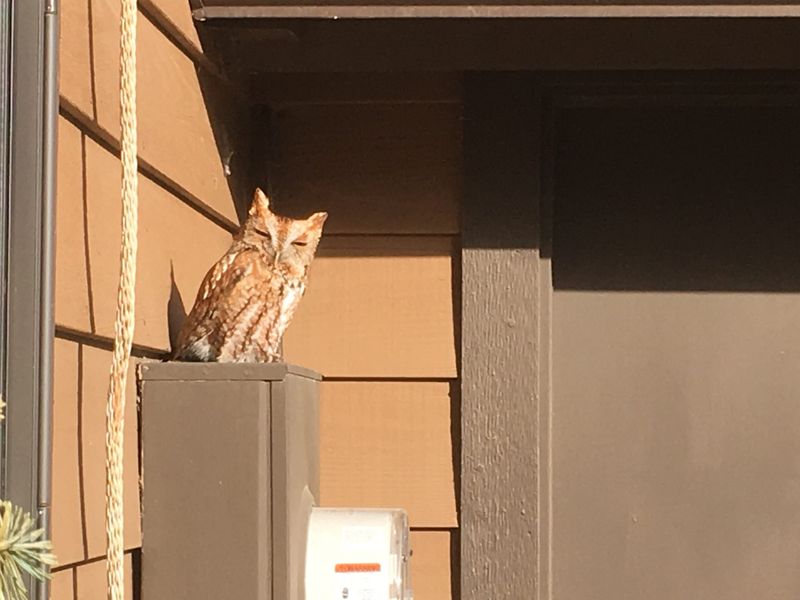
Two conclusions tend to follow a screech-owl sighting almost automatically, and both deserve a second look. The first is that the owl must be there because the yard has a serious rodent problem.
The second is that its presence proves the property is free of pesticides. Neither holds up under scrutiny.
On the rodent question, Eastern Screech-Owls do take mice, voles, and occasionally rats, but their diet is genuinely broad. Cornell Lab’s life history page for the species lists small mammals alongside insects, earthworms, crayfish, frogs, lizards, snakes, small birds, and other prey.
The Forest Service species review reinforces that diet composition shifts with season and local availability. An owl roosting near your yard may be taking advantage of moths near a porch light, earthworms after a rain, or frogs near a drainage area just as readily as it might be hunting mice.
Its presence reflects available cavities, cover, and a broad range of potential prey, not a diagnosis of any particular pest problem.
The pesticide-free inference is equally unreliable. Owls occupy treated and untreated landscapes, and contaminant studies have found pesticide and rodenticide residues in Eastern Screech-Owls living in agricultural and suburban settings.
Research documented in a graduate thesis examining screech-owl contaminant exposure in orchard environments found that birds could accumulate chemical residues even while continuing to use the habitat. A living owl tells you the yard offers shelter and prey.
It does not tell you anything about the chemical history of the soil, the plants, or the food web.
The practical takeaway is straightforward: reduce unnecessary pesticide use because doing so genuinely protects the food web, not because the owl’s arrival has already certified the yard as clean. That distinction keeps the recommendation honest and keeps the bird safer.
Preserve safe shelter and keep the daytime roost quiet
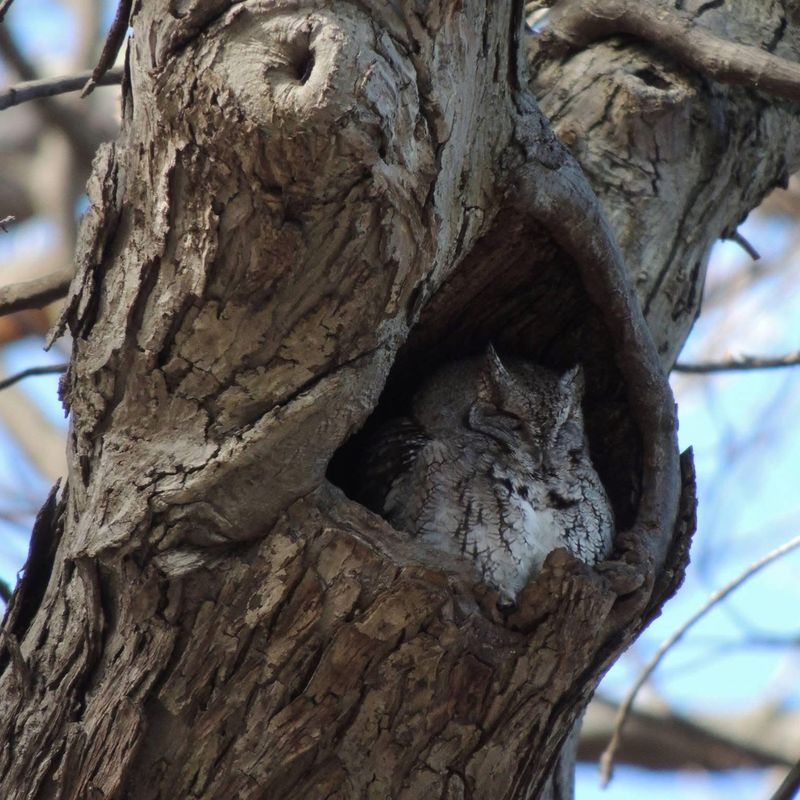
Probably the most useful thing a homeowner can do after spotting a roosting screech-owl is nothing. Specifically, nothing that involves approaching the tree, shining a flashlight at the cavity, repeatedly checking the spot, or attempting to flush the bird to get a better look.
Eastern Screech-Owls rely on camouflage and stillness as their primary defenses, and repeated human presence near a roost site can stress the bird enough to cause it to abandon a location that was otherwise working well for it.
NestWatch guidance for Eastern Screech-Owls advises against disturbing nesting females during and shortly after egg-laying and recommends waiting at least one to two weeks after discovering a nest before conducting any check. That conservative standard makes sense for a roost as well.
The bird chose the spot because it felt secure, and preserving that sense of security costs you nothing.
Beyond staying back, the most durable stewardship step is retaining the physical features the owl is using. Mature trees with natural cavities, broken-limb hollows, and old woodpecker excavations are not replaceable on a short timeline.
Life history data from Cornell Lab confirms that the species depends on these existing openings throughout its range. When a tree with cavities shows signs of disease or structural weakness, the right step is a qualified arborist assessment, not automatic removal.
Many partially dead or hollow trees remain structurally sound for years and continue providing habitat value. A hazardous tree near a structure or utility line is a different matter and should be evaluated professionally.
A roost and an active nest are not the same thing. Repeated sightings of a bird in the same cavity do not by themselves confirm that eggs or dependent young are present.
An active nest requires noticeably greater caution around disturbance, and if you suspect nesting is underway, the safest approach is to give the area a wide berth entirely until the season ends.
A nest box can replace a missing cavity without guaranteeing occupancy
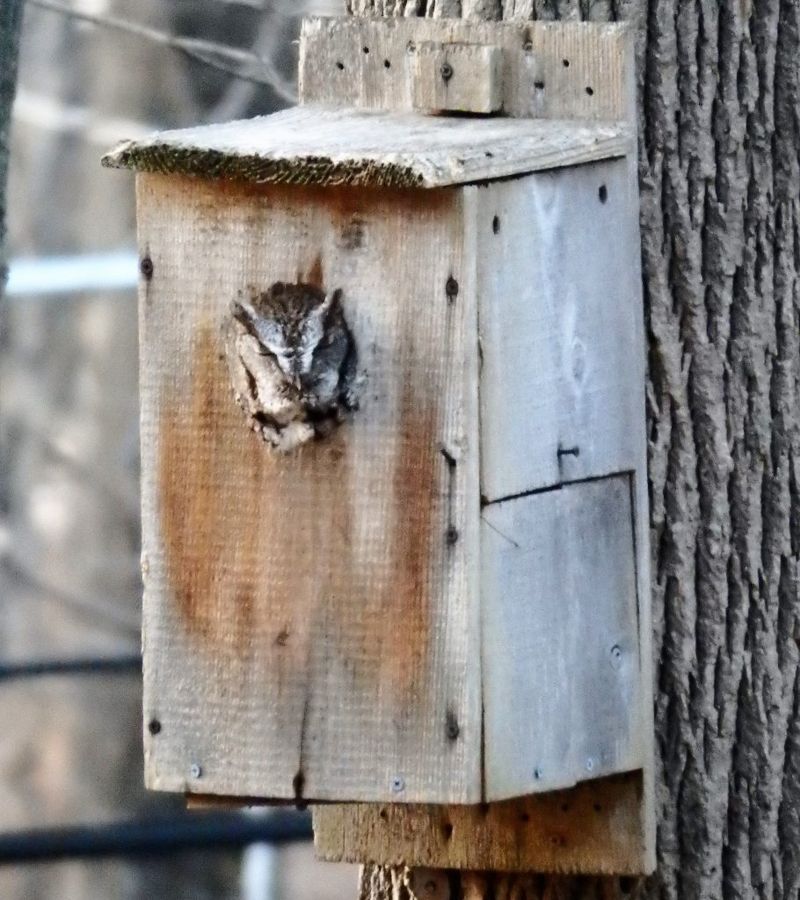
Some yards have the right edge habitat and hunting opportunities but simply lack the mature trees or natural cavities a screech-owl would use for shelter. A properly built nest box can fill that gap, giving a bird an alternative roosting or nesting site when no natural opening is available nearby.
The key word is “alternative.” A box does not summon owls or guarantee that one will move in. Occupancy depends on whether local owls are present, whether competing cavity nesters like squirrels or starlings claim the box first, and whether the surrounding habitat meets the bird’s other needs.
When a box does make sense for your yard, the specifications matter. Cornell NestWatch’s Eastern Screech-Owl nest-box guidance calls for an entrance hole of approximately three inches in diameter, placement between 10 and 30 feet above the ground, and positioning near a woodland edge with adjacent open habitat where the owl can hunt.
If you are putting up more than one box, NestWatch recommends spacing them roughly 100 feet apart to reduce territorial competition between pairs.
Materials and interior setup also affect whether a box stays safe for the birds that use it. Untreated wood is the right choice for the box itself.
Inside, NestWatch recommends adding two to three inches of clean wood shavings, not sawdust, to give the bird a base for eggs or roosting comfort. Avoid pesticide-treated materials anywhere in or on the structure, since any chemical residue in an enclosed space can affect eggs, nestlings, and adults directly.
Once a box is up, resist the urge to check it frequently. Monitoring is reasonable, but daily visits during nesting season can push a bird off eggs or stress dependent young.
Follow NestWatch’s conservative approach: limit checks, move slowly and quietly when you do inspect, and avoid any inspection during the sensitive early nesting period. If the box sits empty for a full season, that is normal.
Adjust the placement or habitat around it before concluding that screech-owls are absent from the area entirely.
Rodenticide exposure can harm predators that eat contaminated prey
One of the less visible threats to a roosting screech-owl has nothing to do with how the bird is treated directly. The risk comes from what it eats.
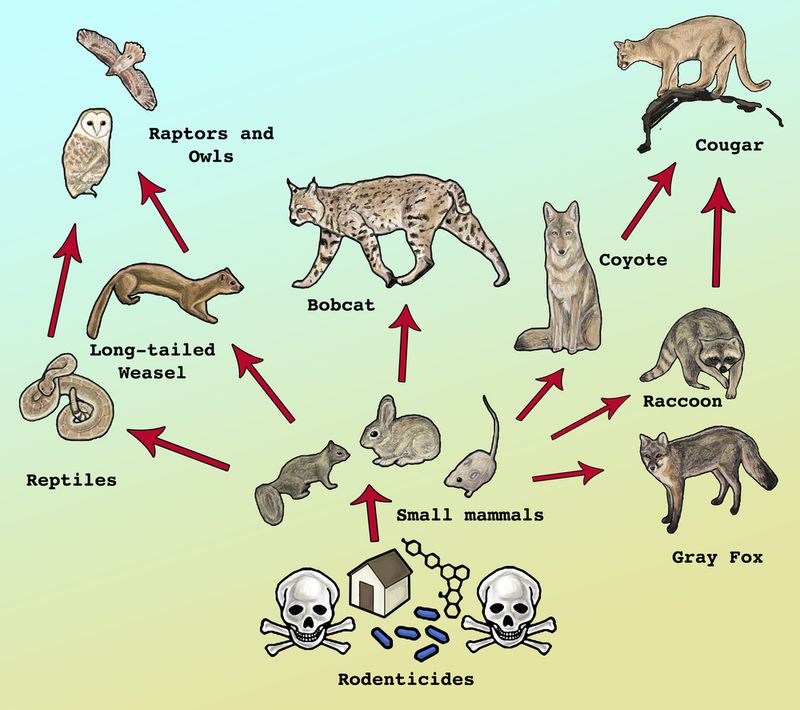
When a mouse or rat consumes a rodenticide bait and is then caught by a predator, the chemical can transfer through the food chain in a process called secondary poisoning. EPA’s rodent-control pesticide safety review specifically identifies predators and scavengers as animals at risk from eating contaminated rodents, and notes that second-generation anticoagulant rodenticides can remain in rodent tissues at levels that may be harmful to wildlife that consume them.
That risk is not hypothetical in North Carolina. A study of raptors collected near the Charlotte metropolitan area, documented in a peer-reviewed analysis of raptor rodenticide residues near Charlotte, detected rodenticide compounds in multiple species.
One Eastern Screech-Owl in that sample exceeded a cited health threshold. The study does not show that every owl in the Charlotte area or across North Carolina carries harmful residue levels, and outcomes vary with the specific compound, the dose, the exposure route, and the individual animal.
But the finding is direct regional evidence that exposure can happen to the same species now roosting near your yard.
The practical response is not to eliminate all rodent management, especially when indoor infestations pose real health risks. The goal is to reduce unnecessary rodenticide use in outdoor settings where wildlife can encounter contaminated prey.
When a rodenticide is genuinely needed, using it in a properly secured bait station, following label instructions precisely, and retrieving dead rodents before predators can reach them all reduce the risk to wildlife. Bait stations lower direct access by children, pets, and non-target animals, but they do not eliminate secondary-poisoning risk entirely, because an owl can still catch a rodent that has left the station after feeding.
For outdoor rodent pressure near a yard with a roosting owl, exclusion and snap trapping, covered in the next section, are the approaches least likely to put the food web at risk. Keep rodenticide use as a last resort managed under professional guidance when other methods have not resolved a serious problem.
Manage indoor rodents with exclusion and appropriate traps
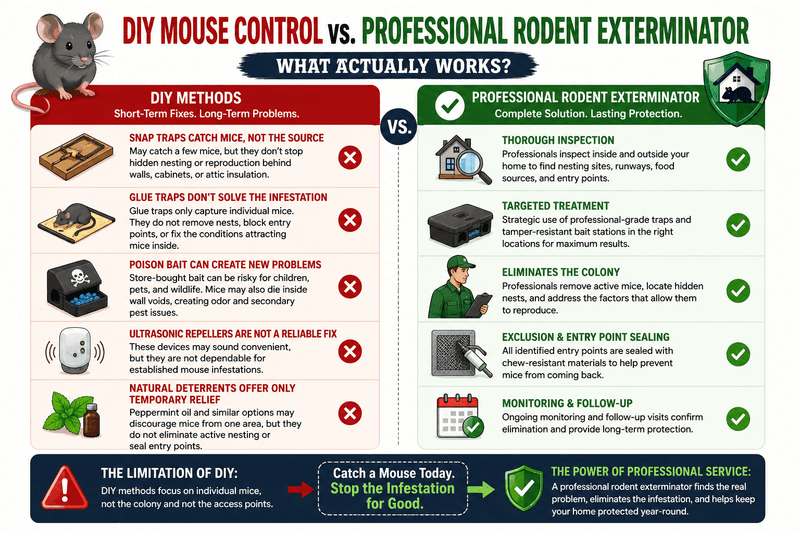
Having a screech-owl roost nearby does not change what needs to happen if rodents are getting into your house. The owl hunts outside, on its own schedule, across a range that may extend well beyond your property line.
It will not patrol your crawl space, guard your pantry, or stop a mouse from squeezing through a gap in your foundation. Household rodent control requires its own set of actions, starting with blocking the ways rodents get in.
CDC guidance on sealing homes against rodents notes that mice can enter through openings as small as one-quarter inch wide, roughly the diameter of a pencil. Gaps around pipes, utility lines, vents, and the spaces where siding meets the foundation are common entry points.
Sealing these with durable materials, steel wool packed into gaps before caulking, hardware cloth over vents, and door sweeps on exterior doors, addresses the problem at its source. At the same time, reducing what draws rodents close to the house in the first place helps significantly: secure garbage in bins with tight lids, bring in pet food after feeding, manage compost in a rodent-resistant container, and store birdseed in sealed metal or hard plastic bins rather than bags.
For rodents already active inside, CDC’s trapping guidance recommends traditional snap traps placed where droppings, gnaw marks, or grease trails indicate activity. Position traps perpendicular to walls, where rodents naturally travel, and keep them out of reach of children and pets.
CDC advises against glue traps and live-catch traps because a frightened, trapped rodent may urinate, which increases the risk of disease exposure during handling.
After catching a rodent or finding evidence of nesting material, safe cleanup matters. CDC’s cleanup protocol calls for wetting droppings or nesting material with a disinfectant spray before touching anything, wearing disposable gloves throughout, double-bagging waste and dead rodents before placing them in an outdoor trash container, and washing hands thoroughly afterward.
Sweeping or vacuuming dry droppings can aerosolize particles and should be avoided entirely.
Assess a grounded owl before deciding it needs rescue
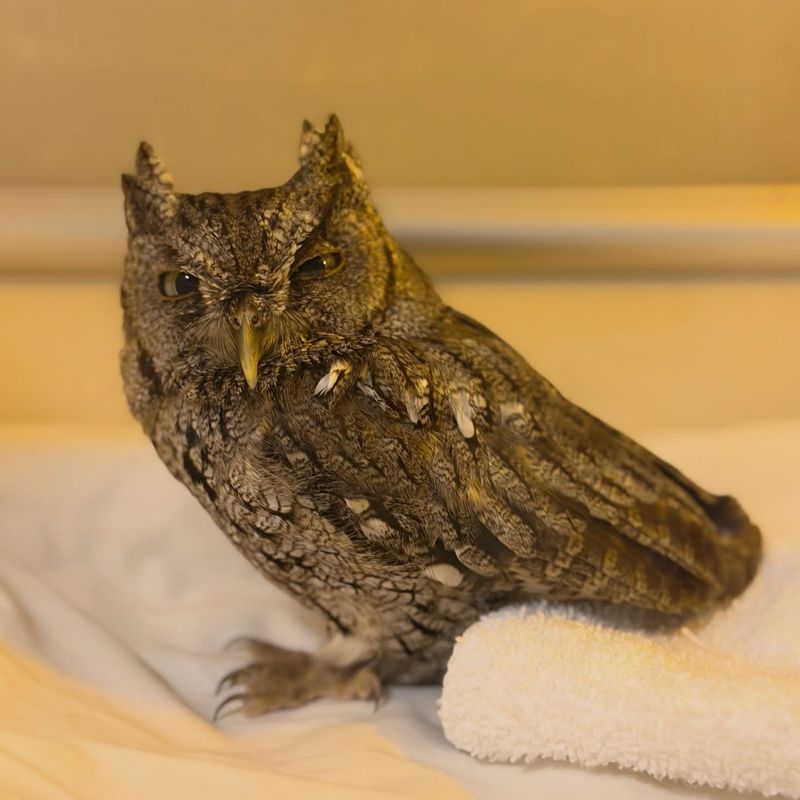
Finding a screech-owl on the ground or at an unusually low perch can feel alarming, but the right first step is to stop and watch rather than immediately intervene. Young owls, called fledglings, regularly leave the nest before they can fly with full strength.
They may spend time on the ground or on low branches while still under the care of their parents, who continue to feed them and monitor the area. A fledgling sitting quietly and holding its head upright, responding to sounds, and gripping a surface normally is often doing exactly what a healthy young owl does during this stage.
Cornell Lab’s Eastern Screech-Owl life history information describes the post-fledging period as a time when young birds remain dependent on adults even after leaving the nest cavity. Moving a healthy fledgling, or placing it somewhere that seems safer to a human observer, can separate it from its parents and do more harm than leaving it alone.
If the bird is in immediate physical danger, such as on a road or in reach of a cat or dog, moving it to a nearby safe surface like a low branch or shrub and stepping well back is reasonable. Placing it back in the nest cavity, if accessible, is also an option for a very young bird.
A different situation calls for professional help. An owl that is bleeding, unresponsive, unable to hold its head up, visibly injured, or clearly unable to move away from a threat is not simply a fledgling doing normal fledgling things.
Do not attempt to feed it, give it water, medicate it, or try to release it yourself. Contact a licensed wildlife rehabilitator or your state wildlife authority for guidance specific to your situation.
The North Carolina Wildlife Resources Commission can direct you toward licensed rehabilitators in your area. Do not leave the bird unattended near a hazard while waiting for help.
The general rule is to observe first, intervene minimally if the bird is in immediate physical danger, and call a professional for any bird showing signs of genuine injury or illness.
Use precise legal guidance when nests or trees are involved
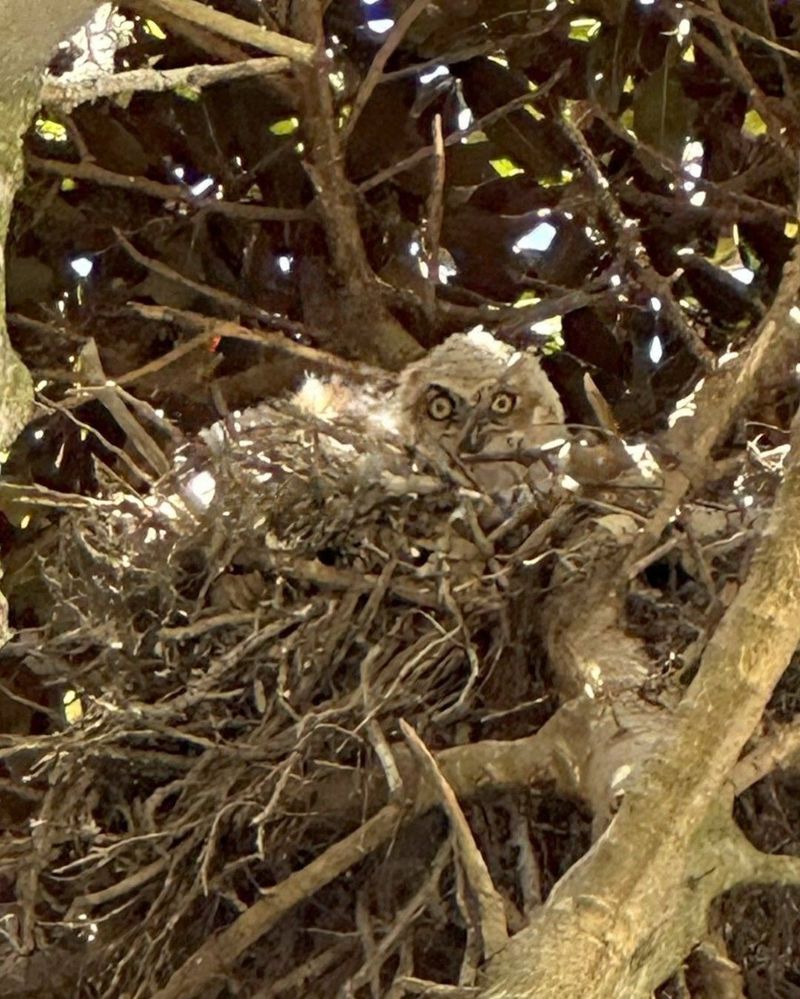
Federal law adds a layer of consideration when a screech-owl is using a tree or cavity on your property. The Migratory Bird Treaty Act protects listed native migratory birds, their eggs, and active nests from directed take, capture, killing, or possession without proper federal authorization.
The U.S. Fish and Wildlife Service’s Migratory Bird Treaty Act page describes the scope of these protections and the types of activities that may require authorization.
What the law does not do is freeze every old cavity or inactive nest in place forever. FWS guidance on bird nest protection clarifies that the treatment of inactive nests, general habitat work, and incidental harm can involve different legal questions depending on the specific circumstances.
A cavity that held a screech-owl roost last winter but shows no current activity is not in the same legal category as a nest actively containing eggs or dependent young. That distinction matters when you are deciding whether to trim a tree, remove a snag, or conduct other yard work.
The practical guidance for most homeowners is to avoid disturbing any nest or cavity that appears to be in active use during breeding season, and to time routine tree work for periods when nesting activity in the area is unlikely. If you are unsure whether a nest is active, or if a tree removal or major pruning job is planned near a suspected nest site, consulting a qualified wildlife professional before starting the work is the safest course.
For questions about specific situations involving active nests or potential MBTA compliance, the U.S. Fish and Wildlife Service is the appropriate contact.
General habitat management, like retaining mature trees or installing a nest box, does not require federal authorization and is straightforwardly encouraged.
Keep legal questions separate from habitat recommendations. Preserving a healthy cavity tree because it benefits wildlife is sound stewardship.
Whether a specific removal or modification requires authorization depends on facts that a wildlife professional or FWS can help you evaluate.
Build a quieter yard instead of chasing a dramatic conclusion
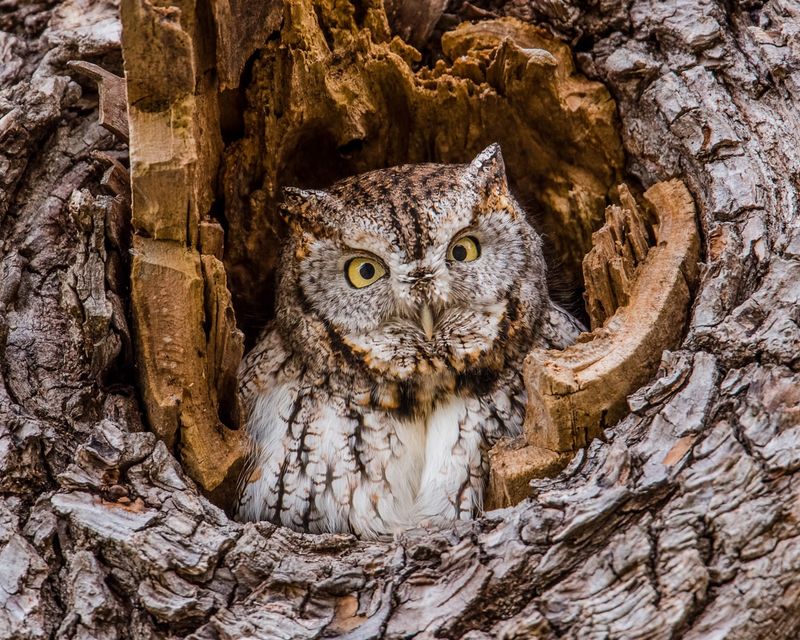
The most accurate reading of a roosting screech-owl is also the least dramatic one. The bird found cover and hunting opportunity nearby, and it stayed.
That is a genuinely good sign about the physical structure of the yard, and it is worth protecting without inflating into something more.
The priorities are practical and manageable. Retain mature trees and cavity-bearing snags where they are safe to keep.
Give the roost site space and quiet. Secure food, garbage, compost, and pet feed so you are not drawing rodents toward the house while trying to support a predator that hunts them outside.
Reduce unnecessary rodenticide use in outdoor areas, because EPA has documented secondary poisoning risks to predators that eat contaminated prey. Handle any indoor rodent activity through sealing entry points and using appropriate traps, which protects your household without putting the food web at risk.
A yard that quietly offers good structure and a clean food web is doing more for the owl than any dramatic intervention could. The Eastern Screech-Owl’s broad adaptability means it will make use of what you have, as long as you do not take it away.
That is the whole story, and it turns out to be enough.