
The Key Establishment Practice North Carolina Fall Lettuce Needs When You Seed It In Late Summer
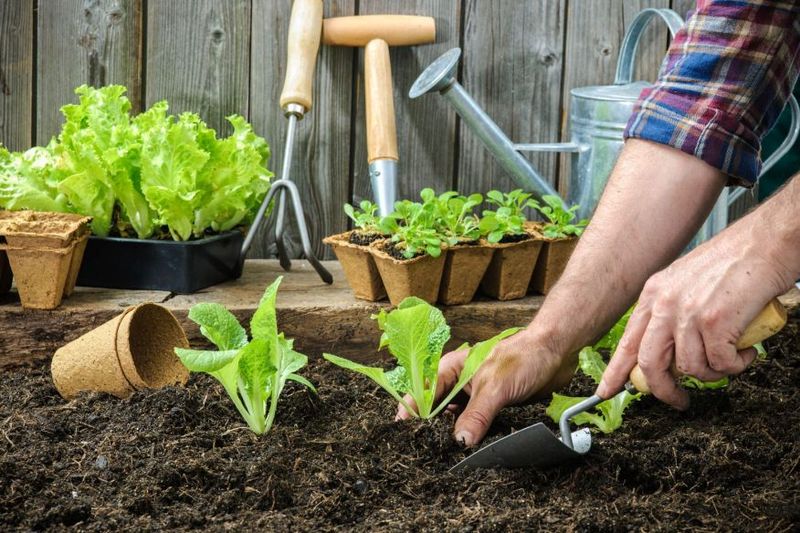
Planting lettuce in late summer in North Carolina is a bit like trying to start a campfire in the rain – the timing feels off, but it works if you know what to adjust. The biggest reason fall lettuce fails at the seedbed stage is not a mystery: hot soil and a drying surface team up to shut down germination before seedlings ever get a chance.
Getting temporary shade and steady moisture in place at seeding time is the key protective step, though it works best alongside the right timing, good cultivar choices, and careful soil prep. Nail those basics and you can be harvesting crisp leaves well into autumn across much of the state.
Late-summer heat creates two different lettuce problems
Gardeners often blame heat for every lettuce failure in late summer, but heat actually creates two very different problems, and mixing them up leads to the wrong fix. The first problem shows up before you ever see a seedling: high soil temperatures can suppress germination, a process sometimes called thermoinhibition.
NC State Extension lettuce guidance places the optimal seed-germination range at approximately 70-75 degrees F and warns that high soil temperatures can reduce emergence significantly.
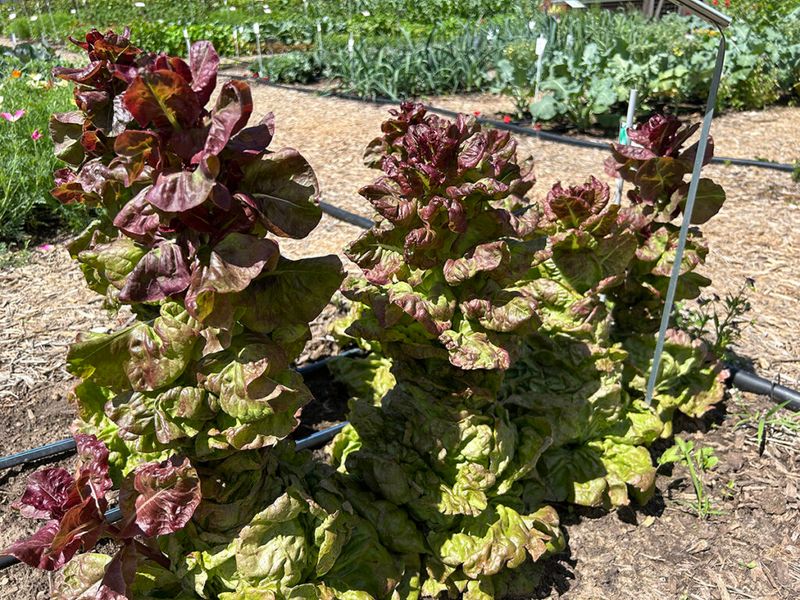
The second problem happens later, after plants are up and growing. Established lettuce can bolt, meaning it sends up a tall flowering stalk and shifts its energy toward reproduction rather than leaf production.
Heat, long days, high light intensity, moisture stress, and cultivar susceptibility can all contribute to bolting in combination. University of Minnesota Extension research on lettuce bolting notes that multiple days of warm temperatures, especially with warm nights, can push plants toward flowering, and that day length and light intensity also play a role.
Seeds themselves do not bolt. A seed that sits in soil that is too hot may simply fail to germinate, or it may germinate poorly and unevenly.
That failed emergence is a germination problem, not a bolting problem, and the fix is different. Bolting is a plant-stage response that involves a shift in the plant’s growth pattern, and it typically produces leaves that become more bitter and less palatable as the flower stalk develops.
According to the NC State Plant Toolbox profile for head lettuce, once flowering is well underway, the plant is no longer a reliable candidate for a normal leaf harvest. Recognizing which problem you are dealing with – poor germination versus active bolting – lets you choose the right response at the right time.
Give the seedbed temporary shade and even moisture
When you seed lettuce in late summer, the seedbed itself becomes the most vulnerable spot in the garden. The top half-inch of soil can reach temperatures well above the air temperature on a sunny August afternoon, and that thin layer is exactly where lettuce seeds need to germinate.
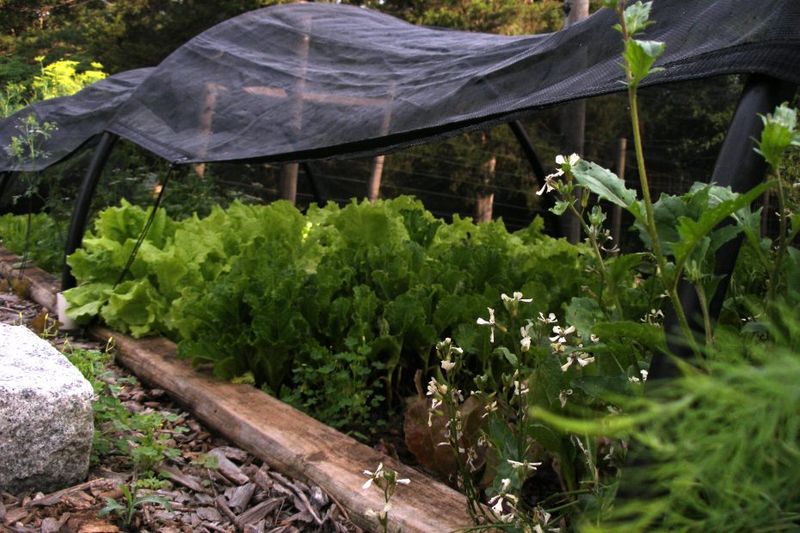
Providing temporary or filtered shade over the seedbed is the key protective step for getting seeds up in hot weather.
University of Minnesota Extension guidance on midsummer planting for fall harvest recommends using shade from taller plants or shade cloth to help cool-season crops establish during warm periods. In a North Carolina backyard, practical options include lightweight row cover, shade cloth draped over wire hoops, a temporary lean-to of boards or lattice on the south and west sides of the bed, or even positioning the bed where a fence or taller crop casts afternoon shadow.
The goal is to reduce peak midday heat and solar intensity, not to block all light permanently.
NC State community food garden guidance also identifies shade cloth as a useful tool for protecting crops from high heat and solar intensity during establishment. Once seedlings are up and daytime temperatures begin to moderate into the mid-70s or below, you can remove or reduce the shade so plants get the light they need for healthy growth.
Lettuce tolerates partial shade but does need adequate light, and permanent deep shade can produce weak, leggy seedlings.
Keeping the seed zone evenly moist is just as important as shade. NC State Extension notes that lettuce has a shallow root system and is sensitive to even short periods of water stress, especially in warm weather.
Check the top inch of soil at least once a day during hot, dry spells and water gently before it dries out. The target is consistently moist, not waterlogged – soggy soil can damage roots and invite disease just as surely as drought can stop germination.
NC State Piedmont container garden guidance and Virginia Cooperative Extension leafy greens guidance both reinforce that lettuce needs reliable moisture and light together, not one at the expense of the other. Shade and moisture together reduce the heat and drying stress that most often derail late-summer germination, but they work best when the rest of the establishment conditions are also in good shape.
Prepare a shallow, crust-free surface for emergence
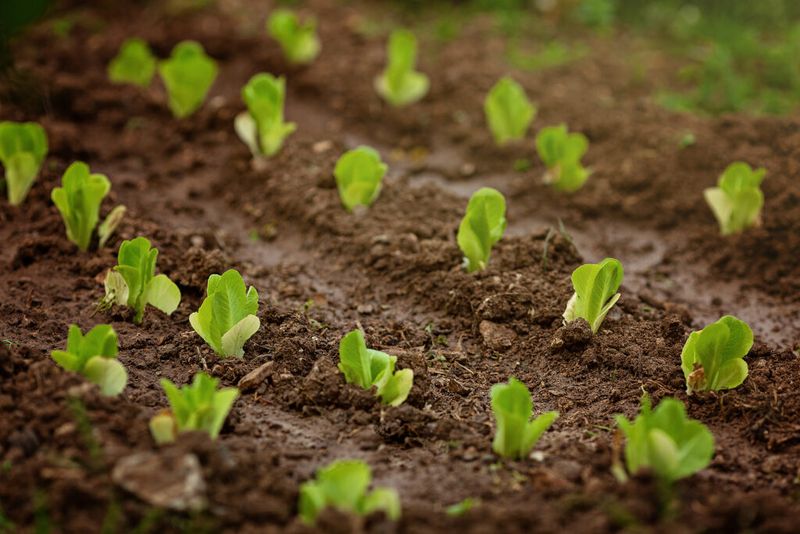
Shade and moisture can only do their job if the seedbed underneath them is ready. One of the most common and least talked-about reasons lettuce fails to emerge in late summer is soil crusting.
After a heavy rain or a hard spray from an overhead sprinkler, the surface of a bare bed can dry into a thin, firm crust that physically blocks seedlings from pushing through. NC State Extension vegetable gardening guidance recommends incorporating organic matter and using a soaker hose where crusting is a problem, since both steps keep the surface looser and more permeable.
Before you seed, remove or work in the remains of the previous crop. Leftover plant debris can interfere with seed-to-soil contact, create uneven moisture pockets, and sometimes harbor pest or disease problems that carry over to the new planting.
University of Minnesota Extension midsummer planting guidance recommends clearing old crop residues before reseeding a bed for fall production. Once the bed is clean, rake the surface to a fine, firm texture and press it lightly so seeds make good contact with the soil.
Sowing depth matters more than many gardeners realize with lettuce. The NC Steps to Health Piedmont and Coastal Plain Planting Guide lists approximately 1/4 inch as the standard seeding depth, and the NC State Plant Toolbox gives a range of 1/4 to 3/8 inch.
Planting too deep buries seeds in hotter, harder-to-escape soil; planting too shallow leaves them exposed to the fastest-drying surface layer. After sowing, cover seeds with a fine layer of soil or compost, press gently, and water in with a soft spray or soaker hose to avoid displacing seeds or compacting the surface.
Check the bed after any heavy rain and break up any crust you find with a light finger-raking before seedlings are trying to push through.
Match sowing time to your North Carolina region
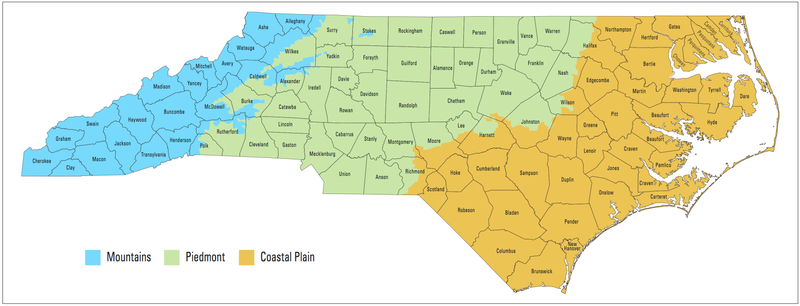
North Carolina stretches from sea-level barrier islands to mountain peaks above 6,000 feet, and that range means no single planting date applies statewide. A gardener in Wilmington and a gardener in Boone are not working with the same fall window, the same first-frost date, or the same late-summer temperatures.
Using a statewide “seed now” rule without accounting for your region is one of the fastest ways to set up a lettuce planting for failure.
The NC State Extension garden calendars offer region-specific planting windows that account for local frost timing and seasonal temperature patterns. For Coastal Plain and Piedmont gardeners, fall lettuce planting often runs from roughly late August through early October, with the exact window depending on your first expected frost date and the days-to-maturity for the cultivar you choose.
NC State Extension lettuce production guidance recommends working backward from your expected first frost to figure out whether there is enough time for your chosen variety to mature.
Mountain gardeners face an earlier frost risk and a narrower fall planting window. NC State Extension vegetable gardening guidance and NC State community food garden guidance both note that western regions of the state have different temperature and frost timing than eastern areas, and that fall planting dates should be adjusted accordingly.
Even if you are in the Piedmont or Coastal Plain, keep in mind that a crop intended for fall harvest may still be sown into hot soil and hot air. A “fall crop” describes when you want to eat it, not necessarily the conditions on the day you plant.
The NC Steps to Health Piedmont and Coastal Plain Planting Guide provides a quick reference for those regions, but checking your county’s specific frost date and using the NC State regional calendars will give you the most accurate window for your yard.
Choose cultivars that handle heat more gracefully
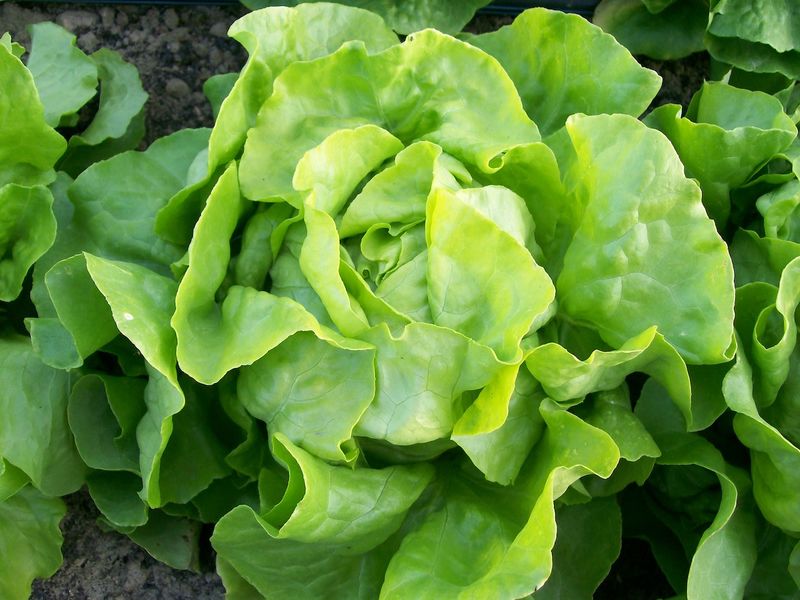
Cultivar selection is one of the most practical levers a home gardener can pull for late-summer lettuce, and it works best when it is paired with good timing and seedbed care rather than used as a substitute for either. Some types and varieties of lettuce are genuinely more forgiving of warm conditions than others, and starting with a better-suited cultivar reduces the odds of bolting before harvest.
NC State Extension lettuce guidance notes that leaf and butterhead types are generally more heat-tolerant than crisphead varieties, making them better candidates for late-summer planting across much of North Carolina. Romaine types tend to tolerate more heat than crisphead types as well, though they still have limits.
NC State lists several cultivars worth considering for warm-weather planting, including “Slobolt,” “Tropicana,” “Nevada,” “Salad Bowl,” “Jericho,” and “Parris Island Cos.” Butterhead types are also frequently mentioned for their relatively easygoing response to warm spells.
None of these varieties are bolt-proof. Heat-tolerant and slow-bolting are useful descriptions of tendencies, not guarantees.
A cultivar that performs well in one North Carolina county may behave differently in another due to differences in soil, microclimate, or the specific weather pattern of a given season. Check with your local NC State Extension office or a regional seed supplier for the most current cultivar performance information before ordering, since availability and recommended varieties can shift from year to year.
Picking a cultivar with documented heat tolerance is a meaningful risk-reduction step, but it works best alongside a well-timed planting date and a properly prepared, shaded, and moistened seedbed.
Keep seedlings protected and spread the planting risk
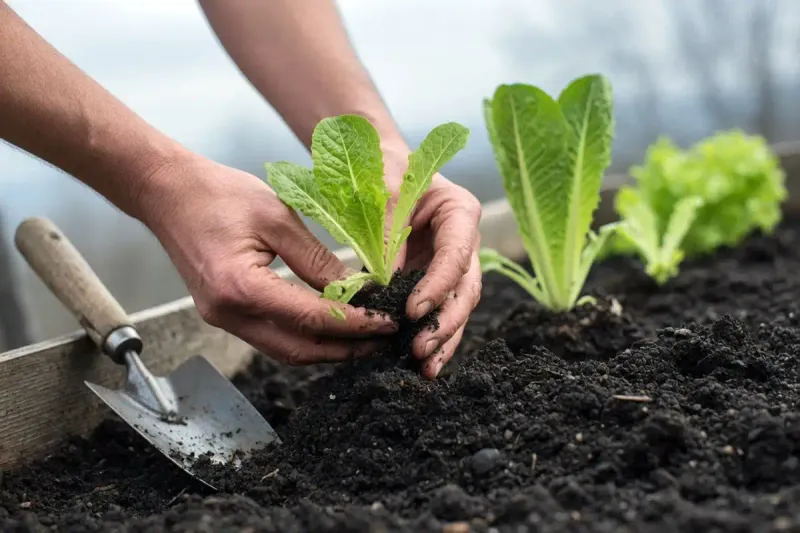
Getting seeds to germinate is only the first checkpoint. Once seedlings are up, they still have shallow roots and a limited ability to buffer themselves against heat and moisture stress.
During any lingering hot spells after germination, continue checking soil moisture daily and water before the top inch dries out. If an unexpected heat wave arrives in September, a temporary shade cloth back over the bed can help protect young plants that are not yet established enough to handle full sun and high temperatures on their own.
Transplants are a useful backup strategy when outdoor soil temperatures stay too high for dependable direct seeding. NC State Extension vegetable gardening guidance notes that starting cool-season crops in a greenhouse or other protected space can help them mature before high outdoor temperatures cause quality problems.
If you start seeds indoors under grow lights or in a cooler garage space, you can transplant young seedlings into the garden once evening temperatures begin to drop and soil conditions improve. University of Minnesota Extension midsummer-to-fall planting guidance similarly recommends transplants as a way to bridge the gap when outdoor conditions are marginal for direct seeding.
Succession planting is another practical way to spread your risk across the season. NC State Extension’s Plant Toolbox recommends sowing additional lettuce seed at roughly two-week intervals to extend harvest and avoid putting all your hopes on a single planting.
If one sowing catches a heat wave at germination, the next one may land in better conditions. NC State Extension lettuce production guidance reinforces that consistent moisture management throughout the growing period, not just at germination, is important for keeping lettuce in good condition and reducing bolting risk as the season progresses.
Harvest before bolting ruins leaf quality
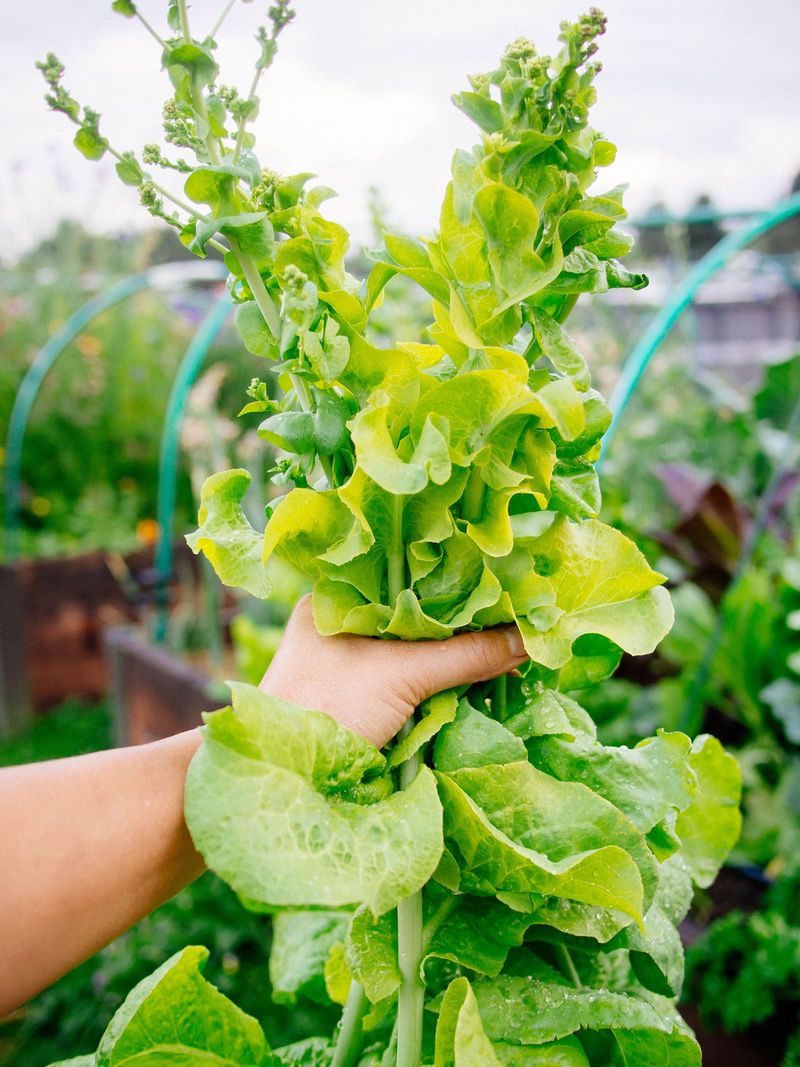
All the work of timing, shading, and watering comes down to getting leaves off the plant at the right moment. Lettuce quality is not static, and the window between “ready to harvest” and “past its prime” can close faster than expected in warm weather.
When a plant starts to bolt, it sends up a central stalk that grows quickly, and the leaves that follow tend to become more bitter and tougher as the plant puts its energy into reproduction rather than foliage.
University of Minnesota Extension lettuce guidance describes bolting as a shift in the plant’s growth pattern that typically ends the useful leaf harvest, and University of Florida IFAS bolting guidance notes that bitterness and declining quality are the practical result. Bolted lettuce is not dangerous, but most gardeners find the flavor unpleasant enough to remove the plant and start fresh.
Start tasting outer leaves before the plant looks fully mature, and harvest regularly once leaves reach a usable size.
Maturity estimates give you a rough target, not a fixed deadline. The NC Steps to Health Piedmont and Coastal Plain Planting Guide estimates leaf lettuce at approximately 40-50 days from seed and head lettuce at roughly 70-85 days, but actual timing shifts with cultivar and weather.
A cool, cloudy stretch can slow a crop; a warm week can speed it up and push plants toward bolting sooner than expected. The full sequence that gives you the best chance of crisp leaves into fall is straightforward: check your regional planting calendar, prepare a shallow and crust-free seedbed, provide temporary shade and even moisture through germination, keep monitoring moisture and heat as seedlings grow, and harvest before the plant decides the season is over.