
Here’s The North Carolina Perennial Vegetable You Plant Once And Harvest Every Spring For 20 Years
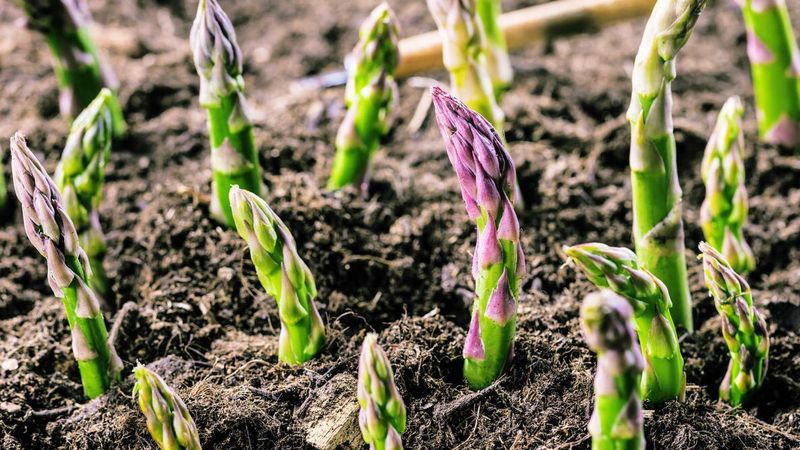
Asparagus is a perennial vegetable that can grow in North Carolina yards and, with good management, reward you with fresh spring spears for 15 years or more. The catch is that it asks for patience first – no harvest the year you plant, only a taste in year two, and a full crop only after the bed matures.
Most vegetables demand replanting every season, so a bed that keeps coming back year after year feels like a different kind of gardening altogether. Understanding what asparagus actually needs, and what it cannot promise, is what separates a thriving decades-long bed from one that fizzles out early.
Asparagus is a long-term crop, not an instant harvest
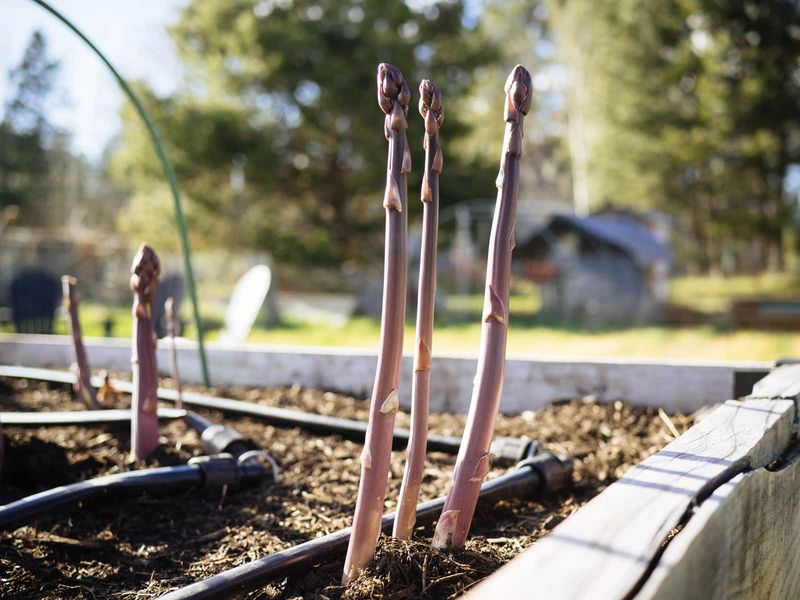
Many gardeners stumble across a headline promising a single planting that feeds the family every spring for two decades, and the promise is not entirely wrong – but it leaves out the most important details. Asparagus is a perennial vegetable that can thrive in North Carolina when the site and management conditions are right, and NC State Extension guidance describes a properly planted and managed bed as capable of producing for roughly 15 years or more.
Penn State Extension puts the range at fifteen to twenty or more years, which makes 20 years a plausible upper-end figure rather than a guarantee.
Longevity is not automatic. Drainage, soil fertility, cultivar choice, disease pressure, and how carefully you manage the harvest all shape how long a bed stays productive.
A gardener who overharvests early, ignores drainage problems, or cuts the fern down too soon can shave years off that window without realizing it.
The timeline also starts later than most people expect. You skip all harvesting during the first growing season so the plants can channel energy into building strong crowns and roots.
The second year allows only a short, light harvest – roughly two weeks – before you let the ferns take over again. A longer harvest window of approximately six to eight weeks arrives only as the bed matures, often not until the fourth or fifth year depending on planting method and local conditions.
“Every spring” also needs a correction. The harvest window is limited each year, and once spear production slows or spears begin to fern prematurely, you stop cutting and let the plant recover.
The fern that fills the bed after harvest is not a sign that the season is over and the garden can be ignored – it is the engine that recharges the crowns for next spring. Asparagus is a long-term investment, and the terms of that investment deserve to be clear before you break ground.
Choose a site that can stay productive for years
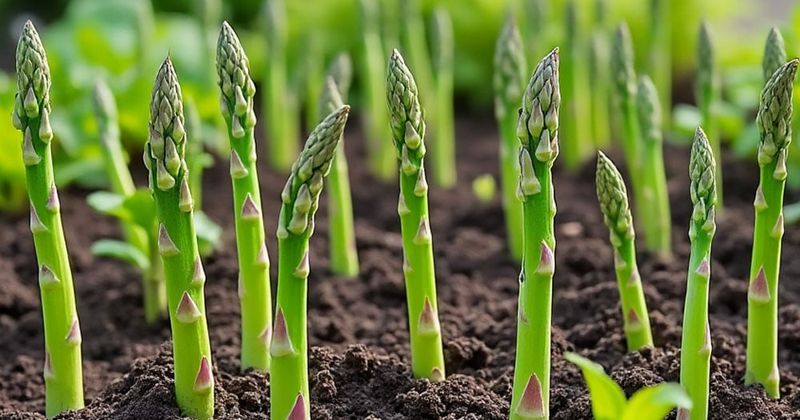
Before you buy a single crown, spend time picking the right location, because asparagus beds do not get moved. Routine tilling, annual bed rotation, and vegetable-garden shuffling all work against a perennial that needs undisturbed soil and years to settle in.
Once you plant, that corner of the yard belongs to asparagus for as long as the bed lasts.
Full sun is non-negotiable. Asparagus needs at least eight hours of direct light daily to build the energy reserves that power spring production.
Beyond sun, the soil must be deep, fertile, and reliably well-drained. NC State’s asparagus guide is direct about drainage: waterlogged conditions raise the risk of crown rot and other diseases that can cut a bed’s productive life short.
A raised bed or a gently sloped site solves many drainage problems in heavier Piedmont clay soils.
Test the soil before you plant anything. A basic soil test from the NC Department of Agriculture tells you the pH and nutrient levels and gives specific lime and fertilizer recommendations for your site.
Asparagus grows best in a pH range of roughly 6.0 to 7.0, and NC State’s soil acidity guidance identifies 6.5 as the crop target used in the state’s soil-testing system. Guessing at amendments wastes money and can create imbalances that hurt the plants for years.
North Carolina is not one climate, and planting timing reflects that. NC State’s crown production guidance and the home-garden asparagus publication both note that eastern Coastal Plain gardens can plant earlier in the season, while Piedmont and mountain gardeners need to wait until hard freezes have passed but before the crowns break dormancy.
Regional commercial guidance gives still later windows for western North Carolina’s higher elevations. Your local NC Cooperative Extension office can confirm the right window for your county rather than relying on a single statewide date that may not fit your conditions.
Plant healthy crowns in a permanent bed
Crowns are where the plant-once concept actually holds up. Buying healthy, disease-free, one-year-old crowns from a reputable supplier gets you to harvestable maturity a full year or more ahead of starting from seed.
Oregon State Extension notes that seed-grown asparagus generally requires an additional year of growing before it can be transplanted as a crown, and then still needs the same establishment period afterward. If patience is already the main challenge with asparagus, starting from seed stretches the timeline even further.
Cultivar choice matters more than many gardeners realize. NC State generally recommends male or all-male hybrid cultivars such as Jersey Giant, Jersey Knight, and Jersey Gem.
Male plants do not produce seed, which eliminates the weedy volunteer seedlings that female plants scatter around the bed. They also tend to produce more numerous, uniform spears across the season.
One clarification worth making: male plants are not guaranteed to produce thicker individual spears than females – that claim is too absolute. What the all-male hybrids reliably deliver is higher spear count and a tidier bed over the long haul.
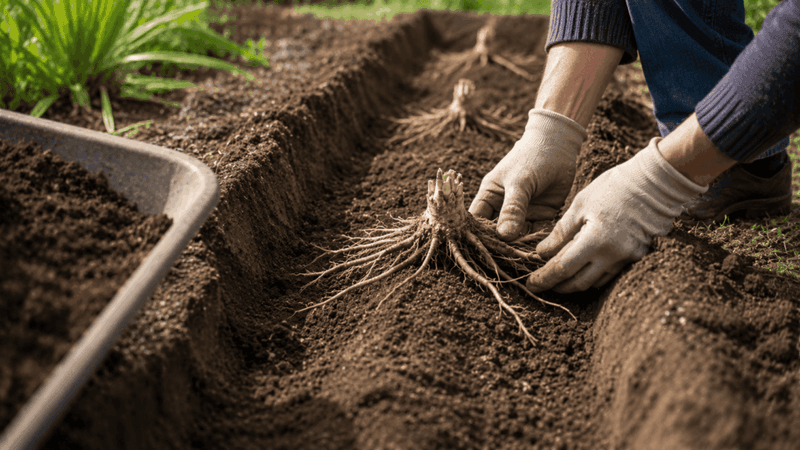
The planting method itself is straightforward but specific. NC State’s asparagus guide recommends digging a trench approximately 6 to 7 inches deep and 12 to 18 inches wide.
Space crowns 5 to 8 inches apart within the row, and keep rows at least 5 feet apart where your yard allows. That spacing feels generous when the crowns look small, but asparagus spreads considerably as it matures.
Place each crown with the buds pointing upward – an easy detail to miss when the crowns look like a tangled root mass. Cover them initially with about 2 inches of soil rather than filling the trench all at once.
As the first shoots push up, gradually add more soil until the trench is level with the surrounding bed. NC State’s home-garden publication supports this gradual backfill approach, which gives emerging shoots light and air while protecting the crowns below.
Build the harvest gradually
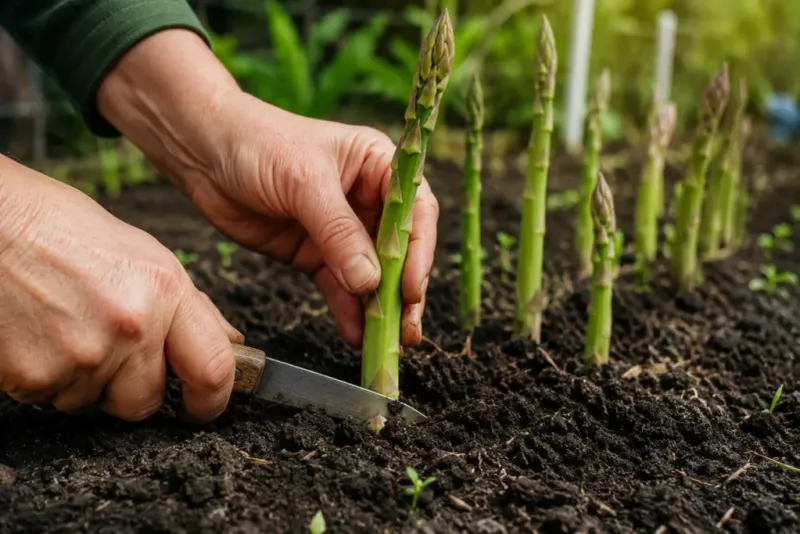
Restraint during the first few years is the single most protective thing you can do for a new asparagus bed. Every spear you harvest in the planting year is energy the plant cannot put into its roots and crown.
NC State’s home-garden asparagus guidance is clear: skip the harvest entirely during the first growing season and let every spear develop into fern-like foliage. The fern feeds the crown, and the crown is what produces next spring’s spears.
Year two brings a small reward for your patience, but only a small one. A short harvest of no more than about two weeks is appropriate at this stage, after which you stop cutting and allow the remaining spears to fern out.
Pushing beyond that window in year two risks weakening crowns that have not yet built sufficient reserves.
The longer harvest window – roughly six to eight weeks – becomes realistic only as the bed matures, which can mean the fourth or fifth year depending on how well the crowns established and what local growing conditions allowed. NC State’s asparagus publication and Penn State’s home-garden guide both frame the harvest schedule around plant vigor rather than a fixed calendar.
When spears are ready to cut, harvest them at roughly 6 to 8 inches tall by snapping or cutting them cleanly at ground level. Work carefully to avoid damaging emerging spears nearby.
University of Minnesota Extension notes that during peak production the bed may need checking daily, since asparagus grows quickly in warm spring weather and spears that are left too long will begin to open and fern before you can harvest them.
Three signals tell you to stop for the season: production slows noticeably, spears become consistently thin – often around pencil thickness or less – or young spears begin to fern out almost immediately after emerging. Oregon State Extension describes these as reliable stopping cues that protect the crowns from being pushed past their limits.
Let the fern rebuild the crowns
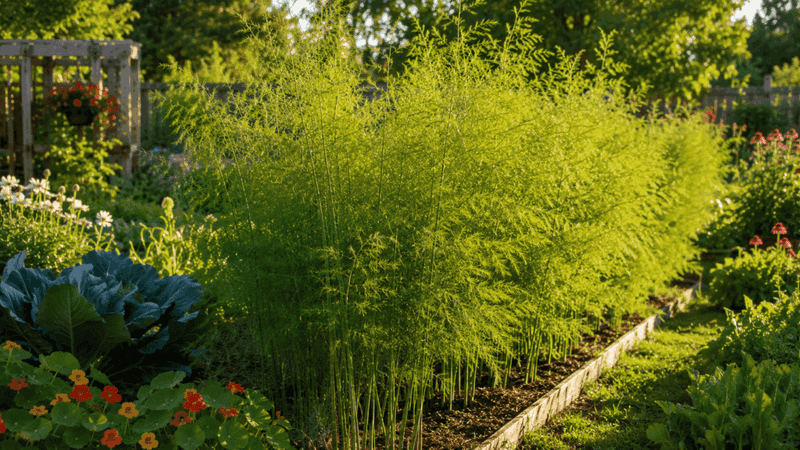
After the harvest window closes, the work shifts from cutting to protecting. The fern that fills the bed looks like the season is winding down, but from the plant’s perspective, the most important phase is just beginning.
Those tall, feathery fronds are photosynthesizing and pushing energy back down into the crown and root system, building the reserves that will power next year’s spears.
New beds need consistent moisture during establishment, but saturated soil is as harmful as drought. Water regularly without letting the bed sit wet, and control weeds aggressively throughout the growing season.
Weeds compete for nutrients and moisture and, in a bed intended to last 15 or more years, even moderate weed pressure compounds into a real problem over time. NC State’s asparagus publication and the home-garden guide both list weed management as a core ongoing responsibility, not a one-time task.
Leave healthy green fern in place until it turns brown naturally in fall or early winter. Cutting it down while it is still green interrupts the energy transfer to the crown and can meaningfully reduce the following spring’s harvest.
Penn State Extension confirms that the fern must be allowed to complete its seasonal cycle before removal. Once the foliage has yellowed and dried, remove and destroy it rather than leaving it on the bed, since old foliage can harbor disease organisms that carry over into the next season.
Thinking of an asparagus bed as low-maintenance after the crowns are in the ground is one of the most common mistakes new growers make. The annual cycle of harvest, fern growth, and end-of-season cleanup is what keeps the crowns healthy year after year, and skipping any part of it tends to show up in reduced production the following spring.
Prevent the problems that shorten a bed’s life
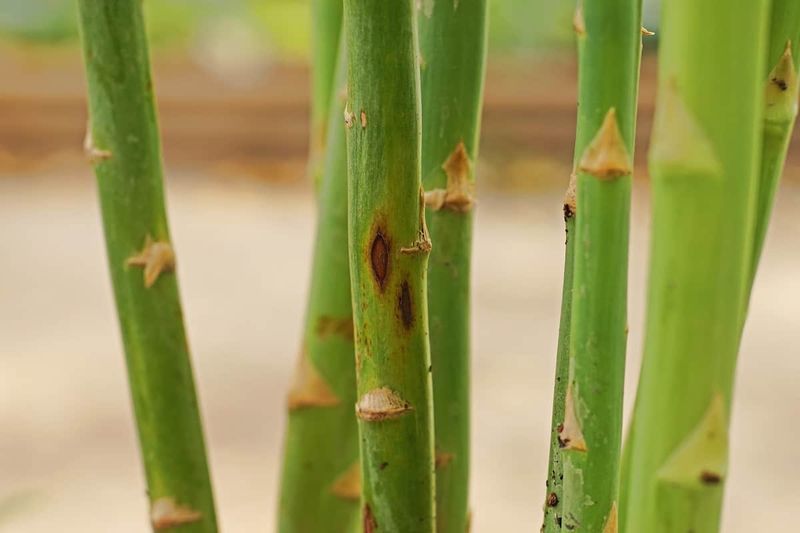
A 15-year bed does not happen by accident. Several specific threats can end an asparagus planting years ahead of its potential, and knowing them before you plant is far more useful than diagnosing them after the damage is done.
Poor drainage sits at the top of the list. Soil that stays wet for extended periods after rain stresses the crowns and creates conditions where pathogens can establish quickly.
Fusarium crown and root rot is the most serious disease threat asparagus faces, and it is persistent. NC State’s crown production guidance and the NC State disease control chapter both identify Fusarium as a major concern for asparagus plantings in the state.
Once Fusarium has seriously damaged a planting, there is no simple home-garden remedy, and the infected soil can remain unsuitable for replanting asparagus for many years.
Starting with healthy, disease-free crowns from a reputable source reduces early infection risk. Equally important is location history: never plant asparagus where asparagus has grown before, since Fusarium and other pathogens can persist in the soil.
Penn State’s commercial asparagus guide reinforces this point, noting that replanting into an old asparagus site is one of the most reliable ways to shorten a new bed’s productive life.
Overharvesting is a quieter threat but just as damaging over time. Cutting spears beyond what the crowns can sustain depletes root reserves and weakens the plants season by season.
Frost injury during late-spring cold snaps, ongoing weed competition, and soil fertility imbalances all contribute to decline as well. Asparagus beetles – both the common and spotted varieties – can damage emerging spears and fern, so monitoring the bed regularly and consulting your local NC Cooperative Extension office for current management options is part of responsible ownership.
Good care reduces problems but does not eliminate them, and no management plan guarantees that every North Carolina yard will support a decades-long bed.
Decide whether the delayed payoff fits your garden
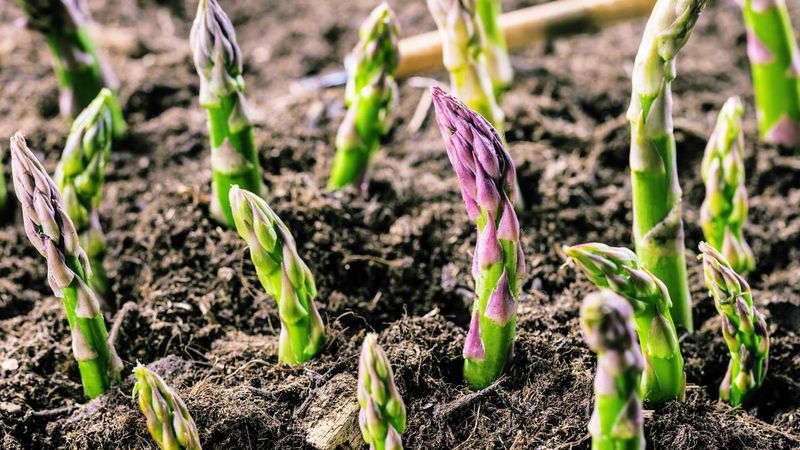
Asparagus earns its place in a yard only when the gardener is ready for the terms it sets. Before ordering crowns, ask whether you can dedicate a sunny, well-drained section of your yard to a bed that will stay put, undisturbed, for potentially 15 years or more.
If that spot might become a patio, a play area, or a different garden bed within the next few years, asparagus is the wrong investment for that location right now.
The qualified promise is worth restating plainly. A well-managed crown bed can produce spring spears for roughly 15 years or more, and 20 years or longer is possible under favorable conditions.
NC State Extension and Penn State Extension both support this range, but neither source guarantees a fixed lifespan. Drainage, disease pressure, soil management, and how carefully you honor the harvest limits all shape the outcome.
Gardeners who go in with realistic expectations tend to manage the bed better because they are not frustrated by the slow start. NC State’s full asparagus guide gives the practical framework: establish strong crowns in a well-chosen permanent site, phase in the harvest over the first few years, and protect the fern after the cutting window closes each season.
Follow those steps consistently and the bed has the best possible chance of delivering on its long-term promise. An asparagus bed is less like planting a vegetable and more like planting a fruit tree – the years you spend building it are the reason it can keep giving back.