
If You Want Blue Jays Visiting Your Yard All Year, Here Are 7 Simple Things That Bring Them In
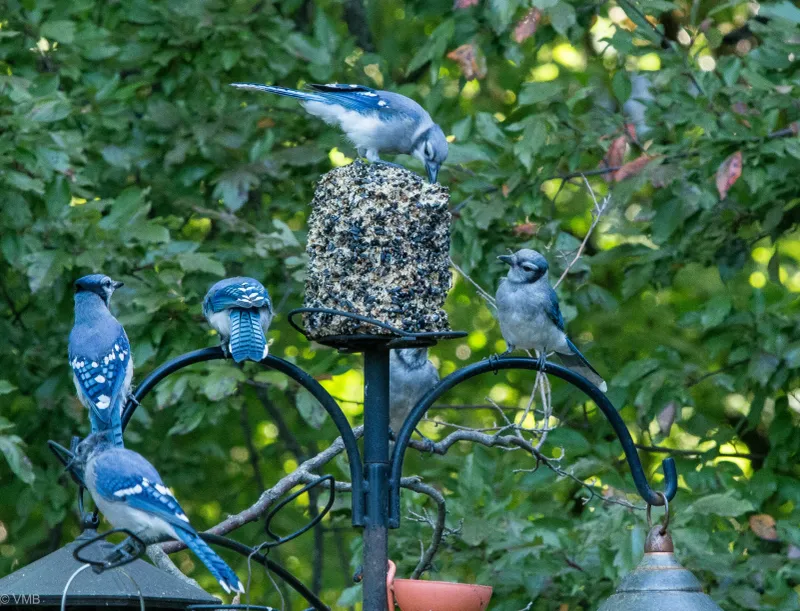
Blue Jays are loud, flashy, and full of personality, and once they find your yard, they tend to stick around. The good news is that keeping these bright blue birds coming back all year is easier than most people think.
With the right food, water, and cover, you can turn your backyard into a spot they visit in every season. Here are seven simple things that will bring Blue Jays in and keep them happy.
1. Offer Their Favorite Foods
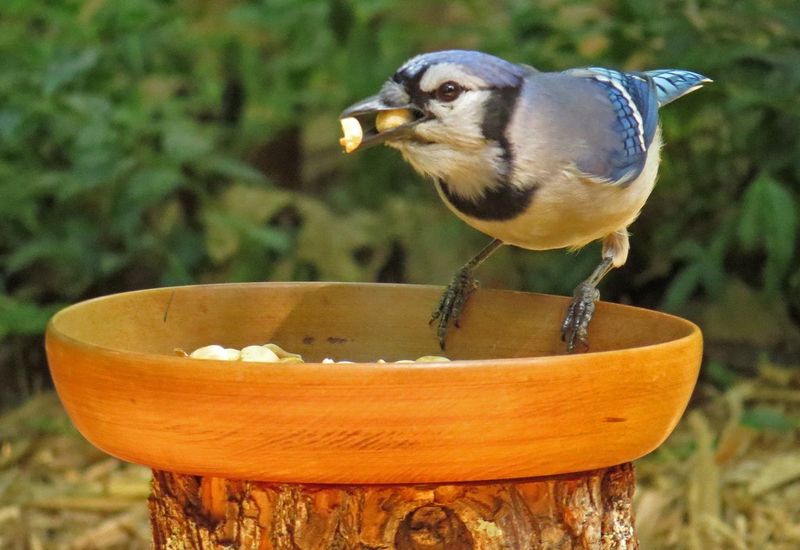
If there is one food that turns a Blue Jay into a regular guest, it is peanuts. These birds go wild for them, whether you offer them whole in the shell, shelled, or even smeared as peanut butter.
Watching a jay stuff two or three peanuts down its throat at once is one of the funniest sights in backyard birding.
Peanuts are not the only thing on the menu, though. Blue Jays are hearty eaters that happily gobble up mealworms, suet cakes, black oil sunflower seeds, and cracked or whole corn.
Mixing up your offerings keeps them interested through every season. A little variety means they always have a reason to swing by, even when other food sources run low.
2. Provide Sturdy, Roomy Feeders
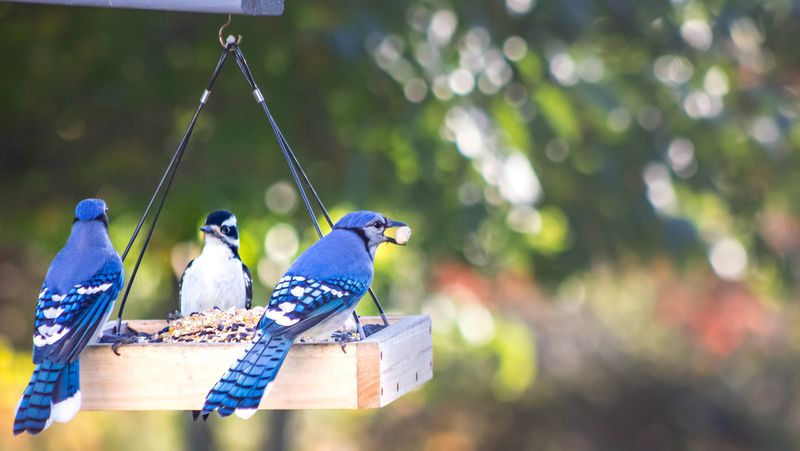
Blue Jays are big birds compared to finches and chickadees, so a flimsy little feeder just will not cut it. They need something solid where they can land, perch, and dig in without feeling cramped.
Hopper feeders, open trays, and platform feeders give them the room they crave.
For peanut lovers, a wire mesh cage or a peanut hut feeder is perfect. It lets the jays work to pull out each nut, which they seem to genuinely enjoy.
One clever trick is to set up a dedicated Blue Jay feeder a little away from your others. Jays can be bossy, and giving them their own spot keeps them from scaring off smaller birds while everyone gets fed.
3. Keep Fresh Water Available
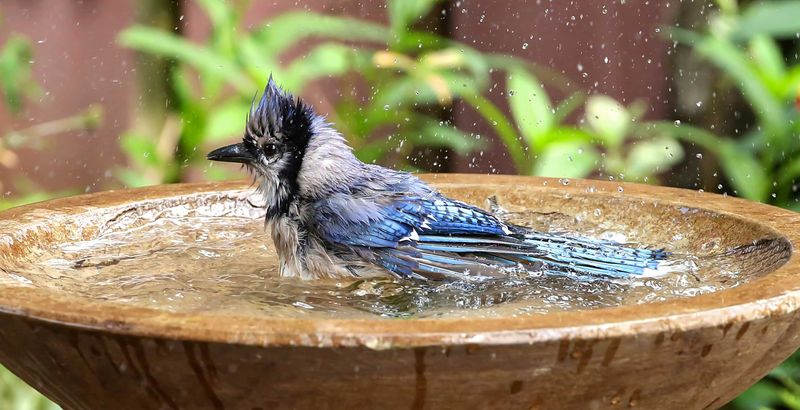
Food gets a lot of attention, but water is just as powerful for drawing birds in. Blue Jays need it for drinking and for bathing, and they are enthusiastic splashers who love a good soak.
A broad, shallow bird bath around two to three inches deep suits them best. Add a dripper or a wiggler to create movement, and the sound and sparkle will catch their attention from across the yard.
Winter is when a water source becomes truly special. When natural puddles and streams freeze over, a heated bird bath can be a lifesaver that keeps jays visiting all through the coldest months.
4. Plant Native Nut-Producing Trees
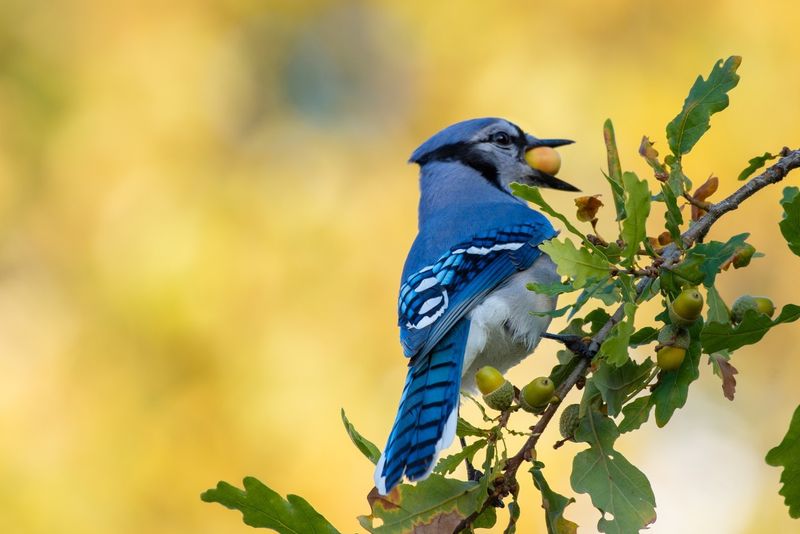
Acorns are like treasure to Blue Jays, which makes an oak tree one of the best gifts you can give them. In fact, jays are famous for helping oak forests spread by burying acorns and forgetting where they hid some of them.
Beyond oaks, trees like beech, hazelnut, hickory, and pinyon pine all offer nuts that jays love to collect. These natural food sources work year round without you lifting a finger once they are established.
Blue Jays cache nuts to eat later, so a nut tree gives them a reason to stick close by. Planting one is a long game, but few things pull jays in more reliably than a tree full of acorns.
5. Add Berry and Fruit-Bearing Plants
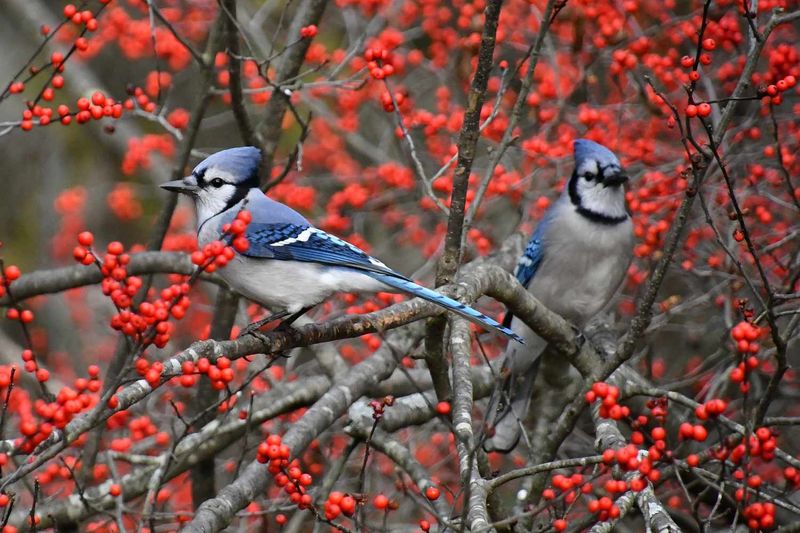
Not everything a Blue Jay eats comes from a shell. These birds also snack on berries and small fruits, which adds another natural layer to your backyard buffet.
Try planting cherries, grapes, blackberries, elderberries, huckleberries, serviceberry, sumac, blueberry, Virginia creeper, red mulberry, or persimmon. Each ripens at a different time, so you can offer something fresh across the growing seasons.
The beauty of fruit-bearing plants is that they feed the jays while also brightening up your yard. You get color and structure, and the birds get a steady, seasonal supply of food they can count on.
6. Create Dense Shelter and Nesting Spots
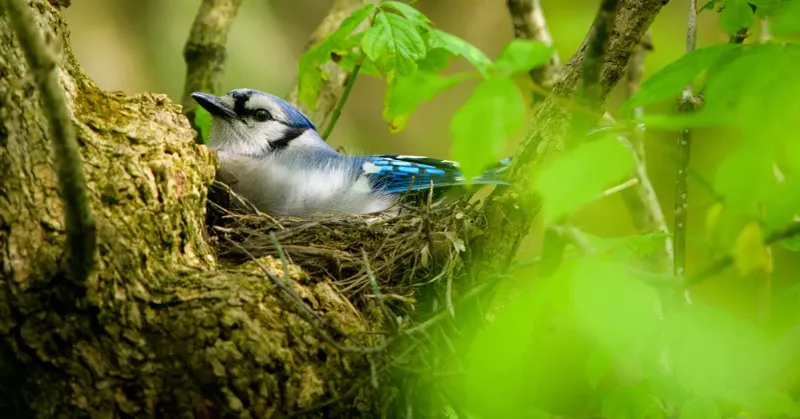
A safe place to hide matters just as much to a Blue Jay as a full belly. Mature trees, both leafy and evergreen, give them protection from hawks, cats, and rough weather all year long.
Evergreens really earn their keep in fall and winter when leafy trees go bare. Going easy on pruning helps keep foliage thick and protective, and planting trees or tall shrubs close together builds a cozy, sheltered corner.
When it comes to nesting, jays build cup-shaped nests in tree forks, usually ten to twenty feet up. They rarely use standard birdhouses, but a large nesting shelf placed under an eave or a sloping roof might just tempt a pair to move in.
7. Supply Nesting Materials
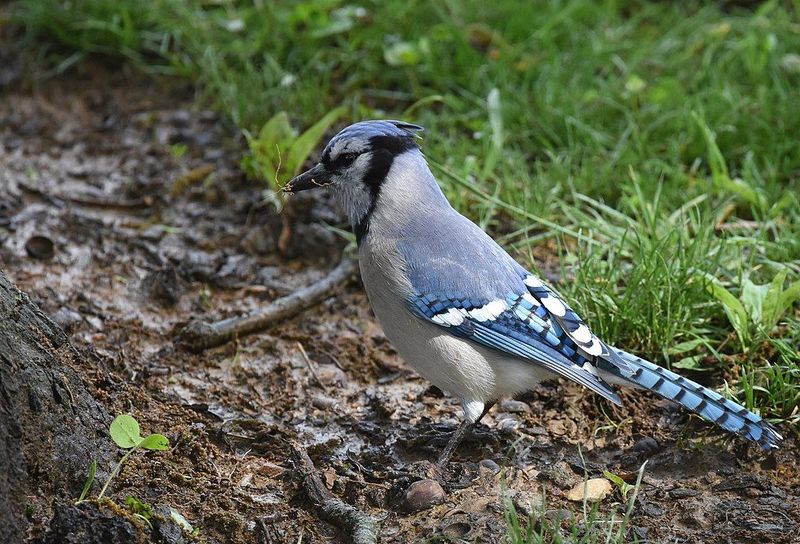
When spring rolls around, roughly mid-March into July, Blue Jays get busy raising families. Giving them a little help with building supplies can convince them to nest right in your yard instead of somewhere down the block.
Leave out twigs and grass clippings where they can grab them easily. Jays typically build in the same trees they already use for shelter, so having materials handy makes your yard even more appealing.
One quirky thing to know is that jays prefer weathered, aged nesting spots over shiny new ones. If you put up a nesting platform, do not be discouraged if it sits empty for a while.
Give it time to look lived-in, and patience often pays off.