
If You Grow Vegetables, Here Are 15 Reasons A Row Of Marigolds Earns Its Spot Between Your Crops
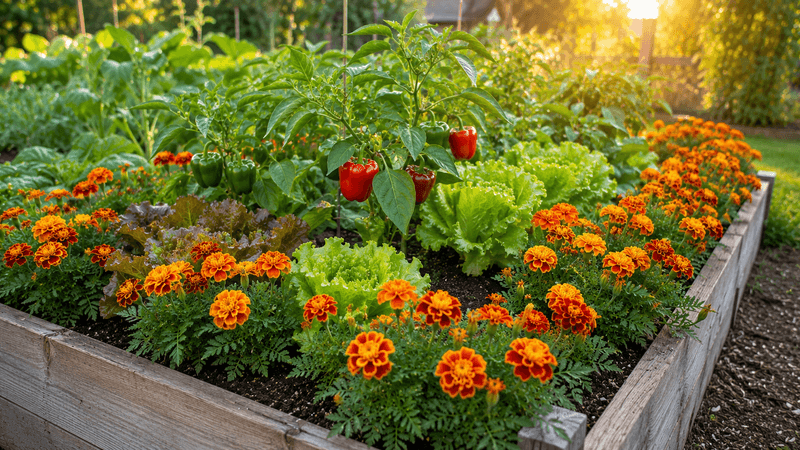
Marigolds might look like a cheerful splash of orange and yellow, but they pull real weight in a vegetable garden. Tucked between your tomatoes, beans, and squash, these little flowers can quietly fight pests, feed the soil, and bring in helpful bugs.
If you have ever worried about your crops getting chewed up or your soil going tired, a simple row of marigolds could be your easiest fix. Here are 15 solid reasons to give them a spot right between your rows.
1. Protects Against Root-Knot Nematodes
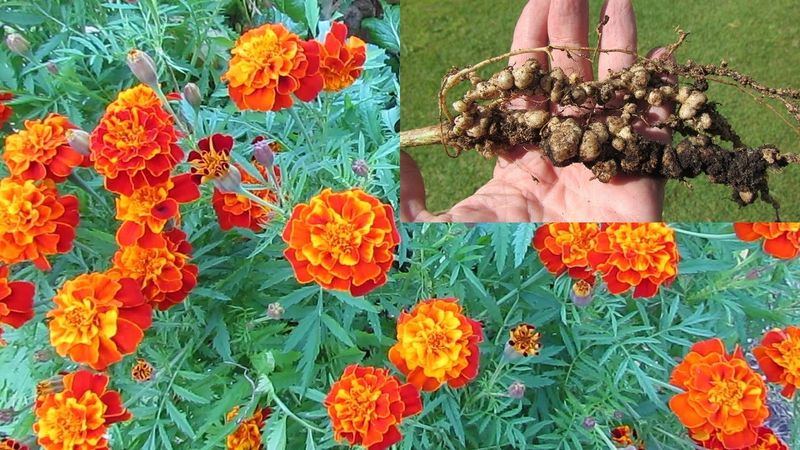
Down in the dirt where you cannot see, tiny worms called root-knot nematodes can quietly wreck your vegetables. They attack the roots of tomatoes, peppers, beans, and cucumbers, leaving plants weak and stunted.
French marigolds (Tagetes patula) are the heavy hitters here. Their roots release a natural compound called alpha-terthienyl that is toxic to these microscopic pests.
Plant them thickly through a bed and you can knock back nematode numbers over the season. It is one of the oldest tricks in the organic gardener’s book, and it actually holds up.
2. Deters Aphids

Aphids are the sap-sucking freeloaders of the garden, clustering on tender new growth until leaves curl and yellow. They breed fast, too, so a small problem becomes a big one overnight.
The strong, unmistakable smell of marigolds helps throw them off. That pungent scent masks the plants aphids are hunting for and can make your beds a lot less inviting.
Line a row of marigolds near your beans or lettuce and you give these pests a reason to look elsewhere.
3. Repels Whiteflies
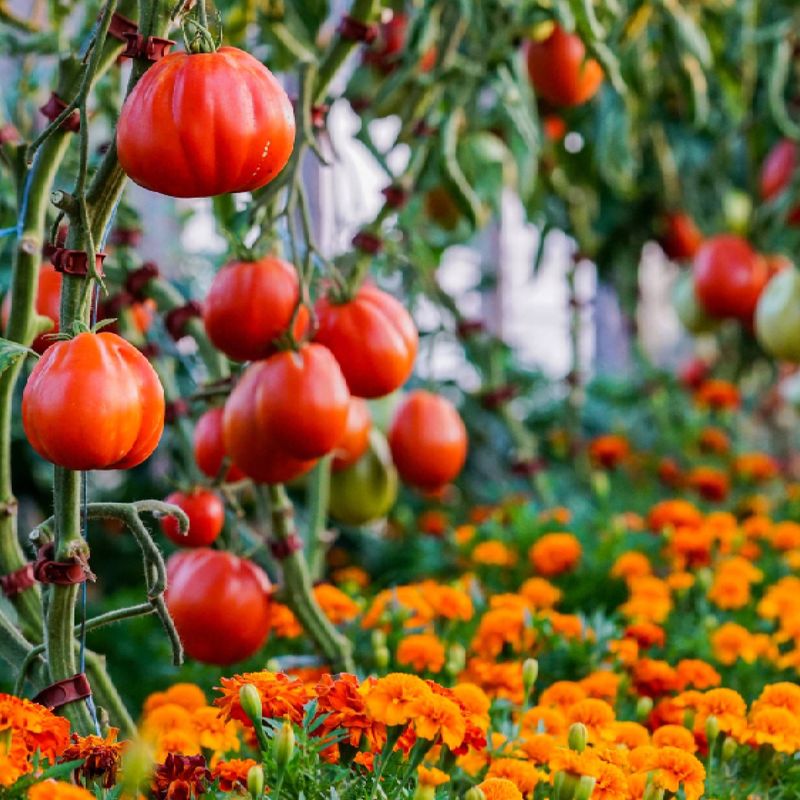
Ever brush a tomato plant and see a little cloud of white specks lift into the air? Those are whiteflies, and they can weaken your plants while spreading disease as they feed.
Marigolds have earned a reputation for pushing whiteflies away. Their scent seems to confuse and repel these flying pests, keeping them off your tomatoes and other favorites.
Tucking marigolds among your nightshades gives you a fragrant, colorful line of defense that costs almost nothing to set up.
4. Confuses Tomato Hornworms
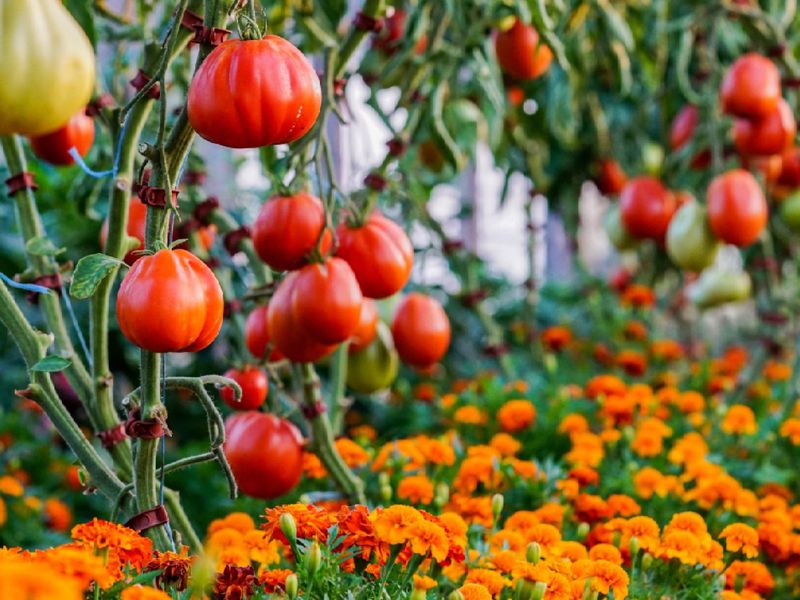
Tomato hornworms are the stuff of gardener nightmares. Big, green, and camouflaged, they can strip a tomato plant of its leaves in what feels like a single night.
The powerful aroma of marigolds can help mask the smell of your tomato plants. When hornworm moths cannot easily sniff out where to lay their eggs, fewer caterpillars end up chewing your crop.
It will not make them vanish completely, but muddying the scent trail is a smart, low-effort way to tip the odds in your favor.
5. Wards Off Cabbage Moths and Worms
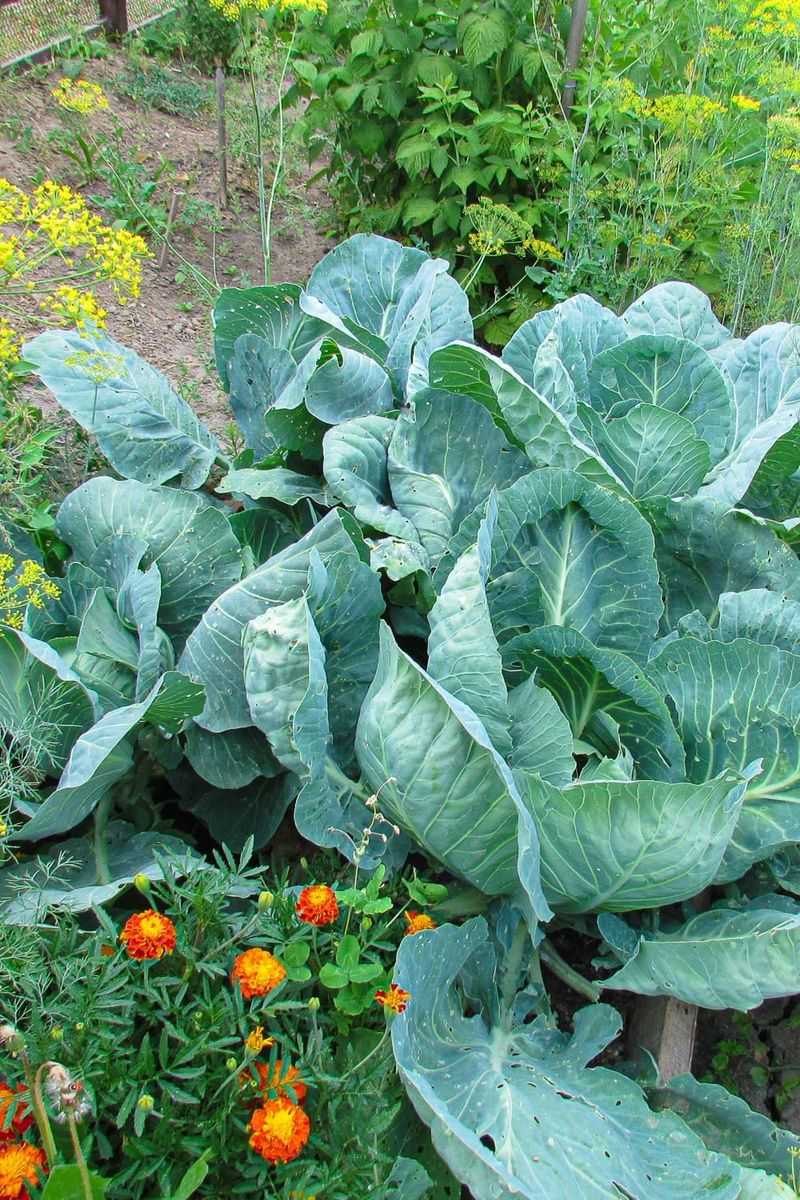
If you grow cabbage, kale, or broccoli, you know the frustration of finding ragged holes and little green worms hiding in the leaves. Those come courtesy of cabbage moths laying eggs on your brassicas.
Slip marigolds between your rows and their sharp smell can confuse the moths as they search for a place to land. Fewer eggs mean fewer hungry worms later on.
Think of the flowers as a scented smokescreen around your cabbage patch, working while you go about your day.
6. Deters Squash Bugs and Cucumber Beetles
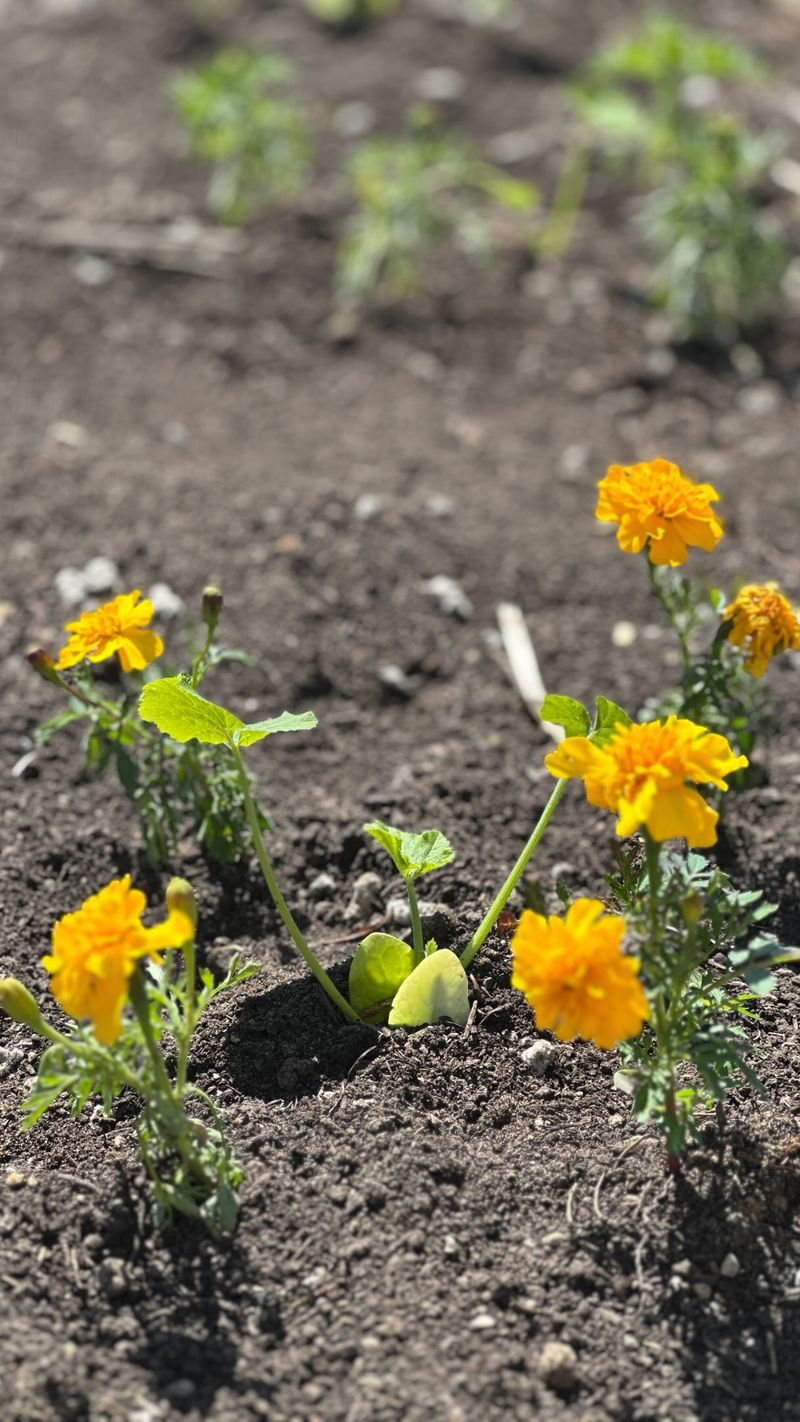
Squash bugs and cucumber beetles are a one-two punch for anyone growing zucchini, cukes, or pumpkins. They pierce leaves, spread disease, and can bring a promising vine to a sad end.
Marigolds help push back against these beetles with their heavy fragrance. Planted around the base of your squash family crops, they make the area less appealing to the bugs cruising through.
Pairing marigolds with your sprawling vines gives those thirsty pests one more reason to keep moving.
7. Acts as a Trap Crop for Slugs
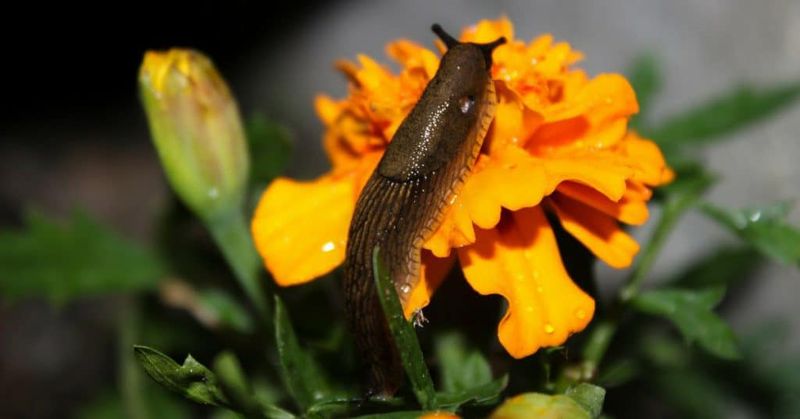
Slugs love a midnight buffet, and your tender lettuce and greens are usually first on the menu. Waking up to slimy trails and holey leaves is a familiar heartbreak.
Here marigolds play the noble role of sacrifice. Slugs are drawn to them, which pulls the pests toward the flowers and away from the vegetables you actually want to eat.
Let a few marigolds take the hit as a trap crop, and your prized greens stand a much better chance of making it to the plate.
8. Discourages Rabbits
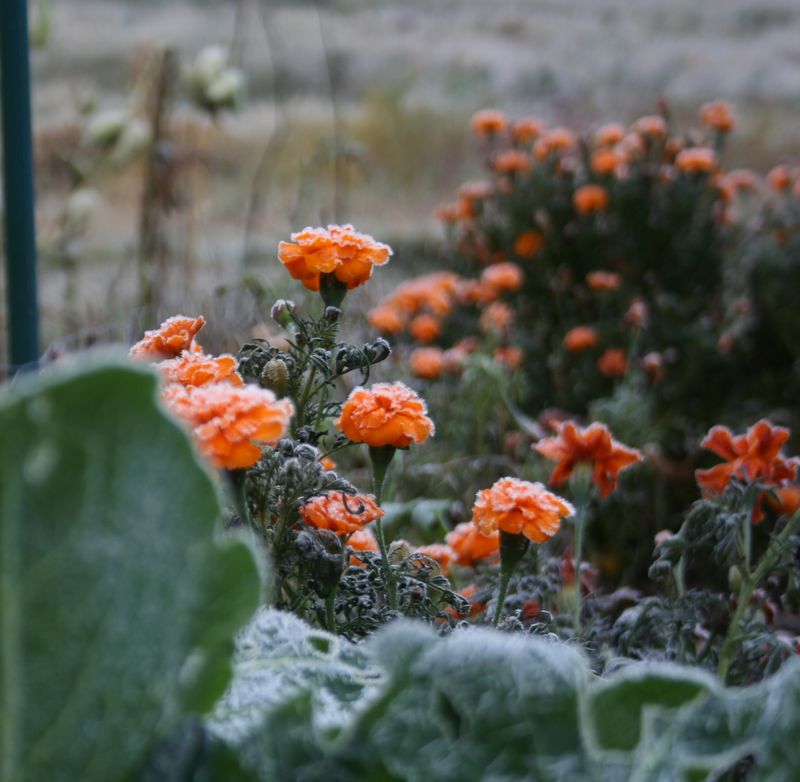
Rabbits look adorable until they treat your garden like an all-you-can-eat salad bar. A hungry bunny can mow down rows of young seedlings before breakfast.
The strong odor marigolds give off may help keep rabbits at a distance. Many gardeners plant a border of them as a first line of defense around beds.
No flower is a guaranteed fence, but a fragrant marigold edge can nudge browsing rabbits toward the neighbor’s yard instead of yours.
9. Attracts Ladybugs
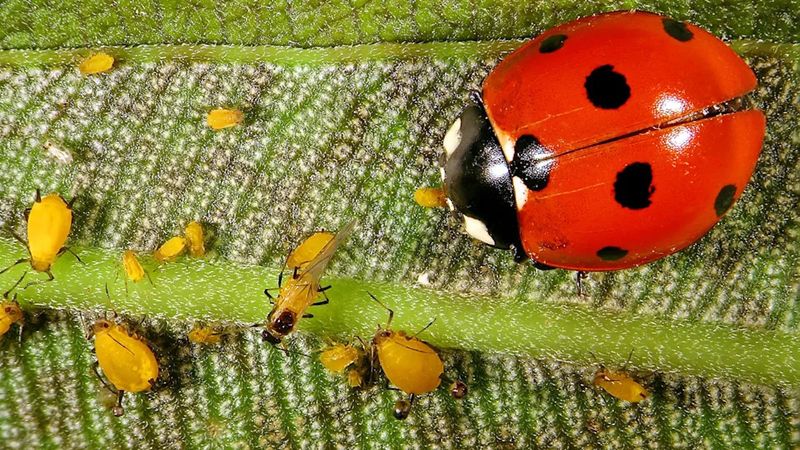
Not every bug in the garden is a villain. Ladybugs, or lady beetles, are some of the best free help you can get, and they have a serious appetite for aphids.
Marigolds are like a welcome sign for these polka-dotted allies. Once they settle in, a single ladybug can eat hundreds of aphids over its lifetime.
Grow marigolds and you are basically hiring a tiny pest-control crew that works for pollen and never asks for a raise.
10. Draws In Hoverflies
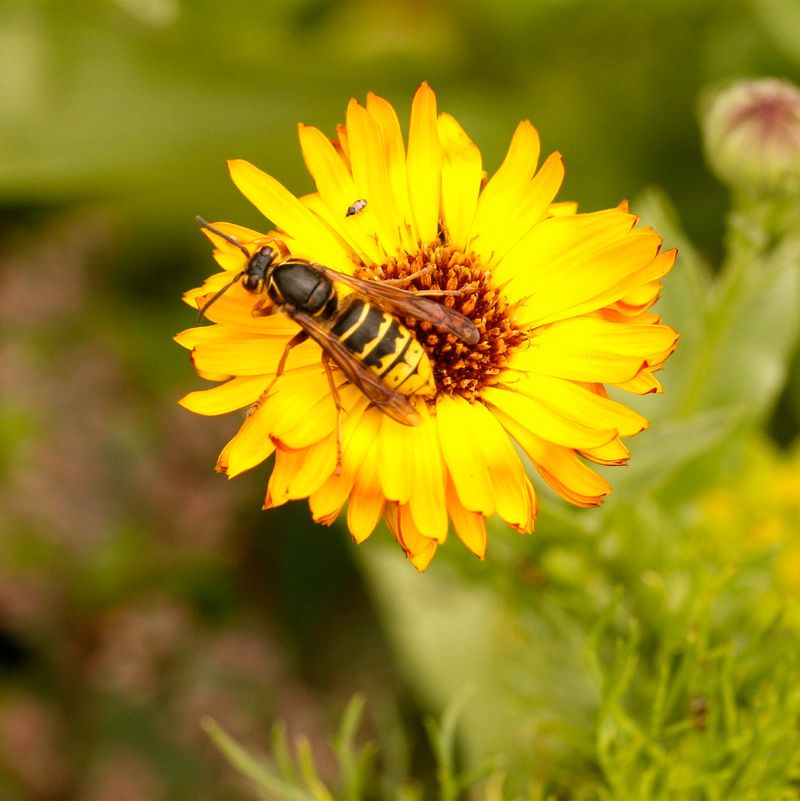
Hoverflies get mistaken for tiny bees, but these striped visitors are quiet garden heroes. The adults sip nectar while their hungry larvae devour aphids and other soft-bodied pests.
Marigold blooms are a magnet for them. Open, easy-to-reach flowers give hoverflies exactly the fuel they need to stick around.
Keep a steady patch of marigolds in bloom, and you invite a rolling generation of aphid-eating helpers right where you need them most.
11. Encourages Lacewings
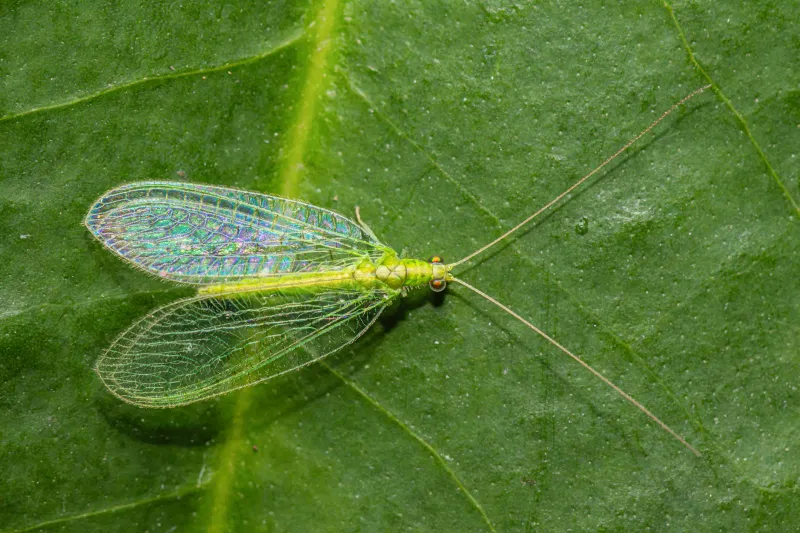
Lacewings are dainty, almost fairy-like insects with clear, veined wings. Do not let their delicate looks fool you, though, because their larvae are fierce little predators.
Nicknamed aphid lions, lacewing young feast on aphids, whiteflies, and mites with impressive speed. Marigolds help lure the adults into your garden so they can lay their eggs nearby.
Add these flowers and you round out a whole team of natural bug-hunters patrolling your crops for free.
12. Boosts Pollination for Fruiting Vegetables
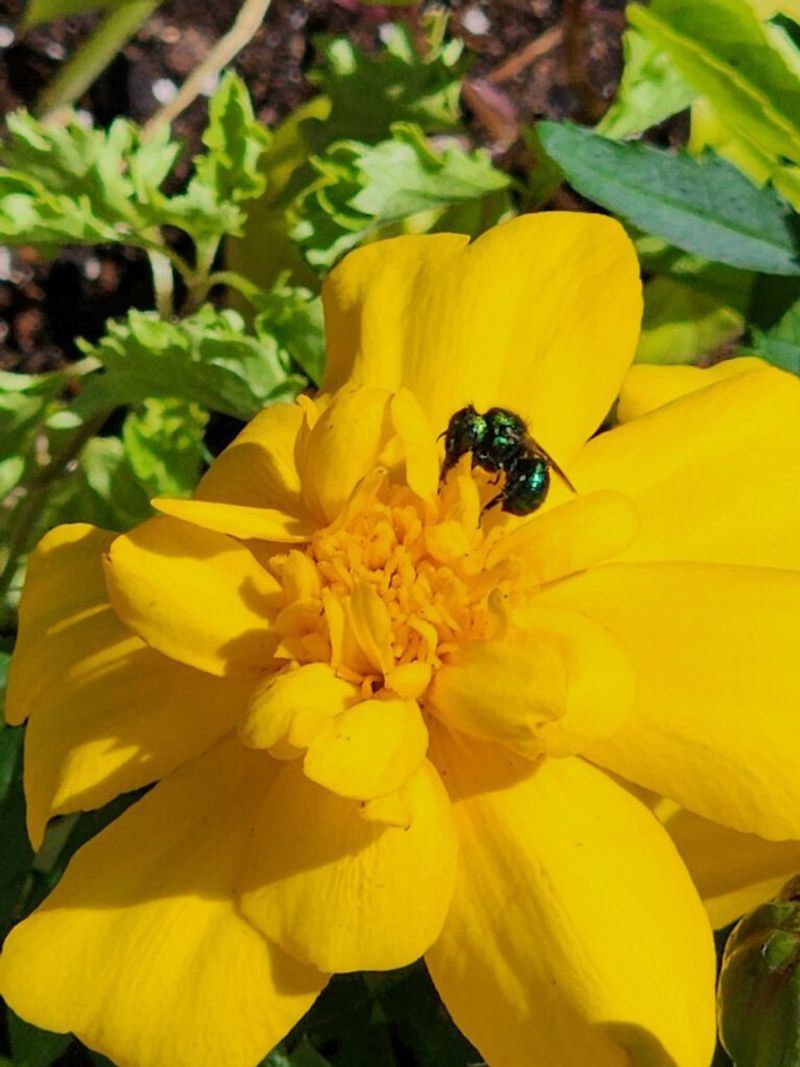
Some vegetables simply will not fruit without a little help from pollinators. Squash, cucumbers, and eggplant all depend on bees and butterflies moving pollen from flower to flower.
Bright marigolds act like a landing pad, pulling in bees and butterflies who then wander over to your crops. More pollinator traffic often means better fruit set and heavier harvests.
If your squash keeps dropping tiny fruits, a nearby row of marigolds might be the buzz your garden was missing.
13. Improves Soil Health and Structure
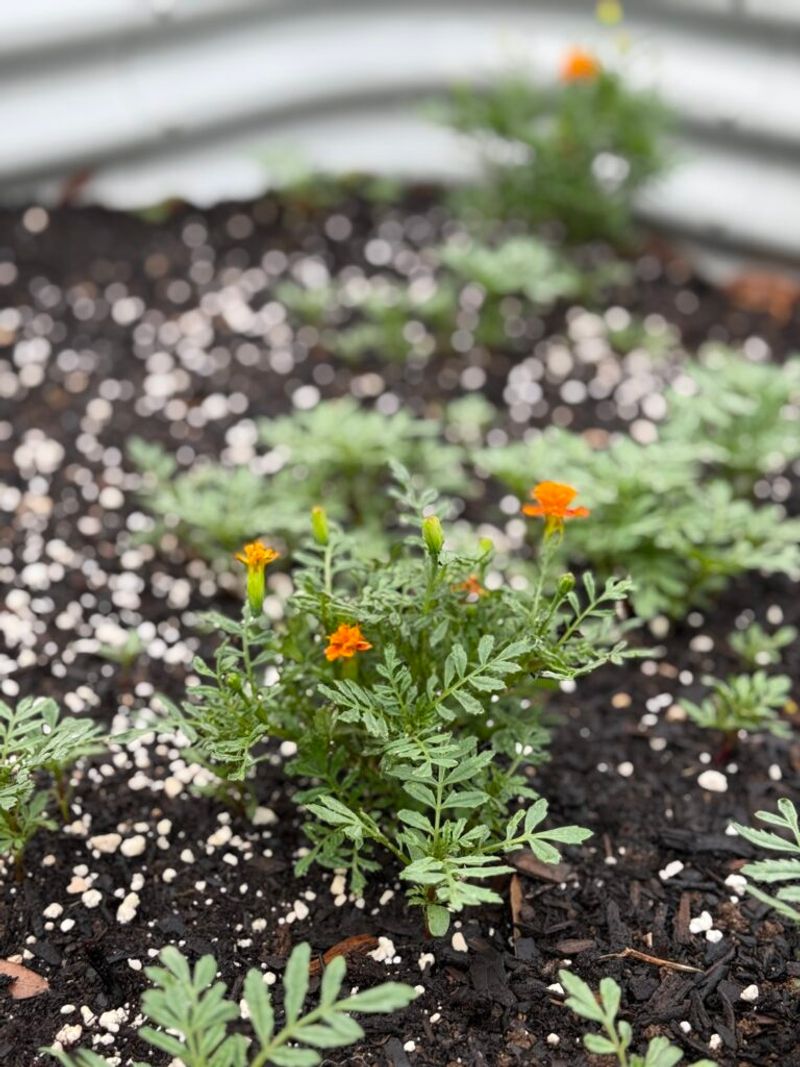
Marigolds keep giving even after their blooming days are over. When the season winds down and the plants fade, they break down and return organic matter to the ground.
That decomposing material feeds the soil, improving its structure and fertility for next year’s crops. Loose, rich dirt drains better and holds nutrients where roots can reach them.
Chop the spent plants and work them into your beds, and you close the loop on a garden that quietly builds itself back up.
14. Suppresses Weeds
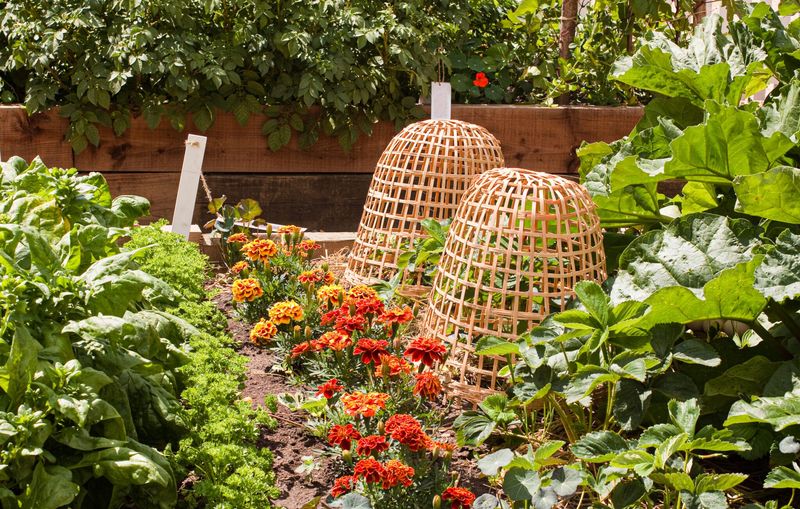
Weeds are the uninvited guests that steal water, light, and nutrients from your vegetables. Pulling them week after week gets old fast.
Planted close together, marigolds work like a living mulch. French varieties especially shade the soil so tightly that weed seeds struggle to sprout underneath.
Fill in the gaps between your crops with dense marigolds, and you spend less time weeding and more time enjoying a tidy, colorful bed.
15. Helps Control Soil-Borne Diseases

Not all garden trouble comes from bugs you can see. Some of the worst problems hide in the soil, where certain diseases attack roots and slowly drain the life out of your plants.
The same alpha-terthienyl that marigold roots use against nematodes can also suppress certain soil-borne diseases. That means a healthier root zone for whatever you grow next.
Rotating marigolds through your beds gives the soil a chance to reset, so your vegetables get a cleaner, safer place to put down roots.