
If Your Hummingbird Feeder Uses Honey, Here Are 4 Hidden Dangers Quietly Putting The Birds At Risk
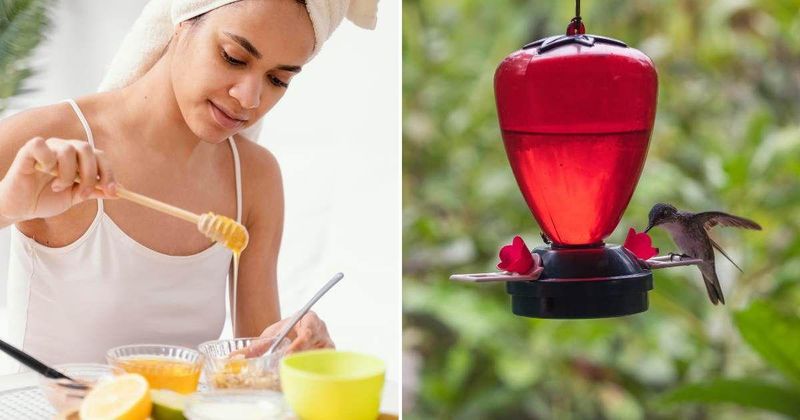
Filling your hummingbird feeder with honey might feel like a natural, wholesome treat, but it can actually hurt the tiny birds you love watching. Honey behaves very differently from real flower nectar, and those differences turn dangerous fast.
Below are four quiet risks that honey brings to your backyard visitors. Once you know them, switching to a safer mix is an easy fix you can make today.
1. Fatal Fungal and Bacterial Infections
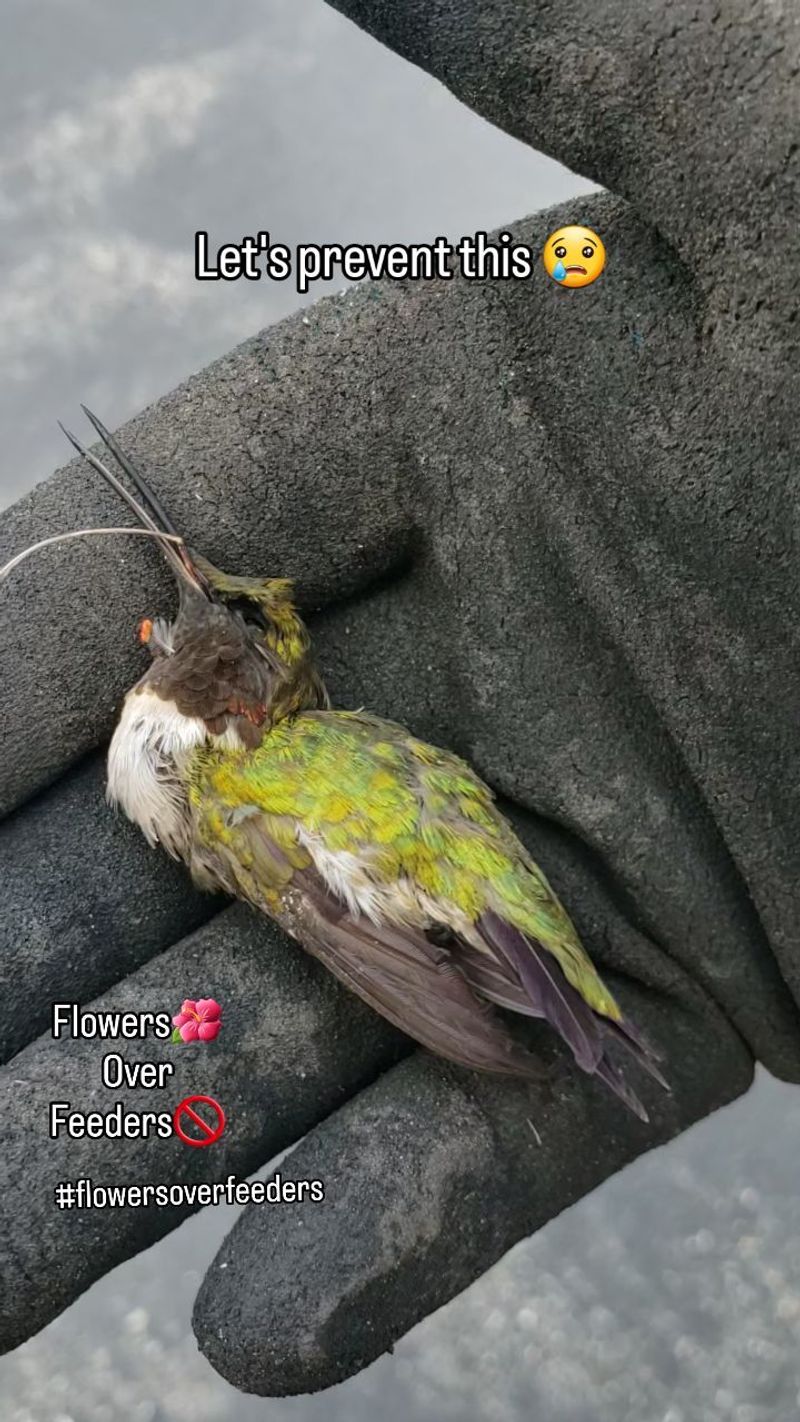
Picture a sweet-looking feeder that is secretly growing something deadly. When honey gets diluted with water, it ferments quickly and turns into a cozy home for harmful bacteria and fungi like Candida.
If a hummingbird sips that contaminated mixture, the microbes can trigger a lethal fungal infection sometimes called “fungal tongue.” The bird’s tongue can swell so badly that feeding becomes impossible.
Once a hummingbird can no longer eat, starvation follows fast because these birds burn energy at an incredible rate. A single bad feeder can quietly harm several birds before you ever notice a problem.
Plain white sugar and water do not ferment nearly as aggressively, which is one big reason experts recommend it instead.
2. Digestive Difficulties and Malnutrition
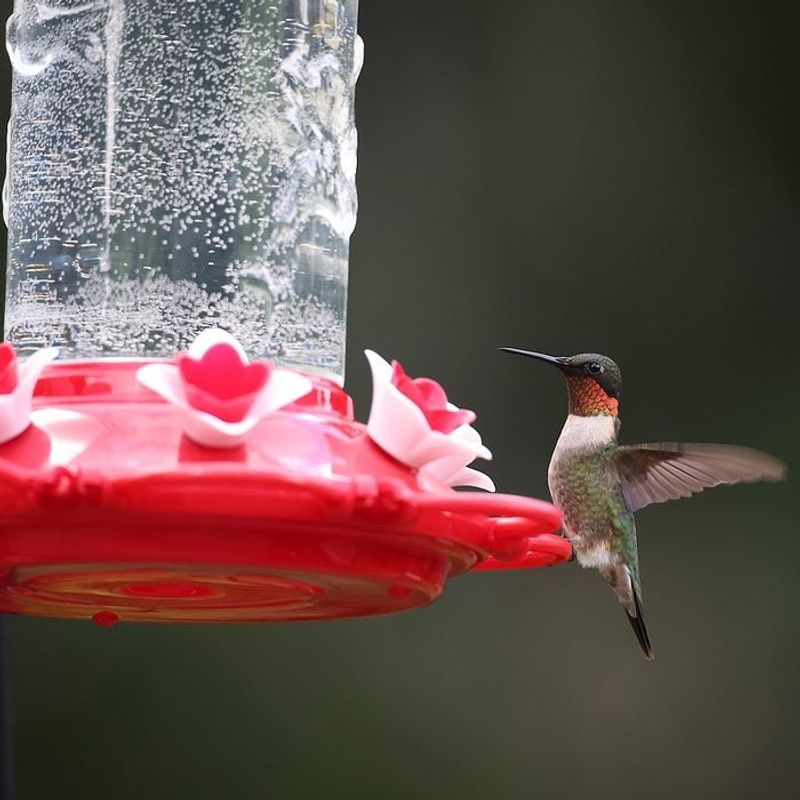
Hummingbirds evolved to drink flower nectar, which is loaded with sucrose, the exact sugar their bodies are built to handle. Honey is a different story.
Honey is packed with glucose and fructose, which are structurally different and harder for a hummingbird’s specialized system to break down. On top of that, honey can be up to 80 percent sugar, while natural nectar sits comfortably around 15 to 25 percent.
That super-concentrated sweetness sounds like a bonus, but it can actually leave the bird unable to pull proper nutrition and energy from each sip. Over time, that mismatch can lead to malnutrition even though the feeder looks full.
A simple mix of one part regular sugar to four parts water lines up much closer to what flowers naturally offer.
3. Physical Obstruction and Reduced Mobility
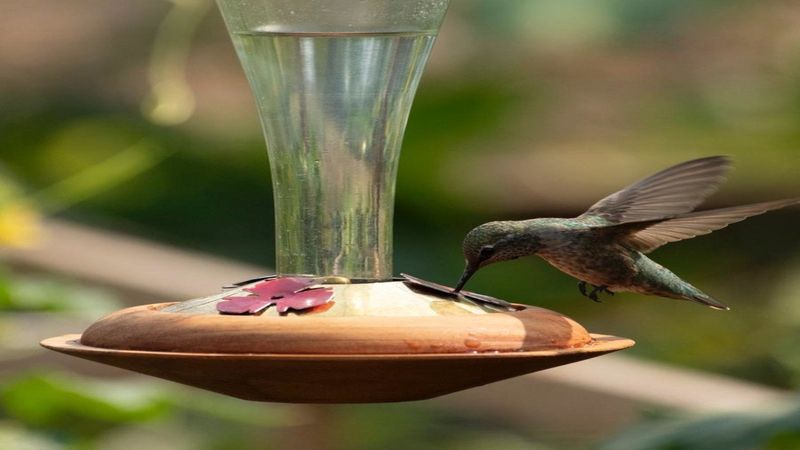
Honey is thick and sticky, and that gooey texture becomes a trap for such a small, delicate bird. If any gets onto a hummingbird’s bill or feathers, it can turn into a glue-like coating.
A bird stuck with sticky feathers may struggle to fly, feed, or preen itself properly. For a creature that depends on constant motion, even a little residue is a serious setback.
The problem does not stop at the bird. Honey, even watered down, tends to clog the tiny feeding ports of the feeder, choking off the flow so the birds cannot reach their food.
Regular sugar water stays thin and slips easily through those little openings, keeping both the feeder and your visitors clean and free to move.
4. Fermentation into Harmful Alcohol
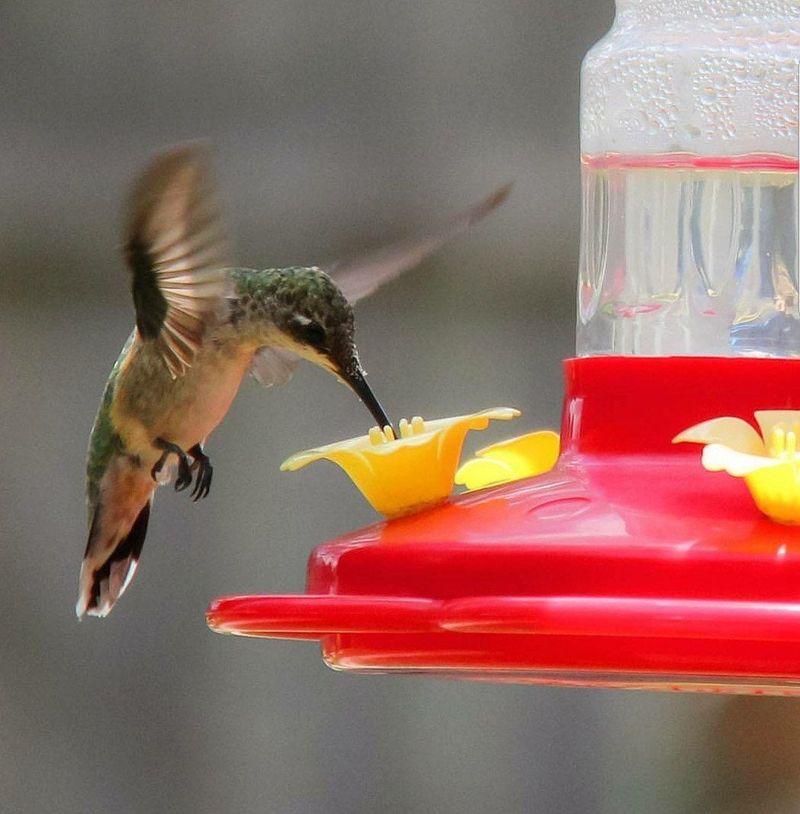
Here is a strange twist most people never expect: honey water can basically turn into a tiny batch of booze. Its high sugar content, once mixed with water and left out in the warm air, ferments and produces alcohol right inside the feeder.
A hummingbird that drinks this fermented solution can become intoxicated, and a wobbly, disoriented bird is easy prey for cats, hawks, and other dangers.
In worse cases, the alcohol itself can be fatal to such a small body. Hot summer days speed up fermentation, so the risk climbs exactly when your feeder is busiest.
Keeping the mixture simple with plain sugar and changing it every few days is the honest, low-cost way to keep your backyard birds safe and steady on the wing.