
If Your Pothos Grows Long And Leggy With Bare Vines, Here Are 16 Care Habits That Make It Full And Bushy Again
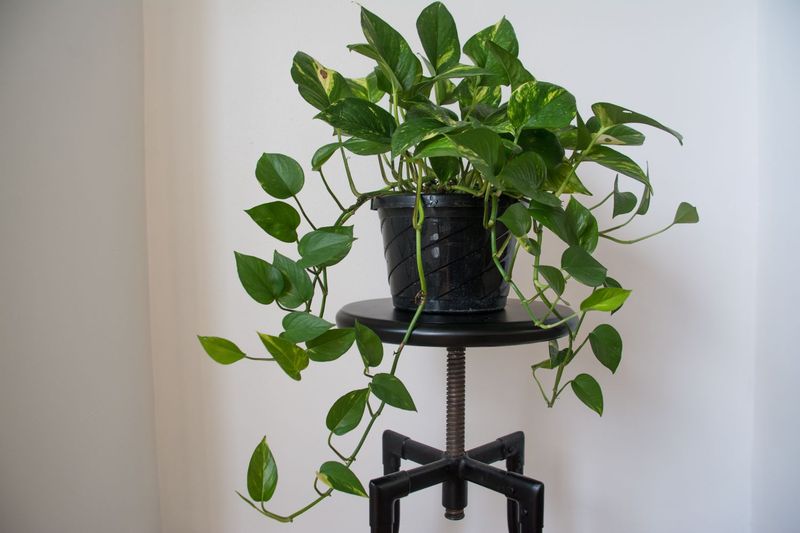
Your pothos was supposed to look lush, but instead you’re staring at long, stringy vines with big gaps between the leaves. Don’t panic, because a leggy pothos is almost always fixable with a few simple changes.
Most of the time the plant is just reaching for light or missing a couple of easy care habits. Below are 16 things you can start doing today to bring back that thick, jungle-full look.
1. Provide Adequate Bright, Indirect Light
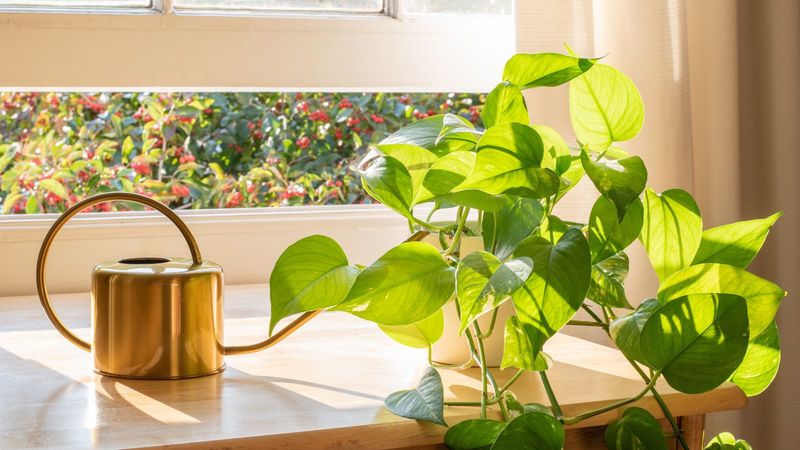
Nine times out of ten, a stretched-out pothos is simply hungry for light. When the plant can’t get enough, it lengthens the space between leaves, called internodes, as it reaches toward the nearest window.
That leaves you with skinny vines and small, sad leaves.
Move your pothos to a spot with bright, indirect light, like a few feet back from an east or north window. Sheer curtains work great for taming harsh afternoon sun that could scorch the foliage.
If your home just doesn’t get much natural light, a small grow light can make a huge difference. Better light means shorter gaps, bigger leaves, and richer variegation on the golden and marble varieties.
2. Prune Regularly to Encourage Bushy Growth
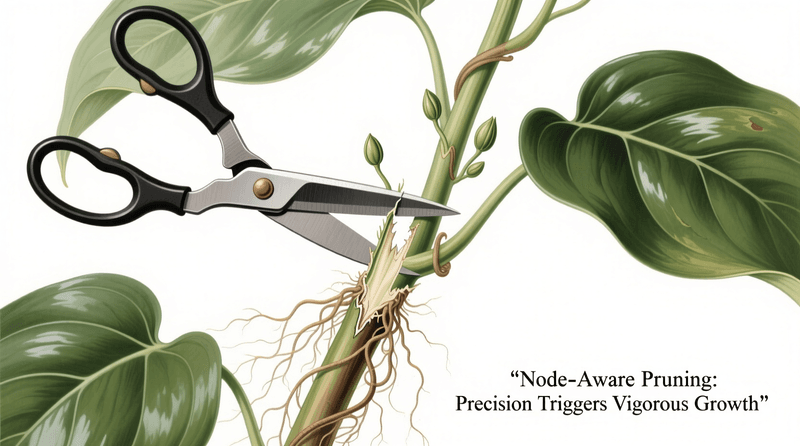
Here’s a secret that surprises a lot of plant owners: cutting your pothos actually makes it fuller. Pothos have something called apical dominance, meaning the tip of each vine sends out hormones that tell the rest of the stem to stay quiet.
Snip that tip off and you interrupt the signal. Suddenly those sleeping buds along the vine wake up and start branching out in new directions.
Make pruning a regular habit rather than a once-a-year rescue mission. A little trim every few weeks during the growing season keeps the plant compact instead of letting it run wild and bare.
3. Cut Just Below a Node
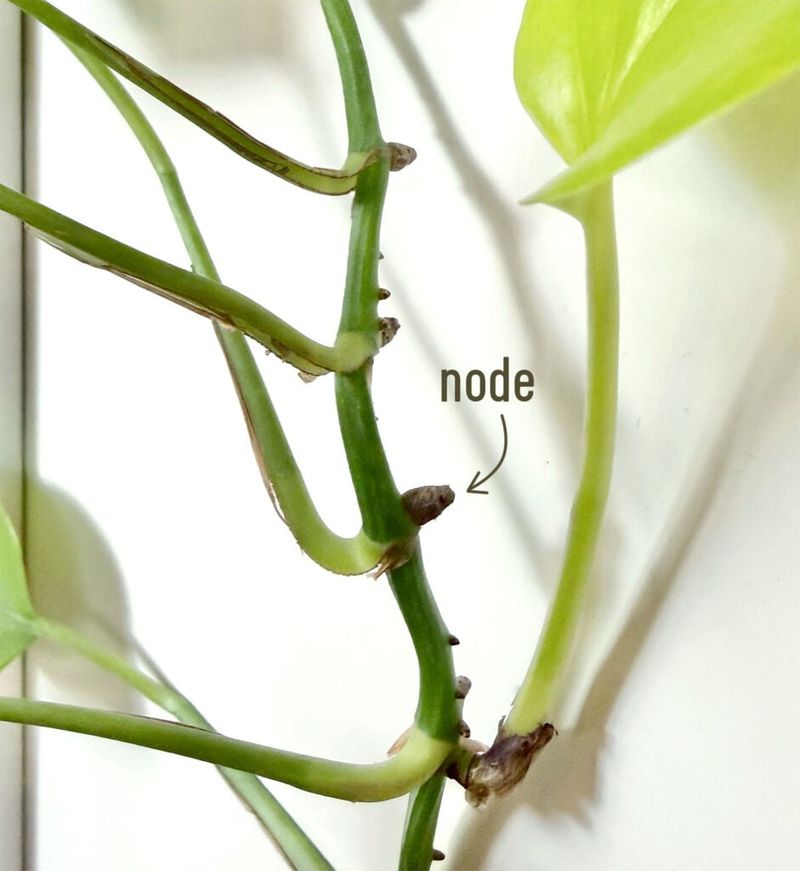
Where you cut matters just as much as whether you cut. Look for the little bumps or joints along the stem, called nodes, where leaves and aerial roots emerge.
New growth always sprouts from these spots.
Aim your snip just below a node, not in the middle of a bare stretch of vine. Cutting there tells the plant exactly where to push out fresh stems and leaves.
If you plan to root the piece you removed, make the cut at a slight 45-degree angle. That angled surface gives the cutting a bit more area to soak up water while it grows roots.
4. Don’t Be Afraid to Trim Back Significantly

Staring at a plant that’s mostly stem and barely any leaves? Sometimes a gentle trim won’t cut it, and you need to be bolder.
Removing three to four inches of the end growth, or even up to two-thirds of the longest shoots, can trigger a burst of fuller regrowth.
It feels scary to hack away at your plant, but pothos are tough and bounce back fast. Those bare vines aren’t going to magically re-leaf on their own.
One rule keeps you safe: don’t remove more than about a third of the total foliage in a single session. Spreading big cuts over a few weeks protects the plant from too much stress.
5. Propagate Cuttings to Fill Bare Spots
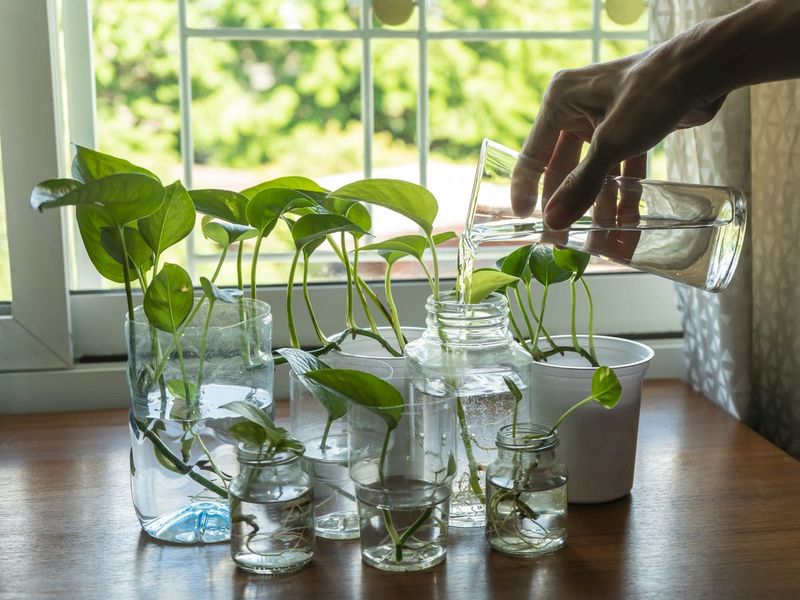
Don’t toss those trimmed pieces in the trash, because they’re your ticket to a fuller pot. Every healthy cutting can become a brand-new plant, and the best trick is to root them and tuck them right back into the same container.
Pop the cuttings in a jar of water or straight into moist soil. Just make sure each one has at least one node, since that’s where the roots will emerge.
Once several cuttings have rooted, plant them together in the original pot. You’ll get an instant lush, dense look without waiting years for the parent plant to fill in.
6. Layer Bare Vines on the Soil Surface
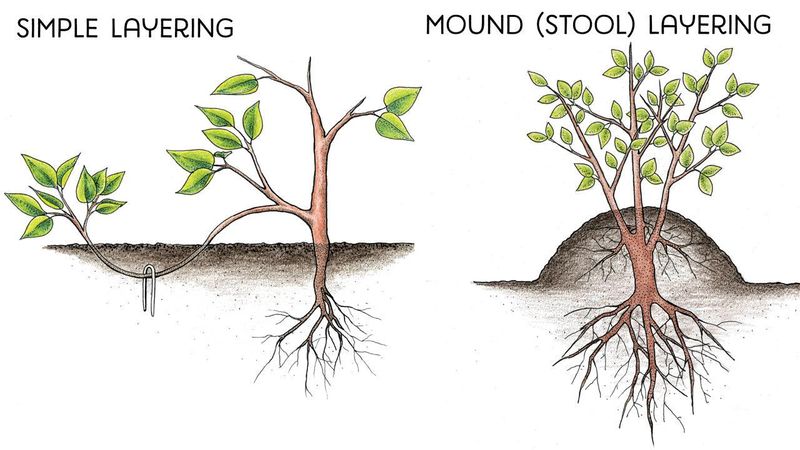
Got a long, bare vine you can’t bear to cut? There’s a clever way to make it earn its keep.
Wrap the vine around the top of the pot so it rests against the soil, then bury one of its nodes just under the surface.
Keep the vine attached to the parent plant while you do this. The node will sense the moist soil and start pushing out new roots and shoots right where the pot looked empty.
Gardeners call this layering, and it’s a low-risk way to fill gaps. You get fresh growth without ever separating the cutting or risking a failed root job.
7. Water Thoroughly When the Soil is Partially Dry
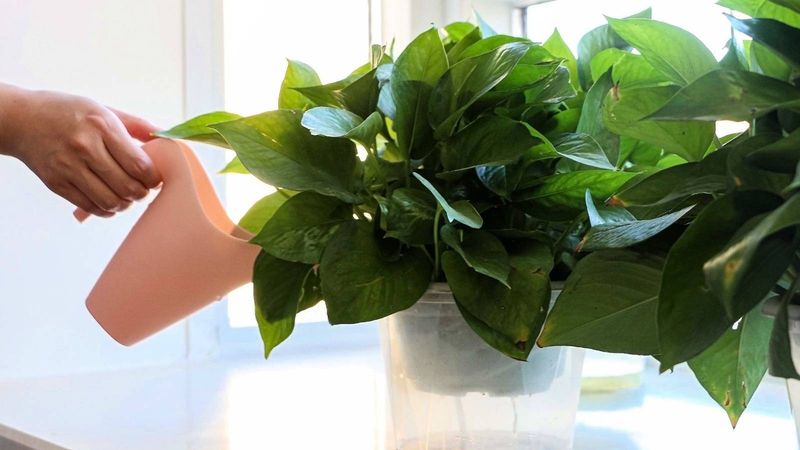
Watering trips up more pothos owners than almost anything else. These plants like to dry out a little between drinks, so poke your finger into the soil first.
When the top one to two inches feel dry, it’s time.
Water deeply until it runs out the drainage holes, which makes sure every root gets a turn. A quick splash on the surface leaves the bottom roots thirsty.
Steer clear of the extremes. Constantly soggy soil invites root rot and yellowing leaves, while letting it bone-dry for too long causes leaves to drop and vines to thin out.
8. Fertilize During the Growing Season
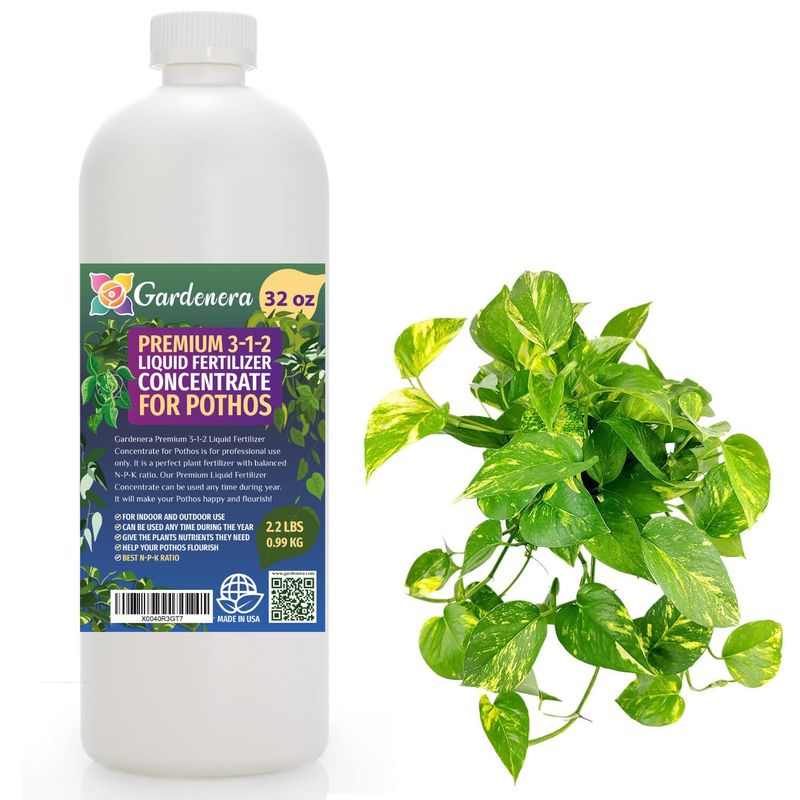
A leggy pothos may simply be running low on fuel. During spring and summer, when the plant is actively growing, a balanced liquid houseplant fertilizer every four to six weeks keeps the leaves coming thick and green.
Look for something with a balanced ratio, around 3-1-2 or 2-2-2, to support lush foliage without pushing the plant too hard. Always dilute according to the label so you don’t burn the roots.
Ease off in fall and winter when growth naturally slows. Feeding a dormant plant just leaves excess salts in the soil with no new leaves to show for it.
9. Use Well-Draining Potting Mix
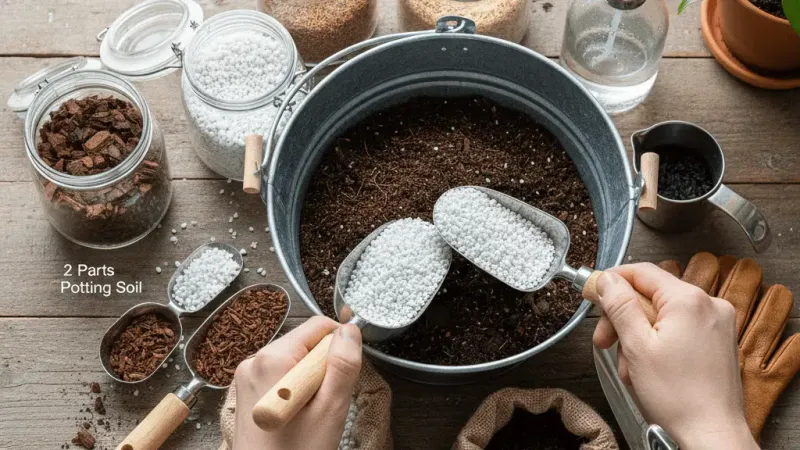
The soil your pothos sits in quietly shapes how well it grows. A heavy, water-logged mix suffocates roots and sets the stage for rot, which weakens the whole plant and thins out the vines.
Reach for a chunky, well-draining blend instead. Stirring perlite or orchid bark into a standard houseplant mix opens up air pockets and lets excess water escape fast.
Roots that can breathe grow stronger, and stronger roots support the fuller, denser top growth you’re after. It’s an easy upgrade you only have to do at repotting time.
10. Repot into a Slightly Larger Container When Root-Bound
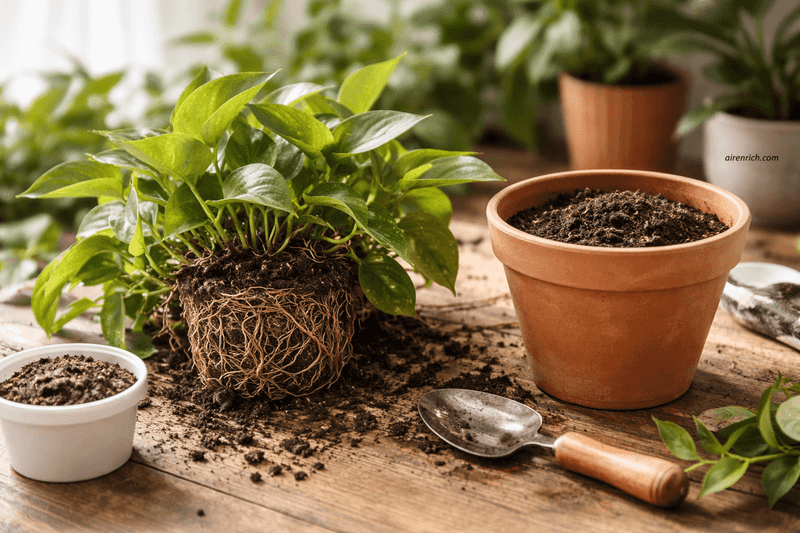
If roots are circling the pot or poking out the drainage holes, your pothos is telling you it’s cramped. A root-bound plant struggles to take up water and nutrients, which can leave it looking tired and stringy.
Move it into a container just one to two inches wider than the current root ball. Pothos actually like being a touch snug, so going too big can lead to soggy soil and unhappy roots.
Refresh with new potting mix while you’re at it, and plan to repot every one to two years. A little more room and clean soil often spark a wave of fuller growth.
11. Maintain Moderate to High Humidity
Pothos hail from steamy tropical forests, so dry indoor air isn’t their favorite. While they’ll tolerate average household humidity of 30 to 60 percent, they really perk up between 40 and 70 percent.
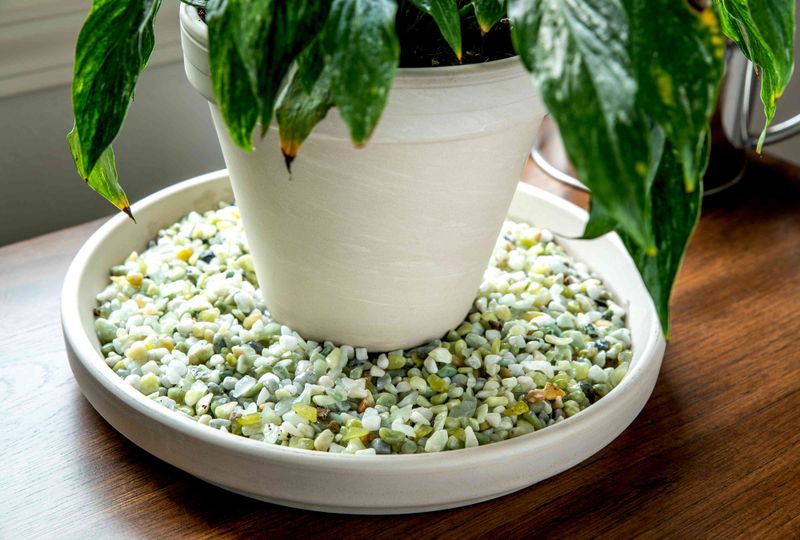
Bumping up the moisture is easy. Set the pot on a pebble tray filled with water, run a small room humidifier, or group it with other plants to create a humid little pocket.
Just keep the pot itself out of standing water so the roots don’t stay soggy. Happier humidity often means bigger, glossier leaves that fill in those bare stretches.
12. Rotate the Pot Regularly
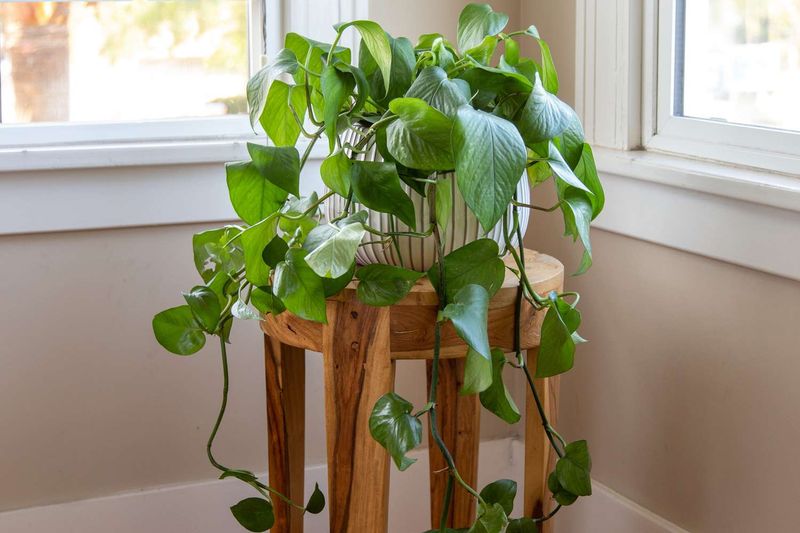
Ever notice how your pothos leans hard toward the window? Plants naturally chase the light, and left alone, all the growth crowds onto one side while the back goes bare.
Give the pot a gentle quarter turn every week or so, or whenever you finish a pruning session. That way every side gets a fair share of light.
Even lighting encourages balanced, all-around growth instead of one long, stretched-out reach. It’s a tiny habit that keeps the whole plant looking symmetrical and full.
13. Remove Wilted or Dead Leaves
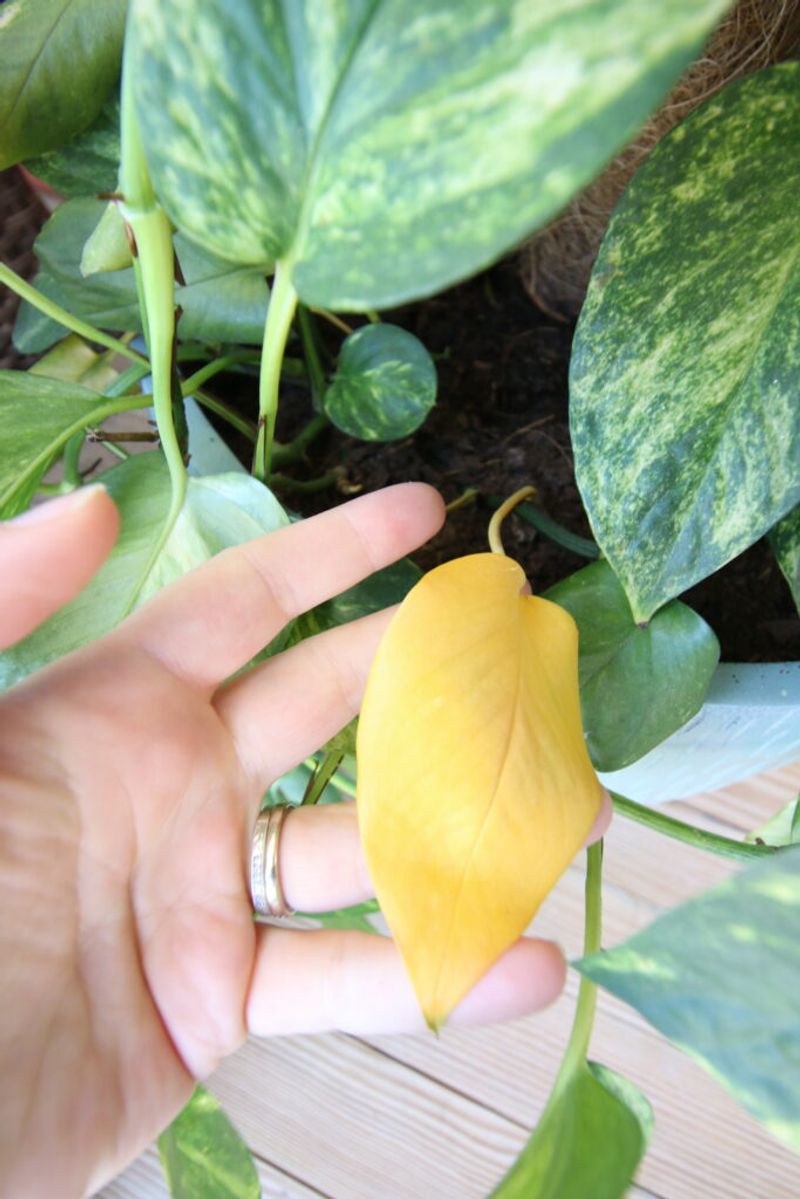
Those crispy, yellow, or mushy leaves aren’t just an eyesore. They quietly drain energy the plant could be spending on fresh, healthy growth instead.
Pinch or snip them off as soon as you spot them. Clearing away the dead weight lets your pothos redirect its resources toward new leaves and stems.
Regular cleanup also makes it easier to spot pests or problems early. A tidy plant is usually a healthier, bushier one.
14. Keep Temperatures Consistent
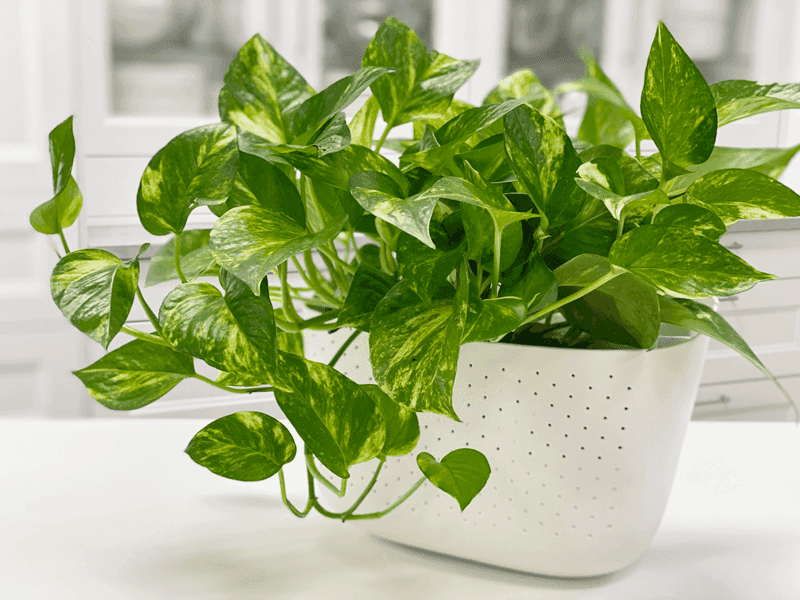
Pothos are happiest in the same comfy range most of us like, roughly 65 to 85 degrees Fahrenheit. Steady warmth keeps growth moving along at a healthy pace.
Cold is the enemy here. Anything below 60 degrees, plus chilly drafts from doors, windows, or air conditioning vents, can stress the plant and stall new growth.
Keep your pothos away from those temperature swings and it’ll reward you with more consistent, fuller leafing. Stable conditions let it focus its energy on filling out.
15. Consider Growing Multiple Plants Together
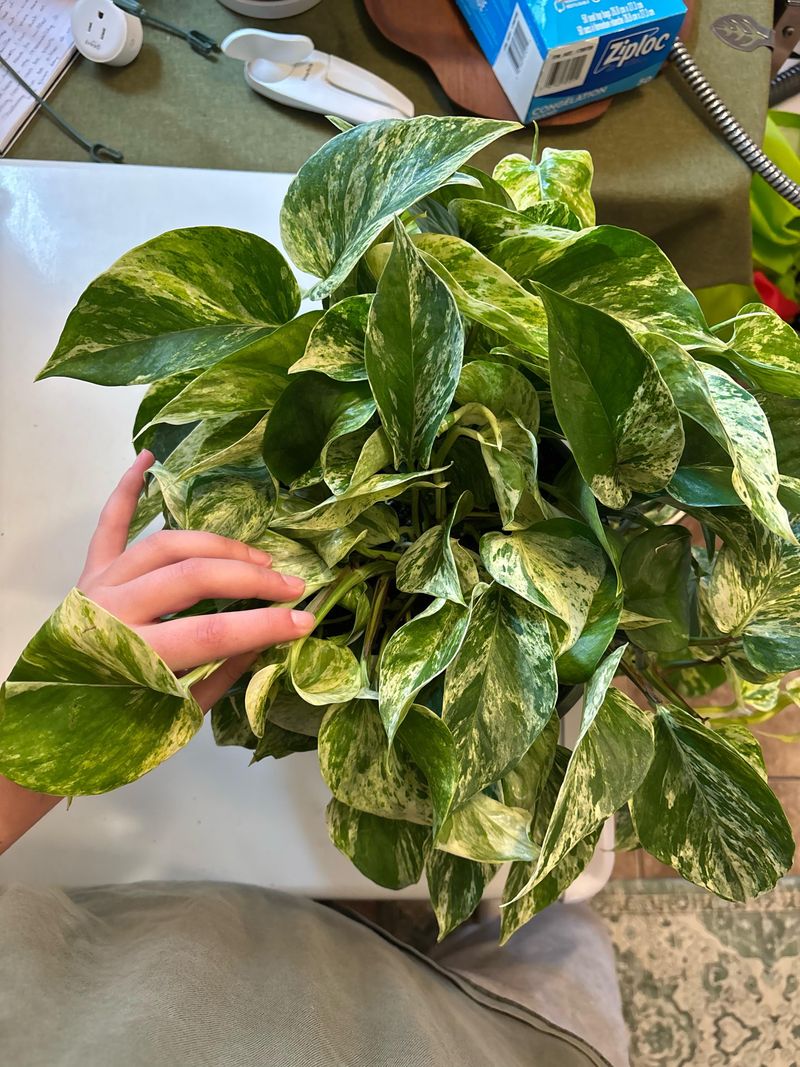
Want a full look right now instead of waiting months? Nothing beats the shortcut of planting several pothos or rooted cuttings together in a single pot.
Multiple plants sharing one container instantly read as lush and dense, filling every gap from day one. It’s the trick behind those impossibly full pothos you see online.
As each plant grows and branches, the whole cluster only gets thicker. Combine this with regular pruning and you’ll have a jungle in no time.
16. Be Patient and Consistent
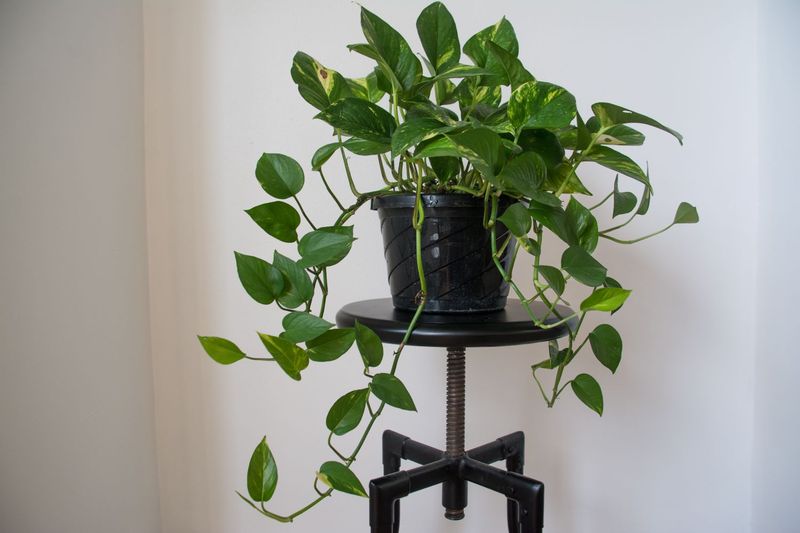
Turning a scraggly, leggy pothos into a full, cascading beauty won’t happen overnight. New shoots take time to appear, and filling in bare spots is a gradual process.
The magic is in the routine. Steady light, thoughtful watering, and regular pruning done week after week add up to real transformation over the months.
Stick with these habits and trust the plant. Give it a season or two of consistent care, and that once-bare pothos will look thicker and healthier than you ever expected.