
If Your Hydrangeas Wilt And Fade Every Afternoon, Here Are 8 Signs They’re Getting Too Much Sun (And The Fix For Each)
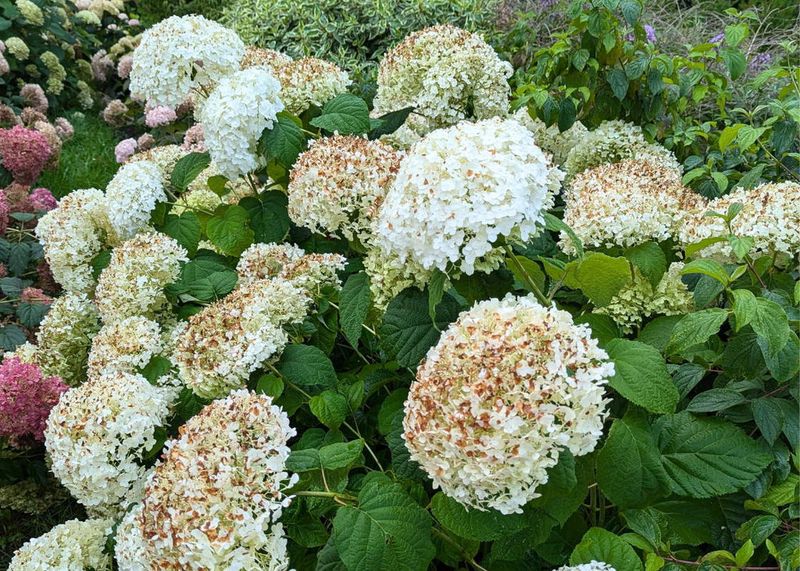
Have you ever walked outside on a hot afternoon and found your hydrangeas looking sad and droopy, even though you just watered them? Too much sun is one of the sneakiest ways to stress out these beautiful shrubs, and most gardeners do not spot the warning signs until the damage is done.
The good news is that hydrangeas are great at telling you exactly what is wrong if you know what to look for. Here are eight signs your plant is getting too much sun, plus the simple fix for each one.
1. Afternoon Wilting or Drooping Leaves
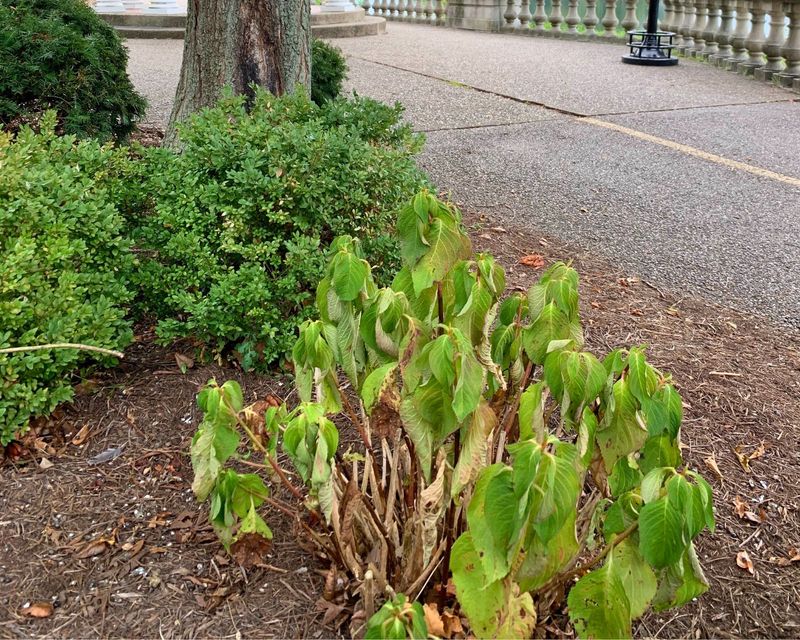
Picture this: your hydrangea looks perfectly happy in the morning, but by two in the afternoon the whole plant flops over like it has given up on life. The frustrating part is that the soil underneath might still feel moist to the touch.
What is actually happening is that the leaves are losing water faster than the roots can pull it back up. It is a temperature problem more than a thirst problem, and most plants perk right back up once the evening cools down.
The Fix: Give your hydrangea temporary shade during the hottest stretch of the day, usually between 2 PM and 5 PM. A patio umbrella, a lawn chair, or a light-colored shade cloth draped nearby all work well.
If your hydrangea lives in a pot, just scoot it to a shadier spot until the heat passes.
2. Brown, Crispy Leaf Edges or Irregular Blotches
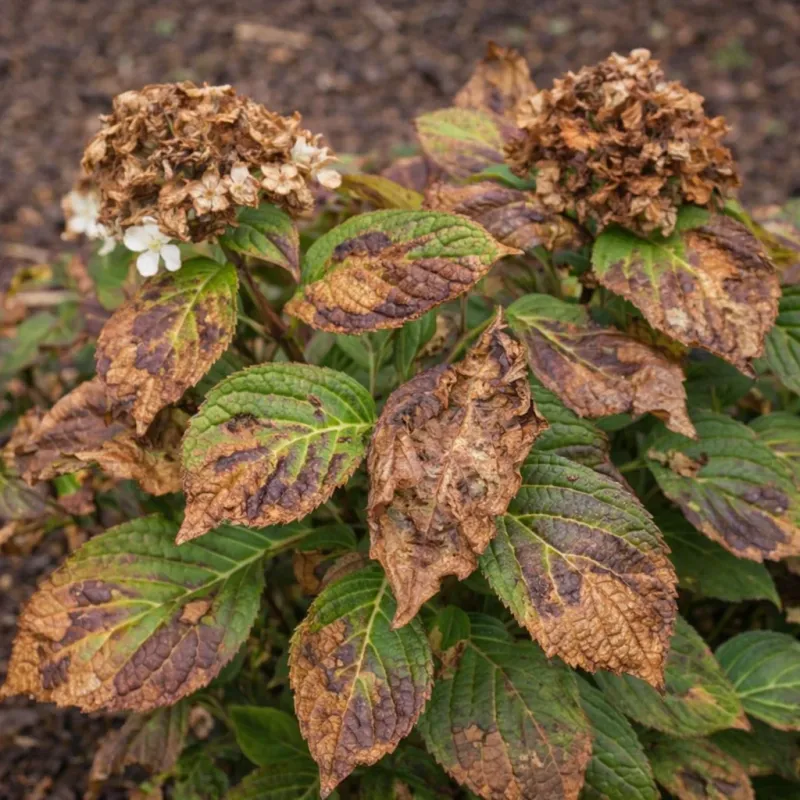
Run your fingers along the edge of a stressed hydrangea leaf and you might hear a faint crunch. Brown, crispy margins and odd blotchy patches are classic signs of leaf scorch, which is basically a sunburn for plants.
Direct, intense light literally cooks the leaf tissue, starting at the tips and edges where water reaches last. Badly damaged leaves often turn brittle and drop off entirely.
The Fix: Start by watering deeply in the early morning so the plant is fully hydrated before the sun cranks up. If your hydrangea is stuck in an all-day sunny spot, consider moving it to a place that gets morning sun and afternoon shade.
That combination is the sweet spot most hydrangeas love, and it prevents the scorching from coming back next season.
3. Bleached, Faded, or Prematurely Browning Flowers
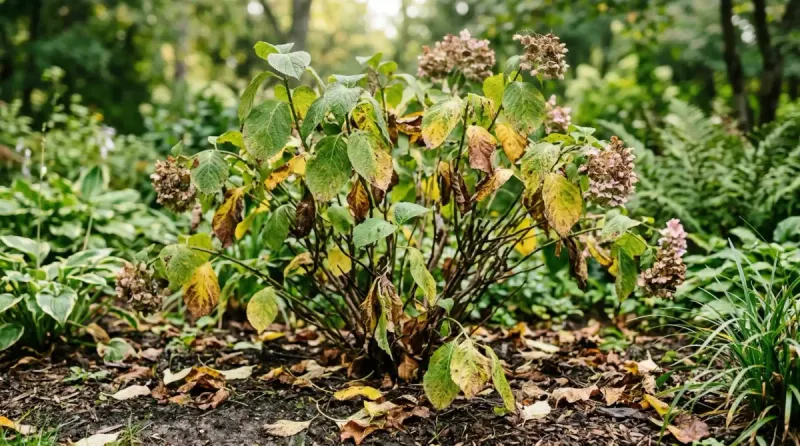
Nothing stings quite like watching those gorgeous blue or pink blooms you waited all spring for turn pale and washed out. Harsh sunlight bleaches the color right out of hydrangea flowers, and sometimes they crisp up and turn brown weeks earlier than they should.
Bigleaf hydrangeas, the classic mophead type, are especially prone to this fading. Their delicate petals just are not built to handle a full afternoon of blazing rays.
The Fix: Shield the blooms from the strongest afternoon light with a temporary shade solution. If some flowers have already browned past saving, snip them off.
Removing the fading blooms lowers the plant’s water demand and lets it pour energy into recovery instead of holding onto lost causes.
4. Yellowing Leaves With Green Veins
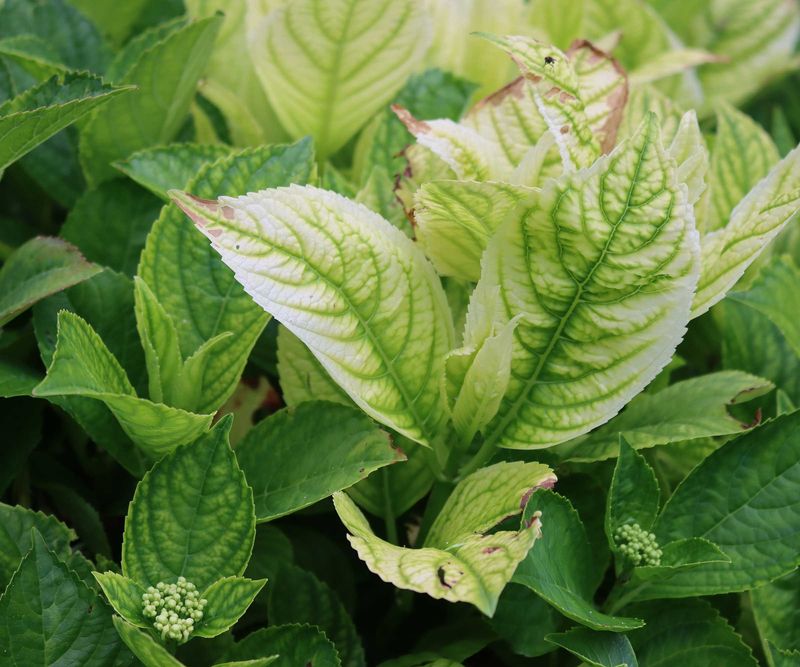
Yellow leaves are one of those symptoms that can mean a dozen different things, which is exactly why they trip people up. When yellowing shows up alongside wilting or crispy edges, though, sun and heat stress climb right to the top of the suspect list.
The plant is essentially overwhelmed. Too much light and heat make it hard for the hydrangea to keep its systems running smoothly, and the leaves show that struggle.
The Fix: Take a hard look at how you water. Hydrangeas crave steady moisture, especially when it is hot, so soak the soil deeply and slowly at the base rather than giving quick, shallow sprinkles.
Deep watering encourages roots to grow down where the soil stays cooler. Check moisture often, and remember that potted hydrangeas may need a drink every single day in a heat wave.
5. Rapidly Drying Soil
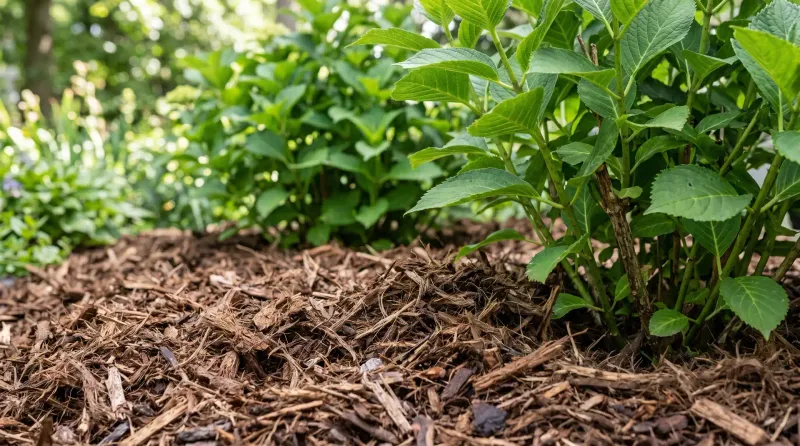
Here is a telltale clue many gardeners overlook: you water thoroughly, and by the next afternoon the soil is bone dry again. When the ground around your hydrangea keeps drying out this fast, intense sun is evaporating the moisture before the roots ever get a fair shot at it.
Hydrangeas have shallow, fibrous root systems that sit near the surface, so they feel the effects of quick-drying soil almost immediately.
The Fix: Lay down a 2 to 4 inch layer of organic mulch, like wood chips or shredded bark, around the base of the plant. Keep it a few inches back from the stems so nothing rots.
Mulch locks in moisture, keeps the roots noticeably cooler, and blocks weeds from stealing water your hydrangea needs.
6. Stunted Growth or Fewer, Underdeveloped Blooms
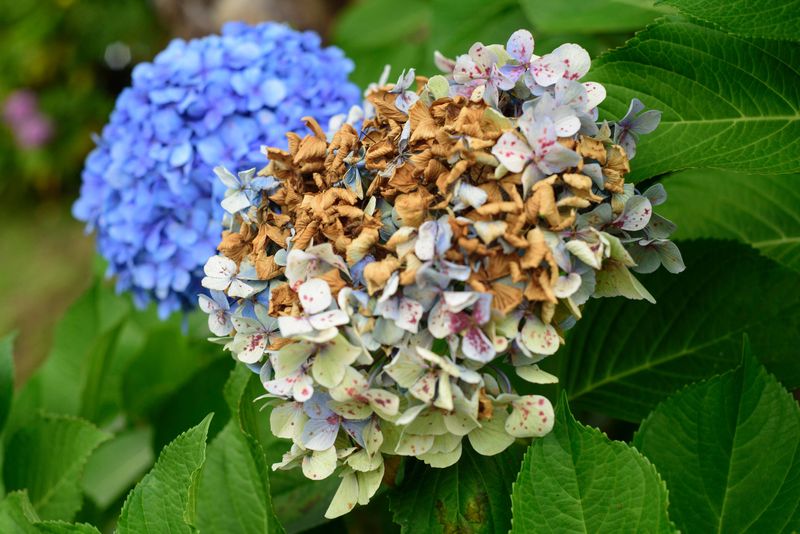
A hydrangea baking in too much sun often turns into an underachiever. Instead of lush growth and big fluffy flower heads, you get leggy stems, sparse foliage, and blooms that come in small, few, and faded.
The reason is simple survival math. When a plant is spending all its energy just trying not to fry, there is nothing left over for vigorous growth and showy flowers.
The Fix: Aim to get your hydrangea into a spot with morning sun and afternoon shade, which lets it relax and grow. If moving it right now is not realistic, boost its health where it stands.
Consistent, deep watering paired with a good layer of mulch will steady the soil temperature and moisture, giving the plant the breathing room it needs to bounce back.
7. Leaves Curled or Cupped Inward
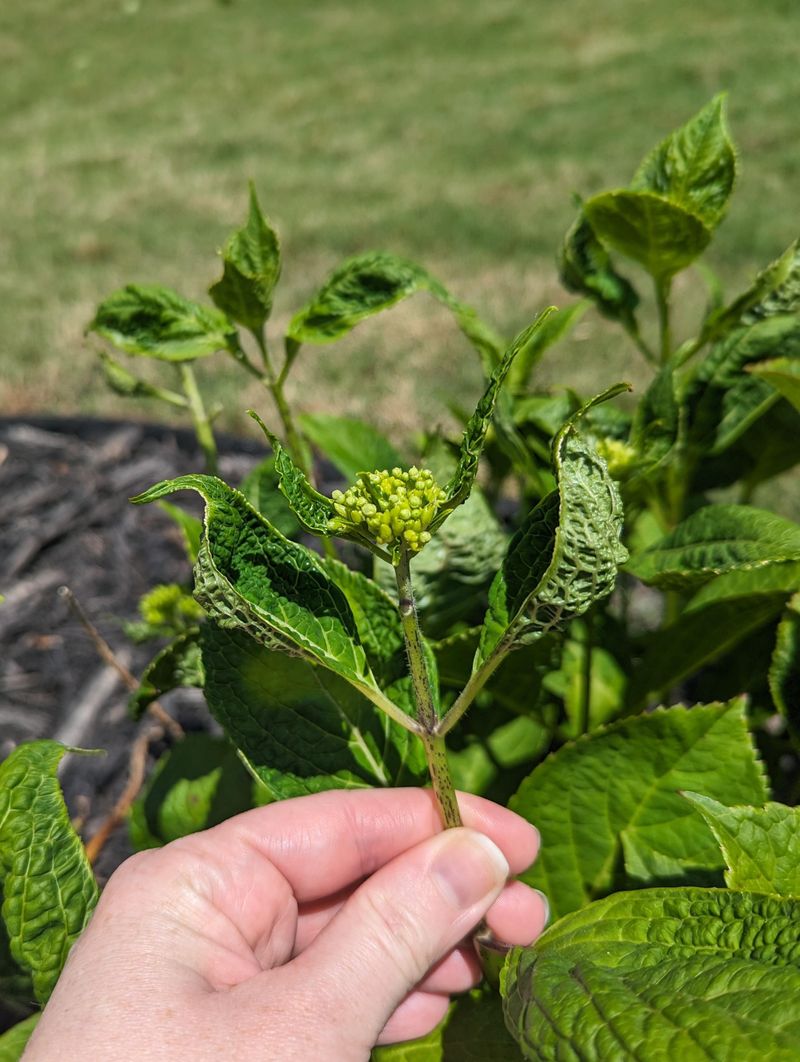
Plants are clever, and curling leaves prove it. When hydrangea leaves roll up or cup inward, the plant is deliberately shrinking the surface area exposed to the sun to slow down water loss.
Think of it as the hydrangea version of hunching your shoulders against a cold wind. The curling often shows up right alongside browning edges, so you may spot both signs at once.
The Fix: Pair afternoon shade with a thorough morning soak so the plant starts each hot day fully stocked with water. It also pays to check that your soil drains well.
Soggy, poorly draining ground can cause wilting symptoms too, so good drainage keeps you from chasing the wrong problem.
8. Damage Concentrated on the Top and Sunniest Side
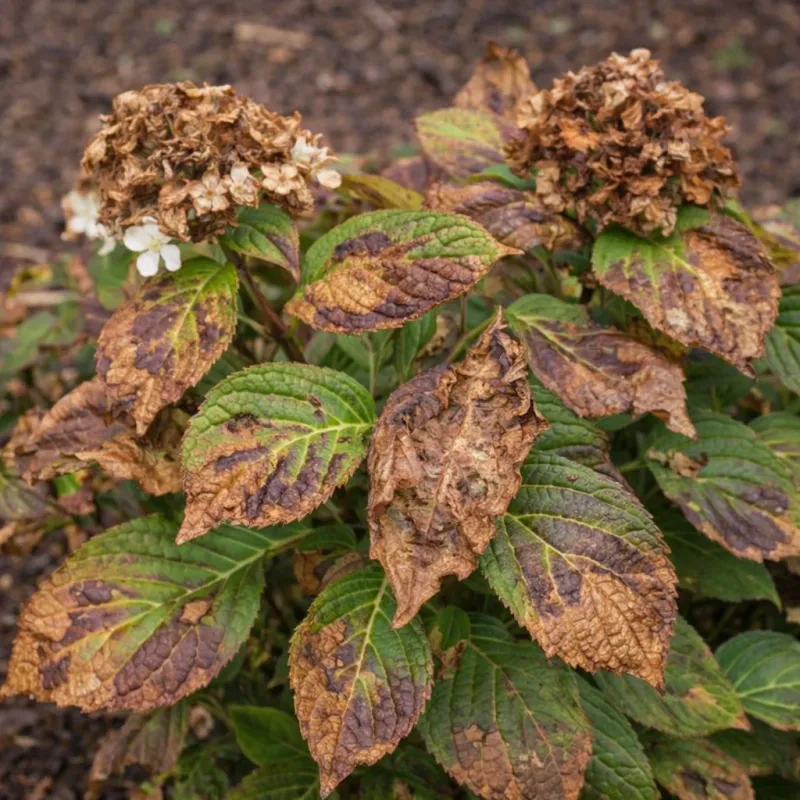
Take a slow walk around your hydrangea and notice where the trouble clusters. If the scorch, wilting, and bleaching all pile up on the top of the plant and the side facing the sun, that lopsided pattern is a dead giveaway.
The most exposed leaves and flowers, the ones farthest from the roots and closest to the light, always take the biggest hit first.
The Fix: This uneven damage confirms exactly what needs protecting. Set up temporary shade aimed at the most exposed parts of the plant during the hottest hours.
If you are planning a new bed or garden layout, think about companion planting with taller shrubs or plants that can cast natural afternoon shade over your hydrangeas for years to come.
Read the signs your hydrangea is showing you, make a small change or two, and you will likely see it perk back up faster than you expect. A little afternoon shade and a steady watering habit go a long way toward keeping those blooms full and vibrant all season.