
What North Carolina Roses Actually Need When Japanese Beetles Show Up – And What Happens If You Wait
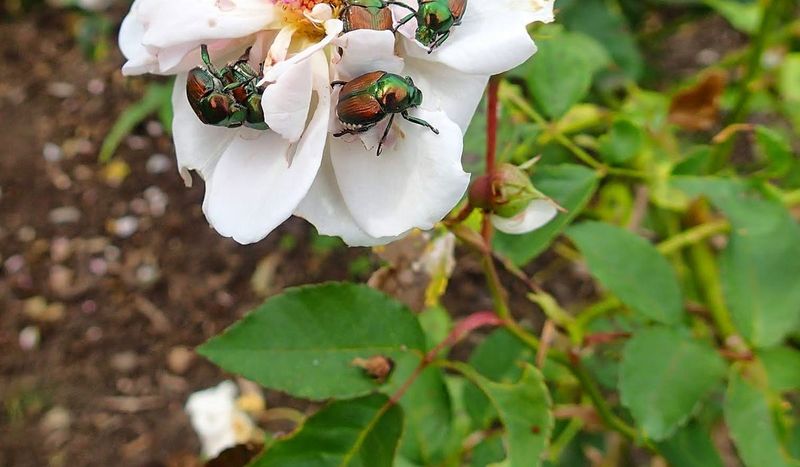
Japanese beetles can turn a healthy rose bush into a ragged mess of torn petals and skeletonized leaves faster than most gardeners expect, but the damage is not automatic or universal. Whether your roses in the Piedmont, Coastal Plain, or Blue Ridge take a hard hit depends on local beetle pressure, plant health, and how quickly you act once the first adults appear.
The good news is that a few targeted steps, timed to your own yard rather than a statewide calendar, can reduce feeding and help your plants recover without putting bees and other backyard wildlife at risk.
Japanese beetles can damage a rose flush without killing the plant
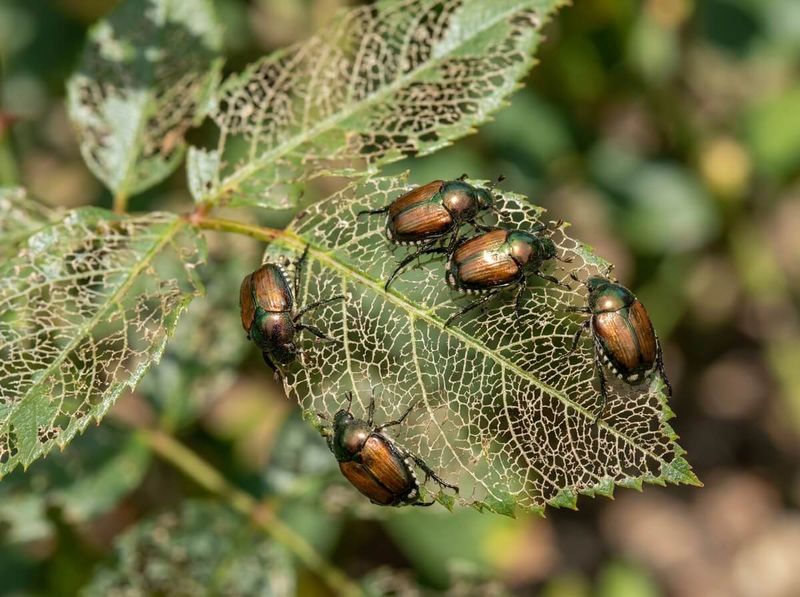
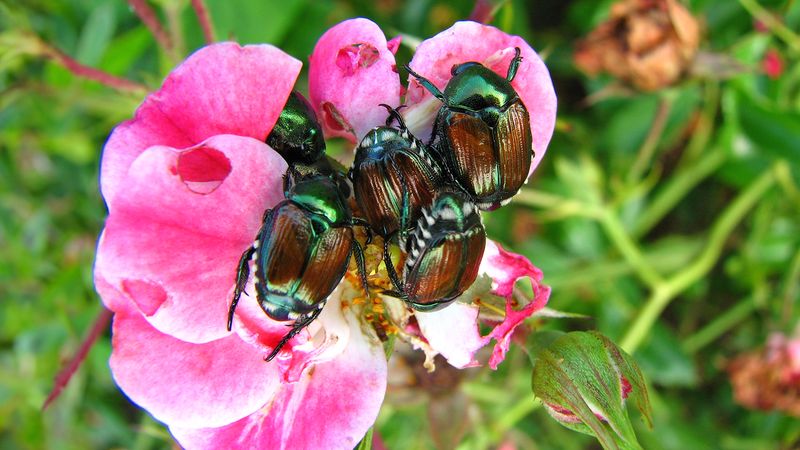
Adult Japanese beetles feed on rose flowers, buds, and leaves, and the damage they leave behind is hard to miss. Flowers develop ragged holes or get consumed almost entirely, while leaves are reduced to a lacy network of veins – a pattern called skeletonization.
NC State’s rose pest guide lists Japanese beetles among the most serious ornamental rose pests, and the flower and foliage damage they cause can look severe even when the plant itself is holding on just fine.
The key distinction is between a ruined bloom flush and lasting harm to the plant. A rose that loses its flowers to beetle feeding is visually dramatic, but that loss is cosmetic as long as the foliage and root system stay healthy.
University of Maryland Extension notes that healthy roses can survive adult beetle feeding, even when the damage looks alarming.
Severe or persistent defoliation is a different matter. When beetles return repeatedly and strip large portions of foliage over an extended period, younger or already-stressed plants can weaken.
A mature, well-watered bush in good soil is far better positioned to bounce back than a recently transplanted one or a plant already dealing with drought or disease.
University of Minnesota Extension reinforces this point, explaining that actual injury varies by beetle pressure, cultivar, plant health, and weather conditions. Knowing this helps you choose a proportionate response rather than assuming an emergency or writing off a plant that still has a good chance of recovery.
Scout for local activity instead of trusting one statewide date
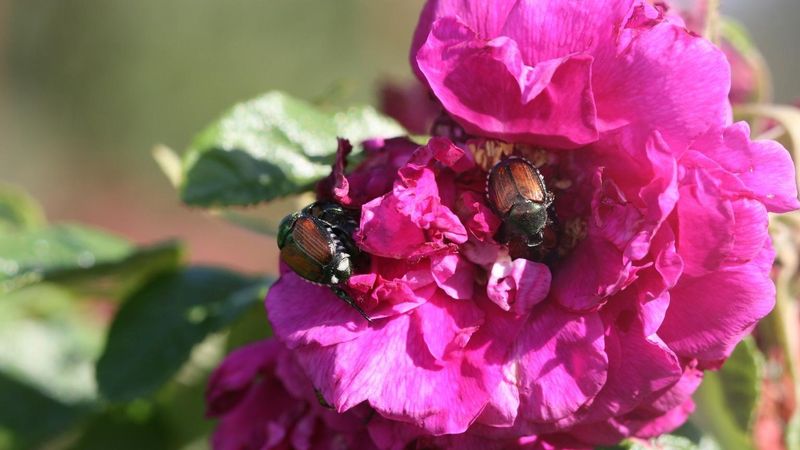
One of the most common mistakes rose growers make is waiting for a neighbor’s warning or a generic calendar alert before checking their own plants. Japanese beetle emergence in North Carolina is not a single statewide event.
Timing shifts with location, weather, soil moisture, and local beetle populations, so what is happening in a Charlotte suburb may not match what is occurring in Asheville or New Bern at the same moment.
NC State’s rose pest management calendar places Japanese beetle management broadly across June through August. Other NC State materials on Japanese beetles describe adult emergence beginning as early as mid-May or extending into July, depending on region and seasonal conditions.
The Coastal Plain tends to see activity before the mountains, but any given year can shift that pattern.
The practical rule is to start inspecting your roses as soon as buds begin forming or opening, then check during warm, sunny daytime conditions when adults are most active. Beetles tend to aggregate on flowers and can appear suddenly in numbers once local populations begin moving.
Missing that early window means walking out one morning to find a dozen beetles already working through an open bloom.
University of Maryland Extension confirms that adults are strong fliers and can arrive from surrounding properties with little warning, which is why your own yard’s first sighting matters more than any fixed date. Treat the first beetle you find on your roses as the signal to act, not a sign that the worst has already passed.
Keep a quick daily or every-other-day check going through mid-summer. A minute of scouting each morning costs almost nothing and gives you the timing edge that makes every other step in this guide more effective.
Remove targeted buds or blooms when beetle activity becomes heavy
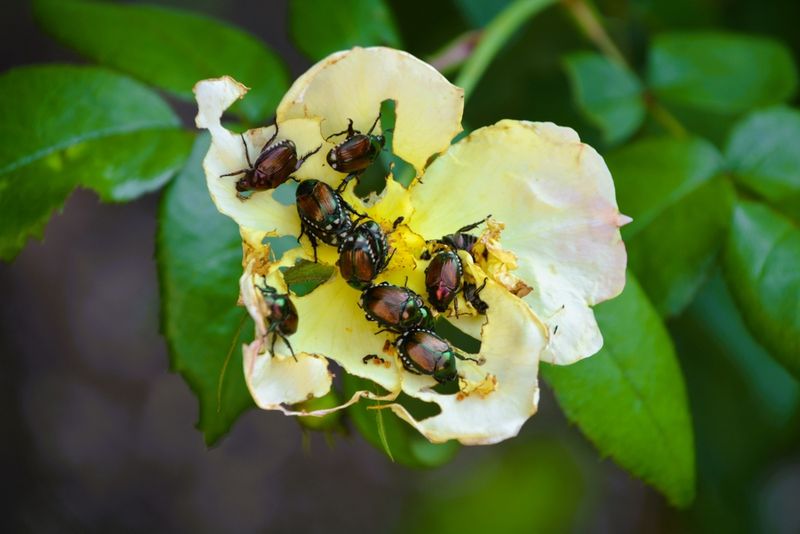
When Japanese beetle adults are actively feeding on your roses, one research-supported option is to remove developing buds or open blooms from the plants you most want to protect. The logic is straightforward: beetles are strongly attracted to rose flowers, and taking away that feeding site reduces the incentive for them to congregate on the plant.
Research cited in the Journal of Integrated Pest Management supports removing blooms during peak beetle flight as a way to reduce feeding injury.
NC State’s rose pest guidance goes further, specifically recommending that growers nip rose buds when beetles are first noticed, then allow the bush to bloom again once beetle numbers decline. This is not a technique you apply weeks in advance as a preventive measure.
Timing it to local activity, when you are actually seeing beetles on or near your roses, is what makes it useful.
Be clear-eyed about what this tactic does and does not do. Removing blooms eliminates one of the most attractive targets on the plant, and that can reduce the number of beetles spending time on it.
It does not repel beetles or create any kind of barrier. Adults can and will continue to arrive from neighboring yards, and they will still feed on foliage if they land on the plant.
NC State’s shrub pest resource makes clear that foliage remains vulnerable regardless of whether flowers are present.
The temporary flower loss is real. You are trading that flush of blooms for a better chance at keeping the plant healthier during the heaviest feeding period.
For most established roses, a new flush will follow as beetle numbers drop through late summer. Deciding whether that tradeoff is worth it comes down to how severe local activity is and how much a particular bloom flush matters to you.
Cover selected flowers when preserving the flush matters more
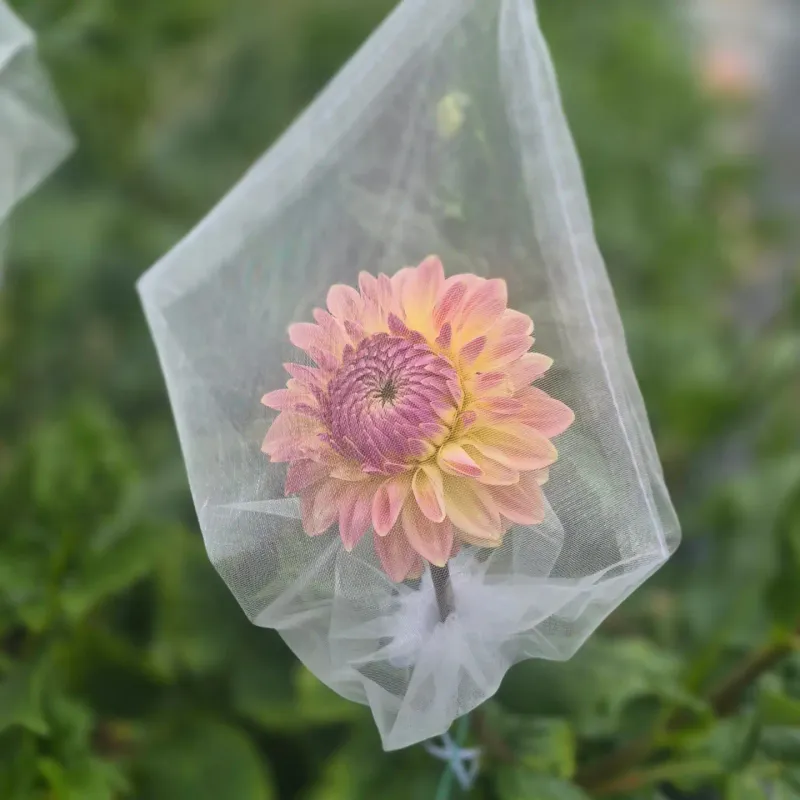
Bloom removal is a practical choice when the plant’s health takes priority, but sometimes a particular rose is in peak form and losing that flush feels like too steep a price. In those cases, a physical barrier can protect selected flowers without sacrificing them entirely.
Fine mesh, cheesecloth, or a similar lightweight fabric placed over targeted blooms gives beetles a literal obstacle between them and the flower.
The cover needs to go on before or as soon as beetles begin feeding on that plant. Waiting until a bloom is already crawling with adults and then draping fabric over it is not effective.
The goal is to intercept beetles before they settle in, not to trap them after the fact. NC State’s Japanese beetle in turf guide lists physical barriers among the management options for ornamental plants, and the principle applies directly to protecting prized rose blooms.
A few practical considerations matter here. The fabric should be light enough that it does not trap heat against the petals on a hot Carolina afternoon, and it should be secured so that wind does not knock it loose.
Remove it periodically to check on the bloom and to allow any necessary air circulation, and take it off once local beetle activity eases.
The honest comparison between covering and removing comes down to priorities. Removing a bud reduces the attractiveness of the plant as a feeding target, which can benefit the whole bush during heavy activity.
Covering a bloom preserves that specific flower but does not change the plant’s overall appeal to arriving beetles. Neither approach guarantees a beetle-free rose or protects every leaf and stem.
They serve different goals, and knowing which one fits your situation helps you use your time and effort where it counts most.
Morning hand-picking can reduce beetle buildup on a few bushes
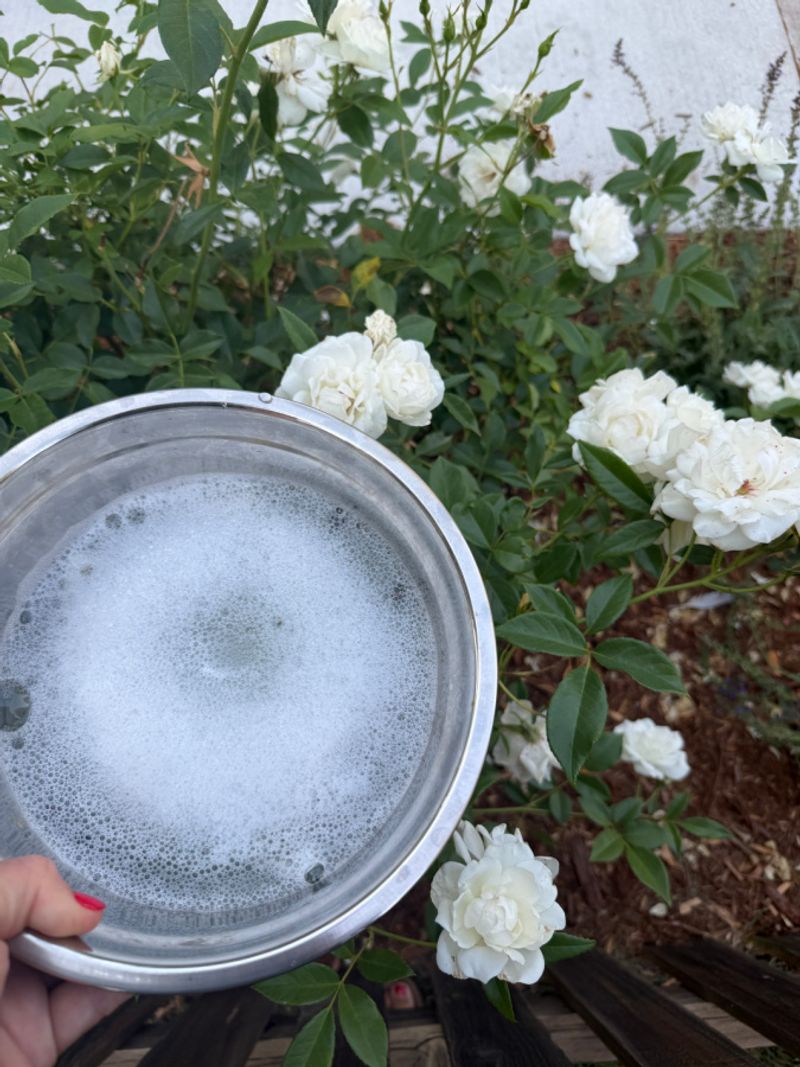
For a small planting of two or three rose bushes, early-morning hand removal is one of the most practical nonchemical steps you can take once beetles start appearing. Adults are slower and less likely to fly in cool morning temperatures, which makes them easier to knock loose before they have a chance to scatter.
The method is simple and requires no special equipment beyond a container of soapy water.
Hold the container directly beneath a branch where beetles are clustered, then give the branch a firm but gentle tap or shake. The adults drop into the soapy water and cannot escape.
Work through the plant systematically, branch by branch, and dispose of the water and beetles afterward. Research published in the Journal of Economic Entomology supports morning hand removal as a way to reduce beetle numbers and feeding on the plant, and NC State’s beetle management guidance includes this approach among its recommended nonchemical options.
Consistency matters more than any single session. Doing this every morning during the peak of local beetle activity keeps numbers from building up on the plant and reduces the aggregation signals that attract more adults.
Beetles release chemicals when they feed that draw in additional individuals, so a plant with fewer beetles feeding on it becomes less of a beacon for others in the area.
Two realistic limits are worth acknowledging. First, this approach gets labor-intensive fast if beetle pressure is heavy and you have more than a handful of bushes.
Second, even a thorough morning session cannot stop fresh beetles from flying in from neighboring yards later in the day. University of Maryland’s rose problem guide notes that adults are mobile and can continue arriving throughout the season, so hand-picking works best as a regular routine rather than a one-time fix.
Nearby traps and lawn grub treatments are not dependable immediate defenses
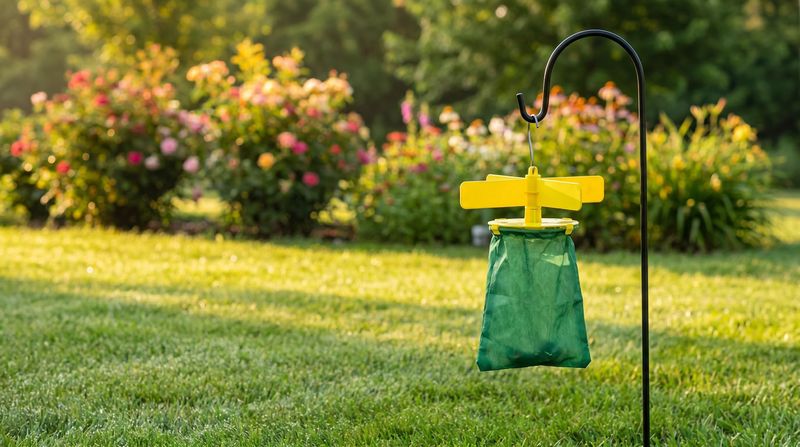
Two solutions that come up often in conversations about Japanese beetles are traps and lawn grub treatments. Both have a role in certain contexts, but neither one is a dependable defense for your roses during an active adult feeding period, and one of them can actually make things worse if placed in the wrong spot.
Lawn grub treatments target the larval stage of Japanese beetles living in the soil. Treating your turf may reduce the number of beetles that emerge from your own yard in future seasons, but it does nothing about the adults already flying and feeding right now.
NC State’s Japanese beetle resource is direct on this point: adult beetles are strong fliers and can enter a yard from surrounding properties regardless of what is happening in your lawn. If your roses are under attack this summer, grub control is not the tool for this moment.
Beetle traps are a more complicated problem. The floral and sex-based lures used in commercial traps are highly attractive to adult beetles, and research has consistently shown that traps placed near susceptible plants can draw in more beetles than they capture.
A study published in the Journal of Economic Entomology found that traps placed near host plants failed to reduce defoliation and in some cases dramatically increased damage. NC State warns that traps attract more beetles than they capture when located near valuable foliage.
If you choose to use a trap for monitoring purposes or decide to try one despite the risk, place it as far from your roses and other prized ornamentals as your yard allows. University of Maryland Extension recommends positioning traps well away from susceptible plants to avoid concentrating feeding pressure where you least want it.
Protect pollinators if you consider an insecticide
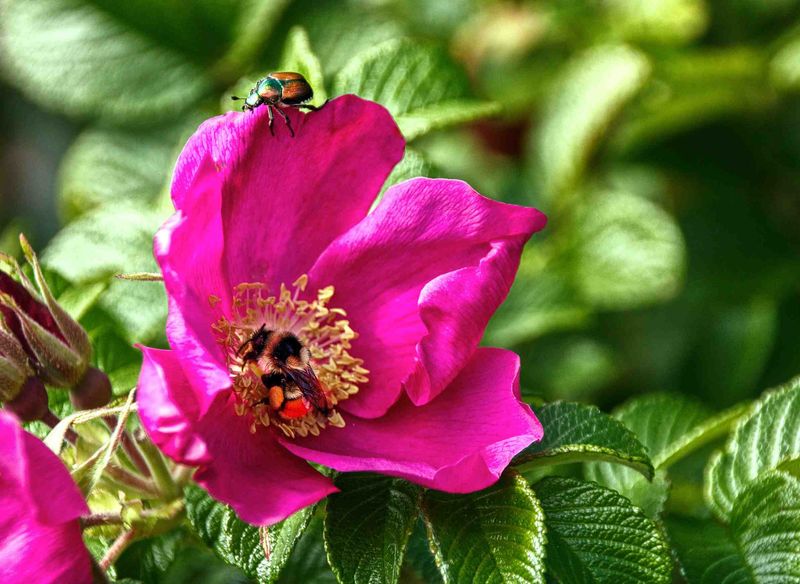
Chemical control is not the first line of defense for a few residential rose bushes, but if beetle pressure is severe and nonchemical steps are not keeping up, a carefully chosen insecticide may be worth considering. The starting point is the label.
Only use a product that is currently registered and labeled for use on roses and specifically for Japanese beetles. Applying a pesticide to a plant or for a pest not listed on its label is illegal under federal law, and no amount of beetle frustration changes that.
EPA pollinator protection guidance identifies application timing, bloom restrictions, drift reduction, and strict label compliance as the central safeguards for bees and other beneficial insects. That guidance has direct meaning for rose growers: do not spray open blooms, do not apply when pollinators are actively visiting the plant or nearby flowering weeds, and follow every label direction for rate, protective equipment, reentry intervals, and weather conditions.
Some insecticides carry specific neonicotinoid pollinator-protection labeling that restricts application when plants are blooming or when bees are foraging. Read those restrictions before you open the container, not after.
Early morning or evening applications, when pollinators are less active, are generally safer for beneficial insects, but the label’s specific directions take precedence over any general timing advice.
University of Minnesota Extension’s beetle management guidance notes that many insecticides provide only temporary protection and that beetles can continue arriving from surrounding areas. No spray should be treated as a season-long fix or a guarantee that feeding will stop.
Lower-risk products such as neem oil or insecticidal soap may require repeated applications and direct contact with the pest to show any effect, and results during heavy infestations can be variable. Use any product within the full bounds of its label, and keep pollinator safety at the center of the decision.
Judge recovery by the rose’s health, not one lost flush
A rose that loses its flowers to Japanese beetles can look like a failure, but the plant’s real condition is measured in its foliage, root system, and overall vigor, not in one missed bloom cycle. Scout your yard when local beetles begin appearing, respond with the steps that fit your priorities – removing or covering targeted blooms, hand-picking adults each morning – and then watch the plant rather than the calendar.
Once beetle numbers decline through late summer, many established roses will produce another flush of blooms. NC State’s rose pest resource supports allowing the bush to bloom again after beetle activity eases, and University of Maryland Extension confirms that healthy roses can recover from adult feeding even when the damage looks severe in the moment.
University of Minnesota Extension reinforces that actual injury varies by beetle pressure, cultivar, plant health, and conditions – meaning no two seasons or two yards will look exactly alike. The goal across all of these steps is to reduce damage and protect the plant’s health through the feeding period, not to promise a beetle-free summer.
A rose that comes through July with most of its foliage intact and pushes out new buds in August has done exactly what a well-tended plant should do.