
The Backyard Mulch Mistake North Carolina Gardeners Make That Quietly Turns Their Beds Into A Tick Haven
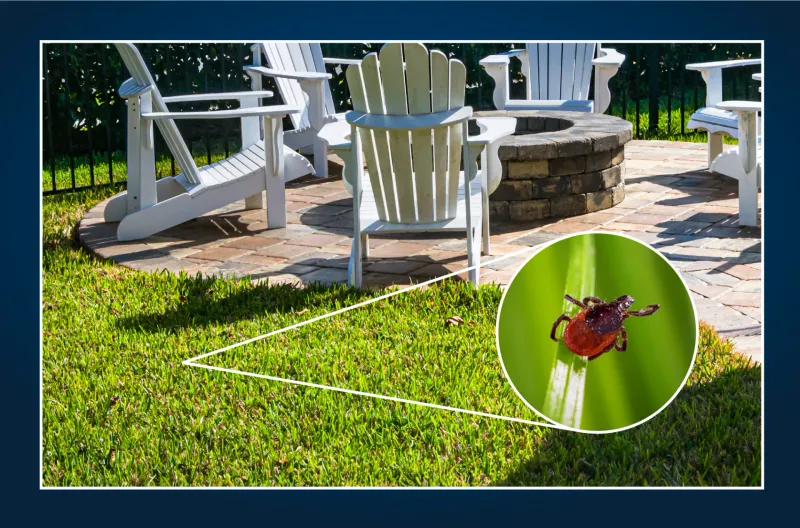
Every spring, North Carolina gardeners spread fresh mulch, tidy their beds, and feel good about their yards. But one common habit at the edge of the lawn, not the mulch itself, can quietly invite ticks closer to where your family plays.
The real problem is a damp, debris-filled transition zone where leaves pile up against woods or brush, and knowing the difference between that risk spot and a healthy mulch bed could change how you manage your yard this season.
The Real Mistake Happens at the Wooded Edge

Garden mulch gets blamed for a lot in tick season, but the science tells a more specific story. Ordinary wood chips spread across a maintained flower bed are not what draws ticks toward your family.
The pattern that actually raises concern is a damp, shaded, overgrown margin where leaves and organic debris pile up at the edge between your lawn and a wooded or brushy area, especially when that edge sits right beside a path, patio, or play area.
North Carolina health guidance is direct about where ticks concentrate: shady spots, moist ground litter, tall grass, brush, low branches, wooded edges, and backyards that border woods. A tidy mulch bed beside your front walkway does not automatically check those boxes.
The risk builds when the bed is neglected, stays wet, fills with fallen leaves, and sits against a wooded buffer where wildlife moves through regularly.
The most defensible version of the “mulch mistake” is what happens when gardeners blow or rake leaves into a deep accumulation along the lawn-woodland edge, or let a mulch bed grow thick, damp, and overgrown right where people walk. A Cornell IPM summary of peer-reviewed research found that intentionally accumulating leaves along forest edges tripled blacklegged tick nymph numbers, though the same study found no observed effect on lone star ticks.
CDC tick-prevention guidance actually recommends wood chips as part of a boundary strategy, which directly contradicts the idea that all mulch creates a tick hotspot. Location, moisture, shade, leaf accumulation, and proximity to wooded habitat are what matter most.
A maintained, dry mulch bed is a different environment from a neglected, wet leaf pile at the forest edge, and treating them as the same thing leads to the wrong fix.
Why Shade, Moisture, and Leaf Litter Matter
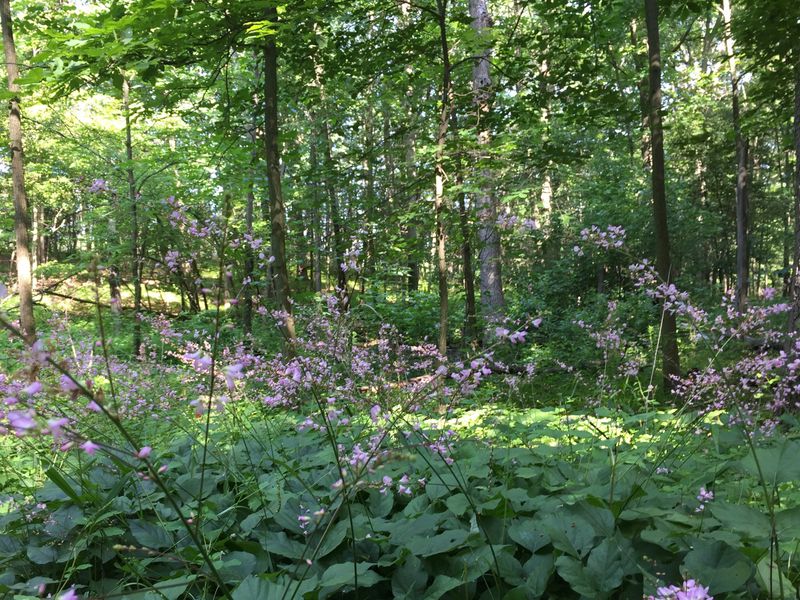
Ticks do not thrive equally in every corner of your yard. What they need most is a microclimate that stays cool and humid, because their bodies lose moisture quickly in dry, sunny, exposed spots.
Shaded ground covered in damp leaf litter, decomposing organic debris, tall grass, or dense low vegetation holds that moisture and gives ticks the conditions they need to survive and move toward areas where people and pets travel.
The lawn-woodland interface is where this risk concentrates. When leaves blow from the woods onto the yard edge and nobody clears them, or when brush and tall grass grow unchecked along a fence line bordering woods, that margin becomes a corridor.
Cornell IPM’s landscape tick management guidance identifies this edge habitat as the primary zone to address, noting that habitat modifications are most consistently useful for blacklegged ticks and may work less reliably against lone star ticks.
That distinction carries real weight in North Carolina. The state’s 2024 tickborne disease annual report confirms that blacklegged ticks, lone star ticks, and American dog ticks are all medically important here, with lone star and American dog ticks especially active in spring and summer.
Because lone star ticks respond differently to habitat changes than blacklegged ticks do, landscape management alone cannot cover all your risk in a North Carolina yard.
Moist, shaded margins also attract the small mammals and deer that carry ticks into residential yards in the first place. Clearing that edge reduces both the habitat ticks prefer and some of the wildlife pathways that deliver them.
Still, no amount of yard work eliminates ticks entirely, since they can arrive on birds, pets, and people regardless of how tidy the border looks.
Keep Useful Mulch, but Place and Maintain It Correctly
Mulch earns its place in a North Carolina yard. It conserves soil moisture during summer heat, suppresses weeds without herbicides, reduces erosion during heavy rain, and moderates soil temperature for plant roots.
Recommending that gardeners rip out all their mulch to reduce tick exposure would trade a real ecological benefit for a fix that the science does not support.
What matters is placing and maintaining mulch correctly. NC State Extension guidance for landscape beds recommends roughly 3 to 4 inches of organic mulch and cautions against exceeding 4 inches.
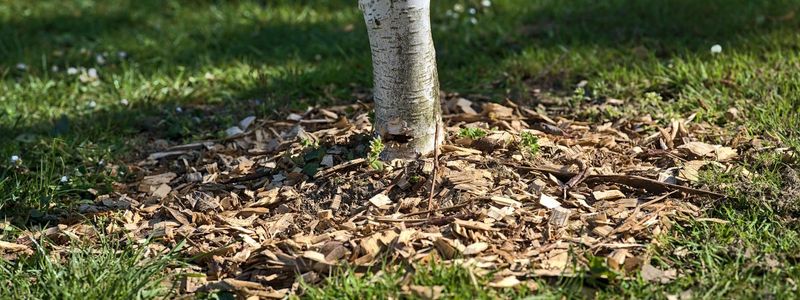
For individual trees, the NC State woody ornamentals handbook recommends maintaining about 2 to 3 inches and keeping mulch at least 6 inches away from trunks. These are plant-health guidelines, not tick-control thresholds, but they also keep beds from becoming the thick, wet, airless environment that accumulates moisture and debris.
Piling mulch against tree trunks creates what horticulturists call a mulch volcano, and it causes several distinct problems. Penn State Extension’s tree mulching guidance explains that excess mulch against bark keeps the wood chronically wet, which can lead to decay and root problems.
Deep mulch piled at the base of a tree can also provide shelter for rodents. Those are serious tree-health concerns on their own, not proof that mulch is breeding ticks, but they are reasons enough to keep depths reasonable and trunks clear.
A maintained, dry, properly layered mulch bed looks very different from a neglected one. Refresh mulch that has compacted or begun to mat, rake it lightly to restore airflow, and pull it back if it has crept toward a trunk or stem.
EPA landscaping guidance supports using mulch as a water-conserving tool, and there is no reason to abandon it. Managing depth, placement, and moisture is the practical path forward.
Reset the Boundary Beside Paths and Play Areas
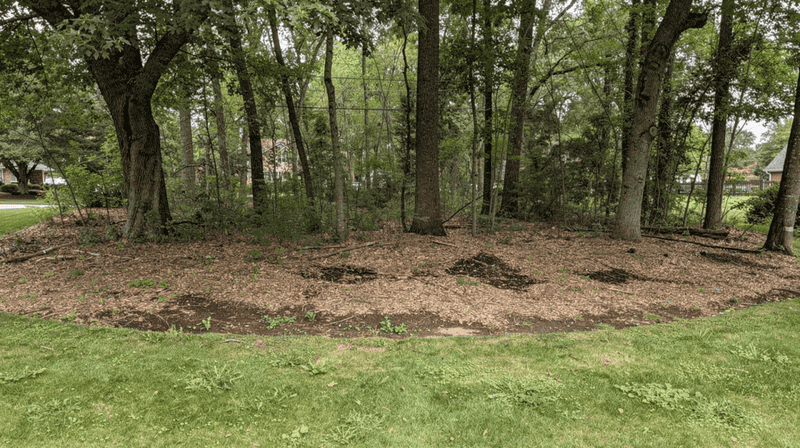
Yard management for tick exposure starts with a clear priority: the areas where your family actually spends time. Patios, play equipment, garden paths, and the lawn itself are the places worth protecting, and the work begins at their edges, not in the middle of a well-kept flower bed.
Start by removing accumulated leaf litter and organic debris from any margin that borders woods, brush, a stone wall, or dense shrubs. Rake those leaves out and dispose of them rather than blowing them into a pile at the tree line.
Next, clear brush and tall grass along the boundary, prune low-hanging branches to let sunlight reach the ground, and keep the lawn mowed. CDC prevention guidance recommends keeping patios and play equipment away from wooded or brushy edges whenever possible, and these clearing steps support that goal by reducing the shaded, moist corridor that connects woodland habitat to family-use areas.
Once that edge is cleared and maintained, a roughly 3-foot-wide strip of dry wood chips or gravel between the lawn and the wooded border can serve as a physical and visual boundary. The CDC tick-safe landscaping handbook describes this strip as a way to restrict tick movement into recreational areas.
Think of it as a use-zone marker, a dry, low-vegetation band that separates where your family plays from the habitat where ticks are more likely to be active.
Cornell IPM’s landscape guidance and University of Minnesota Extension both support this layered approach: clear the edge first, then use a barrier strip as a complement to maintenance, not a replacement for it. The strip does not guarantee a tick-free yard, and ticks can still cross it on wildlife, pets, or people.
Its value is in reducing the seamless transition from wooded habitat directly onto the lawn where your family walks barefoot.
Set Realistic Expectations for Wood-Chip and Gravel Borders
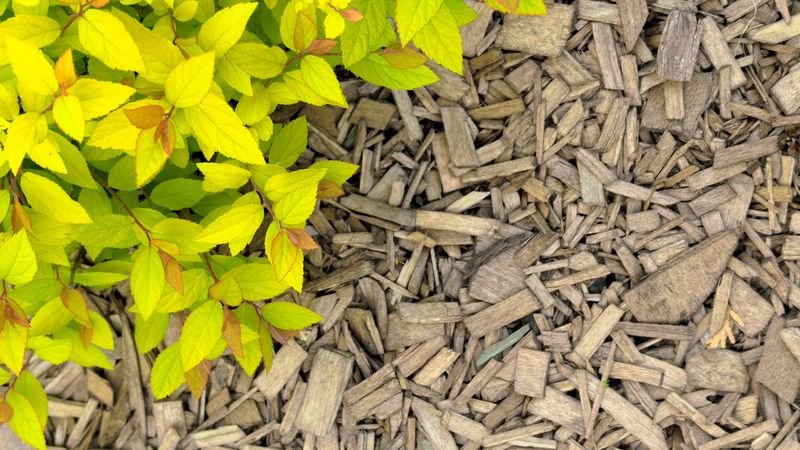
A 3-foot border strip is a reasonable, low-effort addition to a tick-management plan, but the research behind it comes with important caveats that are worth understanding before you invest a weekend installing one.
A 2019 residential-yard study examined multiple yard-management measures and found no detectable effect from barriers, wood piles, bird feeders, or Japanese barberry on tick numbers. The researchers themselves noted a significant limitation: only two properties in the study had qualifying ground barriers, which gave the analysis very low statistical power to evaluate them fairly.
That is not evidence that strips do not work; it is evidence that the question has not been tested at the scale needed to draw confident conclusions.
Earlier laboratory and field work found more reason for cautious optimism. A study on wood-product barriers and blacklegged tick movement found that some wood products did impede tick movement, but the effect varied by material and changed as the material weathered.
The authors were explicit: barriers should not be used as a stand-alone tick-control method. Both findings point toward the same practical conclusion, which is that a border strip works best as one layer in a broader strategy, not as the centerpiece of it.
Gravel and dry wood chips each have trade-offs beyond tick management. Gravel can hold and radiate heat in sunny areas, which may stress nearby plants in a North Carolina summer.
Wood chips break down over time and need to be refreshed to maintain the dry, coarse texture that makes them less hospitable. CDC guidance frames the strip as a tool to restrict movement into recreational areas, and that framing is the right one.
Use it for that purpose, maintain it, and pair it with the habitat clearing and personal protection steps that have stronger and more consistent evidence behind them.
North Carolina Tick Risk Requires More Than Landscape Changes
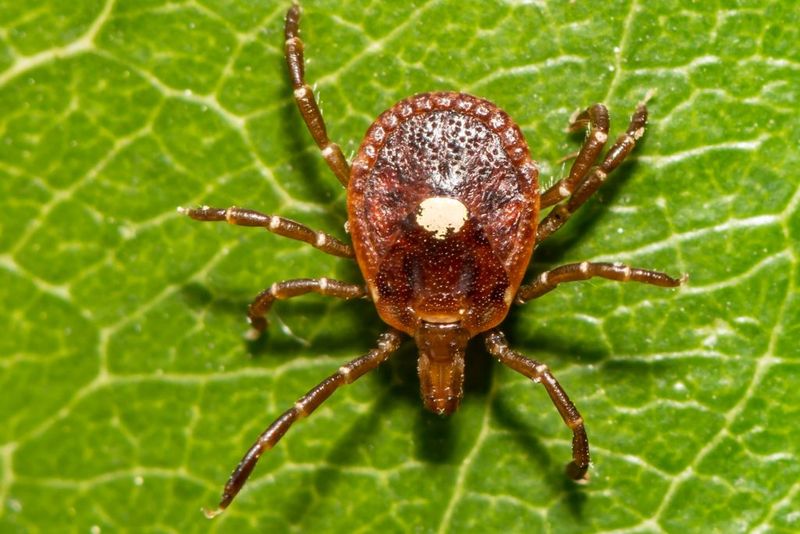
Yard management reduces some tick exposure, but North Carolina’s tick landscape makes clear that landscape changes alone are not enough. The state has multiple medically important tick species, and they do not all behave the same way or transmit the same pathogens.
North Carolina’s 2024 tickborne disease surveillance report identifies blacklegged ticks, lone star ticks, and American dog ticks as the primary species of medical concern, with different activity peaks across spring, summer, and fall. According to the NC State tick identification guide, the lone star tick is the most common tick attacking humans in the state and is associated with ehrlichiosis, STARI, and alpha-gal syndrome.
North Carolina’s tick problem is not primarily a Lyme disease story, and the prevention plan needs to reflect the full range of species present.
Personal protection is the layer that stays with you regardless of what your yard looks like. Before heading outside, apply an EPA-registered repellent to exposed skin and treat clothing and gear with 0.5% permethrin, which binds to fabric and remains effective through multiple washes.
CDC recommends checking your entire body after outdoor activity, paying close attention to the scalp, behind the ears, underarms, and behind the knees, and showering within two hours of coming inside. If you find an attached tick, use fine-tipped tweezers, grasp it as close to the skin as possible, and pull steadily upward without twisting.
NC Division of Public Health advises against petroleum jelly, heat, or other folk remedies for removal.
Pets need their own protection plan. Dogs can carry ticks inside and deposit them throughout the house before anyone notices.
CDC recommends daily tick checks for dogs and consultation with a veterinarian about appropriate prevention products. Cats are particularly sensitive to certain tick-control chemicals, so never apply a product to a cat without explicit veterinary guidance first.
Choose Integrated Pest Management Before Blanket Spraying

When ticks seem to be everywhere, the temptation to spray the entire yard is understandable. Before reaching for a sprayer, though, it helps to know what the evidence actually supports.
CDC notes that yard pesticides can reduce tick numbers in treated areas but explicitly cautions that spraying should not be relied upon to reduce infection risk. The reason is practical: ticks enter yards continuously on deer, rodents, birds, and pets, so a one-time application does not hold the line for long.
EPA’s integrated pest management principles lay out a better sequence: start by monitoring and correctly identifying the pest, apply habitat management and preventive behavior first, and use chemical controls only when those steps are insufficient and a properly labeled product is available for the specific situation.
If targeted treatment becomes necessary, choose a product registered for residential tick control, follow the label completely, and apply it only to the high-risk margins, such as the wooded edge and the area just inside it, rather than across the entire lawn. EPA guidance on protecting children from pesticides requires keeping kids and pets off treated surfaces until they are dry at minimum, though the specific product label controls the re-entry period.
EPA also notes that pesticide residues can affect air quality and non-target organisms, so targeted application matters both for safety and for protecting the native insects and wildlife that make a North Carolina yard worth stewarding.
Natural or homemade materials marketed as tick repellents, including cedar oil, essential oils, and diatomaceous earth, cannot be treated as automatically safe or effective. Without a registered product label and reliable efficacy data, their actual performance in a residential yard remains unverified.
Manage the Edge Without Sacrificing the Yard
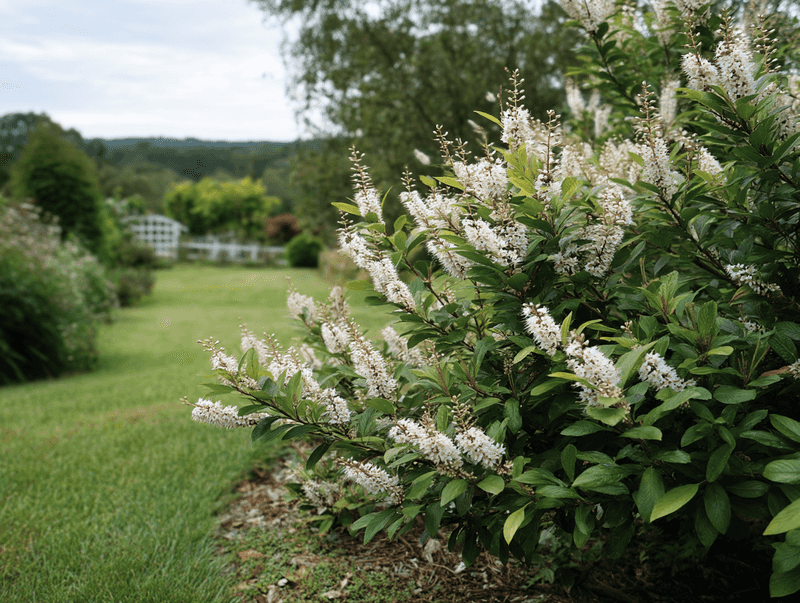
The real problem was never the mulch in your flower bed. A damp, debris-filled, unmanaged transition zone beside the places your family uses every day is what quietly shifts tick exposure closer to home.
Fixing that edge, not stripping out every layer of mulch, is where the effort belongs.
Place mulch to support plant health, follow the depth guidance from NC State Extension, keep it dry and maintained, and remove accumulated leaf piles from wooded margins. Add a dry border strip where it makes sense, keep brush and tall grass cleared, and let sunlight reach the ground along high-use edges.
Then stay consistent with the personal and pet protection steps that no amount of landscaping can replace.
None of these actions promise a tick-free yard, and North Carolina’s tick exposure guidance does not make that promise either. CDC prevention resources frame the goal as reducing exposure risk, which is the honest and achievable target.
A wildlife-friendly yard and a well-managed edge can coexist, and a gardener who understands where the actual risk lives is already ahead of the problem.