
The One Thing North Carolina Panicle Hydrangeas Need In Late Summer Or The Show-Stopping Blooms Fade Early
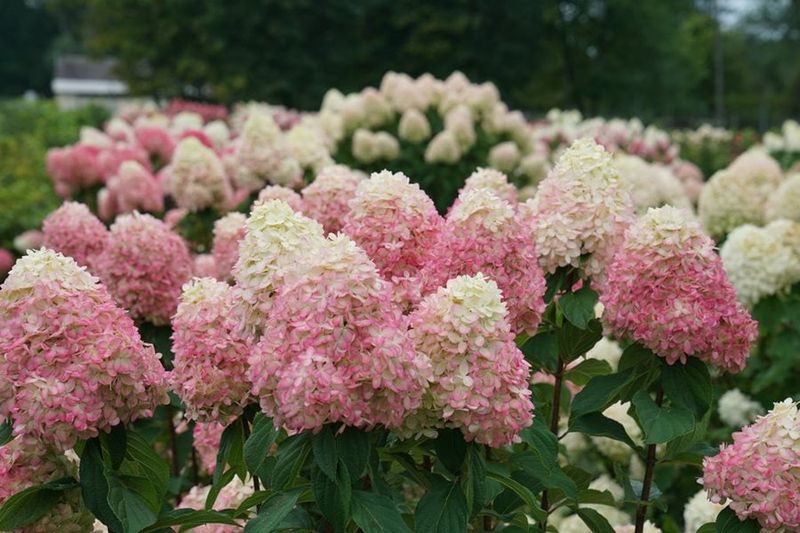
Panicle hydrangeas put on one of the best late-summer shows in North Carolina yards, with flower clusters that shift from white to pink to rosy tan as the season winds down. But when gardeners notice those blooms looking tired or brown, the question is whether the plant is struggling or simply doing what panicle hydrangeas naturally do.
The answer changes everything about how you respond. Getting the diagnosis right before you act can protect a healthy plant from unnecessary intervention and help a stressed one recover before the season ends.
Late-summer fading can describe two different problems
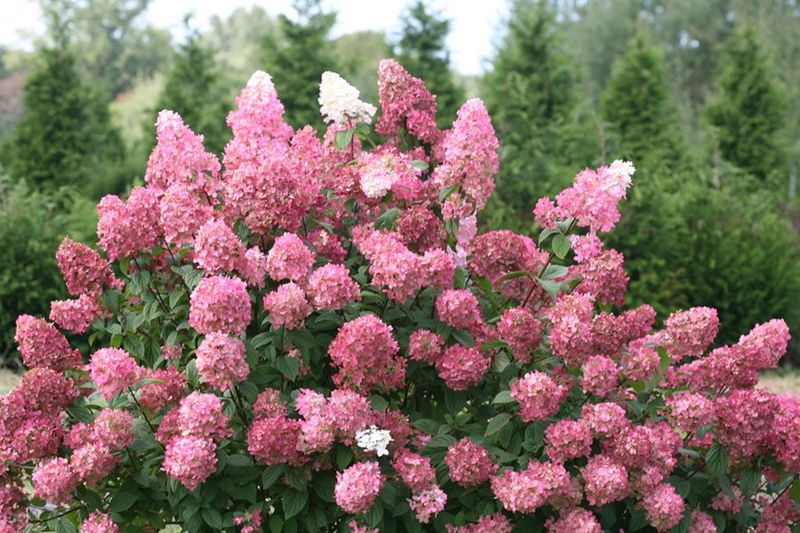
Panicle hydrangeas bloom from midsummer well into fall across North Carolina’s Coastal Plain, Piedmont, and mountains, and their flower clusters are built to change. NC State Extension’s plant profile for panicle hydrangea notes that the large cone-shaped panicles typically open white or pale green and naturally mature toward pink, rose, and eventually tan or brown tones as temperatures cool and the season progresses.
That color shift is part of the plant’s biology, not a sign that anything has gone wrong.
Drought stress looks different. When a panicle hydrangea is struggling with heat or dry soil, you may notice foliage wilting and not recovering by the next morning, leaf edges turning crispy and brown, individual leaves dropping early, or the whole plant taking on a dull, exhausted look well before the flowers have had a chance to mature normally.
University of Maryland Extension’s hydrangea problem guide distinguishes heat-related stress symptoms from normal seasonal changes, a distinction that matters because the response is completely different in each case.
Watering can help manage drought-related wilt, scorch, and premature decline. What it cannot do is keep mature panicle flowers permanently white or fresh-looking, because that color progression is driven by cultivar genetics, cooler temperatures, and time.
Treating normal flower aging as a crisis that needs fixing often leads to unnecessary watering, pruning, or fertilizer applications that do more harm than good. Knowing which problem you actually have is the right starting point before you change anything about how you care for the plant.
Moisture at the roots is the best late-summer response to dry conditions
When hot or dry weather is pulling moisture out of the soil and your panicle hydrangea is showing signs of stress, the most useful thing you can do is prioritize consistent moisture at the root zone. Reaching first for pruning shears or a fertilizer bag will not address the underlying problem and may make things worse.
Moisture is what the root system needs to keep supplying the stems and flower clusters above ground while conditions are tough.
Panicle hydrangeas have relatively shallow roots, which makes them more vulnerable to surface soil drying out quickly during North Carolina’s hot, often dry August and early September stretches. NC State Extension’s panicle hydrangea profile notes that consistent moisture benefits these plants, and that their shallow root system responds well to mulch that reduces moisture loss between watering events or rain.
Keeping that root zone from cycling between soaking wet and bone dry is the practical goal.
Managing moisture during dry periods can reduce wilting, leaf scorch, and the kind of prematurely tired appearance that comes from drought stress rather than normal flower aging. That is a meaningful payoff.
What it does not guarantee is a particular bloom color, a specific number of weeks with flowers on display, or flowers that stay white longer than the cultivar’s genetics allow. The honest promise here is stress management, not bloom preservation in an absolute sense.
Getting water to the root zone reliably during dry spells gives the plant its best chance to hold its condition while the panicles are still on display.
Check the planted root ball and surrounding soil before watering
Before you turn on a hose or set up a sprinkler, check what is actually happening below the surface. Leaf wilt alone is not reliable evidence that the soil is dry.
On a hot afternoon in North Carolina, panicle hydrangeas can droop noticeably even when the root zone holds adequate moisture, because the plant is losing water through its leaves faster than roots can replace it. Penn State Extension’s plant health guidance recommends checking soil moisture before deciding whether to water rather than responding automatically to surface symptoms.
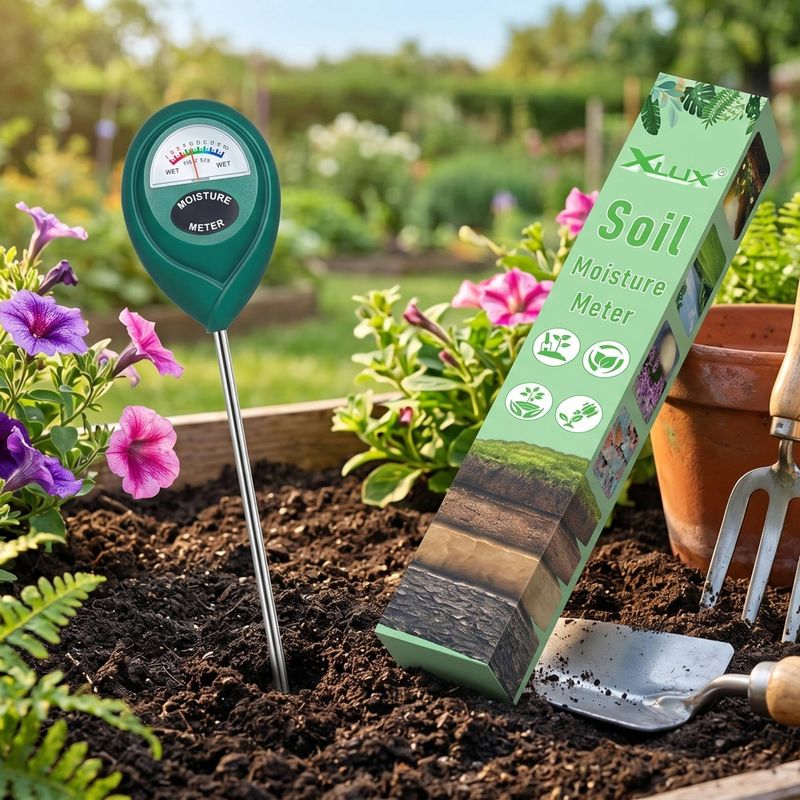
The simplest check is to push a finger or a screwdriver several inches into the soil near the root zone. If the soil feels dry at depth, water thoroughly.
If it still feels moist, hold off and check again in a day or two. For newly planted shrubs, check both the original planted root ball and the surrounding backfill soil, because those two zones can dry at different rates.
Penn State’s newly planted tree watering guide uses a general establishment example of checking soil at roughly 6 to 9 inches as part of tree-care guidance; treat that depth as a rough reference point rather than a fixed rule for every hydrangea situation.
How quickly soil dries depends on several factors working together. Sandy soil in the Coastal Plain drains and dries faster than Piedmont clay.
A slope sheds water before it can soak in. Full-sun exposure bakes the surface more aggressively than a spot with afternoon shade.
Heavy rainfall last week may mean the soil is still holding moisture even if the surface looks dry. University of Maryland Extension cautions that adding water to already-saturated or poorly drained soil can damage roots by cutting off oxygen, so the soil check protects against overwatering just as much as underwatering.
Water slowly and deeply at the soil surface
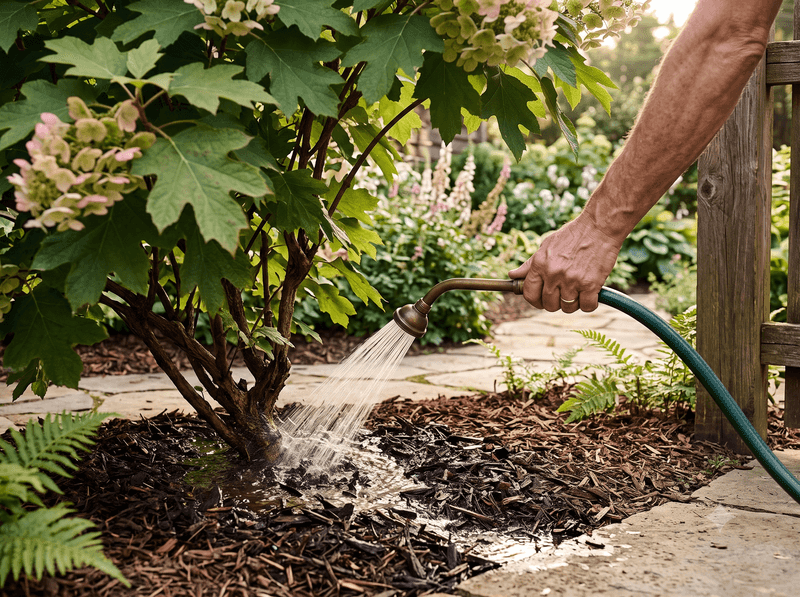
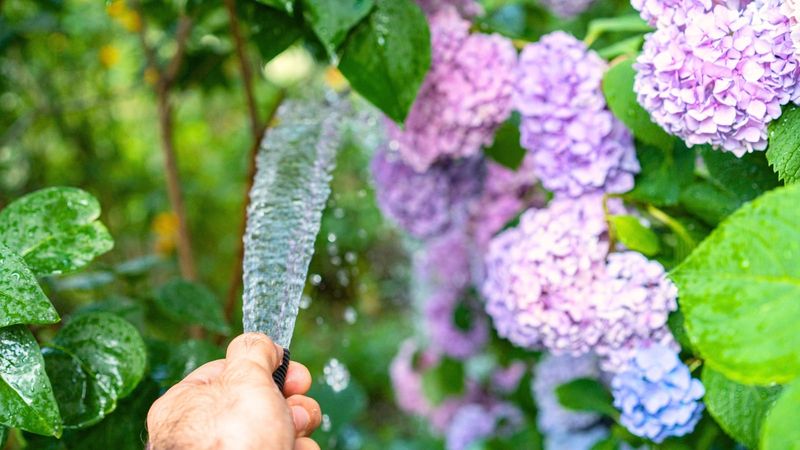
Once you have confirmed the root zone is drying out, how you apply water matters as much as whether you apply it. Slow, deep watering at the soil surface gives moisture time to move downward into the root zone rather than running off the surface or evaporating before it reaches plant roots.
A garden hose set to a gentle trickle, a soaker hose laid around the base of the plant, or a slow-drip watering method all accomplish this better than a quick pass with a sprinkler head set to mist.
Penn State Extension’s promote plant health page specifically recommends watering slowly and deeply at the base rather than relying on brief surface sprinkling, which can encourage roots to stay near the surface where they are most vulnerable to drought. Shallow, frequent watering can also create a false sense that the plant is being cared for while the deeper root zone stays dry and stressed.
The goal is to wet the root zone thoroughly each time you water, then allow the soil to partially dry before watering again.
Morning is the best time to water. Applying water earlier in the day allows any moisture that lands on foliage to dry before evening, which reduces the risk of fungal problems.
Penn State Extension’s hot weather hydration guidance recommends directing water to the soil rather than routinely wetting leaves, especially during humid summer conditions when leaf wetness can contribute to disease. There is no universally correct volume or frequency that applies to every North Carolina yard; the soil-moisture check described in the previous section should guide each watering decision rather than a fixed schedule.
Use mulch to steady moisture around shallow roots
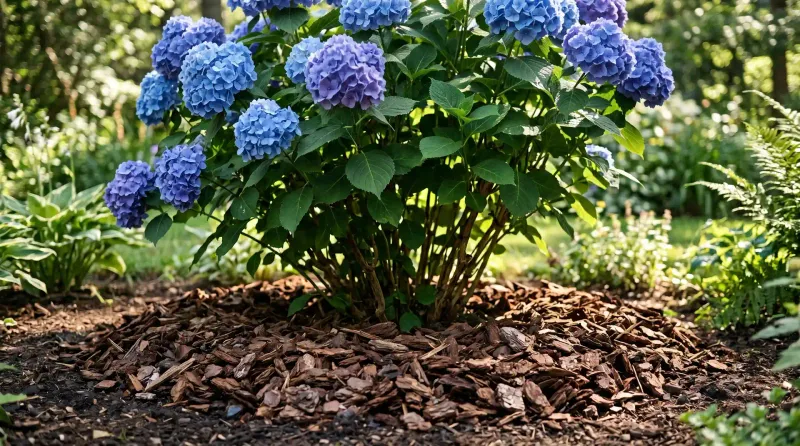
Mulch is one of the most practical tools a North Carolina gardener has for stretching the time between watering events. Organic mulch laid over the root zone slows evaporation from the soil surface, buffers soil temperature against afternoon heat, and gradually breaks down to improve soil structure over time.
For panicle hydrangeas, whose shallow roots sit close to the surface where drying happens fastest, a consistent mulch layer can meaningfully reduce moisture stress during late-summer heat.
A 2- to 3-inch layer of shredded bark, wood chips, or similar organic material is a reasonable general guideline for landscape shrubs. NC State Extension’s panicle hydrangea profile supports mulching over the root zone as part of routine care, and Penn State Extension’s plant-with-care guidance echoes the value of mulch for retaining soil moisture around newly planted and established shrubs alike.
Keep the mulch pulled back a few inches from the main stems so it does not hold moisture directly against the bark, which can invite rot and pest problems.
Mulch supports moisture management; it does not replace it. You still need to check the root zone periodically, especially during extended dry stretches or on sandy Coastal Plain soil that drains quickly.
And mulch will not stop panicle flowers from aging through their natural color progression or extend the bloom season beyond what the cultivar and weather allow. Think of it as reducing how often you need to intervene with the hose, not as a set-it-and-forget-it solution for keeping the plant looking its best through August and September.
Adjust care for new plantings, soil, sun, and exposure
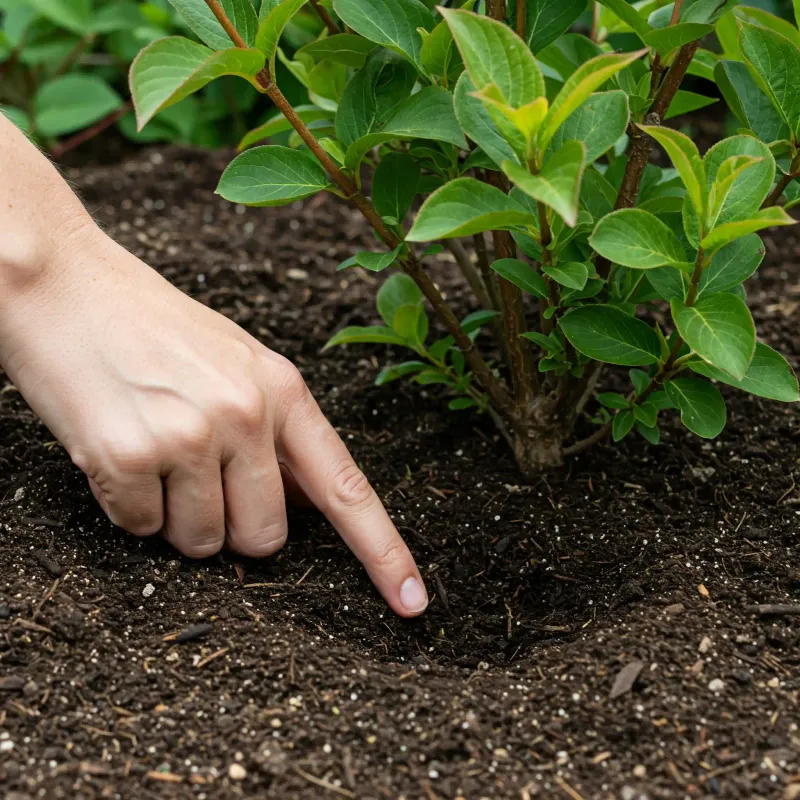
The same root-zone moisture principle applies across North Carolina landscapes, but the details of how you apply it shift considerably depending on your specific site. A panicle hydrangea planted this spring needs much closer attention than one that has been growing in your yard for five or more years.
Established plants develop deeper, more extensive root systems that can draw from a larger volume of soil; newly planted shrubs are still confined largely to the original root ball and immediately surrounding backfill, which can dry out surprisingly fast even after a rainstorm.
Penn State Extension’s newly planted tree watering guide emphasizes that establishment watering needs are substantially greater than for mature plants and that regular monitoring during the first growing season is essential. For a hydrangea planted this year in a sunny North Carolina yard, checking the root ball every few days during a dry stretch is not excessive; for a well-established shrub in average Piedmont soil with some recent rainfall, weekly checks may be sufficient.
Soil type and sun exposure add another layer of variability. Sandy Coastal Plain soil loses moisture quickly, often requiring more frequent checks than the heavier clay soils common in the Piedmont, which hold water longer but can also become compacted and drain poorly.
A panicle hydrangea in full sun on a south-facing slope will dry out faster than one on the east side of a house that gets morning sun and afternoon shade. NC State Extension notes that panicle hydrangeas tolerate full sun better than several other hydrangea types, but full-sun plants generally need closer moisture monitoring, and positioning that offers afternoon shade can reduce heat and water stress at particularly exposed sites without requiring you to move the plant.
Do not use late-summer pruning or fertilizer as a bloom rescue
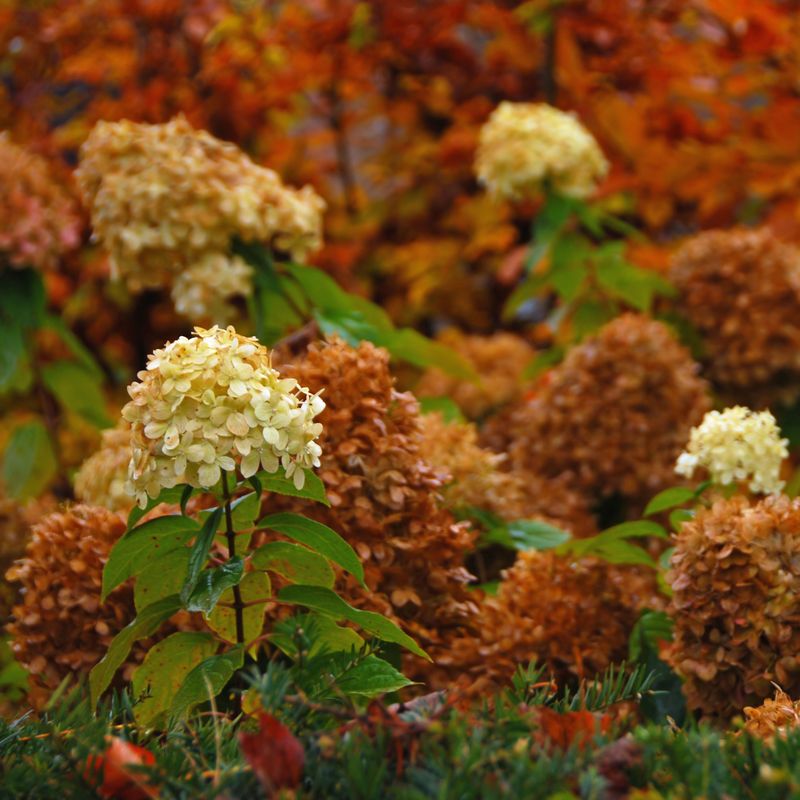
Late summer is not the time to pick up pruning shears and start cutting back a panicle hydrangea in hopes of extending the bloom display. Panicle hydrangeas bloom on current-season wood, meaning the flowers you are enjoying right now grew on stems that pushed out this spring.
NC State Extension’s pruning guide places regular pruning of panicle hydrangeas in late winter or early spring, before new growth begins, not in late summer when flowers are still on display.
Cutting back significantly in August or September removes the very flowers you are trying to preserve and may stimulate a flush of new growth that has little time to harden off before cold weather arrives. University of Minnesota Extension’s hydrangea pruning guidance cautions that late-season pruning can leave tender new growth vulnerable to winter injury.
The panicle hydrangea’s bloom-on-new-wood habit also means it is a completely different plant from bigleaf hydrangeas, which often bloom on old wood and require an entirely different pruning calendar; advice written for one type does not transfer to the other.
Spent flower heads are worth keeping on the plant through fall and into winter. They add structure and subtle color interest long after fresh blooms have faded, and leaving them causes no harm to the plant.
University of Illinois Extension frames deadheading primarily as an appearance choice rather than a reliable way to trigger a second round of panicle blooms. As for fertilizer, applying it now to try to push more flowers is not supported by extension guidance and may be counterproductive.
University of Maryland Extension’s hydrangea problem resource notes that excess nitrogen can favor leafy growth over flowering, and late-season fertilization of established woody shrubs is generally discouraged unless a soil test or specific documented nutrient deficiency calls for it.
Protect the display without fighting natural flower aging
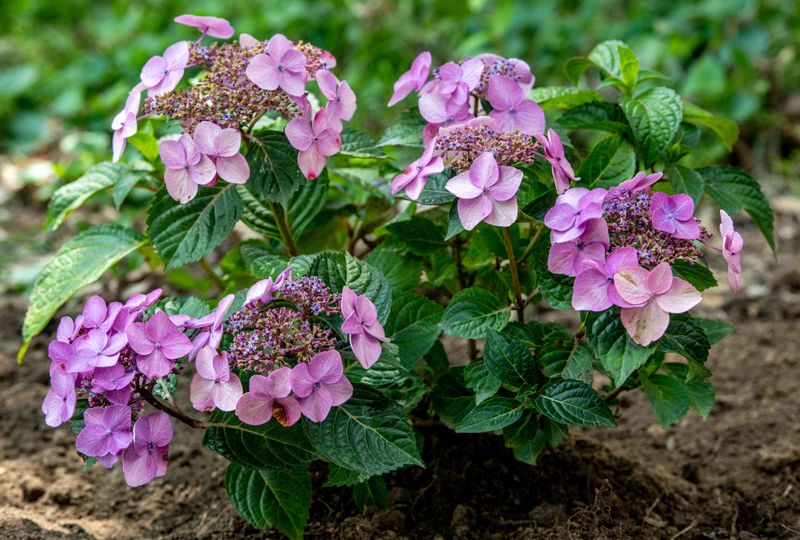
A practical late-summer care routine for panicle hydrangeas comes down to a short checklist. Check the root ball and surrounding soil before watering.
If the root zone is dry, apply water slowly and deeply at the base, ideally in the morning. Maintain a 2- to 3-inch mulch layer over the root zone, keeping it away from the stems.
Skip the pruning shears and the fertilizer bag unless a soil test or documented problem calls for action.
Cultivar choice, local weather, sun exposure, and normal flower maturation all shape what the blooms look like and how long they hold. NC State Extension and Penn State Extension both support moisture management as the key response to dry-period stress, while University of Maryland Extension reminds gardeners that not every wilt signal means the soil is dry.
Good moisture management during hot, dry stretches can help prevent a prematurely stressed appearance without tipping into overwatering. The panicles will still age on their own schedule, but a well-watered plant gets to do that gracefully rather than under duress.