
These North Carolina Perennials Keep Getting More Beautiful Every Week Right Up To The First Frost
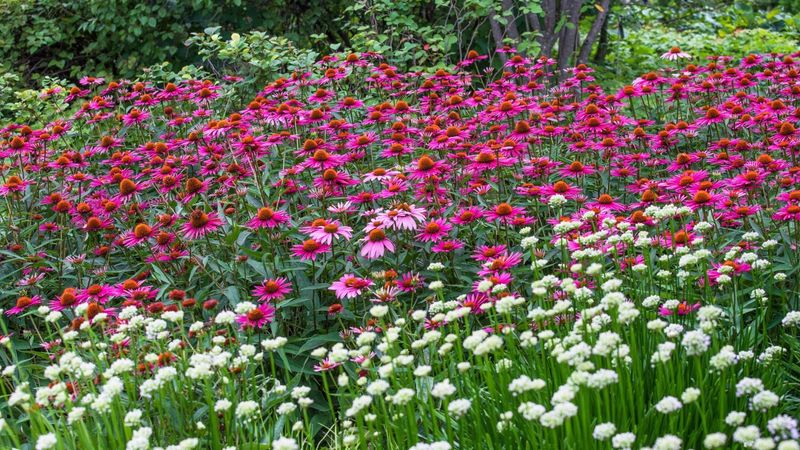
When most gardens start to fade in late summer, some North Carolina natives are just hitting their stride. These plants keep getting fuller, brighter, and buzzier every week until the first frost arrives.
Even better, they feed goldfinches, host pollinators, and help build a healthier yard for the wildlife you love. Fall is the perfect time to plant them, so let’s look at ten native perennials that shine when everything else is winding down.
1. Orange Coneflower (Rudbeckia fulgida)
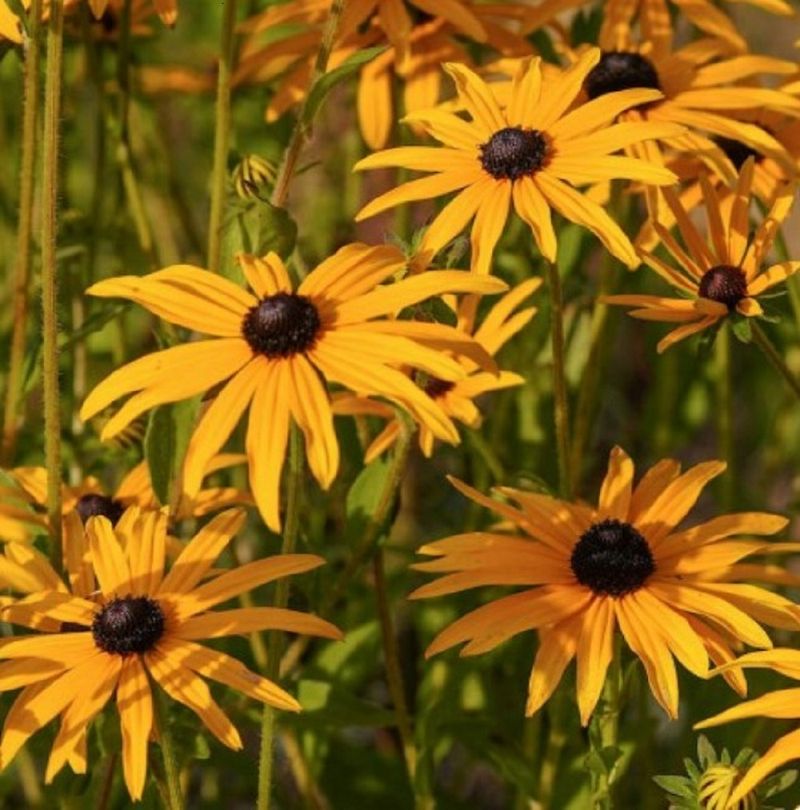
Few flowers stay this cheerful this long. Orange coneflower throws out golden-yellow blooms from late summer well into fall, and it grows happily across every corner of North Carolina, from the Coastal Plain to the Piedmont to the mountains.
The real magic happens after the petals fade. Those dark seed heads become a favorite snack bar for American goldfinches, so resist the urge to cut them down.
Leaving them standing turns your border into a living bird feeder right when the finches need it most.
Easygoing and drought-tolerant once established, this native asks for little beyond a sunny spot. Plant a drift of them and watch the color, and the wildlife, build week after week.
2. Asters (Symphyotrichum spp.)
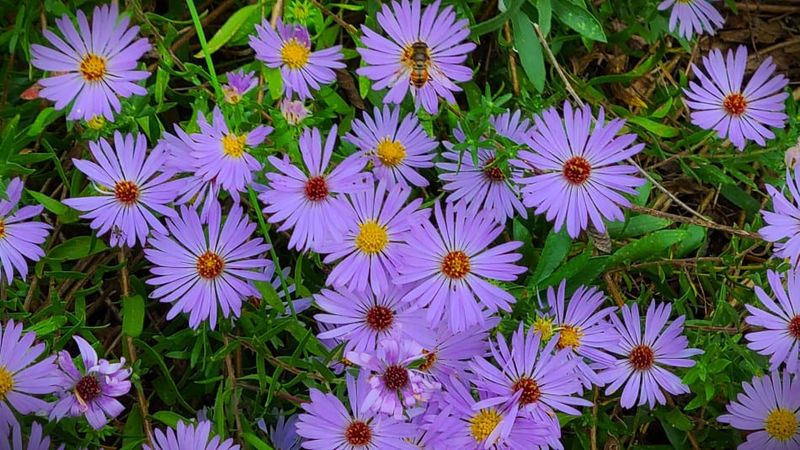
Ask any pollinator what October tastes like, and the answer is probably asters. These fall superstars keep flowering until frost finally shuts things down, coating themselves in white, pink, and lavender blooms.
Calico aster is a standout, blooming from late summer to the first frost and drawing in bees, butterflies, and other pollinators. When the flowers finish, the seeds feed songbirds and small mammals, so your work keeps paying off long after the show ends.
There’s an aster for nearly any spot too. Many varieties crave full sun, while white wood aster is perfectly content brightening up a shady corner where little else wants to bloom.
3. Goldenrod (Solidago ‘Fireworks’)
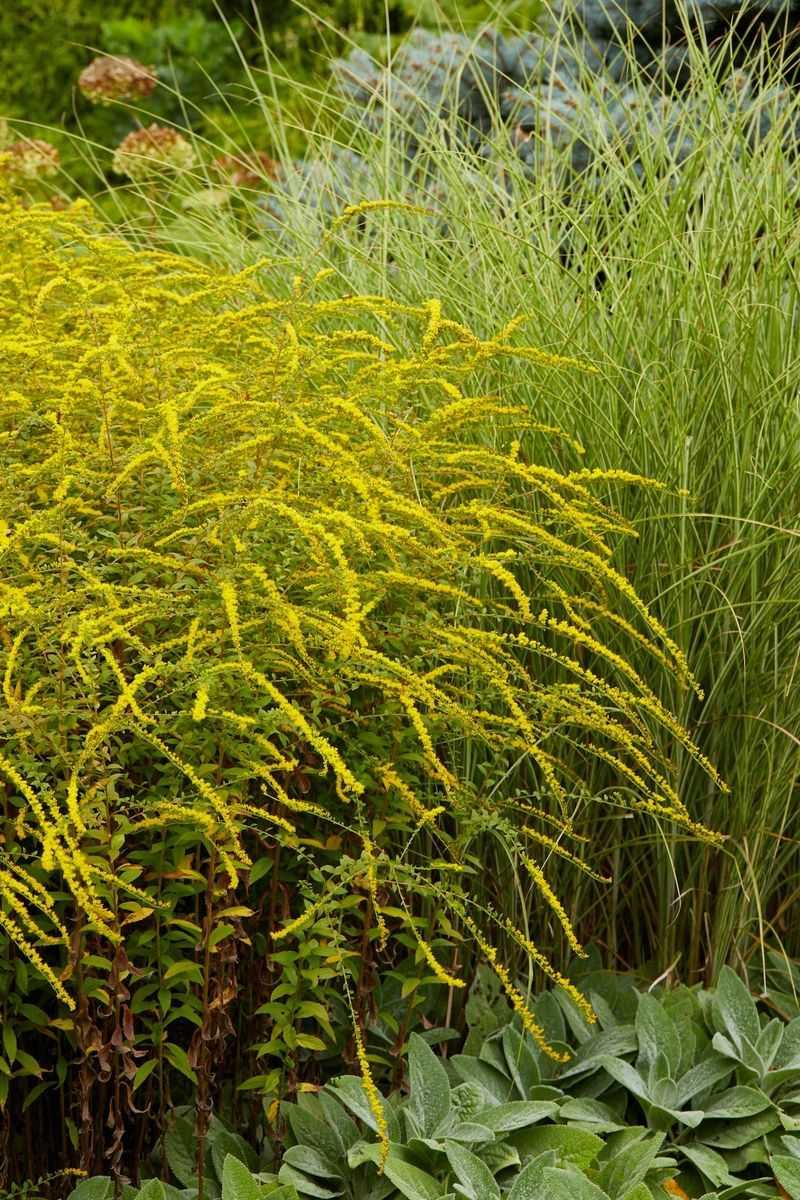
Poor goldenrod gets blamed for allergies it never caused. That’s ragweed’s doing, and clearing goldenrod’s name is worth it, because this plant is one of the most valuable late-season nectar sources in your whole yard.
The ‘Fireworks’ variety earns its name with arching sprays of golden-yellow blooms that seem to explode across the plant in late summer and fall. Butterflies and bees flock to it when other blossoms have called it quits for the year.
It’s also refreshingly low-fuss. Critter-resistant and low-maintenance, goldenrod rewards you with a showy display while barely asking for anything in return.
Consider it a native swap for any invasive that’s been hogging space in your beds.
4. Joe Pye Weed (Eutrochium ‘Baby Joe’)
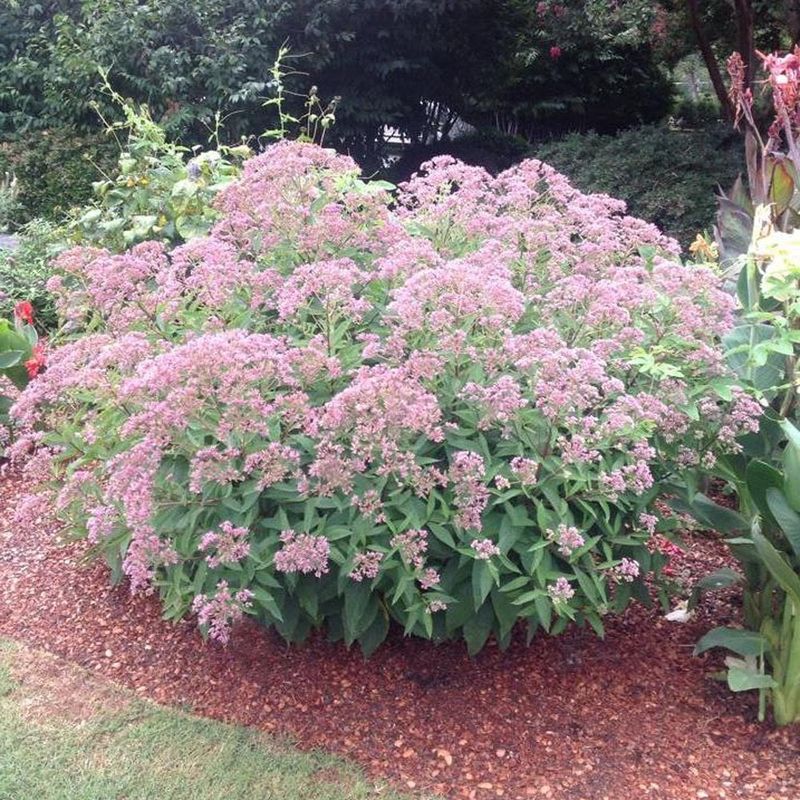
Picture fluffy purple flower heads humming with life, and you’ve got Joe Pye Weed in late summer. Native bees, swallowtails, and skippers can’t seem to stay away from those big mauve clusters.
If you’ve got a smaller yard, ‘Baby Joe’ is your friend. This compact version keeps the pollinator magnetism without towering over everything else, and it loves moist, fertile soil with plenty of sun.
The generosity doesn’t stop when blooming does. As fall and winter roll in, the seeds become food for goldfinches and other birds, giving your garden a purpose long after the color has softened.
5. New York Ironweed (Vernonia noveboracensis)
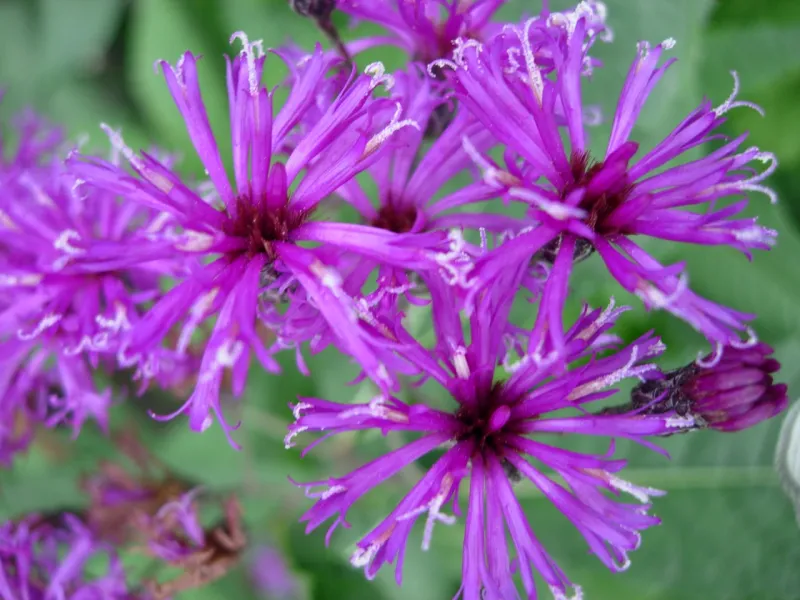
Talk about a dramatic entrance. New York Ironweed shoots up fast and tall, then crowns itself with vivid purple blooms in late summer, exactly when many other flowers are fading into memory.
Bees, swallowtails, and skippers treat it like a favorite roadside diner, and once the flowers finish, the seed heads step up to feed goldfinches. It’s a plant that keeps giving through the changing seasons.
Got a soggy spot that stays wet no matter what? Ironweed thrives in rich, moist soil and full sun, making it a smart native replacement for thirsty invasives that so often colonize damp corners of NC yards.
6. Fall Swamp Sunflower (Helianthus angustifolius)
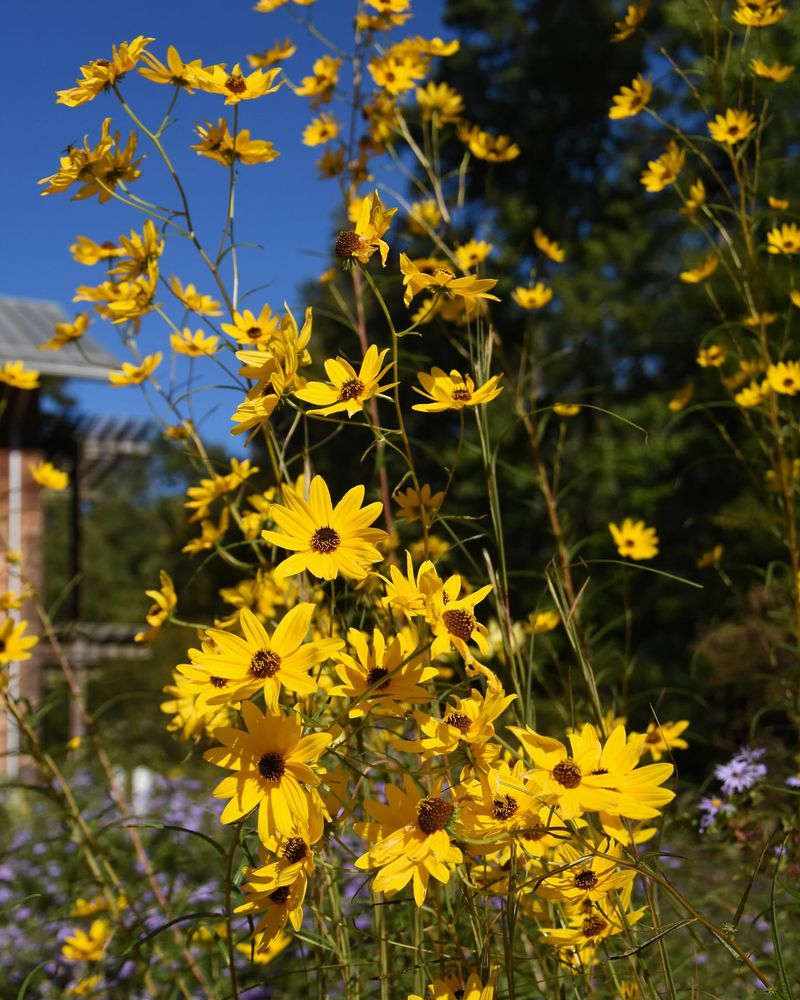
Just when you think sunflower season is over, the swamp sunflower proves you wrong. This one saves its bright yellow, daisy-like blooms for fall, lighting up the garden like a second summer.
Butterflies and their caterpillars find plenty to love here, so planting it means supporting pollinators through their whole life cycle, not just the flashy adult stage.
True to its name, it favors moist soil and full sun. Give it a spot where its feet can stay a little damp, and it’ll pay you back with cheerful color right up to the first frost.
7. Purple Coneflower (Echinacea purpurea)
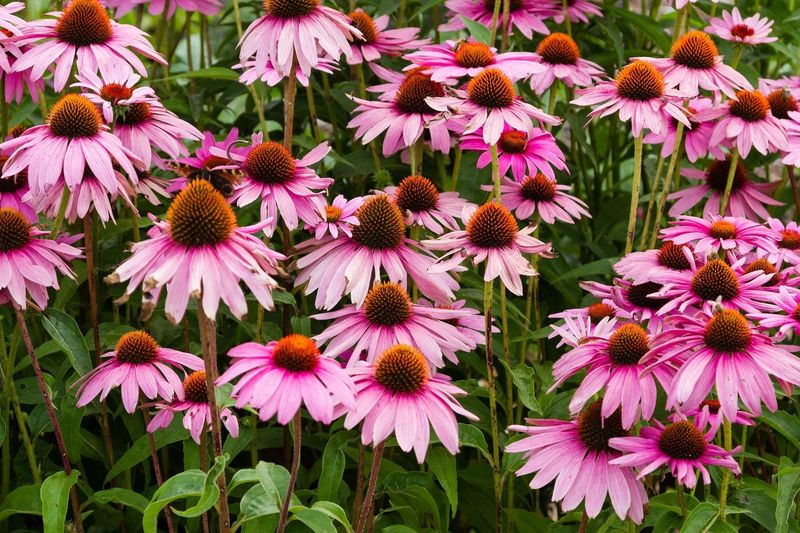
You probably already know this one, and for good reason. Purple coneflower is a native workhorse, blooming from summer straight into fall while pulling in a wide crowd of pollinators.
Its rosy-purple petals and spiky centers hold up beautifully in the garden, but the smartest move is to leave the spent flowers alone. Those seed heads turn into a feast for birds as the weather cools.
Tough, adaptable, and reliable, echinacea fits into almost any sunny NC border. It’s the kind of plant that looks good in July, better in September, and still earns its keep in November thanks to the finches it feeds.
8. Carolina Phlox (Phlox carolina)
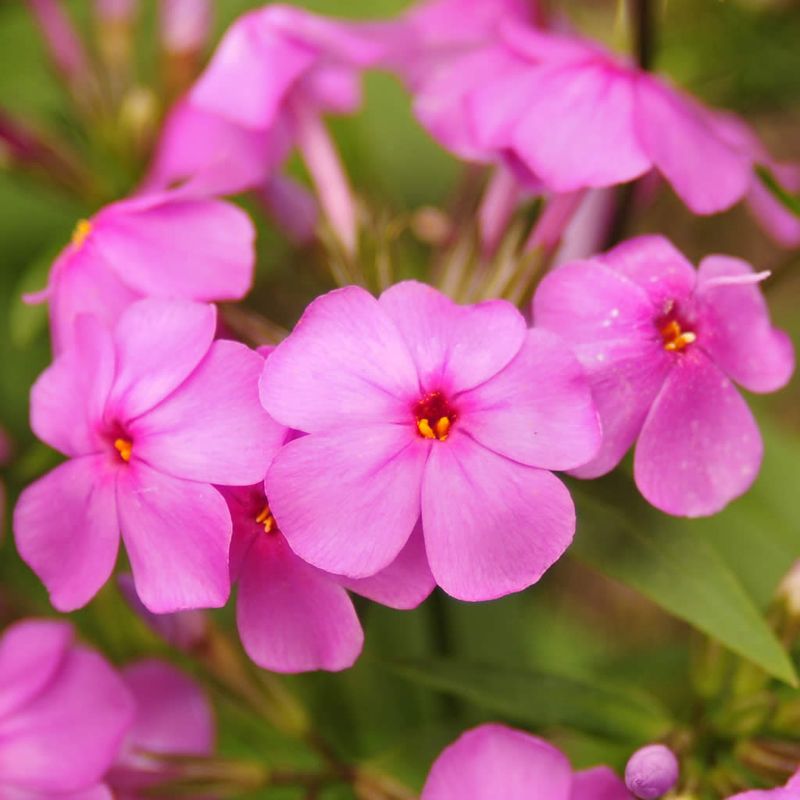
Some plants bloom once and quit, but Carolina phlox likes to keep the party going. This native has a habit of reblooming on and off through the growing season, stretching its display all the way to the first frost.
The clustered pink and lavender blossoms add a soft, cottage-garden feel that pairs nicely with the bolder yellows and purples elsewhere on this list. Pollinators appreciate the steady supply of nectar too.
Because it carries its own name from our state, it feels right at home in NC gardens across the regions. Tuck it in among taller natives and enjoy the way it fills gaps with color week after week.
9. Narrow-leaf Mountain Mint (Pycnanthemum tenuifolium)
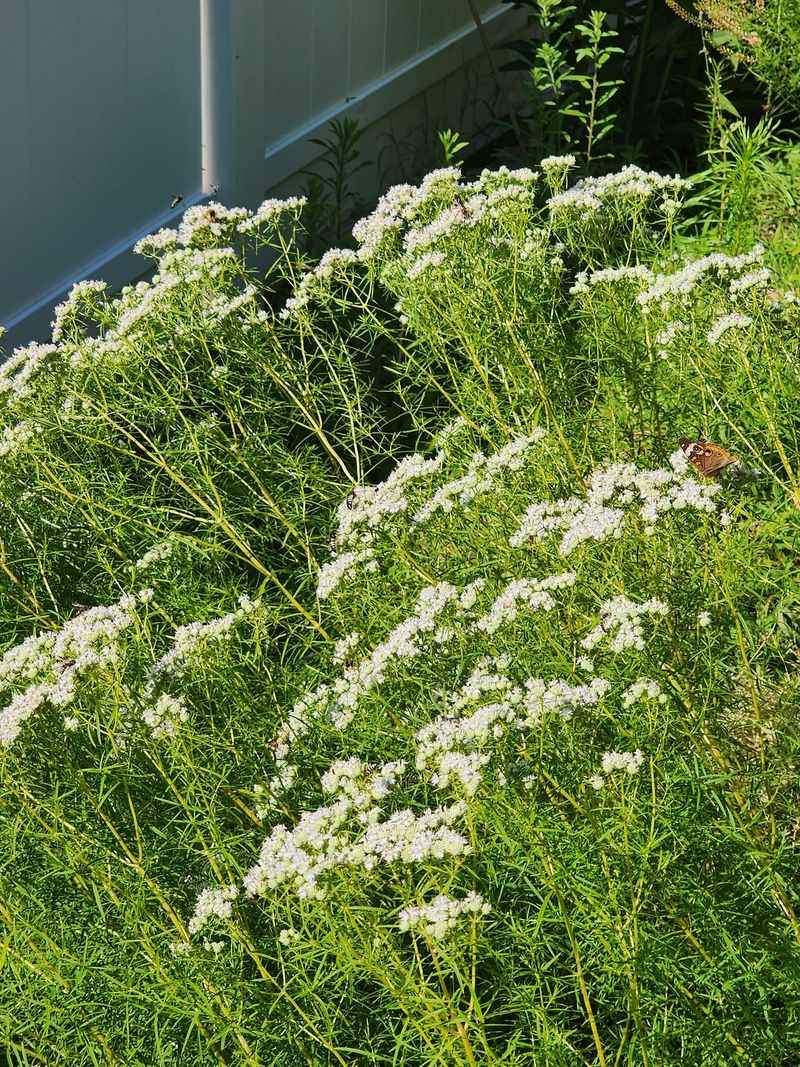
Here’s a border plant that pulls double duty. Crush a leaf of narrow-leaf mountain mint and you’ll catch a sharp, thyme-like scent, one that pollinators adore but deer tend to avoid.
That deer-deterring quality matters more than you might think. Fewer deer wandering close to your patio means fewer tick-carrying animals near where your family spends time, which makes this a genuinely useful tick-safe border choice.
Fun fact: North Carolina is loaded with native mountain mint species, and this one is the most versatile of the bunch, thriving in the Coastal Plain, Piedmont, and mountains alike. Plant a ring of it along a walkway and let the pollinators, and the peace of mind, roll in.
10. Bee Balm / Wild Bergamot (Monarda spp.)
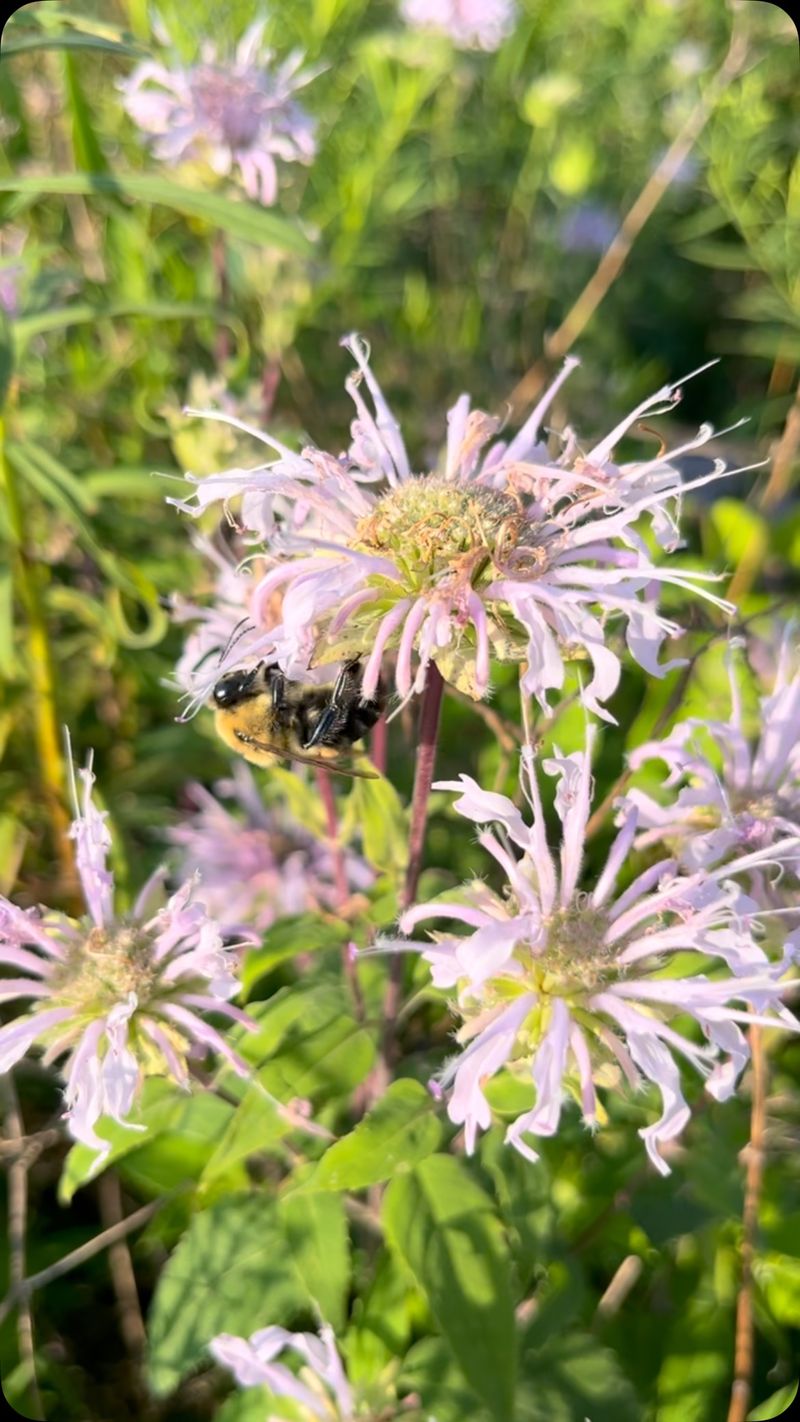
Rub a bee balm leaf between your fingers and you’ll understand its secret weapon right away. That minty aroma is a treat for your nose but a turnoff for deer and rabbits, which is exactly what you want in a tick-conscious border.
Above ground, it’s pure spectacle. The shaggy, whimsical blooms of Monarda draw in bees, butterflies, and hummingbirds all season, giving your yard a lively, buzzing energy.
Keeping browsing animals at a distance is more than a garden win, it’s a stewardship win. Fewer deer near your living spaces can reduce the ticks that hitchhike along with them, so bee balm helps protect both your flowers and your family while feeding the pollinators you’re rooting for.