
If Jasmine Grows Outside Your Bedroom Window, Here’s The Nightly Signal It Quietly Sends Your Nervous System
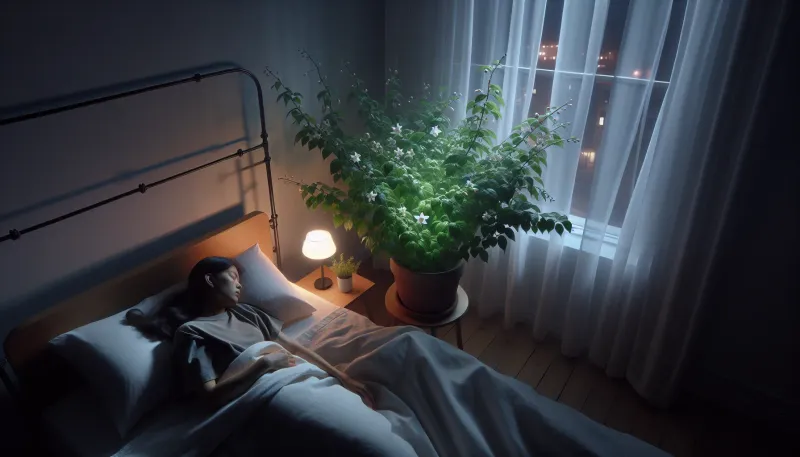
Something about jasmine after dark feels different from most garden smells. Certain true jasmine plants genuinely release more fragrance once the sun goes down, and researchers have studied whether those compounds can affect how humans feel at night.
The science is real but more complicated than the idea of a plant “signaling” your nervous system to sleep. Understanding what the evidence actually shows can help you enjoy your jasmine wisely without expecting more from it than it can deliver.
Certain jasmines become more fragrant after dusk
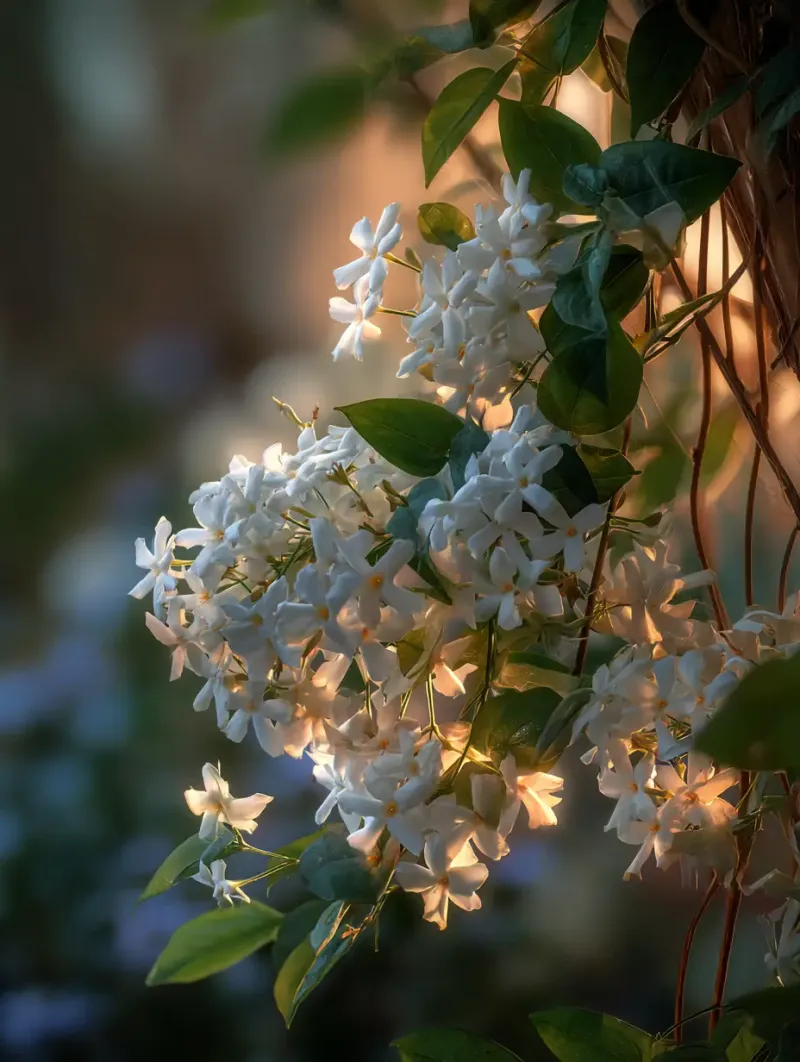
Not every plant sold under the jasmine name does anything special after sunset, so the first thing worth knowing is which ones actually change behavior at dusk. Jasminum sambac, commonly called Arabian jasmine, is one of the most studied examples: its flowers begin opening around dusk and can reach peak volatile emissions near midnight or during the first hours of darkness.
Research tracking floral volatile release in Jasminum sambac confirms that this timing is regulated by the flower’s own internal circadian clock rather than by temperature or light cues alone.
The likely reason for nighttime fragrance has nothing to do with human sleepers. Botanists connect this timing to nocturnal pollination: moths and other night-active insects are the probable targets of those intensified evening emissions.
From the flower’s perspective, the whole performance is about reproduction, not relaxation.
Other Jasminum species, such as Jasminum officinale and Jasminum grandiflorum, also produce fragrant flowers, but their peak emission timing, intensity, and chemical composition differ from J. sambac. A review of horticultural jasmine varieties notes that species, cultivar, flower age, local growing conditions, and even the time since the blossom opened all shape how much scent a plant actually releases on a given night.
A young plant with only a few open flowers on a cool evening may produce almost nothing detectable through a window screen, while a mature, heavily blooming specimen on a warm, humid night can fill the air.
So the premise in the title deserves a careful correction right away: certain fragrant Jasminum species genuinely emit more fragrance after dark, but that timing reflects the plant’s biology and pollination ecology. Whether any of that fragrance reaches a bedroom in meaningful amounts and then affects a sleeper depends on far more variables than simply having the plant nearby.
The fragrance is a changing blend, not a sleep switch
Jasmine fragrance is sometimes described as if it contains a single magic molecule that flips a sleep switch in the brain. The chemistry is far messier than that.
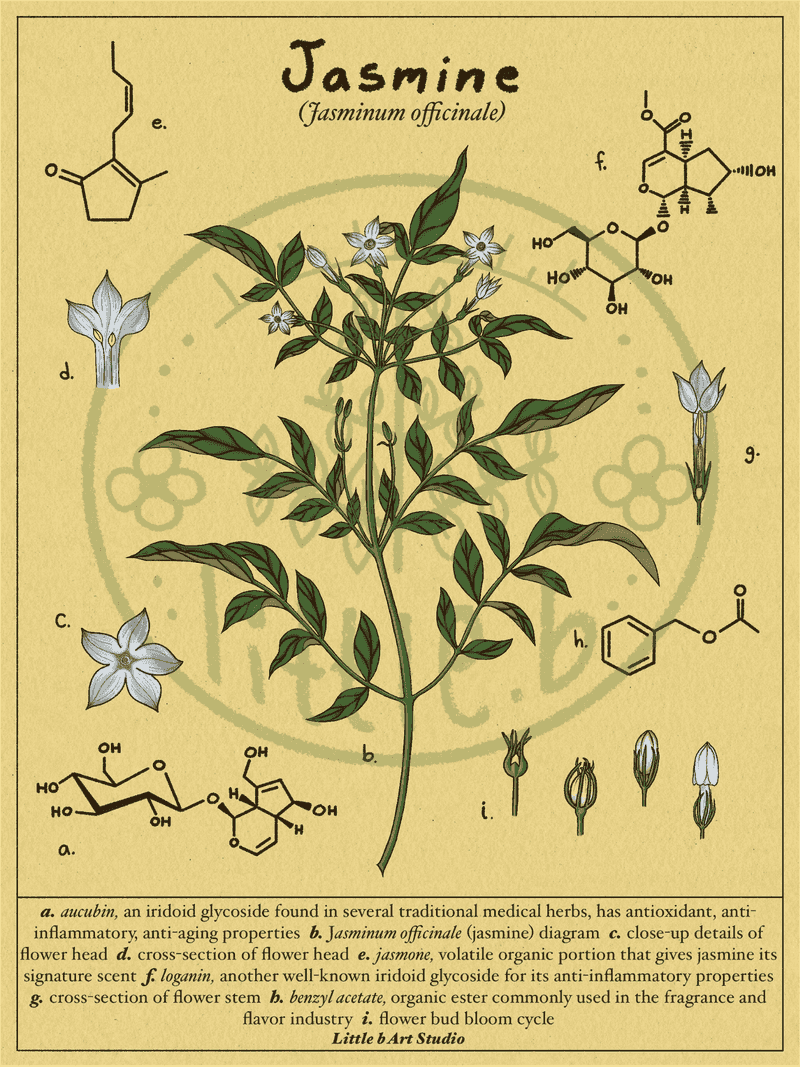
Analytical studies of jasmine floral volatiles identify a wide mixture of compounds including linalool, benzyl acetate, alpha-farnesene, benzyl alcohol, methyl anthranilate, indole, and a range of related terpene and benzenoid molecules. No single compound dominates every species, and the blend shifts depending on which jasmine you have, how old the flower is, what the growing conditions were, and what time of night the sample was collected.
Linalool is the compound most often cited in popular articles about jasmine and sleep. Reviews of linalool’s reported biological activity note that it appears in dozens of plants, from lavender to coriander, and that studies typically use isolated linalool or linalool-rich extracts rather than whole jasmine fragrance.
Finding linalool in a jasmine flower does not mean linalool is the reason jasmine smells calming to some people, and it certainly does not mean the flower is delivering a targeted sedative dose through your window.
Comparative profiling of Jasminum species and cultivars shows that benzyl acetate tends to be a dominant compound in J. sambac absolute but may be far less prominent in other species or in the headspace of a living flower compared with a solvent extract. The practical point is that jasmine essential oil, jasmine absolute, jasmine tea, and a blooming plant in your garden all have different chemical profiles.
What a study finds using extracted oil or a synthetic fragrance accord cannot be applied directly to what wafts through your bedroom window on a summer night.
Treating jasmine as a simple sleep switch misrepresents both the plant and the science. The fragrance is a dynamic, species-specific blend that changes hour by hour, and no single component has been shown to reliably trigger sleep in ordinary outdoor exposure conditions.
Controlled studies find mixed human responses
Human studies on jasmine-related odors do exist, and some of them are genuinely interesting. The key is reading what each study actually tested.
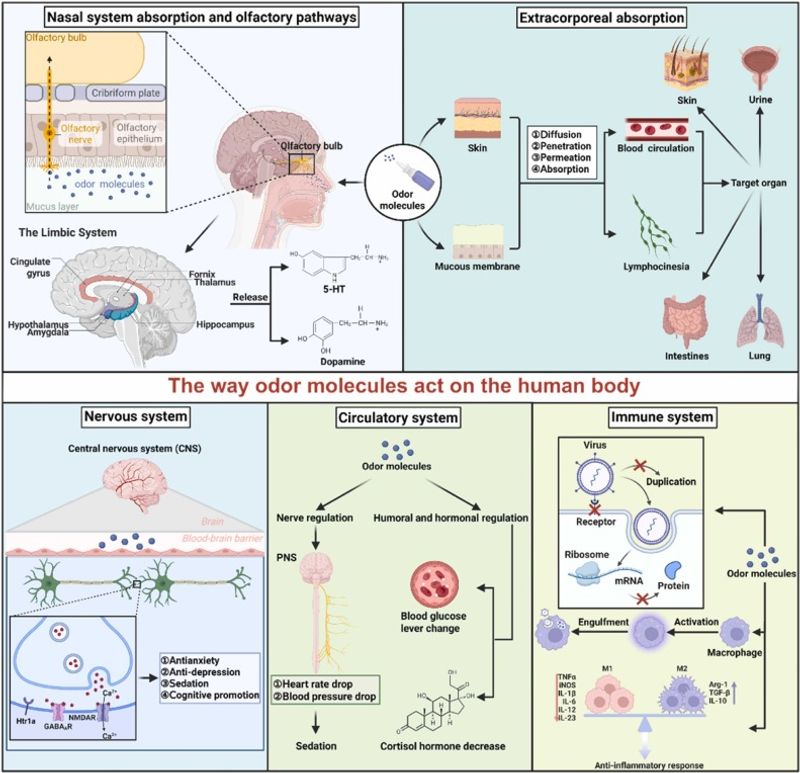
A 2005 study of 24 healthy volunteers exposed participants to low-intensity jasmine tea odor for five minutes in a controlled lab setting and recorded lower heart rate, higher high-frequency heart-rate variability, and self-reported mood changes described as calmer and more vigorous. That is a jasmine tea odor study, not a garden plant study, and the exposure was carefully measured and delivered close to the nose.
A separate experiment with eight volunteers found that low-intensity jasmine tea odor increased parasympathetic nervous system activity regardless of whether the participant liked the smell. At higher odor intensity, people who disliked jasmine showed increased sympathetic activity instead, meaning the scent moved them toward arousal rather than relaxation.
That finding alone shows that jasmine does not produce a uniform calming effect across all people or all exposure levels.
Other studies point in a still different direction. A jasmine oil aromatherapy massage study reported increased breathing rate, higher blood oxygen saturation, and elevated blood pressure in participants, interpreting those changes as signs of increased autonomic arousal rather than sedation.
Those results came from skin contact with diluted jasmine oil during a massage, a very different scenario from smelling flowers outside. A separate odor-exposure study found that jasmine fragrance increased beta-wave activity in selected brain regions, a pattern more consistent with alertness than with drowsiness.
Lower heart rate and higher parasympathetic tone can be consistent with relaxation, but they do not prove that someone falls asleep faster, stays asleep longer, or achieves deeper sleep. Each of these studies measured a specific physiological outcome in a controlled setting, and none of them can be generalized to the experience of a person sleeping near an open window with a jasmine plant outside.
A bedroom window is not a sleep laboratory
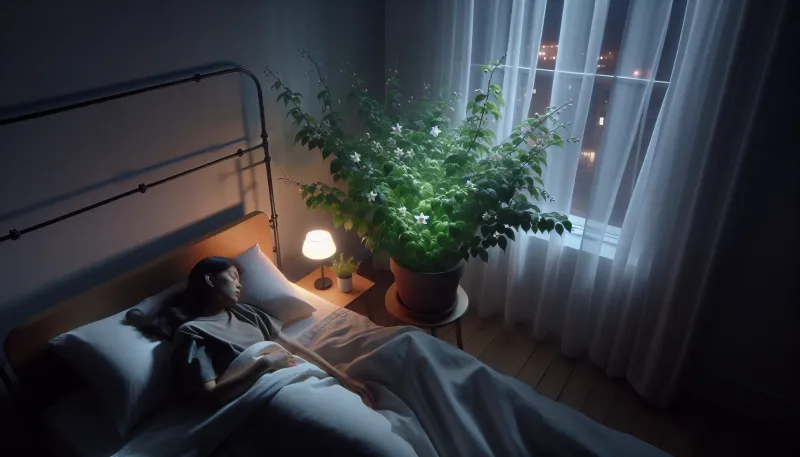
The gap between a sleep laboratory and a bedroom window matters enormously when evaluating jasmine claims. Sleep studies that tested odor effects delivered a known concentration of fragrance through a controlled system, often directly under the nose or on a surface inches from the face.
A jasmine plant growing outside your window produces an unknown and constantly shifting concentration that varies with wind speed, humidity, outdoor temperature, how many flowers are open, how far the plant is from the window, and whether the window is cracked or wide open.
A controlled study of 139 healthy participants that used measured jasmine odor exposure found associations with greater sleep efficiency and reduced sleep movement, which is one of the more promising findings in this area. Still, that study used a controlled odor delivery system in a structured research environment, not a backyard plant.
Treating its results as proof that your garden jasmine will improve your sleep would be a significant overreach.
A 2024 sleep-laboratory abstract reported improved sleep quality and reduced wake-after-sleep-onset with low- and high-dose synthetic jasmine fragrance applied to T-shirts worn by 30 “sensitive sleepers” over four experimental nights. The study was supported by the scent supplier.
Those are interesting preliminary findings, but the intervention was synthetic fragrance on clothing worn to bed, not a flowering plant at the window, and 30 participants across four nights is a narrow evidence base.
NCCIH characterizes aromatherapy evidence for sleep as suggestive but not definitive, and systematic reviews of odor and sleep studies consistently flag substantial variability in methods, uncertain or high risk of bias, and the need for larger, better-controlled trials. More recent meta-analyses echo that conclusion.
No study located has directly tested whether a jasmine plant growing outside an ordinary bedroom window changes human sleep or circadian timing. That gap in the evidence is worth naming plainly.
Use the scent as a personal evening cue, if it feels good
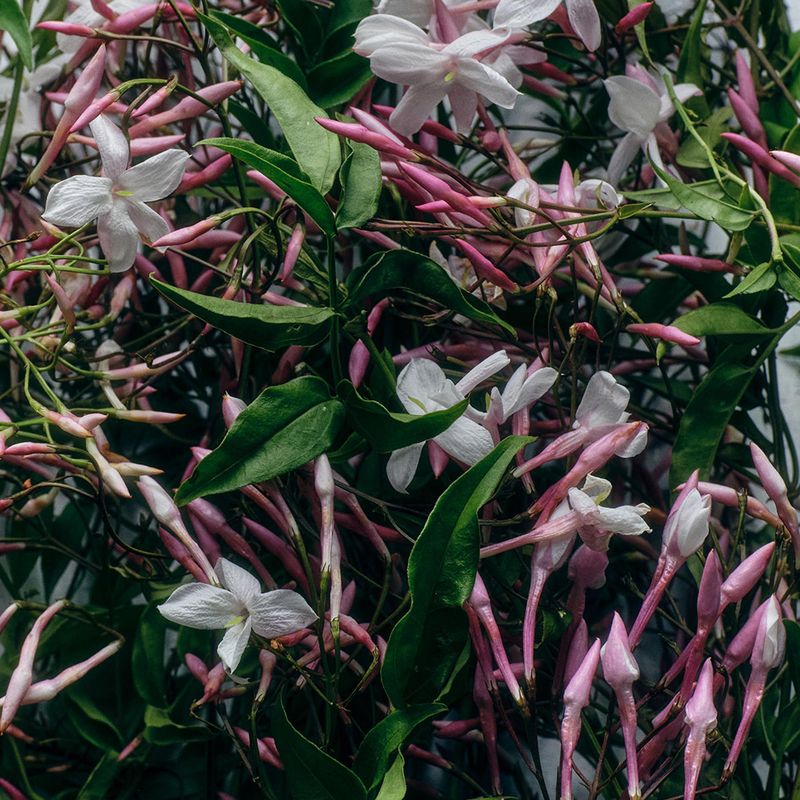
Given what the evidence actually shows, the most honest framing for a jasmine plant outside the bedroom is a personal comfort experiment, not a sleep treatment. If you already have a fragrant true Jasminum species growing nearby and you find the scent pleasant, there is nothing unreasonable about cracking the window on a warm evening and noticing how you feel.
That is a very different thing from claiming the plant is resetting your circadian clock.
A few practical steps make that experiment safer and more informative. Confirm that you have a true Jasminum species and not a look-alike.
Keep the plant at a reasonable distance rather than pressing a potted vine directly against the window screen. Observe your comfort, mood, and sleep quality over several nights while keeping your regular bedtime habits in place.
Ordinary sleep hygiene, consistent sleep and wake times, a dark and cool room, and limiting screens before bed, remains far better supported than any fragrance intervention.
NCCIH advises that complementary approaches to sleep should not replace evaluation of underlying causes. If you notice headache, nausea, nasal irritation, allergy symptoms such as sneezing or watery eyes, respiratory discomfort, or simply worse sleep after the window goes up, reduce exposure or move the plant.
A fragrance that feels pleasant at low levels outdoors can become overwhelming indoors at higher concentrations.
Concentrated jasmine essential oil is a separate matter entirely. Poison Control guidance on essential oils explains that concentrated oils can cause skin irritation, allergic reactions, poisoning if swallowed, and aspiration-related lung injury when misused.
Putting undiluted oil on pillows, bedding, or skin, or diffusing it heavily in a closed room near children or pets, carries real risks that smelling a flowering plant outdoors does not. Persistent insomnia, suspected sleep apnea, or other ongoing sleep concerns deserve a conversation with a healthcare provider, not a gardening solution.
Identify the plant before you bring it near the bedroom
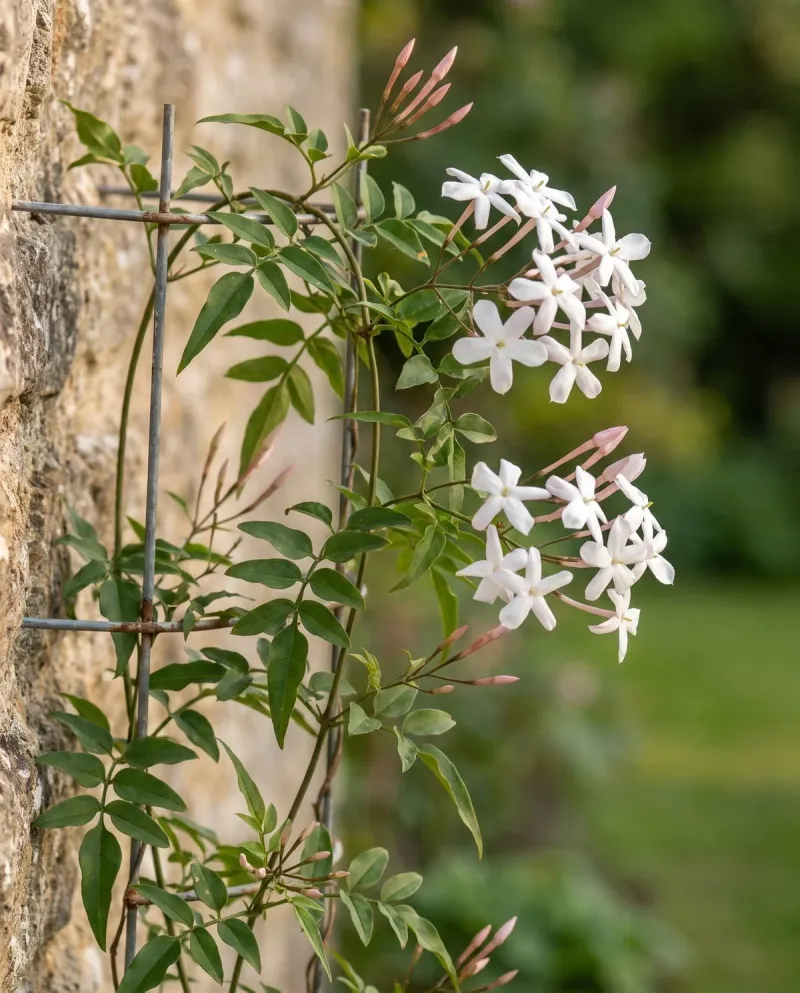
Common plant names are notoriously unreliable, and “jasmine” is one of the worst offenders in that category. Garden centers, neighbors, and online listings routinely apply the jasmine label to plants that belong to completely different genera and carry completely different safety profiles.
Getting the identification right before placing any plant near a bedroom, children, or pets is the single most important practical step in this whole discussion.
NC State Extension’s Jasminum profile covers true jasmine species in the genus Jasminum, which are the plants with the circadian fragrance biology described in the research literature. Star jasmine and Confederate jasmine, both sold widely in the US South and West, belong to the genus Trachelospermum and are unrelated to true jasmine despite the shared common name.
Night-blooming jasmine is Cestrum nocturnum, another unrelated genus. These plants may smell wonderful, but their chemistry, hardiness, and safety profiles differ from Jasminum species.
The safety distinction matters most with Carolina jessamine, Gelsemium sempervirens, a yellow-flowered vine common in the Southeast that sometimes gets called jasmine in casual conversation. ASPCA lists true Jasminum species as non-toxic to dogs, cats, and horses, but that classification does not extend to plants that merely share a common name.
UGA Extension describes Carolina jessamine as a separate and very poisonous plant, with all parts considered toxic to humans and animals. If you are not certain which plant you have, photograph the leaves, flowers, and stem, and run it through a reliable plant-ID app or bring a sample to your local cooperative extension office before placing it anywhere near a sleeping area.
Concentrated jasmine essential oils and absolutes add a further layer of complexity. As Poison Control notes, even oils derived from genuinely non-toxic plants can cause harm when used in concentrated form.
The safety of smelling a flower outdoors and the safety of applying or heavily diffusing an extracted oil indoors are not the same question, and they should never be treated as equivalent.
Choose a jasmine that can thrive in your conditions
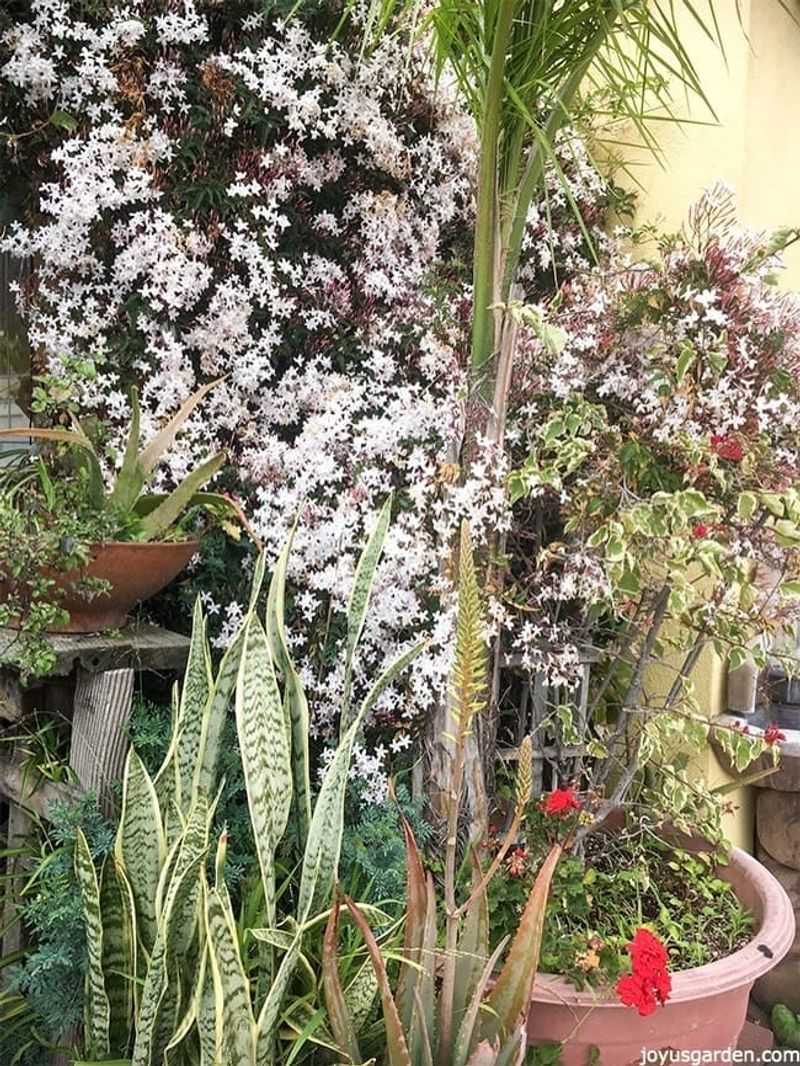
Growing a fragrant jasmine successfully starts with matching the species to your climate, not to a bedroom-window wish. Most true Jasminum species want bright light or full sun and soil that stays moist without becoming waterlogged.
Pruning matters too: many jasmines bloom on older wood, so cutting back right after flowering protects next season’s buds. Pruning at the wrong time, like late fall or early spring before bloom, can remove the flower buds you were counting on.
NC State Extension’s jasmine growing guidance emphasizes that species selection shapes almost every care decision. Jasminum sambac, the species with the most documented nighttime fragrance research, is frost-tender and generally grows outdoors year-round only in USDA zones 9 through 11.
Gardeners in cooler climates often grow it in containers that can be brought inside before the first frost. UF/IFAS fragrance garden guidance notes that star jasmine, Trachelospermum jasminoides, is hardier and better suited to a wider range of warm-to-mild US climates, though it is not a true Jasminum and does not share the same volatile profile.
Container culture is a practical workaround for colder regions, but it comes with its own risks. NC State’s container gardening handbook points out that roots in pots are exposed to temperature extremes on all sides, making them far more vulnerable to freezing than roots insulated by surrounding soil.
UMass Extension guidance on overwintering container ornamentals recommends moving tender plants indoors before nighttime temperatures drop consistently below the plant’s cold tolerance, and giving them a bright, cool indoor spot rather than a warm, dark corner.
A healthy, well-placed jasmine will produce far more fragrant blooms than a stressed one, so getting the growing conditions right is the most direct path to actually enjoying that evening scent, whatever effect it may or may not have on your sleep.
The evidence supports a possibility, not a nightly command
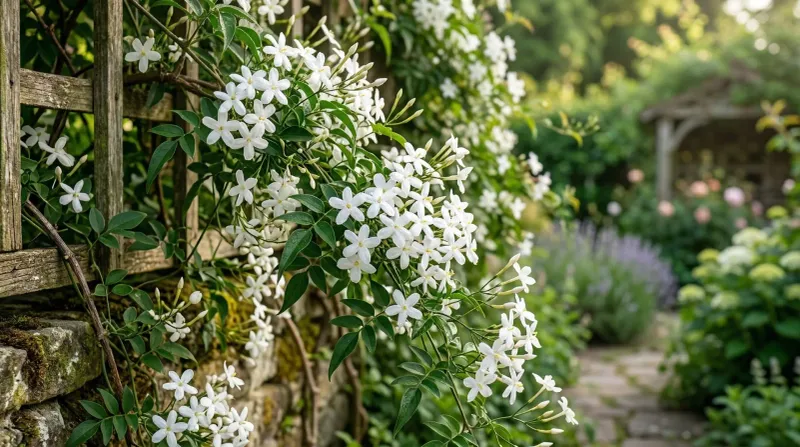
Pulling everything together, here is the direct answer: certain fragrant Jasminum species, especially Jasminum sambac, genuinely release more fragrance after dark as part of their own circadian biology. That nighttime emission pattern is well-documented in floral volatile research and is almost certainly tied to nocturnal pollination rather than to any intention of calming nearby humans.
Some people may find jasmine-related odors pleasant and personally calming, and a handful of controlled studies have found measurable physiological responses to jasmine odors in laboratory settings. Those findings are real but narrow, mixed, and specific to the exposure method used in each experiment.
No study has shown that a live jasmine plant outside an ordinary bedroom window reliably improves sleep, speeds sleep onset, deepens sleep stages, or resets the body clock. The broader aromatherapy evidence is suggestive but not conclusive, and the gap between a controlled laboratory odor delivery and a flowering vine in your garden is too large to bridge with existing data.
The practical takeaway is straightforward. Identify your plant, confirm it is a true Jasminum species, enjoy its natural scent if it stays comfortable, and avoid concentrated essential oils near your sleep space, children, or pets.
If sleep problems persist, talk to a healthcare provider rather than adjusting your garden. A jasmine that blooms well and smells lovely on a summer evening is its own reward, even if it is not sending your nervous system a nightly command.