
When Steep Weedy Slopes Have You Stumped, Here’s What Targeted Goat Grazing Can Actually Do
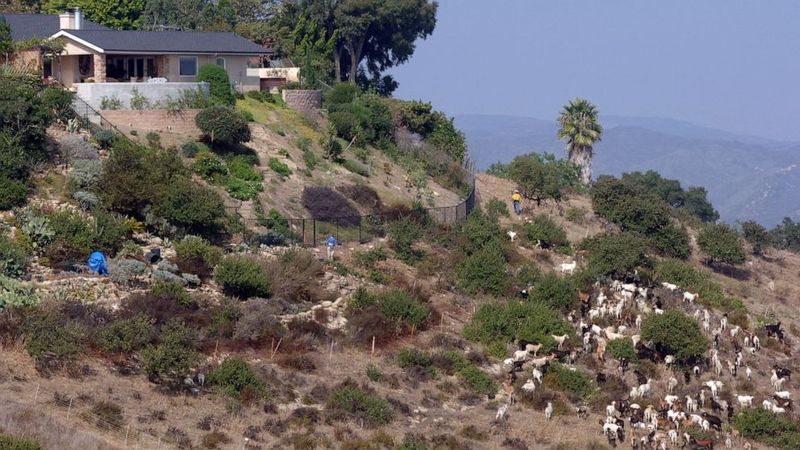
Somewhere on the internet, the story of 2,000 goats clearing a California hillside has taken on a life of its own. The image is spectacular: a living, bleating brush-cutting machine working angles no tractor could safely touch.
Before you call a goat wrangler or start pricing portable fencing, though, it pays to understand what that story actually described and what research says goats can realistically do on a steep, weedy slope.
The 2,000-goat story does not describe one hillside
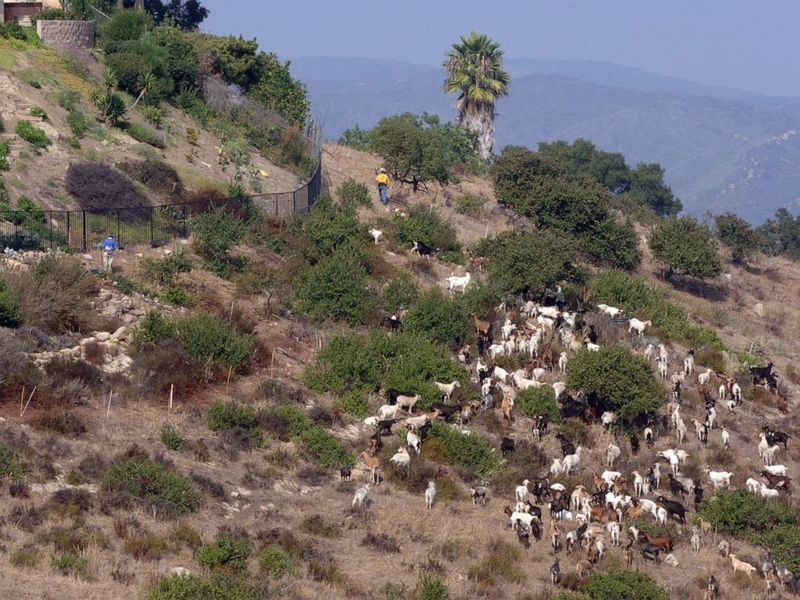
A viral claim has circulated for years: 2,000 goats cleared one steep hillside. The number is real, but the picture it paints is not.
A May 2000 Los Angeles Times report described at least 2,000 brush-clearing goats operating across California at that time, spread across multiple municipalities and private contracts. The article also mentioned roughly 600 goats working for Laguna Beach specifically and noted that more than 1,000 acres were being cleared annually statewide.
That is a far cry from one herd on one hillside.
Fast-forward to today, and Laguna Beach’s own numbers tell a more measured story. The city’s current goat grazing program uses roughly 75 to 600 goats annually, with up to 1,000 deployed in a particularly active year, across fuel-modification zones totaling about 363 acres.
Hand crews maintain the rest. Goats handle part of the terrain; people with tools handle the remainder.
Neither replaces the other entirely.
That gap between legend and practice is actually the most useful starting point for any rural homeowner staring at a brushy slope. The real question is not whether goats beat every machine everywhere.
The real question is whether targeted livestock-based grazing fits your specific terrain, your target vegetation, and your management goals well enough to complement the other tools you might use. The Laguna Beach program works because it is carefully managed, well-funded, and paired with professional oversight.
Understanding those conditions is the first step toward deciding whether goats belong anywhere near your land.
Why goats can reach brush that challenges machinery
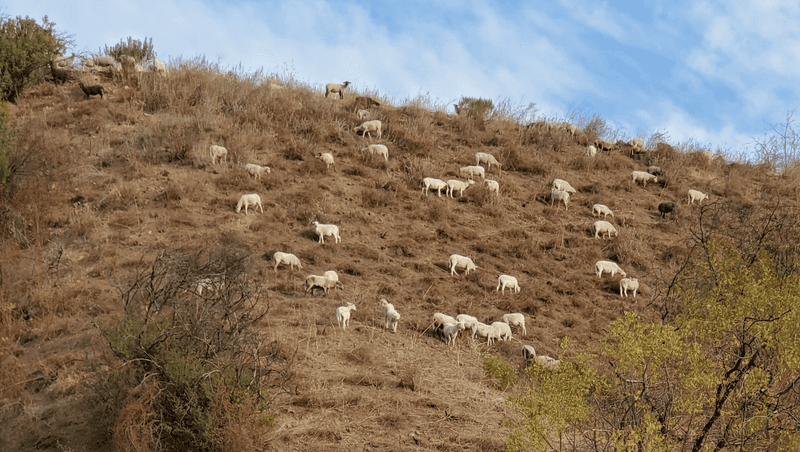
Goats eat differently than cattle or sheep. They are browsers by nature, meaning they prefer leaves, immature twigs, shrub tips, and soft cambium over grass and low-growing ground cover.
That preference makes them genuinely useful against the kind of brushy, multi-stemmed, shrubby growth that tends to take over neglected slopes. University of California IPM guidance on grazing confirms that goats’ browsing behavior gives them an edge against brush and some woody invasives that other grazers largely ignore.
The terrain advantage is just as important as the diet. On slopes steeper than about 30 degrees, on ground scattered with boulders, or on hillsides cut by ravines and gullies, a tractor or brush hog can become genuinely dangerous to operate.
Rollover risk rises sharply with grade, and rocky ground can throw a mowing deck or damage equipment. Goats, by contrast, are famously sure-footed.
They can pick their way across loose scree, navigate around large rocks, and graze pockets of brush that a machine cannot safely reach from any angle.
What goats offer in those settings is an access advantage and a reduction in machinery exposure, not a guarantee of faster or more thorough clearance. Two important caveats apply.
First, goats do not automatically single out only the plant a landowner wants removed. They graze what is available and palatable to them, which may include desirable shrubs, native plants, or young trees mixed in with the target weed.
Second, on terrain where machinery works fine, a tractor or forestry mulcher may clear dense, tall, or heavily woody vegetation faster and more completely than any number of goats. The terrain has to genuinely limit equipment before the goats’ access advantage becomes decisive.
What goats reduce—and what they may leave behind
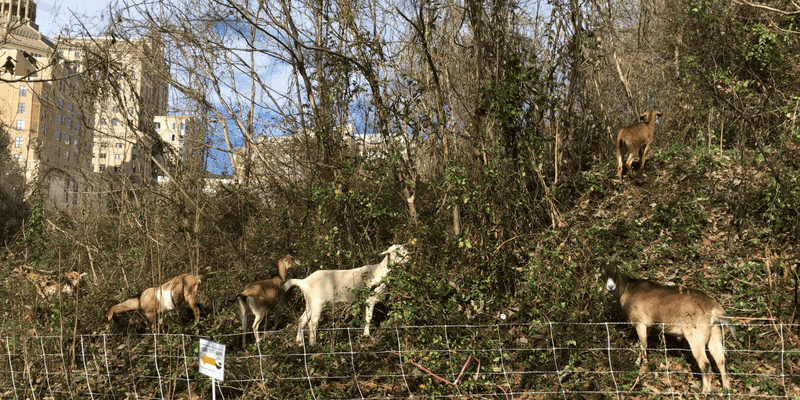
Calling goat grazing a clearance method sets expectations too high. A more accurate description is vegetation-biomass reduction, and the distinction matters enormously when you are planning a project.
Goats can bring down the volume of leafy and herbaceous growth, knock back young woody stems, and suppress some invasive shrubs. What they are far less likely to do is kill mature woody plants outright or leave a slope looking like it was run through a mulcher.
A study of a Southern California shrubland puts specific numbers to that gap. Research published in Fire Ecology followed 1,200 goats grazing for two weeks on chaparral.
The herd substantially reduced the height and cover of herbaceous vegetation. Most woody species, however, showed little or no reduction in height or cover.
The goats grazed what was soft and accessible and left the hard-stemmed shrubs largely intact. That finding is consistent with what researchers have observed elsewhere: targeted grazing works well on the leafy, fine-fuel layer and struggles with established woody structure.
One additional finding from that study deserves attention. The goats tended to leave cheatgrass, an annual grass that cures quickly in summer and is itself a significant fire concern in many Western landscapes.
Removing most of the competing vegetation while leaving cheatgrass behind can actually increase that species’ cover in subsequent seasons, which is the opposite of the intended outcome for fire-fuel management.
A meta-analysis in Restoration Ecology makes a broader point that reinforces this: removing vegetation through grazing is not the same as killing the plant. Defoliation is temporary.
Roots survive, and regrowth typically follows unless grazing is repeated at the right intervals. The target vegetation, not the number of goats, determines whether the treatment moves the needle.
Targeted grazing requires a prescription
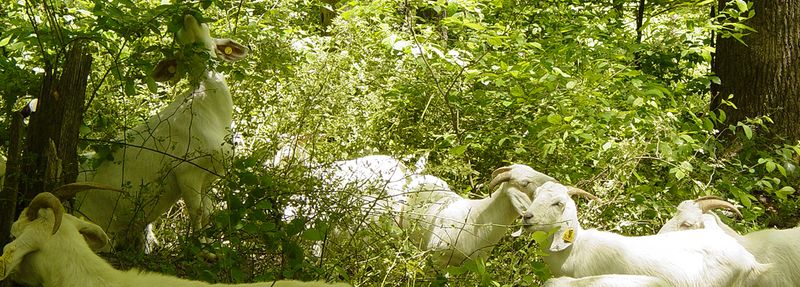
Releasing goats onto a brushy slope without a plan is a bit like applying a random medication without knowing the diagnosis. Targeted grazing, when done well, is built around five variables: the specific plant you want to reduce, the time of year, the number of animals per acre, how long they stay, and what outcome you are trying to achieve.
Change any one of those variables and you change the result, sometimes dramatically.
Timing is one of the most consequential decisions. Prescribed-grazing guidance from Weld County explains that early-season grazing, before a target weed has fully leafed out, can strip new growth and cut off the photosynthesis the plant needs to build root reserves for the season.
Later-season grazing, timed just before the target plant flowers, can interrupt seed production and reduce how much the weed spreads. Neither approach is universally correct.
The right window depends on the growth cycle of the weed you are targeting and the growth cycle of any desirable plants nearby that you cannot afford to damage at the same time.
Stocking density and duration are equally important. Too few goats for too short a time may leave a target plant barely grazed.
Too many goats for too long can strip a site of everything, including native plants, seedlings, and ground cover that holds soil in place on steep terrain. UC IPM guidance is explicit that grazing is very unlikely to eradicate a large weed population in a single event and that poor planning can damage the desirable vegetation you were trying to protect.
Frame grazing as a managed, potentially multi-year treatment rather than a one-time clearing date. A single pass may show progress.
Eliminating a persistent invasive shrub or maintaining a fuel break typically requires repeated treatments, careful monitoring between events, and adjustments based on what the vegetation actually does after the goats leave.
Portable fences still require a full livestock operation
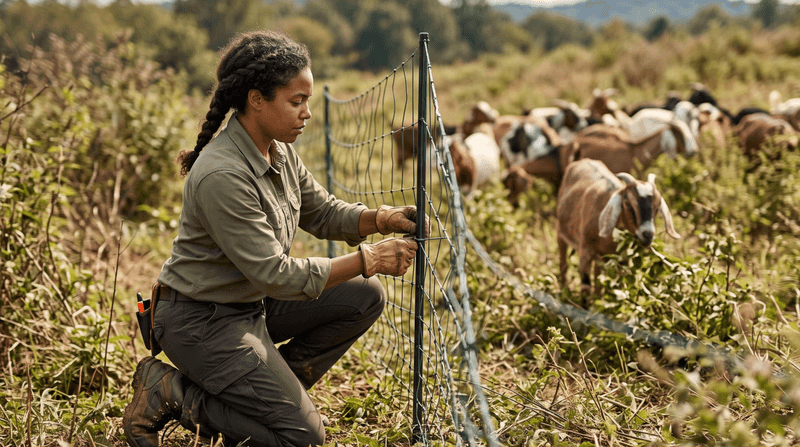
Portable electric netting looks simple from a distance: unroll, stake, plug in, and let the goats work. The reality behind a well-run grazing project involves considerably more equipment, labor, and daily attention than that image suggests.
The U.S. Fish and Wildlife Service describes targeted goat grazing as labor- and cost-intensive, noting that documented programs account for hauling, fencing, energizers, water tanks, herding, overnight housing, and predator protection.
When goats stay on site overnight, guardian animals such as livestock-protection dogs or alpacas are often necessary to deter coyotes, mountain lions, or other predators.
North Carolina Cooperative Extension guidance on electric netting for goats describes temporary electric netting as the standard approach for confining animals to brush-control areas, with the fence moved forward as goats consume the available forage. That sounds straightforward, but moving fence on steep, rocky ground is physical work, and the charger must be checked regularly to confirm voltage is maintained.
A fence that loses charge overnight becomes a suggestion rather than a barrier.
Beyond the fence itself, the site needs to be walked before goats arrive. A contractor or land manager should inventory desirable native plants, sensitive habitat, and any trees or seedlings that must not be grazed.
Laguna Beach’s program employs botanists to flag sensitive plants before each grazing event and physically fences them out. The city also obtains permits for its grazing activities.
Private landowners working with contractors should ask whether the same pre-grazing survey is part of the service.
Water access is another non-negotiable. Goats need fresh water daily, and hauling it to a remote hillside adds both logistics and cost.
None of these requirements make goat grazing impractical, but they do make it a managed livestock operation rather than a self-contained clearing machine you can set and forget.
Expect follow-up work, maintenance, and site-specific costs
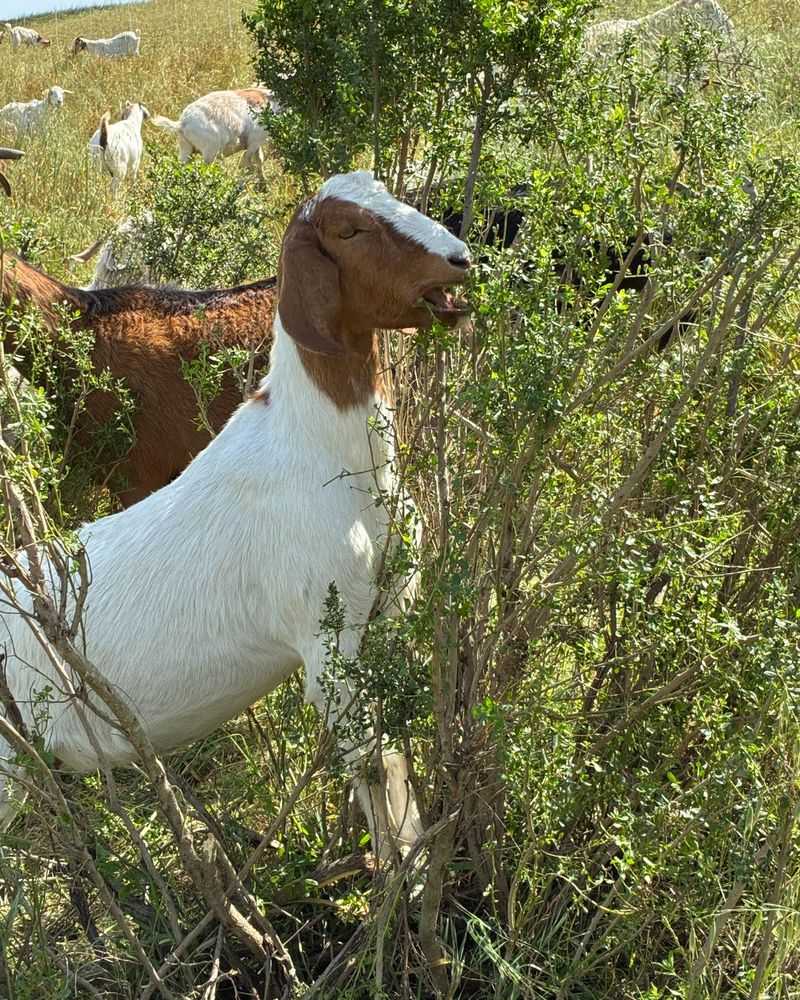
Goat grazing rarely finishes a job by itself. Most well-documented programs treat it as one stage in a longer management sequence rather than a standalone solution.
A five-year USDA Forest Service study on prescribed goat grazing in an Indiana hardwood understory found that grazing reduced invasive multiflora rose cover noticeably over time, but did not eliminate it. Researchers concluded that multiple years of grazing may be needed for substantial reduction of a well-established invasive shrub population.
A related Purdue Extension report on the same project notes that the land managers ultimately applied targeted herbicide to the remaining multiflora rose and other invasive plants that persisted after the grazing rotations. Goats handled the accessible leafy growth; herbicide addressed the roots and regrowth that survived.
That kind of integration is common in professionally managed programs and should be part of any honest cost-benefit conversation before a project begins.
Wildfire fuel reduction adds another layer of complexity. The Fish and Wildlife Service notes that the effects of goat grazing on actual wildfire threat were still being measured in its program at the time of reporting, even though reducing fuel loads is generally expected to reduce potential fire intensity.
Goats can lower the fine-fuel layer, but that does not translate automatically into meeting local defensible-space or fire-code requirements. Check with your local fire authority, because requirements vary by jurisdiction and often include vertical clearance, removal of dead material, and treatment of taller woody fuels that goats are unlikely to address.
Laguna Beach’s fuel-modification zones aim for 50 to 90 percent vegetation reduction and combine goats with hand crews to reach that standard. On cost, UC IPM guidance cautions that small sites and projects requiring frequent fence moves, water hauling, or specialized infrastructure can make grazing more expensive than other methods.
Get itemized quotes and compare them honestly against the alternatives for your acreage and target vegetation before committing.
Screen the slope for ecological and livestock hazards
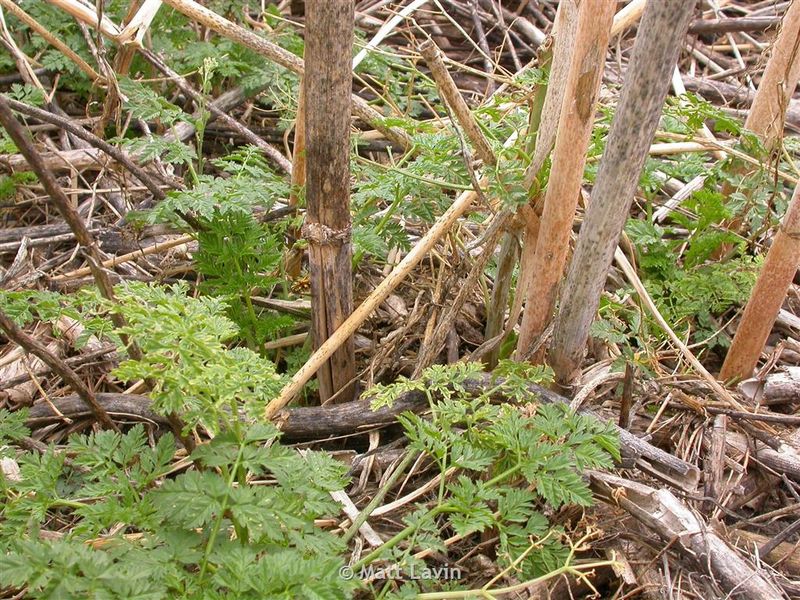
Before any goat sets hoof on your property, someone needs to walk the entire site with a trained eye. The single most urgent item on that checklist is toxic plants.
UC IPM identifies poison hemlock as toxic to goats and other livestock, with poisoning potentially fatal when animals consume it, particularly when other forage is limited and goats begin eating plants they would otherwise avoid. Poison hemlock is widespread across the US and can grow densely on disturbed slopes and roadsides, which are exactly the kind of sites where targeted grazing is often proposed.
Any contractor who does not mention toxic-plant screening before beginning work should raise a red flag.
Federal invasive-plant management guidance makes clear that sheep and goats generally do not graze target weeds to the exclusion of native plants. Goats browsing a mixed-vegetation slope will eat palatable native shrubs, wildflower seedlings, and young trees alongside the intended target.
If your site has native plants or sensitive habitat worth protecting, those areas need to be inventoried, mapped, and physically fenced out before grazing begins.
Seed dispersal is a hazard that often goes unmentioned. USDA Forest Service weed-control guidance notes that livestock moved between pastures can carry viable invasive-plant seeds in their coats, hooves, and digestive tracts.
If goats graze a site with mature invasive seed heads and then move to a clean area, they can spread the problem they were brought in to solve.
Ask any prospective contractor how they will confine, monitor, water, protect, and remove the herd; how they will prevent damage to sensitive habitat; and whether they carry appropriate insurance and permits. UC IPM specifically recommends consulting Cooperative Extension, the Natural Resources Conservation Service, or a certified rangeland manager for a site-specific control plan, rather than purchasing goats for a one-time DIY clearing attempt.
Choose goats when the site and treatment plan fit
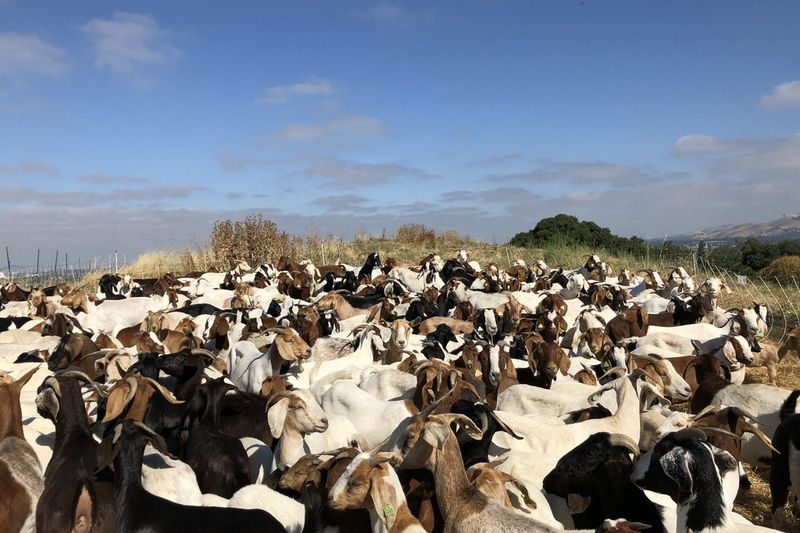
Targeted goat grazing earns its place in a vegetation-management plan under a specific set of conditions. Consider it seriously when steep or rocky terrain makes machinery genuinely difficult or dangerous to operate, when the goal involves reducing accessible brush, leafy invasives, or fine herbaceous fuels rather than clearing mature woody vegetation, and when the site can support secure fencing, daily animal care, and predator protection.
Accept from the start that monitoring and follow-up treatments will almost certainly be part of the picture.
Skip it, or adjust your expectations significantly, when the target vegetation is dense, tall, and heavily woody; when the site is too small or too complex to justify the fencing and hauling costs; or when local fire-code requirements demand a level of clearance that goats alone are unlikely to achieve. UC IPM guidance and Fish and Wildlife Service program documentation both frame targeted grazing as one tool among several, not a replacement for hand crews, mowing, herbicide, or prescribed fire in every situation.
Laguna Beach’s program works because it combines goats with professionals, botanists, hand crews, and ongoing monitoring. That combination, not the goats alone, is what produces results year after year.
Goats are a specialized, livestock-based management tool whose real strengths are targeted terrain access and biomass reduction. The slopes that suit them best are the ones where a machine cannot safely go and a weed is young enough to be browsed into submission.
Knowing that distinction is what turns a spectacular mental image into a practical decision.