
If Aphids Keep Swarming Your Garden Beds, Here’s Why Crushing A Handful Of Herb Leaves Clears Them Out
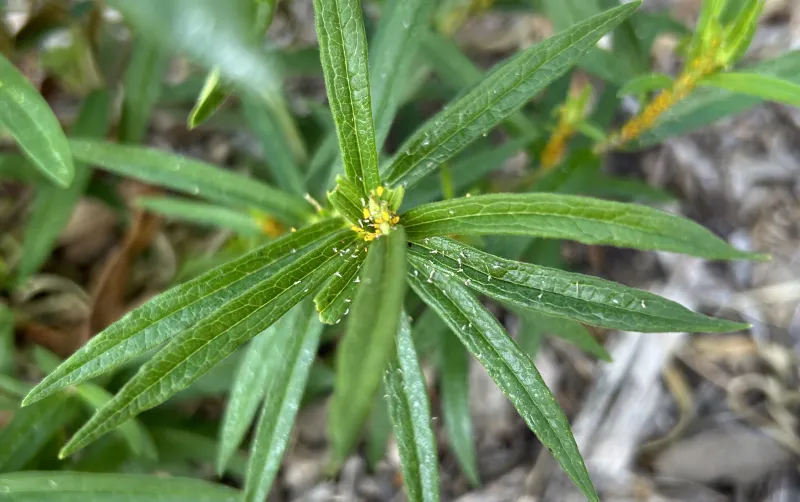
Spotting a cluster of tiny green or black bugs on your tomatoes or petunias is enough to make any gardener uneasy. Aphids spread fast, and it is tempting to reach for whatever quick fix you have on hand, including that bunch of basil growing nearby.
The idea that crushing a few herb leaves drives aphids away sounds almost too simple, and the truth is more complicated than the shortcut promises. Understanding what the science actually says will help you protect your plants without wasting time on methods that may not work.
Aphids Do Not Always Put a Healthy Plant in Immediate Danger
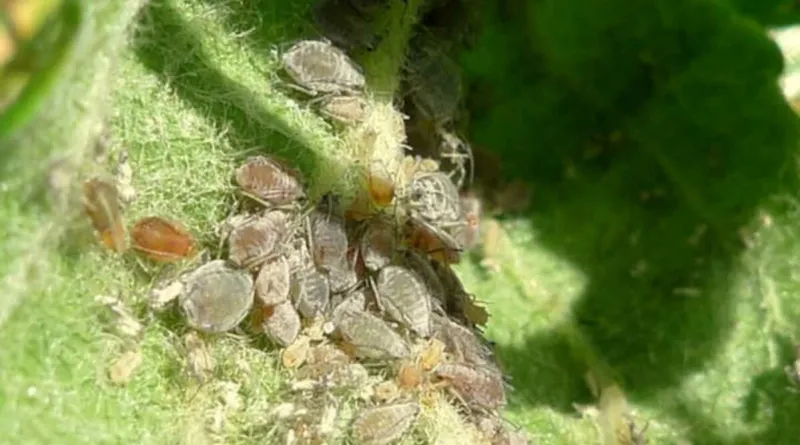
Soft-bodied and barely the size of a sesame seed, aphids feed by piercing plant tissue and drawing out sap. They tend to cluster on tender new growth and the undersides of leaves, which is why a casual glance at the top of a stem can miss a colony that has already settled in underneath.
Common signs of a growing infestation include leaves that curl or pucker, distorted or stunted shoots, yellowing foliage, and a sticky film called honeydew that drips onto lower leaves and surfaces below.
That honeydew is more than just a mess. It encourages a black, powdery fungal coating called sooty mold, which can block sunlight and make plants look far sicker than they actually are.
Certain aphid species also carry plant viruses, transmitting them as they move from plant to plant, which is a particular concern for vegetable crops that are already susceptible.
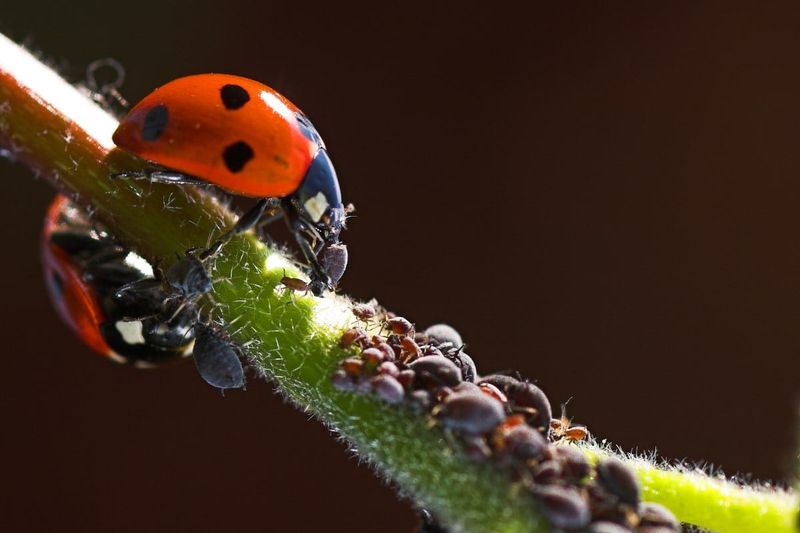
Even so, UC IPM’s aphid guidance points out that most established, healthy plants can tolerate light to moderate aphid populations without lasting harm. Natural enemies, including lady beetles, lacewing larvae, syrphid fly larvae, and parasitic wasps, often move in and bring numbers down on their own.
A small cluster on a mature hydrangea or established geranium is a different situation from a heavy infestation on a young transplant or a crop known to be vulnerable to aphid-transmitted viruses.
Before reaching for any remedy, walk around the plant and look at the actual scale of the problem. Check the undersides of leaves, inspect new growth, and look for signs of natural enemies already at work.
Treating every aphid sighting as a crisis can do more harm than good, especially when beneficial insects are already handling the job.
Crushing Basil or Mint Releases Aromatic Volatiles
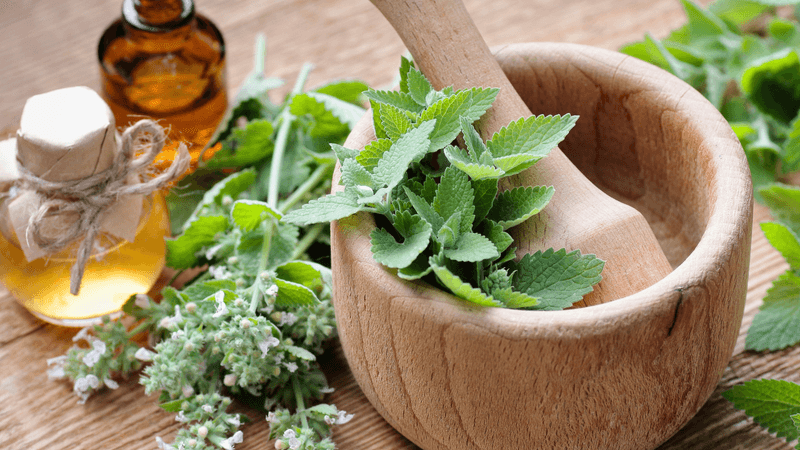
When you crush a basil or mint leaf between your fingers, the sharp, immediate scent that follows is not just pleasant to humans. It is the result of a rapid chemical release from specialized structures inside the leaf.
Aromatic herbs store volatile compounds in glandular trichomes, tiny hair-like oil glands on the leaf surface, as well as in other oil-producing cells within the leaf tissue itself.
Research on peppermint glandular trichome development shows how these structures accumulate essential oils as the plant matures. Once the leaf is damaged, those oil glands rupture and their contents evaporate quickly into the surrounding air.
A related study on wounding-induced volatile emissions in tropical plants found that mechanical leaf damage can produce a rapid, measurable burst of volatile organic compounds, though the release is short-lived and variable depending on the plant, temperature, and how much tissue is damaged.
Broader research on plant volatiles as cues and signals confirms that these airborne compounds play real roles in plant communication and can influence the behavior of nearby insects. The chemistry is genuine, and the scent you notice after crushing a handful of leaves reflects actual volatile compounds entering the air around the plant.
What that chemistry does not guarantee is a lasting protective effect on a garden bed. The burst of scent from a few crushed leaves fades within minutes to hours as the compounds disperse and evaporate.
Unlike a controlled laboratory exposure or a measured dose of extracted essential oil, a handful of leaves delivers an unknown and inconsistent amount of volatile material that varies with the herb cultivar, the age of the leaf, the temperature, and the wind. The smell is real; the pest-control promise attached to it is a much bigger leap.
The Repellency Research Used Oils and Controlled Exposures
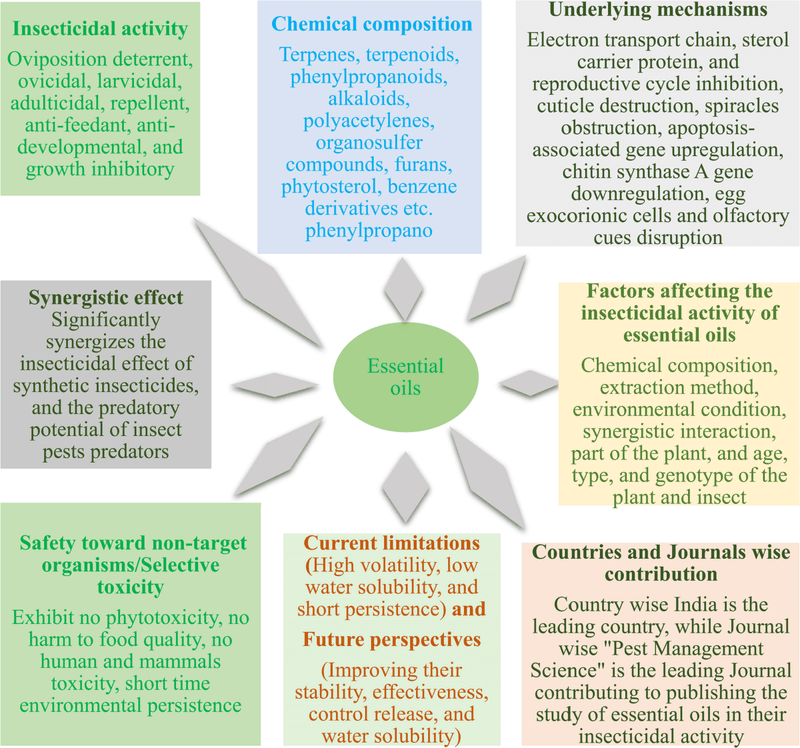
Laboratory findings on aromatic herbs and aphids are real, and they are worth understanding accurately. A 2019 study published in Pest Management Science, examining the repellent effects of volatiles from living aromatic plants on Myzus persicae, found that basil’s volatile blend had a direct repellent effect on green peach aphids.
Researchers identified two distinct modes of action, suggesting the chemistry behind aromatic plant volatiles genuinely interacts with aphid behavior under the right conditions.
A separate 2023 study tested forty plant essential oils against pea aphids and found that peppermint, basil, and spearmint oils ranked among the most promising biorepellents for that species. Both studies represent careful, controlled science.
Neither one, however, tested what happens when a gardener places a few freshly crushed leaves near an infested tomato plant outdoors.
The distinction matters because the experimental methods are very different from a backyard scenario. Researchers used concentrated, extracted essential oils or carefully controlled volatile exposures in enclosed chambers, not the variable, rapidly dispersing scent from a small pile of bruised leaves in open air.
The aphid species tested, green peach aphid and pea aphid, are specific; results from those experiments do not automatically transfer to the cotton aphid on your petunias, the potato aphid on your tomatoes, or any of the hundreds of other aphid species that visit garden plants.
What the research supports is a possibility: certain aromatic volatile compounds, at sufficient concentrations, can influence the behavior of particular aphid species under controlled conditions. That is a meaningful finding for scientists developing botanical pest-management tools.
For backyard gardeners, it means the chemistry has a plausible basis, not that a handful of crushed herbs will clear an established colony from a garden bed. The gap between a laboratory bioassay and an outdoor infestation is wide, and no study in the available evidence bridges it for freshly crushed leaves.
Why a Weekly Handful Cannot Serve as a Proven Aphid Treatment
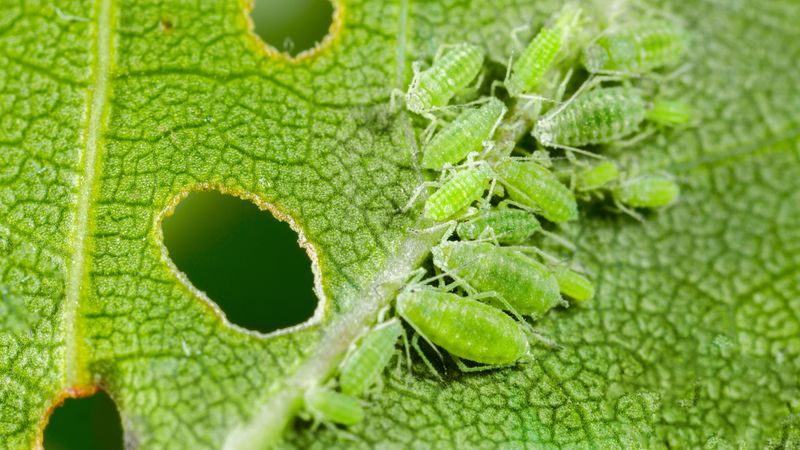
Even if crushed basil or mint briefly releases volatile compounds near a plant, that scent cannot do several things that a genuine aphid treatment needs to do. A repellent may discourage new aphids from landing, but it does not kill aphids already feeding on the plant, reach colonies tucked inside tightly curled or distorted foliage, stop aphids already present from reproducing, prevent reinfestation once the scent fades, or protect a plant from viruses that aphids can transmit during even a brief probe of plant tissue.
The limits go further when you consider how variable both the herbs and the aphids are. Research on aromatic plant volatiles and green peach aphids was conducted with specific volatile blends under controlled conditions.
Basil alone contains different proportions of compounds such as estragole, eugenol, linalool, and others depending on the cultivar and how it was grown. A study on basil’s biochemical response to aphid herbivory notes that one basil compound has been reported as a potential attractant for winged melon aphids, a reminder that aromatic plants do not universally repel every aphid species.
The aphid on your clematis may respond completely differently than the species tested in a laboratory chamber.
There is also the matter of the herbs themselves. Oregon State Extension’s herb guidance notes that basil can occasionally develop aphids, which means the plant with the reputation for repelling pests is not immune to hosting them.
The aromatic reputation does not make a plant pest-proof.
As for the weekly schedule that circulates with this idea, research on volatile organic compound release after wounding shows the burst is rapid and transient. No authoritative source in the available evidence establishes that crushing leaves once a week delivers a dose, duration, or frequency sufficient to manage an aphid population in a garden bed.
Treat this practice as an unproven, possibly temporary scent experiment rather than a reliable treatment plan.
Use Water, Pruning, and Natural Enemies Before Pesticides
A strong stream of water from a garden hose is one of the most effective and lowest-cost responses to an aphid problem that actually has research support behind it. Direct the spray at stems and the undersides of leaves, where aphids cluster most densely.
UC IPM’s aphid management guidance notes that many dislodged aphids do not make it back to the plant, and applying water early in the day gives foliage time to dry before evening, which helps reduce the risk of fungal problems.
Water alone will not reach every aphid, particularly those sheltered inside leaves that have already curled or distorted around a colony. For those, the better move is to prune off the affected growth entirely.
Removing a heavily infested shoot takes that hidden population out of the picture more effectively than any spray that cannot penetrate the curled tissue. Drop the pruned material into a bag rather than leaving it on the soil near the plant.
Before escalating further, check whether natural enemies are already working. Lady beetles and their larvae, lacewing larvae, syrphid fly larvae, and parasitic wasps all feed on aphids.
Small, brown or golden, dried-out aphid husks, sometimes called aphid mummies, are a sign that parasitic wasps have laid eggs inside the aphids and are doing the work for you. Broad-spectrum pesticides can kill these beneficial insects along with the pests, so holding off on chemical treatments gives natural enemies time to build up.
Two less obvious checks are worth adding to the routine. Look for ants traveling up and down stems near aphid colonies.
Ants actively protect aphids from predators because they harvest the honeydew aphids produce, and managing ant access to shrubs and trees can meaningfully improve biological control. Also consider recent fertilizer use.
High-nitrogen fertilizer encourages the soft, fast-growing tissue that aphids prefer, so avoiding excess nitrogen is a straightforward way to make a plant less inviting without applying anything at all.
Escalate With Labeled Contact Products When Necessary
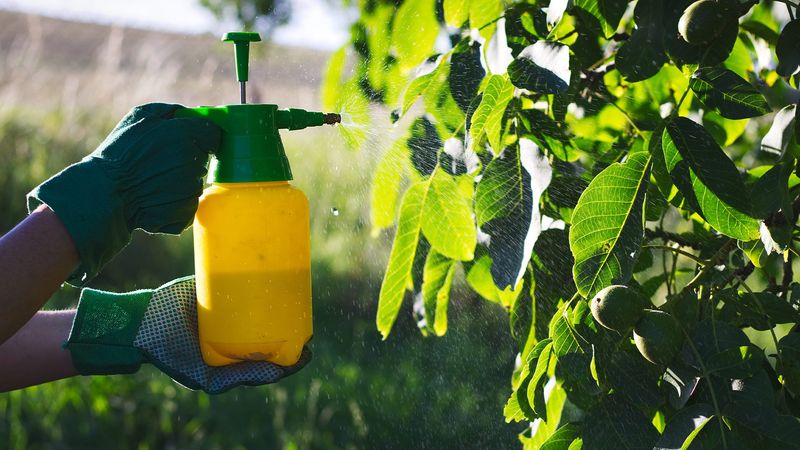
Water sprays and pruning handle a lot of aphid situations, but a heavy infestation on a young plant, an ornamental with dense, difficult-to-reach foliage, or a vegetable crop where populations are climbing quickly may call for a contact product. Insecticidal soap and horticultural oil are the standard lower-risk options recommended for many aphid situations by extension programs.
They work by coating the insect directly, so the spray has to reach the aphids to be effective.
Thorough coverage is the most important part of the application. The undersides of leaves, where aphids concentrate, are easy to miss.
Because these products have little or no residual activity once they dry, UC IPM aphid guidance notes that repeat applications may be necessary, timed according to the product label rather than a general schedule.
Not all soaps are interchangeable. Colorado State University Extension’s insecticidal soap guide explains that household dish detergents are inconsistently formulated, can injure plant tissue, and are not recommended for insect control.
The same caution applies to raw essential oils and homemade herb-leaf sprays. Undiluted oils can scorch foliage, and their effect on beneficial insects is not well established for home-garden use.
Research on peppermint oil found that while it showed aphid toxicity, peppermint oil also demonstrated toxicity to young lady beetle larvae at the concentrations tested, meaning a homemade application could harm the predators already working in your favor.
When selecting a registered product, read the label before purchasing and again before applying. The EPA explains that using a pesticide inconsistently with its labeling violates federal law, and the label is the only legally enforceable guide to safe use.
Check that the product is registered for the specific plant you are treating, the pest you are targeting, and the site where you will apply it. For edible crops, follow any stated intervals between application and harvest.
A product that works well on ornamentals may not be cleared for use on tomatoes or herbs you plan to eat.
Treat the Herb Idea as an Unproven Scent Experiment
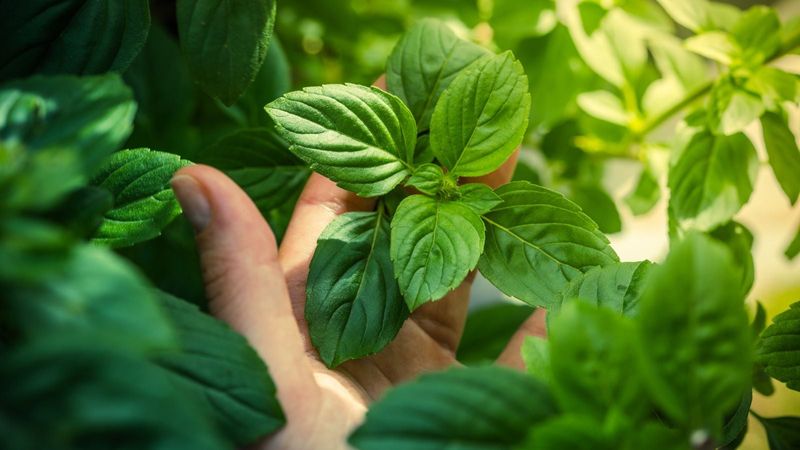
Crushing a basil or mint leaf near your garden is not a harmful thing to do, and the chemistry behind the scent is real. Plant volatile research confirms that aromatic compounds released from damaged leaf tissue can influence insect behavior, and controlled studies have shown species-specific repellency from basil and mint volatiles against certain aphids.
If you want to try it as a low-stakes experiment while you work through the garden, there is no strong reason not to.
What it cannot do is serve as a weekly treatment schedule or a clearance promise. The scent fades quickly, the dose from fresh leaves is inconsistent and unquantified, and no field evidence shows that the practice reliably controls established aphid colonies across the range of species, plants, and conditions found in backyard gardens.
The practical plan stays the same whether you try the herb experiment or not. Inspect the plant first and assess the actual scale of the problem.
UC IPM’s aphid guidance confirms that established plants often tolerate modest populations without lasting damage. Wash aphids off with a strong stream of water, remove any growth that is too curled or distorted for sprays to reach, protect the natural enemies already present, watch for ants guarding colonies, and use a correctly labeled contact product only when the situation genuinely calls for it.
A handful of aphids on a sturdy, established plant is rarely the emergency it feels like at first glance. Most gardens have more resilience than gardeners give them credit for.