
If Your Zinnias And Cosmos Quit Blooming By Late Summer, Here’s The 5-Minute Snip That Keeps Them Flowering Till Frost
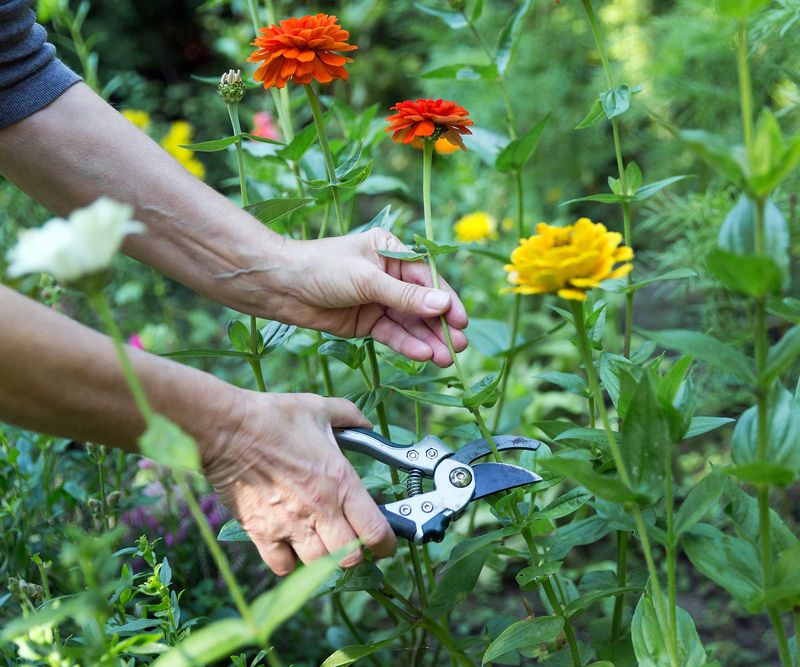
Zinnias and cosmos are two of the most generous bloomers in a backyard garden, but even they can slow down when spent flowers are left to go to seed. A simple habit called deadheading, removing those fading blooms before they fully develop seed, can encourage both plants to keep producing new flowers into fall.
The technique takes just a few minutes per plant, costs nothing, and works with tools you probably already own. Understanding exactly where to cut, and when the problem is something bigger than spent blooms, makes all the difference.
The Snip Helps Fading Flowers, Not Every Late-Season Problem
Neither zinnias nor cosmos are plants that normally give up and stop blooming by late summer. Zinnias can carry their flowers from summer into fall when conditions stay suitable, and cosmos often hits its stride as summer days begin to shorten, producing some of its best color right when you might expect it to slow down.
So if your plants look sparse or tired in late summer, the first question to ask is whether spent blooms are the cause, or whether something else is going on.
Deadheading is the practice of removing a fading flower head before it fully develops seed. Iowa State University Extension guidance on deadheading ornamentals explains that removing spent flowers interrupts seed development and encourages plants to produce additional blooms.
The result is not a guarantee that your garden will stay in full color until the first hard frost, but for many gardeners, regular deadheading meaningfully extends the period of active flowering on both zinnias and cosmos.
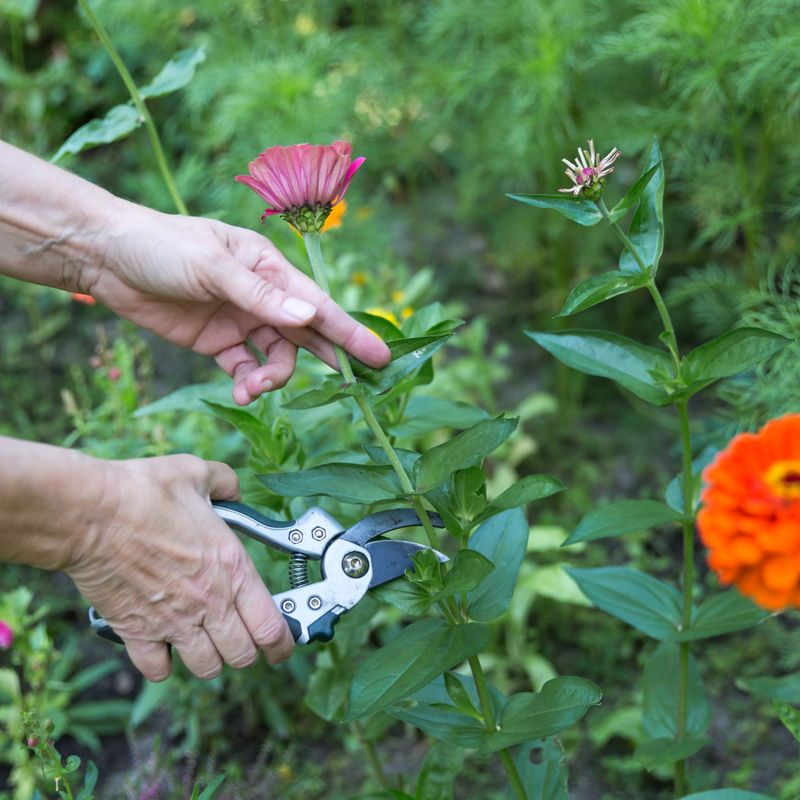
The basic routine is straightforward: check your plants roughly once a week, find the flowers that are fading or dropping petals, and remove them by cutting their stems back to a healthy leaf, side shoot, or bud. That weekly inspection is the core habit, and it works for both plants.
An overgrown or sparsely blooming cosmos may occasionally need something more, a harder cutback to about 12 to 18 inches, but that is a separate step covered later and is not the right move for every plant or for zinnias in general.
Deadheading is a tool, not a cure-all. Drought, poor drainage, too little sun, disease, or a coming frost can all reduce flowering no matter how carefully you snip.
Recognizing what deadheading can and cannot fix helps you spend your garden time where it will actually help.
Find the Right Stem Before You Cut
Good deadheading is not about cutting off whatever looks brown. Before you touch the shears to the stem, take a moment to look at the whole plant and find where healthy growth is waiting just below the spent bloom.
That observation step is what separates a productive snip from one that accidentally removes tomorrow’s flowers.
Start by identifying a flower that is clearly past its prime. Look for petals that have lost their color, begun to drop, or shriveled at the edges.
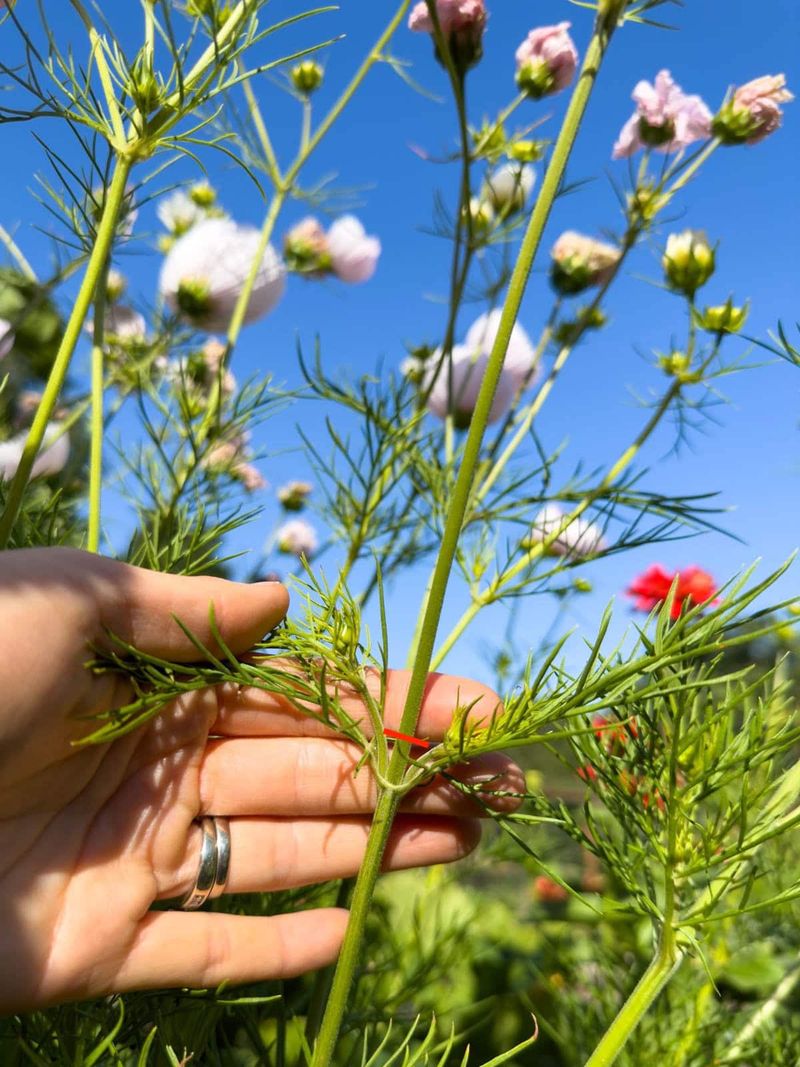
A flower head that is tightening into a hard, green seed case is also ready to go. Once you have spotted a spent bloom, follow its stem downward with your eyes until you reach the next healthy set of leaves, a visible side shoot branching off the stem, or an unopened bud.
That junction is your cut point. Penn State Extension’s deadheading guidance consistently advises locating a healthy leaf node, lateral shoot, or bud before making any cut, rather than simply shearing across the top of the plant.
Make your cut cleanly just above that growth point, angling slightly if you prefer, using sharp scissors, bypass pruners, or even your thumbnail and forefinger for tender stems. A clean cut heals faster and causes less stem damage than a ragged one.
Avoid pressing or crushing the stem, and wipe your blades between plants if you notice any signs of disease on the foliage.
The most common mistake is cutting too high and leaving a bare stub above the leaves, or too low and removing a side shoot that was about to branch. Aim to leave the healthy growth intact and remove only what is spent.
On a bushy zinnia with multiple stems, work through each stem individually rather than running shears across the top, which can slice through buds that are not yet open. The few extra seconds spent finding the right cut point are what make the whole routine worthwhile.
Check the Plants Every Week While They Flower
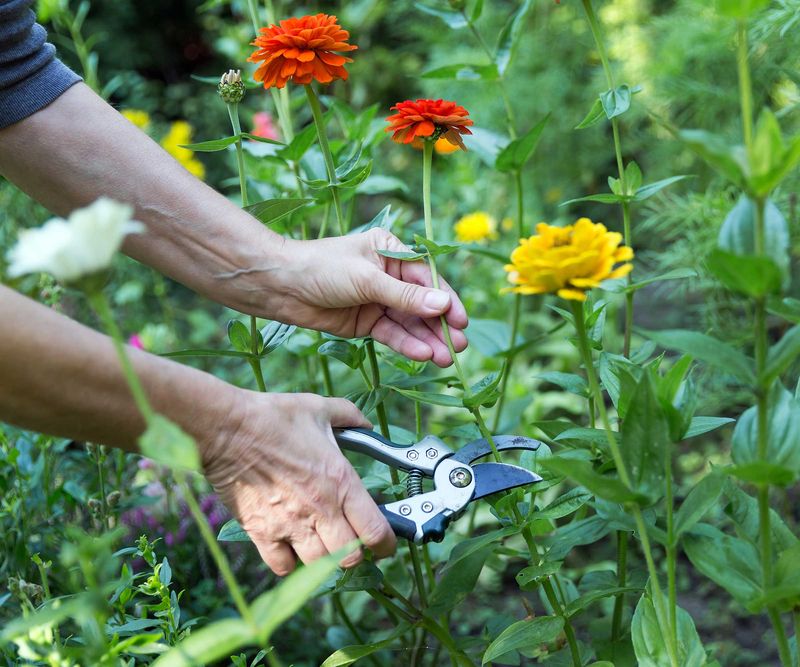
One of the most practical adjustments you can make to your deadheading routine is simply doing it more often. Waiting until the plant looks completely ragged before you act means seeds have already been developing for days or weeks, and the plant has had less encouragement to push out new buds.
A shorter interval keeps things moving.
Purdue University Extension’s annual flower guide recommends checking actively flowering plants every five to seven days rather than waiting until every bloom is spent. That weekly pass through the garden catches flowers at just the right stage, still recognizable as spent but not yet fully seeded.
You will also notice healthy open blooms and tight buds that should be left completely alone. Learning to tell the difference, fading versus open versus budded, is the real skill here, and it comes quickly after a few rounds.
On a practical level, a weekly check rarely takes long for a typical home planting. A few zinnias in a border or a patch of cosmos along a fence can usually be assessed and tidied in a single unhurried pass.
Penn State Extension’s guide to pruning herbaceous plants notes that regular, light maintenance is generally less stressful to the plant than infrequent, heavy cutting sessions.
Zinnias grown specifically for cutting bouquets can handle even more frequent harvest. Utah State University Extension’s zinnia cut-flower guide recommends cutting stems several nodes below the bloom to encourage long-stemmed regrowth, and University of Minnesota Extension’s cutting-garden guide notes that repeated harvesting is associated with continued flower production.
For a home garden where you are not harvesting every stem, the safer general rule is still to cut back to the nearest healthy leaf or branching point rather than counting nodes on every cultivar. The goal is consistent attention, not a rigid formula.
Give Zinnias and Cosmos the Conditions They Need
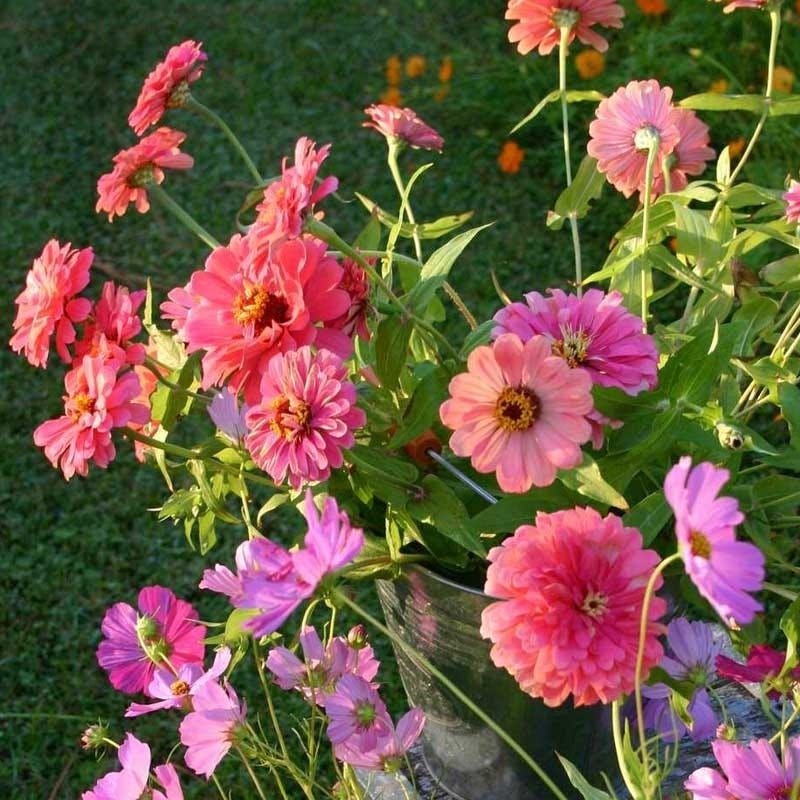
Deadheading works best when the plants underneath it are already getting what they need. Both zinnias and cosmos are sun-loving flowers, but they have slightly different preferences that are worth knowing before you assume the snipping is the only variable.
Zinnias thrive in full sun and well-drained soil. University of Minnesota Extension’s zinnia page advises watering when the top one to two inches of soil are dry and recommends keeping water off the foliage, which helps reduce the risk of fungal issues.
Removing old blooms on zinnias encourages new flowers to form, but only when the plant has adequate light, consistent moisture at the roots, and healthy leaves to support that growth. A zinnia sitting in soggy soil or deep shade will not respond to deadheading the way a well-sited plant will.
Cosmos has its own set of preferences, and they differ from zinnias in a meaningful way. Utah State University Extension’s cosmos guide notes that overwatering and overly rich soil can produce tall, floppy plants with fewer flowers rather than the upright, productive plants most gardeners want.
Cosmos generally does better in relatively lean, well-drained conditions, and it often performs especially well in late summer as day length shortens. University of Illinois Extension’s cosmos page confirms that deadheading promotes continued flowering and also reduces self-seeding if that is a concern.
Zinnias, meanwhile, can continue producing color from summer into fall when temperatures stay within a comfortable range and the plants are not battling disease or waterlogged roots. University of Illinois Extension’s zinnia page describes zinnias as long-blooming annuals that reward consistent care.
Pairing good site conditions with regular deadheading gives both plants the best chance of flowering productively through the later weeks of the growing season.
Use a Bigger Cosmos Cutback Only When It Fits
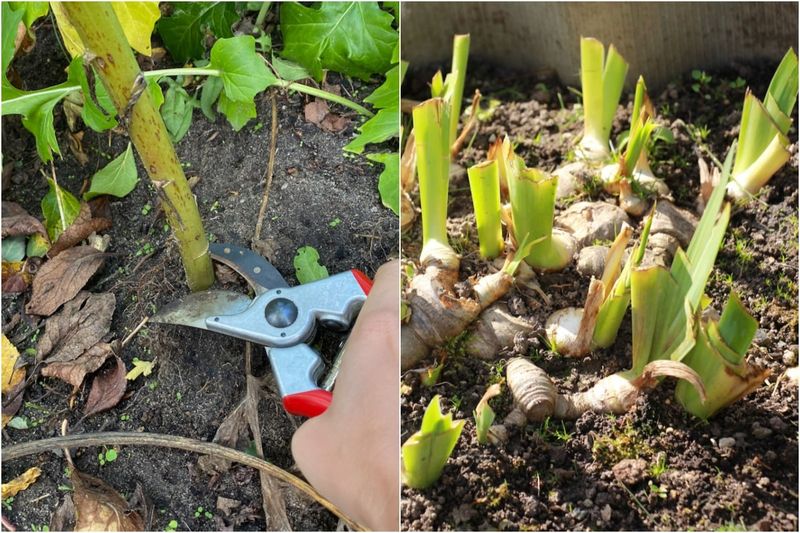
Regular deadheading handles most situations well, but sometimes a cosmos plant gets away from you. Maybe it shot up to four or five feet, started leaning over neighboring plants, and is now producing just a scattered flower or two at the very top.
That is a different problem from a plant that simply has a few spent blooms, and it calls for a different response.
Utah State University Extension’s cosmos guide recommends cutting a tall, overgrown, or sparsely flowering cosmos plant back to 12 to 18 inches to encourage reblooming, and reports that plants may return to bloom in about a month after that kind of reset. That timeline and that guidance are specific to cosmos and to the situation of a plant that has outgrown productive flowering.
Treat it as a targeted option, not a routine step.
Transferring this advice to zinnias would be a mistake. Zinnias have a different growth structure, and cutting a healthy zinnia down to a foot or so without a clear reason can remove most of its productive foliage and delay recovery.
The general principle for zinnias remains: remove spent flower heads by cutting back to the nearest healthy leaf, lateral shoot, or bud, and leave the rest of the plant alone.
Even for cosmos, the hard cutback is most appropriate when the plant is genuinely struggling or overgrown, not as a first response to a few spent blooms. If your cosmos is a reasonable height and flowering reasonably well, standard weekly deadheading is the right tool.
Reserve the 12-to-18-inch reset for plants that have already lost their productive shape and need a fresh start to finish the season usefully. After cutting, water the plant normally and give it a few weeks before expecting new growth to appear at the base of the remaining stems.
Know When Deadheading Is Not the Answer
A spent flower removed at the right moment can encourage a new one to follow. But when a plant has stopped flowering because of a deeper problem, snipping away old blooms does very little.
Recognizing the difference saves time and helps you address what is actually wrong.
Drought is one of the most common reasons flowering slows or stalls in late summer. When soil dries out too deeply between waterings, plants shift their resources toward survival rather than reproduction, and new buds may not form even if old flowers are removed promptly.
The fix is consistent, appropriate watering at the root zone, not more deadheading.
Excessive moisture and poor drainage create the opposite problem. Waterlogged roots cannot absorb oxygen properly, which affects the whole plant including its ability to produce flowers.
Both zinnias and cosmos need soil that drains well, and a planting site that stays wet after rain is worth addressing before blaming spent blooms for the lack of color.
Insufficient light is another documented factor. Zinnias and cosmos both prefer full sun, and a plant that has been gradually shaded out by surrounding growth or structures will produce fewer flowers regardless of how carefully it is deadheaded.
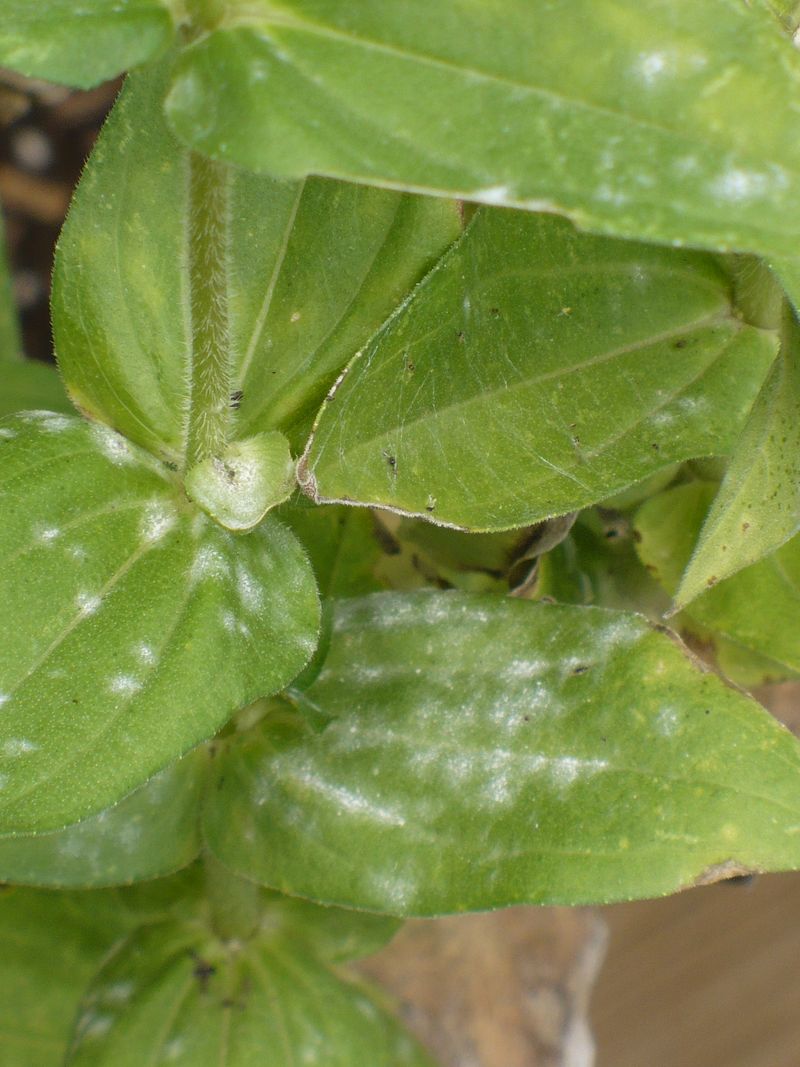
Disease deserves particular attention with zinnias. University of Minnesota Extension’s guide to powdery mildew in the flower garden notes that zinnias are especially susceptible, and a severe infection can reduce both growth and flowering.
The white, dusty coating on leaves is easy to spot once you know what to look for. Deadheading does not treat powdery mildew, so if the foliage looks affected, the disease itself needs to be addressed.
Finally, frost sets the hard limit. University of Illinois Extension’s annuals page describes zinnias and cosmos as tender annuals, meaning a killing frost ends their season regardless of how well they were maintained.
Deadheading can support flowering right up to that point, but it cannot carry the plants through temperatures they are not built to survive.
Leave Selected Flowers for Seeds and Self-Seeding
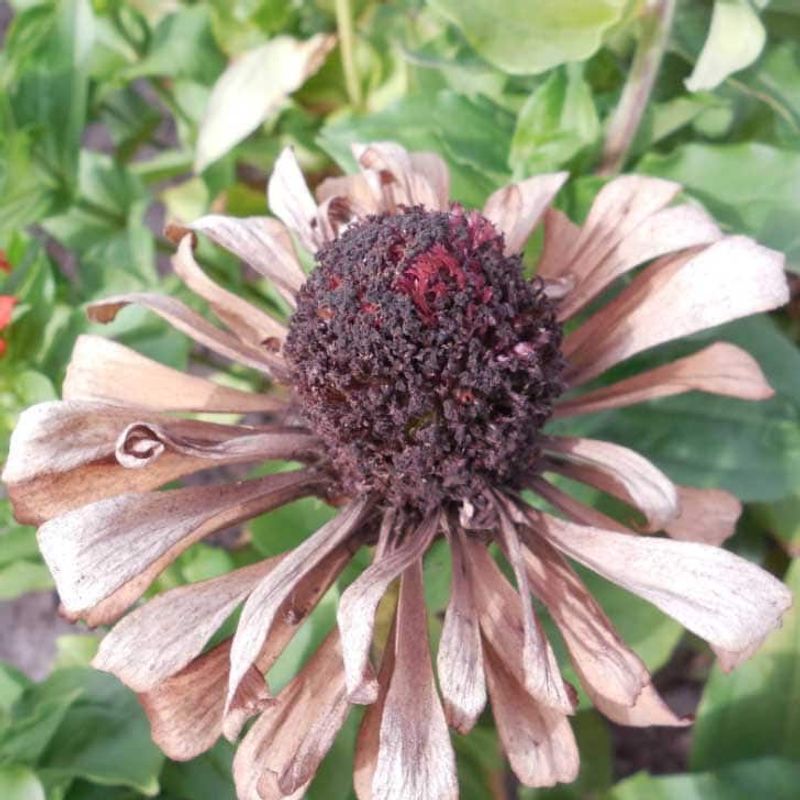
Removing every spent flower from your zinnias and cosmos is not the goal, and for some gardeners it would actually work against what they want from their garden. Both plants have qualities worth preserving beyond the current season, and a little intentional restraint in your deadheading pays off.
Cosmos self-seeds readily, meaning flowers left to mature and drop their seeds can produce volunteer plants the following year without any effort from you. Utah State University Extension’s cosmos guide notes this tendency and points out that deadheading reduces self-seeding.
If you want volunteers next spring, choose a few healthy, fully developed cosmos flowers to leave on the plant and let them complete their seed cycle naturally. The same logic applies if you want to collect seed yourself: wait until the seed head is dry and the seeds pull away cleanly, then store them in a paper envelope in a cool, dry spot.
Some zinnia varieties also self-seed or produce seeds worth saving. University of Illinois Extension’s annuals page notes that certain annuals reseed dependably, though hybrid cultivars may not come true from saved seed.
If you are growing an open-pollinated zinnia variety and want to save seed, leave a few of the most vigorous flower heads to mature fully before collecting them.
Not all zinnias need the same deadheading attention in the first place. North Carolina Extension’s plant profile for Zinnia elegans describes compact hybrid series like Profusion as effectively self-cleaning, because new flowers grow above the old ones without requiring manual removal.
If you are growing Profusion or a similar compact hybrid, you may find that deadheading makes little visible difference. Traditional or large-flowered zinnia types tend to show a clearer response to regular removal of spent blooms, so those are where your weekly attention is best spent.
A practical end-of-week routine looks like this: walk the bed, cut spent blooms above healthy growth, leave a few selected heads for seed, and take a moment to check whether sparse flowering points to a condition issue rather than a deadheading backlog. University of Illinois Extension’s zinnia page reinforces that zinnias reward consistent seasonal care.
The plants do most of the work; the weekly snip just keeps the door open for them.