
If A Pileated Woodpecker Carves A Hollow In Your Dead Tree, Here’s The Waiting List Of Tenants That Moves In Next
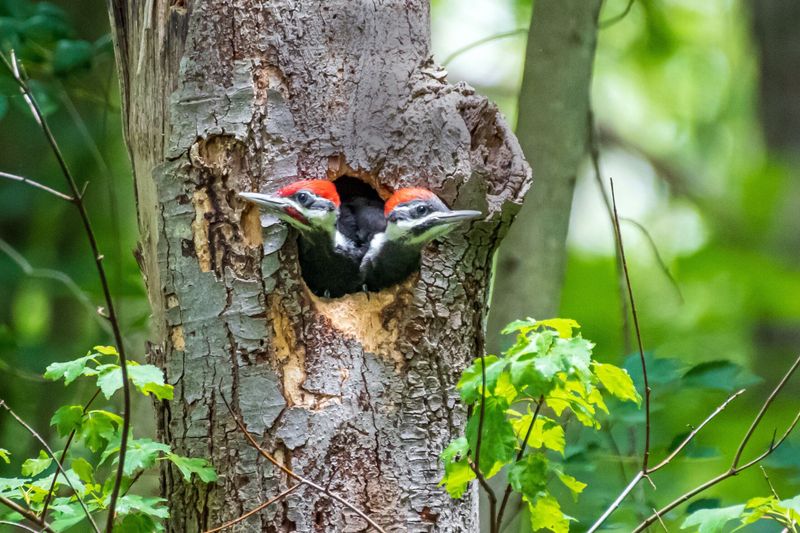
When a Pileated Woodpecker hammers a large hollow into a dead tree in your yard, that tree quietly becomes one of the most valuable pieces of real estate on your property. Other animals, from owls to wood ducks to flying squirrels, may eventually move into that opening, though no guaranteed lineup follows the woodpecker out the door.
Whether your snag becomes a busy wildlife hub or a quiet perch depends on a mix of local species, habitat conditions, and the cavity itself. Understanding what that hollow can offer, and how to decide whether the tree is safe to keep standing, is well worth a few minutes of your time.
A Pileated Woodpecker cavity creates habitat, not a guaranteed tenant queue
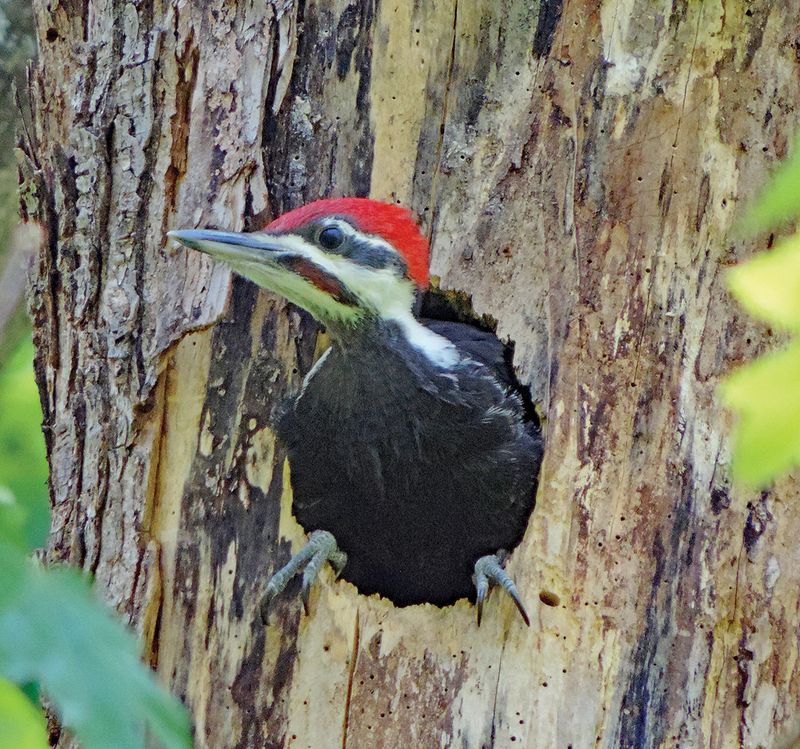
Calling a Pileated Woodpecker cavity the forest’s apartment building makes for a satisfying picture, but the metaphor breaks down the moment you treat it as a literal promise. A large cavity can become valuable habitat for other animals after the woodpecker stops using it, yet no documented waiting list or reliable succession determines who, if anyone, arrives next.
The National Park Service’s overview of Pileated Woodpecker ecology identifies small owls, ducks, bats, flying squirrels, and larger mammals as potential users of abandoned cavities, framing them as possibilities shaped by local conditions rather than a fixed roster. Occupancy depends on cavity size and interior condition, how high the opening sits, how far decay has progressed, what habitat surrounds the tree, which species are present in your region, and whether competitors or predators claim the space first.
Research on excavators and secondary cavity nesters supports a broader pattern: sites with more active excavators tend to offer more available cavities, and that abundance can support greater richness and density of animals that cannot dig their own holes. A peer-reviewed study on woodpeckers and cavity-nesting vertebrate diversity, also published in the Journal of Animal Ecology, found that excavators help maintain cavity availability across communities, though that relationship plays out at a landscape scale rather than guaranteeing that any single hollow gets a tenant.
So the apartment-building comparison earns its keep as a metaphor for shared habitat opportunity, not as a schedule of arrivals. Your snag may attract a screech-owl this winter, host a flying squirrel next spring, or sit empty for years while still serving the surrounding wildlife community in other ways.
The honest answer is that potential is real, but outcome is local.
The woodpecker makes a large doorway that decay and smaller excavators may not provide
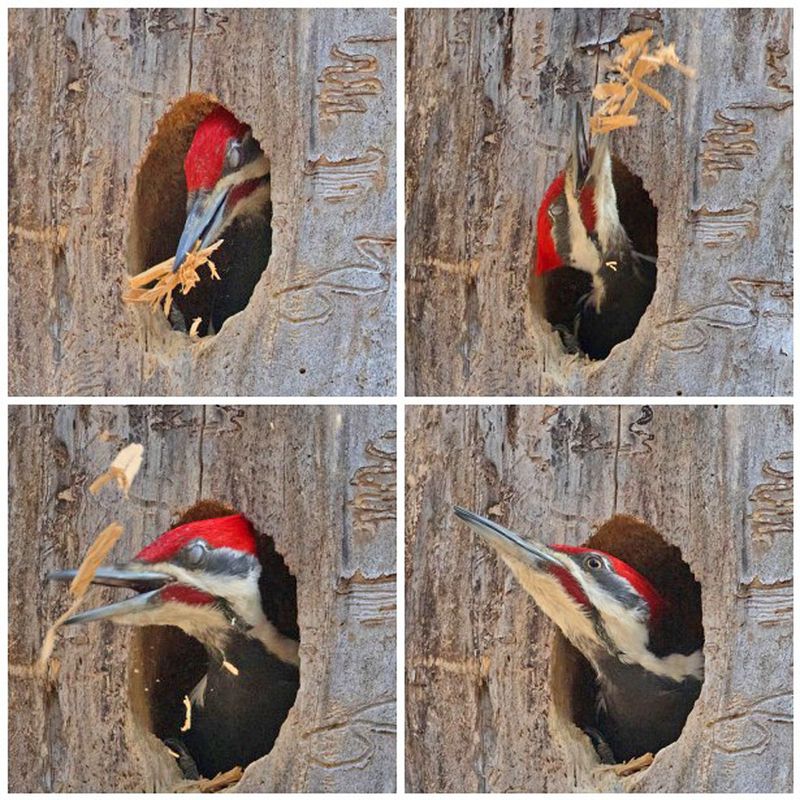
Most cavity-nesting animals cannot excavate their own shelter. They depend on natural decay hollows, abandoned woodpecker holes, or broken limbs to find a place to nest or roost, and the size of the opening determines which animals can fit inside.
That is where the Pileated Woodpecker stands apart from most other excavators in eastern and some western forests.
According to Cornell Lab of Ornithology’s Pileated Woodpecker life history, nest cavities typically reach roughly 10 to 24 inches deep, with a distinctive rectangular or oval entrance large enough to accommodate animals that a Downy or Hairy Woodpecker hole simply cannot serve. Cornell also notes that Pileated Woodpeckers rarely reuse a nest cavity in later years, which means each completed nest hole becomes a potential resource for the next occupant.
The bird typically chooses dead or decaying trees for excavation, though live trees with sufficient internal decay can also be used. That preference for already-softened wood is practical: a bird cannot hammer through sound heartwood, so the snag you are looking at in your yard is precisely the kind of substrate the species seeks.
The NPS Pileated Woodpecker article describes the species as a primary cavity excavator whose large openings serve animals excluded from smaller holes.
Forest Service research on cavity-nesting communities in the Pacific Northwest, summarized in a USFS technical report on the Pileated Woodpecker as a keystone species, notes that the bird’s disproportionately large excavations give it outsized importance for secondary cavity nesters in some forest systems, even though other woodpecker species and natural decay create many cavities in other regions. The takeaway is not that every dead tree needs a Pileated Woodpecker, but that when one does excavate, the resulting opening can serve animals that nothing else in the neighborhood can accommodate.
Possible users include owls, Wood Ducks, bats, and flying squirrels—but habitat decides
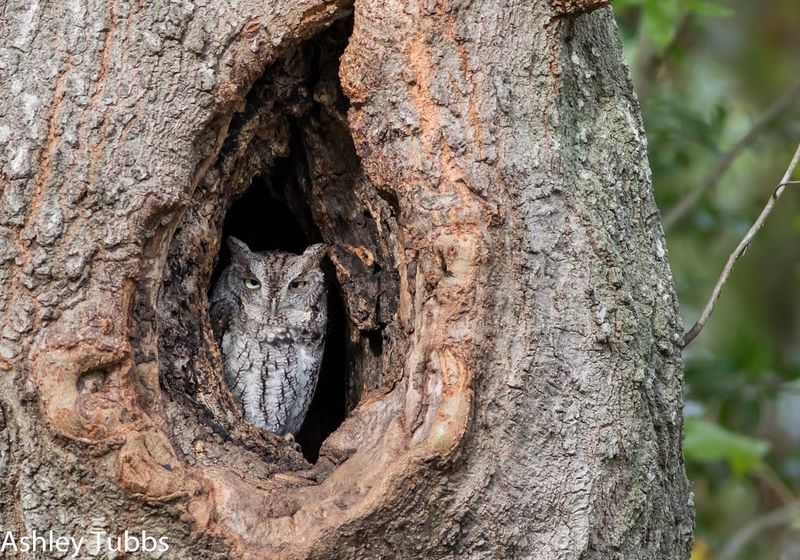
Owls, Wood Ducks, bats, and flying squirrels show up on nearly every list of Pileated Woodpecker cavity users, and each of those examples has genuine ecological grounding. What those lists rarely spell out is that habitat, geography, and local species pools determine whether any of those animals actually appears at your tree.
Some small owls, including Eastern Screech-Owls, can fit comfortably inside a large cavity and may roost or nest there when suitable trees are nearby. The USFS Great Horned Owl species review identifies Great Horned Owls as occasional users of Pileated Woodpecker cavities as well, though Great Horned Owls more commonly commandeer abandoned stick nests.
The NPS Prince William Forest Park bird guide lists cavity-nesting birds broadly, reflecting how regional species pools shift the realistic candidate list from one property to the next.
Wood Ducks present one of the more vivid examples of demand for large cavities. A USFS field study on interactions between nesting Pileated Woodpeckers and Wood Ducks documented Wood Ducks repeatedly attempting to enter an active Pileated Woodpecker nest, illustrating both how intensely the ducks seek large cavities and how fierce competition for them can be.
Wood Ducks are most likely near wetlands, rivers, or ponds, so a backyard cavity surrounded by dry suburban lawn is a far less probable destination for them.
Flying squirrels round out the common examples, but their presence is equally regional. The Southern Flying Squirrel is documented as a cavity user in southeastern studies, including USFS research on woodpecker cavity use by secondary nesters and additional USFS work on flying squirrels and woodpecker cavities.
Northern Flying Squirrels occupy different habitat altogether, and neither species should be assumed nationwide.
Bats, raccoons, and other small mammals round out the potential tenant list, and Penn State Extension’s guide on dead wood for wildlife notes that cavities in living or dead trees support dozens of bird and mammal species across Pennsylvania alone. The realistic picture is a pool of candidates, not a predictable sequence, and your local landscape narrows that pool considerably before any animal ever scouts the opening.
An empty cavity can still support a busy snag
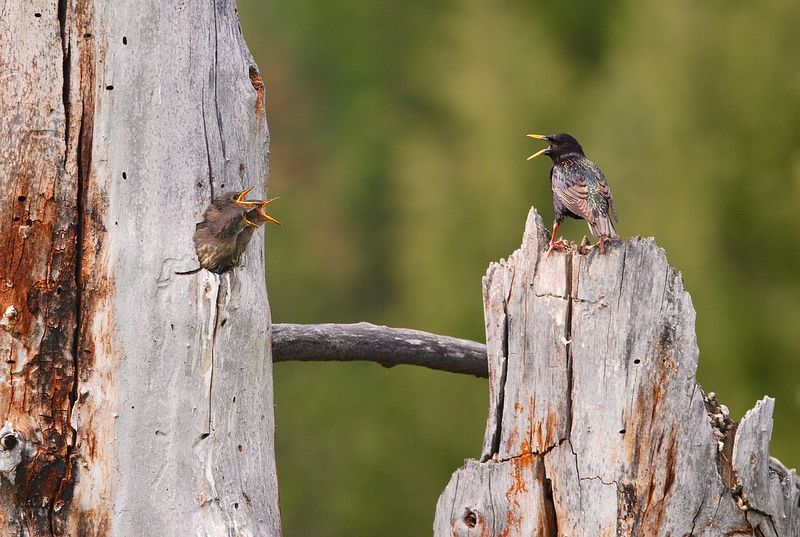
Vacancy does not equal worthlessness. Some cavities stay empty for seasons, fill with rainwater, narrow as decay advances, or get claimed by wasps and squirrels before any bird scouts the entrance.
A Frontiers in Ecology and Evolution study on cavity occupancy and reuse found that Pileated Woodpecker cavities were reused less consistently than some other large cavity types in the study area, and only a fraction showed repeated occupancy across multiple seasons. That finding does not make the hollow useless; it makes the point that cavity reuse is genuinely variable rather than automatic.
A snag offers far more than its hollow. The decaying wood beneath the bark becomes a rich foraging surface for woodpeckers hunting carpenter ants and beetle larvae, and other insect-eating birds follow the same resource.
Raptors use tall dead trunks as hunting perches. Bats roost under loose bark or in cracks well away from any excavated opening.
Mosses, lichens, and fungi colonize the outer surface, feeding the decomposer food web that eventually returns nutrients to the soil.
The Washington Department of Fish and Wildlife’s snag guidance describes standing dead trees as among the most productive wildlife structures in any forest, supporting foraging, roosting, perching, and shelter functions simultaneously. Penn State Extension reinforces that picture, noting that dead wood in various forms, including standing snags, cavity trees, and downed logs, collectively supports a broad community of birds and mammals across many life stages.
A snag with an empty cavity is still a working piece of habitat. The hollow is the headline feature, but the trunk, bark, and eventual collapse into downed wood are chapters in the same story.
Wildlife may be using your dead tree in ways that are easy to miss from a kitchen window.
A rectangular excavation does not prove that the woodpecker built a nest
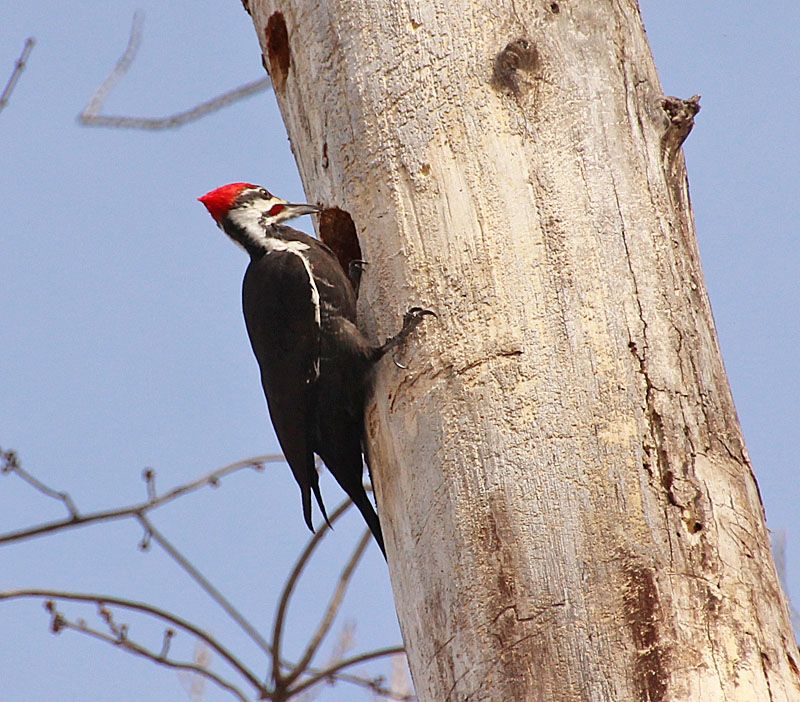
Fresh wood chips scattered at the base of your snag can feel like conclusive evidence that something important is happening up there. They are worth noticing, but they do not settle the question.
Pileated Woodpeckers make two very different kinds of large excavations, and telling them apart from the ground matters before you decide what to do with the tree.
Feeding excavations are the more common of the two. The bird hammers deep, irregular pits and channels into dead wood while pursuing carpenter ants, beetle larvae, and other insects packed inside.
These openings can be impressively large, rectangular, and fresh-looking, yet they are foraging tools rather than nests. Cornell Lab’s Pileated Woodpecker life history pages describe both the feeding and nesting behaviors, and the NPS Big Thicket Pileated Woodpecker profile similarly distinguishes foraging excavations from nest cavities.
Signs that shift the probability toward an active nest include repeated adult visits at the same opening over several days, adults entering and exiting with food, or audible nestling calls from inside the cavity. Even those observations provide stronger evidence than fresh chips alone, without being definitive proof.
No single visible sign conclusively establishes that a nest is active.
Observe from a comfortable distance on the ground. Binoculars or a phone camera with zoom will tell you far more than trying to get closer, and a large dead tree is not a safe ladder.
Dead wood can shed limbs or fail at the trunk without warning, and a climb to peek at the opening is the kind of inspection that can turn a wildlife question into a medical emergency. If you genuinely need to know whether the cavity is active before making a tree decision, a qualified arborist or wildlife professional can advise you on next steps without putting you at risk.
Retain the snag only when a professional finds its site-specific risk acceptable
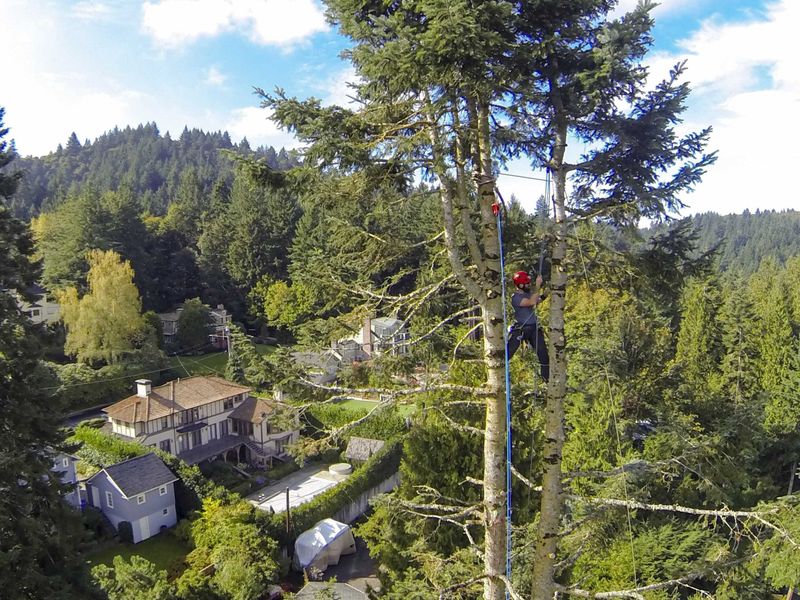
Habitat value and safety are separate questions, and safety comes first. A snag can be genuinely useful to wildlife and still be an unacceptable hazard if it stands within reach of a house, utility line, frequently used play area, driveway, or road.
The two facts coexist without contradiction.
University of Minnesota Extension’s guidance on cavity trees, snags, and deadwood recommends leaving dead standing trees when possible but is equally clear that a tree threatening a home or structure warrants prompt professional attention. University of Florida IFAS guidance on woodpecker poles and habitat wood puts risk assessment at the front of any snag decision, treating habitat preservation as a goal that operates within the limits of acceptable risk rather than overriding them.
A proper risk assessment covers more than whether the whole trunk might fall. Falling limbs, a failing top, bark slabs, and partial failures can cause serious harm well before a tree topples.
The assessment should also consider what targets sit within the failure zone, how often people or structures occupy that space, and the likely consequences of each failure mode. A snag at the back of a large wooded lot with no targets downhill presents a very different picture from one leaning toward a bedroom window.
The Washington Department of Fish and Wildlife snag resource echoes this framing, recommending retention where the tree is away from people, pets, buildings, and high-traffic areas. Do not climb the tree, cut into it, or attempt a personal structural assessment.
Dead wood is unpredictable, and a qualified arborist or tree-risk professional, ideally one familiar with wildlife snags, is the right person to evaluate what your specific tree presents and what options are realistic given its location and condition.
When the full tree cannot remain, preserve safe deadwood where possible
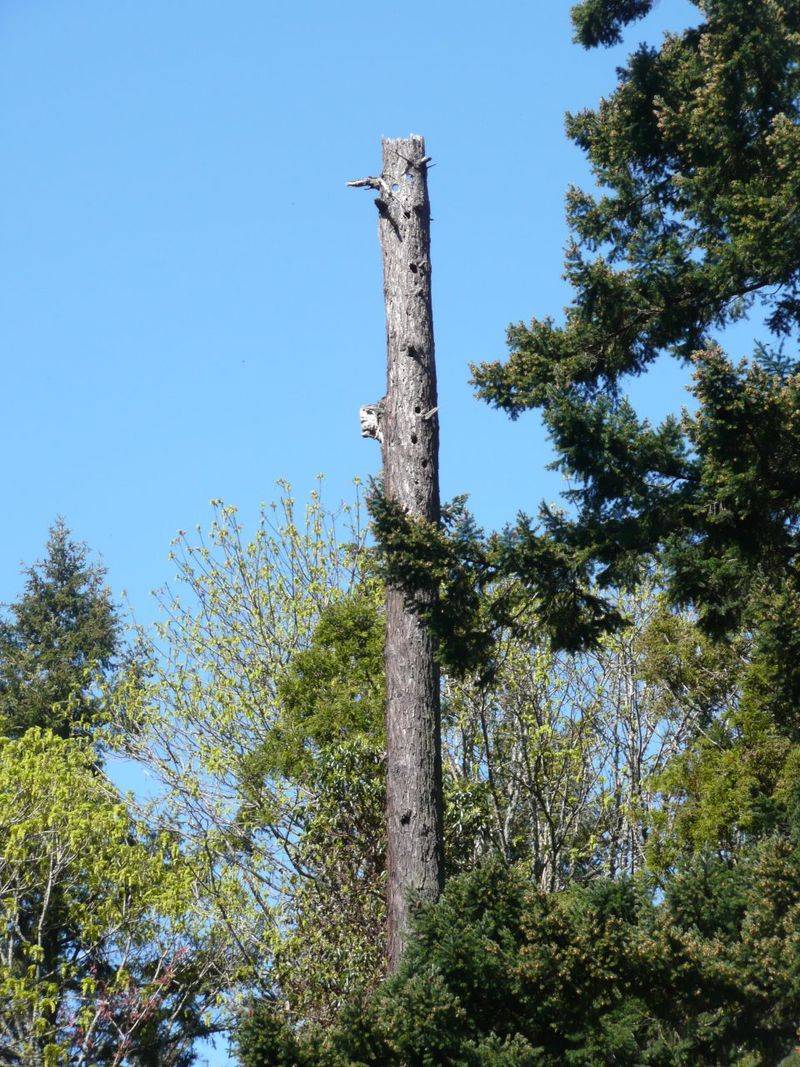
Sometimes a qualified professional determines that the standing tree presents a risk that cannot be managed by leaving it in place. That conclusion does not have to mean the end of the habitat opportunity.
Two practical alternatives can carry some of the snag’s wildlife value forward, depending on site conditions and what the professional judges to be safe.
The first option is reducing the tree to a shorter standing wildlife pole. Rather than removing the entire trunk, a qualified arborist cuts it to a height that keeps the cavity intact while lowering the failure zone and reducing the load on the root system.
University of Florida IFAS homeowner guidance on habitat wood describes this approach as a way to preserve roosting, nesting, and foraging value when the full-height tree cannot safely remain. The retained stump still needs to fall somewhere, so the professional’s judgment about the reduced pole’s own failure zone matters just as much as the original assessment.
The second option is leaving the felled trunk and large limbs on the ground. Downed wood is its own category of wildlife habitat, providing cover for small mammals, salamanders, and invertebrates, foraging substrate for woodpeckers and other insect hunters, and slow-release nutrients as decay continues.
University of Minnesota Extension’s deadwood guidance recommends retaining a mix of snags, cavity trees, and downed wood rather than relying on any single structure, and a felled snag contributes to that mix rather than disappearing from the habitat budget entirely.
Neither option is universally available. Tight urban lots, proximity to structures, utility conflicts, and local ordinances all shape what is actually possible.
Treat these alternatives as questions to raise with the professional doing the work, not as guaranteed substitutes for a retained snag.
Check nesting protections before pruning or removing the tree
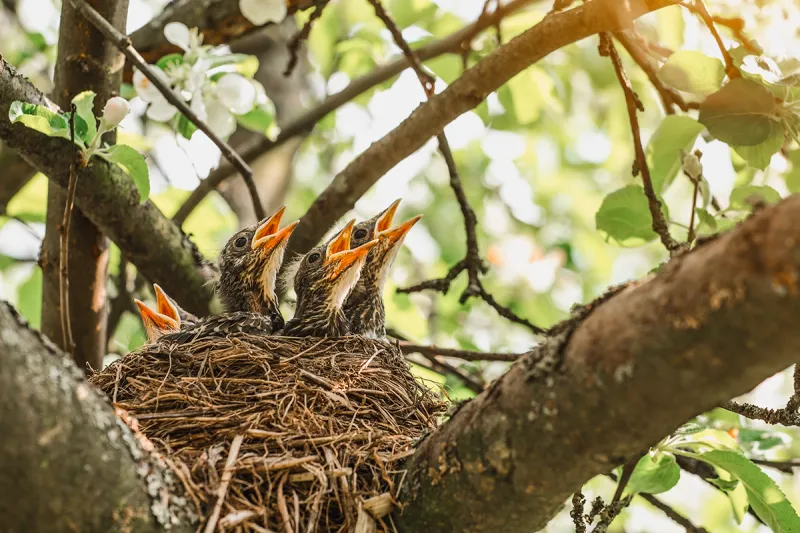
Before any chainsaw starts near a tree with a large cavity, a quick check on nesting status and applicable law can prevent a costly mistake. Timing matters more than most homeowners realize, and the rules are not as simple as “wait until the birds leave.”
The U.S. Fish and Wildlife Service’s guidance on bird nests explains that most wild bird nests receive federal protection under the Migratory Bird Treaty Act.
The Migratory Bird Treaty Act statute makes it unlawful to take, pursue, or destroy birds, eggs, or nests covered by the law, with specifics depending on species and circumstances. Protections apply most forcefully when eggs or dependent young are present, and exact requirements can also vary by state, local jurisdiction, and species.
An empty nest does not automatically bar removal, but confirming that status and understanding your local rules before work begins is the responsible path.
If you are uncertain whether a cavity is currently active, observe from a safe distance over several days. Adults carrying food, audible nestling calls, or consistent adult entries are meaningful signals.
When nesting status or legal requirements remain unclear, contact a qualified arborist, a state wildlife agency, or a local wildlife rehabilitator for guidance before scheduling any work.
Avoiding disturbance to active nests, eggs, and dependent young is both a legal obligation under applicable protections and a straightforward ethical standard. Planning tree work for late summer or early fall, after fledging is complete in most regions, reduces the chance of a conflict, though nesting calendars vary by species and location.
When in doubt, ask before you cut.
Think habitat opportunity, not a promised next tenant
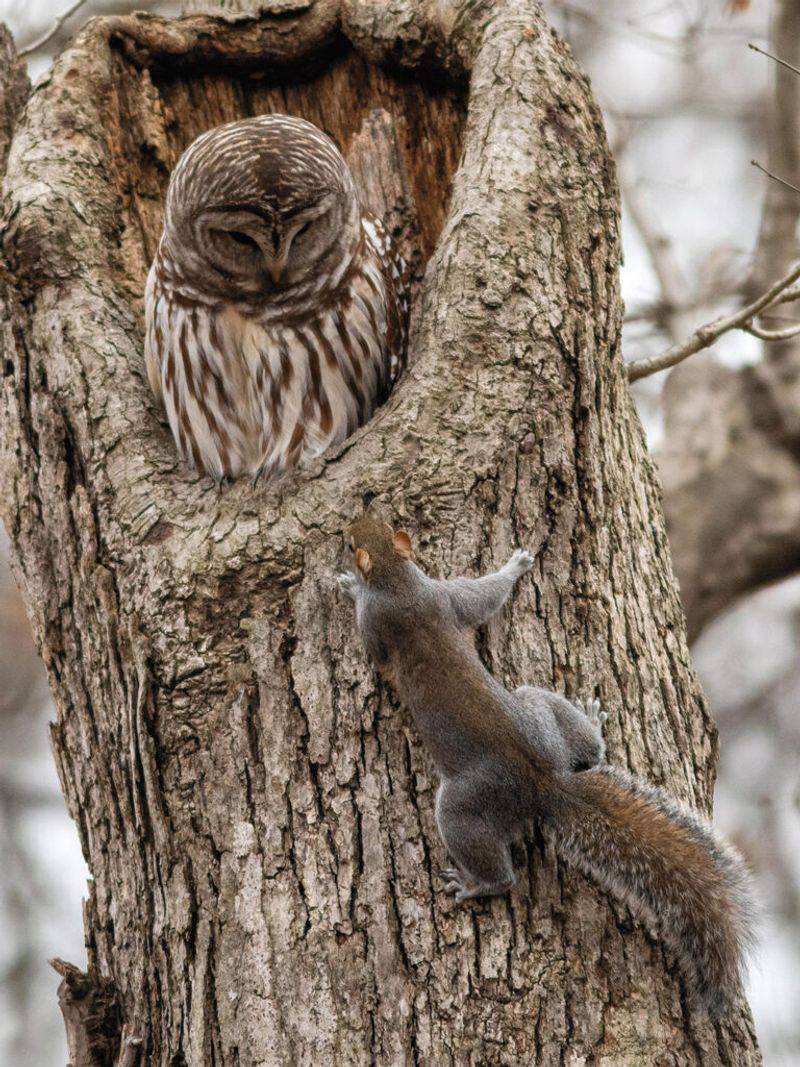
A Pileated Woodpecker cavity can become scarce shelter for animals that cannot excavate a comparable opening anywhere else on your property. Whether that happens at your particular tree depends on what species live nearby, what other habitat exists in the area, and what the cavity looks like after the woodpecker stops using it.
The NPS Pileated Woodpecker overview names the potential users clearly while leaving occupancy open to local conditions, which is the honest framing.
The practical guidance comes down to a short set of questions. Is the snag away from targets and safe to retain according to a qualified professional?
Leave it standing. Does it threaten a structure, utility line, or frequently occupied space?
Get a professional evaluation and consider a wildlife pole or downed wood if the full tree must come down, following the options described by University of Florida IFAS homeowner guidance and University of Minnesota Extension’s deadwood recommendations. Is there any sign of active nesting?
Check current requirements before scheduling work.
The next occupant of that hollow may be an owl, a Wood Duck, a flying squirrel, a colony of bats, or nothing visible at all for several years. A snag’s real value lies in the range of habitat functions it provides across time, not in the arrival of any single promised guest.