
If Your Hydrangeas Are Winding Down This September, Here’s The Bloom Reset That Squeezes Out One More Flush
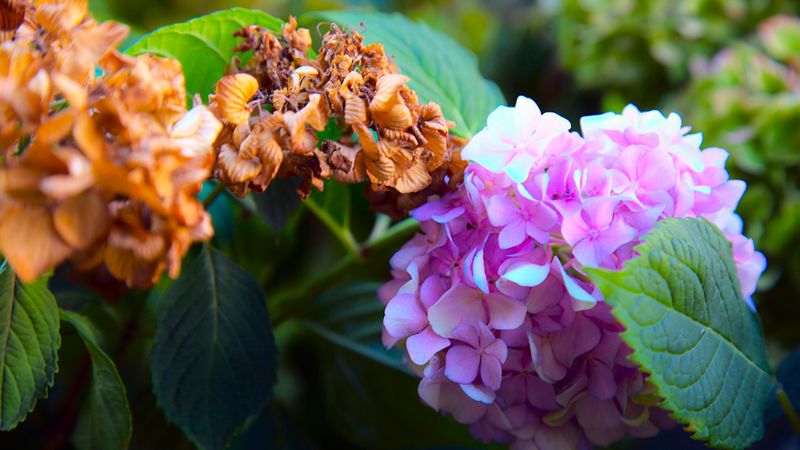
Watching your hydrangeas go from full and gorgeous to faded and droopy in September can feel like a real letdown, especially when summer still has a little warmth left in it. The good news is that a fading flower head does not always mean your plant is done for the season.
Depending on the type of hydrangea you have, a simple and careful deadhead might encourage another round of blooms before the first frost arrives. But the key word here is might, because the right move depends entirely on which hydrangea is growing in your yard.
Fading September flowers do not always mean the hydrangea is finished
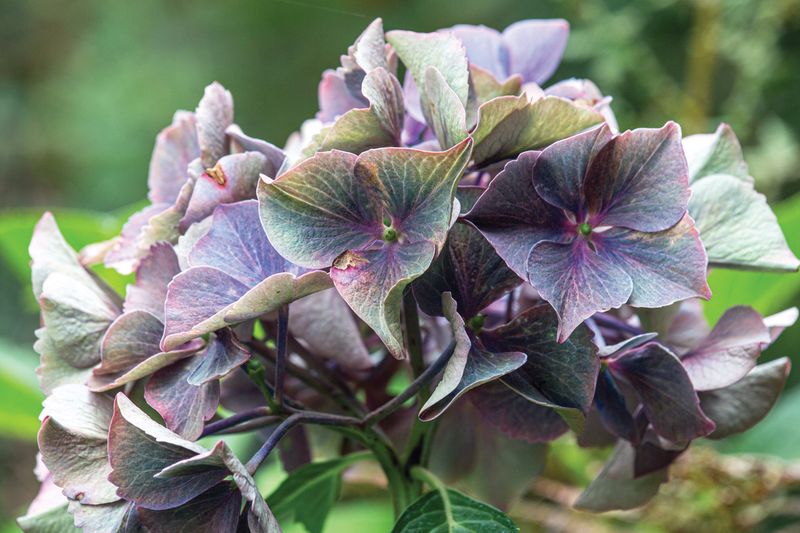
Browning petals and nodding flower heads in September can look alarming if you are not expecting them, but for many hydrangeas this is simply what late-season aging looks like. A spent flower is not the same as a sick or struggling plant.
Before reaching for the pruners, take a moment to look at the overall shrub: if the stems and leaves are healthy and green, the plant almost certainly is, too.
Panicle hydrangeas are a good example of why appearances can be misleading. University of Illinois Extension guidance on hydrangeas notes that panicle types often maintain a long, naturally attractive display well into September, and that their flowers may shift from white or green to shades of pink as they mature.
That color change is a normal part of aging, not a warning sign. Cutting them down prematurely just shortens a display that could otherwise last several more weeks.
The bigger question for September is whether your hydrangea is actually capable of producing another flush of flowers. University of Maryland Extension’s pruning guidance is clear that the potential benefit of deadheading applies only to varieties capable of repeat flowering, not to every hydrangea in every yard.
A late-season cut might encourage more blooms on the right plant, but there is no universal September reset that works across all types.
Identifying your plant before doing anything is the most important first step you can take.
The hydrangea type determines whether a September cut is safe
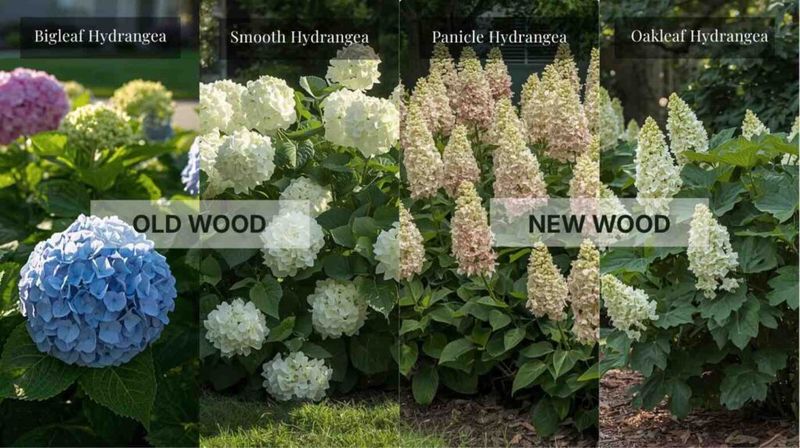
Not all hydrangeas follow the same flowering calendar, and that difference matters enormously when you are considering a September trim. The main dividing line is whether a plant sets its flower buds on wood that grew the previous year, called old wood, or on stems that grew during the current season, called new wood.
Cutting at the wrong time on the wrong type can wipe out next year’s blooms entirely.
Bigleaf hydrangea, Hydrangea macrophylla, and oakleaf hydrangea, H. quercifolia, are old-wood bloomers. Clemson Cooperative Extension’s pruning guide explains that these types form their flower buds in late summer or fall on stems that will carry over into the following year.
Pruning them in September risks removing those developing buds before they ever get the chance to open. Smooth hydrangea, H. arborescens, and panicle hydrangea, H. paniculata, flower on new wood, so a trim does not carry the same bud-removal risk for them.
The important exception is the group of remontant or reblooming cultivars, most of which are bigleaf or mountain hydrangeas. University of Minnesota Extension’s hydrangea pruning resource and Penn State Extension’s bloom-failure explainer both point to cultivars such as Endless Summer, Let’s Dance, Twist-n-Shout, BloomStruck, Summer Crush, Blushing Bride, and some Tuff Stuff varieties as examples of plants that can flower on new wood as well as old.
These are the cultivars where a careful September deadhead has any realistic chance of encouraging more flowers.
Even so, cultivar names alone are not enough: check the plant label or a reliable nursery record to confirm what you actually have, because the general name hydrangea tells you almost nothing about pruning timing.
For a confirmed rebloomer, deadhead the flower—not the shrub
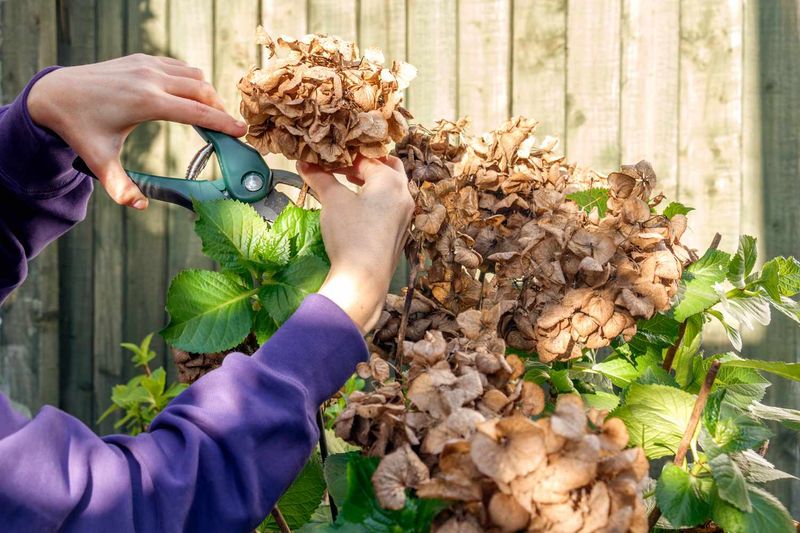
Once you have confirmed that your hydrangea is a reblooming cultivar, the technique matters just as much as the decision to cut. The goal is narrow: remove the faded flower head without disturbing the healthy growth below it.
This is a targeted snip, not a renovation pruning session.
Start with sharp, clean pruners. Dull blades crush stem tissue rather than cutting it cleanly, which slows healing and can invite disease.
Follow the spent flower stem downward until you reach a healthy pair of buds, a set of leaves, or a lateral branch growing off the main stem. University of Maryland Extension recommends making your cut just above that healthy node.
The University of Georgia Extension’s comprehensive pruning guide reinforces this approach, noting that the cut should be clean and precise rather than a rough removal.
What you are not doing is equally important. Do not cut back the entire stem to the base.
Do not remove large amounts of healthy foliage. Do not shorten multiple branches just to tidy the shape of the shrub.
Each of those actions goes well beyond a deadhead and introduces real risk in late summer. Removing healthy growth now can stress the plant, reduce its reserves heading into winter, or strip away buds that were already forming.
Deadheading a confirmed rebloomer may encourage faster new-bud development on the stems below the cut. Whether those buds turn into open flowers before frost depends on factors outside your control, including temperature, light, and how much growing time remains in your region.
The cut is worth making on the right plant, but approach it as a possibility rather than a promise.
A reblooming hydrangea still needs time to make new flowers
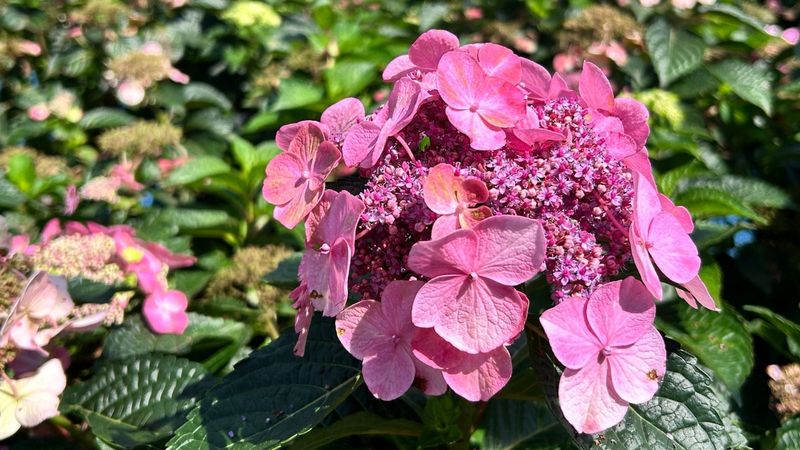
Even when you do everything right on a confirmed rebloomer, another flush of flowers is not a sure thing. New buds still have to develop, swell, and open, and that process takes time the plant may or may not have before cold weather arrives.
Virginia Tech Extension’s hydrangea guide describes remontant bigleaf hydrangeas as capable of extending their flowering season, but that does not translate into a reliable September flush across every part of the United States.
UConn Home and Garden Education Center’s hydrangea resource makes the point clearly: reblooming genetics allow the plant to flower on new wood, but actual late-season performance varies with cultivar, light levels, water status, and temperature. A gardener in coastal South Carolina has a very different window of opportunity than one in upstate New York.
Frost timing is the hard boundary that no amount of deadheading can move.
There are a few honest outcomes to prepare for. A rebloomer might produce a full second flush of flowers if the season stays warm long enough.
It might generate only a modest cluster of blooms, smaller and fewer than the main summer display. Or it might push out small buds that get caught by an early freeze before they ever open.
All three of those results are normal, and none of them indicate that you did something wrong. The value of the September deadhead on a rebloomer is that it removes a barrier to new growth, not that it guarantees a particular result.
Oregon State University Extension notes that frost timing varies widely, which is why regional conditions always factor into whether late flowers actually develop.
Steady care supports the plant without forcing tender growth
When a hydrangea looks tired in September, the instinct to do more, water more, feed more, is understandable. Most of the time, though, steady and consistent care is exactly what the plant needs rather than any dramatic intervention.
Chasing a late flush with aggressive inputs can actually work against you.
Soil moisture is the most practical thing to manage. University of Maryland Extension’s hydrangea problem guide points out that hydrangeas can wilt from heat stress even when the soil is already adequately moist.
If you see drooping leaves on a warm afternoon, check the soil before adding water. Soggy soil in poorly drained ground causes its own problems, including brown leaf edges and leaf drop.
Water at the base of the plant rather than overhead, since wet foliage can invite fungal issues. Oregon State University Extension’s general hydrangea care guidance also recommends consistent moisture in well-drained soil as the baseline, not automatic extra irrigation.
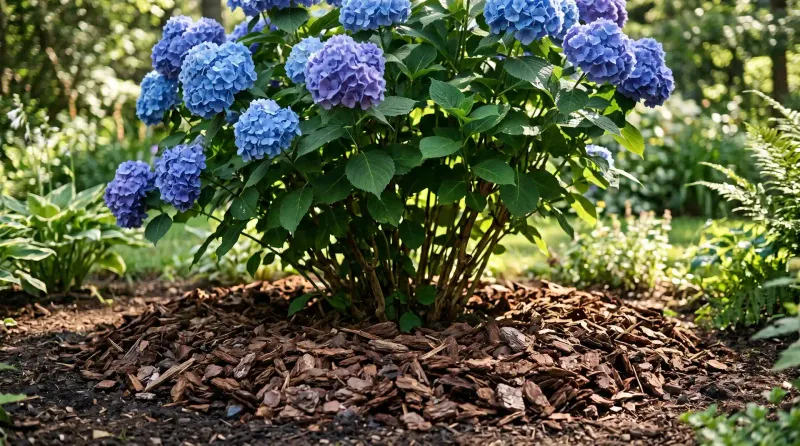
Organic mulch is a quiet but effective tool for late-season stability. OSU Extension’s hydrangea feature and OSU’s mulching guide for woody ornamentals both support applying roughly 2 to 3 inches of organic mulch around the root zone to buffer soil moisture and moderate temperature swings.
Keep mulch a few inches away from the main stems to avoid trapping moisture against the bark.
Mulch does not trigger blooms, but it does help the plant stay in a stable, actively growing condition, which is the real foundation for any late-season flowering.
Hard September pruning can trade one late bloom for next year’s flowers
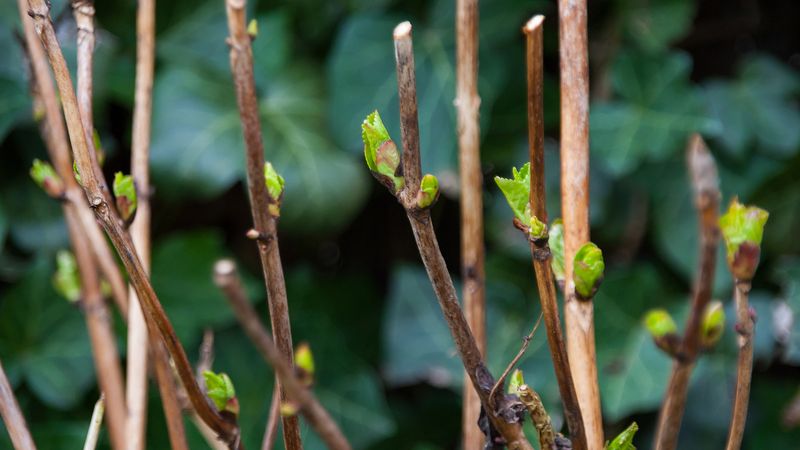
Removing a spent flower head is a small, targeted action. Cutting a hydrangea back hard in September is something else entirely, and the consequences can follow you into next spring.
The two actions are easy to conflate, especially when the shrub looks ragged and the impulse to tidy everything up is strong. Resist that impulse unless you know exactly what you are working with.
Penn State Extension’s species-specific pruning guide explains that bigleaf and oakleaf hydrangeas form their flower buds for the following year in late summer or fall. Structural pruning at that point removes those buds before they have any chance to develop.
The shrub may look neat going into winter, but it will likely produce far fewer flowers the following summer. University of Illinois Extension’s Gardener’s Corner newsletter reinforces this point, noting that mistimed pruning is one of the most common reasons gardeners end up with a healthy-looking hydrangea that refuses to bloom.
Cutting a hydrangea to the ground is sometimes appropriate for smooth hydrangeas on a deliberate late-winter or early-spring schedule, as Illinois Extension’s pruning blog explains, but it is not a September rescue for any type. Severe pruning can also push out soft, tender new growth that has no time to harden before cold weather arrives, leaving the plant more vulnerable than it was before you cut it.
September fertilizer is equally unreliable as a bloom-forcing strategy. Clemson Extension and other university sources caution that excess nitrogen late in the season encourages the same kind of soft, frost-vulnerable new growth without meaningfully improving the odds of late flowers.
The safest approach is to hold off on structural pruning and fertilizer until the right season arrives, which for most types is late winter or early spring.
Frost protection may preserve late flowers when the reset works
Sometimes a reblooming hydrangea does respond to a September deadhead and pushes out new buds or even open flowers. When that happens and a frost is in the forecast, a little protection can make the difference between flowers that open fully and a bud cluster that never gets the chance.
Oregon State University Extension’s frost protection guidance recommends using a sheet, frost cloth, or another breathable covering when freezing temperatures are expected. Drape it loosely over the plant so it traps some warmth without crushing the stems or flowers, and remove it once temperatures rise above freezing the following day.
This kind of cover is temporary protection for a specific weather event, not a way to extend the season indefinitely. Repeated hard freezes will end flowering regardless of how carefully you cover the plant each night.
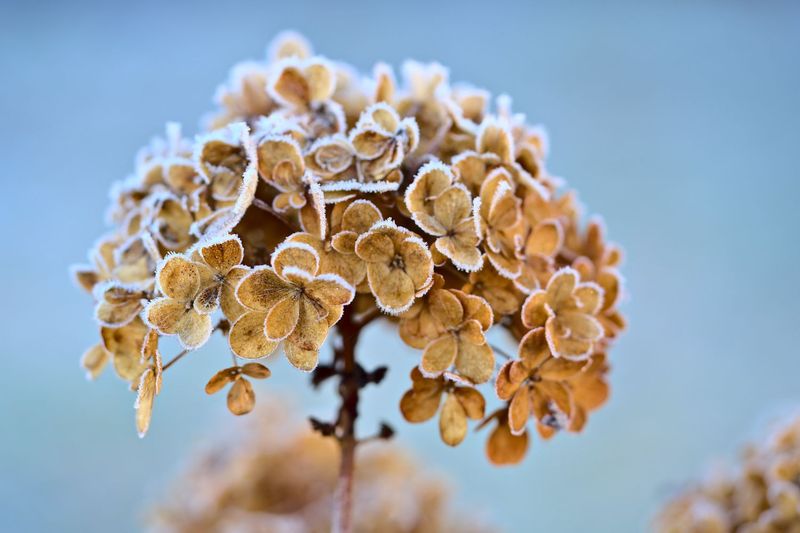
Leaving dried flower heads in place is also a completely legitimate choice, and for many gardeners it is the smarter one. Washington State University Extension’s hydrangea resource notes that dried heads can provide genuine winter interest and that deadheading is not required for plant health.
University of Maryland Extension makes the same point.
When the cultivar is uncertain, frost is approaching quickly, or you simply prefer the look of the dried blooms against winter stems, skipping the cut is a reasonable and protective decision rather than a missed opportunity.
The safest September step starts with restraint
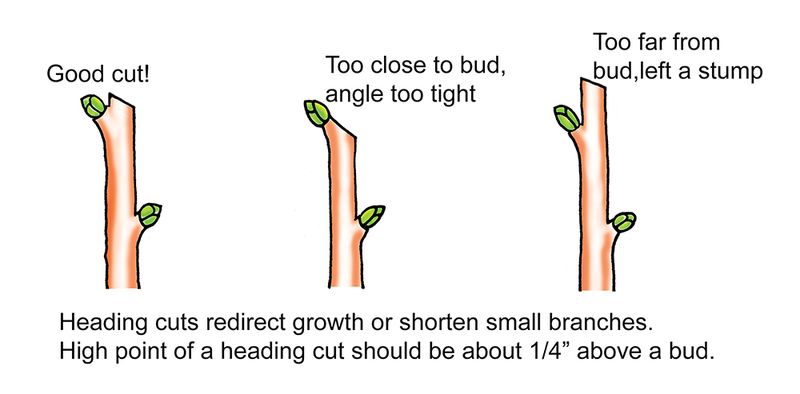
The clearest decision rule for September is this: identify the cultivar first. If you have a confirmed reblooming bigleaf or mountain hydrangea, remove only the spent flower head above a healthy pair of buds or a lateral branch using clean, sharp pruners.
Keep soil moisture consistent, check the ground before watering, and cover any late buds or open flowers with a breathable cloth if a freeze is coming.
If the cultivar is unknown, frost is already close, or the shrub is an old-wood type such as bigleaf or oakleaf, leaving the flower heads in place protects next year’s buds and costs you nothing. University of Maryland Extension and University of Minnesota Extension both make clear that the possible reblooming benefit applies only to capable varieties, and Oregon State University Extension reminds gardeners that frost timing is the hard limit no technique can move.
No second flush is not a failure. A hydrangea that skips a late bloom and goes into winter with its buds and energy intact is one that is more likely to open beautifully next June.
Restraint in September is often the most productive thing you can do.