
Wrens Keep Building Nests In Odd Corners Of Your North Carolina Yard Because The Bugs Are Thick There
A Carolina Wren turning up inside your hanging fern or tucked behind a garden tool on a shelf can stop you in your tracks. These small, loud birds seem to pick the strangest spots, and it is natural to wonder whether they are zeroing in on a particularly buggy corner of your yard.
The real answer is more interesting, and more useful, than that simple explanation. Understanding why wrens choose the spots they do can help you become a better steward of your North Carolina yard without misreading ordinary insect activity as a pest problem.
Odd-corner nests are normal for Carolina Wrens
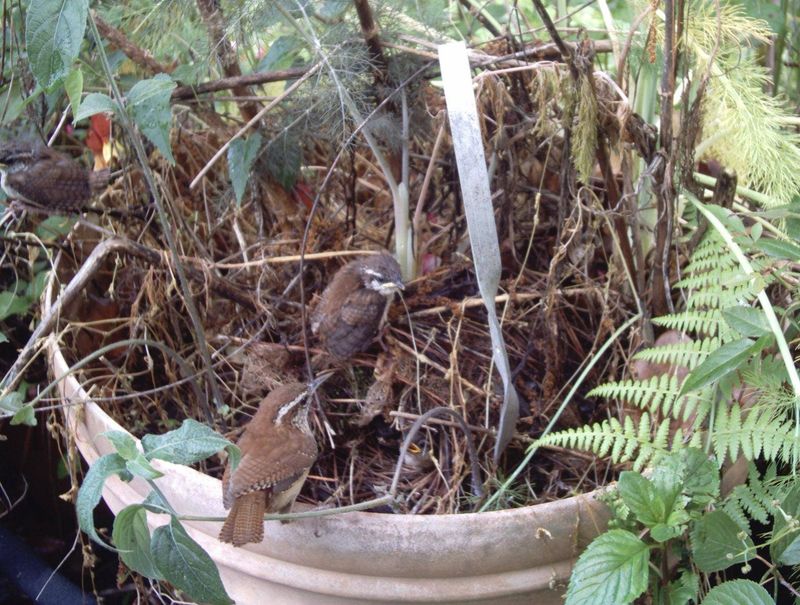
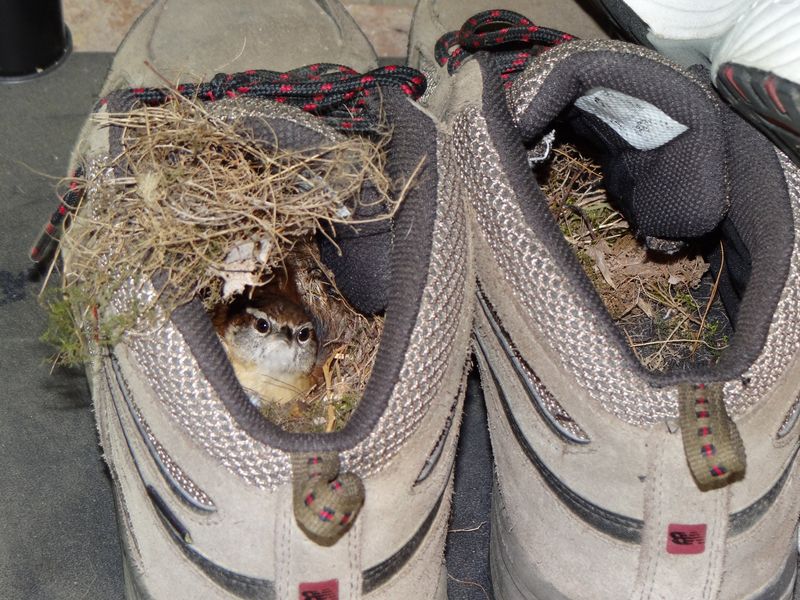
Carolina Wrens are genuinely indifferent to what humans consider a proper nesting location. According to Cornell Lab’s Carolina Wren life history account, reported nest sites include flowerpots, mailboxes, propane-tank covers, coat pockets, old boots, open garages, window ledges, and covered overhangs.
If you find a cup of leaves, bark strips, and grass tucked into your garden shelf or wedged behind a downspout, there is a reasonable chance a Carolina Wren put it there.
Before drawing any conclusions, it helps to confirm the bird. House Wrens and a handful of other small species also use human-made structures, and nest shape alone is not always a reliable identifier.
Carolina Wrens are chunky, rust-colored birds with a bold white eyebrow stripe and a habit of cocking their tail straight up. Hearing the loud, rolling song coming from the general area of the nest is one of the clearest signs you have the right species.
The species is a year-round resident across North Carolina, favoring wooded suburban yards, brush piles, ravines, and any habitat with dense low cover close to the ground. Research on urban and rural Carolina Wrens confirms their use of vine tangles, hanging pots, and covered house ledges as nest sites, noting that the birds adapt readily to structures that mimic natural cavities or overhangs, as documented in a study on predator recognition and nest defense in urban and rural environments.
One more thing worth knowing: a half-built nest does not guarantee that eggs will follow. Carolina Wrens often construct what are called starter nests, sometimes more than one, before the pair commits to a final site.
A loosely assembled pile of material in your garage may be a test run rather than an active breeding attempt. Watch for continued building activity, the presence of both birds, and eventually a deeper, more finished cup before assuming the location is settled.
The wren searches for food below the nest
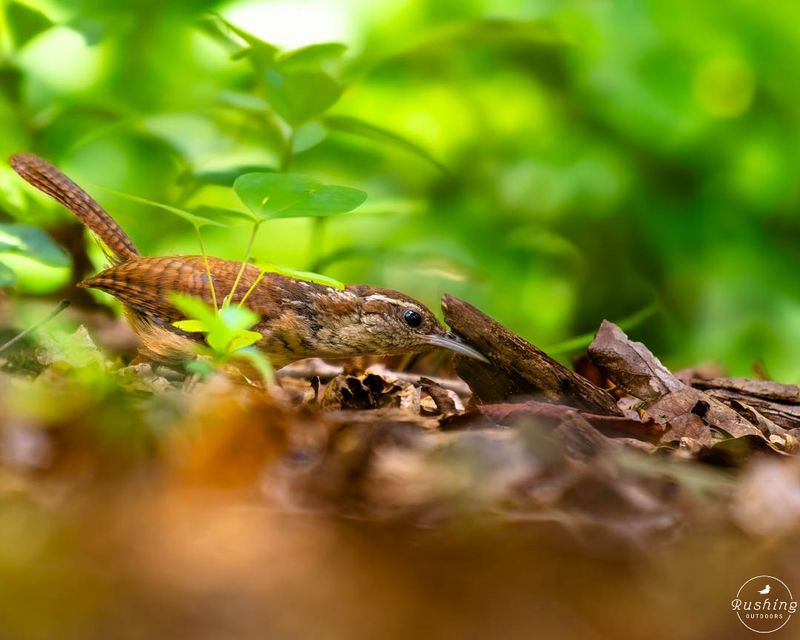
Watch a Carolina Wren work through your yard for a few minutes and you will notice it almost never stops moving. The bird hops low, pushes into tangles, flips leaves, and probes the gaps in decaying wood with the focused energy of an animal that needs to find a lot of food.
Cornell Lab documents that insects and spiders make up the overwhelming majority of the Carolina Wren’s diet, with caterpillars, moths, leafhoppers, beetles, grasshoppers, crickets, and cockroaches all appearing as documented prey.
The foraging style matches the habitat these birds prefer. Leaf litter, tangled low vegetation, rotting stumps, fallen logs, and the crevices in rough bark are all productive hunting grounds.
A yard with dense native shrubs, a brushy border, or a corner where leaves are left to accumulate over winter can be a reliable cafeteria for a resident pair throughout the year.
Here is where the connection to the nest gets more nuanced. A Carolina Wren does not confine its foraging to the square foot directly below where it chose to build.
The bird works across a territory, moving between multiple foraging patches as prey availability shifts with season and weather. NC State Extension’s guide to managing backyards for birds emphasizes that plant diversity drives insect diversity, meaning a yard with varied native plantings can support consistent prey availability across a wider area rather than concentrating bugs in a single corner.
So the wren nesting in your garage or on your porch ledge is almost certainly foraging across the broader yard, the neighboring hedge, the leaf pile under the fence, and the brushy strip along the property line. The nest location and the primary foraging location may not be the same place at all.
Keeping that distinction in mind helps you read the bird’s presence accurately rather than treating one odd corner as the yard’s insect hotspot.
One nest site can solve several problems at once
Reframe the question slightly and the wren’s choice starts to make more sense. Rather than asking where the most bugs are, ask what problems a small bird needs to solve when picking a nest site.
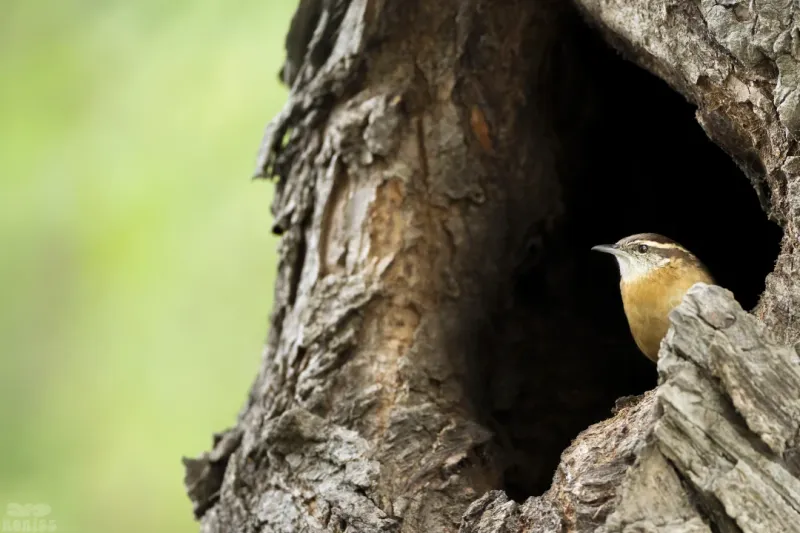
Shelter from rain tops the list. A Carolina Wren nest that gets soaked during a spring storm can fail quickly, so a covered ledge, an enclosed shelf, or the interior of a garage offers genuine protection that an open tree branch cannot.
Concealment from predators is equally important. An odd corner that looks cluttered or inaccessible to a human often looks the same way to a crow, a rat snake, or a neighborhood cat.
The Cornell Lab life history account notes that Carolina Wrens choose cavities and overhangs partly because enclosed or semi-enclosed sites limit the angles from which a predator can approach. Research on Carolina Wrens in both urban and rural settings found that birds in higher-predator-risk environments showed stronger nest defense responses, suggesting that perceived safety is a meaningful part of site selection, as detailed in the Bogrand, Neudorf, and Matich nest defense study.
Structural support matters too. A flowerpot or a wooden box gives the nest a stable base and walls to anchor material against, which can be harder to find in open vegetation during a windy North Carolina spring.
Shade, temperature stability, and reduced human foot traffic around a particular corner can add to its appeal.
NC State Extension’s backyard bird habitat guidance describes how layered vegetation close to a structure creates a transition zone where cover and foraging overlap. A wren that nests on your porch may be taking advantage of the nearby shrub border for foraging while relying on the porch itself for protection.
The two functions do not have to come from the same square foot. That combination of useful features, rather than any single factor like bug abundance, is the more complete explanation for why an odd corner gets chosen.
An odd nest cannot measure the yard’s bug population
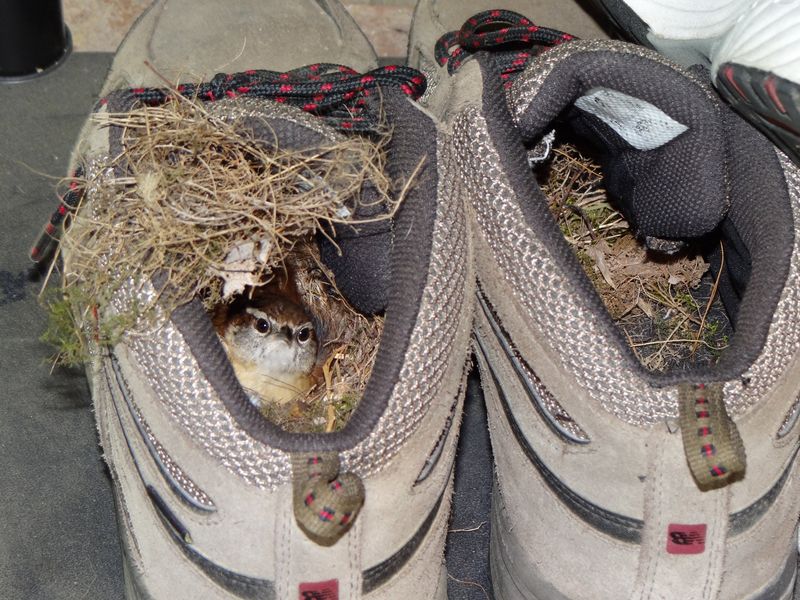
Spotting a wren nest in an unusual spot is genuinely interesting, but treating it as proof that the immediate area has an unusually high insect population goes further than the evidence supports. A nest can tell you that a pair of Carolina Wrens found the location useful.
It cannot tell you that bugs are measurably thicker there than anywhere else in the yard.
The clearest scientific pushback on a food-abundance explanation comes from a Southern Illinois University thesis examining cavity-nesting birds and aquatic invertebrate availability. The researcher looked at whether Carolina Wren nest density and clutch size varied across sites with different levels of aquatic invertebrate biomass, a proxy for food availability, and found no meaningful relationship between the two.
More nesting activity did not cluster where food was most abundant.
That study has real limits. It focused on wetland invertebrates rather than the terrestrial insects and spiders that Carolina Wrens eat most often in residential yards, and wetland sites differ substantially from a Piedmont or Coastal Plain backyard.
The findings do not settle the question for your specific situation. What they do is weaken the assumption that nest placement reliably tracks prey density.
The supported claim is that Carolina Wrens depend on insects and spiders and that a yard with diverse, layered habitat can sustain them. The unsupported leap is that the nest marks the single most insect-rich spot in the yard.
Shelter quality, predator pressure, structural availability, proximity to vegetation, and the pair’s own experience in the territory all feed into the decision. Insect access is plausibly one factor among several, not the overriding explanation for every nest choice.
Reading the nest as a habitat signal pointing toward a broadly productive yard is reasonable. Reading it as a precise insect census is not.
Improve the surrounding habitat without creating a wild mess

Good habitat for Carolina Wrens does not require abandoning yard care or letting invasive plants take over. The goal is variety and selective restraint, not neglect.
A few targeted changes can make a meaningful difference for the birds and the insects they depend on.
Leaf litter is one of the highest-value and lowest-effort improvements available. Leaving a layer of fallen leaves under shrubs or along a fence line provides foraging material for ground-feeding birds and shelter for the beetles, spiders, and other invertebrates that wrens eat.
NC State Extension’s backyard bird habitat guide specifically calls out leaf litter as foraging habitat for ground-feeding species and connects plant diversity directly to insect diversity.
Native shrubs and layered vegetation do more than add visual interest. NC State Extension’s native plant landscaping guidance explains that native plants support native insects, including the caterpillars that many birds rely on to feed nestlings.
Shrubs like beautyberry, native viburnums, and inkberry can provide cover, nest sites, and insect habitat at the same time. A brushy border or a small area of native brambles along a property edge gives wrens the tangled low cover they favor for foraging.
Pesticide choices matter too. NC State’s native plant resources note that minor leaf damage and visible insects are often signs of a functioning food web rather than a landscape problem.
Broad-spectrum pesticides applied unnecessarily can reduce the invertebrate populations that birds need, so reserving chemical treatment for genuine pest pressure rather than routine prevention protects the food supply wrens depend on.
Keep the approach selective. Removing invasive plants like Chinese privet, Japanese honeysuckle, or Bradford pear and replacing them with native alternatives improves habitat quality without creating safety or maintenance problems.
The aim is a yard that stays managed and tidy in the areas that matter while offering some strategically placed roughness, leaf accumulation, and dense native planting where the birds can actually use it.
Protect the nest and limit your response
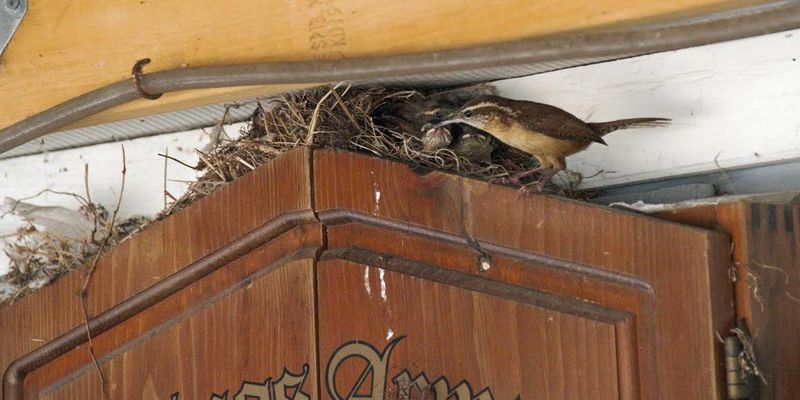
Once you have confirmed an active Carolina Wren nest, the most useful thing you can do is mostly leave it alone. The birds are sensitive to repeated disturbance, and unnecessary human activity near the nest can cause the pair to abandon it or attract the attention of predators.
Observe from a comfortable distance, and resist the urge to peek inside, reposition the container, or take close-up photographs that require you to lean in repeatedly.
Cats are a serious threat. If a cat can access the nesting area, block that access during the breeding season.
A cat waiting near an active nest can prevent the adults from returning to feed nestlings and can kill fledglings that leave the nest before they fly well.
Placing bird feeders or mealworms directly beside an active nest is not a helpful gesture. Added food draws more animal activity to the immediate area, which can attract competing species and predators.
Habitat support works better at a yard-wide scale than as a concentrated offering next to a nest.
Federal protection for Carolina Wrens comes from the Migratory Bird Treaty Act. U.S.
Fish and Wildlife Service guidance on bird nests distinguishes between unused nests and in-use nests. A nest that has not yet received eggs is treated differently under federal guidance than one containing eggs or chicks, though deliberately harassing birds at any stage can still cause harm and may carry its own legal and ethical consequences.
The Migratory Bird Treaty Act broadly prohibits taking, possessing, or disturbing migratory birds and their active nests.
Do not attempt to move an active nest on your own. Birds may abandon a relocated nest, and the move itself can expose eggs or chicks to temperature stress.
USFWS guidance on the handling of migratory birds makes clear that relocation requires proper authorization. If the nest is in a location that creates a genuine safety or access problem, contact a licensed wildlife rehabilitator, your state wildlife authority, or the U.S.
Fish and Wildlife Service before taking any action. They can advise on legal options and help you avoid causing harm while addressing a real concern.
Treat the wren as a habitat clue, not a pest-control promise
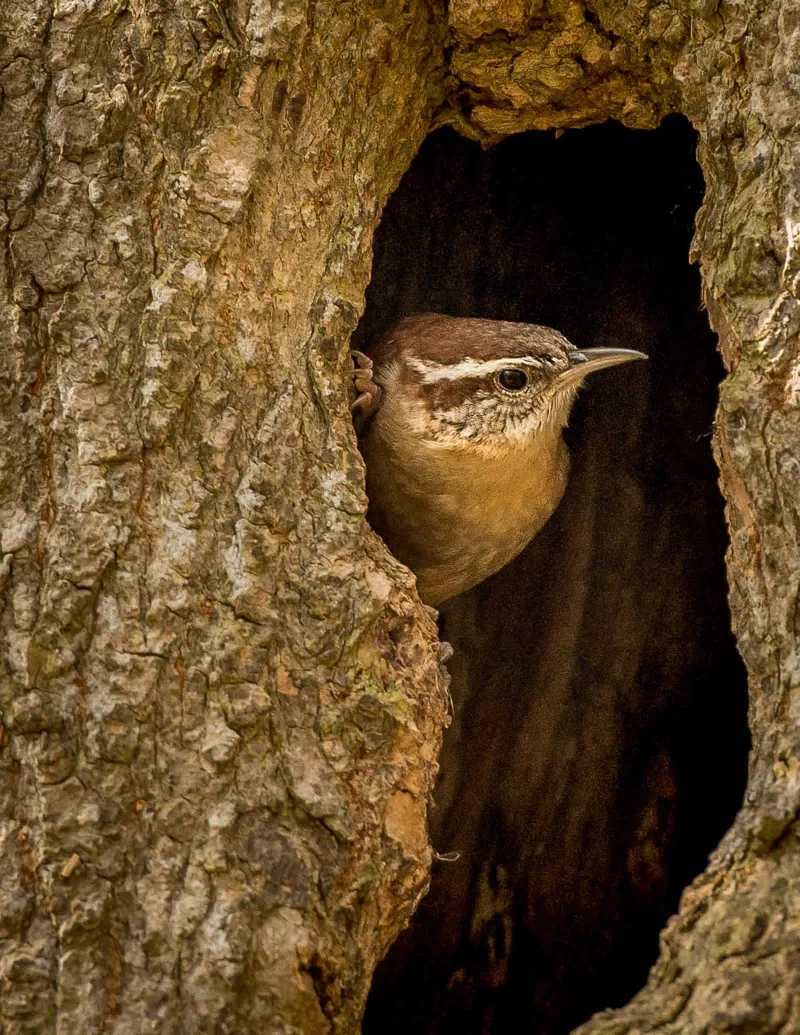
A Carolina Wren choosing the corner of your garage or the shelf in your potting shed is telling you something worth hearing, just not the thing the title of this article suggested. The bird found a spot that works: sheltered, concealed, structurally sound, and close enough to brushy foraging habitat to make the arrangement practical.
That combination points toward a yard with some genuine ecological texture, which is a good sign.
What the nest cannot do is promise relief from ticks, mosquitoes, or any specific household pest. NC State Extension’s mosquito control guidance is direct on this point: insect-eating birds and bats do not produce meaningful reductions in mosquito populations around homes.
Carolina Wrens eat many insects, including some that humans consider pests, but they are not a targeted pest-control service.
The productive response is to protect the nesting area, preserve the diverse habitat that supports the birds and their prey, and support the broader food web rather than trying to eliminate every insect in sight. NC State’s backyard bird habitat guidance and Cornell Lab’s wren life history both point in the same direction: a yard with layered native planting, some leaf litter, and reduced pesticide pressure is good for wrens, good for the insects they eat, and good for the overall ecosystem you are living inside.
A wren in an odd corner is not a pest-control contractor. It is a neighbor worth keeping.