
Cedar Waxwings Descend On One North Carolina Tree Because Its Berries Ripen Exactly Now
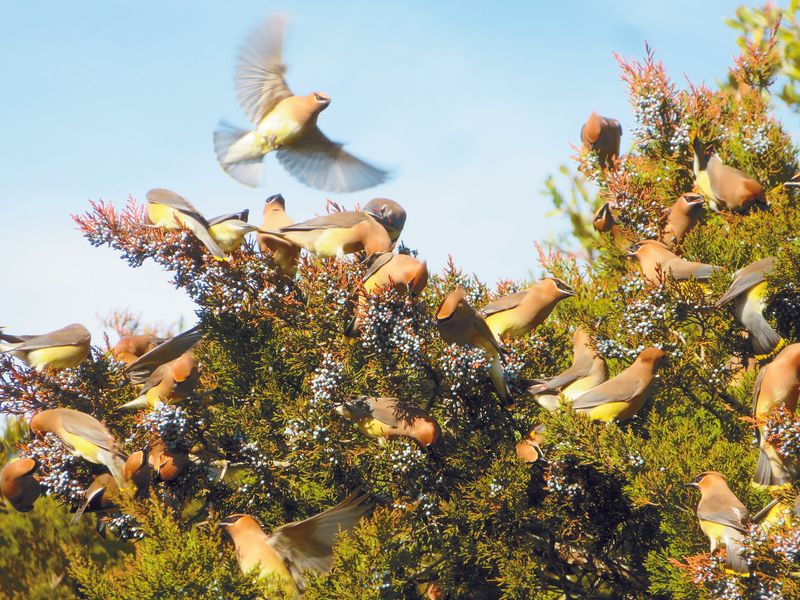
Spotting a flock of Cedar Waxwings packed into one tree in your North Carolina yard is one of those moments that stops you in your tracks. Those sleek, crested birds with their yellow-tipped tails are not there by accident.
What you are actually seeing is a real-time signal about which fruit in your yard is currently attractive, accessible, or abundant enough to pull a whole flock in. Learning to read that signal can help you become a sharper observer and a smarter steward of your own backyard habitat.
The flock is a clue about food, not a timestamp
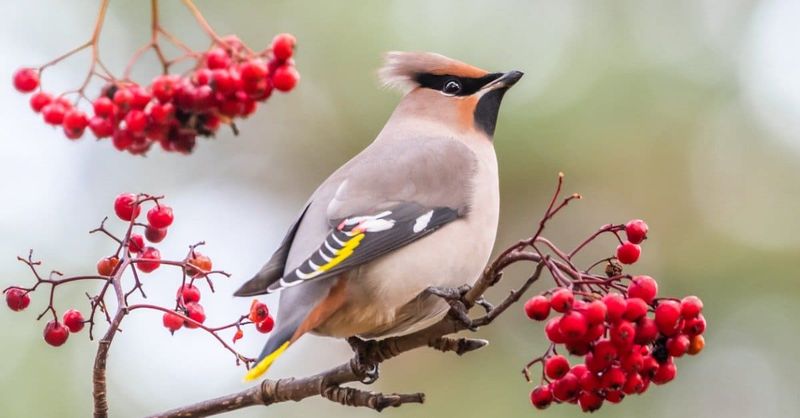
Watching a flock of Cedar Waxwings work through a single tree can feel like witnessing something precise and deliberate, as if the birds received a signal that the fruit crossed some invisible finish line that morning. The reality is more layered and more interesting.
Cornell Lab of Ornithology’s life history account describes Cedar Waxwings as highly frugivorous birds that eat fruit throughout the year and shift to insects mainly during the summer breeding season.
Outside of nesting, Cedar Waxwings forage almost exclusively in flocks. When a flock concentrates on one tree, the most defensible reading is that the tree is offering something currently usable and attractive, whether the fruit recently became edible, whether nearby alternatives have already been stripped bare, or whether this particular tree simply holds a larger or more accessible crop than anything else in the area.
That distinction matters for a homeowner trying to understand what the sighting means. The flock cannot confirm that the fruit ripened at dawn today.
Audubon’s field guide entry for Cedar Waxwing notes that winter movements shift from year to year depending on berry abundance, which means the birds are responding to a dynamic food landscape, not a fixed calendar.
The tree drawing the flock is also probably not the birds’ only stop. Cedar Waxwings typically use a broader feeding circuit that can include nearby shrubs, other fruit trees, open water, and high perches.
The tree you are watching may simply be the richest or easiest patch within that circuit right now. Treating the flock as a clue rather than a verdict keeps your interpretation honest and opens the door to more useful questions about what is actually growing in your yard.
Identify the plant before naming the season
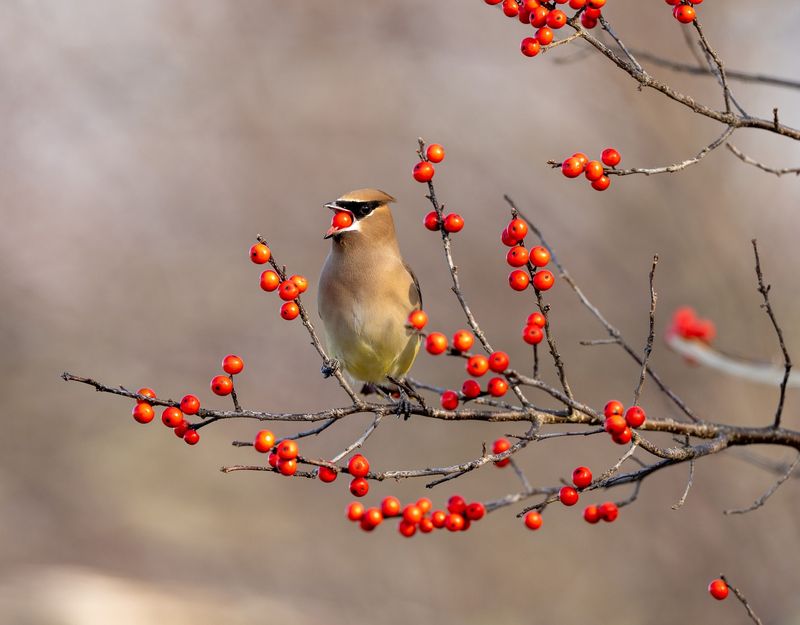
Before concluding that your yard’s fruit is at its seasonal peak, the more useful first step is figuring out exactly what plant the waxwings have found. Fruit color, arrangement, and size are good starting points.
Note whether the berries grow in tight clusters or dangle individually, whether they are round or oval, and whether the skin looks waxy, matte, or translucent.
Bark texture, leaf shape, and the plant’s overall growth form narrow the field considerably. A columnar evergreen with scale-like foliage is quite different from a multi-stemmed deciduous shrub with opposite leaves.
Take photographs of the leaves, fruit, and bark from multiple angles, then cross-reference them against a reliable regional source such as the NC State Extension guide to landscaping with native plants or the NC State Plant Toolbox before drawing conclusions.
Watch how the birds actually behave in the tree. Waxwings that are actively swallowing fruit are doing something meaningfully different from birds that are simply resting between feeding bouts.
Cornell Lab’s life history notes confirm that Cedar Waxwings can strip fruit from a tree quickly before moving on, so the window for observation may be short.
Resist the urge to assign a season to the sighting before you have a plant name. North Carolina spans multiple climate zones, and fruiting timing varies more than most homeowners expect.
NC State Extension’s fruit gardening guidance acknowledges that Piedmont timing can run roughly two weeks ahead of the Coastal Plain, with mountain timing generally later still. That gap is wide enough to make a generalized ripening calendar unreliable for any specific yard or any specific year.
Documented North Carolina natives can create this signal
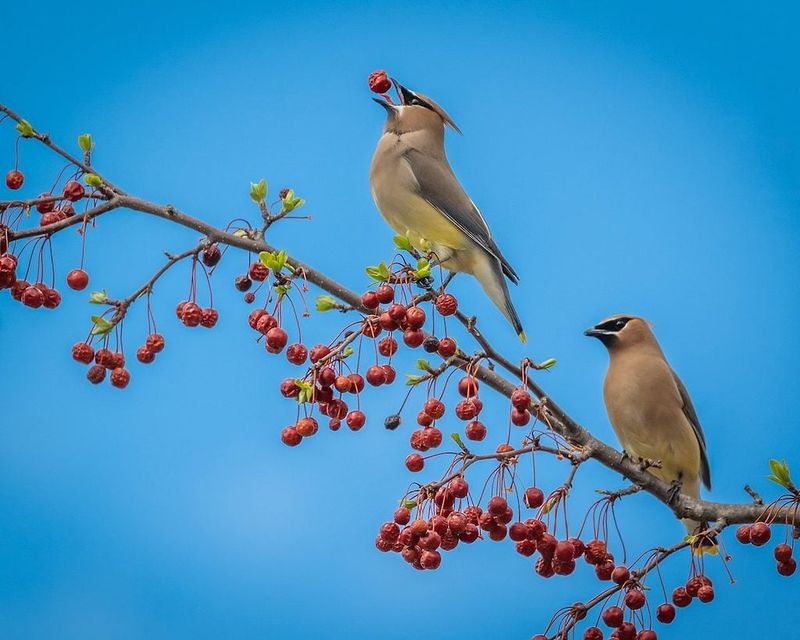
Once you have a plant name in hand, you can compare what you are seeing against the documented North Carolina natives that Cedar Waxwings are known to use. Several species are well-supported by NC State Extension records, and each one offers a different fruit color, shape, and approximate season.
Eastern redcedar is one of the most reliably cited examples. Female trees produce fleshy, blue-gray cones that are sometimes called cedar berries, though NC State’s plant profile for Juniperus virginiana correctly identifies them as fleshy cones rather than true berries.
That botanical distinction does not reduce their value as waxwing food. Eastern redcedar is native throughout North Carolina, tolerates a wide range of soils, and is one of the species most closely associated with the bird’s common name.
American holly can hold red or orange fruit from roughly September through February, giving it one of the longer display windows among native options. A critical detail: NC State’s American holly profile confirms that only female plants produce fruit, and a nearby male pollinizer must be present.
A single-specimen planting may produce little or no fruit regardless of how well the tree is established.
Winterberry carries bright red fruit from fall into winter and can be visually striking after the leaves drop. NC State’s winterberry profile notes the same male-female requirement that applies to American holly.
Both arrowwood viburnum, with its bluish-black fruit ripening in late summer and early fall, and rusty blackhaw viburnum, with blue fruit in fall, are worth considering, though NC State recommends more than one genetic strain or shrub for good fruit production on both species.
Flowering dogwood is native throughout North Carolina and produces clusters of red fruit that can persist from fall into winter, supporting songbirds and other wildlife across a broad range of the state. American beautyberry rounds out the list with its distinctive purple or bluish fruit, which matures roughly from August through October and can linger into early winter.
All timing figures here are approximate and will shift with the homeowner’s region, annual weather patterns, and individual plant health.
Use an observation log instead of guessing at ripeness
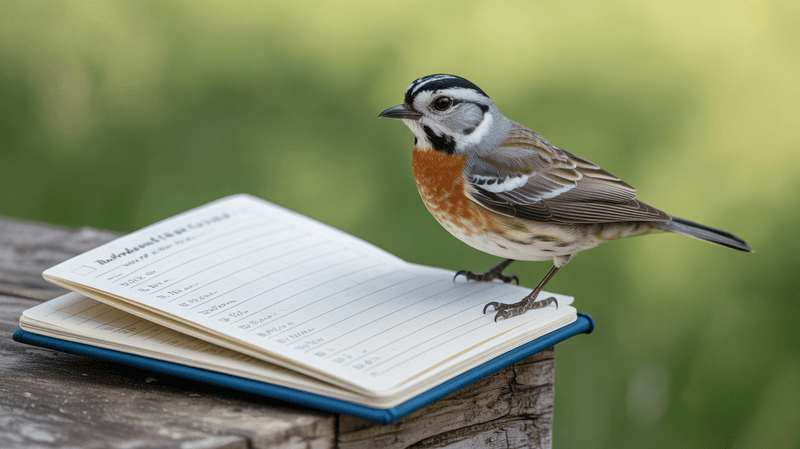
A single sighting of Cedar Waxwings in a fruiting tree is interesting, but a short series of dated notes turns that moment into something genuinely useful. Start with the basics: write down the date the birds first appear, the plant’s identity if you have confirmed it, and a description of the fruit’s color and firmness without tasting or handling it.
Record whether the waxwings are swallowing fruit or simply perching and preening. Note how much of the crop remains after each visit and whether nearby fruiting plants, shrubs, or hedgerows already look stripped.
Audubon’s Cedar Waxwing field guide emphasizes that the birds move with food availability, so a bare neighboring shrub is a meaningful data point that helps explain why your tree is receiving concentrated attention right now.
Over two or three seasons, these notes can reveal a rough window when fruit becomes usable and how long a feeding period typically lasts on that particular plant. That pattern is more informative than any single observation.
NC State Extension’s backyard bird habitat guide supports this kind of repeated, site-specific observation as a practical way to understand seasonal resource availability.
Several factors will shift the pattern from year to year: crop size varies with weather during flowering, competing food sources change as other plants fruit or are depleted, and Cedar Waxwing flock movements respond to regional conditions that have nothing to do with your yard. A log acknowledges that variability instead of flattening it into a single ripening date.
The strongest conclusion your notes can support is that the fruit was usable and attractive during a certain window, which is genuinely useful information for planning future plantings and watching for the birds again.
Bird activity does not make an unidentified berry safe
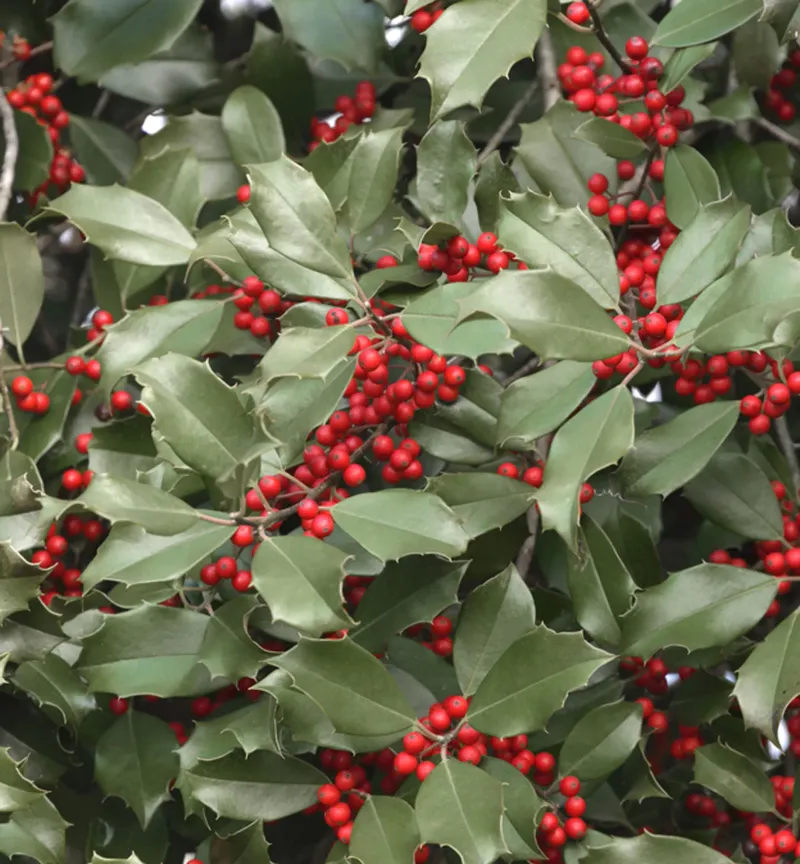
Seeing birds eat something freely from a tree is a compelling sight, and it is natural to wonder whether the fruit might be worth sampling yourself. That curiosity deserves a firm and clear answer: bird tolerance does not establish human safety, and some plants produce fruit that is toxic to people even when wildlife consume it without visible harm.
American holly is the clearest local example. NC State’s American holly plant profile explicitly lists the fruit as poisonous.
Cedar Waxwings can eat holly berries without the reaction a person would experience, because birds process certain compounds differently than humans do. Always identify a plant to the species level before handling its fruit, and treat any unfamiliar berry as potentially harmful until a reliable source confirms otherwise.
A separate but related point applies to planting decisions. Bird use is not evidence that a plant belongs in a North Carolina yard.
NC State’s profile for autumn olive illustrates the problem clearly: the species produces fruit that birds consume and disperse, but autumn olive is invasive in North Carolina and should not be planted as a wildlife shrub. A published veterinary toxicology case also documented Cedar Waxwing deaths associated with nandina berries, another ornamental plant widely available in nurseries, underscoring that bird use alone is not a safety signal for the plant or for people.
The practical rule is straightforward. Use a plant’s identity, confirmed against a credible regional source such as the NC State native plants landscaping guide, to decide whether it belongs in your yard and whether its fruit warrants any human interest.
What the birds do with the fruit is a separate question from what you should do with it.
Protect the feeding site and the birds using it
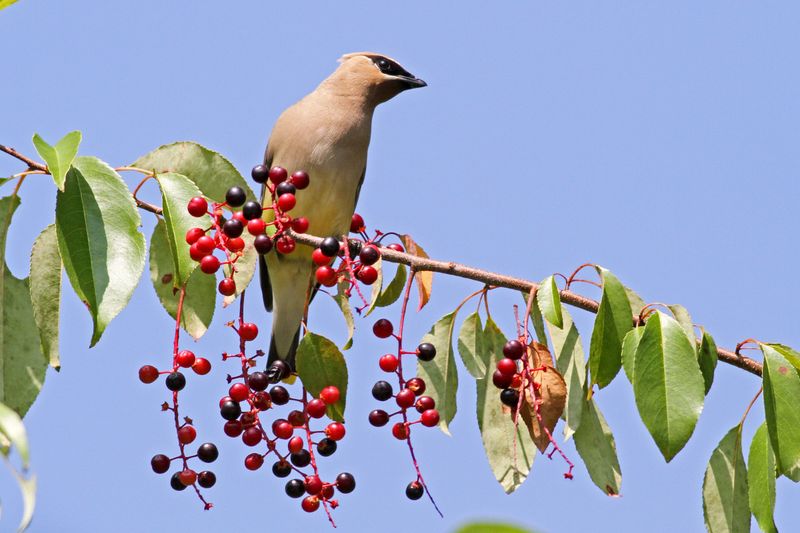
A flock of Cedar Waxwings feeding in your yard is a reason to be thoughtful about what happens in and around that tree while the birds are present. The most immediate concern for most homeowners is pest or disease management on a fruiting plant.
Applying a pesticide to or directly beneath an active feeding tree is a step worth avoiding unless treatment is genuinely necessary.
When treatment cannot wait, the NC State Extension wildlife chapter of the Extension Gardener Handbook advises following product labels carefully, avoiding applications to blooming plants, and taking precautions around wildlife. The U.S.
Fish and Wildlife Service urban bird treaty guidebook identifies pesticides as a documented source of bird injury and mortality in urban settings, reinforcing why timing and product selection both matter.
Window collisions are a second risk that increases when birds are actively feeding near reflective glass. A fruiting tree positioned close to a large window or glass door creates a situation where birds moving quickly between branches and open space may not register the reflection as a solid surface.
Cornell Lab’s guidance on preventing window strikes recommends dense, evenly spaced external treatments rather than one or two isolated decals, which birds tend to fly around rather than avoid.
One topic that comes up whenever Cedar Waxwings and fruit are mentioned together is the idea of birds becoming intoxicated from fermented berries. Audubon has reported on documented intoxication cases, and they do occur, but erratic flock behavior is not a reliable sign that the birds in your yard are impaired.
Ordinary feeding, jostling for position, and fast takeoffs can all look chaotic from a distance. Treat intoxication as a rare possibility rather than a default explanation, and keep it separate from the documented toxicity issue involving nandina berries, which is a distinct and more serious concern.
Build a diverse yard instead of chasing a guaranteed flock
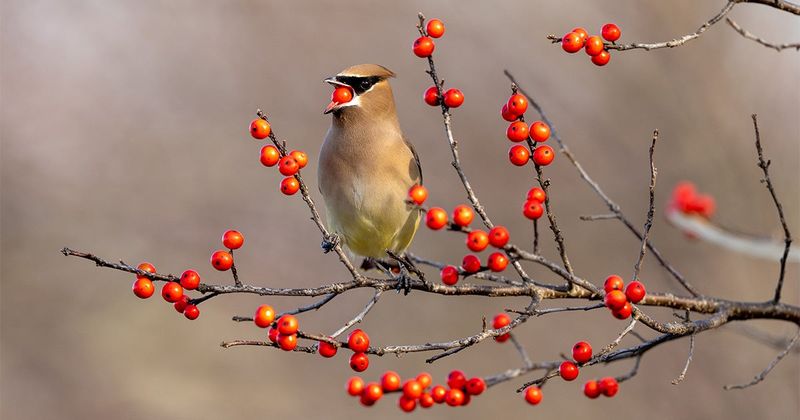
A Cedar Waxwing sighting in your yard is a satisfying moment, and it is tempting to treat it as a formula: keep that tree, wait for next year, expect the same result. Waxwing numbers and timing shift with regional crop conditions, competing food sources, and movement patterns that operate at a scale much larger than one yard.
Audubon’s Cedar Waxwing field guide notes that their movements vary year to year with berry abundance, which means no single planting can promise an annual visit.
What a diverse yard can do is remain consistently useful to Cedar Waxwings and other wildlife across multiple seasons. NC State Extension’s native plants landscaping guide recommends choosing a range of verified natives that together supply fruit, seed, nectar, and cover at different times of year rather than concentrating resources in a single specimen.
That layered approach also reduces the pressure on any one plant and makes the yard resilient when a crop fails or a season runs short.
Use the sighting as a starting point rather than a conclusion. Confirm the plant’s identity, record the fruiting window in a simple log, and check whether the species is a verified North Carolina native suited to your region, whether Piedmont, Coastal Plain, or mountains.
Then use that information to fill gaps in your yard’s seasonal fruit calendar with additional NC State-recommended native species that support birds across the full year. The flock told you one thing clearly: something in your yard is worth a Cedar Waxwing’s time right now.
Building on that narrow, honest signal is the most productive next step a North Carolina homeowner can take.