
A Native Perennial Along Your North Carolina Creek Bank Adds Upper-Bank Cover and Summer Bee Forage – Not a Stand-Alone Erosion Fix
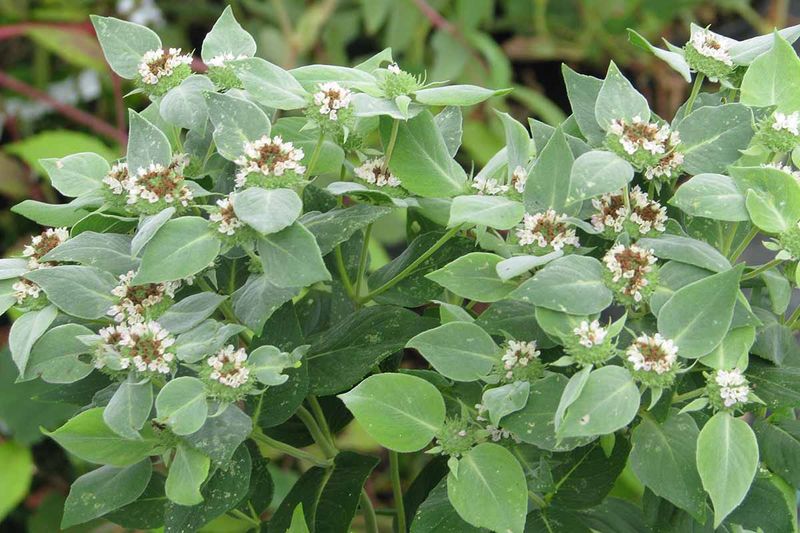
If your creek bank is slowly crumbling, you are not alone – plenty of North Carolina homeowners watch a little more soil disappear after every hard rain. Narrow-leaf mountain mint is a tough native perennial that can help cover the upper part of that bank and pull in native bees all summer long.
But it works best as one piece of a larger planting plan, not a single-plant solution for a washing-out creek.
Narrow-leaf mountain mint adds upper-bank cover and summer bee forage
Narrow-leaf mountain mint (Pycnanthemum tenuifolium) grows across much of North Carolina in full to partial sun, preferring acidic soil that drains well while tolerating the occasional wet spell or dry stretch. NC State Extension’s plant profile lists it for river banks, slopes, ponds, and rain gardens – a range that makes it a practical fit for a mildly eroding residential bank where the soil stays moist but not waterlogged.
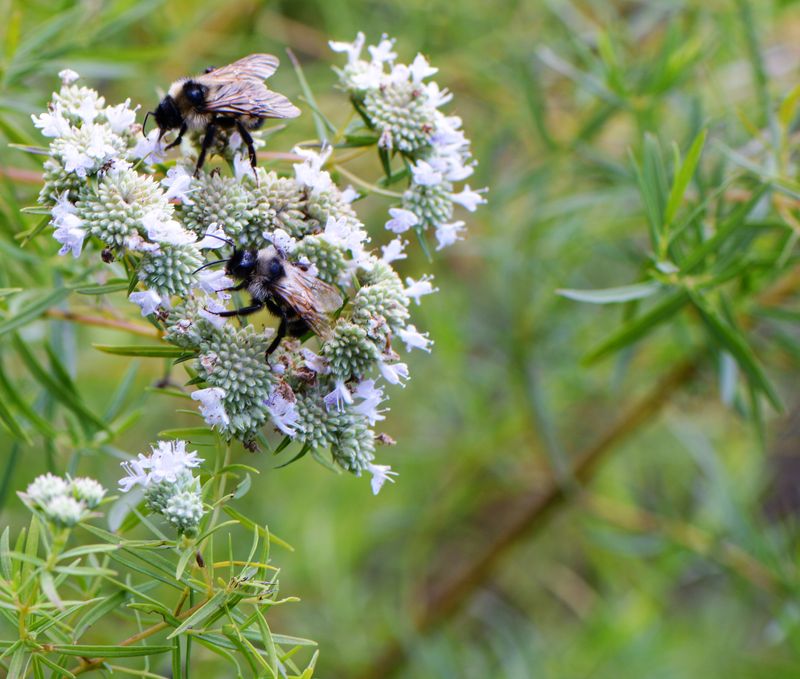
Summer is when this plant earns its reputation with pollinators. The flowers open in dense, flat-topped clusters of whitish to lavender blooms, and they draw native bees, bumblebees, and honey bees once the plant reaches roughly a foot wide.
That summer flowering period is real and well documented, but it is a seasonal draw, not a guarantee of bee activity from spring through fall.
The plant also spreads by rhizome, filling space steadily over a few seasons. That spreading habit can be genuinely useful on a bare or sparsely covered bank, but it means you should plan for it rather than be surprised by it.
A tightly controlled border may need hardscape edges to keep the patch from expanding beyond its intended zone.
For Coastal Plain and Piedmont homeowners who want a regional alternative, Appalachian mountain mint (Pycnanthemum flexuosum) is worth considering. NC State’s profile for Appalachian mountain mint describes it as a North Carolina native found primarily in those regions, useful near ponds and streambanks and similarly attractive to bees, butterflies, and wasps.
Neither species is a universal fit for every corner of the state, and neither should be planted alone as the entire answer to a washing-out bank.
What mountain mint can—and cannot—do for a washing-out bank
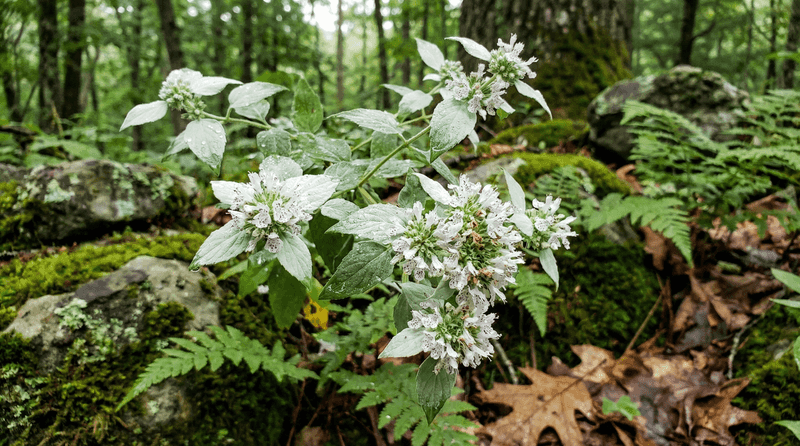
Dense herbaceous growth does real work on an upper bank. Roots from plants like narrow-leaf mountain mint form a fibrous mat that holds surface soil in place, reduces raindrop impact, and slows shallow runoff.
That kind of coverage matters, especially on a bank that has lost its plant layer to mowing or foot traffic.
Herbaceous roots, though, mainly reinforce the upper soil layers. Woody plants – native shrubs and trees – generally send roots deeper and provide stronger structural reinforcement against undercutting and bank slumping.
NC State’s backyard stream repair guidance specifically recommends a diverse mix of trees, shrubs, grasses, flowers, and ferns because different root architectures work at different depths. Relying on one herbaceous perennial leaves the deeper soil layers unanchored.
Erosion is not just a vegetation problem. Flow velocity, bank slope, soil texture, degree of saturation, undercutting from below, and concentrated runoff from impervious surfaces above all shape how fast a bank loses ground.
A plant patch can reduce erosion on a mildly unstable bank, but it cannot reverse the hydraulic forces driving a severely incised or actively widening channel. Oregon State Extension’s threat-based stream management guide frames this clearly: vegetation is one tool, and it works best when the underlying channel instability is low to moderate.
Research published through the Journal of the American Water Resources Association on vegetation and soil type confirms that plant cover reduces erosion rates, but the effect depends heavily on root density, soil cohesion, and flow conditions – not just the presence of plants. Mountain mint fits best into a low-to-moderate erosion situation as part of a broader planting plan, not as the single fix for a bank that is actively collapsing.
Place it above the constantly wet toe
Bank position is the key decision before you put narrow-leaf mountain mint in the ground. The plant handles an occasional wet period without complaint, but it prefers soil that drains between rain events.
Planting it at the constantly saturated toe of the bank – the zone that stays wet or flooded for long stretches – is likely to stress or kill it, wasting the planting and leaving that critical lower zone unprotected.
The upper or middle bank, where soil stays moist from proximity to the creek but drains reasonably well after a storm, is the right target zone. That position lets mountain mint establish its fibrous root mat where it will do the most good: covering surface soil that would otherwise be exposed to raindrop splash and sheet runoff.
NC State’s plant profile confirms that this species tolerates occasional wetness but performs best with good drainage – language that points clearly to an upper or middle bank position rather than the waterline.
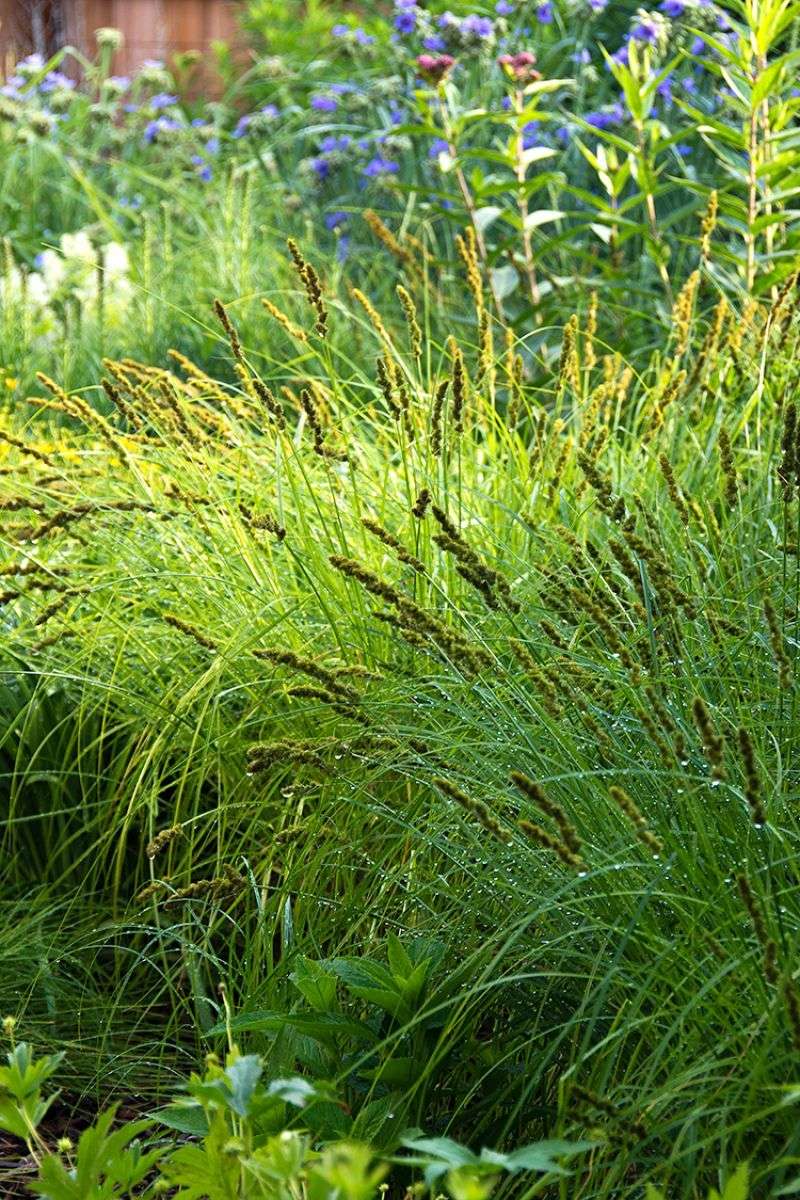
The toe of the bank needs different plants. Sedges such as softstem bulrush or common threesquare, and rushes like path rush, handle persistent saturation far better and can anchor soil right at the water’s edge.
NC State’s native plants and stream protection fact sheet recommends sedges and rushes near the waterline as part of a functional streambank planting.
Where the bank is steep enough to need more structural help at or near the waterline, NC State’s stream repair guide points to live stakes from species like willow or silky dogwood as an option for wetter, lower bank positions. Those decisions involve more than plant selection, so read the regulatory note in a later section before doing any work at or below the ordinary high-water mark.
Build a layered planting instead of relying on one perennial
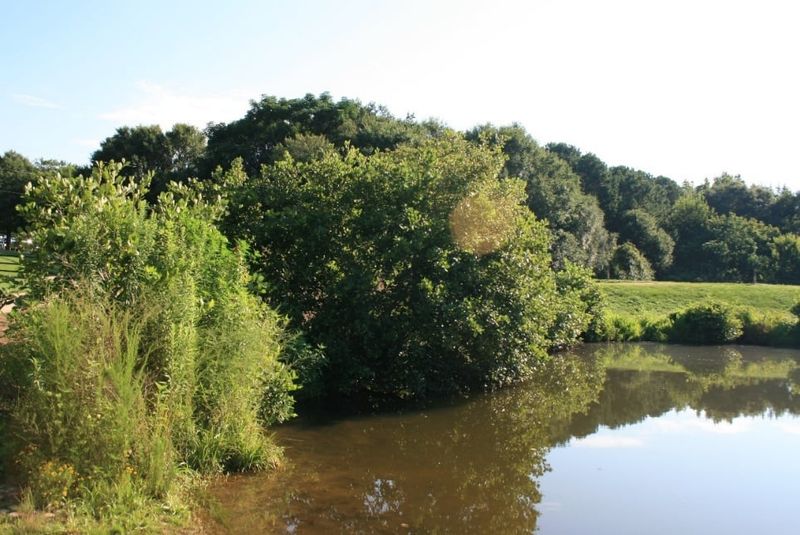
A single patch of mountain mint covers the upper bank but leaves the rest of the bank’s work undone. The most resilient streambank plantings work in layers, with each layer handling a different zone and a different depth of soil.
Start at the waterline with sedges and rushes, which tolerate the wet-dry cycling that occurs right at the creek’s edge. Move up the bank to the middle and upper zones where mountain mint, native grasses like river oats (Chasmanthium latifolium), and other herbaceous perennials can cover soil and contribute a fibrous root network.
Above that, or woven throughout where site conditions allow, native shrubs such as buttonbush, swamp rose, or tag alder and native trees like river birch or sycamore send roots deeper into the bank and provide the structural reinforcement that herbaceous plants alone cannot supply. NC State’s backyard stream repair guide lays out this multi-layer approach directly, recommending trees, shrubs, grasses, flowers, and ferns in combination because root depth and structure together determine how well a bank holds.
Varied plant forms also mean varied bloom times, which extends the forage window for pollinators well beyond what mountain mint alone can offer in summer. That diversity supports your yard’s native bees across more of the season without requiring any single plant to carry the whole load.
Before you add anything new, walk the bank and look carefully at what is already growing. Established native roots may already be doing protective work, and tearing them out to start fresh exposes bare soil to the next storm.
NC State’s streambank fact sheet and Oregon State’s threat-based stream guide both caution against wholesale clearing. Work around existing beneficial natives, and target only the invasive plants for removal.
Plant in the dormant season and expect gradual establishment
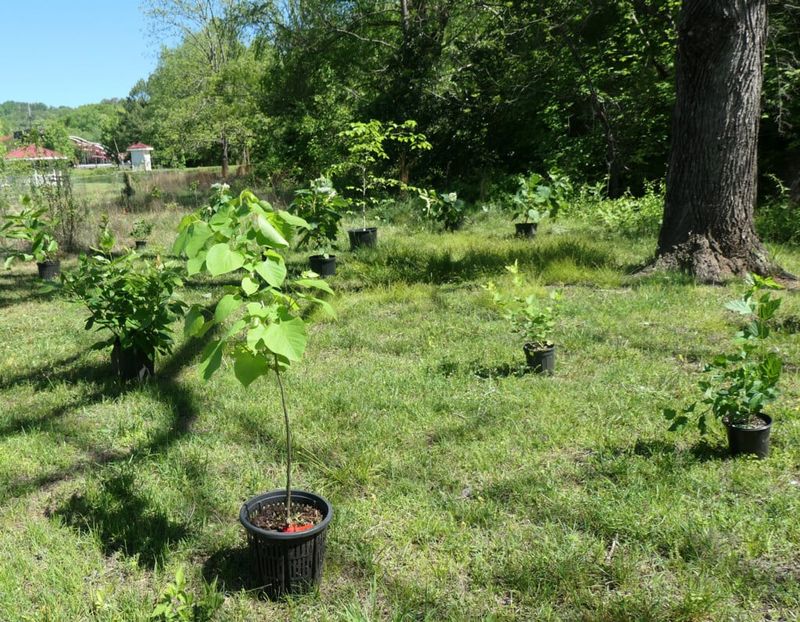
Timing a streambank planting correctly gives roots the best chance to get established before summer heat and storm flows put them to work. NC State’s stream repair guidance recommends the dormant season – typically October through March – for most streambank plantings.
Cooler soil temperatures and reduced water demand let roots spread without the stress of summer heat, and plants are generally more forgiving of transplant shock during that window.
Narrow-leaf mountain mint planted in fall or late winter will spend its first season building roots rather than putting on a dramatic show. Expect modest above-ground growth in year one and a fuller, spreading clump by year two or three.
During that establishment period, the bank may still lose some soil in a heavy rain, particularly if the planting is sparse or if the bank was already significantly eroded before planting began.
Before you plant, check the site conditions honestly. NC State’s mountain mint profile specifies full to partial sun and acidic soil with reasonable drainage.
A shaded bank under a heavy tree canopy, or one with compacted clay that stays waterlogged for weeks at a time, is not the right fit. Matching the plant to the actual conditions on your bank, rather than the conditions you wish it had, is the step most homeowners skip and later regret.
Resist the urge to reshape the bank, add fill, or install matting before you understand the permit picture. Planting plugs or bare-root starts into existing soil is a straightforward gardening task.
Grading, trenching, or placing materials near the channel is a different category of work entirely, with its own regulatory requirements covered in a later section.
Control its spread and protect useful existing vegetation
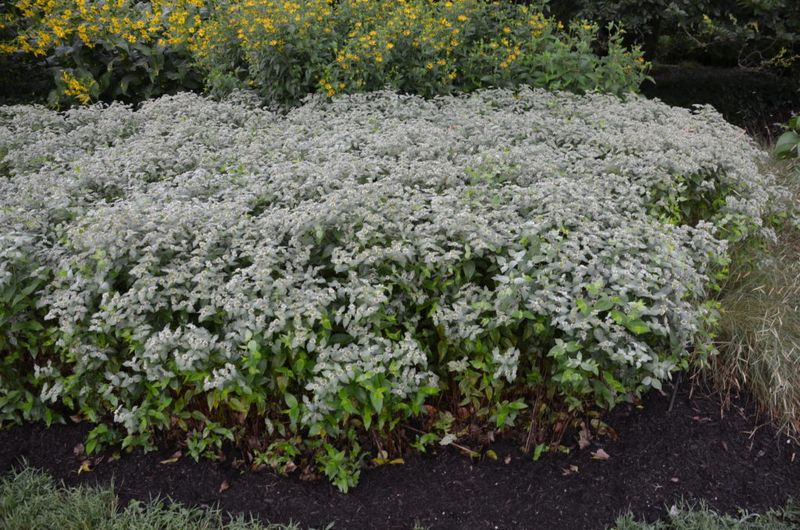
Mountain mint earns its place on a bank partly because it spreads. Rhizomes push outward each season, filling bare spots and thickening the patch.
On a large, open bank that needs coverage, that habit is an asset. On a small yard with a tightly defined planting bed, it can become a maintenance problem if you do not plan for it from the start.
Where spread needs a hard limit, use a physical barrier such as a stone edge, a buried root barrier, or a hardscape path. NC State’s plant profile specifically recommends confining mountain mint with hardscape where spread is undesirable.
Setting that boundary before planting is far easier than trying to dig out an established colony later.
The broader stewardship question along a residential creek is whether you are mowing right to the water’s edge. Stopping the mower 10 to 15 feet back from the bank and letting native vegetation fill that buffer is one of the lower-effort steps you can take to improve bank protection.
NC State’s backyard stream repair guide describes this unmowed strip as a practical low-cost option, while flagging one real risk: when mowing stops, invasive plants can move in quickly if you are not watching.
Walk that buffer strip at least once a season and learn to identify the plants growing there. Kudzu, Chinese privet, Japanese stiltgrass, and multiflora rose are common streamside invaders across the Piedmont and Coastal Plain, and dense growth of any of them does not protect a bank the way native roots do.
Remove invasives selectively rather than clearing everything at once. Pulling or cutting invasives while leaving native grasses, sedges, and shrubs intact keeps roots in the ground and soil covered while you work toward a healthier plant community.
Know when the project needs professional and regulatory review
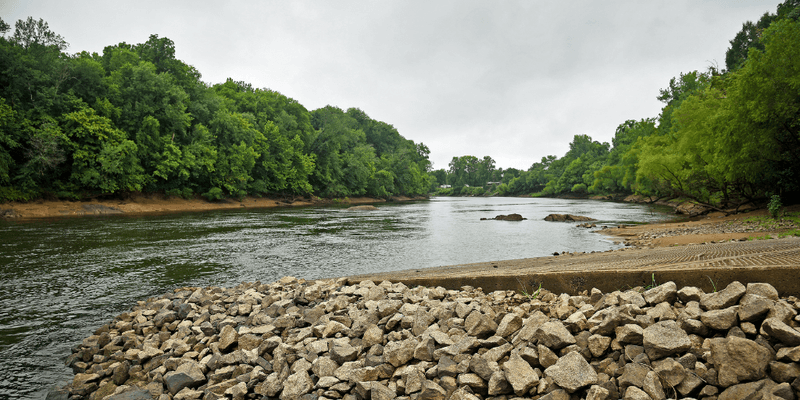
Some creek banks are not garden projects. Before you buy plants or pick up a shovel, look honestly at what your bank is doing.
A gently sloping bank losing a little soil at the edge is a very different situation from a vertical, actively collapsing face or a channel that is visibly widening or cutting deeper with each storm.
NC State’s stream repair guidance draws a clear line: banks taller than 5 feet warrant professional help. Vertical banks, banks with undercutting at the base, channels showing rapid widening or deepening, and areas near culverts, drainage pipes, or concentrated runoff outlets are all situations where a planting plan alone is not enough.
Those conditions require an assessment by a licensed engineer, a certified stream restoration specialist, or a similar professional who can evaluate the hydrology driving the problem.
Regulatory review is a separate but equally important step. North Carolina has riparian buffer rules that apply to many streams, including some intermittent ones, as well as to ponds, lakes, and other listed waters.
The NC DEQ guide to riparian buffer applicability explains how to determine whether your stream is subject to those rules, and the NC DEQ Riparian Buffer Protection Program describes what activities may require authorization within a buffer zone.
Any work that involves grading the bank, placing rock or matting, installing live stakes, cutting into the channel, or otherwise modifying the streambed or banks may require a permit from the NC Division of Water Resources or the U.S. Army Corps of Engineers, or both.
Planting native plugs into existing soil on the upper bank is a different matter, but even that should be done with an understanding of where the buffer begins on your property. When in doubt, request a stream determination before doing anything beyond basic planting.
Use mountain mint as one living layer of a resilient bank
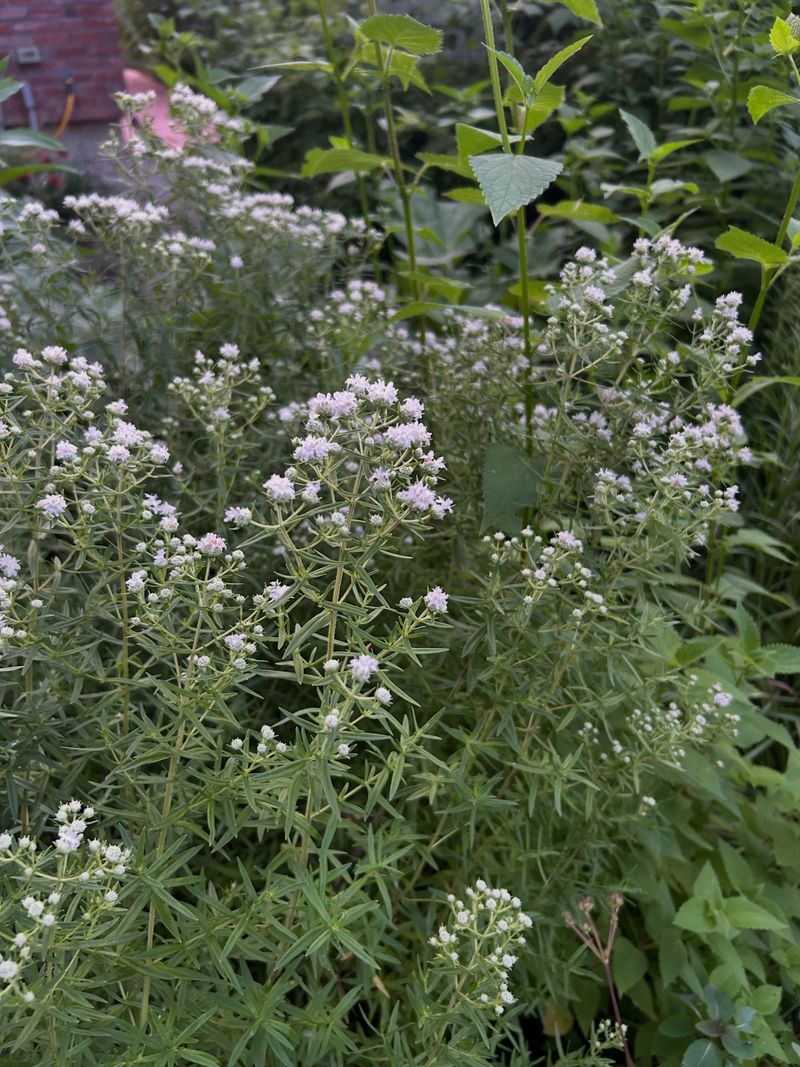
Narrow-leaf mountain mint earns a real place on a North Carolina homeowner’s creek bank – specifically on the higher, moderately moist portion where soil drains between storms and summer sun reaches the plants. Its documented strengths are perennial upper-bank cover and a reliable summer flowering period that draws native bees, bumblebees, and honey bees.
Those are genuine contributions worth making.
The strongest plan pairs it with sedges or rushes at the waterline, deeper-rooted native shrubs and trees where site conditions and permit rules allow, and selective removal of kudzu, privet, stiltgrass, and other invasives. Preserve the native plants already growing on your bank before you plant anything new.
NC State’s backyard stream repair guidance frames this clearly: a diverse, layered planting outperforms any single species, and existing native roots are worth protecting.
Assess your bank’s position and erosion severity honestly before committing to a planting plan. A perennial herb, however well suited to moist upper banks, cannot permanently secure a creek that is actively cutting and widening – but as one layer of a thoughtful, diverse planting, it can make that bank measurably more alive.