
Ravens Keep Gathering In One North Carolina Tree Because The Yard Below Is Handing Them A Meal
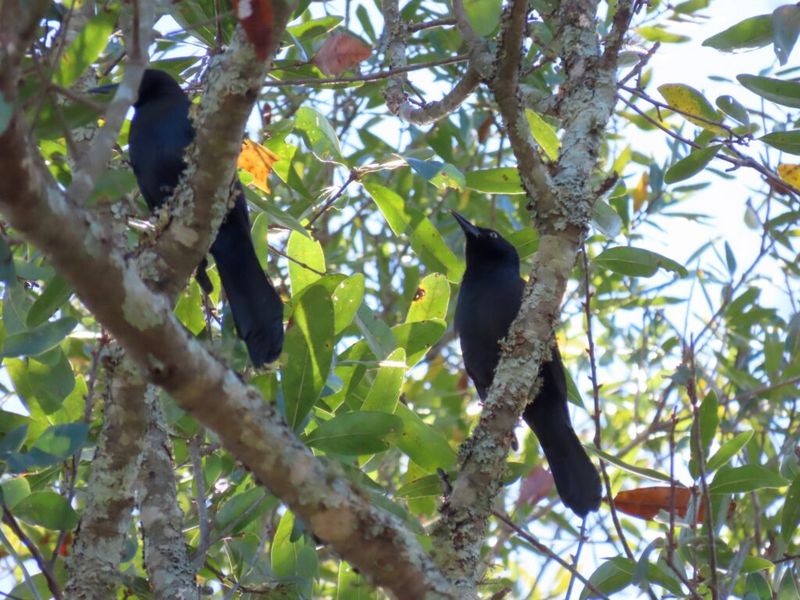
A tree full of large black birds is hard to ignore, especially when the same spot fills up day after day. Many North Carolina homeowners assume the birds are ravens drawn by something in the yard directly below, but the real story is usually more complicated.
The flock overhead may be crows using a traditional nighttime roost, and the food connection, if there is one, could stretch miles beyond your property line. Understanding what is actually happening helps you respond thoughtfully without blaming your yard for something that nature largely arranged on its own.
The tree may be a bedroom, not a buffet
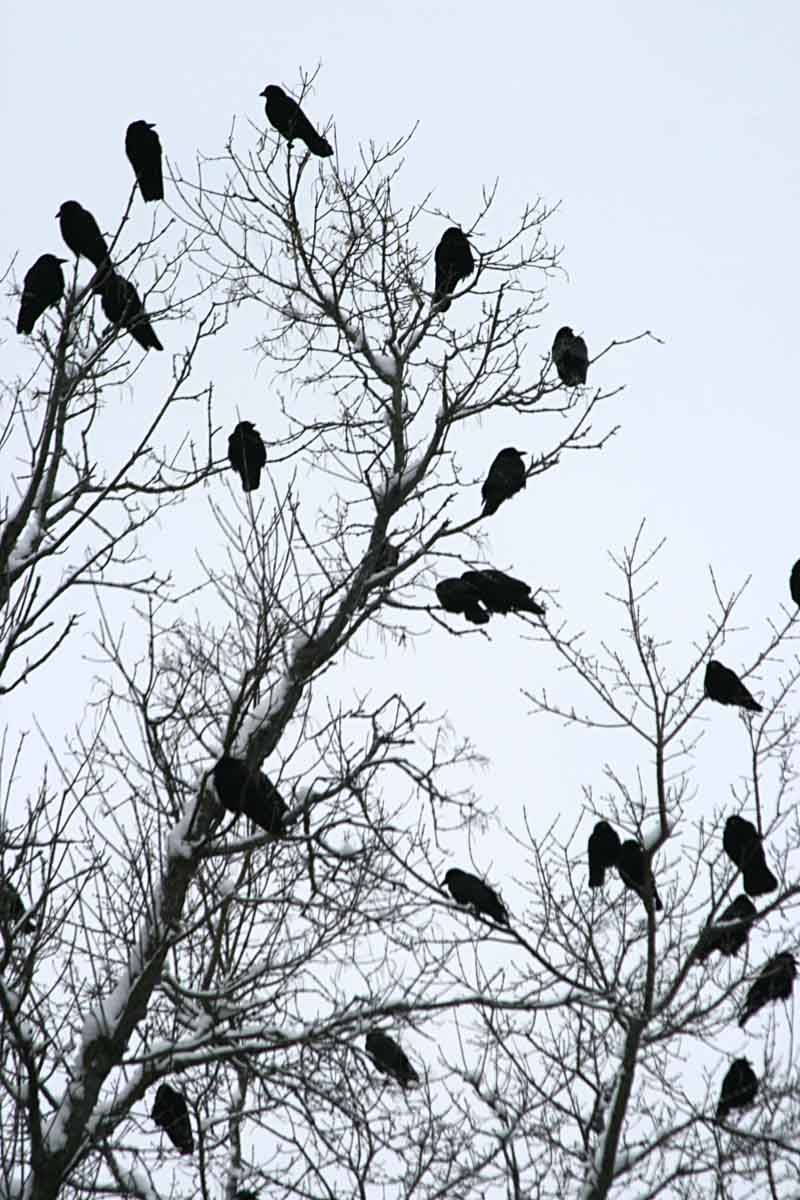
Walk outside around sunset in fall or winter in many parts of North Carolina and you might find a tree packed with large black birds, all settling in for the night. That scene looks dramatic, but it often has a straightforward explanation: American Crows are one of North America’s most consistent communal roosters, gathering by the hundreds or even thousands in the same trees night after night.
Audubon’s reporting on crow roosting notes that these roosts can persist in the same general area for years or even decades, making a single tree feel like a permanent gathering hall rather than an accidental stopping point.
Shelter, warmth, and safety from predators all help explain why crows choose a particular tree. A tall, dense canopy offers protection from owls and hawks; a spot with good sightlines lets birds detect threats early; and roosting together means more eyes watching for danger overnight.
Traditional use also matters – once a roost is established, new birds may simply follow experienced ones to the same location season after season, regardless of what sits on the ground below.
According to USDA APHIS bird management assessments, communal roosts can draw birds from a wide surrounding area, and the roost site itself may be several miles from wherever the birds spend their day feeding. So before concluding that your yard is supplying a meal, consider the simpler possibility: the tree is a bedroom.
The Cornell Lab’s American Crow profile confirms that large overnight gatherings are a well-documented part of crow behavior, particularly in the colder months, and that the roosting spot does not need to sit above a food source to attract hundreds of birds.
Identify the birds before interpreting the gathering
Before drawing any conclusions about why the birds are there, it helps to know which birds you are actually watching. In North Carolina, a large flock of black birds is far more likely to be American Crows than Common Ravens.
American Crows live throughout the state year-round, and according to USDA APHIS Fish Crow assessments for North Carolina, Fish Crows are also common, especially in the eastern Coastal Plain region. Ravens, while present in parts of the state, are a much less frequent explanation for a large residential flock.
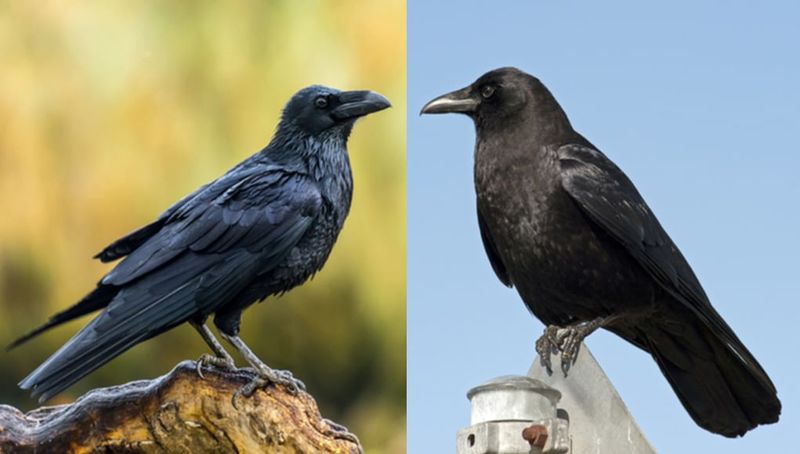
Telling the species apart from a distance takes patience. American Crows are medium-sized, with a fan-shaped tail and a straightforward, slightly nasal “caw.” Fish Crows look nearly identical but give a shorter, nasally “uh-uh” call that sounds almost like a question.
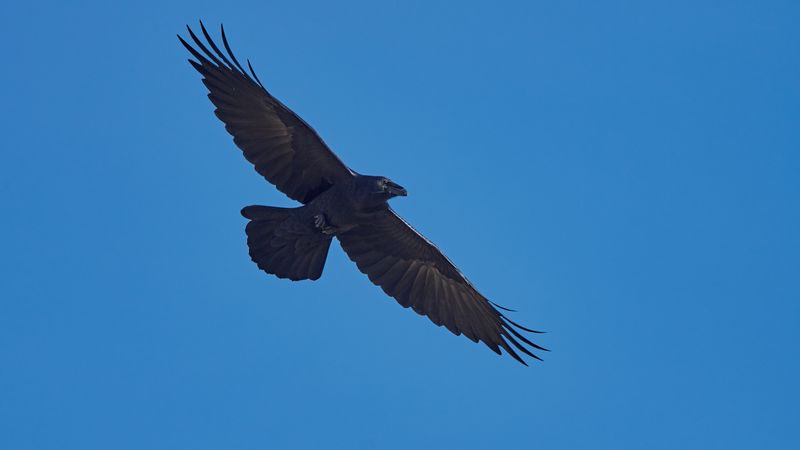
Common Ravens are noticeably larger, closer to a Red-tailed Hawk in body size, with a thick wedge-shaped bill, a diamond-shaped tail, and a deep, hollow croak. The Cornell Lab’s American Crow guide and the Common Raven life history page both offer sound recordings and size comparisons that make the distinction easier in the field.
Ravens are also less likely to form large residential flocks in most settings. When ravens do gather in numbers, it tends to involve nonbreeding younger birds or a concentrated food source like a large carcass or landfill, rather than a standard suburban yard.
A silhouette against the sky can fool even experienced birders, so voice is often the most reliable clue. Knowing the species you are dealing with changes how you read the behavior, so spend a few minutes watching and listening before deciding what the gathering means.
Use timing and movement to read the behavior
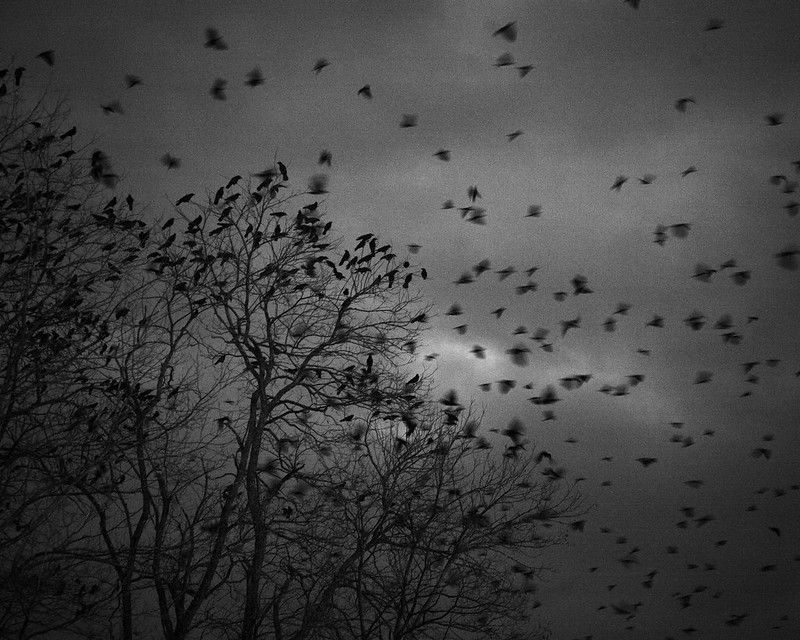
Watching the clock matters as much as watching the birds. A large group of black birds pouring into one tree as the sun goes down, then staying put through the night, fits the communal roost pattern almost perfectly.
Audubon explains that crows follow predictable flight paths to established roosts each evening, arriving in waves from different directions before settling in. That kind of orderly evening arrival is strong evidence that the tree is a sleeping spot, not a dining room.
Daytime behavior tells a different story. If birds are repeatedly dropping to the ground, picking something up, and returning to the tree or flying off with it, that is a stronger sign that something edible is nearby.
Consistent travel in one direction each morning, especially if the same birds return from the same route each afternoon, suggests a connection to a feeding area somewhere along that path. Cornell Lab’s winter bird survival overview notes that corvids are efficient at tracking reliable food supplies, so repeated directional movement is worth noting.
Other explanations are also worth keeping in mind. A group of crows mobbing a perched owl or hawk looks frantic and loud but has nothing to do with food below the tree.
Birds may also rest in a shady spot during midday heat, or stage in a tree before moving as a group to a new area. The Cornell Lab’s crow profile lists mobbing as one of the species’ most recognizable behaviors.
These clues narrow the possibilities considerably, but none of them prove on their own what is beneath the tree. A few days of quiet observation, noting arrival time, departure direction, and whether birds touch the ground, gives you much better information than a single glance.
The flock may know about food farther away
Communal roosts do have a genuine connection to food, but it works differently than most people imagine. Research on hooded crows found that birds with no prior knowledge of a food patch were more likely to visit it after spending the night roosting alongside birds that did know about it.
A landmark study on hooded crow roost behavior provided early experimental support for what researchers call the “information centre” hypothesis: that naive birds observe and then follow experienced foragers out of the roost in the morning, eventually reaching food they would not have found alone.
Similar patterns have been documented in Common Ravens. A study on raven communal roosts as structured information centres found that the roost functions as more than just a sleeping spot – it appears to help distribute knowledge about food patches across the group.
Work on American Crows by Butler in the Canadian Field-Naturalist also found that discovery of a food patch increased the number of crows using a known flight corridor, consistent with social recruitment connecting roost behavior to foraging.
What these findings do not support is the idea that one bird gives the whole flock a precise address. The research describes social recruitment and increased visits to known food patches, not a map broadcast at bedtime.
More practically, USDA APHIS bird management data shows that crows can travel several miles between a roost and a daytime feeding area. The tree in your yard may connect to a food source in a neighboring county, a landfill several towns over, or an agricultural field miles away.
A roost overhead is a clue that food exists somewhere in the broader landscape, not a sign that the meal is sitting in the grass beneath the branches.
Inspect the yard for food attractants
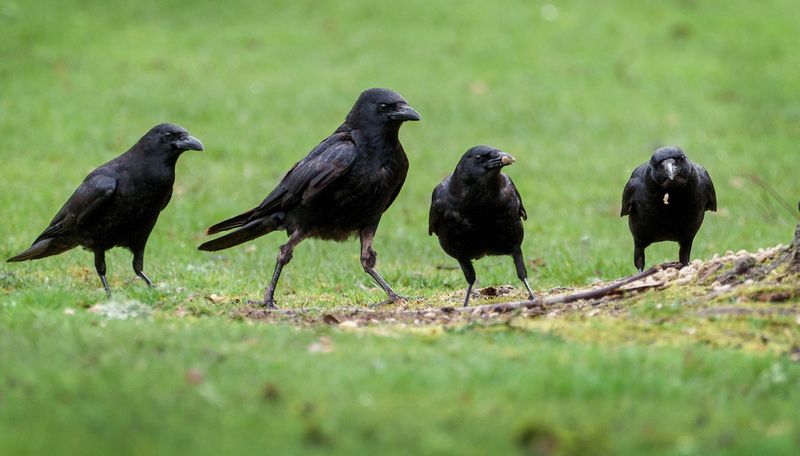
Even if a communal roost is the primary reason the birds chose that tree, your yard may still be contributing something. Crows and ravens eat a wide variety of foods.
The Cornell Lab’s American Crow profile lists insects, earthworms, seeds, fruit, garbage, carrion, and pet food among the species’ documented food sources. The Common Raven life history page adds grains and a similarly broad list of animal and human-associated materials.
A yard that offers any of these things, even unintentionally, can attract daytime visits even when it has nothing to do with why the roost is nearby.
A practical walk-through of the property is a reasonable first step. Check whether trash cans have tight-fitting lids and whether any bags have been torn open or left accessible overnight.
Look for outdoor pet food bowls that stay outside after feeding time, especially ones that sit out at night when other scavengers are also active. USDA APHIS guidance on protecting food resources from wildlife specifically flags open compost piles, spilled birdseed, and exposed food waste as documented attractants for corvids and other opportunistic species.
Fallen or overripe fruit beneath trees and shrubs is another common draw, as is roadkill or a dead animal near the property line. Spilled seed under bird feeders can accumulate into a substantial ground-level food source that birds other than songbirds will readily exploit.
Going through this checklist is a precaution, not a confession. Finding one of these items does not prove it caused the gathering, and fixing it may reduce yard visits without changing the roost at all.
The USDA Wildlife Services guidance on not feeding wildlife frames this kind of audit as standard practice for anyone noticing increased wildlife activity near their home.
Remove rewards without making the birds the enemy
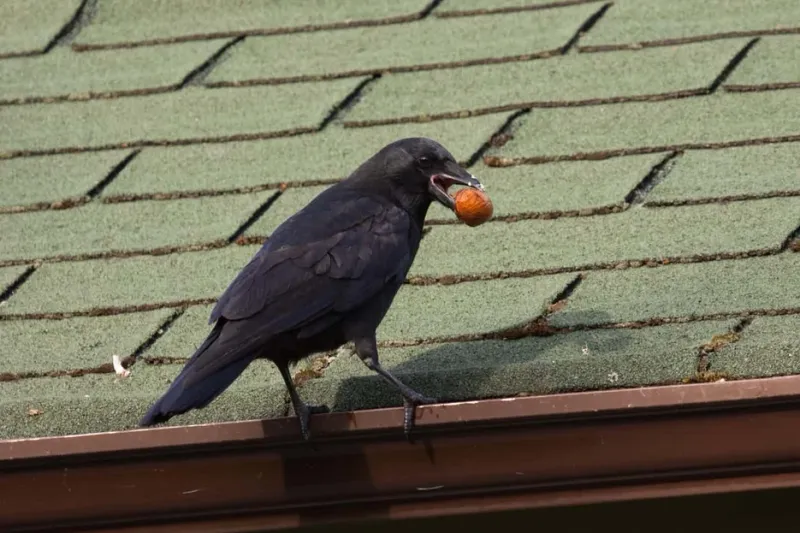
Once you know what might be drawing visits, the fix is usually straightforward. Secure garbage cans with lids that latch or lock, because even a briefly open can overnight is enough to establish a habit.
Move pet food indoors after each feeding session, particularly in the evening, since bowls left outside become a reliable signal to any corvid that has learned your yard’s schedule. A closed tumbler-style compost bin keeps food scraps inaccessible without forcing you to give up composting entirely.
Fruit trees and berry shrubs require a bit more attention in fall. Harvest ripe fruit before it drops, or rake fallen fruit regularly to prevent a ground-level buffet from building up.
Beneath bird feeders, accumulated seed hulls and droppings attract crows just as reliably as an open trash bag. USDA Wildlife Services advises against intentionally feeding wildlife because concentrated animals can create disease, conflict, and habituation problems that are harder to reverse than the original attraction.
If you want to keep feeding smaller songbirds, offer only as much seed as they are likely to eat in a day, and rake up hulls and droppings every few days.
Feeder hygiene matters year-round. Cornell Lab recommends cleaning seed feeders roughly every two weeks, more often during wet weather or heavy use, while Penn State Extension advises weekly cleaning for some setups and keeping the ground beneath feeders clear of residue.
Removing one attractant may reduce yard visits noticeably, but a traditional roost can continue drawing birds from a wide area regardless. The tree itself does not need to come down just because birds sleep in it.
Crows and ravens are protected under the Migratory Bird Treaty Act, and any damage-control actions beyond removing attractants may require federal or state authorization through a process like a migratory bird depredation permit. Harassment, trapping, or nest destruction are not appropriate first steps and can carry legal consequences.
Dead or sick birds require a different response
Finding one dead bird beneath a roost tree is not automatically alarming. Birds die from collisions, weather stress, and natural causes, and a single carcass near a busy roost may simply reflect ordinary mortality in a large group.
However, the situation changes when multiple birds are sick or dead, when you notice birds showing lethargy, swelling, or difficulty standing, or when deaths occur across several days in the same location. Patterns like those warrant a call to the relevant state wildlife or local health authority before you begin any extensive cleanup.
CDC guidance on dead birds and West Nile virus explains that reporting unusual mortality can help public health agencies detect West Nile virus, avian influenza, and other wildlife diseases early. CDC surveillance and control guidelines emphasize that the value of reporting lies precisely in catching unusual patterns before they spread, so a cluster of dead corvids in a yard is worth mentioning to local authorities even if you are unsure whether it is significant.
Safe handling keeps the risk low for anyone who does need to remove a carcass. Skip bare hands entirely and use disposable gloves or an inverted plastic bag to pick up the bird, then seal it in a second bag before placing it in the trash or following local disposal instructions.
Wash hands thoroughly with soap and water afterward. One specific hazard that is easy to overlook: avoid pressure-washing surfaces contaminated with bird droppings.
High-pressure water can aerosolize dried fecal material and push infectious particles into the air. A damp cloth or low-pressure rinse with appropriate protective gear is a safer approach.
A single dead bird does not tell you why the flock gathered there, and it does not prove that your yard supplied a meal. It just means one bird died, and careful handling is the right response.
Treat the roost as a clue, not a verdict
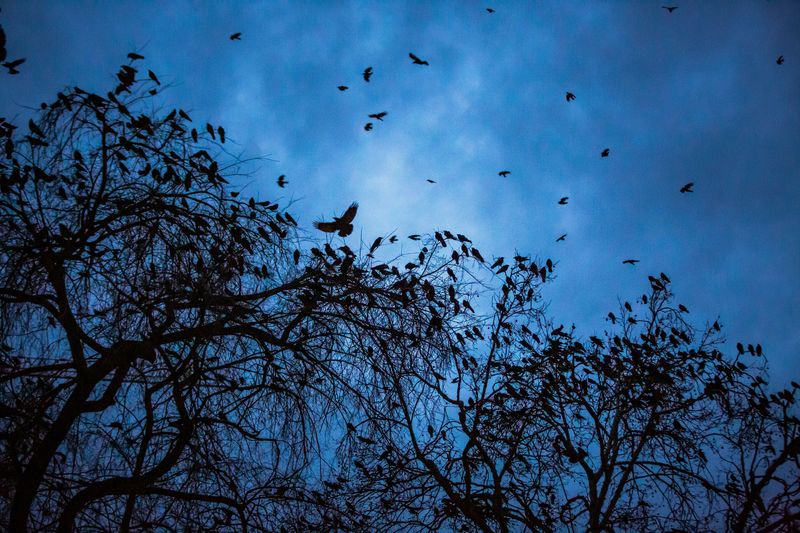
A tree packed with black birds is a genuine observation worth taking seriously, but it is not a verdict about your yard. Start by identifying the birds as well as you can, noting size, tail shape, bill profile, and especially voice.
American Crows and Fish Crows are the most likely explanation across most of North Carolina, and the Cornell Lab’s crow resources make the identification process accessible even for beginners.
Next, watch when and how the birds gather. Evening arrivals that stay through the night point toward a communal roost, as Audubon’s coverage of crow roosting makes clear.
Daytime ground visits with food being carried away point toward a feeding connection. Then walk the yard and address any attractants you find, following the USDA Wildlife Services guidance on keeping food sources secured.
Reducing what your yard offers is a reasonable, nonlethal step even if the roost itself continues, because USDA data shows the roost and the feeding area can be miles apart.
A flock in one tree is not a problem to be solved so much as a behavior to be understood. Careful observation and a tidy yard are the most useful tools you have, and they work without putting the birds, the tree, or your yard’s ecosystem at risk.