
That Muscadine Vine On Your North Carolina Fence Drops Sweet Fruit The Whole Neighborhood Will Envy
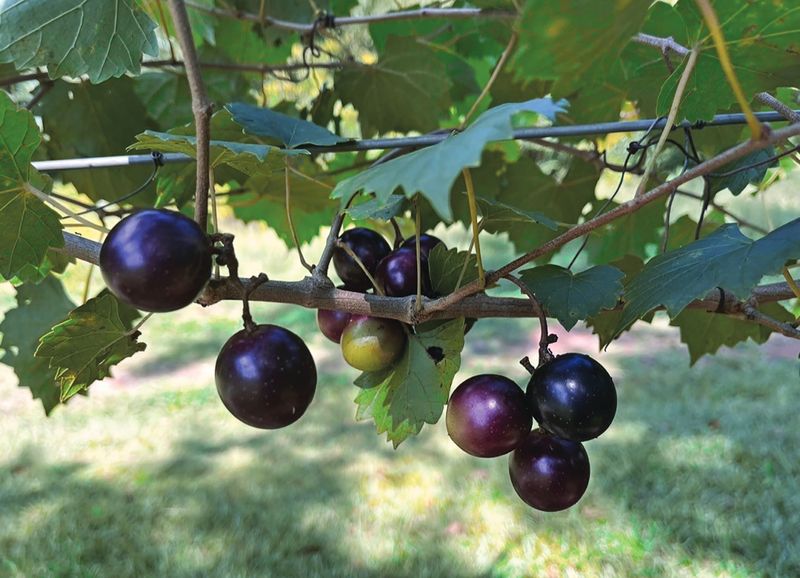
Walk along almost any old North Carolina fence row in August and you might spot clusters of thick-skinned, dark purple or bronze berries hanging in the late-summer heat. Those are muscadines, a native southeastern grape that has been sweetening backyards and woodland edges here for centuries.
With the right fence, the right cultivar, and a little honest maintenance, a single vine can turn a sunny stretch of your property into a productive late-summer and early-fall harvest. Getting there takes some planning, but the payoff is real.
This native vine can turn a sunny fence into a late-season harvest
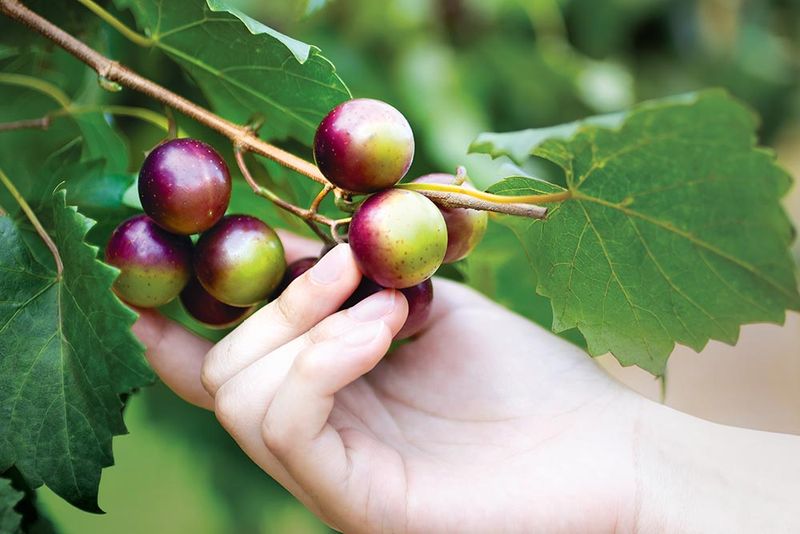
Muscadine grape, known botanically as Vitis rotundifolia, is a woody, deciduous vine that grew wild in North Carolina long before anyone put up a fence to train it on. Unlike the European bunch grapes most people picture in a vineyard, muscadines produce large, thick-skinned berries that appear singly or in small groups rather than in tight, heavy clusters.
The picture to hold in your mind is a productive vine dotted with generous individual berries, not a wall of hanging grape bunches.
That distinction matters because it sets realistic expectations. A well-grown muscadine along a suitable fence or trellis can be genuinely impressive, with fruit ripening unevenly from roughly August through early October depending on the cultivar and location.
NC State’s plant profile for Vitis rotundifolia confirms the vine as suited for edible, native, and pollinator gardens, with fruit that is sweet, pungent, and distinctly musky in a way that no grocery-store grape quite matches.
One name worth straightening out before you visit a nursery: Scuppernong is not a catch-all word for every muscadine. It is one specific traditional cultivar, a bronze-skinned variety with deep roots in North Carolina history and the distinction of being the state’s official fruit.
The muscadine group is much broader, covering dozens of cultivars in colors ranging from near-black to golden bronze.
Muscadines are native to the southern United States, and North Carolina falls squarely within their natural range. That nativeness translates to real resilience: the vine is adapted to the heat, humidity, and summer rainfall patterns that stress many other fruit plants.
A sunny fence line in the Coastal Plain or Piedmont can be an excellent home for one, though not every site or every fence will work, and those details deserve a closer look before you buy a plant.
First, test whether the fence line can carry the vine
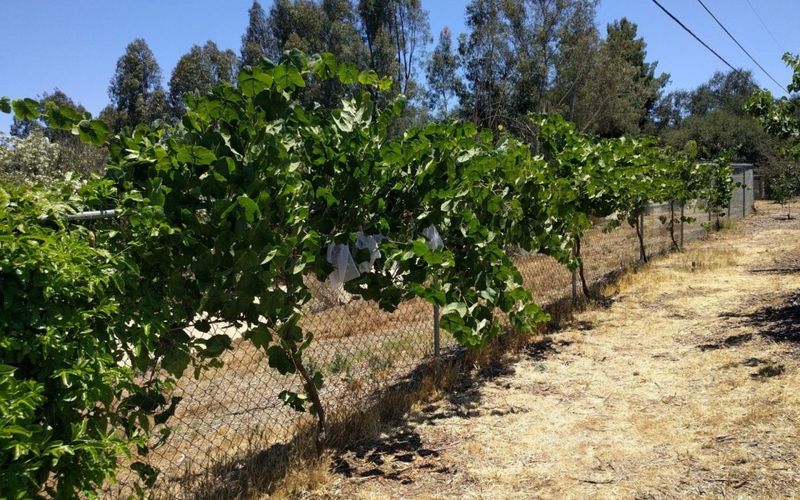
Before you spend money on a plant, walk the fence line and ask a few hard questions. Full sun is non-negotiable: muscadines want at least eight hours of direct sunlight daily, and a shaded or partially shaded fence will produce a vine that grows but does not fruit reliably.
Look at the soil too. Muscadines tolerate a range of soil types, but they can suffer or die where water pools even briefly after a heavy rain.
If your fence line sits in a low spot that stays wet, that location is the wrong one for this vine.
Drainage and sunlight sorted, turn to the support itself. A mature muscadine is a substantial plant, and the structure carrying it needs to handle years of woody growth and the weight of fruit without sagging, leaning, or pulling apart.
A lightweight decorative fence panel or a standard privacy fence built from thin boards is often not adequate for the long term. NC State’s Extension Gardener Handbook on small fruits recommends a permanent wire support system and gives spacing guidance of roughly 15 to 20 feet between vines.
The University of Georgia Extension describes a minimum of about 20 feet of trellis per plant. Either way, this is not a vine for a six-foot decorative panel between two posts.
Horizontal room is just as important as structural strength. The vine’s cordons, the permanent woody arms that run along the support, need to spread outward from the trunk, and the fruiting shoots that grow from those cordons need room to hang and be reached at harvest.
Crowding the vine onto too short a run of fence means crowded canopy, poor air circulation, and a harder time pruning each winter.
Soil preparation rounds out the site assessment. UGA’s home garden muscadine guide and NC State both recommend testing the soil before planting and adjusting pH toward approximately 6.0 if needed.
Not every soil will need amendment, but knowing your starting point prevents guesswork and lets you correct problems before the vine goes in the ground rather than after.
Choose the cultivar that matches your site and pollination plan
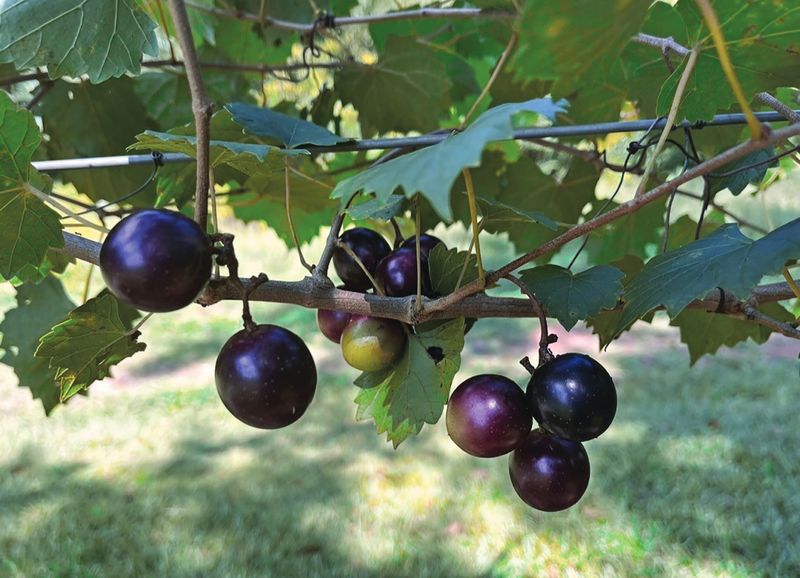
Pollination is the single most important detail that home gardeners overlook when buying a muscadine, and getting it wrong means a vine that blooms every year but never drops a single berry. Muscadine cultivars fall into two groups based on flower type.
Perfect-flowered cultivars carry both male and female parts in the same flower and can set fruit on their own. Female cultivars produce only female flowers and require pollen from a nearby perfect-flowered plant to fruit at all.
If you are planting one vine on one fence, you need a confirmed perfect-flowered cultivar. The nursery label or catalog description should say “self-fertile” or “perfect flower” explicitly.
Do not assume that a familiar name means the vine will fruit alone. Traditional Scuppernong, for example, is a female cultivar and will not reliably produce fruit without a compatible perfect-flowered pollinizer nearby.
NC State’s small fruits handbook and UGA’s home garden muscadine publication both make this distinction clearly, and UGA suggests keeping a pollinizer within about 50 feet of female cultivars in production settings. For a home gardener with a single fence run, the simpler path is a self-fertile cultivar from the start.
Where you live in North Carolina shapes the cultivar decision beyond just pollination. The Coastal Plain is where muscadines are most at home: warm winters, long growing seasons, and soils that drain well after summer rains.
Piedmont gardeners can succeed with the right cultivar, but they face somewhat cooler winters and should look for cold-hardy options. Mountain and foothill sites carry real winter-injury risk; NC State’s muscadine production guide notes that considerable injury typically occurs below 0 degrees Fahrenheit and recommends cold-hardy cultivars for more northerly or elevated locations.
Cultivars such as Carlos and Magnolia are frequently cited for cold tolerance and broad North Carolina adaptability. UGA’s muscadine horticulture guide offers a detailed cultivar comparison that includes flower type, fruit color, and regional performance.
Reading that table before you visit a nursery takes fifteen minutes and can save years of disappointment.
Build the planting around permanent support
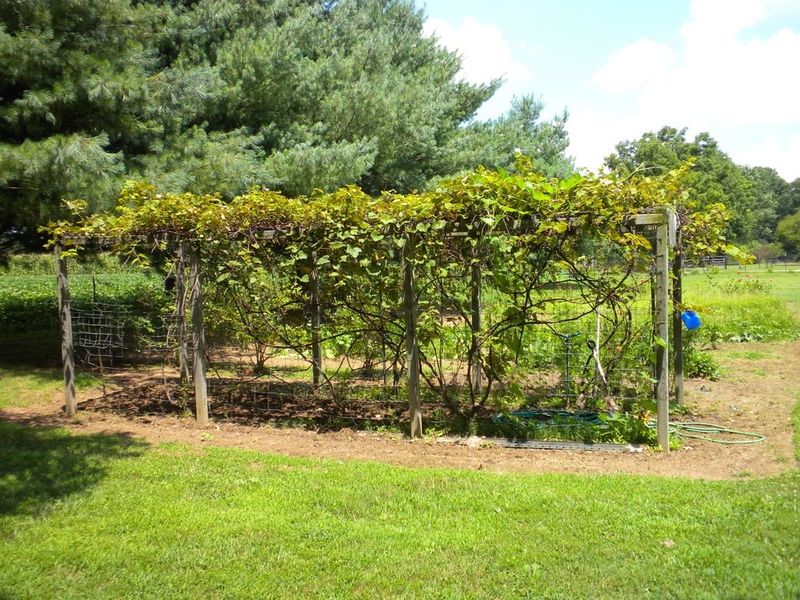
Once the site is chosen and the cultivar confirmed, the support structure goes up before the vine goes in the ground. A muscadine trained to a fence or trellis needs something it can rely on for decades, not just the first few seasons when the plant is small and light.
The standard residential approach is a system of sturdy posts set firmly in the ground with heavy-gauge galvanized wire strung horizontally at roughly five to six feet above the soil. That height keeps the canopy accessible for pruning and puts the fruit within reach at harvest without a ladder.
NC State’s Vitis rotundifolia profile and the small fruits handbook both describe the vine as suitable for fences, trellises, pergolas, and privacy screens, with the consistent caveat that the support must be able to carry mature vine weight and still allow access for annual pruning. A pergola with stout lumber can work well.
A standard vinyl privacy fence or a lightweight ornamental panel usually cannot. The honest test is whether you would trust the structure to hold a heavy load of wet wood and fruit without flexing or pulling at its fasteners.
Planting the vine at the base of the support is straightforward. Set it at the same depth it grew in its container, water it in well, and tie a single shoot loosely to the wire or post to guide upward growth.
The goal in the first year or two is not fruit but root establishment and the development of a strong, straight trunk. Resist the urge to let the vine sprawl in every direction early on; directing growth deliberately from the start makes future pruning much easier.
UGA’s home garden guide describes training the vine’s cordons outward along the wire once the trunk reaches the support height, which creates the permanent framework from which fruiting shoots will grow each season. Getting that framework established correctly in years one and two pays dividends every August for the life of the planting.
Prune and water the vine so it stays productive
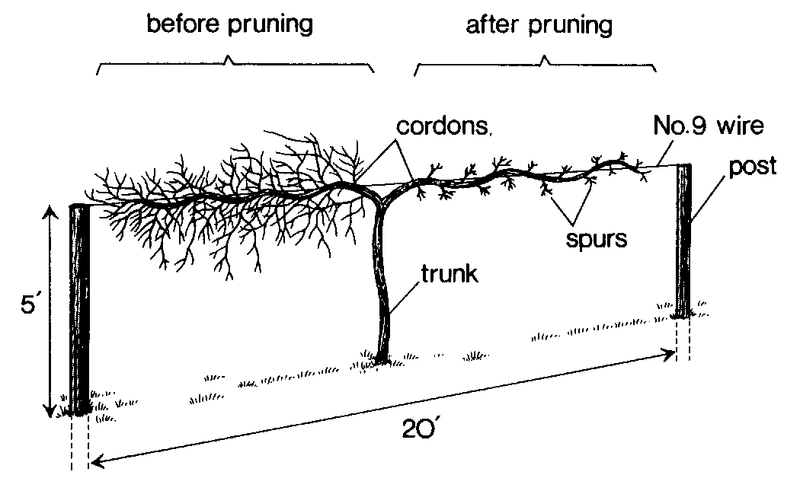
Pruning is where most backyard muscadine stories go sideways. Skip it for a season or two and the vine responds enthusiastically, sending out long shoots in every direction that tangle together, shade the fruit zone, and make the following year’s pruning a much bigger job.
Annual dormant-season pruning is not optional if you want a productive vine; it is the practice that keeps the whole system working.
The timing is late winter, after the coldest weather has passed but before the vine breaks dormancy and new growth begins. NC State’s small fruits handbook recommends shortening the fruiting shoots that grew the previous season back to short spurs, typically two to three buds each, while maintaining the permanent cordon arms along the wire.
The goal is a tidy, open framework that lets sunlight reach the fruit and air move through the canopy. NC State’s step-by-step pruning guide for Carlos muscadine walks through the process with enough detail to give a first-time pruner a clear picture of what to cut and what to keep.
Water matters most during the first two growing seasons, when the vine is developing its root system and has not yet found its footing in the local soil. Deep, regular watering during dry stretches in that establishment period prevents setbacks that can delay fruiting by a full season.
Once the vine is established, muscadines are relatively drought-tolerant, though a dry August during fruit development can still reduce yield and berry size.
Fertilizer deserves a careful hand. NC State’s childcare garden muscadine resource and the small fruits handbook both caution against excess nitrogen.
Too much pushes the vine into heavy vegetative growth at the expense of fruit, reduces overall fruit quality, and can increase the vine’s vulnerability to winter injury. A soil test result should guide any fertilizer decision rather than a general annual application schedule.
Harvest gradually, share with wildlife, and avoid unnecessary sprays
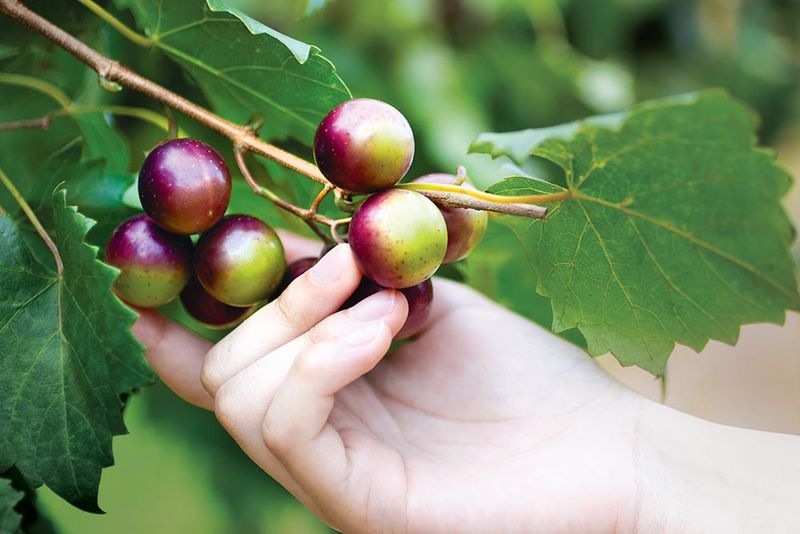
Harvest time arrives gradually rather than all at once, which is one of the things that makes a muscadine different from a vegetable garden crop. Berries ripen unevenly across the vine from roughly August into early October, with the timing shifting by cultivar and location.
NC State’s small fruits guidance describes ripe fruit as fully colored and soft to the touch, with mature berries eventually dropping from the vine on their own. Checking the vine every few days during peak season and picking or collecting what is ready keeps the harvest moving without waste.
Dry-stem-scar cultivars, where the berry separates cleanly from the stem, hold up better in a bowl on the counter for a few days than wet-stem-scar types, which leave a moist scar that shortens storage life. That detail is worth knowing if you plan to collect a week’s worth of fruit before using it, but it should not drive the entire cultivar decision on its own.
Wildlife will find the vine. NC State’s plant profile notes that muscadine fruit attracts songbirds, pollinators, small mammals, raccoons, opossums, and deer.
That is a feature for a wildlife-friendly North Carolina yard, but it also means the homeowner should plan to share some of the crop or protect a portion of it with netting if a full harvest matters. Expecting wildlife to stay away is not realistic, and harming the animals that visit is not the answer.
On the question of sprays, most backyard muscadine plantings do not need routine fungicide or insecticide applications. North Carolina’s agricultural chemicals guidance states that fungicides are generally unnecessary in home plantings, and NC State’s home orchard disease and insect management resource emphasizes sanitation, canopy management, and monitoring as the first line of response.
If a problem does call for a product, choose one registered for muscadine, follow the current label exactly, observe the required harvest interval, and apply it when pollinators are least active. The EPA’s pesticide label database can help confirm whether a product is registered for the crop before you buy it.
A muscadine earns its place when the fence can support the harvest
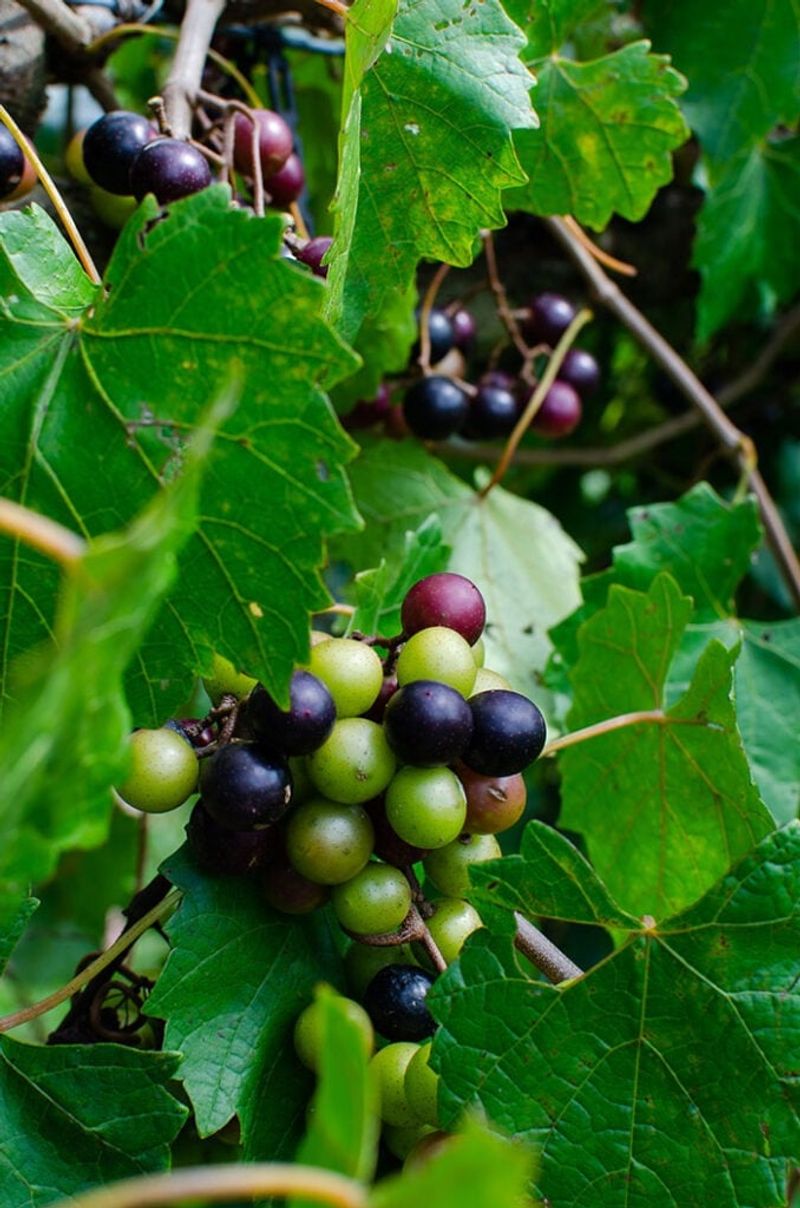
The appealing picture of a fence draped in late-summer fruit is genuinely achievable, but it arrives on the vine’s terms, not just the gardener’s wish. Start with an honest site assessment: full sun, good drainage, and a structurally sound support with at least 15 to 20 feet of horizontal reach.
NC State confirms muscadine’s native adaptability across much of North Carolina, but Coastal Plain sites are the most reliably favorable, and gardeners in the Piedmont, foothills, or mountains should verify that their chosen cultivar can handle local winter temperatures.
Verify flower type before buying. A self-fertile cultivar can fruit alone; a female cultivar cannot.
NC State’s small fruits handbook and UGA’s home garden guide both make that distinction clearly and offer cultivar guidance to help match the plant to the site. Accept that annual dormant pruning, occasional deep watering, and sharing some fruit with the local wildlife are simply part of the arrangement.
When those conditions line up, a muscadine vine earns its fence space every August and September in a way that few other plants can match in a North Carolina yard. The sweetness is real, the harvest window is long, and the vine has been doing exactly this, somewhere along a southern fence row, for a very long time.